Technical Audits
Technical audits are comprehensive evaluations performed to assess the effectiveness, reliability, compliance, and performance of an organization’s technical systems, processes, equipment, and infrastructure. These audits help identify technical gaps, operational risks, inefficiencies, and areas where improvements can enhance productivity, safety, and overall performance. Unlike financial or general management audits, technical audits focus specifically on engineering processes, technology implementation, operational procedures, maintenance practices, and compliance with industry standards.
In today’s rapidly evolving business environment, organizations depend heavily on advanced technologies, complex machinery, digital systems, and specialized infrastructure. Over time, these systems may experience performance issues, outdated components, security vulnerabilities, or operational inefficiencies. A technical audit provides a structured approach to evaluate existing conditions, identify potential risks, and recommend corrective actions to improve reliability and sustainability.
The scope of a technical audit varies depending on the industry and organizational requirements. In manufacturing, it may involve assessing production equipment, automation systems, maintenance practices, and energy efficiency. In information technology, technical audits evaluate software systems, cybersecurity measures, networks, databases, and IT infrastructure. In construction and engineering sectors, audits may focus on project execution, design compliance, material quality, and technical documentation.
A typical technical audit involves reviewing technical documents, inspecting systems and equipment, analyzing performance data, conducting interviews with technical teams, and comparing existing practices against industry benchmarks and regulatory requirements. The findings are documented in a detailed audit report that highlights strengths, weaknesses, risks, and recommended improvement strategies.
Regular technical audits provide organizations with valuable insights to optimize operations, reduce downtime, improve safety, enhance compliance, and make informed investment decisions. They also support preventive maintenance strategies by identifying potential failures before they lead to costly disruptions.
As industries continue to adopt digital transformation, automation, and advanced technologies, technical audits have become an essential tool for ensuring that systems remain efficient, secure, and aligned with organizational goals. By implementing periodic technical assessments, businesses can improve operational resilience, maintain competitive advantages, and achieve long-term technical sustainability.
What Is a Technical Audit and Why Is It Important?
A technical audit is a systematic evaluation of an organization’s technical systems, processes, equipment, infrastructure, and operational practices to determine their efficiency, reliability, compliance, and overall performance. It is conducted by qualified technical professionals or auditors who analyze existing systems, identify weaknesses, assess risks, and recommend improvements to enhance productivity and long-term sustainability.
Unlike financial audits that focus on monetary records, technical audits concentrate on the technical aspects of an organization. These may include machinery performance, software systems, engineering processes, IT infrastructure, safety procedures, maintenance practices, energy efficiency, and compliance with industry standards. The scope of a technical audit depends on the organization’s industry, operational requirements, and specific objectives.
A technical audit typically involves reviewing technical documentation, inspecting equipment and systems, analyzing performance data, evaluating operational procedures, and comparing current practices with industry benchmarks and regulatory requirements. The results are documented in an audit report that highlights existing strengths, technical challenges, potential risks, and recommended corrective actions.
Importance of Technical Audits
Technical audits are important because they help organizations identify inefficiencies and technical problems before they result in operational failures, financial losses, or safety concerns. Regular audits enable businesses to detect outdated technologies, equipment failures, cybersecurity risks, process inefficiencies, and compliance gaps.
One of the major benefits of technical audits is improved operational efficiency. By analyzing existing systems and processes, organizations can identify areas where resources, technology, and workflows can be optimized. This leads to better productivity, reduced downtime, and improved overall performance.
Technical audits also play a critical role in risk management and preventive maintenance. Early identification of equipment issues, system vulnerabilities, or process failures allows organizations to take corrective measures before major disruptions occur. This is particularly valuable in industries such as manufacturing, energy, construction, healthcare, and information technology, where system failures can have significant consequences.
Another key advantage is ensuring regulatory compliance. Many industries must follow strict technical standards, safety regulations, and quality requirements. Technical audits help organizations verify that their systems and processes meet applicable guidelines and reduce the risk of penalties or operational restrictions.
Furthermore, technical audits support better decision-making by providing accurate insights into the condition and performance of technical assets. Organizations can use audit findings to plan upgrades, allocate resources effectively, improve maintenance strategies, and make informed technology investments.
In conclusion, technical audits are essential tools for maintaining efficient, secure, and reliable operations. They help organizations enhance performance, reduce risks, comply with industry standards, and achieve sustainable growth. By conducting regular technical assessments, businesses can ensure that their technical infrastructure remains aligned with current needs and future objectives.
Authoritative Resources
- International Organization for Standardization (ISO): https://www.iso.org/
- National Institute of Standards and Technology (NIST): https://www.nist.gov/
- International Electrotechnical Commission (IEC): https://www.iec.ch/
- Institute of Electrical and Electronics Engineers (IEEE): https://www.ieee.org/
- International Society of Automation (ISA): https://www.isa.org/
What Are the Key Areas Evaluated During a Technical Audit?
A technical audit involves a detailed assessment of an organization’s technical infrastructure, systems, processes, and operational practices to determine their efficiency, reliability, safety, and compliance with industry standards. The specific areas evaluated during a technical audit depend on the industry, business objectives, and the type of systems being reviewed. However, most technical audits focus on several critical areas that influence operational performance, risk management, and long-term sustainability.
1. Technical Infrastructure and Equipment Assessment
One of the primary areas evaluated during a technical audit is the condition and performance of technical infrastructure and equipment. Auditors inspect machinery, hardware, tools, production systems, electrical installations, and supporting equipment to determine their operational efficiency, reliability, and maintenance requirements. The assessment helps identify aging assets, performance issues, equipment failures, and opportunities for upgrades or optimization.
2. System Performance and Efficiency
Technical audits analyze whether existing systems are performing according to expected standards and operational requirements. This includes evaluating system capacity, productivity, energy consumption, resource utilization, downtime, and overall efficiency. Performance analysis helps organizations identify bottlenecks and implement improvements that enhance productivity and reduce operational costs.
3. Technology and Software Evaluation
In industries dependent on digital systems, technical audits assess software applications, databases, networks, cybersecurity systems, and IT infrastructure. Auditors review system architecture, software performance, data management practices, access controls, and technology compatibility. This evaluation helps identify outdated systems, security vulnerabilities, and opportunities for digital transformation.
4. Maintenance Practices and Asset Management
A technical audit reviews existing maintenance strategies to determine whether equipment and systems are properly managed. Auditors evaluate preventive maintenance schedules, repair records, spare parts management, equipment lifecycle planning, and maintenance procedures. Effective maintenance practices help reduce unexpected failures, improve reliability, and extend asset lifespan.
5. Safety and Risk Assessment
Safety evaluation is a critical component of technical audits, particularly in industries such as manufacturing, construction, energy, and healthcare. Auditors assess workplace safety procedures, equipment protection systems, emergency protocols, and potential operational hazards. Identifying risks allows organizations to implement corrective actions and improve overall safety performance.
6. Regulatory and Standards Compliance
Technical audits verify whether systems, processes, and operations comply with applicable industry regulations, technical standards, and quality requirements. Auditors compare current practices against recognized frameworks such as ISO standards, engineering guidelines, and sector-specific regulations. Compliance assessments help organizations avoid legal issues, improve quality control, and maintain operational credibility.
7. Technical Documentation Review
Proper documentation is essential for effective technical management. Auditors examine technical drawings, operating manuals, maintenance records, system configurations, inspection reports, and process documents. Accurate documentation ensures better decision-making, easier troubleshooting, and efficient knowledge management.
8. Energy Efficiency and Sustainability
Many technical audits evaluate energy consumption, resource utilization, and environmental performance. Auditors analyze energy usage patterns, equipment efficiency, waste management practices, and opportunities for sustainable improvements. These assessments help organizations reduce operating expenses while supporting environmental goals.
9. Data Security and Cybersecurity Assessment
For organizations relying on digital technologies, cybersecurity is an essential audit area. Technical audits examine network security, data protection measures, user access controls, backup systems, and vulnerability management practices. This helps organizations protect sensitive information and reduce the risk of cyber threats.
10. Future Scalability and Improvement Opportunities
A technical audit also evaluates whether existing systems can support future growth and technological changes. Auditors identify upgrade requirements, modernization opportunities, and strategies for improving long-term technical performance. These recommendations help organizations plan investments effectively and remain competitive.
Conclusion
Technical audits provide organizations with a comprehensive understanding of their technical strengths, weaknesses, and improvement opportunities. By evaluating infrastructure, systems, maintenance practices, safety measures, compliance, cybersecurity, and operational efficiency, technical audits help businesses reduce risks, optimize resources, and improve long-term performance. Regular technical assessments ensure that technical systems remain reliable, secure, and aligned with evolving business requirements.
Authoritative Resources
- International Organization for Standardization (ISO): https://www.iso.org/
- National Institute of Standards and Technology (NIST): https://www.nist.gov/
- International Electrotechnical Commission (IEC): https://www.iec.ch/
- Institute of Electrical and Electronics Engineers (IEEE): https://www.ieee.org/
- International Society of Automation (ISA): https://www.isa.org/
How Is a Technical Audit Conducted?
A technical audit is a structured process used to evaluate the performance, reliability, efficiency, and compliance of an organization’s technical systems, equipment, processes, and infrastructure. It is conducted by qualified technical auditors or specialists who analyze existing operations, identify technical gaps, assess risks, and recommend improvements. The audit process varies depending on the industry and objectives, but it generally follows a systematic approach involving planning, inspection, analysis, reporting, and follow-up actions.
1. Audit Planning and Scope Definition
The first step in conducting a technical audit is defining the audit objectives, scope, and evaluation criteria. Auditors work with stakeholders to understand the organization’s technical requirements, operational challenges, and expected outcomes. During this stage, they identify the systems, equipment, processes, or departments that will be reviewed.
The audit plan typically includes the audit schedule, required resources, inspection methods, applicable industry standards, and key performance indicators. Proper planning ensures that the audit is focused, efficient, and aligned with organizational goals.
2. Collection and Review of Technical Documentation
Auditors begin by reviewing relevant technical documents to understand the existing systems and processes. These documents may include:
- Equipment manuals
- Technical drawings
- System architecture documents
- Maintenance records
- Operating procedures
- Compliance certificates
- Inspection reports
- Performance data
Document analysis helps auditors identify gaps between documented procedures and actual operational practices.
3. Physical Inspection and System Evaluation
The next stage involves a detailed inspection of technical assets, infrastructure, and operational processes. Depending on the industry, auditors may examine machinery, electrical systems, IT infrastructure, production equipment, software platforms, safety systems, or engineering installations.
During inspections, auditors evaluate:
- Equipment condition and performance
- System reliability
- Operational efficiency
- Safety practices
- Maintenance standards
- Installation quality
- Potential technical risks
Advanced tools such as monitoring software, diagnostic equipment, sensors, and testing instruments may be used to collect accurate performance data.
4. Performance and Risk Assessment
After collecting technical information, auditors analyze system performance and identify areas requiring improvement. They evaluate factors such as productivity, energy efficiency, downtime, resource utilization, cybersecurity risks, and compliance with technical standards.
Risk assessment is a key part of the process, helping organizations identify potential failures, operational vulnerabilities, and safety concerns before they affect business continuity.
5. Compliance Evaluation
Technical auditors compare existing systems and practices against relevant industry standards, regulations, and organizational policies. This step determines whether the organization meets required technical, safety, quality, and environmental guidelines.
Compliance evaluation may include reviewing standards such as ISO management systems, cybersecurity frameworks, engineering codes, and industry-specific requirements.
6. Data Analysis and Findings Preparation
Once inspections and evaluations are complete, auditors analyze the collected data to prepare detailed findings. The analysis highlights:
- Existing technical strengths
- System weaknesses
- Performance issues
- Compliance gaps
- Maintenance requirements
- Improvement opportunities
Auditors prioritize findings based on their severity, operational impact, and urgency.
7. Preparation of Technical Audit Report
The final stage is the preparation of a comprehensive technical audit report. The report generally includes:
- Audit scope and methodology
- Current system assessment
- Identified issues and risks
- Performance evaluation
- Compliance status
- Recommended corrective actions
- Improvement strategies
The report provides organizations with a clear roadmap for improving technical operations and addressing identified challenges.
8. Implementation and Follow-Up Review
After receiving the audit report, organizations implement recommended corrective actions. These may include equipment upgrades, process improvements, software updates, safety enhancements, or maintenance changes.
A follow-up review may be conducted to verify whether corrective actions have been successfully implemented and whether the desired improvements have been achieved.
Conclusion
A technical audit is a comprehensive process that helps organizations evaluate the effectiveness, safety, and reliability of their technical systems. Through systematic planning, documentation review, inspections, performance analysis, and improvement recommendations, technical audits enable businesses to reduce risks, optimize operations, maintain compliance, and make informed technology and infrastructure decisions. Regular technical audits ensure that systems remain efficient, secure, and capable of supporting future organizational growth.
Authoritative Resources
- International Organization for Standardization (ISO): https://www.iso.org/
- National Institute of Standards and Technology (NIST): https://www.nist.gov/
- International Electrotechnical Commission (IEC): https://www.iec.ch/
- Institute of Electrical and Electronics Engineers (IEEE): https://www.ieee.org/
- International Society of Automation (ISA): https://www.isa.org/

What Are the Common Challenges Identified Through Technical Audits?
A technical audit helps organizations evaluate the effectiveness, reliability, and performance of their technical systems, processes, and infrastructure. During an audit, professionals examine equipment, technology platforms, operational procedures, maintenance practices, and compliance requirements to identify weaknesses and improvement opportunities. These findings help organizations address technical challenges before they lead to operational disruptions, increased costs, safety risks, or reduced productivity.
1. Outdated Technology and Aging Infrastructure
One of the most common challenges identified during technical audits is the presence of outdated equipment, software, or infrastructure. Aging systems may have reduced efficiency, limited compatibility with modern technologies, and increased failure risks. Auditors often recommend system upgrades, modernization strategies, or technology replacements to improve performance and reliability.
2. Poor Maintenance Practices
Inadequate maintenance procedures are frequently identified as a major technical issue. Organizations may lack preventive maintenance schedules, proper documentation, skilled maintenance teams, or effective monitoring systems. Poor maintenance can result in unexpected equipment failures, increased downtime, higher repair costs, and reduced asset lifespan.
3. System Performance Inefficiencies
Technical audits often reveal inefficiencies in system operations, including low productivity, excessive energy consumption, slow processing speeds, and poor resource utilization. These inefficiencies may occur due to improper configuration, outdated processes, insufficient capacity planning, or lack of regular performance monitoring.
4. Lack of Technical Documentation
Incomplete or outdated documentation is another common challenge discovered during technical audits. Missing equipment records, outdated system diagrams, unclear operating procedures, and incomplete maintenance histories can make troubleshooting and future upgrades more difficult. Proper documentation is essential for efficient system management and knowledge transfer.
5. Cybersecurity Vulnerabilities
For organizations using digital systems, cybersecurity weaknesses are frequently identified during technical audits. Common issues include outdated software, weak access controls, insufficient data protection measures, poor backup practices, and unpatched security vulnerabilities. Addressing these gaps helps protect sensitive information and reduce the risk of cyber incidents.
6. Regulatory and Compliance Gaps
Technical audits often identify areas where organizations do not fully comply with industry standards, safety regulations, or technical guidelines. Compliance gaps may involve equipment certifications, operational procedures, environmental requirements, or quality management systems. Failure to address these issues can result in penalties, operational restrictions, or increased business risks.
7. Equipment Reliability Issues
Auditors frequently identify problems related to equipment performance and reliability. These may include excessive wear and tear, improper installation, abnormal operating conditions, vibration issues, overheating, or inefficient energy consumption. Early detection allows organizations to repair, replace, or optimize equipment before major failures occur.
8. Skill and Training Gaps
Technical audits may reveal that employees lack adequate training or technical expertise to operate and maintain complex systems effectively. Insufficient knowledge can lead to operational errors, safety concerns, and inefficient use of technology. Auditors may recommend specialized training programs and improved technical support systems.
9. Inefficient Processes and Workflows
Many technical challenges are linked to inefficient operational processes. Audits may identify unnecessary manual tasks, poor workflow integration, communication gaps between departments, or inefficient resource allocation. Process optimization can improve productivity, reduce errors, and enhance overall operational performance.
10. Lack of Future Scalability
Technical audits also evaluate whether current systems can support future business growth. Organizations may face challenges when existing infrastructure cannot handle increased workloads, new technologies, or changing operational requirements. Auditors often recommend scalable solutions, modernization plans, and strategic technology investments.
Conclusion
Technical audits provide valuable insights into the weaknesses and improvement opportunities within an organization’s technical environment. By identifying challenges such as outdated systems, maintenance issues, cybersecurity risks, compliance gaps, and operational inefficiencies, technical audits help businesses develop effective solutions and improve long-term performance. Regular technical assessments enable organizations to reduce risks, optimize resources, enhance reliability, and ensure that their technical infrastructure remains aligned with future goals.
Authoritative Resources
- International Organization for Standardization (ISO): https://www.iso.org/
- National Institute of Standards and Technology (NIST): https://www.nist.gov/
- International Electrotechnical Commission (IEC): https://www.iec.ch/
- Institute of Electrical and Electronics Engineers (IEEE): https://www.ieee.org/
- International Society of Automation (ISA): https://www.isa.org/
What Are the Benefits of Regular Technical Audits for Businesses?
Regular technical audits provide businesses with a structured approach to evaluate the performance, reliability, security, and efficiency of their technical systems, infrastructure, and operational processes. As organizations increasingly depend on advanced technologies, automated systems, machinery, and digital platforms, maintaining these assets becomes essential for achieving consistent performance and long-term growth. Technical audits help businesses identify weaknesses, optimize resources, reduce risks, and ensure that their technical operations remain aligned with business objectives.
1. Improved Operational Efficiency
One of the primary benefits of regular technical audits is improved operational efficiency. Audits help identify system bottlenecks, outdated processes, inefficient workflows, and underperforming equipment. By addressing these issues, businesses can improve productivity, optimize resource utilization, reduce delays, and achieve smoother operations.
2. Early Identification of Technical Risks
Technical audits allow organizations to detect potential problems before they develop into major failures. Auditors evaluate equipment performance, system reliability, cybersecurity vulnerabilities, and operational risks to identify areas requiring attention. Early detection helps businesses take preventive measures, minimize downtime, and avoid costly emergency repairs.
3. Reduced Maintenance and Operational Costs
Regular technical assessments support preventive maintenance strategies by identifying equipment issues and performance gaps at an early stage. Instead of relying on reactive repairs, businesses can plan maintenance activities, replace aging components, and optimize asset performance. This reduces unexpected breakdowns, extends equipment lifespan, and lowers long-term operational expenses.
4. Enhanced Safety and Reliability
Safety is a critical concern across industries such as manufacturing, construction, energy, healthcare, and technology. Technical audits evaluate safety systems, equipment conditions, operational procedures, and compliance requirements. By identifying hazards and recommending improvements, audits help create safer workplaces and improve the reliability of technical operations.
5. Better Compliance with Standards and Regulations
Businesses must comply with industry standards, technical regulations, and quality requirements to maintain operational credibility. Regular technical audits help organizations assess their compliance status and identify gaps that need correction. Compliance with recognized standards such as ISO frameworks and industry-specific guidelines reduces legal risks and supports continuous improvement.
6. Improved Decision-Making
Technical audits provide valuable data and insights that help business leaders make informed decisions. Audit reports highlight system performance, technology limitations, investment requirements, and improvement opportunities. This information supports better planning for upgrades, expansions, resource allocation, and technology investments.
7. Increased Asset Lifespan
Technical assets such as machinery, IT systems, electrical infrastructure, and production equipment require proper management to perform effectively over time. Regular audits help identify maintenance needs, operational issues, and upgrade requirements, allowing businesses to maximize the useful life of their assets and improve return on investment.
8. Stronger Cybersecurity and Data Protection
For businesses that depend on digital infrastructure, technical audits help identify cybersecurity weaknesses. Auditors review network security, access controls, software updates, backup systems, and data protection practices. Addressing these vulnerabilities helps reduce the risk of cyber threats and protects critical business information.
9. Support for Business Growth and Scalability
Technical audits evaluate whether existing systems and infrastructure can support future expansion. Businesses can identify limitations in their current technology environment and develop strategies for upgrades, automation, and scalability. This ensures that technical systems continue to support changing business requirements.
10. Continuous Improvement and Competitive Advantage
Regular technical audits encourage organizations to continuously improve their processes, systems, and technologies. By adopting better practices, improving efficiency, and reducing operational risks, businesses can strengthen their market position and maintain a competitive advantage.
Conclusion
Regular technical audits are an essential tool for businesses seeking to improve efficiency, reduce risks, maintain compliance, and achieve sustainable growth. By providing a detailed assessment of technical systems and identifying opportunities for improvement, audits enable organizations to make smarter decisions, optimize resources, and ensure operational reliability. In an increasingly technology-driven business environment, periodic technical audits are a valuable investment in long-term performance and resilience.
Authoritative Resources
- International Organization for Standardization (ISO): https://www.iso.org/
- National Institute of Standards and Technology (NIST): https://www.nist.gov/
- International Electrotechnical Commission (IEC): https://www.iec.ch/
- Institute of Electrical and Electronics Engineers (IEEE): https://www.ieee.org/
- International Society of Automation (ISA): https://www.isa.org/
Case Study of Technical Audits: Improving Operational Efficiency in a Manufacturing Facility
Introduction
Technical audits play a crucial role in identifying operational inefficiencies, technical risks, and improvement opportunities within industrial and business environments. The following case study demonstrates how a comprehensive technical audit helped a manufacturing facility improve equipment reliability, reduce downtime, enhance safety, and optimize overall operational performance.
Background
A medium-sized manufacturing company specializing in industrial components was experiencing frequent production interruptions, increasing maintenance costs, and declining equipment efficiency. The facility operated advanced machinery, automated production lines, electrical systems, and computerized monitoring platforms. Despite regular maintenance activities, the company faced unexpected equipment failures, production delays, and higher operational expenses.
To identify the root causes of these challenges, the management team initiated a detailed technical audit conducted by a team of experienced technical consultants and engineers.
Technical Audit Process
The audit began with a review of technical documentation, including equipment manuals, maintenance records, operational procedures, safety reports, and performance data. Auditors analyzed historical breakdown records and identified patterns related to equipment failures and production losses.
A detailed on-site assessment was then conducted to evaluate:
- Production machinery performance
- Electrical and control systems
- Preventive maintenance practices
- Automation systems
- Energy consumption
- Safety procedures
- Technical documentation
- Employee operating practices
Advanced monitoring tools were used to analyze equipment conditions, including vibration analysis, thermal imaging, performance monitoring software, and electrical testing equipment. These evaluations helped auditors identify technical issues that were not visible during routine inspections.
Key Findings
The technical audit revealed several critical challenges affecting operational performance:
1. Aging Equipment Components
Several production machines contained outdated components that were operating below their optimal efficiency levels. These components increased the risk of unexpected failures and required frequent repairs.
2. Inefficient Maintenance Practices
The audit identified that maintenance activities were primarily reactive rather than preventive. The absence of condition-based monitoring resulted in equipment problems being addressed only after failures occurred.
3. Energy Inefficiencies
Auditors discovered excessive energy consumption caused by inefficient motors, outdated control systems, and improper equipment settings. These issues contributed to unnecessary operational expenses.
4. Documentation and Training Gaps
The audit found incomplete maintenance records, outdated operating procedures, and insufficient technical training for some employees. These gaps affected troubleshooting efficiency and equipment handling practices.
5. Safety and Compliance Issues
Minor safety concerns were identified, including inadequate equipment labeling, inconsistent inspection schedules, and gaps in compliance documentation.
Recommended Improvements
Based on the audit findings, the technical team recommended a structured improvement plan, including:
- Replacing outdated machine components
- Implementing predictive and preventive maintenance strategies
- Upgrading automation and monitoring systems
- Improving technical documentation
- Providing specialized employee training
- Establishing regular equipment performance reviews
- Enhancing safety procedures and compliance monitoring
Results After Implementation
After implementing the recommended improvements, the manufacturing facility achieved significant operational benefits:
- Reduced unexpected equipment failures
- Improved production efficiency
- Lower maintenance costs
- Better energy management
- Enhanced workplace safety
- Improved compliance with industry standards
- Increased equipment reliability
The company also developed a long-term technical asset management strategy based on continuous monitoring and periodic technical audits.
Key Lessons from the Case Study
This case study demonstrates that technical audits are not only problem-identification exercises but also valuable tools for business improvement. By evaluating technical systems, identifying weaknesses, and recommending practical solutions, audits help organizations improve performance and reduce operational risks.
Regular technical audits enable businesses to move from reactive problem-solving toward proactive management. They provide decision-makers with accurate technical insights, allowing them to invest in the right improvements, maintain reliable operations, and achieve sustainable growth.
Conclusion
A well-executed technical audit can significantly improve an organization’s technical performance, operational efficiency, and long-term reliability. In this manufacturing case, the audit helped identify hidden inefficiencies, optimize maintenance practices, improve safety, and reduce operational challenges. As industries become increasingly dependent on complex technologies and automated systems, regular technical audits will continue to be an essential strategy for maintaining competitiveness and operational excellence.
Authoritative Resources
- International Organization for Standardization (ISO): https://www.iso.org/
- National Institute of Standards and Technology (NIST): https://www.nist.gov/
- International Electrotechnical Commission (IEC): https://www.iec.ch/
- Institute of Electrical and Electronics Engineers (IEEE): https://www.ieee.org/
- International Society of Automation (ISA): https://www.isa.org/
White Paper on Technical Audits: Enhancing Operational Efficiency, Reliability, and Business Performance
Executive Summary
Technical audits have become an essential practice for organizations seeking to improve operational efficiency, reduce technical risks, and ensure the reliability of their systems and infrastructure. As businesses increasingly depend on advanced technologies, automation, digital platforms, and complex engineering systems, maintaining technical performance has become critical for long-term success.
A technical audit is a systematic evaluation of an organization’s technical assets, processes, equipment, software systems, infrastructure, and operational practices. It helps identify performance gaps, compliance issues, security vulnerabilities, maintenance challenges, and opportunities for optimization. Through detailed assessments and data-driven analysis, technical audits provide organizations with valuable insights to improve productivity, reduce costs, and support strategic decision-making.
This white paper explores the concept, methodology, benefits, challenges, applications, and future trends of technical audits. It highlights how organizations across industries can use technical audits as a proactive tool for improving reliability, safety, compliance, and sustainable growth.
Introduction to Technical Audits
Modern organizations operate in highly competitive and technology-driven environments where technical systems directly influence business performance. Machinery failures, outdated technology, inefficient processes, cybersecurity vulnerabilities, and compliance gaps can significantly impact productivity and profitability.
A technical audit provides a structured framework for evaluating the effectiveness and condition of technical systems. Unlike financial audits that focus on financial accuracy, technical audits examine engineering processes, equipment performance, technology infrastructure, operational efficiency, and technical compliance.
The primary objective of a technical audit is to identify existing strengths, detect potential weaknesses, and recommend practical solutions that improve system performance and reliability.
Understanding Technical Audits
A technical audit is a detailed assessment conducted by qualified professionals to evaluate technical operations, assets, and systems against established standards, industry best practices, and organizational objectives.
Technical audits may cover areas such as:
- Engineering systems
- Manufacturing equipment
- Information technology infrastructure
- Automation systems
- Electrical and mechanical installations
- Software platforms
- Maintenance procedures
- Safety systems
- Energy management practices
- Regulatory compliance
The scope of the audit depends on the organization’s industry, operational requirements, and specific improvement goals.
Objectives of Technical Audits
The major objectives of technical audits include:
1. Assessing System Performance
Technical audits evaluate whether existing systems, equipment, and processes are operating efficiently and meeting expected performance standards.
2. Identifying Technical Risks
Audits help detect potential failures, vulnerabilities, safety concerns, and operational risks before they impact business continuity.
3. Improving Operational Efficiency
By identifying inefficient processes and resource utilization issues, technical audits help organizations optimize productivity and reduce operational waste.
4. Ensuring Compliance
Technical audits verify compliance with industry regulations, safety standards, quality requirements, and technical guidelines.
5. Supporting Strategic Decisions
Audit findings provide valuable information for technology upgrades, infrastructure investments, maintenance planning, and future expansion.
Technical Audit Process
A professional technical audit generally follows a structured methodology.
1. Audit Planning and Scope Definition
The first step involves defining audit objectives, evaluation criteria, systems to be reviewed, and applicable standards. Auditors work with organizational stakeholders to understand technical requirements and operational challenges.
The audit plan includes:
- Scope of assessment
- Audit schedule
- Required resources
- Inspection methods
- Performance indicators
- Applicable standards
2. Documentation Review
Auditors examine relevant technical documents to understand existing systems and operational practices.
Common documents reviewed include:
- Equipment manuals
- Technical drawings
- Maintenance records
- System configurations
- Operating procedures
- Safety documentation
- Compliance certificates
- Performance reports
This step helps identify documentation gaps and inconsistencies.
3. Physical Inspection and Technical Evaluation
Auditors conduct on-site inspections to evaluate technical assets, systems, and processes.
Depending on the industry, assessments may include:
- Equipment condition analysis
- Machinery performance evaluation
- Electrical system inspection
- Software and network assessment
- Process workflow review
- Safety system evaluation
Advanced diagnostic tools may be used to collect accurate technical data.
4. Performance Analysis
Collected data is analyzed to determine system efficiency, reliability, and operational effectiveness.
Auditors evaluate:
- Equipment downtime
- Productivity levels
- Energy consumption
- Maintenance performance
- Resource utilization
- System capacity
- Operational risks
5. Risk and Compliance Assessment
Technical auditors compare current systems against industry standards, regulations, and organizational policies.
This assessment identifies:
- Safety risks
- Compliance gaps
- Security vulnerabilities
- Process weaknesses
- Technical limitations
6. Audit Report Preparation
The final audit report provides a detailed summary of findings and recommendations.
A technical audit report typically includes:
- Audit objectives
- Assessment methodology
- Current technical condition
- Identified issues
- Risk evaluation
- Recommended improvements
- Implementation priorities
Key Areas Evaluated During Technical Audits
Technical audits assess multiple aspects of an organization’s technical environment.
Infrastructure and Equipment
Auditors evaluate the condition, performance, and reliability of machinery, hardware, and physical infrastructure.
Technology Systems
Digital systems, software platforms, networks, databases, and cybersecurity measures are reviewed to identify vulnerabilities and improvement opportunities.
Maintenance Management
Maintenance schedules, repair practices, asset tracking, and lifecycle management strategies are analyzed.
Safety Systems
Auditors assess operational safety procedures, protective systems, and compliance with workplace safety requirements.
Energy Efficiency
Energy consumption patterns, equipment efficiency, and sustainability practices are evaluated to identify cost-saving opportunities.
Technical Documentation
Documentation accuracy and availability are reviewed to ensure effective operation and future maintenance.
Benefits of Technical Audits
Improved Operational Efficiency
Technical audits identify inefficiencies and provide recommendations to optimize processes, equipment, and resource utilization.
Reduced Operational Risks
Early identification of technical issues helps organizations prevent failures, downtime, and unexpected expenses.
Cost Optimization
By improving maintenance strategies and system performance, technical audits help reduce operational and repair costs.
Enhanced Safety
Audits identify potential hazards and support implementation of improved safety measures.
Better Compliance Management
Regular technical assessments help organizations maintain compliance with industry regulations and standards.
Improved Asset Management
Technical audits extend asset lifespan by supporting preventive maintenance and informed upgrade decisions.
Data-Driven Decision Making
Audit findings provide reliable information for planning investments, improvements, and modernization initiatives.
Industry Applications of Technical Audits
Manufacturing Industry
Technical audits help manufacturers evaluate production equipment, automation systems, energy efficiency, and maintenance practices.
Information Technology Sector
IT audits assess cybersecurity, software systems, networks, cloud infrastructure, and data management practices.
Construction and Engineering
Technical audits evaluate project execution, engineering quality, equipment performance, and compliance requirements.
Energy Sector
Power plants and utility companies use technical audits to assess equipment reliability, safety systems, and operational efficiency.
Healthcare Industry
Hospitals use technical audits to evaluate medical equipment, facility systems, technology infrastructure, and safety compliance.
Telecommunications
Telecommunication companies conduct technical audits to assess network performance, infrastructure reliability, and system capacity.
Common Challenges Identified Through Technical Audits
Technical audits frequently identify challenges such as:
- Outdated technology systems
- Aging equipment
- Poor maintenance practices
- Lack of technical documentation
- Cybersecurity weaknesses
- Inefficient processes
- Compliance gaps
- Insufficient employee training
- Limited system scalability
- High operational costs
Addressing these challenges allows organizations to improve reliability and achieve better technical performance.
Role of Technology in Modern Technical Audits
Technological advancements are transforming the way technical audits are performed.
Modern audit practices increasingly use:
- Artificial Intelligence (AI)
- Internet of Things (IoT) monitoring
- Predictive analytics
- Cloud-based audit platforms
- Digital twins
- Automated inspection tools
- Data visualization systems
- Remote monitoring technologies
These technologies improve accuracy, reduce inspection time, and enable proactive decision-making.
Best Practices for Effective Technical Audits
Organizations should follow these best practices:
- Conduct audits regularly rather than only after failures occur.
- Define clear audit objectives before starting.
- Use qualified technical auditors.
- Maintain updated technical documentation.
- Prioritize risks based on business impact.
- Implement corrective actions promptly.
- Monitor improvements after implementation.
- Integrate audit findings into long-term planning.
Future Outlook of Technical Audits
The future of technical audits will be shaped by automation, artificial intelligence, and continuous monitoring technologies. Traditional periodic inspections are gradually evolving into real-time technical assessment systems that continuously evaluate performance and identify potential failures.
Predictive maintenance, digital twins, and AI-powered analytics will enable organizations to detect problems before they occur, reducing downtime and improving operational resilience. As industries continue adopting advanced technologies, technical audits will become increasingly important for managing complex technical ecosystems.
Conclusion
Technical audits are a vital tool for organizations aiming to improve efficiency, reliability, safety, and compliance. By evaluating technical systems, identifying risks, and recommending improvement strategies, audits help businesses optimize operations and make informed decisions.
Regular technical audits enable organizations to move from reactive maintenance toward proactive management, ensuring that technical infrastructure remains efficient, secure, and capable of supporting future growth. In an increasingly technology-dependent world, technical audits are not only a risk management practice but also a strategic investment in long-term business success.
Authoritative Resources
- International Organization for Standardization (ISO): https://www.iso.org/
- National Institute of Standards and Technology (NIST): https://www.nist.gov/
- International Electrotechnical Commission (IEC): https://www.iec.ch/
- Institute of Electrical and Electronics Engineers (IEEE): https://www.ieee.org/
- International Society of Automation (ISA): https://www.isa.org/
- Information Systems Audit and Control Association (ISACA): https://www.isaca.org/
Industry Applications of Technical Audits
Technical audits have become an essential practice across industries for evaluating the performance, reliability, safety, and efficiency of technical systems, equipment, and operational processes. As businesses increasingly depend on advanced technologies, automation, digital infrastructure, and complex engineering systems, regular technical assessments help organizations identify risks, improve performance, maintain compliance, and optimize resources.
A technical audit provides a detailed analysis of existing technical capabilities and identifies areas for improvement. From manufacturing plants and IT systems to energy facilities and healthcare organizations, technical audits help businesses ensure that their infrastructure remains reliable, secure, and aligned with industry standards.
1. Manufacturing Industry
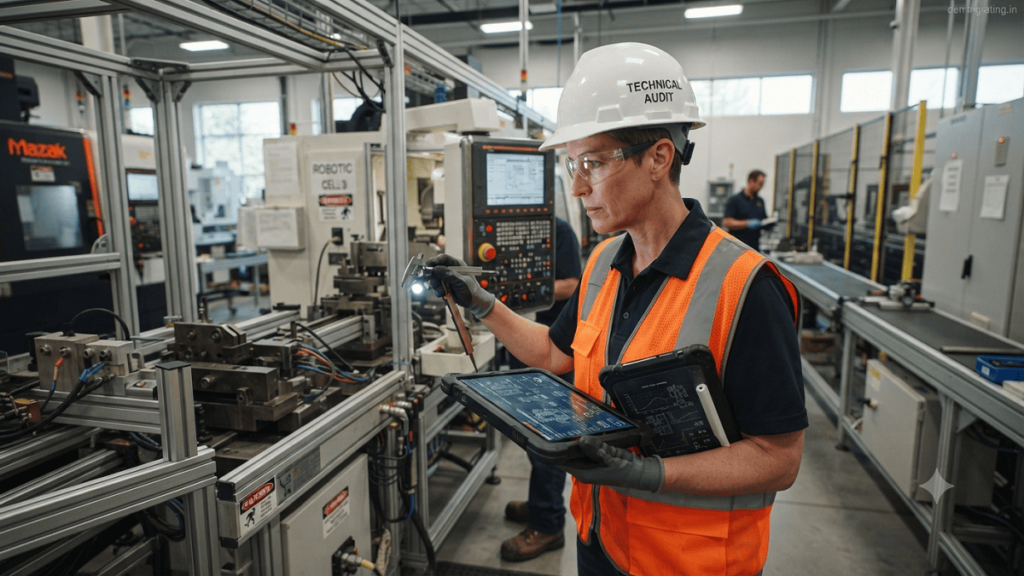
The manufacturing sector is one of the largest users of technical audits due to its dependence on machinery, automation systems, production lines, and industrial processes. Technical audits help manufacturers evaluate equipment performance, production efficiency, maintenance practices, energy consumption, and workplace safety.
Auditors inspect machinery conditions, automation controls, electrical systems, production workflows, and maintenance records to identify inefficiencies and potential failures. These assessments help manufacturers reduce equipment downtime, improve productivity, extend machinery lifespan, and implement preventive maintenance strategies.
Technical audits also support Industry 4.0 initiatives by evaluating automation readiness, digital monitoring systems, robotics integration, and data management practices.
2. Information Technology (IT) Industry
In the IT sector, technical audits are used to evaluate digital infrastructure, software systems, cybersecurity measures, networks, databases, and cloud environments. With increasing cyber threats and dependency on digital operations, organizations rely on technical audits to identify vulnerabilities and strengthen technology systems.
IT technical audits assess:
- Network performance
- Data security controls
- Software configurations
- System availability
- Backup and recovery procedures
- Access management
- Cloud infrastructure
These audits help organizations improve cybersecurity, ensure data protection, enhance system reliability, and comply with technology standards.
3. Construction and Engineering Industry
Technical audits play a significant role in construction and engineering projects by evaluating technical quality, design compliance, project execution, and material usage. They help ensure that construction activities follow approved specifications, safety standards, and engineering practices.
Construction technical audits may include assessments of:
- Project design documents
- Material quality
- Construction methods
- Equipment utilization
- Safety procedures
- Quality control systems
These audits help identify technical issues early, reduce project risks, improve construction quality, and ensure successful project completion.
4. Energy and Power Industry
The energy sector relies heavily on technical audits to maintain the reliability and efficiency of critical infrastructure such as power plants, transmission systems, renewable energy installations, and utility networks.
Auditors evaluate:
- Equipment performance
- Electrical systems
- Energy efficiency
- Safety mechanisms
- Maintenance practices
- Environmental compliance
Technical audits help energy companies reduce operational failures, improve energy efficiency, enhance safety, and maintain uninterrupted power generation and distribution.
5. Healthcare Industry
Healthcare facilities depend on advanced medical equipment, electrical systems, information technology, and specialized infrastructure. Technical audits help hospitals and healthcare organizations ensure that their systems operate safely and efficiently.
Audits commonly evaluate:
- Medical equipment performance
- Facility management systems
- Data security
- Emergency power systems
- Equipment maintenance schedules
- Regulatory compliance
Regular technical assessments help healthcare providers improve patient safety, reduce equipment failures, and maintain compliance with healthcare standards.
6. Telecommunications Industry
Telecommunication companies use technical audits to assess network infrastructure, communication systems, and service reliability. With increasing demand for high-speed connectivity, technical audits help identify network limitations and performance issues.
Auditors evaluate:
- Network capacity
- Signal quality
- Infrastructure condition
- Equipment performance
- Data transmission efficiency
- Security systems
These assessments help telecom providers improve service quality, reduce downtime, and support future network expansion.
7. Transportation and Infrastructure Industry
Technical audits are widely applied in transportation systems, including railways, airports, highways, bridges, and public infrastructure projects. These audits ensure that critical infrastructure remains safe, reliable, and operational.
Auditors assess:
- Structural systems
- Mechanical equipment
- Electrical installations
- Safety systems
- Maintenance practices
- Operational efficiency
Regular technical audits help prevent failures, improve public safety, and extend infrastructure service life.
8. Oil and Gas Industry
The oil and gas sector operates complex facilities involving pipelines, refineries, drilling equipment, storage systems, and processing plants. Technical audits help identify operational risks, equipment issues, and safety concerns.
Auditors evaluate:
- Equipment integrity
- Process systems
- Safety controls
- Environmental compliance
- Maintenance strategies
These assessments help companies improve reliability, minimize operational risks, and maintain strict safety standards.
9. Banking and Financial Services Industry
Although financial institutions primarily focus on financial operations, their dependence on technology makes technical audits essential. Banks use technical audits to evaluate IT infrastructure, cybersecurity systems, data centers, and digital banking platforms.
Technical audits help financial organizations:
- Protect customer data
- Improve system availability
- Strengthen cybersecurity
- Ensure regulatory compliance
- Reduce technology risks
10. Education Sector
Educational institutions use technical audits to evaluate campus infrastructure, digital learning systems, laboratory equipment, and IT networks. These audits help schools and universities maintain safe, efficient, and technology-enabled learning environments.
Auditors assess:
- Computer networks
- Laboratory equipment
- Safety systems
- Digital platforms
- Facility technology infrastructure
Technical audits support better resource management and improve educational technology performance.
Conclusion
Technical audits have wide-ranging applications across industries, helping organizations improve efficiency, reduce risks, maintain compliance, and optimize technical resources. Whether evaluating manufacturing equipment, IT infrastructure, energy systems, healthcare technology, or public infrastructure, technical audits provide valuable insights for better decision-making.
As industries continue adopting automation, artificial intelligence, cloud technologies, and digital transformation strategies, the importance of technical audits will continue to grow. Regular technical assessments enable organizations to maintain reliable systems, improve operational performance, and build resilient infrastructure for future challenges.
Authoritative Resources
- International Organization for Standardization (ISO): https://www.iso.org/
- National Institute of Standards and Technology (NIST): https://www.nist.gov/
- International Electrotechnical Commission (IEC): https://www.iec.ch/
- Institute of Electrical and Electronics Engineers (IEEE): https://www.ieee.org/
- International Society of Automation (ISA): https://www.isa.org/
- Information Systems Audit and Control Association (ISACA): https://www.isaca.org/
Ask FAQs
What is the purpose of a technical audit?
A technical audit is conducted to evaluate the performance, reliability, efficiency, and compliance of an organization’s technical systems, equipment, and processes. Its main purpose is to identify technical weaknesses, operational risks, outdated technologies, and opportunities for improvement. By analyzing infrastructure, maintenance practices, software systems, machinery, and technical procedures, audits help organizations improve performance, reduce failures, optimize resources, and make informed decisions regarding upgrades and investments.
How often should a technical audit be conducted?
The frequency of technical audits depends on the industry, complexity of systems, regulatory requirements, and operational risks. Organizations operating with critical infrastructure, industrial equipment, or sensitive digital systems may require annual or periodic audits. Regular technical assessments are recommended because technology, operational requirements, and industry standards continuously evolve. Conducting audits at planned intervals helps identify emerging risks, maintain system efficiency, and ensure ongoing compliance.
Who performs a technical audit?
Technical audits are performed by qualified professionals with expertise in specific technical fields. Depending on the audit scope, auditors may include engineers, IT specialists, cybersecurity experts, automation professionals, or industry-certified consultants. These experts evaluate systems using technical knowledge, industry standards, diagnostic tools, and performance analysis methods to provide accurate findings and practical recommendations.
What industries benefit from technical audits?
Technical audits are beneficial across various industries, including manufacturing, information technology, construction, energy, healthcare, telecommunications, transportation, banking, and education. Any organization that relies on technology, machinery, infrastructure, or complex operational systems can benefit from technical audits. These assessments help improve reliability, enhance safety, reduce downtime, and ensure that technical resources support business objectives effectively.
What are the outcomes of a technical audit?
A technical audit provides organizations with a detailed assessment report highlighting system performance, identified issues, risks, and improvement recommendations. The outcomes may include better equipment reliability, improved operational efficiency, enhanced cybersecurity, reduced maintenance costs, improved compliance, and optimized resource utilization. By implementing audit recommendations, organizations can strengthen their technical capabilities and improve long-term operational performance.
Table of Contents
Disclaimer: The information provided in this article is for general informational purposes only. Technical audits should be performed by qualified professionals, and recommendations should be based on a detailed assessment of the specific systems, processes, and industry requirements.