
Countries Introduction: Understanding Nations, Cultures, and Global Diversity
Countries are the foundation of the modern world, representing unique territories, governments, cultures, economies, and communities. A country is a defined geographical region that has its own government, laws, population, and sovereignty. Today, the world consists of nearly 200 recognized countries, each contributing to global development through its history, traditions, resources, and innovations.
Every country has its own identity shaped by geography, climate, language, religion, customs, and historical experiences. For example, some countries are known for advanced technology and industrial development, while others are recognized for their natural landscapes, cultural heritage, or agricultural resources. These differences create a diverse global community where nations interact through trade, tourism, education, diplomacy, and international organizations.
The political systems of countries vary widely. Some nations operate as democracies where citizens participate in government decisions through elections, while others follow different forms of governance. Governments are responsible for maintaining law and order, developing infrastructure, protecting citizens, and managing national resources.
Economically, countries differ in terms of development levels, industries, and resources. Developed countries often have strong technology, healthcare, and financial sectors, while developing countries may focus on improving infrastructure, education, and industrial growth. International cooperation helps countries address shared challenges such as climate change, economic inequality, and global health issues.
Culture is one of the most important aspects that defines a country. Languages, traditional foods, festivals, clothing, music, and art reflect the values and history of different societies. Exploring different countries allows people to understand diverse perspectives and build stronger connections across borders.
Travel and global communication have made it easier than ever to learn about countries around the world. Organizations such as the United Nations provide platforms for countries to collaborate on international issues and promote peace and sustainable development. More information about countries and global affairs can be found through resources like the United Nations website: https://www.un.org/ and the World Bank: https://www.worldbank.org/.
Understanding countries helps individuals appreciate global diversity and recognize how nations are interconnected. Whether through economic partnerships, cultural exchanges, or international cooperation, every country plays an important role in shaping the future of the world. Learning about different countries encourages respect, awareness, and a broader understanding of the global community.
What Is a Country and How Is It Defined?
A country is a distinct geographical and political area that has its own government, population, territory, and authority to manage its internal and external affairs. It is commonly understood as a sovereign state with clearly defined borders, a permanent population, and a system of governance. Countries are the primary units that make up the international community and interact with one another through diplomacy, trade, agreements, and global organizations.
The definition of a country is based on several key elements. The first requirement is territory, which refers to a specific geographic area with recognized boundaries. This territory may include land, internal waters, and airspace under the control of that country. Borders may be formed through historical agreements, treaties, geographic features, or political decisions.
The second important element is population. A country must have people who permanently live within its territory. These citizens or residents form the society of the country and contribute to its cultural, economic, and social development. Populations can vary greatly in size, from countries with millions of inhabitants to smaller nations with much smaller communities.
The third element is government. A country needs an organized political system capable of creating and enforcing laws, providing public services, maintaining security, and representing the nation internationally. Governments can take different forms, including democracies, monarchies, and other political systems.
The fourth element is sovereignty, which means that a country has the authority to govern itself without being controlled by another state. Sovereign countries can establish their own laws, manage their resources, and conduct relationships with other nations.
International recognition also plays an important role in defining a country. Organizations such as the United Nations provide platforms where countries participate in global discussions and cooperation. The commonly referenced criteria for statehood are connected to the Montevideo Convention, which outlines requirements such as a permanent population, defined territory, government, and the capacity to engage with other states. More information about international law and state relations is available through the United Nations website: https://www.un.org/.
Countries may also be identified by shared cultural elements such as language, traditions, history, and national identity. However, cultural identity alone does not determine whether a region is considered a country; political and legal factors are equally important.
In summary, a country is a combination of territory, population, government, sovereignty, and international recognition. These elements allow nations to function independently and participate in the global community. Understanding how countries are defined helps explain the structure of international relations and the way societies organize themselves around the world.
What is a country and how is it defined?
A country is a distinct geographical and political area that has its own government, population, territory, and authority to manage its internal and external affairs. It is commonly understood as a sovereign state with clearly defined borders, a permanent population, and a system of governance. Countries are the primary units that make up the international community and interact with one another through diplomacy, trade, agreements, and global organizations.
The definition of a country is based on several key elements. The first requirement is territory, which refers to a specific geographic area with recognized boundaries. This territory may include land, internal waters, and airspace under the control of that country. Borders may be formed through historical agreements, treaties, geographic features, or political decisions.
The second important element is population. A country must have people who permanently live within its territory. These citizens or residents form the society of the country and contribute to its cultural, economic, and social development. Populations can vary greatly in size, from countries with millions of inhabitants to smaller nations with much smaller communities.
The third element is government. A country needs an organized political system capable of creating and enforcing laws, providing public services, maintaining security, and representing the nation internationally. Governments can take different forms, including democracies, monarchies, and other political systems.
The fourth element is sovereignty, which means that a country has the authority to govern itself without being controlled by another state. Sovereign countries can establish their own laws, manage their resources, and conduct relationships with other nations.
International recognition also plays an important role in defining a country. Organizations such as the United Nations provide platforms where countries participate in global discussions and cooperation. The commonly referenced criteria for statehood are connected to the Montevideo Convention, which outlines requirements such as a permanent population, defined territory, government, and the capacity to engage with other states. More information about international law and state relations is available through the United Nations website: https://www.un.org/.
Countries may also be identified by shared cultural elements such as language, traditions, history, and national identity. However, cultural identity alone does not determine whether a region is considered a country; political and legal factors are equally important.
In summary, a country is a combination of territory, population, government, sovereignty, and international recognition. These elements allow nations to function independently and participate in the global community. Understanding how countries are defined helps explain the structure of international relations and the way societies organize themselves around the world.
What Are the Key Features That Make Up a Country?
A country is more than just a geographical area; it is a structured political and social entity with specific characteristics that allow it to function independently. Several key features define a country, including territory, population, government, sovereignty, and international recognition. These elements work together to establish a nation’s identity and its role within the global community.
1. Defined Territory
One of the most important features of a country is a clearly defined territory. This refers to the geographical area that falls under a country’s control, including land, water boundaries, and airspace. A country’s territory is usually established through historical agreements, treaties, geographic boundaries, or political decisions. Clearly defined borders help determine where a country’s laws and authority apply.
For example, countries may have natural boundaries such as rivers, mountains, or seas, while others have borders created through agreements between governments. Maintaining territorial integrity is a major responsibility of every country.
2. Permanent Population
A country must have a permanent population living within its territory. The people of a country form its society and contribute to its economic, cultural, and political development. Populations may include different ethnic groups, languages, religions, and cultural traditions, creating diverse societies.
Citizens generally have rights and responsibilities, such as following laws, participating in elections, and contributing to national development. Population size can vary significantly, from small island nations to countries with populations exceeding a billion people.
3. Government and Political System
A functioning government is another essential feature of a country. Governments create laws, provide public services, maintain security, manage resources, and represent the country in international affairs.
Different countries have different political systems, including democracies, constitutional monarchies, and other forms of governance. The structure of government determines how decisions are made and how authority is distributed among leaders and institutions.
4. Sovereignty
Sovereignty refers to a country’s ability to govern itself independently without external control. A sovereign country has the power to create its own laws, manage its economy, protect its borders, and establish relationships with other nations.
Sovereignty allows countries to participate in international organizations and make decisions based on their national interests.
5. International Recognition
International recognition is an important factor in establishing a country’s position in the world. A country that is recognized by other nations can participate in diplomatic relations, international agreements, and global organizations such as the United Nations. More information about global cooperation and international relations can be found at https://www.un.org/.
6. National Identity and Culture
Although not a legal requirement, national identity and culture play an important role in shaping a country. Shared traditions, languages, historical experiences, arts, and customs help create a sense of belonging among citizens.
In conclusion, the key features that make up a country are territory, population, government, sovereignty, international recognition, and cultural identity. Together, these elements create a functioning nation capable of managing its affairs and participating in the global community. Understanding these features provides a clearer view of how countries are formed and how they operate in today’s interconnected world.
How Do Countries Differ in Culture, Geography, and Economy?
Countries around the world differ significantly in their culture, geography, and economy, creating a diverse global landscape. These differences are shaped by historical events, natural resources, climate conditions, social traditions, political systems, and levels of development. Understanding these differences helps people appreciate the unique characteristics of nations and how they contribute to global cooperation.
Cultural Differences Between Countries
Culture is one of the most visible ways countries differ from one another. It includes language, traditions, customs, food, clothing, religion, art, music, and social values. Every country develops its own cultural identity based on its history and the experiences of its people.
For example, countries in Asia, Europe, Africa, and the Americas have distinct cultural practices that influence daily life, celebrations, communication styles, and family structures. Some countries may emphasize community and traditional values, while others may focus more on individual expression and modern lifestyles.
Language is another important cultural factor. Thousands of languages are spoken worldwide, and many countries have multiple languages due to diverse populations and historical influences. Cultural heritage sites, traditional festivals, and local arts also represent the identity of different nations. Organizations such as UNESCO work to protect cultural heritage around the world. More information is available at https://www.unesco.org/.
Geographical Differences Between Countries
Geography plays a major role in shaping a country’s lifestyle, resources, and development. Countries vary in size, landscapes, climates, and natural resources. Some nations have vast mountain ranges, while others consist mainly of plains, deserts, forests, or islands.
Climate influences agriculture, settlement patterns, and economic activities. Countries with fertile land may develop strong agricultural industries, while those with abundant minerals, oil, or natural resources may build economies around mining and energy production.
Geographical location also affects transportation, trade opportunities, and relationships with neighboring countries. Coastal countries often benefit from access to international shipping routes, while landlocked countries may face challenges related to transportation and trade.
Economic Differences Between Countries
Countries differ greatly in their economic structures, industries, and levels of development. Some nations have highly developed economies based on technology, finance, healthcare, and advanced manufacturing. Others rely more heavily on agriculture, natural resources, or emerging industries.
Economic differences are often measured through indicators such as Gross Domestic Product (GDP), employment rates, infrastructure, education levels, and income distribution. Organizations like the World Bank provide research and data on global economic development. More information can be found at https://www.worldbank.org/.
Developed economies often have advanced infrastructure and higher standards of living, while developing economies may focus on improving education, healthcare, industrial growth, and access to technology.
In conclusion, countries differ in culture, geography, and economy because of their unique histories, environments, resources, and social systems. These differences make the world diverse and interconnected, encouraging international cooperation, cultural exchange, and economic partnerships among nations. Understanding these variations helps individuals develop a broader perspective of global societies and their contributions to the world.
Why Is It Important to Learn About Different Countries?
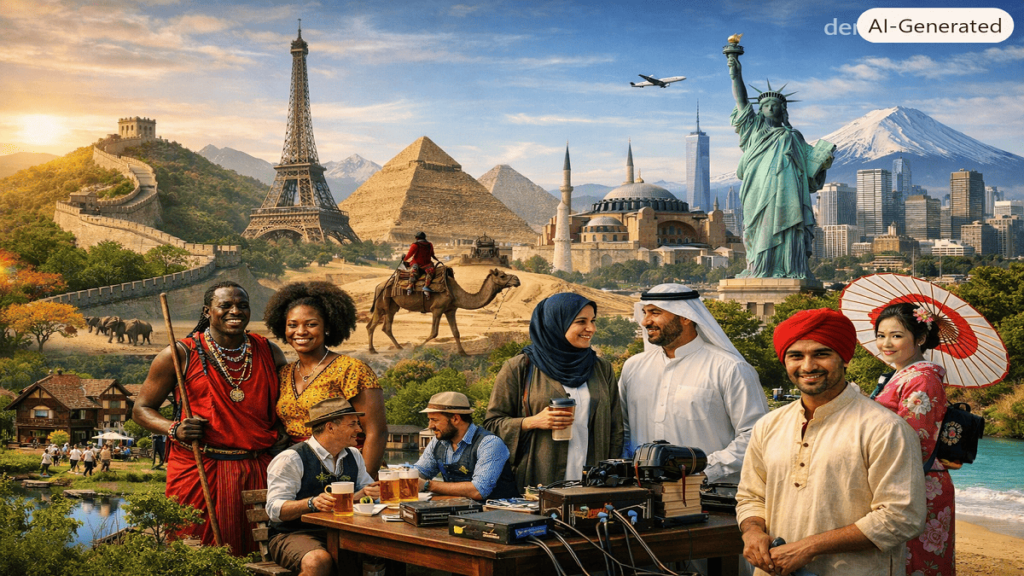
Learning about different countries is important because it helps people develop a better understanding of the world and the diverse societies that exist within it. In an increasingly connected global community, knowledge about other nations allows individuals to appreciate cultural differences, understand international issues, and build stronger relationships with people from different backgrounds.
Understanding Cultural Diversity
One of the main reasons to learn about different countries is to understand and respect cultural diversity. Every country has unique traditions, languages, customs, foods, festivals, and ways of life. Exploring these cultural differences helps reduce stereotypes and encourages respect for different perspectives.
For example, learning about another country’s history and traditions can help people understand why certain practices are important to its citizens. Cultural awareness is valuable in education, business, travel, and personal relationships because it promotes better communication and cooperation.
Organizations such as UNESCO work to preserve and promote cultural heritage around the world. More information about global cultural initiatives can be found at https://www.unesco.org/.
Expanding Knowledge and Global Awareness
Studying different countries helps people understand global events, international relationships, and worldwide challenges. Issues such as climate change, economic development, migration, public health, and international security often involve multiple countries working together.
By learning about other nations, individuals can better understand how political decisions, economic trends, and environmental changes in one part of the world can affect people elsewhere.
Improving Travel and Communication Skills
Knowledge about different countries is especially useful for travelers, students, and professionals who interact internationally. Understanding local customs, languages, social behaviors, and cultural expectations can make communication easier and create more positive experiences.
For businesses, knowledge of international markets and cultural differences is essential for building successful partnerships and serving customers from different regions.
Encouraging Global Cooperation
Learning about countries helps promote cooperation and peaceful relationships between nations. When people understand the challenges and achievements of other societies, they are more likely to support collaboration rather than conflict.
International organizations such as the United Nations provide platforms for countries to work together on issues such as peace, sustainable development, and humanitarian efforts. More details about global cooperation can be found at https://www.un.org/.
Supporting Personal Growth
Learning about different countries broadens a person’s perspective and encourages curiosity, critical thinking, and open-mindedness. It helps individuals recognize that there are many ways to solve problems and organize societies.
In conclusion, learning about different countries is important because it builds cultural understanding, improves global awareness, strengthens communication, and encourages cooperation. In today’s interconnected world, knowledge of other nations is not only valuable for education and travel but also essential for becoming an informed and responsible global citizen.
What Factors Should Be Considered When Introducing a Country?
Introducing a country requires presenting a complete overview of its identity, characteristics, and significance in the global community. A well-rounded introduction should include information about its geography, history, culture, government, economy, population, and unique features. These factors help readers understand what makes a country distinct and how it contributes to the world.
1. Geographic Location and Physical Features
The first factor to consider when introducing a country is its geographical location. This includes its position on the world map, neighboring countries, land area, climate, landscapes, and natural resources. Geography influences many aspects of a country’s development, including agriculture, industries, transportation, and lifestyle.
For example, countries with coastal regions may have strong fishing and maritime industries, while countries with large forests or mineral resources may develop economies based on natural resources. Information about geography helps explain how the environment shapes the lives of people living in a country.
2. History and Heritage
A country’s history provides important context about its identity and development. Historical events such as independence movements, major conflicts, political changes, and cultural achievements influence how a nation has evolved over time.
Understanding a country’s heritage also includes learning about historical monuments, traditional practices, and important figures who have contributed to its development. Historical knowledge helps explain the values and traditions that shape modern society.
3. Population and Demographics
Population information is another important factor when introducing a country. This includes the number of people, population distribution, languages spoken, ethnic diversity, and social characteristics.
A country’s population influences its workforce, cultural identity, urban development, and economic growth. Countries with diverse populations often have a wide range of traditions, languages, and cultural practices.
4. Government and Political System
A country’s government structure is essential for understanding how it operates. An introduction should include information about its political system, leadership structure, laws, and administrative divisions.
Government policies influence areas such as education, healthcare, economic development, and international relations. Understanding the political system provides insight into how decisions are made within the country.
5. Economy and Major Industries
The economic structure of a country is another key factor. This includes major industries, trade activities, natural resources, employment sectors, and economic development levels.
Some countries are known for technology and manufacturing, while others depend on agriculture, tourism, energy, or financial services. Reliable economic information can be explored through resources such as the World Bank website: https://www.worldbank.org/.
6. Culture and Lifestyle
Culture plays a major role in defining a country’s identity. Important cultural elements include languages, religions, food, festivals, music, art, clothing, and social traditions.
Introducing cultural aspects allows people to understand the values, beliefs, and daily experiences of a country’s population. Cultural information also encourages respect and appreciation for global diversity.
7. International Role and Relations
A country’s position in the international community is also important. This includes its relationships with other nations, participation in international organizations, and contributions to global issues.
Organizations such as the United Nations provide opportunities for countries to cooperate on issues such as peace, development, and environmental protection. More information is available at https://www.un.org/.
In conclusion, introducing a country requires considering multiple factors, including geography, history, population, government, economy, culture, and global influence. These elements provide a complete picture of a nation and help readers understand its unique identity, achievements, and role in the world.
Case Study of Countries Introduction: Understanding Japan as an Example
Introducing a country through a case study provides a practical way to understand its geography, history, culture, economy, and global importance. Japan is an excellent example of how a country’s unique characteristics shape its identity and development. Located in East Asia, Japan is known for its rich cultural heritage, advanced technology, strong economy, and significant influence in international affairs.
Geographic Overview
Japan is an island country located in the Pacific Ocean, consisting of thousands of islands, with the four main islands being Honshu, Hokkaido, Kyushu, and Shikoku. The country has a mountainous landscape, limited flat land, and is located in a region that experiences earthquakes and volcanic activity.
Japan’s geography has influenced its way of life, urban development, and industries. Because of limited agricultural land, the country has developed advanced farming techniques and relies on efficient use of resources. Its coastal location has also supported strong fishing and maritime industries.
Historical Background
Japan has a long and complex history that has shaped its modern identity. The country developed a unique culture influenced by traditional practices, including the samurai heritage, tea ceremonies, literature, and arts. During the late 19th and early 20th centuries, Japan experienced rapid modernization and industrial growth.
After World War II, Japan focused on rebuilding its economy and became one of the world’s leading industrial nations. Its transformation from a war-damaged country into a global economic power is considered one of the most significant examples of economic development in modern history.
Culture and Society
Japanese culture is recognized worldwide for its combination of traditional values and modern innovation. Traditional elements such as temples, festivals, calligraphy, and martial arts exist alongside modern influences such as animation, technology, and popular entertainment.
Respect, discipline, teamwork, and attention to detail are important cultural values in Japanese society. The country’s cuisine, including sushi, ramen, and other regional foods, has also gained international popularity.
Economy and Development
Japan has one of the largest economies in the world and is recognized for industries such as automobiles, electronics, robotics, and advanced manufacturing. Companies from Japan have contributed significantly to global technology and innovation.
Organizations such as the World Bank provide economic research and development data about countries worldwide. More information can be found at https://www.worldbank.org/.
Global Influence
Japan plays an important role in international cooperation through trade, technology, environmental initiatives, and diplomacy. It is a member of major international organizations and contributes to global discussions on economic development, innovation, and sustainability.
The United Nations provides a platform for Japan and other nations to collaborate on international challenges such as peace, climate change, and humanitarian development. More information is available at https://www.un.org/.
Conclusion
The case study of Japan demonstrates how geography, history, culture, and economic strategies combine to shape a country’s identity. By examining individual countries in detail, people can better understand the diversity of nations and the factors that contribute to their development. Country introductions through case studies provide valuable insights into how different societies evolve and interact within the global community.
White Paper on Countries Introduction: Understanding the Foundations, Identity, and Global Role of Nations
Executive Summary
Countries are the fundamental building blocks of the international system, representing unique territories, populations, governments, cultures, and economies. A country is not simply a geographical location; it is a complex social and political structure that reflects the history, values, resources, and aspirations of its people. Understanding countries and their characteristics is essential for analyzing global relationships, economic development, cultural diversity, and international cooperation.
This white paper provides an overview of the key elements that define countries, including their formation, geographic characteristics, governance systems, economic structures, cultural identities, and roles in global affairs.
1. Introduction to Countries
A country is generally defined as a sovereign territory with a permanent population, established government, defined borders, and the ability to engage in international relations. Countries operate independently while participating in global networks involving trade, diplomacy, security, education, and environmental cooperation.
The modern world consists of nearly 200 recognized countries, each with different political systems, economic conditions, and cultural backgrounds. These differences contribute to the complexity and diversity of global society.
International organizations such as the United Nations provide frameworks for cooperation between nations on issues such as peace, development, human rights, and sustainability. Further information about international cooperation can be found at https://www.un.org/.
2. Key Components That Define a Country
2.1 Territory and Geography
A country requires a clearly defined territory with recognized borders. Geography plays a major role in shaping a nation’s development by influencing climate, natural resources, transportation systems, agriculture, and population distribution.
Countries with abundant natural resources may develop industries based on energy, mining, or agriculture, while nations with limited resources often focus on innovation, technology, and trade.
2.2 Population and Society
A country’s population forms the foundation of its social and economic structure. Population characteristics include size, age distribution, languages, ethnic diversity, education levels, and cultural traditions.
Human resources are essential for economic growth, innovation, and social development. Countries invest in education, healthcare, and skills development to improve quality of life and national productivity.
2.3 Government and Political Structure
Governance determines how a country is managed and how decisions are made. Governments establish laws, provide public services, maintain security, and represent national interests internationally.
Political systems vary across countries, including democratic systems, constitutional monarchies, and other forms of governance. Each system influences how citizens participate in decision-making and how national policies are developed.
2.4 Economy and Development
Economic structure is a major factor in understanding a country’s position in the world. Economies may depend on industries such as manufacturing, agriculture, technology, tourism, finance, or natural resources.
Economic indicators such as Gross Domestic Product (GDP), employment rates, infrastructure, and income levels help measure development progress. The World Bank provides research and data on global economic development. More information is available at https://www.worldbank.org/.
3. Cultural Identity and Diversity
Culture represents the values, traditions, beliefs, and practices that distinguish one country from another. Language, food, music, art, literature, religion, and festivals contribute to national identity.
Cultural diversity allows countries to share knowledge, creativity, and traditions with the global community. Protecting cultural heritage is an important part of maintaining national identity while encouraging international understanding.
Organizations such as UNESCO support the preservation of cultural and historical heritage worldwide. More information can be found at https://www.unesco.org/.
4. Role of Countries in Global Affairs
Countries are interconnected through international trade, diplomacy, technology exchange, migration, and environmental cooperation. Modern challenges such as climate change, cybersecurity, economic inequality, and global health require cooperation between nations.
Countries participate in international agreements and organizations to address shared problems and promote sustainable development. Strong international relationships help improve economic opportunities, security, and social progress.
5. Importance of Studying Countries
Understanding countries provides valuable knowledge about global diversity and international relations. It helps individuals, businesses, researchers, and policymakers make informed decisions by considering different cultural, economic, and political environments.
Knowledge of countries supports:
- Better cross-cultural communication
- Improved international business strategies
- Increased awareness of global challenges
- Stronger diplomatic relationships
- Greater appreciation of cultural diversity
Conclusion
Countries are complex systems shaped by geography, history, culture, governance, and economic development. Each nation has unique characteristics that influence its identity and role in the world. Studying countries provides a deeper understanding of global connections and highlights the importance of cooperation among nations.
A comprehensive introduction to countries helps individuals recognize both the differences and similarities that exist across societies. In an increasingly interconnected world, understanding countries is essential for promoting collaboration, innovation, and sustainable global development.
Industry Application of Countries Introduction: Understanding the Role of National Characteristics in Global Industries
Introduction
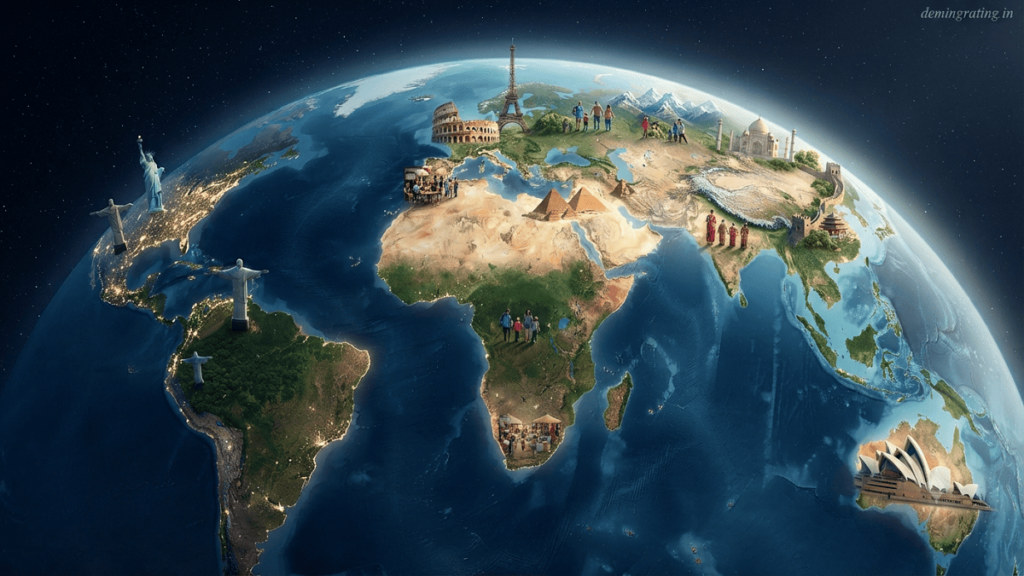
A country’s geography, resources, workforce, infrastructure, policies, and cultural characteristics significantly influence the development of industries within its borders. Understanding a country’s background is essential for businesses, investors, governments, and organizations because it helps identify opportunities, challenges, and market potential. A comprehensive introduction to a country provides valuable insights into how industries operate, grow, and compete in the global economy.
Countries differ in their industrial strengths based on factors such as natural resources, technological capabilities, economic conditions, government policies, and consumer behavior. These differences determine which industries become major contributors to national growth and international trade.
1. Manufacturing and Industrial Development
Country introductions play an important role in understanding manufacturing opportunities. Nations with strong infrastructure, skilled labor, and advanced technology often become global manufacturing centers.
For example, countries such as Japan, Germany, and South Korea have developed strong manufacturing industries due to their focus on engineering, innovation, quality standards, and research. Information about industrial development helps companies identify suitable locations for production, supply chains, and partnerships.
Businesses analyze factors such as labor availability, transportation networks, energy resources, and government regulations before establishing manufacturing operations in a country.
2. International Trade and Business Expansion
Understanding a country’s economic environment is essential for companies planning international expansion. A country introduction provides information about trade policies, market size, consumer demand, and economic stability.
Companies use this knowledge to determine export opportunities, establish partnerships, and adapt products according to local preferences. For example, businesses entering a new market must consider language, cultural practices, purchasing behavior, and legal requirements.
Organizations such as the World Trade Organization support international trade cooperation and provide information about global trade systems. More details can be found at https://www.wto.org/.
3. Tourism and Hospitality Industry
Country characteristics are highly important in the tourism sector. Natural landscapes, historical attractions, cultural traditions, and local experiences influence tourism development.
Countries with beaches, mountains, heritage sites, or unique cultural experiences often build strong tourism industries. Understanding a country’s geography and culture helps tourism companies design better travel experiences and promote destinations effectively.
Tourism also supports related industries such as transportation, food services, accommodation, and local businesses.
4. Technology and Innovation Sectors
A country’s education system, research capabilities, and investment environment influence its technology industry. Countries that prioritize innovation, digital infrastructure, and scientific research often become leaders in technology-based industries.
Technology companies consider factors such as skilled professionals, startup ecosystems, intellectual property protection, and government support when choosing locations for research and development activities.
5. Agriculture and Natural Resource Industries
Geography and climate have a direct impact on agriculture and resource-based industries. Countries with fertile land, favorable climates, forests, minerals, or energy resources often develop industries based on these advantages.
Understanding environmental conditions helps organizations plan sustainable resource management and agricultural development. International institutions such as the Food and Agriculture Organization of the United Nations provide research and guidance on global agriculture and food systems. More information is available at https://www.fao.org/.
6. Financial and Investment Applications
Country introductions are valuable for investors evaluating new markets. Economic indicators, political stability, regulations, and infrastructure help determine investment opportunities and risks.
Investors study countries to understand market potential, business conditions, and long-term growth opportunities. Reliable economic data from organizations such as the World Bank helps businesses and policymakers analyze development trends. More information can be found at https://www.worldbank.org/.
Conclusion
The introduction of a country has significant applications across multiple industries, including manufacturing, trade, tourism, technology, agriculture, and finance. By understanding a country’s geography, economy, culture, and political environment, organizations can make informed decisions and develop effective strategies.
In today’s globalized economy, knowledge of countries is essential for identifying opportunities, managing international operations, and building successful cross-border partnerships. A detailed understanding of national characteristics allows industries to adapt, innovate, and contribute to sustainable economic growth worldwide.
Ask FAQs
What is the basic definition of a country?
A country is a defined geographical and political region that has its own territory, population, government, and sovereignty. It operates independently and has the authority to create laws, manage resources, and establish relationships with other nations. A country’s identity is shaped by factors such as its history, culture, economy, and political system. International recognition also plays an important role in determining a country’s status within the global community.
What are the main features that define a country?
The main features of a country include a defined territory, permanent population, government, sovereignty, and international recognition. Territory refers to the land and borders controlled by the country. A permanent population provides the social foundation of the nation. A government manages laws, public services, and national policies. Sovereignty allows a country to govern itself without external control, while international recognition enables it to participate in global relations and organizations.
Why is it important to learn about different countries?
Learning about different countries helps people understand global diversity, cultural differences, economic systems, and international relationships. It improves awareness of global issues such as climate change, trade, migration, and development. Knowledge about other countries also supports better communication, international business cooperation, travel experiences, and respect for different traditions and perspectives.
How do countries differ from one another?
Countries differ based on their geography, culture, history, political systems, and economic conditions. Geographic differences include climate, natural resources, landscapes, and location. Cultural differences involve languages, traditions, religions, food, arts, and social values. Economic differences are influenced by industries, resources, technology, infrastructure, and levels of development. These variations create unique national identities and roles in the global community.
How do industries use information about countries?
Industries use country information to evaluate business opportunities, investment potential, and market conditions. Companies analyze factors such as economic stability, workforce skills, infrastructure, consumer behavior, resources, and government policies before entering new markets. Understanding a country helps businesses develop effective strategies in sectors such as manufacturing, tourism, technology, agriculture, trade, and finance. Reliable information from organizations such as the World Bank (https://www.worldbank.org/.
Table of Contents
Disclaimer:
The information provided is for general informational and educational purposes only. While efforts are made to ensure accuracy, readers should verify details from official sources before making decisions based on the information presented.