
Organic Waste Management, Post-Occupancy
Organic Waste Management, Post-Occupancy focuses on how organic waste generated after a building becomes operational can be effectively collected, processed, and diverted from landfill. It includes food scraps, garden and landscape waste, biodegradable materials, and other organic waste produced by occupants, restaurants, offices, residential communities, and facility operations.
Effective post-occupancy organic waste management begins with source segregation. Separate collection of food Sustainable Organic Waste Management and garden waste prevents contamination and makes organic material suitable for composting, anaerobic digestion, or other recovery processes. Building management teams should provide clearly identified collection points, appropriate containers, tenant guidance, and regular monitoring to encourage correct disposal practices.
Composting is one of the most practical solutions for managing organic waste. Properly processed organic material can be converted into compost that supports soil health and landscaping activities. Anaerobic digestion provides another option, breaking down organic waste in controlled conditions to produce biogas and digestate. The U.S. Environmental Protection Agency (EPA) recognizes composting and anaerobic digestion as important approaches for managing food waste and recovering value from organic materials. (EPA)
Post-occupancy management also requires ongoing measurement and operational planning. Facility managers can track the amount of organic waste generated, contamination rates, collection frequency, diversion rates, and the final destination of recovered materials. This data can identify opportunities to improve waste separation Sustainable Organic Waste Management and reduce unnecessary disposal.
Food waste prevention should remain a priority. Purchasing controls, portion management, food donation, inventory monitoring, Sustainable Organic Waste Management and occupant education can reduce the quantity of organic waste generated before recycling or composting becomes necessary. The EPA’s sustainable food-management hierarchy places source reduction and food donation above recycling and disposal because preventing waste generally provides greater environmental benefits.
In commercial and residential buildings, successful programs depend heavily on occupant participation. Clear signage, convenient collection stations, staff training, regular communication, and feedback can improve participation and reduce contamination. Building owners can also include organic waste requirements in facility-management contracts and tenant agreements.
Post-occupancy organic waste management can deliver several sustainability benefits. It can reduce landfill disposal, conserve landfill capacity, recover nutrients, support soil improvement, and potentially generate renewable energy through anaerobic digestion. It can also contribute to broader circular-economy objectives by transforming waste into useful resources.
Ultimately, organic waste management should be treated as an ongoing building-management responsibility, not simply a construction-stage sustainability feature. A well-designed post-occupancy program combines waste prevention, source separation, collection, biological processing, monitoring, occupant engagement, Waste Management and continuous improvement to create a more resource-efficient and environmentally responsible building.
Relevant External Resources
- U.S. EPA — Composting
- U.S. EPA — Food Recovery Hierarchy
- U.S. EPA — Sustainable Management of Food
- U.S. Green Building Council — LEED
#SustainableConstruction
What Is Organic Waste Management During the Post-Occupancy Phase of a Building?
Organic waste management during the post-occupancy phase refers to the systems, procedures, and operational practices used to prevent, separate, collect, process, and recover biodegradable waste generated after a building becomes occupied. Unlike construction-stage waste management, which focuses on materials generated during building activities, post-occupancy management addresses waste produced through everyday building operations. This may include food scraps, kitchen waste, garden and landscape trimmings, and other biodegradable materials generated by residents, employees, visitors, restaurants, cafeterias, and facility-management activities.
Source Separation and Collection
An effective organic waste management program begins with source separation. Organic materials should be separated from general waste and recyclable materials as close as possible to where the waste is generated. Clearly marked collection containers, appropriate signage, convenient locations, and regular collection schedules can help reduce contamination and improve recovery rates.
In commercial buildings, organic waste may come primarily from cafeterias, restaurants, kitchens, and food-service areas. Residential buildings may generate organic waste through household food preparation and landscaping. The exact collection system should therefore be designed around the building’s occupancy type and waste profile.
Processing and Resource Recovery
Once collected, organic waste can be directed to suitable recovery processes. Composting converts organic material into a stable soil amendment that can be used in landscaping and agriculture. Anaerobic digestion uses microorganisms to break down organic waste in an oxygen-free environment, producing biogas and a nutrient-rich digestate. The U.S. Environmental Protection Agency (EPA) identifies composting and anaerobic digestion as important options for recovering value from food and other organic materials.
However, recycling organic waste should not be the first priority when the waste can be prevented. The EPA’s Food Recovery Hierarchy places source reduction and food donation above recycling Waste Management and disposal because preventing food waste can provide greater environmental benefits.
Role of Building Management
Post-occupancy organic waste management requires continuous involvement from facility managers and building operators. Management teams can monitor waste quantities, contamination levels, collection performance, and diversion rates. They can also train cleaning staff, communicate procedures to occupants, coordinate with waste contractors, and periodically review the system.
Education is particularly important because even a well-designed collection system can perform poorly if occupants do not understand what belongs in each container. Clear visual instructions and convenient collection points can improve participation.
Sustainability Benefits
Effective organic waste management can reduce the amount of biodegradable waste sent to landfills while recovering valuable nutrients and materials. Composting can produce useful soil amendments, while anaerobic digestion can generate renewable biogas. These practices support a more circular approach to resource management, where organic materials are returned to productive use rather than simply discarded.
Ultimately, post-occupancy organic waste management should be viewed as an ongoing component of building operations. By combining waste prevention, source separation, efficient collection, resource recovery, occupant engagement, and performance monitoring, buildings can reduce their environmental impact and operate more sustainably throughout their useful life.
Relevant External Resources
- U.S. EPA — Composting
- U.S. EPA — Food Recovery Hierarchy
- U.S. EPA — Sustainable Management of Food
- U.S. Green Building Council — LEED
#GreenBuilding
What Types of Organic Waste Are Commonly Generated by Occupants and Building Operations?
Organic waste generated during the post-occupancy phase of a building comes primarily from the everyday activities of occupants, food-service operations, landscaping, cleaning, and facility management. Identifying these waste streams is an important first step in developing an effective organic waste management program. The exact composition varies according to the building type, occupancy, location, Waste Management and services provided.
1. Food Waste
Food waste is one of the most common organic waste streams in occupied buildings. It can include fruit and vegetable peels, food scraps, spoiled food, leftovers, coffee grounds, tea leaves, eggshells, and other biodegradable kitchen materials. Offices with cafeterias, restaurants, hotels, schools, hospitals, and residential buildings can generate significant quantities of food waste.
The U.S. Environmental Protection Agency (EPA) recommends prioritizing food waste prevention and donation where possible, followed by recycling methods such as composting and anaerobic digestion. (EPA)
2. Yard and Landscape Waste
Buildings with gardens, lawns, trees, and landscaped areas can generate substantial quantities of green waste. Common examples include grass clippings, fallen leaves, branches, weeds, flowers, pruning residues, and other plant materials.
These materials can often be composted, mulched, or processed into useful soil amendments rather than being mixed with general waste. Proper management can reduce disposal volumes while returning organic matter and nutrients to landscaping systems.
3. Paper and Biodegradable Fiber
Certain paper products can also contribute to the organic waste stream, particularly when they are contaminated with food and therefore unsuitable for conventional paper recycling. Examples include used paper towels, napkins, food-soiled paper packaging, and some compostable food-service products.
However, not every paper product should automatically be placed in an organic waste container. Local composting facilities determine which materials they can accept, so building operators should follow the requirements of their waste-processing provider.
4. Kitchen and Food-Service Waste
Commercial kitchens can produce additional organic waste through food preparation and service activities. This includes vegetable trimmings, meat and seafood scraps, bones, expired ingredients, coffee grounds, and food residues. Hotels, restaurants, cafeterias, and institutional kitchens may therefore require dedicated collection systems and frequent waste removal.
5. Organic Waste from Building Maintenance
Routine property maintenance can produce smaller organic waste streams, including plant residues from pruning, dead plants, and other biodegradable landscaping materials. In some buildings, maintenance contractors may also generate organic waste during seasonal landscaping activities.
6. Other Biodegradable Materials
Some buildings may generate additional biodegradable materials such as untreated wood, certain natural-fiber products, or certified compostable packaging. Their acceptance depends on local waste-management infrastructure and processing requirements.
Importance of Identifying Waste Streams
Understanding the types and quantities of organic waste generated allows facility managers to select appropriate collection containers, determine collection frequency, reduce contamination, and identify opportunities for prevention and recovery. A waste audit can help establish a baseline and reveal which activities generate the greatest quantities.
Ultimately, effective post-occupancy organic waste management depends on source reduction, proper separation, reliable collection, and suitable recovery methods. By understanding the building’s specific organic waste profile, owners and facility managers can develop systems that reduce landfill disposal and support composting, anaerobic digestion, or other beneficial uses.
Relevant External Resources
#CircularEconomy
How Can Organic Waste Be Segregated, Collected, Composted, and Processed After Occupancy?
Effective organic waste management after building occupancy requires a coordinated system that moves biodegradable materials from the point of generation to an appropriate recovery facility. The process generally involves source segregation, collection, transportation, pre-processing, composting or anaerobic digestion, and beneficial use of the final products. A well-designed system can reduce landfill disposal while recovering nutrients, organic matter, and, through anaerobic digestion, renewable energy. The U.S. Environmental Protection Agency (EPA) identifies composting and anaerobic digestion as important pathways for managing food scraps and other organic materials.
1. Segregate Organic Waste at Source
The process should begin where waste is generated. Occupants, kitchens, cafeterias, restaurants, housekeeping teams, and landscaping staff should have clearly identified containers for organic materials.
Typical materials include food scraps, fruit and vegetable waste, coffee grounds, tea leaves, eggshells, leaves, grass clippings, and other locally accepted biodegradable materials. Food-soiled paper may also be accepted by some composting programs, depending on the processing facility’s requirements.
Separate collection is important because contamination from plastics, glass, metals, chemicals, and other non-compostable materials can reduce the quality of recovered organic material. EPA guidance notes that source separation can produce cleaner feedstocks and support better material recovery.
2. Establish Convenient Collection Systems
Buildings should provide appropriately sized organic-waste bins at kitchens, food-service areas, common spaces, and other locations where organic waste is generated. Containers should have clear signage explaining what can and cannot be deposited.
Collection frequency should be based on the quantity and type of waste generated. Food waste generally requires more frequent collection than dry landscape materials because it can produce odors and attract pests if stored improperly.
Building management should also train cleaning and maintenance staff and communicate procedures to occupants. Regular inspections can identify contamination and determine whether additional education or changes to collection locations are required.
3. Transport and Pre-Process the Waste
Separated organic waste should be transferred to an on-site treatment system or transported to an appropriate composting or anaerobic-digestion facility. Before processing, organic materials may require sorting, screening, grinding, or removal of packaging and other contaminants. EPA describes pre-processing as an important step for preparing organic feedstocks for treatment.
For larger buildings, on-site equipment may be appropriate if sufficient space, operational capacity, and local regulatory approvals are available. Smaller buildings may find it more practical to use a contracted organic-waste collection service.
4. Compost Organic Materials
Composting is an aerobic biological process in which microorganisms break down organic materials in the presence of oxygen. Successful composting requires suitable levels of moisture, oxygen, carbon, nitrogen, and appropriate material structure.
Food scraps can be combined with suitable carbon-rich materials such as dry leaves or untreated wood chips. The resulting compost can be used as a soil amendment for landscaping, gardens, and other appropriate applications. EPA notes that compost returns organic matter and nutrients to soil and can support soil health and water retention.
5. Consider Anaerobic Digestion
Where suitable infrastructure exists, organic waste can also be sent to an anaerobic digestion facility. In this process, microorganisms break down organic materials without oxygen, producing biogas and digestate. Biogas can be captured and used as a renewable energy source, while appropriately managed digestate can be used for beneficial applications such as soil amendments.
Anaerobic digestion can accept food waste, fats, oils, greases, and other suitable organic feedstocks, although acceptance criteria vary between facilities.
6. Monitor and Improve the System
Post-occupancy management should include regular measurement of waste quantities, contamination rates, collection frequency, and diversion performance. Building operators can conduct waste audits and use the results to improve bin placement, signage, staff training, and collection contracts.
Ultimately, the most effective approach follows a hierarchy: prevent organic waste where possible, separate unavoidable waste at source, recover it through composting or anaerobic digestion, and monitor the system continuously. By integrating these practices into everyday building operations, post-occupancy organic waste can become a valuable resource rather than simply a disposal burden.
Relevant External Resources
- U.S. EPA — Approaches to Composting
- U.S. EPA — Composting
- U.S. EPA — Basic Information About Anaerobic Digestion
- U.S. EPA — Environmental Benefits of Anaerobic Digestion
- U.S. EPA — Source Separation Best Practices
#AnaerobicDigestion
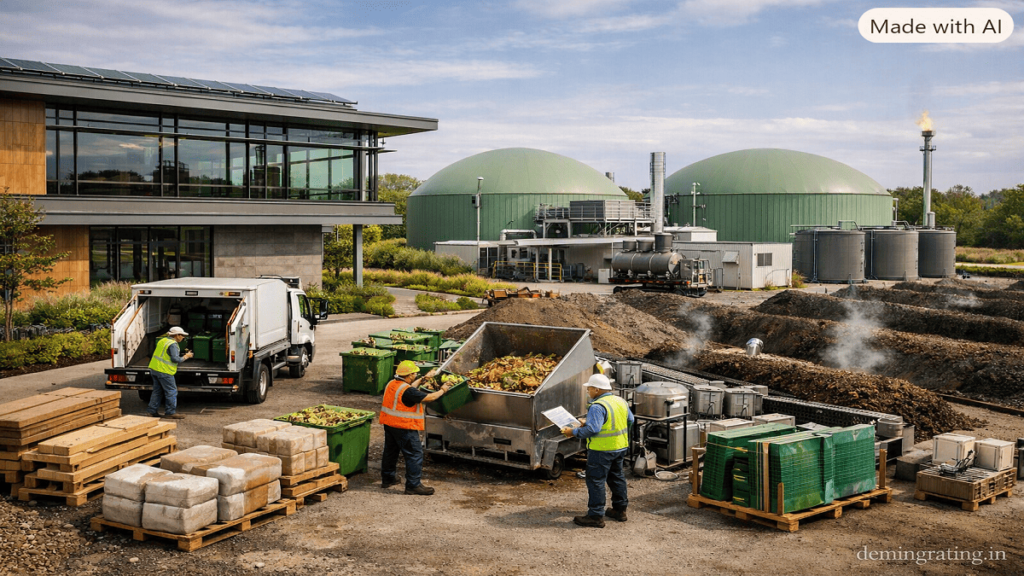
How Can On-Site Composting, Biogas Generation, or Authorized Organic-Waste Processing Reduce Waste Sent to Landfills?
On-site composting, biogas generation, and authorized organic-waste processing are effective strategies for reducing the quantity of biodegradable waste sent to landfills after a building becomes operational. These approaches divert food scraps, garden waste, and other suitable organic materials from the conventional waste stream and convert them into useful resources such as compost, renewable energy, or nutrient-rich digestate. The U.S. Environmental Protection Agency (EPA) identifies composting and anaerobic digestion as important alternatives to landfilling organic materials.
On-Site Composting
On-site composting involves processing organic waste at or near the building where it is generated. Offices, residential communities, schools, hotels, restaurants, and institutional facilities can potentially compost suitable food scraps and landscape waste on their own premises.
Instead of transporting organic waste to a landfill, the building can use an appropriately designed composting system to biologically break down the material under controlled aerobic conditions. The resulting compost can potentially be used for gardens, landscaping, soil improvement, and other approved applications. EPA notes that on-site composting can reduce hauling costs, support sustainability goals, and produce a useful soil amendment.
Biogas Generation Through Anaerobic Digestion
Anaerobic digestion provides another recovery option. In this process, microorganisms break down suitable organic materials in the absence of oxygen. The process produces biogas, which can be captured and used as a renewable energy source, as well as digestate, which can have beneficial soil-related applications when appropriately processed and managed.
Sending organic waste to an anaerobic digestion facility prevents that material from entering a landfill, where uncontrolled decomposition can generate methane. EPA identifies diversion of food scraps, fats, oils, greases, and yard waste to anaerobic digesters as a strategy for reducing landfill-related environmental impacts.
Authorized Organic-Waste Processing
Buildings that cannot process organic waste on-site can contract with an authorized composting or anaerobic-digestion facility. Source-separated organic waste can be collected and transported to a facility that is permitted or otherwise authorized under applicable local requirements.
This approach is particularly useful for buildings that have limited space, large waste volumes, or insufficient staff and equipment for on-site processing. EPA recommends using appropriate permitted facilities and establishing contracts that direct collected organic materials toward productive recovery rather than disposal.
Reducing Landfill Impacts
Keeping organic waste out of landfills provides two major benefits: it reduces the volume of material requiring disposal and allows useful resources to be recovered. Organic materials represent a significant portion of landfill waste, and their decomposition under landfill conditions can produce methane, a potent greenhouse gas. Composting and anaerobic digestion provide controlled alternatives that recover nutrients, organic matter, or energy.
For building owners and facility managers, the most effective strategy is to combine waste prevention, source segregation, convenient collection, appropriate processing, and continuous monitoring. The choice between on-site composting, anaerobic digestion, and authorized off-site processing should depend on waste quantities, available space, local regulations, operating capacity, contamination levels, and nearby processing infrastructure.
Ultimately, these systems transform organic waste from a disposal burden into a potential resource while reducing the amount of waste sent to landfills and supporting more sustainable post-occupancy building operations.
Relevant External Resources
- U.S. EPA — Composting
- U.S. EPA — Approaches to Composting
- U.S. EPA — Environmental Benefits of Anaerobic Digestion
- U.S. EPA — Industrial Uses for Wasted Food
- U.S. EPA — Productive Market Use of Organic Materials
#Composting
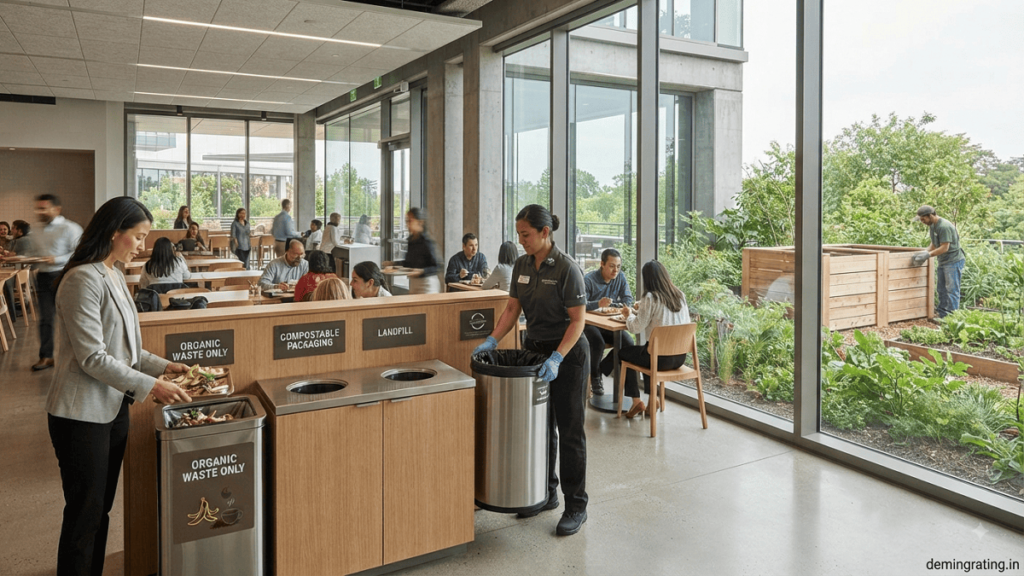
What Are the Environmental, Economic, and Operational Benefits of Effective Post-Occupancy Organic Waste Management?
Effective post-occupancy organic waste management provides important environmental, economic, and operational benefits for buildings throughout their operational life. By separating food scraps, landscape waste, and other biodegradable materials from general waste, building owners and facility managers can reduce landfill disposal and direct organic materials toward composting, anaerobic digestion, or other authorized recovery processes. The U.S. Environmental Protection Agency (EPA) identifies composting and anaerobic digestion as important strategies for diverting organic materials from landfills and recovering their value.
Environmental Benefits
The most significant environmental benefit is reduced landfill disposal. When food and other organic materials decompose under anaerobic conditions in landfills, they can generate methane, a potent greenhouse gas. Separating these materials for composting or anaerobic digestion can reduce the quantity of organic waste entering landfills and associated methane emissions. EPA reports that food represents a substantial portion of municipal solid waste sent to landfills and identifies organic-waste diversion as an important methane-reduction strategy.
Composting also transforms organic waste into a useful soil amendment. Finished compost can improve soil organic matter, nutrient availability, water retention, and soil structure while reducing erosion and supporting healthier vegetation.
Anaerobic digestion provides another environmental benefit by producing biogas and digestate. Biogas can be recovered as a renewable energy source, while appropriately managed digestate can provide nutrients and organic matter for beneficial soil applications.
Economic Benefits
Organic waste recovery can create economic value by reducing disposal requirements and supporting markets for compost, recovered nutrients, and renewable energy. Composting and organic-material recovery can also support local businesses and employment. EPA notes that composting can create green jobs and that organic recycling activities contribute to local economic development.
Buildings may also achieve savings through better waste management efficiency. Separating organic waste can reduce the volume of general waste requiring conventional disposal, potentially lowering hauling or disposal expenses depending on local waste contracts and infrastructure.
For facilities with significant food-service operations, preventing food waste can provide even greater financial benefits because purchasing less food that ultimately becomes waste directly reduces operating costs. EPA’s sustainable food-management approach emphasizes waste prevention as a high-value strategy for both environmental and economic reasons.
Operational Benefits
From an operational perspective, a structured organic-waste program creates a clearer and more measurable waste-management system. Dedicated collection points, defined procedures, staff training, and regular waste audits can improve segregation and reduce contamination.
Facility managers can monitor indicators such as organic waste quantities, diversion rates, contamination levels, collection frequency, and disposal costs. This information helps identify inefficiencies and improve building operations over time.
A successful program can also improve occupant awareness and participation. Clear signage, convenient collection bins, and regular communication encourage residents, employees, visitors, and food-service staff to follow waste-separation procedures.
Supporting Long-Term Building Sustainability
Post-occupancy organic waste management contributes to a broader circular-economy approach by treating organic materials as resources rather than disposable waste. Instead of sending nutrients and organic matter to landfill, buildings can return these resources to productive uses through composting or energy recovery.
Ultimately, the greatest benefits occur when buildings combine waste prevention, source segregation, efficient collection, composting or anaerobic digestion, monitoring, and continuous improvement. This integrated approach can reduce environmental impacts, support economic value, improve operational efficiency, and strengthen the overall sustainability performance of an occupied building.
Relevant External Resources
- U.S. EPA — Composting
- U.S. EPA — Sustainable Management of Food
- U.S. EPA — Benefits of Using Compost
- U.S. EPA — Environmental Benefits of Anaerobic Digestion
- U.S. EPA — Community Composting
#WasteManagement
Case Study of Organic Waste Management, Post-Occupancy
A strong example of post-occupancy organic waste management in India is the Amrita Institute of Medical Sciences (AIMS) in Kochi, Kerala. The 1,450-bed super-specialty hospital developed an integrated waste-management approach with the objective of moving toward zero waste. According to a case study published by Amrita Vishwa Vidyapeetham, the hospital manages its municipal solid waste on an industrial scale and composts approximately eight metric tons of organic waste per day.
Background and Waste-Management Approach
A large healthcare facility generates substantial quantities of waste through kitchens, food services, landscaping, staff facilities, and daily operations. Managing the organic fraction separately is particularly important because mixing biodegradable waste with other waste streams can increase contamination and make recovery more difficult.
At AIMS, organic waste is separated and directed toward dedicated composting operations. The system was developed as part of the hospital’s wider effort to reduce the environmental impacts associated with conventional waste disposal. The composting operations were established at a rehabilitated former dump site, demonstrating how waste-management infrastructure can also support the recovery and productive reuse of degraded land.
Post-Occupancy Operations
The case demonstrates that organic waste management is not limited to the building’s design and construction stages. Once a facility is occupied, continuous operational processes are required to maintain waste segregation and recovery.
For a large hospital such as AIMS, this involves collecting organic materials generated through daily activities, transporting them to the appropriate processing area, and managing the composting process under controlled conditions. The reported capacity of approximately eight tonnes of organic waste per day illustrates the scale that post-occupancy waste systems may need to accommodate in large institutional facilities.
Environmental Benefits
The AIMS example demonstrates the potential environmental value of diverting organic waste from conventional disposal. Composting keeps biodegradable material within a productive resource cycle and produces compost that can be used for beneficial applications. It also reduces the amount of organic material requiring landfill disposal.
The U.S. Environmental Protection Agency recognizes composting as a method for recycling organic materials into a useful soil amendment and identifies source reduction, food recovery, composting, and anaerobic digestion as important components of sustainable food-waste management.
Lessons for Other Buildings
The AIMS case provides several lessons that can be applied to offices, residential communities, hotels, educational campuses, hospitals, and other large facilities. First, organic waste should be segregated at source. Second, collection and processing systems must be designed around the building’s actual waste generation. Third, adequate space, equipment, trained personnel, and operating procedures are necessary for consistent performance.
Another important lesson is that composting can be integrated with broader sustainability objectives rather than being treated as an isolated waste-management activity. Buildings can use the resulting compost in landscaping where appropriate, creating a connection between organic waste generation and on-site resource use.
Conclusion
The AIMS case study shows how post-occupancy organic waste management can operate at a significant institutional scale. By processing approximately eight tonnes of organic waste daily, the hospital demonstrates the potential of dedicated composting infrastructure to divert biodegradable materials from conventional disposal and support a more circular approach to building operations.
For other buildings, the key takeaway is that successful organic waste management requires more than installing composting equipment. It depends on source segregation, occupant and staff participation, reliable collection, appropriate processing, monitoring, and long-term operational commitment.
Relevant External Resources
- Amrita Vishwa Vidyapeetham — Moving Towards Zero Waste: A Case Study from Kerala
- U.S. EPA — Composting
- U.S. EPA — Food Recovery Hierarchy
- U.S. EPA — Sustainable Management of Food
#SustainableBuildings
White Paper: Organic Waste Management in the Post-Occupancy Phase
Executive Summary
Organic waste management is an essential component of sustainable building operations after a facility becomes occupied. Unlike construction waste, which is generated during the development and fit-out stages, post-occupancy organic waste is produced continuously through everyday activities such as food preparation, dining, landscaping, housekeeping, and facility maintenance.
A well-designed post-occupancy program can prevent unnecessary waste generation, separate organic materials at source, and direct unavoidable waste toward composting, anaerobic digestion, or other authorized recovery pathways. This approach can reduce landfill disposal while recovering nutrients, organic matter, and, through anaerobic digestion, renewable energy. The U.S. Environmental Protection Agency (EPA) identifies prevention as the preferred strategy for wasted food and recognizes composting and anaerobic digestion as important recovery pathways.
This white paper examines the principles, processes, technologies, benefits, challenges, and implementation strategies associated with organic waste management during the post-occupancy phase of buildings.
1. Introduction
Buildings become continuous generators of waste once they are occupied. Residential developments, offices, hotels, hospitals, educational campuses, shopping centers, restaurants, and institutional facilities can produce significant quantities of food scraps, landscape residues, and other biodegradable materials.
Organic waste requires particular attention because disposal can create environmental impacts. When food and other organic materials decompose under anaerobic conditions in landfills, methane can be generated. EPA reports that food is the largest single material category in U.S. municipal solid waste landfills and estimates that wasted food contributes substantially to landfill methane emissions.
Effective post-occupancy management therefore requires building operators to treat organic materials as potential resources rather than simply as waste.
2. Understanding Post-Occupancy Organic Waste
Post-occupancy organic waste includes biodegradable materials generated through routine building activities. Common sources include:
- Food preparation and kitchen scraps
- Uneaten food and plate waste
- Fruit and vegetable residues
- Coffee grounds and tea waste
- Yard trimmings and leaves
- Grass clippings
- Tree and shrub pruning
- Untreated wood residues
- Certain food-soiled paper products
- Other locally accepted biodegradable materials
The quantity and composition of organic waste depend heavily on building occupancy and operations. A residential apartment building may primarily generate household food scraps, while a hotel or hospital may generate substantial kitchen and landscaping waste.
Conducting a waste audit can help facility managers determine the quantity, composition, contamination level, and seasonal variation of the organic waste stream before selecting a management system.
3. Waste Prevention as the First Priority
The most sustainable organic-waste strategy is to avoid generating unnecessary waste in the first place. EPA’s current Wasted Food Scale places prevention of wasted food above downstream management options because preventing waste also avoids the resources used to produce, process, transport, and prepare food that is never consumed.
Buildings can reduce food waste through:
- Better purchasing and inventory control
- Accurate meal forecasting
- Portion management
- Food donation
- Reuse of suitable food ingredients
- Occupant awareness programs
- Kitchen waste monitoring
- Staff training
For commercial kitchens, tracking purchasing, preparation, and disposal quantities can identify recurring sources of avoidable waste.
4. Source Segregation
When organic waste cannot be prevented, source segregation becomes the foundation of an effective recovery system. Organic materials should be separated from general waste and recyclable materials as close as possible to the point of generation.
Buildings can provide dedicated organic-waste containers in kitchens, cafeterias, dining areas, residential common areas, landscaping zones, and other appropriate locations. Clear signage should identify accepted and prohibited materials.
Contamination is one of the major operational challenges. Plastics, glass, metals, chemicals, and non-compostable packaging can reduce the quality of recovered organic material and increase processing costs. EPA guidance emphasizes appropriate separation and pre-processing to prepare organic feedstocks for composting or anaerobic digestion.
5. Collection and Transportation
After segregation, organic materials need a reliable collection system. Collection frequency should correspond to waste volume, climate, building type, and storage conditions.
Food waste generally requires more frequent collection than dry landscape materials because it can produce odors, liquids, and pest-related problems if stored for extended periods.
Facility managers should establish:
- Collection schedules
- Container-cleaning procedures
- Internal transportation routes
- Temporary storage areas
- Spill-management procedures
- Contractor responsibilities
- Documentation and tracking requirements
For buildings without suitable on-site processing capacity, organic waste can be transported to an authorized composting or anaerobic-digestion facility.
6. Composting
Composting is a managed aerobic biological process in which microorganisms break down organic materials in the presence of oxygen. Appropriate feedstocks can include food scraps, leaves, grass clippings, and untreated wood.
Successful composting depends on several factors, including carbon-to-nitrogen balance, moisture, oxygen, temperature, particle size, and appropriate pile structure. EPA identifies these factors as important for efficient decomposition and production of quality compost.
Composting can be performed at different scales, from small on-site systems to large centralized facilities. The appropriate approach depends on the building’s waste quantity, available space, operational resources, local regulations, and access to suitable end users for the finished compost.
The resulting compost can potentially be used in landscaping, gardens, agriculture, parks, and soil-restoration applications. EPA notes that composting recycles nutrients and organic matter and can improve soil quality and water retention.
7. Anaerobic Digestion and Biogas Recovery
Anaerobic digestion (AD) provides another option for managing organic waste. Unlike composting, AD occurs without oxygen. Microorganisms break down suitable organic materials and produce two primary outputs: biogas and digestate.
Biogas can be captured and used for applications such as heat, electricity generation, vehicle fuel, or renewable natural gas, depending on the facility and treatment system. Digestate can potentially be processed for use as a soil amendment, fertilizer, or other beneficial product.
EPA identifies anaerobic digestion as a pathway that can divert organic materials from landfills, recover energy, and reduce methane emissions associated with landfill disposal.
For large buildings or campuses generating significant organic waste, AD may provide an attractive resource-recovery option. However, technical feasibility, feedstock quality, capital costs, regulatory requirements, and available infrastructure must be evaluated carefully.
8. On-Site Versus Off-Site Processing
The choice between on-site and off-site processing should be based on project-specific conditions.
On-site systems can reduce transportation requirements and allow buildings to directly use recovered compost or other outputs. They may be appropriate for campuses, residential communities, hotels, institutions, and facilities with sufficient space and trained staff.
Off-site processing is often more practical for buildings with limited space or insufficient waste volumes. Organic waste can be collected by a qualified service provider and transported to an authorized composting or anaerobic-digestion facility.
EPA emphasizes the importance of evaluating local circumstances and using properly designed and operated facilities for organic-waste processing.
9. Environmental Benefits
Effective post-occupancy organic waste management can provide several environmental benefits. Diverting organic materials from landfills reduces the quantity of biodegradable waste requiring disposal and can reduce methane emissions associated with landfill decomposition.
Composting also returns organic matter and nutrients to soil. Properly managed compost can improve soil structure, water retention, and resilience while supporting plant growth.
Anaerobic digestion provides an additional benefit by recovering energy in the form of biogas. These recovery pathways support a circular approach in which organic materials are returned to productive use.
10. Economic and Operational Benefits
Organic waste management can also create economic and operational value. Preventing wasted food reduces unnecessary purchasing and preparation costs. Separating organic materials can reduce the quantity of general waste requiring conventional disposal, potentially lowering hauling and disposal expenses depending on local contracts.
Composting can create local economic activity and provide a useful soil amendment. EPA notes that composting can support local jobs and economies because organic materials are often processed close to where they are generated.
From an operational perspective, measuring organic waste provides facility managers with valuable information about purchasing, food-service performance, collection efficiency, and occupant behavior.
11. Occupant Engagement and Education
Occupant participation is critical to the success of post-occupancy organic waste programs. Even sophisticated processing equipment will perform poorly if organic waste is contaminated at the source.
Building operators should provide:
- Simple collection instructions
- Clearly labeled containers
- Consistent signage
- Staff training
- Tenant communication
- Periodic awareness campaigns
- Feedback on program performance
Restaurants, cafeterias, housekeeping teams, landscaping contractors, and residents may require different instructions based on their activities.
12. Monitoring and Performance Measurement
A post-occupancy program should be measured regularly rather than treated as a one-time sustainability initiative. Useful indicators include:
- Total organic waste generated
- Organic waste diverted from landfill
- Contamination rates
- Compost production
- Biogas production
- Collection frequency
- Waste-management costs
- Food-waste prevention quantities
- Occupant participation
- Percentage of waste recovered
Performance data can help facility managers identify problems and improve collection systems over time.
Building-performance programs increasingly emphasize operational outcomes. For example, the U.S. Green Building Council’s LEED Zero Waste program uses performance data and TRUE certification to recognize projects achieving advanced waste-diversion performance.
13. Challenges and Risk Management
Several challenges must be addressed when implementing an organic-waste program. Contamination can reduce processing efficiency, while inadequate storage can create odor and pest problems. On-site systems may require capital investment, trained personnel, maintenance, and regulatory approvals.
Anaerobic digestion projects require particular attention to feedstock quality, system design, safety, permitting, and management of digestate. EPA notes that AD facilities must comply with relevant federal, state, and local requirements to ensure appropriate design and operation.
Climate, space constraints, waste volumes, local infrastructure, and end markets for recovered products should also be considered during planning.
14. Recommended Implementation Framework
A practical post-occupancy organic-waste strategy can follow these steps:
- Conduct a building waste audit.
- Identify major organic-waste sources.
- Establish food-waste prevention targets.
- Design convenient source-segregation systems.
- Train occupants, staff, and contractors.
- Establish appropriate collection and storage procedures.
- Evaluate on-site composting or anaerobic digestion.
- Identify authorized off-site processing facilities where required.
- Track quantities, contamination, costs, and diversion rates.
- Review performance and improve the system periodically.
This framework allows waste management to become an integrated component of facility operations rather than a separate sustainability activity.
Conclusion
Organic waste management during the post-occupancy phase is an important part of sustainable building performance. The most effective approach begins with preventing unnecessary food waste, followed by source segregation and reliable collection. Remaining organic materials can then be directed toward composting, anaerobic digestion, or other authorized recovery pathways.
The environmental benefits include reduced landfill disposal, methane mitigation, nutrient recovery, soil improvement, and renewable-energy generation. Economic and operational benefits can include reduced purchasing and disposal costs, improved facility management, local economic activity, and better understanding of waste-generation patterns.
Ultimately, successful post-occupancy organic waste management requires continuous operational commitment. Building owners, facility managers, occupants, food-service operators, landscapers, and waste contractors all have a role to play. By measuring waste, improving segregation, selecting appropriate processing technologies, and using recovered resources productively, occupied buildings can move from a disposal-oriented model toward a more circular and resource-efficient system.
Relevant External Resources
- U.S. EPA — Sustainable Management of Food
- U.S. EPA — Wasted Food Scale
- U.S. EPA — Composting
- U.S. EPA — Approaches to Composting
- U.S. EPA — Benefits of Using Compost
- U.S. EPA — Industrial Uses for Wasted Food
- U.S. EPA — Anaerobic Digestion
- U.S. Green Building Council — LEED Zero
#PostOccupancyManagement
Industry Application of Organic Waste Management, Post-Occupancy
Organic waste management has become an increasingly important component of post-occupancy building operations across residential, commercial, hospitality, healthcare, educational, institutional, and food-service sectors. Once a building is occupied, organic waste is continuously generated through food preparation, dining, landscaping, housekeeping, and routine facility activities. Effective management systems can prevent unnecessary waste, divert biodegradable materials from landfills, and recover useful resources through composting, anaerobic digestion, and other authorized processing methods.
Residential Buildings and Communities
Apartment complexes, housing developments, and residential communities generate organic waste primarily through household food preparation and consumption, including vegetable scraps, fruit peels, leftovers, coffee grounds, and garden waste. Property managers can establish dedicated organic-waste collection points alongside recycling and general-waste bins.
Community-scale composting can be particularly effective where adequate space and landscaping are available. Organic waste can be processed locally and the resulting compost potentially used in community gardens and landscape maintenance. Where on-site processing is impractical, source-separated waste can be collected by authorized organic-waste processors.
Commercial Offices
Office buildings generally generate organic waste from employee cafeterias, kitchens, coffee stations, food courts, and landscaped areas. Post-occupancy programs can include separate food-waste containers, centralized collection stations, staff training, and agreements with commercial composting or anaerobic-digestion providers.
Reducing food waste can also provide operational savings. Building operators and food-service providers can monitor purchasing, food preparation, and disposal quantities to identify avoidable waste.
Hotels and Hospitality
Hotels generate organic waste from restaurants, kitchens, buffets, room-service operations, events, and landscaping. Their relatively high food-service activity makes organic-waste management particularly important.
Hotels can combine food-waste prevention, donation, source segregation, composting, and anaerobic digestion. The U.S. Environmental Protection Agency’s Food Recovery Hierarchy recommends preventing food waste and donating edible food before recycling unavoidable food waste through methods such as composting or anaerobic digestion. (EPA)
Hotels can also use waste audits to monitor food waste generated by different departments and identify opportunities to improve purchasing and portion management.
Restaurants and Food-Service Facilities
Restaurants, cafeterias, institutional kitchens, and food courts can generate large quantities of organic waste every day. Their programs typically require dedicated collection containers near food-preparation and dishwashing areas, clear sorting instructions, frequent collection, and reliable processing arrangements.
Food-service operators can improve performance by measuring preparation waste, spoiled inventory, plate waste, and other categories separately. This allows management teams to identify the largest sources of avoidable waste.
Where appropriate infrastructure exists, organic waste can be sent to anaerobic digestion facilities. The EPA identifies anaerobic digestion as a technology capable of processing food waste and producing biogas that can be recovered for energy use. (EPA)
Healthcare Facilities
Hospitals and healthcare campuses can generate organic waste through cafeterias, kitchens, staff dining areas, landscaping, and food-service operations. Because healthcare facilities have strict hygiene and waste-segregation requirements, organic waste programs must be carefully coordinated with infection-control procedures and applicable regulations.
The program should clearly distinguish ordinary biodegradable waste from infectious, pharmaceutical, chemical, and other regulated waste streams. Organic materials suitable for recovery should be segregated at the point of generation and transferred through approved collection channels.
Large healthcare campuses may benefit from centralized waste-management systems that monitor quantities, contamination, collection schedules, and recovery outcomes.
Educational Institutions
Schools, colleges, and universities generate organic waste through cafeterias, dining halls, food courts, student housing, and landscaping. Educational campuses can combine operational waste management with sustainability education.
On-campus composting can provide an opportunity to process food and landscape waste while producing compost for campus gardens and landscaping. Where on-site systems are unsuitable, universities can partner with external composting or anaerobic-digestion facilities.
Because students, staff, and visitors generate waste across multiple buildings, centralized collection systems and consistent signage are particularly important.
Retail and Shopping Centers
Shopping centers and large retail properties can generate organic waste from restaurants, food courts, grocery stores, landscaping, and tenant operations. Property managers can establish centralized organic-waste collection areas and include waste-management requirements in tenant agreements.
Grocery and food retailers can also implement inventory controls and food-donation programs to prevent edible food from becoming waste. Unavoidable organic waste can then be directed toward appropriate recovery pathways.
Landscaping and Property Management
Organic waste is not limited to food. Landscaping operations generate leaves, grass clippings, branches, pruning residues, and other green waste. These materials can often be composted, mulched, or processed into useful landscaping products.
Managing green waste on-site can reduce transportation requirements and potentially return organic matter to the same landscape from which it originated. However, the selected processing method should comply with local requirements and avoid introducing contaminated or unsuitable materials.
Construction and Real Estate Management
Property owners and real estate managers can incorporate post-occupancy organic-waste requirements into building-management plans, tenant guidelines, service contracts, and sustainability policies.
For green-building projects, waste diversion and resource recovery can complement broader sustainability objectives. The U.S. Green Building Council’s LEED framework addresses waste management and resource efficiency as part of sustainable building performance.
Industry-Wide Benefits
Across these sectors, effective organic-waste management can reduce landfill disposal, support resource recovery, and improve operational visibility. Composting can produce a useful soil amendment, while anaerobic digestion can recover biogas and digestate. The EPA recognizes these processes as pathways for managing organic waste while recovering valuable resources.
The most successful programs generally combine waste prevention, source segregation, convenient collection, reliable processing, employee and occupant education, and performance measurement.
Conclusion
The industry application of post-occupancy organic waste management extends across virtually every building type that generates food or landscape waste. Residential communities can use community composting, offices can implement source-separated food-waste collection, hotels and restaurants can combine food-waste prevention with recovery, and large campuses can develop centralized processing systems.
The key is to design the system around the building’s actual waste profile, available infrastructure, local regulations, and operational capacity. When properly implemented, organic waste management can transform unavoidable biodegradable waste into compost, renewable energy, or other useful resources while reducing landfill dependence and supporting a more circular approach to building operations.
Relevant External Resources
- U.S. EPA — Food Recovery Hierarchy
- U.S. EPA — Composting
- U.S. EPA — Basic Information About Anaerobic Digestion
- U.S. EPA — Sustainable Management of Food
- U.S. Green Building Council — LEED
#OrganicWasteManagement
Ask FAQs
What is organic waste management in the post-occupancy phase?
Organic waste management during post-occupancy refers to the ongoing collection, segregation, processing, and recovery of biodegradable waste generated by building occupants and daily operations. This includes food scraps, kitchen waste, garden trimmings, leaves, grass clippings, and other locally accepted organic materials. Effective management focuses first on preventing unnecessary waste, followed by source segregation and appropriate recovery through composting, anaerobic digestion, or authorized organic-waste processing.
What types of organic waste are commonly generated in occupied buildings?
Common organic waste streams include fruit and vegetable scraps, leftover food, coffee grounds, tea leaves, eggshells, food-preparation waste, and landscape materials such as leaves, grass, flowers, branches, and pruning residues. Hotels, restaurants, hospitals, schools, and residential communities may generate significant quantities of organic waste because of their kitchens, cafeterias, dining facilities, and landscaping activities.
How can buildings manage organic waste after occupancy?
Buildings can establish separate organic-waste collection systems with clearly labeled containers positioned near kitchens, cafeterias, dining areas, residential spaces, and landscaping zones. Collected materials can then be composted on-site where suitable or transported to an authorized composting or anaerobic-digestion facility. Regular waste audits, staff training, contamination monitoring, and occupant education are important for maintaining effective performance.
What are the benefits of composting organic waste?
Composting diverts suitable organic materials from landfill disposal and converts them into a useful soil amendment. Finished compost can support soil structure, organic matter, moisture retention, and plant growth when appropriately produced and applied. Composting can therefore support both waste-diversion objectives and sustainable landscape management. The U.S. Environmental Protection Agency provides guidance on the environmental and practical benefits of composting. (EPA
Can organic waste be used to generate energy?
Yes. Suitable organic waste can be processed through anaerobic digestion, where microorganisms break down organic material without oxygen and produce biogas and digestate. Biogas can be recovered for applications such as heat, electricity, or renewable fuel, depending on the processing facility and local infrastructure. Digestate may also have beneficial uses when properly processed and managed.
Table of Contents
Disclaimer: This content is for general informational purposes only. Organic waste requirements, processing methods, and regulations may vary by location and building type. Consult qualified professionals and local authorities before implementing a waste-management system.