
Separation of House-hold Waste
Household waste separation is the process of sorting waste into different categories at the point where it is generated so that recyclable, biodegradable, hazardous, and residual materials can be managed through the appropriate recovery or disposal pathway. Effective segregation is a fundamental part of sustainable waste management because it prevents recyclable and organic materials from becoming contaminated and supports their recovery.
What Is Household Waste Separation?
A typical household waste-separation system divides waste into categories such as wet or organic waste, dry recyclable waste, hazardous household waste, and residual waste. Organic waste can include food scraps, fruit and vegetable peels, coffee grounds, and garden waste. Dry recyclables may include paper, cardboard, metal cans, glass containers, and suitable plastics. Hazardous household waste can include batteries, certain chemicals, paints, and electronic products, Household Waste which require specialized handling.
The exact categories and collection requirements vary according to local waste-management systems. Residents should therefore follow the instructions provided by their municipality or authorized waste-management service.
Why Is Waste Separation Important?
Separating waste at source improves the quality and value of materials that can be recovered. When food waste is mixed with paper, plastic, Household Waste and other recyclables, contamination can make recycling more difficult and increase processing costs. Similarly, placing hazardous materials into general household waste can create safety and environmental risks.
Source separation also supports the circular economy by keeping useful materials in circulation. Organic waste can be composted or processed through anaerobic digestion, while recyclable materials can be sent to appropriate recycling facilities. The U.S. Environmental Protection Agency (EPA) emphasizes source reduction, reuse, recycling, and composting as important elements of sustainable materials management.
How Should Households Implement Separation?
A practical system starts with clearly identified containers for different waste streams. Households should keep organic waste separate from dry recyclables and residual waste. Recyclable containers should be emptied and prepared according to local requirements, while hazardous materials should never be mixed with ordinary household garbage.
Clear labels, convenient bin placement, and consistent household participation are essential. Families can also reduce the amount of waste requiring disposal by purchasing products with less packaging, reusing suitable items, Household Waste repairing products, and avoiding unnecessary consumption.
Role of Education and Awareness
Successful household waste separation depends heavily on resident behavior. People need to understand what belongs in each category and why separation matters. Simple instructions, local awareness programs, community campaigns, and clear collection schedules can significantly improve participation.
For apartment buildings and housing communities, property managers can provide common collection stations, signage, resident guidance, and regular monitoring to reduce contamination.
Environmental and Economic Benefits
Proper household waste separation can reduce landfill disposal, conserve natural resources, support recycling industries, and improve organic-waste recovery. It can also reduce the environmental impacts associated with extracting Household Waste and processing virgin resources.
In addition, effective segregation can make collection and processing more efficient. Recovering valuable materials can support recycling markets and create employment throughout collection, processing, manufacturing, and resource-recovery industries.
Conclusion
Household waste separation is a simple but powerful waste-management practice. By separating organic, recyclable, hazardous, and residual materials at the point of generation, households can improve resource recovery and reduce unnecessary landfill disposal. The most effective programs combine clear categories, appropriate containers, occupant education, convenient collection systems, and consistent participation.
When practiced across households and communities, source separation can become an important foundation for cleaner neighborhoods, more efficient recycling systems, reduced waste generation, Household Waste and a more circular approach to resource management.
Relevant External Resources
- U.S. EPA — Recycling and Sustainable Materials Management
- U.S. EPA — Sustainable Materials Management
- U.S. EPA — Household Hazardous Waste
#ZeroWaste
What Is Household Waste Separation and Why Is It Important for Sustainable Waste Management?
Household waste separation is the practice of sorting different types of waste at the point where they are generated so that each material can be handled through the most appropriate recovery, treatment, or disposal method. Instead of placing all household waste into a single container, residents separate materials such as organic waste, recyclable materials, hazardous household waste, Household Waste and residual waste. This simple practice is an essential foundation for efficient and sustainable waste management.
Understanding Household Waste Separation
Household waste can contain a wide range of materials. Organic waste includes food scraps, fruit and vegetable peels, coffee grounds, and certain garden materials. Dry recyclable waste may include paper, cardboard, metal, glass, and accepted plastic packaging. Hazardous household waste can include batteries, paints, solvents, pesticides, Household Waste and certain cleaning chemicals. The remaining materials that cannot be practically recovered generally become residual waste.
The exact categories accepted for collection vary by municipality and waste-management provider. Therefore, households should always follow local collection rules rather than assuming that every recyclable or compostable material is accepted.
Why Source Separation Matters
The primary advantage of household waste separation is that it reduces contamination. When food scraps are mixed with paper, cardboard, or other recyclables, the resulting contamination can make materials more difficult or expensive to process. Separating materials at the source helps preserve their quality and improves the possibility of recovery.
The U.S. Environmental Protection Agency (EPA) identifies recycling and composting as important components of sustainable materials management because they help conserve resources and reduce the amount of waste requiring disposal. (EPA)
Supporting Resource Recovery
Waste separation allows different materials to follow different recovery pathways. Organic waste can potentially be composted or processed through anaerobic digestion. Paper, cardboard, metals, glass, and suitable plastics can be directed to recycling facilities. Certain household hazardous materials require specialized collection and treatment.
This approach supports the principles of a circular economy, where materials are recovered and returned to productive use instead of being discarded after a single use.
Reducing Environmental Impacts
Proper segregation can reduce the quantity of waste sent to landfills and incineration facilities. Recovering recyclable materials also reduces the need for some virgin raw materials, while composting organic waste can return nutrients and organic matter to soil.
Separating hazardous household waste is particularly important because inappropriate disposal can result in chemical contamination, worker exposure, or damage to waste-processing systems. The EPA recommends special management approaches for many household hazardous-waste products.
Improving Household and Community Practices
Successful waste separation depends on convenient systems and consistent participation. Households should use clearly identified containers, keep incompatible waste streams separate, and follow local collection schedules. Apartment buildings and residential communities can improve participation through clear signage, centralized collection points, resident education, Household Waste and regular communication.
Waste separation should also be accompanied by waste prevention. Purchasing products with less packaging, reusing items, repairing products, donating usable goods, and avoiding unnecessary consumption can reduce the total amount of waste generated.
Conclusion
Household waste separation is a practical and effective way to improve sustainable waste management. By separating organic, recyclable, hazardous, and residual materials at the source, households can reduce contamination, improve resource recovery, decrease landfill disposal, and support recycling and composting systems.
Its success ultimately depends on clear local guidelines, convenient collection infrastructure, proper education, and consistent household participation. When adopted across entire communities, source separation can significantly strengthen resource conservation and move waste management toward a more efficient and circular system.
Relevant External Resources
- U.S. EPA — Recycling and Sustainable Materials Management
- U.S. EPA — Sustainable Materials Management
- U.S. EPA — Household Hazardous Waste
#CircularEconomy
What Are the Main Categories of Household Waste That Should Be Separated at Source?
Source separation means sorting household waste into different categories before collection or disposal. This practice helps keep recyclable and organic materials clean, reduces contamination, improves resource recovery, and ensures hazardous materials receive appropriate treatment. Although specific categories vary by municipality, most household waste-separation systems can be organized into several major streams.
1. Organic or Biodegradable Waste
Organic waste includes materials that can naturally decompose. Common examples are fruit and vegetable peels, leftover food, coffee grounds, tea leaves, eggshells, and suitable garden waste such as leaves and grass clippings.
Where local infrastructure permits, organic waste can be sent for composting or anaerobic digestion. Composting converts suitable organic materials into a soil amendment, while anaerobic digestion can generate biogas and digestate. The U.S. Environmental Protection Agency (EPA) identifies composting and anaerobic digestion as important pathways for recovering value from organic materials.
2. Paper and Cardboard
Paper and cardboard include newspapers, magazines, office paper, cartons, corrugated boxes, and other accepted paper products. These materials should generally be kept dry and free from food contamination where required by the local recycling program.
Separating paper and cardboard helps recycling facilities process the materials more efficiently and reduces the quantity of potentially recoverable fiber sent to landfill.
3. Plastic, Metal, and Glass Recyclables
This category commonly includes plastic bottles and containers, aluminum and steel cans, glass bottles, and jars. However, acceptance varies considerably between recycling programs.
Residents should check local guidelines because a product being technically recyclable does not necessarily mean that it is accepted in a particular collection system. Correct preparation and separation can help reduce contamination and improve the quality of recovered materials.
4. Household Hazardous Waste
Hazardous household waste requires special attention because it can contain substances that may pose risks to people, waste workers, or the environment. Examples include certain paints, pesticides, solvents, automotive fluids, batteries, and chemical products.
These materials should not be mixed with ordinary household waste or poured down drains unless local authorities specifically permit it. The EPA recommends using appropriate collection programs for household hazardous waste. (EPA)
5. Electronic Waste
Electronic waste, or e-waste, includes discarded computers, mobile phones, televisions, chargers, printers, appliances, and other electronic equipment. Electronics can contain valuable recoverable materials as well as substances requiring controlled handling.
E-waste should therefore be directed to authorized collection, refurbishment, reuse, or recycling programs rather than being placed in general household garbage. The EPA provides guidance on responsible electronics management and recycling. (EPA)
6. Residual or General Waste
Residual waste consists of materials that cannot reasonably be reused, recycled, composted, or otherwise recovered through available local programs. Examples may include certain contaminated or composite materials.
The objective of source separation is not simply to create more bins; it is to minimize the residual stream by recovering as many useful materials as practical.
7. Reusable Items
Although reusable products are not technically a waste category, households should consider them before recycling or disposal. Clothing, furniture, books, appliances, containers, and other usable items may be donated, repaired, refurbished, or reused.
The EPA’s waste-management approach emphasizes prevention and reuse before recycling and disposal because avoiding waste generation generally provides greater resource benefits.
Conclusion
The main household waste categories typically include organic waste, paper and cardboard, recyclable plastics and metals, glass, hazardous waste, e-waste, and residual waste. The exact separation system should always follow local collection requirements because accepted materials, container colors, and disposal procedures differ between communities.
A well-designed source-separation system makes recycling and organic-waste recovery more effective, reduces contamination, protects waste workers, and minimizes the quantity of material ultimately requiring disposal.
Relevant External Resources
- U.S. EPA — Recycling
- U.S. EPA — Sustainable Management of Food
- U.S. EPA — Household Hazardous Waste
- U.S. EPA — Electronics Donation and Recycling
#OrganicWasteManagement
How Can Organic, Recyclable, Hazardous, and Residual Waste Be Properly Segregated?
Proper household waste segregation means separating waste at the point where it is generated so that each material can be directed toward the appropriate recycling, composting, treatment, or disposal process. Source separation reduces contamination and improves the quality of materials available for recovery. The U.S. Environmental Protection Agency (EPA) notes that effective source separation can produce cleaner recyclable and compostable feedstocks and improve material recovery. (US EPA)
1. Separate Organic Waste
Organic waste should be placed in a dedicated container separate from dry recyclables and residual waste. Typical materials include:
- Fruit and vegetable peels
- Food scraps and leftovers
- Coffee grounds and tea leaves
- Eggshells
- Grass clippings
- Leaves and other suitable garden waste
Depending on local facilities, these materials can be composted or processed through anaerobic digestion. Composting converts suitable organic materials into a soil amendment, while anaerobic digestion can recover biogas and digestate.
Residents should avoid mixing plastics, glass, chemicals, and other contaminants with organic waste. Food-soiled paper may be accepted in some composting programs, but this depends on local requirements.
2. Separate Recyclable Materials
Dry recyclable materials should be kept separate from food and other waste that can contaminate them. Common recyclable categories include:
- Paper and cardboard
- Metal cans
- Glass bottles and jars
- Accepted plastic bottles and containers
Items should be prepared according to local recycling instructions. Not every material that is technically recyclable is accepted by every collection program, so residents should check their local provider’s requirements.
Keeping recyclables clean and properly sorted can improve the quality of recovered materials and reduce the risk that contamination causes recyclable loads to be rejected.
3. Keep Hazardous Waste Separate
Household hazardous waste requires special handling and should never be mixed casually with organic, recyclable, or residual waste. Examples include certain paints, pesticides, solvents, batteries, oils, and chemical cleaners.
These materials should be stored safely according to product instructions and taken to an authorized household hazardous-waste collection point or other approved facility. They should not be poured into drains, dumped outdoors, or placed in recycling containers unless the local program specifically accepts them.
Keeping hazardous materials separate is important because contamination can create risks for residents, collection workers, recycling facilities, and the environment.
4. Use a Residual-Waste Container
Residual waste is the material remaining after reusable, recyclable, compostable, and specially managed hazardous materials have been removed. Examples vary according to local collection systems and may include contaminated materials or products that have no available recovery pathway.
The objective should be to keep this stream as small as reasonably possible by prioritizing waste prevention, reuse, recycling, and composting. EPA’s waste-management hierarchy places source reduction and reuse above recycling and composting, followed by energy recovery and disposal.
5. Make Segregation Easy and Consistent
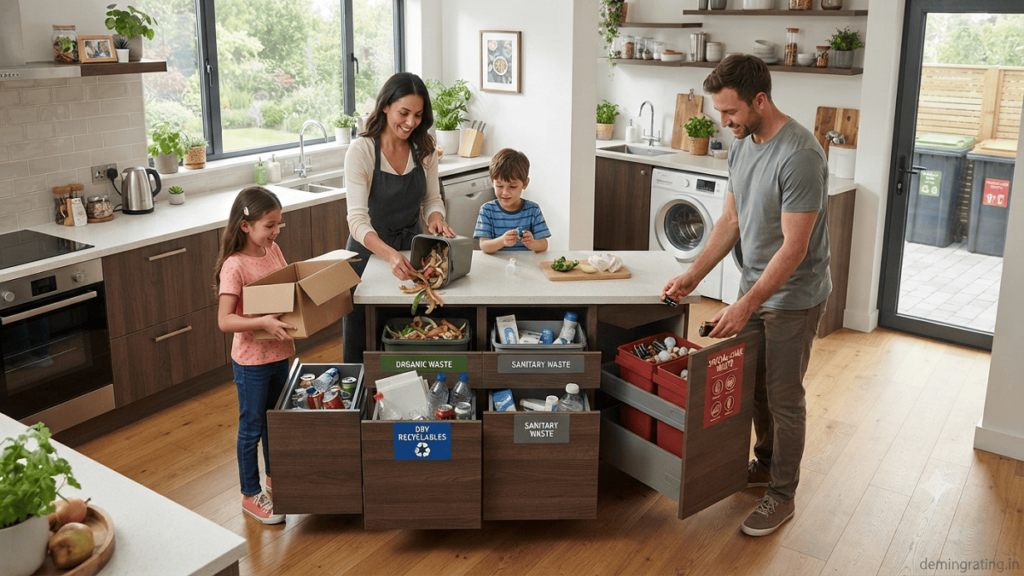
A successful household system requires more than separate bins. Containers should be clearly labeled and conveniently located, particularly in kitchens and utility areas. Simple instructions can help household members understand what belongs in each stream.
For apartment buildings and residential communities, property managers can provide centralized collection points and consistent signage. Regular communication and monitoring can also help reduce contamination.
Most importantly, households should follow their local waste-collection rules, because accepted materials, collection categories, and processing infrastructure differ between locations. EPA likewise recommends checking with the local recycling provider before placing materials in recycling systems.
Conclusion
Proper segregation can be organized around four core streams: organic waste, recyclable materials, hazardous waste, and residual waste. Separating these materials at source keeps valuable resources cleaner, protects hazardous materials from entering inappropriate waste streams, improves recycling and composting, and reduces the amount of waste requiring final disposal.
A practical system should therefore combine clear categories, dedicated containers, proper labeling, occupant education, safe hazardous-waste handling, and compliance with local collection requirements. When consistently practiced, household source separation becomes an effective foundation for sustainable waste management.
Relevant External Resources
- U.S. EPA — Source Separation Best Practices
- U.S. EPA — How Do I Recycle Common Recyclables?
- U.S. EPA — Household Hazardous Waste
- U.S. EPA — Sustainable Materials Management Hierarchy
#RecyclingIndustry
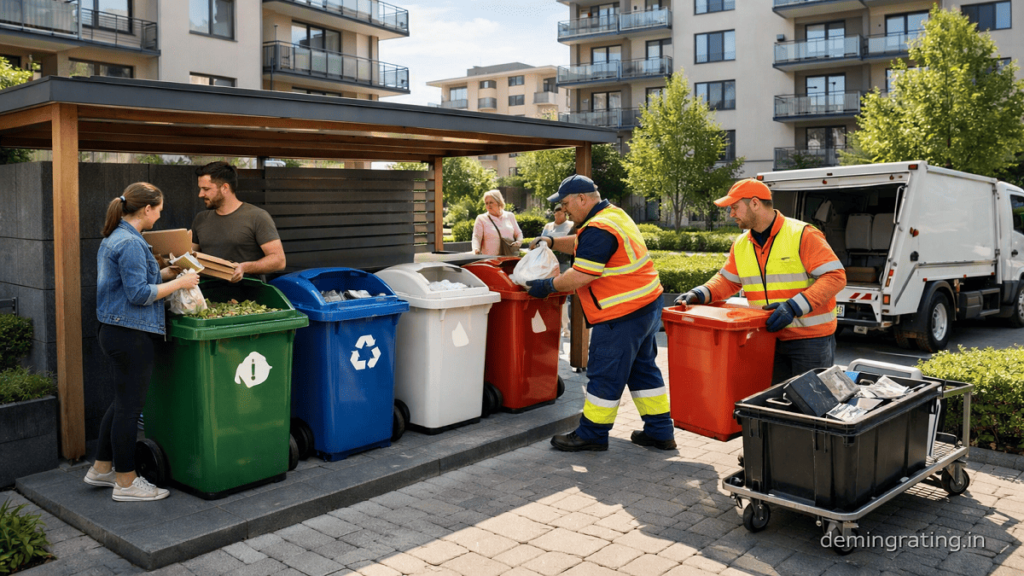
What Facilities, Collection Systems, and Awareness Measures Are Needed for Effective Household Waste Separation?
Effective household waste separation requires more than providing separate bins. A successful system combines appropriate collection infrastructure, reliable transportation and processing facilities, clear operating procedures, and continuous public awareness. When these elements work together, households can separate organic, recyclable, hazardous, and residual waste more consistently, improving resource recovery and reducing contamination. The U.S. Environmental Protection Agency (EPA) notes that source-separation programs are most effective when supported by suitable infrastructure and education for both waste generators and collection staff.
1. Appropriate Household Collection Facilities
The first requirement is convenient and clearly identified collection containers. Households should have separate containers for the waste categories required by their local system, such as organic waste, dry recyclables, hazardous or special waste, and residual waste.
Bins should be clearly labeled, appropriately sized, easy to clean, and located where waste is generated. Kitchen areas are particularly important for organic waste, while convenient collection points should be available for recyclable packaging. EPA guidance emphasizes that convenient collection encourages better participation and reduces contamination.
For apartment complexes and residential communities, centralized collection areas should provide sufficient space for separate containers without obstructing pedestrian movement or creating hygiene problems.
2. Collection and Transportation Systems
Separate waste streams require a collection system capable of maintaining segregation after materials leave the household. Collection vehicles should have appropriate compartments or separate containers so that previously segregated materials are not unnecessarily mixed.
Collection frequency should be based on waste quantities and characteristics. Organic waste generally requires more frequent collection because it can create odors and attract pests if stored for extended periods. Waste storage areas should also be designed to prevent spills, odors, pests, and other health or safety concerns.
For recyclable materials, collected waste should be transported to suitable sorting and processing facilities, where materials can be further separated, cleaned, and prepared for recycling.
3. Organic-Waste Processing Facilities
Communities need suitable facilities for handling separated organic waste. Depending on local infrastructure, food and garden waste may be processed through composting or anaerobic digestion.
Composting converts suitable organic materials into compost, while anaerobic digestion can recover biogas and digestate. Providing reliable processing capacity is essential because households are less likely to participate consistently if separated organic waste ultimately receives the same disposal treatment as general waste.
4. Recycling and Material-Recovery Facilities
Recyclable materials require appropriate downstream infrastructure. Materials such as paper, cardboard, metals, glass, and accepted plastics can be transported to recycling or material-recovery facilities for sorting, cleaning, processing, and preparation for manufacturing.
Local programs should clearly communicate which materials they actually accept. Recycling systems differ between communities, and incorrect materials can increase contamination and processing costs.
5. Hazardous-Waste Collection Facilities
Household hazardous waste requires a separate system because materials such as paints, pesticides, solvents, batteries, oils, and certain chemicals should not be mixed with ordinary household waste.
Communities can provide permanent collection centers, scheduled collection days, or designated drop-off locations. The EPA recommends checking with local environmental, health, or solid-waste authorities for available household hazardous-waste options. (US EPA)
6. Public Awareness and Education
Infrastructure alone cannot guarantee successful segregation. Residents need simple and consistent information explaining what goes where, how materials should be prepared, when waste is collected, and why separation matters.
Effective awareness measures can include door-to-door education, posters, community meetings, school programs, social-media communication, demonstrations, multilingual instructions, and simple “do and don’t” examples. EPA research and guidance emphasize education and outreach as important components of source-separation programs.
7. Monitoring and Community Participation
Local authorities and housing managers should periodically monitor contamination, collection performance, participation rates, and quantities of recovered materials. Feedback can then be used to improve bin locations, collection schedules, signage, and education programs.
In India, the Solid Waste Management Rules, 2026, which came into effect on April 1, 2026, establish mandatory four-stream segregation at source, including wet waste, dry waste, sanitary waste, and special-care waste. This provides an important regulatory framework for improving household-level segregation.
Conclusion
An effective household waste-separation system requires an integrated combination of convenient bins, suitable storage areas, segregated collection and transportation, recycling facilities, organic-waste processing, hazardous-waste collection points, and continuous public education.
The most important principle is consistency. Residents need convenient infrastructure and clear instructions, while collection agencies need the capacity to maintain separation throughout transportation and processing. When infrastructure, collection systems, regulations, and public participation operate together, household waste separation can significantly improve recycling and organic-waste recovery while reducing the quantity of waste sent for final disposal.
Relevant External Resources
- U.S. EPA — Source Separation Best Practices
- U.S. EPA — Best Practices for Solid Waste Management
- U.S. EPA — The U.S. Recycling System
- U.S. EPA — Household Hazardous Waste
- Press Information Bureau — Solid Waste Management Rules, 2026
#SolidWasteManagement
What Are the Environmental, Health, and Economic Benefits of Separating Household Waste at Source?
Separating household waste at source means sorting materials into appropriate categories such as organic waste, recyclable materials, hazardous waste, and residual waste before they are collected. This simple practice improves the quality of waste streams and allows different materials to be recycled, composted, treated, or safely disposed of. The U.S. Environmental Protection Agency (EPA) identifies source separation as an effective way to produce cleaner recyclable and compostable materials and improve resource recovery.
Environmental Benefits
One of the most important benefits is reducing the amount of waste sent to landfills and other disposal facilities. When recyclable paper, metals, glass, plastics, and organic materials are separated, they can be directed toward appropriate recovery processes instead of being discarded with residual waste.
Recycling also reduces demand for virgin resources such as timber, minerals, and water. According to the EPA, recycling can reduce pollution and greenhouse-gas emissions associated with extracting and processing new raw materials.
Separating organic waste provides additional environmental benefits. Food and garden waste can be composted or processed through anaerobic digestion, allowing nutrients and organic matter to be recovered rather than sent to disposal facilities. The World Health Organization recommends separate collection of food and green organic waste and appropriate recovery systems to return nutrients to the environment.
Health Benefits
Proper waste segregation can improve public health and occupational safety by preventing hazardous and potentially harmful materials from being mixed with ordinary household waste.
Hazardous materials such as chemicals, batteries, paints, and certain electronic components require appropriate handling. If incorrectly disposed of, they can expose residents, waste collectors, recycling workers, and nearby communities to chemical or physical hazards.
The WHO highlights that poorly managed solid waste can contribute to air, soil, and water contamination and can create conditions that support disease vectors. It also emphasizes that improved waste management can reduce health risks associated with waste collection, handling, treatment, and disposal.
Source separation also reduces contamination within recycling and organic-waste streams, creating safer and more manageable materials for workers at sorting and processing facilities.
Economic Benefits
Household waste separation can create economic value by increasing the quantity and quality of materials available for recycling and recovery. Source-separated recyclables are generally cleaner, and the EPA notes that they can achieve higher material value and recycling revenues.
Recycling and reuse activities also support employment across collection, sorting, processing, manufacturing, and related services. The EPA’s Recycling Economic Information report documents substantial employment, wage, and tax-revenue contributions from the recycling economy in the United States.
For households and communities, better segregation can also reduce the volume of residual waste requiring disposal. Depending on local waste-management systems, this can contribute to more efficient collection and lower disposal requirements.
Supporting a Circular Economy
Source separation is also important for developing a circular economy. Instead of treating materials as waste after one use, recyclable and organic resources are recovered and returned to productive applications.
For example, food waste can become compost, metals can be recycled into new products, and paper and cardboard can provide recovered fiber for manufacturing. This reduces dependence on virgin resources and helps create more resource-efficient communities.
Conclusion
Separating household waste at source provides interconnected environmental, health, and economic benefits. It reduces landfill disposal, conserves natural resources, improves recycling and organic-waste recovery, reduces potential exposure to hazardous materials, and supports employment and economic activity within the recycling sector.
However, source separation works best when households have convenient collection systems, clear instructions, suitable processing facilities, and reliable local waste-management services. When these elements are combined, household segregation becomes an important foundation for cleaner communities, safer waste handling, resource conservation, and sustainable waste management.
Relevant External Resources
- U.S. EPA — Best Practices: Source Separation
- U.S. EPA — Recycling Basics and Benefits
- U.S. EPA — Recycling Economic Information
- World Health Organization — Guidance on Solid Waste and Health
- World Health Organization — Solid Waste Management, Air Pollution and Health
#SustainableWasteManagement
Case Study of Separation of Household Waste: Indore, India
Indore, Madhya Pradesh, provides one of India’s most recognized examples of large-scale household waste segregation and source-based waste management. The city’s experience demonstrates how household participation, door-to-door collection, dedicated waste-processing infrastructure, public awareness, and continuous monitoring can work together to improve municipal solid-waste management.
Background
Indore’s waste-management transformation was developed under the broader Swachh Bharat Mission-Urban (SBM-U). The city moved toward a system in which waste was collected directly from households rather than relying primarily on conventional community dumping points. Government reports have repeatedly highlighted Indore’s door-to-door collection and source-segregation practices as important components of its cleanliness performance. (Press Information Bureau)
The approach focused on changing waste management from a disposal-oriented model to a system based on segregation, collection, transportation, processing, and resource recovery.
Household-Level Segregation
A critical part of the model was encouraging households to separate waste before collection. Wet or biodegradable waste was kept separate from dry recyclable materials and other waste streams.
This approach is important because mixing food waste with recyclable materials can cause contamination and reduce the quality and recoverability of dry waste. India’s Swachh Bharat Mission guidelines similarly identify source segregation as the first major step in solid-waste management and recommend separate handling of wet and dry waste.
Door-to-Door Collection
Source segregation was supported by a structured door-to-door collection system. Instead of requiring residents to transport mixed waste to distant disposal points, collection workers collected waste directly from households.
Government documentation reported that Indore had implemented door-to-door garbage collection and operated a large collection fleet. This approach makes segregation more convenient for residents and allows collection personnel to identify and manage different waste streams more systematically.
Processing and Resource Recovery
The system did not stop at collection. Segregated waste was directed toward appropriate processing and recovery pathways.
Wet organic waste can be processed through composting or other biological treatment methods, while dry materials can be sorted for recycling. Government reporting has also highlighted Indore’s development of biological treatment infrastructure for wet waste.
This illustrates an important principle: household segregation is effective only when suitable downstream processing infrastructure exists.
Public Awareness and Participation
Community participation was another important element. Waste segregation requires residents to understand which materials belong in each waste stream and why separation matters.
Indore’s wider cleanliness program incorporated citizen participation, monitoring, communication, and awareness activities. The Swachh Survekshan assessment framework also included citizen feedback and direct observation of household segregation and door-to-door collection. In the 2018 assessment, approximately 94,000 households were visited specifically to check segregation and door-to-door collection across assessed cities.
More recently, the city’s waste-collection improvements have also incorporated public-awareness measures. A 2025 government release described audio systems in collection e-rickshaws being used to communicate waste-segregation messages through songs and public-information campaigns.
Key Outcomes and Lessons
The Indore case demonstrates several important lessons for other cities and residential communities:
- Segregation must begin at household level.
- Door-to-door collection makes participation more convenient.
- Separate waste streams require appropriate processing facilities.
- Public awareness must continue after the initial implementation.
- Monitoring and performance measurement help maintain standards.
- Organic waste should be treated as a resource through composting or biological processing where feasible.
- Recyclable materials should be kept sufficiently clean to support material recovery.
The broader national experience also shows the importance of combining infrastructure with public participation. Government reporting under SBM-U indicated substantial growth in door-to-door collection, source segregation, and waste processing across urban local bodies.
Conclusion
The Indore household waste-segregation case study demonstrates that successful source separation requires more than distributing separate bins. It depends on an integrated system connecting households, collection workers, transportation, sorting, processing facilities, municipal authorities, and public-awareness programs.
For other cities, apartment communities, housing societies, and residential developments, the key takeaway is that segregation should be designed as a complete operational system. Residents need convenient collection arrangements, clear instructions, reliable services, and visible evidence that separated waste is actually being recovered or treated appropriately.
Indore’s experience therefore provides a valuable model for developing more efficient household waste-management systems that prioritize source segregation, resource recovery, cleaner communities, and reduced dependence on landfill disposal.
Relevant External Resources
- Swachh Bharat Mission — Operational Guidelines
- Press Information Bureau — Swachh Survekshan and Waste Segregation
- Press Information Bureau — Indore Waste-Management Initiatives
- Swachh Bharat Mission — Biodegradable Waste Management Manual
- Swachh Bharat Mission — Solid and Liquid Waste Management Guidelines
#SourceSegregation
White Paper on Separation of Household Waste
Executive Summary
Household waste separation is a fundamental component of sustainable solid-waste management. It involves sorting waste at the point of generation into appropriate streams so that organic materials, recyclable resources, sanitary waste, special-care waste, and residual materials can be collected, processed, recovered, or disposed of through suitable pathways.
Source segregation improves the quality of recoverable materials, reduces contamination, supports recycling and composting, and can reduce dependence on landfilling. The U.S. Environmental Protection Agency identifies source separation as a best practice because it produces cleaner feedstocks and supports the highest and best use of recyclable and compostable materials.
In India, the regulatory framework has recently been strengthened. The Solid Waste Management Rules, 2026, notified on January 27, 2026 and effective from April 1, 2026, introduce mandatory four-stream segregation at source: wet waste, dry waste, sanitary waste, and special-care waste.
This white paper examines the principles, categories, infrastructure, collection systems, awareness requirements, environmental benefits, economic implications, and implementation strategies associated with household waste separation.
1. Introduction
Rapid urbanization, changing consumption patterns, population growth, and increasing use of packaged products have made household waste management an important environmental and public-health issue.
A conventional system in which all household waste is placed in one container creates a mixed waste stream. Once organic food waste, recyclable materials, sanitary products, chemicals, and other materials become mixed, recovery becomes more difficult and contamination increases.
Source separation addresses this problem by requiring households to sort materials before collection. This creates cleaner waste streams that can be directed to specialized treatment and recovery facilities.
India’s earlier Solid Waste Management Rules, 2016 required waste generators to segregate waste at source into biodegradable, non-biodegradable, and domestic hazardous streams. (Press Information Bureau) The 2026 rules have now strengthened this framework through four-stream segregation.
2. Objectives of Household Waste Separation
The primary objectives are to:
- Reduce mixing and contamination of waste.
- Increase recycling and resource recovery.
- Enable biological treatment of organic waste.
- Improve the safe handling of sanitary and special-care materials.
- Reduce the quantity of residual waste requiring disposal.
- Conserve virgin natural resources.
- Improve collection and processing efficiency.
- Support circular-economy principles.
- Reduce environmental and public-health risks.
Source separation should therefore be considered an integrated part of waste management rather than simply a household sorting exercise.
3. Major Household Waste Streams
Under India’s current four-stream framework, households are required to separate waste into distinct categories.
Wet Waste
Wet waste primarily includes biodegradable materials such as kitchen scraps, food waste, vegetable and fruit residues, meat waste, and flowers. This stream can potentially be treated through composting, anaerobic digestion, or other approved biological processes.
Dry Waste
Dry waste includes recyclable materials such as paper, plastic, glass, and metal. These materials should be kept as clean and dry as practical and directed toward appropriate sorting and recycling systems.
Sanitary Waste
Sanitary waste includes materials such as diapers, sanitary towels, napkins, tampons, condoms, and incontinence products. These materials require separate handling because they can present hygiene and occupational risks.
Special-Care Waste
Special-care waste includes materials requiring specific handling, such as discarded paint containers, pesticide containers, fluorescent lamps and tubes, expired medicines, batteries, mercury-containing devices, used needles and syringes, and contaminated gauze.
The exact collection and treatment arrangements should follow the requirements of the applicable local authority and authorized waste-management providers.
4. Source Segregation Infrastructure
Successful household segregation requires convenient infrastructure. Homes, apartment buildings, and residential communities should provide appropriately sized and clearly identified containers for the applicable waste streams.
Collection areas should be hygienic, accessible, protected from weather where necessary, and designed to prevent mixing after households have completed segregation.
For larger residential developments, waste-management areas should provide adequate space for temporary storage, collection vehicles, cleaning, and safe movement of workers.
India’s municipal solid-waste guidance has historically emphasized source segregation because it reduces contamination and optimizes subsequent processing and treatment technologies.
5. Collection and Transportation
Segregation at home is effective only if the collection system maintains separation.
Collection agencies should use suitable vehicles, containers, and operating procedures to prevent separately collected waste from being remixed. Collection schedules should also reflect the characteristics of individual streams.
Organic waste may require frequent collection because of moisture, odors, and biological decomposition. Dry recyclables can generally tolerate longer storage periods when kept clean and dry.
India’s 2016 framework required local authorities to develop door-to-door collection and infrastructure for transportation and secondary storage of segregated waste.
6. Processing and Resource Recovery
Once collected, each waste stream should be directed to an appropriate processing pathway.
Organic waste can be processed through composting or anaerobic digestion. Dry recyclable materials can be sorted and processed for recycling. Special-care materials require appropriate specialized treatment, while sanitary waste requires controlled handling.
The objective should be to maximize recovery and minimize residual disposal.
The current Indian framework explicitly emphasizes recovery and scientific disposal through four-stream segregation.
7. Role of Recycling and Material Recovery
Source-separated recyclable materials are generally more valuable when they are kept relatively clean and free from organic contamination. Paper, cardboard, glass, metals, and suitable plastics can be directed to material-recovery and recycling facilities.
The EPA notes that effective source separation supports cleaner feedstock for recycling and can increase the quality and economic value of recovered materials.
However, households should not assume that every technically recyclable product is accepted by their local program. Collection requirements differ according to available infrastructure and local markets.
8. Organic Waste Management
Separating wet waste is particularly important because organic material can represent a substantial portion of household waste.
Instead of sending food and garden waste to landfill, communities can establish composting or anaerobic-digestion systems where appropriate. Composting can produce a useful soil amendment, while anaerobic digestion can generate biogas and digestate.
India’s 2016 framework specifically directed wet kitchen waste toward composting or biomethanation and encouraged decentralized processing.
9. Public Awareness and Behavioural Change
Infrastructure alone cannot deliver effective source separation. Households need clear instructions explaining:
- Which materials belong in each stream.
- How materials should be prepared.
- When each stream is collected.
- What materials are prohibited.
- Why contamination is harmful.
- How recovered materials are ultimately used.
Awareness campaigns can include signage, community meetings, school programs, social-media communication, demonstrations, printed materials, and direct engagement with residents.
The Indian solid-waste framework assigns local authorities responsibilities for public awareness and information, education, and communication campaigns.
10. Environmental Benefits
Household source separation can deliver significant environmental benefits by increasing recycling and organic-waste recovery.
Recycling reduces the need for some virgin raw materials, while composting returns organic matter and nutrients to productive use. Separating hazardous and special-care waste also reduces the risk of inappropriate disposal.
The EPA identifies cleaner feedstock, improved material recovery, increased diversion, and community awareness among the advantages of effective source separation.
11. Health and Safety Benefits
Mixed waste can create unnecessary exposure risks for residents, collection workers, waste pickers, sorting personnel, and processing workers.
Separating special-care and sanitary waste reduces the likelihood that sharp objects, chemicals, medicines, batteries, or contaminated materials will enter ordinary waste streams.
Collection workers should also receive appropriate training and personal protective equipment. India’s solid-waste rules include provisions relating to worker education and protective equipment.
12. Economic Benefits
Source separation can improve the economic value of recovered materials by reducing contamination and improving processing efficiency.
Cleaner recyclable materials may have better market value, while organic waste can become compost or a feedstock for biogas production. The EPA identifies higher recycling revenues among the potential advantages of effective source separation. (US EPA)
There can also be longer-term savings from reducing the quantity of residual waste requiring transportation and final disposal, although actual financial outcomes depend on local collection contracts, infrastructure, processing costs, and material markets.
13. Challenges
Several challenges can limit the effectiveness of household segregation:
- Inconsistent resident participation.
- Lack of convenient collection infrastructure.
- Contamination between waste streams.
- Insufficient processing capacity.
- Inadequate public awareness.
- Weak enforcement.
- Poor coordination between households and collection agencies.
- Remixing of segregated waste during transportation.
- Limited markets for certain recovered materials.
A particularly important lesson from waste-management programs is that segregation without downstream processing capacity is insufficient. India’s municipal-waste guidance has previously identified inadequate processing and disposal facilities as a factor that can undermine segregation efforts.
14. Implementation Framework
A practical household waste-separation program can follow these steps:
- Identify locally required waste categories.
- Provide appropriately sized and labeled household containers.
- Educate residents about acceptable materials.
- Establish reliable door-to-door or designated collection systems.
- Maintain separation during transportation.
- Provide sufficient recycling and organic-waste processing capacity.
- Establish safe systems for sanitary and special-care waste.
- Monitor contamination and participation.
- Provide feedback to households and communities.
- Enforce applicable local requirements.
- Review performance and improve the system periodically.
Residential developments can integrate these requirements into property-management procedures, resident handbooks, waste contracts, and building-management plans.
15. Role of Technology and Data
Digital tools can strengthen modern waste-separation programs through collection tracking, weighing systems, route optimization, contamination monitoring, and performance reporting.
India’s 2026 Solid Waste Management Rules include online tracking and monitoring provisions as part of a strengthened framework for scientific waste management.
Data can help local authorities and property managers understand waste-generation patterns, identify problem areas, measure diversion rates, and evaluate the effectiveness of awareness campaigns.
Conclusion
Household waste separation is a fundamental requirement for creating an efficient and resource-conscious waste-management system. Its success depends on connecting household behaviour with appropriate collection, transportation, processing, recovery, awareness, and regulatory systems.
The current Indian framework has strengthened source segregation through mandatory four-stream separation of wet waste, dry waste, sanitary waste, and special-care waste.
For households, the process begins with a simple action: placing each material in the correct container. At the community level, however, effective segregation requires reliable infrastructure and consistent collection. At the city level, it requires sufficient recycling, composting, treatment, and recovery capacity.
Ultimately, source separation should be viewed not merely as a waste-disposal measure but as a resource-recovery strategy. By keeping valuable materials clean and separate, communities can reduce environmental impacts, improve worker safety, conserve resources, and move toward a more circular and sustainable waste-management system.
Relevant External Resources
- Central Pollution Control Board — Solid Waste Management Portal
- U.S. EPA — Best Practices: Source Separation
- Press Information Bureau — Solid Waste Management Rules, 2026
- Maharashtra Pollution Control Board — Solid Waste Management
- Ministry of Housing and Urban Affairs — Manual on Municipal Solid Waste Management
#WasteSegregation
Industry Application of Separation of Household Waste
The separation of household waste has applications far beyond individual homes. It is increasingly integrated into the operations of residential communities, real estate developments, hospitality, healthcare, education, retail, food services, facility management, recycling, and municipal waste-management industries. The objective is to keep different waste streams separate from the point of generation through collection, transportation, processing, and final recovery.
In India, this approach has gained additional importance under the Solid Waste Management Rules, 2026, which came into effect on April 1, 2026. The rules require source segregation into four streams: wet waste, dry waste, sanitary waste, and special-care waste. They also introduce greater responsibilities for bulk waste generators and online tracking of waste-management activities. (Press Information Bureau)
1. Residential and Real Estate Industry
Residential developers, apartment complexes, gated communities, and housing societies are among the most direct users of household waste-separation systems. Property managers can provide designated collection containers, centralized waste rooms, signage, and separate collection arrangements for different waste streams.
Wet waste can be directed toward composting or biomethanation, while dry waste can be transferred to authorized recyclers or material-recovery facilities. India’s current regulations place responsibilities on waste generators to segregate waste and hand it over through authorized channels.
For developers, waste segregation can also become part of the building’s sustainability and facility-management strategy.
2. Hospitality Industry
Hotels, resorts, serviced apartments, and restaurants generate substantial quantities of food waste, packaging, glass, paper, and other materials. Separation at source allows kitchens and housekeeping departments to prevent food waste from contaminating recyclable materials.
Food waste can be directed to composting or anaerobic digestion, while recyclable packaging can be recovered separately. This can reduce the volume of mixed waste requiring disposal and improve resource recovery.
Hotels can also incorporate waste-segregation requirements into housekeeping procedures, kitchen operations, procurement policies, and contractor agreements.
3. Healthcare Facilities
Hospitals and healthcare campuses require particularly careful segregation because ordinary household-type waste can exist alongside biomedical, sanitary, pharmaceutical, and other specialized waste streams.
Cafeterias, staff kitchens, residential quarters, and landscaping areas can use source separation for suitable organic and recyclable materials. However, potentially infectious or regulated healthcare waste must remain within the appropriate specialized waste-management system.
The objective is to prevent unsuitable materials from entering ordinary recycling or organic-waste streams while improving recovery of materials that can safely be recycled.
4. Educational Institutions
Schools, colleges, universities, and student housing facilities can use source separation across classrooms, cafeterias, offices, hostels, and landscaping areas.
Educational institutions have an additional advantage because waste segregation can be incorporated into environmental education and student participation programs. Clearly labeled collection stations, awareness campaigns, waste audits, and composting demonstrations can make the waste system part of the institution’s sustainability program.
5. Retail and Food-Service Industry
Shopping centers, supermarkets, food courts, and restaurants generate mixed streams of food waste, cardboard, plastics, metals, and glass. Separating these materials at source makes downstream recovery more efficient.
Food retailers can combine segregation with food-waste prevention and donation programs. Unavoidable organic waste can then be directed toward composting or anaerobic digestion, while recyclable packaging is sent to appropriate recovery facilities.
6. Facility Management Industry
Facility-management companies play a central role in implementing household and building-level waste separation. Their responsibilities may include providing containers, training housekeeping personnel, coordinating collection contractors, monitoring contamination, maintaining waste-storage areas, and preparing performance reports.
This makes waste segregation an operational issue rather than simply an environmental initiative.
Modern systems can also use digital weighing, collection records, dashboards, and tracking systems. India’s 2026 rules provide for online monitoring of waste-management activities, including collection, transportation, processing, and disposal.
7. Recycling and Material-Recovery Industry
Source-separated dry waste provides an important feedstock for Material Recovery Facilities (MRFs) and recycling businesses. Under India’s 2026 framework, dry waste such as plastic, paper, metal, glass, wood, and rubber is intended to move toward MRFs for sorting and recycling.
Cleaner source-separated material can reduce sorting requirements and improve the recovery potential of valuable materials. This supports recycling industries and contributes to a circular economy.
8. Composting and Biogas Industry
The separation of wet waste creates a cleaner feedstock for biological treatment. Food and other biodegradable materials can be processed through composting or anaerobic digestion.
The World Health Organization recommends separate collection systems for food and green organic waste together with appropriate recovery facilities, noting that segregation can optimize recoverable waste streams and improve health and safety.
For large residential communities, hotels, campuses, and institutional facilities, decentralized composting or biomethanation may be considered where sufficient space, technical capacity, and regulatory approvals are available.
9. Municipal Waste-Management Industry
Municipal authorities depend on household source separation to make collection and processing systems more efficient. Door-to-door collection can maintain separate streams and reduce the quantity of mixed waste reaching disposal facilities.
India’s urban waste-management program has expanded significantly, with the Ministry of Housing and Urban Affairs reporting that 97% of wards had door-to-door collection coverage in 2026 and that urban waste processing had increased substantially.
This demonstrates how household-level segregation can connect directly with city-scale waste infrastructure.
10. Bulk Waste Generators and Large Establishments
Large residential developments, institutions, commercial establishments, and other bulk waste generators have an increasingly important role. The 2026 rules introduce Extended Bulk Waste Generator Responsibility, making qualifying large establishments more directly accountable for the environmentally sound management of their waste. (Press Information Bureau)
This encourages businesses and property operators to establish internal segregation, storage, processing, documentation, and authorized disposal systems rather than depending entirely on municipal disposal infrastructure.
Conclusion
The industry application of household waste separation extends across the entire waste-management value chain. Real estate companies provide segregation infrastructure, facility managers operate collection systems, hospitality and healthcare organizations manage specialized waste streams, recyclers recover dry materials, composting and biogas operators process organic waste, and municipalities coordinate collection and infrastructure.
The most effective approach is an integrated system in which waste remains separated from the household or building through transportation and processing. India’s current regulatory framework reinforces this model through mandatory four-stream segregation, greater accountability for bulk waste generators, and digital monitoring.
Ultimately, household waste separation transforms waste management from a disposal-focused activity into a resource-recovery system, helping industries reduce contamination, recover valuable materials, improve operational efficiency, and support a more circular economy.
Relevant External Resources
- Press Information Bureau — Solid Waste Management Rules, 2026
- Press Information Bureau — Solid Waste Management Rules and Bulk Waste Generators
- Press Information Bureau — Urban Waste Management Progress, 2026
- World Health Organization — Waste and Health Guidance
#HouseholdWasteSeparation
Ask FAQs
What is household waste separation?
Household waste separation is the process of sorting waste into different categories at the point where it is generated. Common categories include wet or organic waste, dry recyclable waste, sanitary waste, special-care waste, and residual waste. Proper segregation allows each waste stream to be collected, treated, recycled, composted, or disposed of through the appropriate system.
Why should household waste be separated at source?
Source separation reduces contamination between different waste streams and improves the recovery of useful materials. Organic waste can be composted or processed through anaerobic digestion, while paper, metals, glass, and suitable plastics can be recycled. It also helps prevent hazardous or sanitary materials from entering ordinary waste streams and reduces the amount of waste requiring final disposal.
How should households separate organic and recyclable waste?
Households should place food scraps, vegetable and fruit peels, and other locally accepted biodegradable materials in the designated organic-waste container. Paper, cardboard, metals, glass, and accepted plastics should be placed separately as dry recyclables. Materials should be prepared according to local collection requirements because accepted items and preparation rules vary between municipalities.
What should households do with hazardous and special-care waste?
Items such as batteries, paints, pesticides, expired medicines, chemicals, fluorescent lamps, and certain electronic products should not be mixed with regular household waste or recycling unless specifically permitted by the local system. They should be stored safely and taken to an authorized collection center or designated disposal program. The U.S. EPA provides guidance on managing household hazardous waste.
How can communities improve household waste segregation?
Communities can improve segregation by providing clearly labeled containers, convenient collection points, reliable door-to-door collection, regular awareness campaigns, and simple instructions about acceptable materials. Apartment societies and housing developments can also conduct waste audits, monitor contamination, train housekeeping staff, and provide residents with feedback. Consistent collection and appropriate downstream recycling or composting facilities are essential to maintaining long-term participation.
Table of Contents
Disclaimer: This content is for general informational purposes only. Waste-separation requirements and disposal procedures vary by location. Always follow applicable local regulations and authorized waste-management guidelines.