
Purchase of Green Consumables
What Are Green Consumables and Why Are They Important for Sustainable Building Operations?
Green consumables are everyday products used to operate, clean, maintain, and manage buildings that are designed or selected to reduce environmental and human-health impacts compared with conventional alternatives. They can include cleaning chemicals, detergents, hand soaps, paper towels, tissues, toilet paper, trash bags, office supplies, disposable food-service products, and other frequently replaced items.
Unlike durable building components, consumables are continuously purchased and replaced. This makes procurement decisions an important part of a building’s long-term sustainability strategy. A product’s environmental performance should be assessed across its life cycle, including raw-material extraction, manufacturing, packaging, transportation, use, and disposal. The U.S. Environmental Protection Agency (EPA) notes that greener purchasing can address impacts such as toxic exposure, air and water pollution, resource consumption, waste, and climate-related impacts.
Environmental Importance
Green consumables can help reduce the quantity of harmful chemicals, packaging, and waste generated during routine building operations. For example, cleaning products formulated with safer ingredients can reduce potential impacts on workers, occupants, waterways, and ecosystems.
The EPA’s Safer Choice program provides an established example. Products carrying the Safer Choice label undergo ingredient-level review against stringent human-health and environmental criteria. The program also considers factors such as product performance and packaging.
Packaging is another important consideration. Concentrated products, refillable containers, recycled-content packaging, recyclable packaging, and efficient packaging designs can reduce material consumption and transportation impacts. EPA specifically identifies these characteristics as considerations when evaluating greener cleaning products. (US EPA)
Health and Indoor Environmental Quality
Consumables can also influence indoor environmental quality. Cleaning chemicals, disinfectants, air fresheners, and other products may contain substances that contribute to indoor chemical exposure. Selecting appropriately certified products can help facility managers reduce unnecessary chemical hazards while maintaining required cleaning and hygiene standards.
However, “natural” or “green” marketing claims should not automatically be treated as evidence of better performance. EPA cautions purchasers to look for credible ecolabels and verified criteria rather than relying on vague environmental claims. (US EPA)
Operational and Economic Benefits
Green consumables can also support efficient building management. Concentrated cleaning products, controlled dispensing systems, refillable packaging, and products designed for efficient use can reduce consumption and storage requirements. Durable or high-performance consumables may also reduce purchasing frequency and operating costs over their useful life.
For organizations managing large facilities, establishing sustainable procurement standards can create consistent purchasing practices across offices, schools, hotels, healthcare facilities, and commercial properties.
Role in Sustainable Building Operations
Green consumables should therefore be viewed as part of a broader operational sustainability strategy. Building managers can establish procurement criteria covering chemical safety, environmental certifications, packaging, recycled content, resource efficiency, performance, worker safety, and end-of-life disposal.
Ultimately, purchasing green consumables helps ensure that sustainability continues after a building is constructed. Sustainable operations depend not only on efficient equipment and building systems but also on the everyday products used to maintain and occupy the facility.
Relevant External Resources
- U.S. EPA – Safer Choice
- U.S. EPA – Identifying Greener Cleaning Products
- U.S. EPA – Why Buy Greener Products?
- U.S. EPA – Safer Choice Standards and Criteria
- U.S. EPA – Green Building Procurement Resources
#EnvironmentalSustainability
What Types of Consumables Can Be Classified as Environmentally Friendly or Sustainable?
Environmentally friendly or sustainable consumables are everyday products that are designed, manufactured, packaged, or sourced in ways that reduce environmental and human-health impacts while still meeting required performance standards. In sustainable building operations, these products can help reduce waste, conserve resources, limit exposure to hazardous chemicals, and support responsible procurement. The U.S. Environmental Protection Agency (EPA) describes environmentally preferable purchasing as considering factors such as recycled content, toxicity, durability, recyclability, and life-cycle impacts rather than focusing only on price.
1. Sustainable Cleaning Products
Cleaning chemicals are among the most frequently purchased consumables in commercial buildings. Environmentally preferable options include certified low-toxicity, biodegradable, concentrated, and low-emission cleaning products. The EPA’s Safer Choice program evaluates product ingredients against human-health and environmental criteria, making certified products useful for sustainable facility-management programs.
Concentrated cleaners and refillable systems can also reduce packaging and transportation impacts when used correctly.
2. Recycled and Responsibly Sourced Paper Products
Paper is another major category of building consumables. Sustainable options include recycled-content copy paper, notebooks, envelopes, tissues, paper towels, toilet paper, napkins, and other sanitary products.
EPA’s procurement guidelines specifically identify printing and writing papers, sanitary tissue, paperboard, and packaging as categories where recovered materials can be incorporated.
When selecting paper, buyers can consider post-consumer recycled content, total recycled content, responsible fiber sourcing, recyclability, manufacturing processes, and packaging.
3. Sustainable Office Supplies
Pens, pencils, folders, binders, clipboards, notebooks, toner cartridges, printer supplies, and desktop accessories can also be purchased with sustainability attributes.
Products made with recycled materials, refillable components, remanufactured parts, or recyclable materials can reduce resource consumption and waste. EPA identifies several non-paper office products, including binders, file folders, plastic accessories, toner cartridges, and printer ribbons, within its recycled-content procurement guidance.
4. Refillable and Reusable Consumables
Products that minimize single-use packaging can also support sustainable operations. Examples include refillable soap dispensers, concentrated cleaning solutions, reusable dispensing systems, and refillable writing instruments.
These options can reduce packaging waste and the frequency of purchasing replacement containers.
5. Sustainable Food-Service Products
Buildings with cafeterias, restaurants, meeting facilities, or employee kitchens can consider recycled-content, responsibly sourced, compostable, or reusable food-service products where appropriate.
Examples include recycled paper napkins, responsibly sourced paper products, reusable serviceware, and packaging designed for established recycling or composting systems. However, a product being labeled “compostable” does not guarantee that local composting infrastructure can process it, so disposal systems should be considered before procurement.
6. Waste-Management Consumables
Trash bags, recycling bags, liners, and related products can incorporate recycled content or more resource-efficient materials. EPA’s procurement guidelines include plastic trash bags and recycling containers among product categories for which recovered-content purchasing can be considered.
Conclusion
The main categories of sustainable consumables include green cleaning products, recycled paper and tissue products, sustainable office supplies, refillable products, environmentally preferable food-service items, and recycled-content waste-management products. The strongest purchasing strategy considers more than a product’s environmental label. Buyers should evaluate recycled content, responsible sourcing, chemical safety, packaging, durability, recyclability, performance, and realistic end-of-life options.
Most importantly, sustainability claims should be supported by credible certifications or documented product information. A product should be considered environmentally preferable when it delivers the required function while reducing environmental or health impacts compared with practical alternatives.
Relevant External Resources
- EPA – Identifying Greener Cleaning Products
- EPA – Greener Paper
- EPA – Procurement Guidelines for Paper Products
- EPA – Procurement Guidelines for Non-Paper Office Products
- EPA – Sustainable Materials Management
#ResponsibleProcurement
What Criteria Should Be Considered When Purchasing Green Consumables?
Purchasing green consumables requires more than choosing products labeled “eco-friendly.” Facility managers, procurement teams, and sustainability professionals should evaluate the product’s complete environmental and operational profile, including recycled content, biodegradability, toxicity, responsible sourcing, packaging, performance, and end-of-life options. A well-designed procurement policy should also require credible documentation or third-party certification to support environmental claims.
1. Recycled and Recovered Content
Recycled content is an important criterion for products such as paper towels, toilet tissue, office paper, packaging, trash bags, and other frequently replaced materials. Buyers should determine the percentage of recycled content and distinguish between post-consumer and pre-consumer material.
Environmental claims should be specific rather than simply stating that a product is “recycled.” The U.S. Federal Trade Commission recommends that recycled-content claims clearly identify the proportion of recycled material when a product is only partially made from recycled content.
2. Biodegradability and Compostability
Biodegradability can be useful when evaluating cleaning products, packaging, food-service items, and other consumables. However, buyers should examine how quickly the material breaks down, under what conditions, and whether suitable waste-management infrastructure exists.
A product described as compostable, for example, may require a commercial composting facility rather than ordinary household or building waste systems. The FTC advises that compostable and degradable claims should be supported by reliable evidence and appropriately qualified where necessary.
3. Low Toxicity and Chemical Safety
For cleaning chemicals, detergents, soaps, and maintenance products, toxicity should be a major purchasing consideration. Buyers should evaluate ingredients for potential effects on occupants, workers, aquatic ecosystems, and indoor air quality.
The EPA’s Safer Choice program evaluates individual chemical ingredients against human-health and environmental criteria, while also considering product performance, packaging, pH, and VOC content.
4. Responsible Sourcing
The origin of raw materials should also be investigated. For paper and wood-based consumables, buyers can consider responsible forestry certifications and verified recycled content. For other products, responsible sourcing may involve supply-chain transparency, renewable materials, ethical manufacturing, and resource-efficient production.
5. Packaging and Resource Efficiency
Packaging can significantly increase the environmental footprint of frequently purchased consumables. Look for minimal packaging, concentrated formulations, refill systems, recycled packaging, and recyclable materials where appropriate.
Refillable products can reduce the number of containers entering the waste stream, while concentrated cleaning products may reduce packaging and transportation requirements.
6. Product Performance and Durability
A green product must still perform its intended function. Purchasing a sustainable cleaning product that requires substantially more product to achieve the same result may undermine its environmental advantages.
EPA’s Safer Choice program, for example, requires certified products to meet applicable performance requirements and perform comparably to conventional alternatives.
7. Credible Certifications and Environmental Claims
Finally, procurement teams should prioritize recognized certifications, independently verified data, and transparent manufacturer documentation. Broad claims such as “100% green,” “non-toxic,” or “environmentally friendly” should not automatically be accepted as evidence of sustainability. The FTC advises that broad environmental claims should be specific and substantiated.
Overall, the strongest green-consumables purchasing strategy considers material content, chemical safety, sourcing, packaging, performance, certification, and end-of-life management together. This life-cycle approach helps organizations make purchasing decisions that reduce environmental impact while maintaining the hygiene, safety, and operational performance required in modern buildings.
Relevant External Resources
- EPA – Safer Choice Standard and Criteria
- EPA – Safer Choice Label
- FTC – Environmental Marketing Claims
- FTC – Eco-Friendly and Green Marketing Claims
#GreenBuildingOperations

How Can Sustainable Procurement Policies Reduce Waste, Resource Consumption, and Environmental Impact?
Sustainable procurement policies provide organizations with a structured approach to purchasing products and services that meet operational requirements while reducing environmental and social impacts. In building operations, these policies can influence everything from cleaning chemicals and paper products to office supplies, packaging, maintenance materials, and other frequently purchased consumables.
Rather than focusing only on purchase price, sustainable procurement considers factors such as resource efficiency, recycled content, responsible sourcing, chemical safety, packaging, durability, energy use, and end-of-life management. When consistently implemented, these practices can reduce waste and resource consumption throughout the building’s operational life.
1. Reducing Material Waste
Procurement policies can prioritize products with recycled content, minimal packaging, reusable components, refill systems, and longer service lives. This reduces the amount of material entering the waste stream.
For example, purchasing concentrated cleaning products with refillable dispensing systems can reduce the number of single-use containers required for routine operations. Similarly, selecting recycled-content paper and office supplies can reduce demand for virgin materials.
The U.S. Environmental Protection Agency (EPA) recommends sustainable materials-management strategies that emphasize reducing material use, increasing reuse, and improving recycling.
2. Conserving Natural Resources
Sustainable procurement can reduce pressure on forests, fossil fuels, minerals, water, and other natural resources. Procurement teams can specify recycled materials and responsibly sourced renewable resources where appropriate.
For paper products, for example, organizations can establish minimum recycled-content requirements. For wood and paper-based materials, responsible forestry certifications can provide additional sourcing assurance.
The EPA’s Comprehensive Procurement Guidelines identify products containing recovered materials that federal agencies are encouraged to purchase, providing a useful reference for recycled-content procurement.
3. Reducing Hazardous Chemical Impacts
Sustainable procurement policies can establish chemical-screening requirements for cleaning products, maintenance chemicals, paints, adhesives, and other consumables.
The EPA’s Safer Choice program provides a practical example of how procurement teams can identify products whose ingredients have been evaluated against human-health and environmental criteria.
Reducing unnecessary exposure to hazardous substances can benefit workers, occupants, wastewater systems, and ecosystems.
4. Minimizing Packaging
Packaging requirements can significantly influence waste generation. Procurement policies can favor products with concentrated formulations, bulk purchasing where appropriate, refillable containers, recycled packaging, and minimal packaging.
However, packaging reductions should not compromise hygiene, product protection, or safe transportation. The best approach is to optimize packaging rather than simply eliminate it.
5. Improving Product Efficiency
Sustainable procurement should also consider how much product is required to achieve the intended result. A cleaning chemical that requires smaller quantities per application may generate less waste than a conventional alternative, even if both products have similar packaging.
Procurement teams can establish performance criteria alongside environmental requirements to ensure that sustainable products remain effective.
6. Supporting Circular Economy Practices
Policies can prioritize products that are reusable, repairable, refillable, recyclable, or designed for material recovery. Organizations can also introduce supplier take-back programs for products such as toner cartridges, packaging, electronic accessories, and maintenance materials.
This helps keep valuable materials in circulation for longer and reduces dependence on disposal.
7. Using Life-Cycle Costing
A sustainable procurement policy should not evaluate products solely according to their initial purchase price. Life-cycle costing considers acquisition, use, maintenance, replacement, disposal, and potentially other long-term costs.
A product with a slightly higher purchase price may provide better economic and environmental performance if it lasts longer, requires less material, or produces less waste.
Conclusion
Sustainable procurement policies can reduce environmental impact by systematically influencing what an organization buys and how those products are used and discarded. Effective policies prioritize recycled and responsibly sourced materials, low-toxicity products, efficient formulations, reduced packaging, durable products, reuse, recycling, and credible environmental certifications.
The greatest results occur when procurement requirements are supported by supplier engagement, employee training, consumption monitoring, and regular policy reviews. Sustainable purchasing should therefore be treated as an ongoing operational strategy rather than a one-time purchasing initiative.
Relevant External Resources
- U.S. EPA – Sustainable Materials Management
- U.S. EPA – Comprehensive Procurement Guidelines
- U.S. EPA – Safer Choice
- U.S. EPA – Environmentally Preferable Purchasing
#SustainableBuilding
What Are the Environmental, Economic, and Health Benefits of Purchasing Green Consumables?
Purchasing green consumables can help organizations make everyday building operations more sustainable while maintaining essential functions such as cleaning, hygiene, office administration, food service, and waste management. Because consumables are purchased and replaced regularly, even small improvements in product selection can produce meaningful benefits over time.
Green consumables may include recycled-content paper products, responsibly sourced tissue, certified cleaning products, refillable supplies, low-toxicity chemicals, concentrated cleaning solutions, recycled-content waste bags, and other products designed to reduce environmental or health impacts. The benefits can be grouped into three major areas: environmental protection, economic efficiency, and occupant and worker health.
Environmental Benefits
The most direct benefit is reduced environmental impact. Products containing recycled materials can reduce demand for virgin resources, while responsibly sourced materials can support better management of forests and other natural resources.
Reducing packaging can also decrease the amount of material entering the waste stream. Concentrated cleaning products and refill systems may require fewer containers and can reduce transportation requirements because more usable product can be transported in less packaging.
Green consumables can also support waste reduction through reusable, recyclable, refillable, or compostable options where appropriate infrastructure exists. The U.S. Environmental Protection Agency (EPA) promotes sustainable materials management practices that emphasize reducing material use, reuse, recycling, and improved resource efficiency.
Economic Benefits
Green purchasing can provide economic benefits beyond the initial purchase price. Concentrated products, efficient dispensing systems, and high-performance consumables can reduce the quantity of product required for routine operations.
Long-term savings can also come from reduced waste disposal, lower storage requirements, fewer deliveries, and more efficient resource use. For example, a refillable cleaning system may reduce the number of individual containers that need to be purchased, transported, stored, and discarded.
Organizations should use life-cycle costing rather than comparing purchase prices alone. A product with a higher unit price may deliver better value if it lasts longer, requires less product per application, or reduces disposal and operational costs.
Health Benefits
Health considerations are particularly important for cleaning chemicals, detergents, soaps, and other products used frequently inside occupied buildings.
Some conventional cleaning products can contain ingredients that contribute to worker or occupant exposure and may affect indoor air quality or aquatic environments when improperly managed. Selecting products with credible low-toxicity or safer-ingredient certifications can help reduce these concerns.
The EPA’s Safer Choice program evaluates ingredients against rigorous human-health and environmental criteria and also considers product performance.
Reducing unnecessary chemical exposure can be particularly valuable in schools, healthcare facilities, offices, hospitality buildings, and other environments where people spend substantial amounts of time indoors.
Supporting Sustainable Building Operations
Green consumables also reinforce an organization’s broader sustainability objectives. Procurement policies can establish minimum requirements for recycled content, responsible sourcing, chemical safety, packaging, and product efficiency.
However, organizations should avoid assuming that every product marketed as “green” is automatically better. Buyers should look for recognized certifications, transparent product information, and measurable environmental or health criteria. The EPA recommends considering credible ecolabels and standards when identifying environmentally preferable products. (EPA)
Conclusion
Purchasing green consumables can provide environmental, economic, and health benefits simultaneously. Environmentally, they can reduce resource consumption, packaging waste, and pollution. Economically, efficient products and refill systems can reduce operating and disposal costs over time. From a health perspective, safer and lower-emission products can help reduce potential exposure to undesirable chemicals.
The strongest approach is to evaluate each product based on its life-cycle impact, performance, chemical safety, sourcing, packaging, durability, and end-of-life options. When these criteria are incorporated into a consistent procurement policy, everyday purchasing decisions can become an important part of sustainable building operations.
Relevant External Resources
- U.S. EPA – Sustainable Materials Management
- U.S. EPA – Safer Choice
- U.S. EPA – Identifying Greener Cleaning Products
- U.S. EPA – Environmentally Preferable Purchasing
#EcoFriendlyProducts
Case Study of Purchase of Green Consumables
A practical example of green consumables procurement can be found in the City of Santa Monica, California, which developed an environmentally preferable purchasing program for cleaning products. The case demonstrates how a public organization can use purchasing criteria to reduce hazardous materials, control costs, and improve workplace conditions while maintaining cleaning performance.
Background
Santa Monica wanted to reduce the environmental and health impacts associated with conventional cleaning products used across municipal facilities. Instead of relying on general claims that products were “green,” the city researched recognized environmental criteria and consulted sources including Green Seal, the Washington Toxics Coalition, Environmental Choice, and Germany’s Blue Angel program. Cleaning staff were also involved in developing the purchasing specifications.
This approach was important because cleaning products are regularly consumed and replaced. Consequently, changing procurement requirements could influence environmental performance across a large number of facilities and purchasing cycles.
Green Consumables Procurement Approach
The city began by focusing on custodial products rather than attempting to transform every purchasing category simultaneously. This allowed procurement teams and cleaning personnel to evaluate alternatives in practical conditions.
Products were assessed according to environmental and health characteristics, while their ability to perform the required cleaning functions remained important. This is a key principle of sustainable procurement: a product should not be considered preferable simply because it has environmental attributes; it must also perform its intended function effectively.
Santa Monica subsequently replaced toxic products with less-toxic or non-toxic alternatives in 15 of 17 cleaning-product categories. The program also incorporated environmental requirements into purchasing specifications, creating a repeatable procurement process rather than relying on individual purchasing decisions.
Measurable Results
The program produced notable results. According to the EPA case study, Santa Monica eliminated approximately 3,200 pounds of hazardous materials annually from the cleaning products it purchased. The city also reported approximately 5% lower spending on custodial products.
The case also highlighted potential occupational-health benefits. Cleaning personnel reported improved experiences with alternative products, including fewer unpleasant effects associated with some conventional cleaning chemicals. This demonstrates how sustainable procurement can address environmental and workplace-health objectives simultaneously.
Lessons for Building Operations
Several lessons from Santa Monica can be applied to modern green-consumables procurement:
- Use measurable purchasing criteria instead of vague environmental claims.
- Involve cleaning staff when evaluating product performance.
- Use credible ecolabels and third-party standards where appropriate.
- Evaluate environmental and economic performance together.
- Introduce sustainable procurement category by category rather than attempting an immediate organization-wide transition.
- Monitor results to determine whether environmental improvements are being achieved without compromising operational performance.
A more recent example of this principle can be seen in U.S. federal custodial procurement, where EPA and GSA have incorporated requirements addressing safer chemicals, including products certified to programs such as EPA Safer Choice and certain Green Seal certifications.
Conclusion
The City of Santa Monica case demonstrates that purchasing green consumables can deliver practical benefits when sustainability is incorporated directly into procurement specifications. The program reduced hazardous materials while also reporting lower custodial-product spending and positive feedback from cleaning personnel.
For modern buildings, the same approach can be expanded beyond cleaning chemicals to include paper products, sanitary supplies, waste bags, soaps, packaging, office supplies, and other frequently purchased consumables.
The key takeaway is that successful green procurement depends on combining credible environmental criteria, product performance, staff involvement, supplier information, and measurable results. Rather than treating green consumables as a premium alternative, organizations can integrate them into routine purchasing systems and make sustainability part of everyday building operations.
Relevant External Resources
- U.S. EPA – City of Santa Monica Environmental Purchasing Case Study
- U.S. EPA – Greening Your Purchase of Cleaning Products
- U.S. EPA – Safer Choice
- U.S. EPA – Federal Environmentally Preferable Purchasing Case Studies
- European Commission – Sustainable Cleaning Services Case Studies
#GreenPurchasing
White Paper: Purchase of Green Consumables for Sustainable Building Operations
Executive Summary
The purchase of green consumables is an important part of sustainable building operations because everyday products such as cleaning chemicals, paper products, hand soaps, waste liners, office supplies, and food-service items are purchased and replaced continuously. Although individual products may have a relatively small environmental footprint, their cumulative impact can become significant across offices, schools, healthcare facilities, hotels, retail spaces, and other large buildings.
Green procurement focuses on selecting products that provide the required function while reducing environmental and human-health impacts. Relevant considerations include recycled content, responsible sourcing, safer chemical ingredients, efficient packaging, biodegradability where appropriate, recyclability, resource efficiency, and product performance. The U.S. Environmental Protection Agency (EPA) recommends considering a product’s impacts across its life cycle, from raw-material extraction and manufacturing through use and disposal.
A successful green-consumables purchasing strategy therefore requires more than choosing products with environmental marketing claims. Organizations should establish measurable procurement requirements, prioritize credible standards and ecolabels, evaluate suppliers, monitor consumption, and periodically review purchasing outcomes.
1. Introduction
Building sustainability does not end when construction is complete. Once a building becomes operational, substantial quantities of consumable products are required for cleaning, hygiene, administration, maintenance, food service, and waste management.
Traditional procurement often emphasizes initial price, availability, and performance. While these factors remain important, sustainable procurement adds environmental and health considerations to the purchasing process.
The EPA’s Environmentally Preferable Purchasing program describes greener purchasing as a strategy that can help reduce climate impacts, prevent pollution, and improve health while encouraging demand for more sustainable products.
For building owners and facility managers, green procurement can therefore become an operational sustainability tool rather than simply a purchasing preference.
2. What Are Green Consumables?
Green consumables are frequently used and replaced products that demonstrate one or more verified environmental or health advantages compared with conventional alternatives.
Typical categories include:
- Cleaning chemicals and detergents
- Hand soaps and personal hygiene products
- Toilet tissue and paper towels
- Printing and office paper
- Waste and recycling liners
- Office supplies
- Food-service disposables
- Packaging materials
- Maintenance products
- Refillable and concentrated products
The sustainability characteristics of these products can vary significantly. A recycled-content product addresses resource consumption differently from a low-toxicity cleaning product. Therefore, procurement teams should evaluate the environmental priorities that are most relevant to each product category.
3. Key Sustainability Criteria
Recycled Content
Products containing recycled materials can reduce demand for virgin resources and support markets for recovered materials. Paper products, packaging, waste liners, and office supplies are common examples.
However, buyers should verify the percentage and type of recycled content rather than relying on a general “recycled” claim.
Responsible Sourcing
Sustainable procurement should consider where raw materials originate and how they are produced. For paper and forest-based products, responsible sourcing certifications can provide additional assurance.
For other products, procurement teams can investigate supplier transparency, renewable material content, ethical production, and resource-management practices.
Chemical Safety
Chemical composition is particularly important for cleaning products and other consumables used indoors. The EPA’s Safer Choice program evaluates ingredients against human-health and environmental criteria and requires certified products to meet performance requirements.
This approach allows organizations to reduce unnecessary chemical hazards without sacrificing cleaning performance.
Packaging Efficiency
Packaging is another important consideration. Sustainable purchasing can prioritize concentrated formulations, refillable containers, recycled packaging, recyclable packaging, bulk delivery, and packaging systems designed to minimize exposure.
EPA guidance specifically identifies efficient, recyclable, recycled-content, and refillable packaging as characteristics that can be considered when purchasing greener cleaning products.
Biodegradability and Compostability
Biodegradable or compostable products can offer advantages in appropriate applications, but these terms should be evaluated carefully. A product may require specific temperature, moisture, microbial conditions, or commercial composting infrastructure to break down effectively.
Therefore, procurement policies should consider local waste-management capabilities rather than assuming that every compostable or biodegradable product will automatically provide an environmental benefit.
4. Role of Certifications and Ecolabels
Third-party certifications and recognized ecolabels can make green procurement more reliable. EPA recommends looking for standards and ecolabels that address important environmental or health impacts, consider relevant life-cycle stages, and are developed or supported by respected organizations.
For cleaning and custodial products, examples include EPA Safer Choice, Design for the Environment (DfE) for applicable antimicrobial products, and recognized private-sector standards such as Green Seal and UL standards. EPA maintains recommendations of standards and ecolabels across multiple purchasing categories.
Organizations should nevertheless examine what each certification actually measures. No single ecolabel addresses every sustainability issue.
5. Environmental Benefits
Green-consumables procurement can reduce environmental impact through several mechanisms.
First, recycled-content products can reduce demand for virgin resources. Second, safer chemical formulations can reduce potential impacts associated with hazardous substances. Third, efficient packaging can reduce material waste and transportation requirements.
Refillable and concentrated products can also reduce packaging consumption. Similarly, products that are reusable, recyclable, or designed for efficient material recovery can support circular resource management.
EPA notes that greener purchasing can address impacts including energy, water, materials, pollution, waste, climate change, and ecosystem damage.
The most effective approach is therefore to evaluate products throughout their life cycle rather than focusing on a single environmental attribute.
6. Health and Indoor Environmental Quality
Consumables can influence the health and comfort of building occupants and workers.
Cleaning products, disinfectants, fragrances, and other chemical products can contribute to chemical exposure when used improperly or when formulations contain substances of concern. Choosing products with verified safer ingredients can reduce potential exposure.
The EPA’s Safer Choice program evaluates chemical ingredients according to human-health and environmental criteria while maintaining performance requirements.
Proper product selection should also be combined with correct dilution, storage, ventilation, labeling, worker training, and safe handling procedures.
7. Economic Considerations
Green consumables should be evaluated using total cost of ownership rather than purchase price alone.
A concentrated cleaning product, for example, may have a higher price per container but require significantly less product per application. Refillable systems may reduce packaging purchases, storage requirements, and waste-management costs.
Similarly, efficient paper products or durable office supplies may reduce consumption and replacement frequency.
EPA notes that greener products can sometimes save money, particularly when durability and efficiency are considered over the full product life cycle.
Organizations should therefore evaluate:
- Purchase price
- Product concentration
- Consumption rate
- Packaging requirements
- Storage costs
- Transportation
- Waste-disposal costs
- Labor requirements
- Product performance
- Replacement frequency
8. Sustainable Procurement Framework
A practical green-consumables procurement policy can follow a structured process.
Step 1: Establish Product Categories
Identify the consumables with the highest purchasing volume, environmental impact, chemical concerns, or waste generation.
Step 2: Define Minimum Requirements
Establish criteria for recycled content, chemical safety, responsible sourcing, packaging, performance, and end-of-life management.
Step 3: Identify Credible Certifications
Use relevant third-party standards and ecolabels rather than relying on unsupported marketing claims.
Step 4: Evaluate Suppliers
Request product specifications, certification documentation, ingredient information, recycled-content data, packaging information, and safety documentation.
Step 5: Compare Life-Cycle Costs
Evaluate purchase price together with consumption rates, storage, maintenance, disposal, and replacement costs.
Step 6: Monitor Performance
Track purchasing volumes, waste generation, costs, and user feedback to determine whether the program is delivering measurable improvements.
9. Avoiding Greenwashing
One of the major challenges in green procurement is greenwashing. Terms such as “natural,” “eco-safe,” “green,” and “environmentally friendly” can be vague if they are not supported by measurable criteria.
EPA specifically advises purchasers to be cautious about generic environmental claims and recommends credible ecolabels and standards as a way of identifying products with defined environmental performance.
Procurement policies should therefore require evidence rather than accepting unsupported claims.
10. Implementation in Building Operations
Green consumables can be incorporated into operational sustainability programs across multiple building types.
Corporate offices can focus on cleaning products, paper, office supplies, and sanitary products.
Schools and universities can prioritize safer cleaning chemicals, recycled paper, tissues, and low-impact food-service products.
Healthcare facilities require particularly careful evaluation because hygiene and infection-control requirements must remain the primary operational considerations.
Hotels and hospitality facilities can implement green purchasing for housekeeping chemicals, toiletries, tissue products, packaging, and food-service supplies.
Retail and commercial facilities can establish standardized procurement specifications across multiple locations, making purchasing practices more consistent.
Conclusion
The purchase of green consumables provides organizations with a practical way to integrate sustainability into everyday building operations. Because consumables are purchased continuously, even modest improvements in product selection can generate significant cumulative benefits.
The strongest procurement strategies evaluate recycled content, responsible sourcing, chemical safety, packaging efficiency, biodegradability where appropriate, product performance, certifications, life-cycle costs, and end-of-life management.
Green procurement should not mean purchasing the product with the most environmental claims. Instead, it should mean selecting products supported by credible evidence that provide the required function while reducing environmental and health impacts.
By establishing clear procurement standards, engaging suppliers, training staff, monitoring consumption, and using credible ecolabels, organizations can turn routine purchasing into a measurable component of sustainable building management.
Relevant External Resources
- EPA – Sustainable Marketplace: Greener Products and Services
- EPA – Safer Choice Standard and Criteria
- EPA – Identifying Greener Cleaning Products
- EPA – Recommendations of Standards and Ecolabels
- EPA – Institutional Purchasers of Greener Products and Services
- EPA – What Makes a Product “Greener?”
#SustainableProcurement
Industry Application of Purchase of Green Consumables
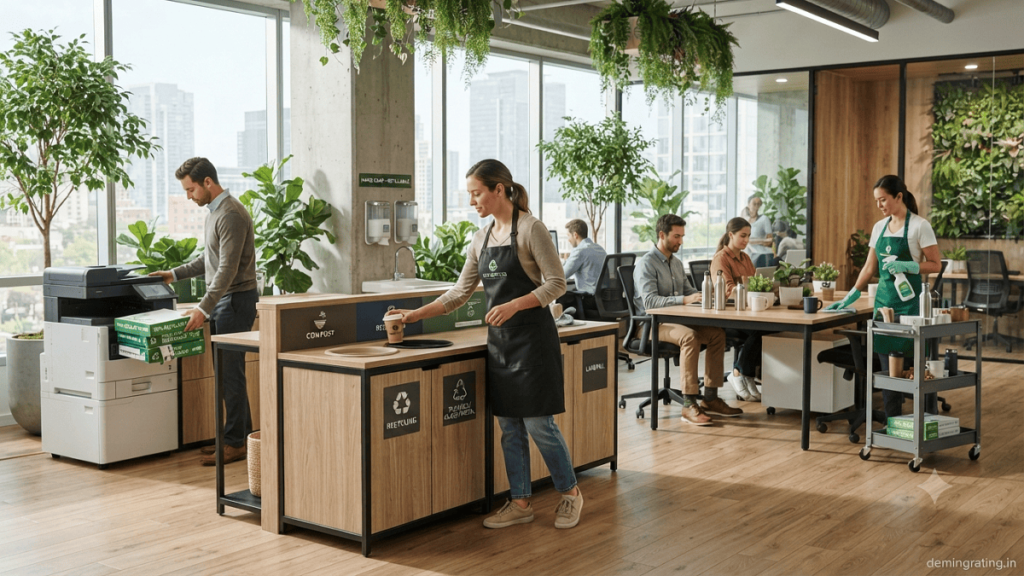
The purchase of green consumables has become an increasingly important practice across industries as organizations seek to reduce operational waste, conserve resources, improve workplace conditions, and meet sustainability objectives. Green consumables include frequently purchased products such as cleaning chemicals, paper products, sanitary supplies, office materials, waste liners, packaging, and food-service products that demonstrate verified environmental or health advantages.
Sustainable procurement is particularly valuable because consumables are purchased repeatedly. A small improvement in an individual product can therefore create significant cumulative benefits when implemented across multiple facilities or departments.
1. Corporate Offices
Corporate offices commonly purchase paper, toner, cleaning products, tissues, hand soaps, waste bags, and other consumables. Organizations can establish procurement requirements for recycled content, responsible sourcing, low-toxicity ingredients, reduced packaging, and refillable systems.
For cleaning products, the EPA’s Safer Choice program provides a framework for identifying products whose ingredients have been evaluated for human-health and environmental considerations.
Companies can also reduce paper consumption through digital workflows while specifying recycled-content paper for unavoidable printing.
2. Healthcare Facilities
Hospitals, clinics, nursing facilities, and laboratories consume substantial quantities of cleaning chemicals, disinfectants, paper products, gloves, packaging, and hygiene supplies.
Green procurement in healthcare requires a careful balance between sustainability and infection-control requirements. Products must meet applicable safety and performance standards before environmental considerations are applied.
Safer cleaning formulations, concentrated products, efficient dispensing systems, recycled-content paper products, and optimized packaging can support sustainability without compromising essential hygiene requirements.
3. Education Sector
Schools, colleges, universities, and training institutions can use green procurement for classroom supplies, cleaning chemicals, tissues, paper products, food-service items, and waste-management materials.
Educational facilities can particularly benefit from safer chemical purchasing because students and employees spend significant amounts of time indoors. Procurement policies can prioritize products with credible chemical-safety certifications and reduced packaging.
Universities can also use purchasing programs as opportunities to demonstrate sustainability principles to students and the wider community.
4. Hospitality Industry
Hotels, resorts, restaurants, and conference facilities purchase large volumes of consumables every day. These include housekeeping chemicals, toiletries, tissues, paper products, packaging, food-service disposables, and laundry products.
Hotels can reduce environmental impacts by using refillable amenity dispensers, concentrated cleaning products, recycled-content tissue, responsibly sourced paper products, and appropriately certified cleaning supplies.
The hospitality industry can also use purchasing standards as part of broader environmental-management programs designed to reduce waste and improve resource efficiency.
5. Retail and Commercial Facilities
Shopping centers, supermarkets, stores, and commercial properties require consumables for cleaning, employee facilities, packaging, customer services, and waste management.
Large retail organizations can achieve substantial environmental improvements by standardizing green purchasing specifications across multiple locations. Centralized procurement can make it easier to negotiate sustainable products, monitor consumption, and reduce unnecessary packaging.
6. Government and Public-Sector Buildings
Government agencies are significant purchasers of goods and services, making sustainable procurement an important policy tool. Offices, public libraries, municipal buildings, and public facilities can establish requirements for recycled-content products, safer cleaning chemicals, energy-efficient equipment, and environmentally preferable supplies.
The EPA’s Environmentally Preferable Purchasing program provides resources that institutional purchasers can use to identify products and services with reduced environmental impacts.
Public-sector purchasing can also influence suppliers by creating greater market demand for sustainable products.
7. Manufacturing and Industrial Facilities
Manufacturing facilities use consumables for cleaning, maintenance, packaging, employee hygiene, and administrative operations. Sustainable procurement can focus on reducing hazardous chemicals, improving packaging efficiency, increasing recycled content, and selecting products that minimize waste.
Industrial facilities can also integrate green purchasing into broader environmental management systems, allowing procurement data to contribute to waste-reduction and resource-efficiency targets.
8. Property Management and Facility Services
Property managers responsible for offices, apartment complexes, commercial buildings, and mixed-use developments can implement standardized green-consumables policies across multiple properties.
Facility-management companies can establish approved-product lists covering cleaning chemicals, paper goods, sanitary supplies, waste bags, and maintenance products. Standardization helps ensure that sustainability requirements remain consistent even when different contractors or suppliers are involved.
9. Food-Service and Catering Operations
Restaurants, cafeterias, corporate kitchens, schools, and catering companies can consider sustainable procurement for napkins, paper products, food packaging, cleaning products, and disposable serviceware.
Where appropriate infrastructure exists, reusable products can reduce single-use waste. Recycled-content and responsibly sourced paper products can also reduce dependence on virgin materials.
Compostable products should be selected carefully because their environmental benefit depends partly on whether suitable collection and processing facilities are available.
Conclusion
The purchase of green consumables has applications across corporate offices, healthcare, education, hospitality, retail, government, manufacturing, property management, and food-service operations. Each sector has different operational requirements, but the underlying procurement principles remain similar: select products that provide required performance while reducing unnecessary resource consumption, hazardous chemical exposure, packaging, and waste.
Successful industry implementation depends on establishing clear purchasing criteria, verifying environmental claims, engaging suppliers, monitoring consumption, and evaluating total life-cycle costs. Organizations should also avoid treating a single environmental attribute as proof that a product is sustainable.
When green procurement becomes part of routine purchasing rather than an occasional initiative, organizations can create measurable improvements in resource efficiency, waste reduction, workplace health, and environmental performance. This makes green consumables an important and practical component of sustainable building operations.
Relevant External Resources
- U.S. EPA – Environmentally Preferable Purchasing
- U.S. EPA – Safer Choice
- U.S. EPA – Institutional Purchasers
- U.S. EPA – Sustainable Materials Management
#GreenConsumables
Ask FAQs
What are green consumables?
Green consumables are frequently used and replaced products that are designed or selected to reduce environmental and health impacts. Examples include recycled-content paper, eco-certified cleaning products, refillable soaps, sustainable packaging, recycled waste bags, and responsibly sourced sanitary products. Their sustainability can be evaluated through factors such as material sourcing, chemical safety, packaging, resource efficiency, and end-of-life options.
How do green consumables benefit building operations?
Green consumables can help reduce waste, resource consumption, chemical exposure, and packaging impacts. Products such as concentrated cleaners and refillable supplies can also reduce storage and disposal requirements. When sustainable procurement is implemented consistently, organizations can incorporate environmental responsibility into everyday facility management.
What should organizations consider when purchasing green consumables?
Key criteria include recycled content, responsible sourcing, low toxicity, product performance, packaging efficiency, recyclability, biodegradability where appropriate, and credible environmental certifications. Buyers should also consider life-cycle costs rather than relying solely on the initial purchase price.
Are certified green consumables always more expensive?
Not necessarily. Some certified products may have a higher upfront price, but concentrated formulations, refill systems, efficient products, and reduced packaging can lower overall operating costs. Organizations should compare purchase price, consumption rates, maintenance, storage, disposal, and replacement costs to determine total value.
How can businesses avoid greenwashing when purchasing consumables?
Businesses should avoid relying solely on terms such as “natural,” “eco-friendly,” or “green.” Instead, they should look for recognized third-party certifications, documented recycled content, ingredient information, environmental specifications, and transparent supplier claims. Programs such as EPA Safer Choice provide a useful framework for evaluating certain cleaning products.
Table of Contents
Disclaimer: This content is for general informational purposes only. Sustainability claims, certifications, and product performance may vary by manufacturer and region. Verify current product information and certifications before purchasing.