
Distributed Power Generation: Definition, Benefits, Technologies, and Future Outlook
Distributed power generation refers to the production of electricity through relatively small-scale generating systems located close to where electricity is consumed. Unlike traditional centralized power plants, which generate electricity at large facilities and transmit it over long distances, distributed generation places power resources within or near residential, commercial, industrial, or community facilities. This approach is becoming increasingly important as electricity systems transition toward renewable energy, energy storage, smart grids, and more resilient infrastructure.
Distributed power generation can include rooftop solar photovoltaic systems, small wind turbines, fuel cells, microturbines, combined heat and power systems, small hydropower installations, and battery-supported generation systems. The U.S. Department of Energy identifies distributed energy resources as small-scale resources that can support electricity supply and grid operations closer to consumers.
How Distributed Power Generation Works
In a distributed generation system, electricity is produced near the point of consumption. For example, a commercial building may install rooftop solar panels to generate electricity during the day. Excess electricity can be stored in batteries or, depending on local regulations, Distributed Power Generation and interconnection arrangements, exported to the electricity grid.
Modern distributed generation increasingly operates as part of a broader distributed energy resource (DER) ecosystem. DERs can combine generation, energy storage, flexible electricity demand, electric vehicles, and smart control systems. The International Energy Agency notes that these resources are changing traditional electricity flows by allowing consumers to both consume Distributed Power Generation and produce electricity.
Major Benefits
One of the primary advantages of distributed power generation is reduced dependence on centralized electricity supply. Producing electricity closer to users can reduce transmission requirements and provide additional flexibility to the power system. Renewable distributed generation, particularly solar power, can also help organizations reduce reliance on fossil-fuel-based electricity and support decarbonization goals.
Distributed generation can also improve energy resilience. When combined with batteries and microgrids, local generation can help critical facilities maintain electricity service during grid outages. The U.S. Department of Energy highlights microgrids, Distributed Power Generation and distributed energy resources as tools that can strengthen resilience and support faster recovery from disruptions.
Challenges and Grid Integration
Despite its advantages, distributed power generation introduces technical and regulatory challenges. High levels of distributed solar and other DERs can affect voltage levels, power flows, system protection, and grid stability. NREL notes that increasing DER penetration can create issues such as overvoltage, reverse power flows, equipment overloading, Distributed Power Generation and protection coordination challenges.
Effective integration therefore requires advanced monitoring, smart inverters, improved forecasting, modern distribution management systems, appropriate interconnection standards, and supportive regulatory frameworks.
The Future of Distributed Power Generation
The future of distributed power generation is closely connected to digitalization, battery storage, electric vehicles, and virtual power plants. Aggregating thousands of small energy resources can allow them to operate collectively and provide valuable services to the electricity grid. The IEA identifies battery storage, flexible demand, smart buildings, electric vehicles, and virtual power plants as important components of the evolving distributed energy landscape.
As energy systems become more decentralized, distributed power generation is likely to play an increasingly significant role in creating electricity networks that are cleaner, more flexible, resilient, Distributed Power Generation and responsive to consumer needs.
Relevant External Resources
- U.S. Department of Energy – Distributed Energy Resources
- International Energy Agency – Unlocking the Potential of Distributed Energy Resources
- NREL – Distributed Generation Market Demand Model
- U.S. Department of Energy – Distributed Energy Resources and Microgrids Basics
#CleanEnergy
What Is Distributed Power Generation?
Distributed power generation is an approach to electricity production in which relatively small generating systems are installed close to the point where electricity is consumed. Instead of relying entirely on large power stations located far from consumers, distributed generation allows homes, businesses, industrial facilities, and communities to generate some or all of their electricity locally. Common examples include rooftop solar photovoltaic systems, small wind turbines, fuel cells, microturbines, small hydropower systems, Distributed Power Generation and combined heat and power units. The U.S. Energy Information Administration defines distributed generation as electricity generation located near the load it is intended to serve.
Distributed power generation is closely related to the broader concept of distributed energy resources (DERs). DERs can include not only local generation but also battery storage, electric vehicles, and flexible electricity demand. The International Energy Agency notes that these small-scale resources are generally situated near electricity users and are changing how electricity is generated, delivered, and consumed.
How Does It Differ From Centralized Power Generation?
The primary difference is where electricity is generated and how it reaches consumers. In a conventional centralized system, large power plants generate electricity at a relatively small number of locations. These facilities may include coal-fired, natural-gas, nuclear, large hydroelectric, or utility-scale renewable power plants. Electricity is then transported through high-voltage transmission networks before entering local distribution systems and ultimately reaching consumers.
Distributed generation reverses much of this traditional arrangement. Electricity is generated closer to the customer, reducing the distance between generation and consumption. For example, a factory may use a combined heat and power system, while a household may generate electricity using rooftop solar panels, Distributed Power Generation and store surplus electricity in batteries.
Another important distinction is the direction of electricity flow. Conventional grids were largely designed around one-way electricity movement—from centralized generators through transmission and distribution networks to consumers. With distributed generation, consumers can also become electricity producers, sometimes called “prosumers.” Excess electricity from local systems can flow back into the grid, creating bidirectional power flows.
Distributed generation can provide several benefits, including greater energy resilience, reduced dependence on distant generation, and opportunities to integrate renewable energy directly at the point of consumption. However, high levels of distributed generation can also create technical challenges, including voltage management, reverse power flows, Distributed Power Generation and the need for more advanced grid monitoring and control.
Overall, centralized generation remains important for supplying large amounts of electricity efficiently, while distributed power generation adds flexibility and local capacity. Modern electricity systems are increasingly combining both approaches to create a more flexible, resilient, and renewable energy network.
Relevant External Resources
- U.S. Energy Information Administration – Distributed Generation
- International Energy Agency – Unlocking the Potential of Distributed Energy Resources
- U.S. Environmental Protection Agency – Centralized Generation of Electricity
- IEEE – Distributed Power Generation
#EnergyEfficiency
What Renewable Energy Technologies Can Be Used for Distributed Power Generation?
Distributed power generation can use several renewable energy technologies to produce electricity close to the point of consumption. These systems are particularly valuable for homes, businesses, industries, farms, institutions, and remote communities because they can reduce dependence on centralized electricity networks while supporting cleaner and more resilient energy supply. India’s Ministry of New and Renewable Energy describes decentralized renewable energy systems as technologies that generate energy close to where it is consumed.
1. Solar Photovoltaic Systems
Solar photovoltaic (PV) is one of the most widely used technologies for distributed generation. Solar panels convert sunlight directly into electricity and can be installed on residential rooftops, commercial buildings, factories, schools, farms, and community facilities. Small PV systems can operate independently with batteries or remain connected to the electricity grid. The U.S. Department of Energy identifies rooftop photovoltaics as an important distributed energy resource.
2. Small Wind Turbines
Small-scale wind turbines can generate electricity for homes, farms, telecommunications facilities, and remote communities in locations with sufficient wind resources. Unlike large wind farms, distributed wind systems can be installed close to the electricity load. India’s National Power Training Institute recognizes domestic micro-wind turbines as an option for small-scale electricity generation.
3. Small and Micro Hydropower
Small hydropower and micro-hydropower systems use flowing or falling water to generate electricity. They can be particularly effective in rural and mountainous regions where suitable streams or rivers are available. In India, hydropower projects up to 25 MW are categorized as small hydro, with micro-hydro systems representing the smallest installations.
4. Biomass and Biogas Power
Biomass systems generate electricity from organic materials such as agricultural residues, forestry waste, organic waste, and other biological resources. Biogas can also be produced from organic waste Distributed Power Generation and used to generate electricity through suitable engines or generators. These systems can be especially useful in agricultural areas where biomass resources are locally available.
5. Geothermal Energy
Geothermal systems use heat from beneath the Earth’s surface to produce electricity. Although geothermal power is highly location-dependent, it can provide a relatively consistent renewable electricity source where suitable underground resources exist. NREL includes geothermal among the technologies that can be considered in renewable power systems.
6. Ocean and Tidal Energy
In suitable coastal locations, tidal, wave, and other marine-energy technologies can potentially support distributed electricity generation. These technologies remain less widely deployed than solar, wind, hydropower, and biomass, but they can provide additional renewable options for coastal communities and specialized applications.
Overall, solar PV, small wind, small hydropower, biomass/biogas, geothermal, and marine energy can all contribute to distributed renewable power generation. The most appropriate technology depends on local resource availability, electricity demand, available installation space, costs, environmental conditions, and grid connectivity. Hybrid systems that combine technologies such as solar, wind, Distributed Power Generation and battery storage can further improve reliability by balancing the variable output of renewable resources.
Relevant External Resources
- Ministry of New and Renewable Energy – Decentralised Renewable Energy
- U.S. Department of Energy – Distributed Energy Resources and Microgrids
- National Renewable Energy Laboratory – Electricity Technologies
- National Power Training Institute – Renewable Energy Mix
#Microgrid
How Can Distributed Power Generation Improve Energy Efficiency, Reliability, and Power Supply Resilience?
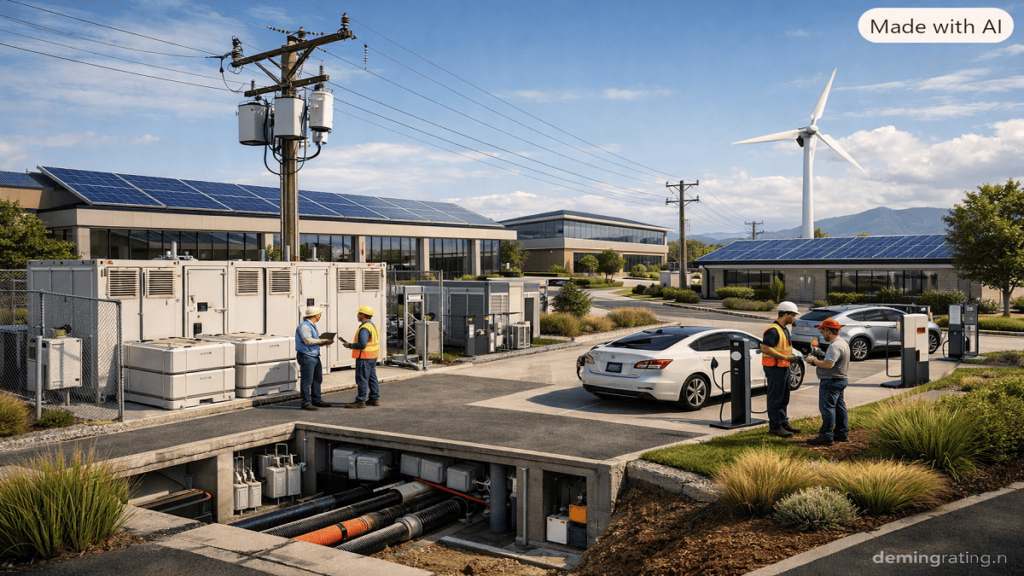
Distributed power generation can strengthen modern electricity systems by producing energy closer to where it is consumed. Unlike conventional centralized generation, which depends on large power plants and extensive transmission networks, distributed generation uses smaller resources such as rooftop solar, small wind systems, biomass generators, fuel cells, and battery storage. When these resources are properly integrated with smart grids and energy management systems, they can improve efficiency, reliability, Distributed Power Generation and resilience.
Improving Energy Efficiency
One of the main advantages of distributed generation is that electricity is produced close to the point of consumption. This can reduce the amount of electricity that must travel through transmission and distribution networks, potentially reducing network losses. Distributed resources can also be combined with energy storage and demand-response technologies to better match electricity supply with demand.
For example, a commercial building with rooftop solar can use locally generated electricity during periods of high daytime demand. A battery can store surplus electricity and discharge it during peak-demand periods. The U.S. Department of Energy notes that integrating distributed resources with customer loads can reduce peak demand and improve the utilization of grid assets.
Improving Electricity Reliability
Distributed generation provides additional sources of electricity instead of relying exclusively on a limited number of centralized power stations. If one generating facility experiences a problem, other distributed resources may continue supplying electricity.
Battery storage can further improve reliability by providing electricity when renewable generation temporarily falls or when the main grid experiences an interruption. Advanced inverters and intelligent control systems can also allow distributed resources to support voltage and frequency management. The International Energy Agency highlights the potential of distributed energy resources to provide valuable grid services when supported by appropriate technologies, regulations, Distributed Power Generation and market arrangements.
Strengthening Power Supply Resilience
Resilience refers to the ability of an electricity system to withstand disruptions and recover quickly from them. Distributed generation can significantly contribute to resilience when combined with batteries and microgrids. A microgrid can disconnect from the main electricity network and continue operating independently, allowing critical facilities such as hospitals, emergency centers, water-treatment plants, and communication facilities to maintain power during grid outages.
Local solar generation combined with battery storage is particularly useful because it can continue providing electricity without depending entirely on long-distance transmission lines. The Department of Energy notes that distributed generation and storage can provide local power when centralized systems are disrupted.
Conclusion
Distributed power generation can make electricity systems more efficient, reliable, and resilient by reducing dependence on distant generation, supporting peak-demand management, diversifying energy sources, and enabling local backup power. However, these benefits depend on effective grid planning, advanced controls, suitable interconnection standards, energy storage, and coordinated system management. As electricity networks become increasingly digital and renewable, distributed generation is likely to become an important component of a flexible and resilient power system.
Relevant External Resources
- U.S. Department of Energy – Distributed Energy Resources
- International Energy Agency – Unlocking the Potential of Distributed Energy Resources
- U.S. Department of Energy – Distributed Energy Resources and Microgrids
- U.S. Department of Energy – Resilient Distribution Systems
#SmartGrid
How Can Solar PV, Wind, Battery Storage, and Other Distributed Systems Be Integrated With the Electrical Grid?
Solar photovoltaic (PV), wind turbines, battery storage, electric vehicles, and other distributed energy resources (DERs) can be integrated with the electrical grid through advanced power electronics, intelligent control systems, modern grid infrastructure, and coordinated energy management. Unlike conventional power plants, distributed systems are often connected directly to local distribution networks or installed behind the customer meter. Their successful integration allows consumers to generate, store, and manage electricity while also providing valuable services to the wider grid. The International Energy Agency identifies distributed PV, battery storage, electric vehicles, and flexible demand as important components of modern electricity systems.
Connecting Renewable Generation to the Grid
Solar PV systems generate direct-current (DC) electricity, while most electrical grids operate using alternating current (AC). Therefore, inverters are required to convert electricity into a form that can be supplied to the grid. Modern smart inverters can do more than simple power conversion. They can regulate voltage and reactive power, respond to frequency changes, communicate with grid operators, and remain connected during certain disturbances. These capabilities help maintain grid stability as the share of inverter-based renewable generation increases.
Wind systems can similarly be connected through power converters and appropriate protection and control equipment. Because solar and wind generation varies according to sunlight and weather conditions, grid operators need accurate forecasting and flexible resources to maintain the balance between electricity supply and demand.
Integrating Battery Storage
Battery energy storage can compensate for some of the variability of renewable generation. Excess solar or wind electricity can be stored when production exceeds demand and discharged later when demand rises or renewable output decreases. Batteries can also provide fast-response services, including frequency regulation, peak-demand management, and other grid-support functions. The IEA identifies battery storage as one of the most versatile resources for providing power-system flexibility.
Using Smart Grids and Energy Management Systems
Digital technologies are essential for coordinating large numbers of distributed systems. Smart meters, sensors, automated controls, forecasting software, and distribution management systems provide utilities with greater visibility of electricity production and consumption. Aggregators can also combine many small systems into a virtual power plant (VPP), allowing distributed solar, batteries, electric vehicles, and flexible loads to operate collectively as a controllable grid resource.
Microgrids and Resilience
Distributed resources can also be integrated into microgrids. A microgrid can normally operate while connected to the main grid but can disconnect during an outage and operate independently when sufficient local generation and storage are available. This approach can help critical facilities maintain electricity during severe weather, equipment failures, or other disruptions.
Conclusion
Successful integration requires suitable interconnection standards, upgraded distribution networks, smart inverters, energy storage, forecasting, demand response, real-time monitoring, and appropriate market and regulatory frameworks. These measures are increasingly important as solar PV, wind, batteries, electric vehicles, and other DERs expand. The IEA emphasizes that greater system flexibility, grid upgrades, storage, and demand response are essential for securely integrating growing amounts of solar and wind generation.
Relevant External Resources
- U.S. Department of Energy – Distributed Energy Resources
- U.S. Department of Energy – Solar Systems Integration Basics
- International Energy Agency – Unlocking the Potential of Distributed Energy Resources
- International Energy Agency – Integrating Solar and Wind
- U.S. Department of Energy – Solar Integration: Inverters and Grid Services
#EnergyStorage
What Are the Environmental, Economic, and Operational Benefits of Implementing Distributed Power Generation?
Distributed power generation offers significant environmental, economic, and operational advantages by producing electricity closer to where it is consumed. Technologies such as rooftop solar PV, small wind turbines, biomass systems, battery storage, fuel cells, and combined heat and power can work individually or as part of a coordinated distributed energy system. According to the International Energy Agency (IEA), distributed energy resources can support decarbonization, improve resilience, provide flexibility, and create economic benefits for consumers and electricity systems. (IEA)
Environmental Benefits
One of the most important environmental benefits is the potential to reduce greenhouse gas emissions and local air pollution. When renewable distributed generation replaces electricity produced from fossil-fuel-based generation, the overall carbon intensity of electricity consumption can decrease. Rooftop solar, small wind, and other renewable technologies can therefore contribute to cleaner electricity production and support broader decarbonization objectives.
Distributed generation can also reduce the need to transmit electricity over long distances. Generating electricity closer to consumers can reduce certain transmission and distribution losses, although the actual savings depend on the location, technology, grid conditions, and operating pattern. The U.S. Department of Energy notes that distributed energy systems can reduce electrical losses and contribute to a more resilient energy infrastructure. (DOE)
Economic Benefits
Distributed generation can help consumers reduce electricity expenses by allowing them to generate some of their own electricity. A commercial building with rooftop solar, for example, can use locally generated power during periods of high demand and potentially reduce purchases from the grid. Battery storage can further increase economic value by storing electricity when it is inexpensive or abundant and supplying it when electricity demand or prices are higher.
At the system level, distributed resources can also help defer or reduce some investments in network infrastructure when appropriately planned. They can provide additional capacity during peak periods and deliver services such as demand response, frequency support, and energy balancing. The IEA reports that aggregated distributed resources can improve system efficiency and provide flexibility that may reduce the need for some conventional infrastructure investments. (IEA)
Distributed energy development can also create employment opportunities in manufacturing, installation, engineering, maintenance, software, and energy management. This can support local economic activity while increasing access to modern energy technologies.
Operational Benefits
Operationally, distributed generation can improve grid flexibility, reliability, and resilience. A diversified network of smaller generation and storage resources reduces dependence on individual large generating facilities. Battery storage can respond quickly to changes in electricity demand and renewable output, while smart controls can coordinate multiple distributed resources.
Distributed systems can also be integrated into microgrids. During a grid outage, a properly designed microgrid can disconnect from the main network and continue supplying selected critical loads. This can be particularly valuable for hospitals, emergency facilities, data centers, water infrastructure, and industrial operations. The U.S. Department of Energy highlights microgrids as an important tool for improving grid resilience and supporting faster recovery from disruptions. (DOE)
Conclusion
Overall, distributed power generation can deliver benefits across the entire energy system. Environmentally, it can support renewable energy adoption and reduce emissions. Economically, it can lower energy costs, create local employment, and provide additional value through flexibility services. Operationally, it can improve reliability, resilience, and the ability of the electricity grid to manage changing demand and variable renewable generation.
However, these benefits are not automatic. Effective planning, grid modernization, appropriate interconnection standards, energy storage, digital monitoring, and supportive regulatory and market frameworks are essential to maximize the value of distributed generation.
Relevant External Resources
- International Energy Agency – Unlocking the Potential of Distributed Energy Resources
- U.S. Department of Energy – Distributed Energy Resources
- U.S. Department of Energy – Distributed Energy Systems Demonstrations
- International Energy Agency – The Value of Demand Flexibility
- U.S. Department of Energy – Distributed Energy Resources for Resilience
#WindEnergy
Case Study of Distributed Power Generation: Solar-Battery Microgrid in Harnoo, India
A practical example of distributed power generation can be seen in Harnoo, a remote village in rural India, where a locally developed renewable-energy microgrid has helped address unreliable electricity access. The project demonstrates how distributed generation can combine multiple renewable technologies with energy storage to provide electricity closer to where it is needed.
Before 2019, Harnoo had limited and unreliable access to electricity. According to the U.S. Department of Energy, the village had no conventional electricity infrastructure such as poles, wires, or household outlets and relied on sporadic electricity from a nearby distribution feeder. Researchers and local technicians subsequently worked with the community to develop a microgrid based on biomass, solar energy, and battery storage. The system also incorporated solar-powered pumps for agricultural irrigation.
System Configuration
The Harnoo project illustrates an important characteristic of distributed power generation: different local energy resources can be integrated into a single system. Solar PV provides electricity when sunlight is available, while biomass generation can provide an additional source of power using locally available organic materials. Battery storage helps balance generation and demand by storing electricity when production exceeds immediate consumption and supplying stored energy when renewable generation is insufficient.
The microgrid approach is particularly valuable for remote communities because electricity does not have to depend entirely on long transmission and distribution networks. A microgrid can manage local generation and loads and, where properly designed, can operate independently from the main grid during interruptions. The U.S. Department of Energy explains that distributed energy resources and microgrids can support local electricity supply and improve resilience during grid disruptions.
Community and Economic Benefits
The impact of the Harnoo project extended beyond basic electricity supply. The distributed system supported a women’s agricultural cooperative, enabled solar-powered irrigation, and contributed to improvements in education and overall living conditions. These outcomes demonstrate that distributed generation can support productive activities rather than simply providing household electricity.
From an energy-system perspective, the project also demonstrates how renewable generation and storage can be matched to local requirements. Instead of building a large centralized power station and relying on extensive transmission infrastructure, energy resources are deployed where demand exists.
Key Lessons
The Harnoo case study highlights several important lessons for distributed power generation. First, combining multiple technologies can improve the flexibility of a local energy system. Second, battery storage can help manage fluctuations in renewable generation. Third, distributed generation can be particularly useful in remote locations where extending conventional grid infrastructure may be difficult or expensive. Finally, successful projects should consider community needs, productive energy uses, local resources, and long-term operation and maintenance.
Overall, Harnoo demonstrates how solar power, biomass generation, battery storage, and intelligent microgrid design can work together to create a localized and more resilient electricity supply. Similar distributed systems can potentially support rural electrification, agricultural development, critical infrastructure, and community resilience in regions where conventional centralized electricity infrastructure is limited.
Relevant External Resources
- U.S. Department of Energy – Harnoo Microgrid Case Study
- U.S. Department of Energy – Distributed Energy Resources and Microgrids
- International Energy Agency – Unlocking the Potential of Distributed Energy Resources
- Oxford Academic – Renewable Microgrid Case Study in India
#SolarEnergy
White Paper on Distributed Power Generation
Executive Summary
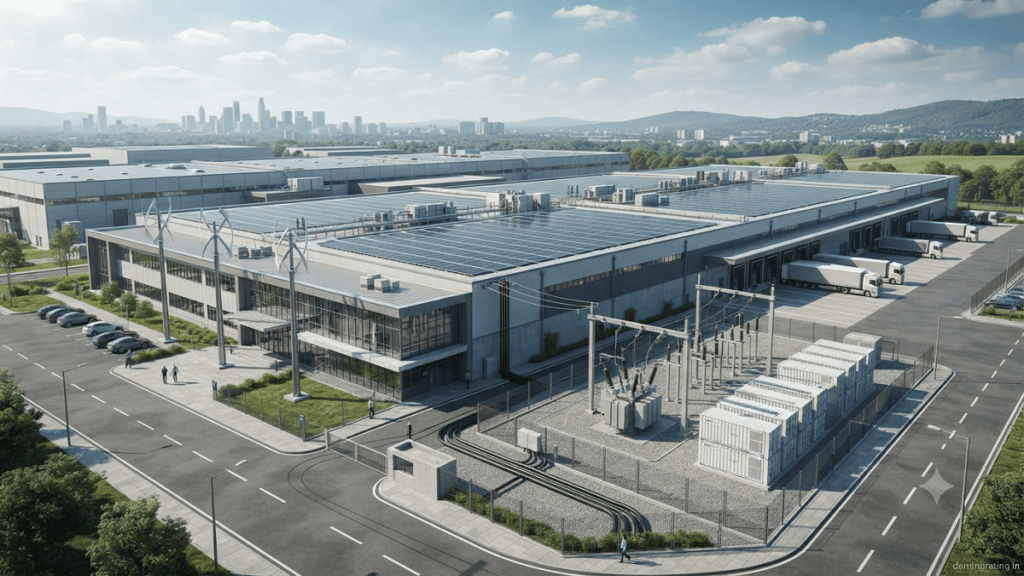
Distributed power generation is transforming the conventional electricity model by moving a portion of electricity production closer to consumers. Instead of depending exclusively on large centralized power stations and long-distance transmission networks, distributed generation uses smaller energy resources located at or near the point of consumption. These resources may include solar photovoltaic (PV), small wind turbines, biomass and biogas systems, small hydropower, fuel cells, combined heat and power, and battery energy storage.
India’s Ministry of New and Renewable Energy (MNRE) describes decentralized renewable energy systems as technologies that generate energy close to where it is consumed. Such systems can reduce dependence on centralized transmission and distribution infrastructure while supporting reliable, affordable, and clean energy access, particularly in remote and underserved areas.
1. Introduction
Traditional electricity systems are primarily based on centralized generation. Large power plants generate electricity that is transmitted over high-voltage networks and distributed to consumers. While this model remains important for supplying large-scale electricity demand, increasing renewable-energy deployment, electrification, extreme-weather risks, and changing consumption patterns are creating demand for more flexible and decentralized solutions.
Distributed power generation provides an alternative or complementary approach. It enables homes, commercial buildings, industries, farms, institutions, and communities to generate electricity locally. When combined with energy storage, smart inverters, digital controls, and microgrids, distributed resources can also provide services to the wider electricity network.
The importance of grid integration is increasing rapidly. In March 2026, the Government of India reported that transmission planning was being undertaken to integrate more than 500 GW of renewable-energy capacity by 2030, alongside investments in grid modernization and storage.
2. Key Technologies
Solar PV is currently one of the most accessible distributed-generation technologies because systems can be installed on rooftops, parking structures, industrial facilities, and community buildings. Small wind systems can serve locations with suitable wind resources, while biomass and biogas systems can convert locally available organic materials into useful electricity.
Battery energy storage is increasingly important because it allows electricity generated during periods of high renewable output to be stored and used later. Hybrid systems can combine solar, wind, storage, and other technologies to improve reliability and reduce the effects of renewable intermittency.
3. Grid Integration
Integrating distributed generation requires appropriate technical standards, protection systems, communication networks, smart meters, advanced inverters, and distribution-system controls. These systems must manage voltage, frequency, power quality, reverse power flows, and changing electricity flows.
India has taken an important step in this area through the adoption of IS 18968:2025, which is based on IEEE 1547-2018 and addresses the interconnection and interoperability of distributed energy resources with electric power systems. (BIS)
Forecasting and system flexibility are also essential. India’s power-sector authorities are using Renewable Energy Management Centres, forecasting, scheduling, storage, and grid-support technologies to manage increasing renewable penetration. (PIB)
4. Environmental Benefits
Distributed renewable generation can reduce dependence on fossil-fuel-based electricity and contribute to lower greenhouse-gas emissions. Local renewable generation can also reduce certain network losses because electricity is produced closer to consumers.
Beyond emissions reduction, decentralized renewable energy can support energy access in rural and remote communities. MNRE identifies applications including household energy, agriculture, healthcare, education, enterprises, and community services.
5. Economic Benefits
Distributed generation can provide consumers with greater control over their energy costs. Rooftop solar can reduce electricity purchases from the grid, while batteries can help manage demand and optimize the timing of electricity consumption.
At the system level, distributed resources can provide flexibility, peak-demand support, and ancillary services. They can also create economic opportunities in installation, maintenance, manufacturing, software, energy management, and related services.
However, economic performance depends on technology costs, electricity tariffs, financing, local solar or wind resources, maintenance requirements, grid-connection costs, and applicable regulations.
6. Reliability and Resilience
Distributed generation can improve resilience by diversifying electricity sources. When combined with batteries and microgrids, local generation can continue supplying selected critical loads during grid disruptions.
Microgrids are particularly valuable for hospitals, emergency services, telecommunications, water systems, industrial facilities, and remote communities. Their ability to operate independently from the main grid can reduce the impact of certain outages and improve recovery capabilities.
7. Challenges and Considerations
Despite its advantages, distributed generation creates technical and institutional challenges. High penetration of rooftop solar and other inverter-based resources can affect voltage regulation, protection coordination, power flows, and distribution-network operations.
There are also challenges related to forecasting, cybersecurity, interoperability, financing, consumer participation, electricity-market design, and regulatory frameworks. Effective planning is therefore essential to ensure that distributed resources complement rather than destabilize the existing grid.
India’s recent grid-integration initiatives emphasize transmission expansion, storage deployment, forecasting, real-time grid management, and advanced grid-support technologies as part of the broader renewable-energy transition. (PIB)
8. Strategic Recommendations
For distributed power generation to reach its full potential, stakeholders should focus on several priorities:
- Modernize distribution networks with automation, sensors, smart meters, and advanced control systems.
- Adopt clear interconnection standards that establish technical requirements for distributed resources.
- Expand energy storage to manage renewable variability and provide grid-support services.
- Develop flexible electricity markets that allow distributed resources to participate in demand response and ancillary services.
- Promote hybrid systems and microgrids for critical facilities and underserved communities.
- Strengthen forecasting and digital monitoring to improve system visibility and operational planning.
- Encourage consumer participation through suitable tariffs, incentives, and mechanisms for exporting electricity to the grid.
- Invest in workforce development so utilities and service providers have the technical expertise required to operate increasingly decentralized networks.
Conclusion
Distributed power generation represents an important evolution of the electricity sector. Rather than replacing centralized power generation completely, it can complement large-scale generation by bringing additional capacity, flexibility, renewable energy, and resilience closer to consumers.
The combination of distributed solar, wind, biomass, batteries, electric vehicles, smart inverters, demand response, and microgrids can create a more flexible electricity system. For India and other rapidly developing energy markets, distributed generation also offers an opportunity to improve energy access while supporting decarbonization and economic development.
The long-term success of distributed power generation will depend not only on installing generation capacity but also on developing the grid infrastructure, standards, markets, storage, digital technologies, and regulatory frameworks needed to integrate these resources effectively. With coordinated planning and investment, distributed generation can become a major component of a cleaner, more reliable, resilient, and consumer-focused electricity system.
Relevant External Resources
- Ministry of New and Renewable Energy – Decentralised Renewable Energy
- Ministry of Power – Renewable Energy Grid Integration
- Bureau of Indian Standards – IS 18968:2025
- International Energy Agency – Unlocking the Potential of Distributed Energy Resources
- U.S. Department of Energy – Distributed Energy Resources
#RenewableEnergy
Industry Applications of Distributed Power Generation
Distributed power generation has become an important component of modern industrial energy management. Instead of depending entirely on electricity supplied by large centralized power stations, industrial facilities can generate electricity close to their operations using technologies such as solar PV, wind, biomass, biogas, combined heat and power (CHP), fuel cells, and battery energy storage. These systems can be installed individually or integrated into microgrids to support industrial productivity, reduce energy costs, and improve power reliability.
Manufacturing and Industrial Facilities
Manufacturing plants are among the most important applications for distributed generation because they often have large and continuous electricity requirements. Rooftop or ground-mounted solar PV systems can supply part of a facility’s daytime electricity demand, while battery storage can help manage fluctuations in renewable generation and peak electricity consumption.
Industries with simultaneous electricity and thermal-energy requirements can benefit from combined heat and power. CHP systems generate electricity while recovering useful heat for industrial processes, heating, or cooling. The U.S. Department of Energy identifies CHP as an efficient technology for facilities that require both electricity and thermal energy. (DOE)
Data Centers and Critical Infrastructure
Data centers require highly reliable electricity because even short interruptions can cause operational and financial losses. Distributed generation can be combined with battery storage and backup systems to provide additional resilience.
A microgrid can coordinate local generation, storage, and electricity demand, allowing critical loads to continue operating during certain grid disruptions. The U.S. Department of Energy recognizes microgrids as an important approach for improving energy resilience and integrating distributed energy resources.
Agriculture and Food Processing
Agriculture can use distributed generation for irrigation, crop processing, refrigeration, grain milling, and other electricity-intensive activities. Solar-powered irrigation systems can reduce dependence on diesel-powered pumps, while agricultural residues can potentially be used as biomass fuel for electricity or combined heat and power.
Food-processing facilities can also benefit from biogas systems that convert organic waste into useful energy. This approach can simultaneously address waste-management requirements and generate electricity or heat for facility operations.
Mining and Remote Industrial Operations
Mining sites and remote industrial facilities are often located far from conventional electricity infrastructure. Extending transmission networks to these locations can be expensive and technically challenging. Distributed generation can provide a localized alternative through combinations of solar PV, wind, battery storage, and other generation technologies.
Hybrid renewable systems can reduce dependence on diesel generators while maintaining a reliable electricity supply. Battery storage can help balance renewable output and reduce the operating time of conventional backup generators.
Commercial Buildings and Facilities
Hotels, hospitals, shopping centers, office complexes, warehouses, and educational institutions can use distributed generation to reduce grid electricity consumption and improve energy resilience. Rooftop solar is particularly suitable for facilities with large roof areas and significant daytime electricity demand.
When combined with building energy-management systems, distributed generation can be coordinated with heating, ventilation, air-conditioning, lighting, and other loads. This can improve energy efficiency and help facilities respond to changing electricity demand.
Industrial Microgrids
One of the most advanced applications is the industrial microgrid, which combines multiple distributed energy resources with intelligent control systems. A microgrid can coordinate solar PV, wind generation, batteries, CHP, backup generators, and flexible industrial loads.
Under normal conditions, the microgrid can operate in coordination with the utility grid. During a grid outage, it can potentially disconnect and continue supplying prioritized loads. This capability is particularly valuable for industries where power interruptions can damage equipment, interrupt production, or result in significant financial losses.
Benefits to Industry
The major industrial benefits of distributed power generation include improved energy reliability, reduced electricity costs, greater renewable-energy utilization, improved resilience, and potentially lower carbon emissions. Distributed systems can also provide greater control over energy consumption and reduce exposure to fluctuations in electricity prices.
The International Energy Agency highlights distributed energy resources such as solar PV, batteries, demand response, and electric vehicles as important sources of flexibility for modern power systems.
Conclusion
Distributed power generation has applications across manufacturing, agriculture, mining, data centers, healthcare, commercial facilities, and other energy-intensive industries. Its greatest value often comes from combining local renewable generation with storage, efficient energy management, and microgrid controls.
As industries pursue greater energy security, lower operating costs, and decarbonization, distributed generation is likely to become increasingly important. Successful implementation requires careful assessment of electricity demand, available renewable resources, grid conditions, technology costs, storage requirements, and applicable regulations. When properly designed, distributed generation can transform industrial energy management from a model based primarily on electricity consumption into one based on local generation, intelligent energy management, flexibility, and resilience.
Relevant External Resources
- U.S. Department of Energy – Combined Heat and Power Basics
- U.S. Department of Energy – Distributed Energy Resources and Microgrids
- International Energy Agency – Unlocking the Potential of Distributed Energy Resources
- U.S. Department of Energy – Industrial Technologies Office
- International Renewable Energy Agency – Renewable Energy in Industry
#DistributedPowerGeneration
Ask FAQs
What is distributed power generation?
Distributed power generation refers to producing electricity through small- or medium-scale energy systems located close to where the electricity is consumed. Examples include rooftop solar PV, small wind turbines, biomass systems, battery storage, fuel cells, and combined heat and power systems. Unlike centralized generation, which relies on large power plants and long-distance transmission networks, distributed generation can supply electricity locally and may also export surplus power to the grid.
What are the main benefits of distributed power generation?
The major benefits include improved energy efficiency, greater electricity reliability, reduced transmission losses, increased renewable-energy use, and improved power resilience. Businesses and industries can potentially reduce electricity costs by generating some of their own power and using battery storage to manage demand. Distributed systems can also provide backup power when combined with microgrids and appropriate control technologies.
Which renewable technologies are commonly used for distributed generation?
Solar photovoltaic systems are among the most widely used distributed renewable technologies because they can be installed on rooftops and other available spaces. Other options include small wind turbines, micro- and small hydropower, biomass and biogas systems, and geothermal technologies in suitable locations. Hybrid systems can combine multiple technologies with battery storage to provide a more reliable electricity supply.
Can distributed generation be connected to the main electricity grid?
Yes. Distributed generation can operate either independently or while connected to the utility grid. Grid-connected systems use equipment such as inverters, protection devices, smart meters, and control systems to ensure safe and stable operation. When local generation produces more electricity than the facility requires, surplus electricity may be exported to the grid where regulations and utility arrangements permit it.
How can distributed generation improve industrial energy resilience?
Distributed generation can reduce an industry’s dependence on a single centralized electricity source. Solar PV, wind, batteries, combined heat and power, and other technologies can be integrated into an industrial microgrid. During a grid outage, a properly designed microgrid may disconnect from the main grid and continue supplying critical equipment. This can help reduce production interruptions, protect sensitive equipment, and support continuity of essential operations.
Table of Contents
Disclaimer: The information provided is for general informational purposes only. Readers should verify technical, financial, regulatory, and safety requirements with qualified professionals and relevant authorities before making decisions related to distributed power generation.