
GGBC Green Factory Building Rating System
What Is the GGBC Green Factory Building Rating System and Why Is It Important?
The GGBC Green Factory Building Rating System is a structured framework for evaluating and encouraging sustainable practices in factory and industrial buildings. It provides project teams with a systematic approach to incorporate environmental performance, resource efficiency, occupant well-being, and responsible site development into the planning, design, construction, and operation of industrial facilities.
The Green Factory Building Rating System is described as a voluntary and consensus-based programme developed around materials, technologies, and practices available for Indian projects. It is designed to facilitate factories that are more energy efficient, water efficient, environmentally responsible, and healthier for factory workers. The system uses both prescriptive requirements and performance-based approaches, allowing projects to demonstrate sustainability through specific measures as well as measurable performance.
What Does the Rating System Address?
The rating system takes a holistic approach to factory buildings rather than focusing on a single environmental parameter. Depending on the applicable version and project requirements, areas of assessment include site selection and planning, water conservation, energy efficiency, materials and resources, indoor environmental quality, and other sustainable building practices.
An important characteristic of the system is that it focuses on the building and associated infrastructure, rather than the industrial manufacturing process itself. This distinction helps project teams understand which aspects of an industrial facility can be addressed through green-building design and operational strategies.
Why Is It Important for Industrial Projects?
Industrial buildings typically have substantial requirements for energy, water, materials, transportation, lighting, ventilation, and waste management. Applying a structured green-building rating system can help identify opportunities to reduce resource consumption and environmental impacts while improving working conditions.
The system also places importance on occupational health, comfort, and indoor environmental quality. Appropriate daylighting, ventilation, thermal comfort, and air-quality strategies can create healthier working environments and potentially support employee productivity.
From a resource-management perspective, efficient energy and water systems can help reduce operational consumption and associated costs. Sustainable site planning can address issues such as soil erosion, stormwater management, heat-island effects, and alternative transportation.
Certification and Project Value
The rating framework provides a recognizable method for demonstrating that sustainability measures have been incorporated into an industrial development. This can help owners, developers, design professionals, facility managers, and other stakeholders establish measurable sustainability objectives and document their implementation.
The broader importance of green factory certification is that it connects environmental responsibility with industrial performance. A well-designed factory can reduce resource consumption while maintaining its functional requirements and providing a better environment for workers.
For industries seeking to improve their environmental performance, the GGBC Green Factory Building Rating System therefore provides a practical framework for integrating sustainability into factory development. It encourages project teams to consider environmental performance from the earliest planning stages rather than treating sustainability as an additional feature after construction.
External references: Green Factory Building Rating System – Official Reference | GGBC Green Factory Building Version 2.0 Reference Document
#WaterConservation
What Are the Key Criteria Evaluated Under the GGBC Green Factory Building Rating System?
The GGBC Green Factory Building Rating System evaluates an industrial facility through a comprehensive set of sustainability criteria covering the building’s site, resource consumption, environmental performance, and the health and well-being of factory occupants. The framework is intended specifically for factory buildings rather than manufacturing processes and can be applied to new as well as existing factory buildings.
The major evaluation categories are as follows:
1. Site Selection and Planning
This category focuses on responsible development of the factory site. It considers aspects such as sustainable site planning, soil erosion prevention and control, landscaping, stormwater management, heat-island reduction, and facilities that encourage sustainable transportation. The objective is to minimize environmental impacts associated with site development and improve the overall ecological performance of the facility.
2. Water Conservation
Water efficiency is an important criterion because industrial facilities can have significant water requirements. The rating system evaluates strategies for reducing potable-water consumption, improving water efficiency, managing wastewater, and promoting water reuse and rainwater management. Effective water conservation can reduce pressure on local water resources and lower operating costs.
3. Energy Conservation
Energy performance is another major component. Projects are encouraged to improve building energy efficiency through efficient lighting, HVAC systems, building-envelope strategies, energy-efficient equipment, renewable-energy integration, and appropriate energy-management practices. The rating system uses both prescriptive and performance-based approaches for evaluating certain credits.
4. Materials Conservation
This criterion addresses the responsible selection and use of building materials and resources. Projects can focus on recycled or locally appropriate materials, efficient material use, waste reduction, construction waste management, and environmentally preferable products. The objective is to reduce the environmental impacts associated with material extraction, manufacturing, transportation, and disposal.
5. Indoor Environmental Quality and Occupational Health
Factory workers spend substantial time within industrial buildings, making indoor environmental quality particularly important. This category addresses factors such as indoor air quality, ventilation, daylighting, thermal comfort, and occupational health and safety. The rating system recognizes improved indoor conditions as an important benefit of green factory development.
6. Innovation and Design Process
The system also provides an opportunity for projects to demonstrate innovative sustainability strategies that go beyond conventional requirements. This encourages project teams to develop solutions suited to the site’s specific environmental, operational, and climatic conditions.
Overall, these criteria provide a holistic framework for evaluating factory sustainability. Projects must satisfy applicable mandatory requirements and achieve the required number of credit points for certification. Certification levels are determined by the total points achieved, with Certified, Silver, Gold, and Platinum levels available for eligible projects.
External reference: GGBC Green Factory Building Rating System – Official Reference
#EnergyEfficiency
How Can Factories Improve Energy, Water, Waste, and Resource Efficiency to Achieve a Better Rating?
Factories can improve their performance under the GGBC Green Factory Building Rating System by adopting measurable strategies that reduce energy consumption, conserve water, minimize waste, and use materials and resources more efficiently. The rating system is designed to address factory buildings rather than manufacturing processes and evaluates green features across categories including Water Conservation, Energy Conservation, Materials Conservation, Site Selection and Planning, Indoor Environmental Quality and Occupational Health, and Innovation & Design Process.
1. Improve Energy Efficiency
Factories can begin by conducting an energy audit to identify major consumption areas and opportunities for improvement. High-efficiency LED lighting, occupancy sensors, efficient motors, pumps, HVAC systems, variable-frequency drives, and energy-efficient equipment can reduce electricity demand. Building-envelope improvements, such as appropriate insulation, efficient glazing, shading, and daylighting, can further reduce cooling and lighting requirements.
Where feasible, factories can also integrate solar photovoltaic systems or other renewable-energy solutions to offset grid electricity consumption. Energy meters and sub-metering can help facility managers monitor performance and identify abnormal consumption. The GGBC framework uses both prescriptive and performance-based approaches for evaluating certain credits, making actual performance an important consideration.
2. Reduce Water Consumption
Water efficiency can be improved through low-flow fixtures, efficient process-related building services, leak detection, water metering, and rainwater harvesting. Factories can also reuse treated wastewater for suitable non-potable applications such as landscaping, flushing, or cooling-tower requirements where technically appropriate.
Regular monitoring of water consumption allows facility managers to establish benchmarks and quickly identify leaks or inefficient operations.
3. Strengthen Waste Management
Factories should establish systems for segregation, collection, storage, recycling, reuse, and responsible disposal of waste generated from building operations. Recyclable materials should be separated at source, while hazardous and non-hazardous waste should be handled according to applicable regulations.
Construction waste management is also important for new developments. Materials that can be reused or recycled should be identified early, reducing the quantity of waste sent to landfill.
4. Optimize Materials and Resources
Factories can improve resource efficiency by selecting durable, responsibly sourced, recycled, recyclable, and locally appropriate materials where suitable. Efficient material planning can reduce cutting waste, packaging waste, and unnecessary consumption. Procurement policies can also prioritize environmentally preferable products and materials with relevant environmental credentials.
5. Measure, Maintain, and Improve
Achieving a better GGBC rating requires more than installing efficient equipment. Factories should establish performance targets, monitoring systems, commissioning procedures, maintenance schedules, and documentation. Regular measurement of energy, water, and waste performance allows improvements to be quantified and sustained.
The GGBC rating system is intended to facilitate energy-efficient, water-efficient, healthy, productive, and environmentally responsible factories, with certification awarded according to mandatory requirements and achieved credit points.
Overall, the strongest approach is to treat resource efficiency as an integrated management strategy. Combining efficient technologies, renewable energy, water reuse, waste reduction, responsible material selection, and continuous performance monitoring can improve both the environmental performance and operational efficiency of a factory while supporting a higher GGBC rating.
External reference: GGBC Green Factory Building Rating System – Official Reference
#IndustrialSustainability
What Are the Benefits of Adopting GGBC Green Building Practices in Industrial Facilities?
Adopting GGBC green building practices can provide industrial facilities with significant environmental, operational, financial, and workforce-related benefits. The Green Factory Building Rating System is designed to support factories that are energy efficient, water efficient, healthy, productive, and environmentally responsible. It evaluates the factory building and associated infrastructure rather than the manufacturing process itself.
1. Reduced Energy Consumption
Energy-efficient lighting, HVAC systems, motors, pumps, building-envelope improvements, energy monitoring, and renewable-energy systems can help factories reduce electricity consumption. According to the official Green Factory Building rating information, green factory projects can achieve energy savings of around 30–40%, depending on project-specific design and operational conditions.
Lower energy consumption can reduce operating expenses while also decreasing the environmental impact associated with electricity use.
2. Improved Water Efficiency
Industrial facilities can reduce potable-water demand through efficient plumbing fixtures, rainwater harvesting, wastewater treatment, water reuse, leak detection, and effective monitoring. The official rating-system information indicates potential water savings of approximately 20–30% for green factory buildings.
These measures can help factories reduce pressure on local water resources and improve long-term water security.
3. Better Waste and Resource Management
GGBC practices encourage responsible material selection, efficient resource use, recycling, reuse, and construction-waste management. Better waste segregation and recovery can reduce the quantity of material sent to disposal while improving resource utilization.
Factories can also benefit from selecting durable and environmentally preferable materials, helping reduce resource consumption over the building’s operational life.
4. Healthier Working Conditions
A major benefit of green factory development is improved indoor environmental quality and occupational health. Strategies involving ventilation, indoor air quality, daylighting, thermal comfort, and appropriate workplace design can contribute to healthier working conditions. The rating system specifically identifies enhanced indoor air quality, good daylighting, health and well-being, and worker safety as important benefits.
5. Improved Workforce Productivity and Well-being
A better workplace environment can support employee comfort, health, and productivity. Green-building research associated with the rating-system framework also considers relationships between sustainable workplaces, employee well-being, productivity, and business performance.
6. Lower Environmental Impact
Energy conservation, water efficiency, sustainable site planning, responsible materials, waste reduction, and improved transportation infrastructure collectively reduce the environmental footprint of an industrial facility.
7. Stronger Sustainability Performance and Recognition
Achieving a higher GGBC rating provides a structured way for industrial organizations to demonstrate their commitment to sustainable development. The rating system awards certification levels based on mandatory requirements and total credits achieved, ranging from Certified to Platinum for new factories.
Overall, GGBC green-building practices can help factories combine resource efficiency, cost optimization, environmental responsibility, worker well-being, and long-term operational performance. The greatest value comes when sustainability measures are integrated during the early stages of planning and maintained throughout the facility’s operational life.
External reference: GGBC Green Factory Building Rating System – Official Reference
#SustainableFactories
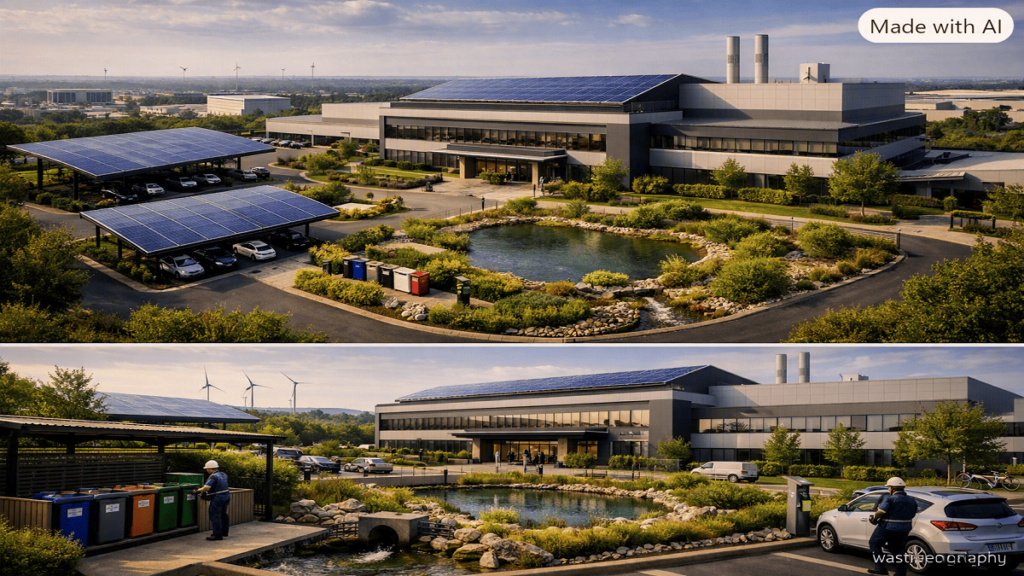
What Are the Key Steps for Achieving and Maintaining GGBC Certification for a Green Factory Building?
Achieving GGBC Green Factory Building certification requires a structured process that begins with selecting the appropriate rating system and continues through planning, design, construction, documentation, review, and ongoing performance management. The rating system is voluntary and consensus-based and is intended to promote energy-efficient, water-efficient, healthy, productive, and environmentally responsible factory buildings.
1. Select the Appropriate GGBC Rating System
The project team should first determine whether the factory is a new or existing facility and identify the applicable rating-system version. The project’s scope, building areas, operational characteristics, and sustainability objectives should be reviewed before registration.
2. Register the Project
After confirming eligibility, the project should be registered under the applicable Green Factory Building rating programme. Early registration is beneficial because it allows sustainability requirements to be incorporated into the design rather than added after major decisions have already been made. The official resources provide the applicable rating-system documents and project guidance. (
3. Establish a Green Building Project Team
A multidisciplinary team should be formed, involving the owner, architect, MEP consultants, landscape professionals, energy and water specialists, facility-management representatives, and other relevant stakeholders. Including a qualified green-building professional can help coordinate documentation and identify opportunities for additional credits.
4. Assess Mandatory Requirements and Credits
The team should review every applicable mandatory requirement and potential credit under categories such as site selection and planning, water conservation, energy conservation, materials conservation, indoor environmental quality and occupational health, and innovation and design process. The project should establish a target rating and create an action plan for achieving the required points.
5. Integrate Strategies During Design and Construction
Measures such as energy-efficient systems, water-efficient fixtures, rainwater management, renewable energy, waste segregation, responsible material selection, soil erosion control, daylighting, ventilation, and sustainable transportation should be incorporated into the project. Implementing these strategies during design is generally more effective than making changes after construction.
6. Maintain Comprehensive Documentation
Documentation is essential for demonstrating that the claimed requirements and credits have actually been implemented. Project teams should maintain drawings, calculations, specifications, product information, photographs, commissioning records, test reports, invoices, and operational data as applicable.
7. Submit for Review and Certification
The completed documentation is submitted for evaluation against the applicable GGBC rating requirements. The project must satisfy mandatory requirements and achieve the required number of points for its targeted certification level. The official Green Factory Building programme provides the applicable rating-system framework and certification information.
8. Maintain Performance After Certification
Certification should not be treated as the end of the sustainability process. Facility teams should continue monitoring energy, water, waste, indoor environmental quality, landscape performance, and other relevant parameters. Preventive maintenance, periodic audits, staff awareness, and performance tracking help preserve the benefits achieved during certification.
Renewal is also an important part of long-term green-building performance. The certification body encourages renewal so owners and facility managers can continue improving energy and water performance and potentially achieve a higher rating.
Overall, successful GGBC certification depends on early planning, multidisciplinary coordination, measurable sustainability strategies, accurate documentation, formal review, and continuous operational improvement. Treating certification as an ongoing performance-management programme rather than a one-time exercise can provide greater long-term value to industrial facilities.
External references: GGBC Green Factory Building Rating System – Official Reference | GGBC Resources and Rating-System Documents | Renewal of Green Building Rating
#GreenBuildingRating
Case Study of GGBC Green Factory Building Rating System
A useful case study for understanding the GGBC Green Factory Building Rating System is the Mainetti (India) Pvt. Ltd. manufacturing facility in Chennai, which was presented as India’s first Platinum-rated green factory under the Green Factory Building programme. The facility demonstrates how an industrial building can combine resource efficiency, environmental responsibility, and improved workplace conditions within a structured green-building framework.
Project Background
Mainetti, a manufacturer of garment hangers, registered its Chennai factory under the Green Factory Building rating programme in 2009. The project was recognized at the Platinum level, representing the highest certification category under the rating structure used at that time. The case study highlighted the factory as an example of applying green-building principles to an operational industrial environment.
The Green Factory Building framework evaluates multiple aspects of factory-building sustainability, including site selection and planning, water conservation, energy conservation, material conservation, indoor environmental quality and occupational health, and innovation and design process.
Sustainable Strategies
The Mainetti case study demonstrates several strategies relevant to green factory development. These included rainwater harvesting, energy-efficiency measures, and waste-management practices. Such measures address resource consumption while reducing the environmental impact associated with factory operations.
Energy efficiency is particularly important in industrial buildings because lighting, ventilation, air-conditioning, machinery-support spaces, and other building services can contribute significantly to operational energy demand. Water-management measures such as rainwater harvesting can reduce dependence on conventional water supplies and improve the site’s overall water resilience.
Indoor Environmental Quality
An important feature of the Green Factory Building approach is its attention to worker health, comfort, ventilation, and daylighting. The rating framework was developed not only to reduce resource consumption but also to encourage healthier and more productive factory environments. The case-study material highlights better ventilation, daylighting, occupational health, and indoor environmental quality as distinguishing characteristics of green factories.
This is significant because industrial sustainability extends beyond energy and water savings. A factory is also a workplace, and the quality of the indoor environment can influence employee comfort and well-being.
Rating and Certification
The Green Factory Building programme uses mandatory requirements together with credit-based evaluation. The earlier rating structure awarded Certified, Silver, Gold, and Platinum levels based on total points achieved, with Platinum representing global leadership under that framework. Projects are required to provide supporting documentation demonstrating compliance with mandatory requirements and attempted credits.
The current programme has evolved over time, and the official Green Factory Building page notes that Version 2.0 has been launched, so project teams should always use the latest applicable rating-system documents rather than relying exclusively on historical case studies.
Key Lessons for GGBC Projects
The Mainetti case demonstrates that a green factory rating can be approached as an integrated strategy rather than as a collection of isolated technologies. Successful implementation requires coordination between site planning, energy management, water conservation, material selection, waste management, and indoor environmental quality.
For modern GGBC projects, the key lesson is to establish sustainability objectives early, incorporate measurable strategies into design and construction, maintain proper documentation, and monitor performance after occupancy. This approach can help industrial facilities reduce resource consumption while creating healthier and more environmentally responsible workplaces.
External references: GGBC Green Factory Building – Official Reference | Green Factory Building Reference Guide | Mainetti Green Factory Case Study
#GGBCCertification
White Paper on GGBC Green Factory Building Rating System
Executive Summary
The GGBC Green Factory Building Rating System provides a structured framework for integrating sustainability into industrial and factory buildings. It is a voluntary, consensus-based rating programme designed to encourage factories that are energy efficient, water efficient, environmentally responsible, healthier, and more productive. The framework combines prescriptive requirements with performance-based evaluation, allowing projects to demonstrate sustainability through both defined practices and measurable outcomes.
For industrial organizations, the rating system provides an opportunity to address environmental performance at the building and site level while also improving resource efficiency and workplace conditions. It is particularly relevant as factories increasingly seek to reduce operating costs, manage resource consumption, improve worker well-being, and demonstrate measurable sustainability performance.
1. Introduction
Industrial facilities typically require substantial amounts of energy, water, materials, and infrastructure. Conventional factory development can also create impacts through land disturbance, stormwater runoff, waste generation, and inefficient building systems.
The GGBC Green Factory Building Rating System provides a systematic approach to addressing these challenges. The programme is fundamentally designed around national priorities and the quality of life of factory workers, while encouraging the adoption of technologies and practices that are available for implementation in Indian projects.
2. Core Areas of Assessment
The rating system takes a holistic approach to factory-building sustainability. Major areas include site selection and planning, water conservation, energy conservation, materials conservation, indoor environmental quality and occupational health, and innovation and design process.
Site Selection and Planning
Responsible site development can reduce environmental impacts associated with construction. Strategies may include soil erosion prevention, protection of existing vegetation, stormwater management, sustainable landscaping, heat-island reduction, and facilities that encourage sustainable transportation.
Water Conservation
Factories can reduce water demand through efficient fixtures, water monitoring, rainwater harvesting, wastewater treatment, reuse, and appropriate landscape-management strategies. These measures can improve water efficiency while reducing dependence on potable water resources.
Energy Conservation
Energy efficiency is a major component of sustainable factory development. Efficient lighting, HVAC systems, motors, pumps, controls, building-envelope strategies, energy monitoring, and renewable-energy integration can help reduce energy consumption and associated operating costs.
Materials Conservation
Responsible material selection and waste management can reduce resource consumption throughout the building lifecycle. Projects can consider durable, recycled, recyclable, locally appropriate, and environmentally preferable materials where technically suitable.
Indoor Environmental Quality and Occupational Health
Factory sustainability also includes the workplace environment. Appropriate ventilation, indoor air quality, daylighting, thermal comfort, and occupational-health strategies can contribute to healthier and more productive working conditions.
3. Performance-Based Approach
An important characteristic of the GGBC framework is that certain credits are evaluated using a prescriptive approach, while others use a performance-based approach. This allows projects to demonstrate compliance through specified strategies as well as measurable building performance.
This approach can encourage project teams to move beyond simply installing individual green technologies and instead focus on the overall performance of the facility.
4. Implementation Strategy
Successful implementation should begin during the earliest stages of project planning. The owner and design team should establish sustainability targets, identify applicable mandatory requirements, assess potential credits, and determine the documentation required for certification.
A multidisciplinary team involving architects, engineers, energy and water consultants, landscape professionals, facility managers, and sustainability specialists can coordinate the implementation of green strategies.
During construction, the project team should maintain evidence such as drawings, calculations, specifications, photographs, test results, commissioning records, and other supporting documentation required for applicable criteria.
After occupancy, continuous monitoring and maintenance become important. Energy and water consumption, waste management, indoor environmental conditions, landscape performance, and building-system efficiency should be reviewed regularly.
5. Business and Environmental Benefits
A well-designed green factory can provide multiple benefits. Improved energy efficiency can reduce electricity consumption and operating costs, while water conservation can improve resource security. Better waste management can reduce disposal requirements and encourage material recovery.
Sustainable site planning can protect soil and water resources, while improved indoor environmental quality can support worker health and comfort. The rating system’s focus on healthier and more productive factories therefore connects environmental performance with broader organizational objectives.
Green certification can also provide organizations with a structured method for communicating their sustainability commitments to stakeholders, customers, employees, investors, and supply-chain partners.
6. Long-Term Performance and Renewal
Certification should not be viewed as the final stage of sustainability management. Building owners and facility managers need to maintain the systems and practices that supported certification and continue monitoring performance.
The certification body encourages renewal of green ratings at the end of their validity period. Renewal provides an opportunity for owners and facility managers to improve energy and water performance and potentially achieve a higher level of green-building rating.
Conclusion
The GGBC Green Factory Building Rating System provides a comprehensive framework for transforming conventional industrial facilities into more resource-efficient and environmentally responsible buildings. Its combination of site planning, water conservation, energy efficiency, material conservation, indoor environmental quality, occupational health, and innovation allows sustainability to be addressed throughout the building lifecycle.
For industrial organizations, the greatest value comes from integrating GGBC objectives into planning, design, construction, commissioning, and ongoing facility management rather than treating certification as a standalone exercise. With measurable targets, proper documentation, effective implementation, and continuous performance improvement, green factory practices can support both environmental responsibility and long-term operational efficiency.
External references: GGBC Green Factory Building Rating System – Official Reference | GGBC Resources | Renewal of Green Building Rating
#GreenFactoryBuilding
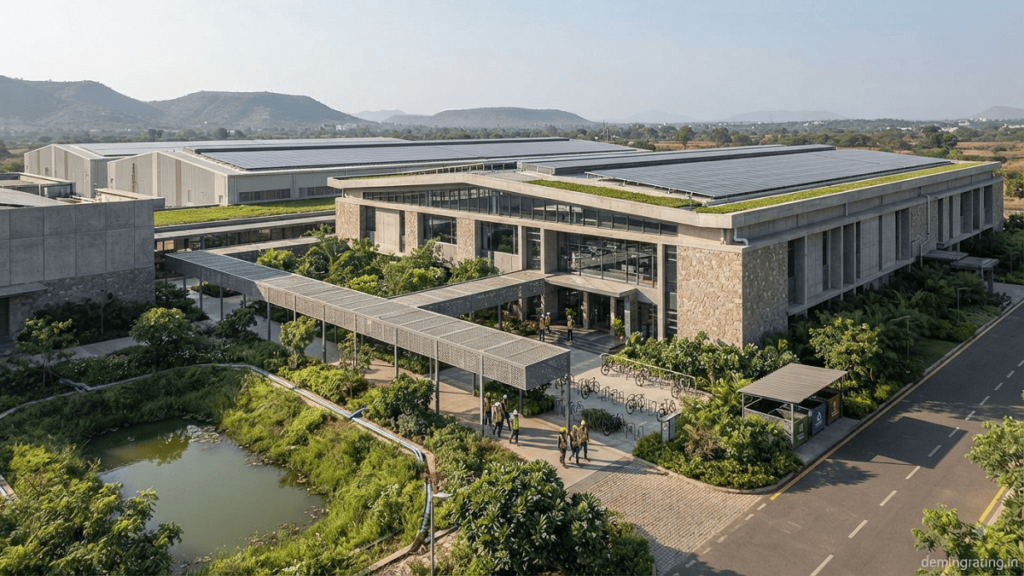
Industry Application of GGBC Green Factory Building Rating System
The GGBC Green Factory Building Rating System has broad applications across India’s industrial sector, including manufacturing plants, processing facilities, assembly units, warehouses associated with factory operations, and other industrial buildings. The framework is applicable to both new and existing factory buildings and across different industrial sectors and climatic zones in India. Importantly, the rating system evaluates the factory building and associated infrastructure rather than the manufacturing process itself.
Application in Manufacturing Facilities
Manufacturing facilities can use GGBC principles to improve the environmental performance of their buildings through energy-efficient lighting, HVAC systems, efficient equipment supporting building operations, daylighting, renewable-energy integration, and energy monitoring.
For large factories with significant electricity demand, these measures can help reduce operating consumption and improve long-term energy management. Projects can also establish energy-performance benchmarks and use sub-metering to identify areas where efficiency improvements are required.
Application in Water-Intensive Industries
Industries with substantial water requirements can apply GGBC strategies such as efficient plumbing fixtures, rainwater harvesting, wastewater treatment, water metering, and reuse of treated water for appropriate non-potable applications.
Factories can integrate water-management systems into their site infrastructure to reduce dependence on fresh water and improve resilience against water shortages. Water conservation is one of the principal areas addressed by the rating framework.
Application in Construction and Site Development
GGBC can influence industrial development even before factory operations begin. Construction-stage strategies can include soil erosion prevention, topsoil preservation, stormwater management, sustainable landscaping, heat-island reduction, and responsible site planning.
These measures are particularly valuable for large industrial campuses, where extensive excavation, paved surfaces, parking areas, and internal roads can significantly alter natural drainage patterns.
Application in Materials and Waste Management
Industrial facilities can apply resource-efficiency principles through responsible material selection, construction-waste management, recycling, reuse, and improved waste segregation. Procurement teams can consider durable and environmentally preferable materials where technically appropriate.
During construction, systematic segregation and recovery of recyclable materials can reduce the amount of construction waste sent for disposal. During operation, similar systems can support more efficient resource management.
Application to Worker Health and Workplace Quality
A significant industry application is improving the indoor environmental quality and occupational health of factory buildings. Appropriate ventilation, daylighting, thermal comfort, indoor air quality, and workplace design can contribute to healthier and more comfortable working conditions.
This makes the GGBC framework relevant not only from an environmental perspective but also from a human-performance perspective. The programme was developed with attention to the quality of life of factory workers.
Application Across Industrial Sectors
The rating system is designed to be applicable across all sectors of industry and climatic zones of India. This makes it suitable for organizations operating different types of manufacturing facilities while allowing project teams to select strategies appropriate to their local conditions and building characteristics.
Projects can evaluate potential credits using a checklist and must satisfy applicable mandatory requirements while achieving the minimum points required for certification. Under the current framework, certification levels for new factories range from Certified to Platinum, based on the total credits achieved.
Conclusion
The industry application of the GGBC Green Factory Building Rating System extends beyond installing individual green technologies. It provides an integrated framework for improving site management, energy performance, water efficiency, material use, waste management, indoor environmental quality, and overall building sustainability.
For industrial organizations, implementing these strategies during planning and design can make sustainability part of the facility’s core infrastructure. Continued monitoring and maintenance after occupancy can then help preserve performance and support long-term operational efficiency.
#GGBC
Ask FAQs
What is the GGBC Green Factory Building Rating System?
The GGBC Green Factory Building Rating System is a framework for evaluating and encouraging sustainable practices in industrial and factory buildings. It addresses areas such as site planning, water conservation, energy efficiency, materials, indoor environmental quality, occupational health, and innovation. It is designed to help factories become more resource-efficient, environmentally responsible, and healthier workplaces.
Which areas are evaluated under the GGBC Green Factory Building Rating System?
The main areas include Site Selection and Planning, Water Conservation, Energy Conservation, Materials Conservation, Indoor Environmental Quality and Occupational Health, and Innovation & Design Process. Projects must meet applicable mandatory requirements and achieve sufficient credit points to qualify for their targeted certification level.
Can existing factories apply for GGBC certification?
Yes. The Green Factory Building programme is applicable to both new and existing factory buildings. Existing facilities can identify opportunities to improve energy and water efficiency, waste management, site performance, indoor environmental quality, and other sustainability parameters. Expansion or major renovation projects may need to follow the requirements applicable to new factory developments.
What benefits can industries gain from GGBC certification?
GGBC certification can help industries improve energy and water efficiency, resource management, waste reduction, indoor environmental quality, and environmental performance. Efficient systems can also contribute to lower operating costs and improved resource management. In addition, certification provides a structured way for organizations to demonstrate their commitment to sustainable industrial development.
How can a factory achieve a higher GGBC rating?
A factory can improve its rating by identifying applicable credits early, establishing measurable sustainability targets, and integrating efficient strategies into the design and operation of the facility. Measures such as energy-efficient systems, renewable energy, water conservation, rainwater harvesting, wastewater reuse, sustainable materials, waste management, soil erosion control, daylighting, and improved ventilation can contribute to better performance. Accurate documentation, commissioning, monitoring, and ongoing maintenance are also essential for demonstrating compliance.
Table of Contents
Disclaimer: This content is for general informational purposes only. GGBC criteria and certification requirements may be updated, so always refer to the latest official guidelines before making project or certification decisions.