
GGBC Soil Erosion Prevention & Control
What Is Soil Erosion and Why Is Its Prevention Important in GGBC Projects?
Soil erosion is the process by which the upper layer of soil is detached and transported from one location to another by agents such as rainwater, surface runoff, wind, and human activities. Construction activities can significantly increase the risk of erosion because excavation, grading, vegetation removal, and soil disturbance expose previously protected ground surfaces. If these areas are not properly managed, loose soil can be carried into stormwater drains, nearby water bodies, roads, and surrounding properties.
For GGBC projects, preventing and controlling soil erosion is an important part of responsible site development. Construction should not only focus on the final performance of a green building but also on minimizing environmental impacts during the construction process. Effective erosion control helps protect the site’s natural characteristics while reducing sediment movement and associated pollution.
Why Soil Erosion Prevention Matters
One of the major concerns associated with construction-related erosion is sediment pollution. When rainwater flows across exposed construction areas, it can collect loose soil and transport sediment into drainage systems and water bodies. Excessive sediment can reduce water quality, obstruct drainage infrastructure, and negatively affect aquatic ecosystems. The U.S. Environmental Protection Agency identifies sediment as a major pollutant associated with construction stormwater runoff and recommends appropriate erosion and sediment controls for construction sites. (U.S. EPA)
Soil erosion can also affect the stability and productivity of the site. Loss of topsoil removes valuable organic matter and nutrients that are important for future landscaping and vegetation. Maintaining and protecting topsoil can therefore reduce the need for importing replacement soil and support healthier landscape development after construction.
Importance During Construction
Construction-stage erosion prevention should begin before major earthwork starts. A project team can identify areas vulnerable to erosion, minimize unnecessary disturbance, preserve existing vegetation where possible, and establish temporary measures to control runoff. Common measures include silt fences, sediment barriers, temporary drainage channels, sediment traps, stabilized construction entrances, mulching, and temporary or permanent vegetation.
The U.S. EPA recommends using erosion-control practices that stabilize soil and sediment-control practices that capture sediment before it leaves a construction site. (U.S. EPA)
Contribution to Sustainable Development
For a GGBC project, soil erosion prevention supports broader environmental objectives by protecting natural resources, reducing construction-related pollution, and improving site management. It can also help maintain cleaner roads and drainage systems around the development, reducing maintenance requirements caused by excessive sediment accumulation.
Ultimately, soil erosion prevention is not simply a construction-site housekeeping measure. It is an essential component of sustainable site planning and environmental protection. By controlling exposed soil, managing stormwater runoff, protecting topsoil, and restoring disturbed areas, GGBC projects can minimize their ecological impact while creating healthier and more resilient sites.
External references: U.S. EPA – Stormwater Discharges from Construction Activities | U.S. EPA – Erosion and Sediment Control
#EnvironmentalManagement
What Are the Main Causes of Soil Erosion During Construction Activities?
Soil erosion during construction occurs when naturally protected soil surfaces are disturbed and exposed to rainfall, stormwater runoff, wind, and construction-related activities. Construction sites can be particularly vulnerable because vegetation and topsoil are often removed, land levels are changed, and large areas may remain uncovered until the building and landscaping work is completed. For GGBC projects, identifying these causes early is essential for developing an effective soil erosion prevention and control strategy.
1. Removal of Vegetation
Existing grass, shrubs, trees, and other vegetation help hold soil in place through their root systems while leaves and ground cover reduce the direct impact of rainfall. Clearing vegetation for buildings, roads, parking areas, and utilities leaves soil exposed and significantly increases its vulnerability to erosion.
2. Excavation and Earthwork
Excavation, grading, trenching, filling, and other earthwork activities loosen and redistribute soil. Large areas of exposed soil can be easily transported by rainfall and runoff, particularly during periods of heavy precipitation. The U.S. Environmental Protection Agency identifies clearing, grading, and excavating as common construction activities that can contribute to stormwater pollution. (U.S. EPA)
3. Stormwater Runoff
Rainfall is one of the most significant causes of construction-site erosion. When rain falls on exposed soil, it can detach soil particles and create surface runoff. As runoff travels across the site, it can carry sediment toward drains, roads, neighboring properties, and nearby water bodies.
Poorly planned drainage can make the problem worse. Concentrated flows through temporary channels, slopes, or construction access routes can create rills, gullies, and localized soil loss.
4. Unprotected Slopes
Sloped areas are particularly susceptible to erosion because gravity and flowing water can accelerate soil movement. Cut-and-fill slopes that remain uncovered for extended periods may experience significant erosion during rainfall events. Proper slope stabilization, drainage management, vegetation, mulching, or suitable erosion-control materials can help reduce this risk.
5. Construction Traffic and Heavy Equipment
Movement of trucks, excavators, loaders, and other machinery can disturb soil and remove protective ground cover. Repeated vehicle movement can also compact some areas while loosening or displacing soil in others. Construction traffic can create wheel ruts that collect and concentrate stormwater, increasing erosion potential.
6. Improper Storage of Soil and Construction Materials
Excavated soil stored in uncovered piles can be washed away by rain or blown away by wind. If soil stockpiles are positioned near drainage routes, the resulting sediment can quickly leave the construction site. Covering stockpiles and installing appropriate perimeter controls can help prevent this.
7. Inadequate Erosion and Sediment Controls
Failure to install or maintain measures such as silt fences, sediment traps, stabilized entrances, temporary drainage controls, and ground-cover systems can allow sediment to leave the site. The EPA recommends combining erosion-control practices that stabilize exposed soil with sediment-control practices that capture sediment before it leaves the construction area. (U.S. EPA)
Therefore, preventing soil erosion in GGBC projects begins with understanding where soil is most vulnerable. Vegetation removal, earthwork, rainfall, runoff, slopes, construction traffic, exposed stockpiles, and inadequate site controls should all be addressed through careful planning, regular monitoring, and timely stabilization.
External references: U.S. EPA – Stormwater Discharges from Construction Activities | U.S. EPA – Erosion and Sediment Control
#SustainableDevelopment
What Methods Can Be Used to Prevent and Control Soil Erosion on Construction Sites?
Preventing and controlling soil erosion on construction sites requires a combination of site planning, soil stabilization, stormwater management, sediment control, and regular maintenance. For GGBC projects, these measures help minimize environmental impacts during construction while protecting topsoil, drainage systems, nearby properties, and water resources. The U.S. Environmental Protection Agency recommends using erosion-control measures as the first line of defense, supported by sediment-control measures to capture soil that becomes displaced.
1. Minimize Soil Disturbance
One of the most effective approaches is to avoid unnecessary clearing, excavation, and grading. Existing vegetation should be retained wherever practical, particularly in areas that do not need to be disturbed for construction. Construction activities can also be phased so that only the areas required for immediate work are exposed at any given time. This reduces the amount of vulnerable soil on the site.
2. Stabilize Exposed Soil
Exposed soil should be stabilized as quickly as possible. Depending on the site and construction stage, suitable methods may include temporary or permanent seeding, mulching, turf or sod, erosion-control blankets, geotextiles, and other ground-cover systems. Stabilizing the surface reduces the ability of rainfall and wind to detach soil particles.
3. Manage Stormwater Runoff
Stormwater should be prevented from flowing uncontrolled across exposed soil. Temporary diversion channels, drainage systems, berms, check dams, and other measures can redirect or slow runoff. Reducing the velocity and concentration of water helps minimize rill and gully erosion.
4. Install Sediment-Control Measures
Some sediment may still become mobilized even when erosion controls are installed. Measures such as silt fences, sediment traps, sediment basins, filter barriers, fiber rolls, and storm-drain inlet protection can capture sediment before it leaves the construction site. These controls are particularly important around site boundaries and drainage points.
5. Control Construction Traffic
Vehicle movement can carry loose soil onto public roads and increase erosion around access routes. Stabilized construction entrances using aggregate or other suitable materials can reduce soil tracking. Regular cleaning of affected roads and proper management of vehicle routes can further limit sediment movement.
6. Protect and Manage Slopes
Slopes should be designed and stabilized according to site conditions. Vegetation, erosion-control mats, suitable retaining or drainage measures, and controlled runoff can help prevent soil from being washed downslope.
7. Inspect and Maintain Controls
Erosion-control measures are only effective when properly installed and maintained. Construction teams should inspect barriers, drainage systems, sediment traps, stabilized areas, and other controls regularly and after significant rainfall events. Damaged or blocked measures should be repaired promptly.
For a GGBC project, the most effective strategy is therefore a layered approach: minimize disturbance, stabilize exposed soil, control runoff, capture sediment, and continuously inspect the site. Implementing these measures from the beginning of construction can significantly reduce soil loss and help protect the surrounding environment.
External references: U.S. EPA – Stormwater Discharges from Construction Activities | U.S. EPA – Erosion and Sediment Control
#GreenFactory
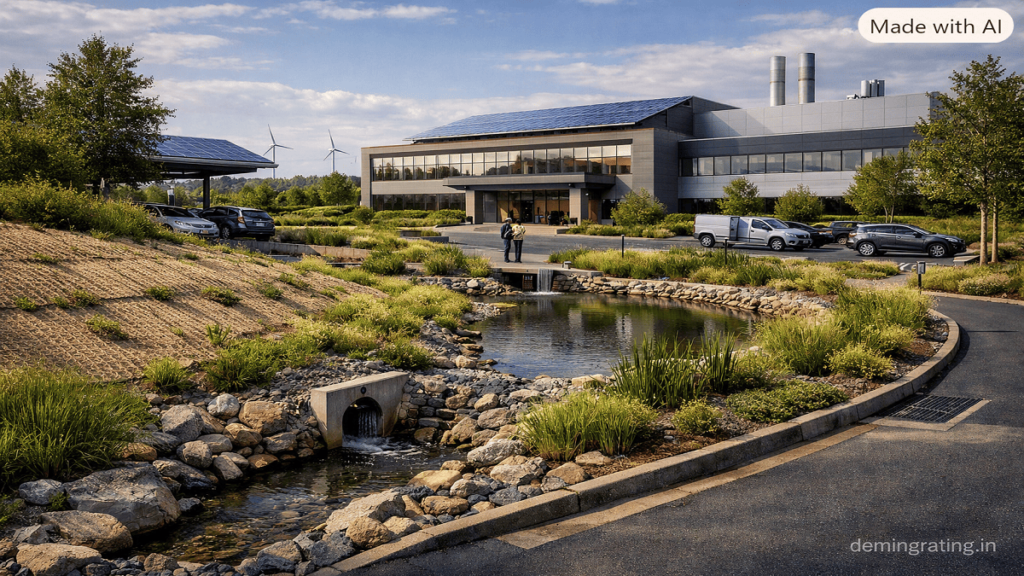
How Do Vegetation, Drainage Systems, and Erosion-Control Measures Protect Soil and Water Resources?
Vegetation, drainage systems, and erosion-control measures work together to protect soil and water resources during construction. For GGBC projects, integrating these measures into site planning can reduce soil loss, control stormwater runoff, prevent sediment from entering drainage networks and water bodies, and maintain the ecological quality of the site. Construction activities can expose loose soil, allowing rainfall and runoff to transport sediment and other pollutants beyond the project boundary. The U.S. Environmental Protection Agency identifies effective erosion and sediment controls as an important way to minimize these impacts.
Role of Vegetation
Vegetation is one of the most effective natural methods for protecting soil. Grass, shrubs, trees, and other ground cover reduce the direct impact of raindrops on exposed soil. Plant roots also help bind soil particles together, while vegetation slows surface-water movement and encourages greater infiltration into the ground. These effects reduce both the amount of soil available for erosion and the speed at which runoff can transport sediment. Research from the U.S. Department of Agriculture describes vegetation as an important mechanism for reducing rainfall impact, runoff velocity, and soil erodibility.
For GGBC projects, existing vegetation should therefore be preserved wherever practical. Disturbed areas can subsequently be stabilized through grassing, planting, mulching, or other appropriate ground-cover methods.
Role of Drainage Systems
Proper drainage prevents stormwater from flowing uncontrolled across exposed construction areas. Drainage channels, diversion structures, check dams, temporary slope drains, and other runoff-management measures can direct water safely while reducing its velocity and concentration.
This is particularly important because uncontrolled stormwater can carry sediment, construction debris, chemicals, and other pollutants into storm drains, rivers, lakes, and groundwater.
Role of Erosion-Control Measures
Erosion-control measures provide an additional layer of protection. Depending on site conditions, these can include silt fences, sediment traps, sediment basins, erosion-control blankets, geotextiles, mulching, stabilized construction entrances, and storm-drain inlet protection. The EPA’s construction BMP guidance identifies these measures for erosion prevention, runoff control, and sediment capture.
The key principle is to prevent erosion wherever possible and capture sediment that does become mobilized. Regular inspection and maintenance are essential because damaged or poorly maintained controls can lose effectiveness.
Together, vegetation, drainage systems, and erosion-control measures create a layered approach to site protection. They help retain topsoil, slow runoff, reduce sediment movement, protect drainage infrastructure, and maintain water quality. For GGBC projects, incorporating these measures from the beginning of construction can significantly reduce environmental impacts and support responsible, sustainable site development.
External references: U.S. EPA – Stormwater Discharges from Construction Activities | U.S. EPA – National Menu of Best Management Practices for Stormwater Construction | USDA Agricultural Research Service – Vegetation and Soil Erosion
#SustainableConstruction
What Are the Environmental Benefits of Implementing Effective Soil Erosion Prevention and Control Measures?
Effective soil erosion prevention and control measures provide significant environmental benefits during the construction and development of GGBC projects. Construction activities such as vegetation removal, excavation, grading, and soil stockpiling can expose soil to rainfall and stormwater runoff. Without appropriate controls, sediment can be transported from the construction site into storm drains, rivers, lakes, and other receiving water bodies. The U.S. Environmental Protection Agency identifies sediment, debris, and other construction-related pollutants as important concerns associated with stormwater runoff.
1. Protection of Topsoil
One of the most important benefits is the preservation of valuable topsoil. Topsoil contains organic matter, nutrients, microorganisms, and other components required for healthy vegetation. Preventing its loss helps maintain the site’s natural soil resources and provides a better foundation for future landscaping and vegetation restoration.
Vegetation and ground-cover measures can further improve soil stability by reducing rainfall impact, slowing runoff, and helping bind soil particles through root systems.
2. Improved Water Quality
Construction-site erosion can introduce large quantities of sediment into stormwater. Sediment can increase water turbidity and may carry other pollutants, including nutrients, metals, and chemicals, into nearby water bodies. Effective erosion and sediment controls reduce the amount of contaminated sediment leaving the site and therefore help protect surface-water quality.
3. Protection of Aquatic Ecosystems
Excessive sedimentation can negatively affect aquatic habitats and organisms. Sediment can alter water clarity, affect habitat conditions, and interfere with the survival and regeneration of aquatic and terrestrial plants and wildlife. USDA guidance notes that excessive sediment deposition can negatively influence watershed processes, water quality, and wildlife.
4. Better Stormwater Management
Erosion-control practices can help slow and manage stormwater before it becomes concentrated. Vegetation, stabilized surfaces, drainage controls, sediment basins, and other measures can reduce runoff velocity and encourage infiltration where site conditions permit. Improved stormwater management can also reduce the amount of sediment reaching municipal drainage systems.
5. Reduced Environmental Impact of Construction
Implementing erosion and sediment controls helps ensure that construction activities have a smaller impact on surrounding land and water resources. Measures such as stabilizing disturbed areas, protecting drainage points, maintaining vegetation, and regularly inspecting control systems create a more environmentally responsible construction process.
For GGBC projects, these benefits support sustainable site development by protecting soil, maintaining water quality, reducing sediment pollution, and preserving ecological resources. Effective erosion prevention should therefore be incorporated into the project from the early planning stage and maintained throughout construction rather than introduced only after erosion problems occur.
External references: U.S. EPA – Stormwater Discharges from Construction Activities | USDA Climate Hubs – Reduce Soil Erosion and Sediment Deposition | U.S. EPA – Environmental Benefits of Green Infrastructure
#GreenBuilding
Case Study of GGBC Soil Erosion Prevention & Control
A practical example of GGBC Soil Erosion Prevention & Control can be seen in industrial green-building projects where erosion and sedimentation controls are incorporated from the early stages of construction through post-occupancy. The purpose is to prevent the loss of fertile soil, control stormwater runoff, protect surrounding water resources, and maintain the ecological quality of the project site.
A relevant example is the Schindler India manufacturing facility in Pune, which received a Platinum green-building rating. The project incorporated several soil erosion prevention and control measures during construction and after completion. These included topsoil preservation, site barricading, water sprinkling, sedimentation pits with screen filters, landscaping, rainwater harvesting, and recharge pits. The project also used temporary seeding to protect preserved topsoil during construction.
Construction-Stage Erosion Control
The Schindler project demonstrates the importance of controlling exposed soil before construction activities can cause significant erosion. Topsoil was preserved rather than being permanently lost during excavation. Site barricading helped control the movement of soil and construction materials, while water sprinkling helped manage dust and loose soil.
Sedimentation pits equipped with screen filters provided an additional layer of protection by capturing sediment carried by runoff before it could reach surrounding areas. These measures illustrate how erosion prevention can be integrated into normal construction-site management rather than being treated as a separate environmental activity.
Post-Construction Measures
Erosion control should continue after the major construction work is completed. At the Schindler facility, landscaping, rainwater harvesting, and recharge pits formed part of the post-construction strategy. Vegetation helps stabilize soil through root systems, while appropriately designed stormwater and recharge infrastructure helps manage rainfall and runoff.
The current GGBC Green Factory Building requirements similarly emphasize erosion control before and during construction and after occupancy. For new factories, the criteria include preserving fertile topsoil, implementing erosion-control measures consistent with the National Building Code, developing post-occupancy measures, and preparing an operation and maintenance plan. Documentation includes an erosion and sedimentation control narrative, site drawings, and photographs of measures implemented at different construction stages.
Lessons for GGBC Projects
The case demonstrates that effective soil erosion prevention requires a multi-stage approach. Before construction, existing vegetation and fertile topsoil should be protected. During construction, exposed soil should be stabilized and runoff managed using appropriate barriers, sedimentation systems, temporary drainage, and other controls. After construction, vegetation, stormwater channels, sediment-control facilities, and rainwater-management systems should be maintained.
Another relevant industrial example is the Hindustan Coca-Cola Beverage Sanand factory, which reported maintaining soil erosion prevention and control measures during the project phase as part of its green-site initiatives.
Overall, these examples show how GGBC Soil Erosion Prevention & Control can be practically implemented through topsoil preservation, vegetation protection, sediment management, stormwater control, site stabilization, and continuous maintenance. Such measures reduce construction-related environmental impacts while supporting responsible and sustainable industrial development.
External references: GGBC Green Factory Building – Soil Erosion Prevention & Control | Schindler India Manufacturing Facility Case Study | Hindustan Coca-Cola Beverage – Sanand Green Factory
#SoilErosionControl
White Paper on GGBC Soil Erosion Prevention & Control
Executive Summary
GGBC Soil Erosion Prevention & Control is a critical component of sustainable site development because construction activities can disturb existing soil, remove vegetation, alter natural drainage patterns, and increase the movement of sediment through stormwater runoff. Effective erosion and sedimentation control helps protect fertile topsoil, surrounding land, drainage infrastructure, and water resources while reducing the environmental impacts associated with construction.
The current Green Factory Building requirements identify Soil Erosion Prevention & Control as a mandatory requirement. For new factory projects, the criteria call for erosion-control measures before and during construction in accordance with relevant best practices in the National Building Code of India 2016, preservation of fertile topsoil for future reuse, post-occupancy erosion-control measures, and an Operation & Maintenance (O&M) plan.
Introduction
Soil is a valuable natural resource that supports vegetation, regulates water movement, and contributes to the ecological functioning of a site. During construction, however, excavation, grading, vegetation removal, stockpiling, and heavy equipment movement can expose and destabilize soil.
Rainfall and surface runoff can then transport loose sediment away from the construction area. If sediment enters stormwater systems or nearby water bodies, it can contribute to water-quality problems and increase the environmental impact of development.
The objective of GGBC Soil Erosion Prevention & Control is therefore to minimize these impacts through systematic planning and implementation.
Key GGBC Requirements
For a new factory, the current requirements include four principal actions:
- Implement soil erosion-control measures before and during construction.
- Stockpile fertile topsoil before construction for future reuse.
- Develop measures to control erosion after occupancy.
- Prepare an O&M plan for ongoing soil erosion prevention and control.
For an existing factory, the focus is on post-occupancy measures, including maintenance of the stormwater network and green cover. Where expansion, retrofitting, or additions are undertaken, the applicable requirements for new factory projects should be followed.
Erosion and Sedimentation Control Strategy
An effective GGBC strategy should address the entire project lifecycle.
Before Construction
The first priority is to protect existing site resources. This includes preserving fertile topsoil and retaining existing vegetation and trees wherever feasible. The GGBC documentation framework specifically identifies topsoil preservation and preservation of existing vegetation as pre-construction measures.
Topsoil should be carefully removed, stored in designated areas, protected from contamination and erosion, and reused for landscaping after construction.
During Construction
Construction-stage controls should prevent exposed soil from being transported outside the site. Appropriate measures may include site barricading, wheel-washing facilities, sedimentation pits or basins, swales, temporary stormwater drains, mulching, and temporary vegetation.
The exact combination should be determined according to site topography, soil characteristics, rainfall conditions, construction activities, and drainage patterns.
Post Construction
Erosion control must continue after the building is completed. Permanent stormwater channels, sedimentation facilities, rainwater-harvesting systems, and vegetation can help stabilize the site and manage rainfall. Maintaining green cover is particularly important because vegetation helps protect exposed soil and reduce runoff velocity.
Environmental Benefits
Effective erosion control protects fertile topsoil and reduces sediment entering stormwater systems. This helps maintain soil quality, protect drainage infrastructure, and reduce the potential impact of construction runoff on surrounding water resources.
Vegetation and properly designed drainage systems can also contribute to long-term site stability by reducing uncontrolled runoff and supporting infiltration where appropriate.
Documentation and Verification
Documentation is an important part of demonstrating implementation. The current GGBC criteria call for a narrative describing the erosion and sedimentation control measures implemented during construction and post occupancy, along with site drawings identifying these measures and photographs showing controls at different construction stages.
A well-organized project record can include the erosion-control plan, topsoil preservation records, site photographs, drainage drawings, inspection records, maintenance procedures, and evidence of post-construction landscaping.
Conclusion
GGBC Soil Erosion Prevention & Control should be approached as a continuous environmental-management process rather than as a temporary construction activity. Protecting topsoil before construction, controlling runoff and sediment during construction, and maintaining vegetation and stormwater infrastructure after occupancy create a comprehensive approach to site protection.
By integrating erosion-control measures into project planning, construction management, landscape design, drainage planning, and long-term maintenance, GGBC projects can reduce negative impacts on soil and water resources while supporting responsible and sustainable industrial development.
External references: GGBC Green Factory Building – Version 2.0 with First Addendum | GGBC Green Factory Building – Abridged Reference Guide | Global Green Building Council – E-Library
#SoilErosionPrevention
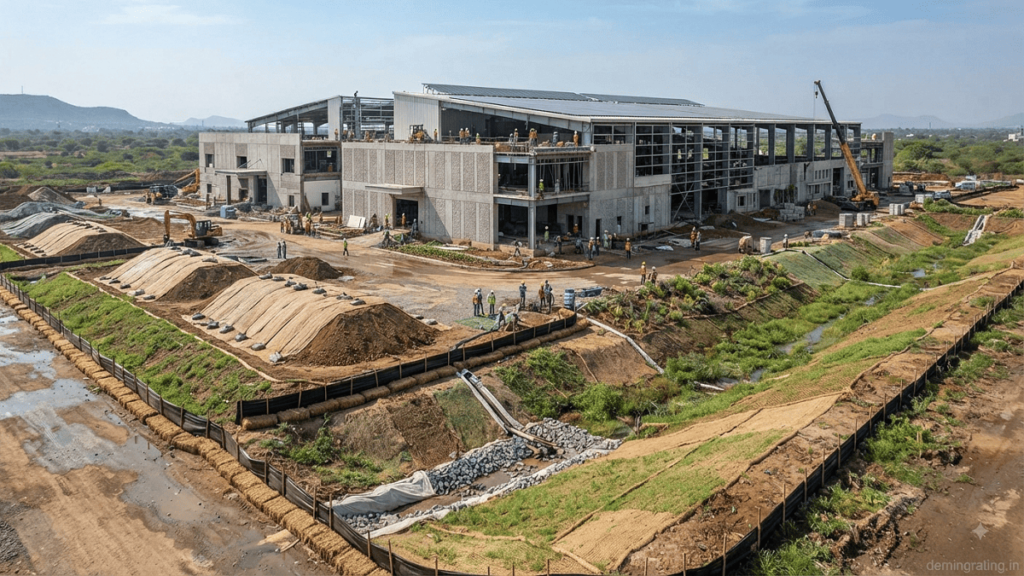
Industry Application of GGBC Soil Erosion Prevention & Control
The GGBC Soil Erosion Prevention & Control requirement has practical applications across manufacturing plants, industrial campuses, warehouses, logistics facilities, and other large-scale developments. Its primary objective is to control soil erosion and reduce negative impacts on the project site. Under the current Green Factory Building requirements, soil erosion prevention and control is a mandatory requirement, with measures expected before construction, during construction, and after occupancy.
Application in Manufacturing Facilities
Manufacturing projects often involve extensive excavation, grading, foundation work, utility installation, internal roads, and parking development. These activities can expose significant areas of soil to rainfall and surface runoff. An industrial project can therefore establish an erosion and sedimentation control plan before construction begins.
Key measures may include topsoil preservation, protection of existing vegetation, temporary site barricading, wheel-washing facilities, sedimentation pits or basins, swales, temporary stormwater drains, mulching, and temporary vegetation. These measures are specifically identified within the current GGBC Green Factory Building documentation requirements.
Application in Industrial Parks and Large Campuses
Large industrial campuses typically contain extensive paved and landscaped areas. Proper drainage and landscape planning are therefore essential to prevent concentrated runoff from eroding exposed soil. Permanent stormwater channels, sediment basins, rainwater-harvesting systems, and vegetation can be incorporated into the completed development.
Where practical, permeable paving and landscaped areas can also help manage rainfall and reduce uncontrolled surface runoff. The GGBC guidance recommends directing runoff from impermeable surfaces toward appropriate stormwater collection systems.
Application During Construction
Construction managers can divide the site into manageable work zones and stabilize exposed soil progressively rather than leaving large areas uncovered for long periods. Topsoil should be stockpiled safely for future landscaping use, while temporary erosion-control systems should be inspected and maintained throughout construction.
Construction entrances should also be managed to prevent soil from being carried onto public roads. Wheel washing can reduce the movement of mud and sediment from vehicle tires, while sedimentation systems can capture soil carried by runoff.
Application After Occupancy
Soil erosion control does not end when construction is completed. Industrial facilities should maintain green cover, stormwater drains, sediment-control structures, rainwater-harvesting systems, and landscaped areas. The current GGBC requirements specifically call for post-occupancy erosion-control measures and an Operation & Maintenance (O&M) Plan.
For existing factories, maintaining the stormwater network and green cover is specifically identified as a post-occupancy approach. Expansion or retrofitting projects should follow the applicable requirements for new factory projects.
Business and Environmental Value
Effective erosion control can protect valuable topsoil, reduce sediment entering drainage systems, minimize site pollution, and support healthier landscaping. It can also reduce maintenance problems associated with blocked drains and sediment accumulation.
For industries pursuing GGBC certification, proper documentation is equally important. Project teams should maintain an erosion and sedimentation control narrative, site drawings showing implemented measures, photographs from different construction stages, and relevant O&M records.
Overall, GGBC Soil Erosion Prevention & Control can be applied as an integrated site-management strategy covering planning, construction, drainage, landscaping, and long-term facility maintenance. Its implementation enables industrial projects to protect soil and water resources while creating more resilient and environmentally responsible facilities.
External references: GGBC Green Factory Building – Version 2.0 with First Addendum | GGBC Green Factory Building – Abridged Reference Guide
#GGBC
Ask FAQs
What is GGBC Soil Erosion Prevention & Control?
GGBC Soil Erosion Prevention & Control refers to measures used to minimize soil loss and sediment movement during and after construction. These measures protect topsoil, control stormwater runoff, reduce sediment pollution, and help protect surrounding land and water resources. For new factory projects, the current GGBC Green Factory Building requirements include erosion-control measures before and during construction, topsoil preservation, post-occupancy measures, and an Operation & Maintenance plan.
What are the main causes of soil erosion on construction sites?
The primary causes include vegetation removal, excavation, grading, exposed soil, uncontrolled stormwater runoff, construction traffic, unprotected slopes, and improperly managed soil stockpiles. Heavy rainfall can wash loose soil into drainage systems and nearby water bodies. Proper site planning and timely stabilization of disturbed areas can significantly reduce these risks.
Which measures can be used to control soil erosion in GGBC projects?
Common measures include preserving existing vegetation, stockpiling and protecting fertile topsoil, sedimentation pits, sediment basins, silt barriers, swales, temporary drainage channels, mulching, temporary vegetation, and site stabilization. The appropriate measures depend on the site’s soil characteristics, topography, rainfall conditions, and construction activities. The GGBC framework emphasizes implementing suitable erosion-control measures before and during construction and maintaining appropriate controls after occupancy.
Why is topsoil preservation important for GGBC projects?
Topsoil contains organic matter, nutrients, microorganisms, and other components required for healthy vegetation. Construction can remove or bury this valuable layer if it is not properly managed. Preserving fertile topsoil allows it to be reused for landscaping after construction, reducing the need to purchase replacement soil and supporting healthier vegetation. Proper topsoil management also helps conserve an important natural resource within the project site.
What documentation is required for GGBC Soil Erosion Prevention & Control?
Project documentation should demonstrate that the required erosion and sedimentation measures have been properly planned and implemented. The current GGBC Green Factory Building requirements identify an erosion and sedimentation control narrative, site drawings showing the measures, and photographs of the measures at different construction stages as supporting documentation. Projects should also maintain relevant inspection and maintenance records, particularly for post-occupancy erosion-control measures and stormwater infrastructure.
Table of Contents
Disclaimer: This content is for general informational purposes only. GGBC requirements and applicable standards may change, so projects should verify the latest official guidelines before implementation or certification.