
Energy Saving Measures in Appliances & Other Equipment
Energy-saving measures in appliances and other equipment are practical strategies designed to reduce energy consumption without compromising performance, comfort, productivity, or safety. Since appliances and equipment can represent a significant portion of electricity use in homes, offices, commercial buildings, and industrial facilities, improving their efficiency can reduce operating costs while supporting broader sustainability goals.
Choose Energy-Efficient Equipment
One of the most effective measures is selecting high-efficiency appliances and equipment when purchasing or replacing existing units. Energy-efficient refrigerators, air conditioners, washing machines, pumps, motors, lighting systems, and office equipment can provide the same required service while consuming less electricity.
In India, the Bureau of Energy Efficiency (BEE) provides energy-efficiency standards and labeling programs that help consumers identify products with better energy performance. The BEE Standards & Labeling Programme provides information about covered appliances and energy-efficiency labels.
Improve Operating Practices
Even efficient equipment can waste energy if it is operated unnecessarily. Users should switch off appliances and equipment when they are not required and avoid leaving systems in standby mode for extended periods.
Timers, occupancy sensors, programmable controls, and automatic shutdown functions can reduce unnecessary operation. In commercial and industrial environments, operating schedules can be optimized so that equipment runs only when required.
Maintain Equipment Regularly
Regular maintenance is another important energy-saving measure. Dirty filters, blocked ventilation, poor lubrication, incorrect settings, and worn components can cause equipment to work harder and consume more energy.
For example, regularly cleaning air-conditioner filters can help maintain airflow and cooling performance. Similarly, maintaining motors, pumps, compressors, and other mechanical equipment can help prevent unnecessary energy losses.
Use Efficient Motors and Drives
Industrial facilities can achieve significant savings by improving the efficiency of motors and motor-driven equipment. High-efficiency motors can reduce electricity consumption, while variable-frequency drives (VFDs) can adjust motor speed according to actual demand.
This is particularly useful for pumps and fans, where operating continuously at full speed may consume more energy than necessary.
The U.S. Department of Energy’s Industrial Efficiency and Decarbonization Office provides resources on improving industrial energy efficiency and equipment performance.
Optimize Heating and Cooling
Heating, ventilation, and air-conditioning systems can be major energy consumers. Appropriate temperature settings, regular maintenance, efficient equipment, improved insulation, Saving and automated controls can help reduce energy consumption.
Energy-efficient air conditioners and heat pumps can also reduce electricity use over their operating lifetime. Equipment sizing is important as well because oversized or undersized systems may operate inefficiently.
Monitor Energy Consumption
Energy monitoring and metering can help identify appliances and equipment that consume excessive electricity. Smart plugs, submeters, digital energy meters, and centralized monitoring systems can provide information about consumption patterns.
This data allows users to identify high-energy equipment, detect abnormal operation, and evaluate whether efficiency measures are producing measurable savings.
Conclusion
Energy saving does not depend on one technology or action. It requires a combination of efficient equipment, responsible operating practices, regular maintenance, intelligent controls, and continuous monitoring. Replacing inefficient appliances with high-efficiency models, reducing unnecessary operating hours, maintaining equipment properly, optimizing motors and HVAC systems, Saving and monitoring energy consumption can collectively produce significant savings.
For organizations, these measures can reduce operating expenses while improving equipment performance and supporting sustainability objectives. For households, selecting efficient appliances and adopting better usage habits can lower electricity bills Saving and reduce unnecessary energy consumption.
Relevant resources: Bureau of Energy Efficiency – Standards & Labeling · U.S. Department of Energy – Energy Saver · U.S. Department of Energy – Industrial Efficiency and Decarbonization
#SustainableEnergy
What Energy-Saving Measures Can Be Implemented in Appliances and Electrical Equipment?
Energy-saving measures in appliances and electrical equipment can significantly reduce electricity consumption, operating costs, and environmental impact. These measures range from selecting efficient products and improving operating practices to maintaining equipment and using automated controls. The most effective approach is to combine efficient technology with proper usage Saving and regular performance monitoring.
1. Choose Energy-Efficient Appliances
The first step is to select appliances with strong energy-efficiency ratings. In India, the Bureau of Energy Efficiency (BEE) uses its Standards & Labeling Programme to help consumers compare the energy performance and potential operating costs of appliances. BEE’s star-rating system ranges from 1 to 5, Saving with higher ratings indicating greater energy efficiency.
When purchasing refrigerators, air conditioners, fans, televisions, water heaters, pumps, or other equipment, users should consider both the purchase price and the expected lifetime energy cost.
2. Reduce Standby and Unnecessary Consumption
Many electrical devices continue consuming small amounts of electricity while operating in standby mode. Although the consumption of one device may be relatively small, the combined effect across many appliances can become significant.
Equipment should be switched off when it is not required, particularly computers, monitors, printers, televisions, chargers, and office equipment. Timers, smart plugs, and automatic shutdown functions can further reduce unnecessary operating hours.
3. Improve Equipment Operating Practices
Efficient equipment can still consume excessive energy if it is operated incorrectly. Users should operate appliances according to manufacturer recommendations and avoid unnecessary high-power settings.
For example, air conditioners should be operated at appropriate temperature settings, refrigerators should not be overloaded, and electric water heaters should not remain powered continuously when hot water is not required.
4. Maintain Electrical Equipment Regularly
Regular maintenance helps equipment operate efficiently and prevents performance degradation. Dirty filters, poor ventilation, loose electrical connections, worn components, and inadequate lubrication can increase energy consumption.
For commercial and industrial equipment, scheduled inspections can help identify declining performance before it results in significant energy waste or equipment failure.
5. Use Efficient Motors and Controls
For industrial and commercial applications, high-efficiency motors and variable-frequency drives can reduce energy consumption in pumps, fans, compressors, and other motor-driven systems. Variable-speed control allows equipment output to better match actual demand instead of continuously operating at full capacity.
6. Monitor Energy Consumption
Energy meters and submeters can identify which appliances or equipment consume the most electricity. Monitoring data can reveal unusual consumption patterns and help organizations evaluate whether energy-saving measures are producing measurable results.
Automated monitoring can also provide alerts when equipment operates outside expected schedules or consumption levels.
7. Replace Outdated Equipment
Old appliances and electrical equipment may consume considerably more energy than newer efficient models. Replacing equipment should therefore be based on lifecycle cost rather than purchase price alone. BEE states that its labeling program is designed to help consumers make informed choices based on energy savings and cost-saving potential.
Conclusion
Energy-saving measures for appliances and electrical equipment include selecting efficient products, reducing standby consumption, optimizing operating schedules, performing regular maintenance, using efficient motors and controls, monitoring consumption, and replacing inefficient equipment. Together, these measures can reduce electricity bills while maintaining required performance.
#EnergySavings
How Can Energy-Efficient Appliances and Equipment Reduce Electricity Consumption?
Energy-efficient appliances and equipment are designed to provide the same essential service while using less electricity than conventional or inefficient alternatives. They can reduce electricity consumption through improved components, better controls, reduced energy losses, and more effective operation. For households, commercial buildings, and industrial facilities, replacing inefficient equipment with high-efficiency alternatives can contribute to lower electricity bills, reduced operating costs, and improved environmental performance.
1. Using Less Electricity for the Same Output
The fundamental advantage of an energy-efficient appliance is that it requires less electricity to perform the same task. For example, an efficient refrigerator can provide the required cooling while consuming less electricity through improved compressors, insulation, temperature controls, and heat-exchange components.
Similarly, efficient LED lighting produces useful illumination with substantially less electricity than older incandescent technologies. The U.S. Department of Energy identifies LED lighting as an energy-efficient lighting technology that can provide significant energy savings compared with traditional incandescent lighting.
2. Improved Motors and Compressors
Motors and compressors are important energy consumers in appliances and industrial equipment. High-efficiency motors reduce electrical losses during operation, while improved compressor technologies can deliver required cooling or refrigeration performance using less electricity.
Equipment such as air conditioners, refrigerators, pumps, fans, and compressors can therefore benefit significantly from efficient motor and drive technologies.
3. Better Temperature and Load Controls
Modern appliances increasingly use sensors and electronic controls to adjust their operation according to actual demand. Instead of operating continuously at maximum capacity, equipment can reduce its output when less energy is required.
For example, variable-speed air-conditioning systems can adjust compressor speed according to cooling demand. This avoids unnecessary full-power operation and can improve overall efficiency.
4. Reduced Standby Consumption
Many modern appliances incorporate improved power-management features that reduce electricity consumption when equipment is idle. This is particularly useful for electronics such as computers, televisions, printers, monitors, and office equipment.
Automatic sleep modes, timers, and power-management controls can further reduce electricity consumed during periods of inactivity.
5. Improved Insulation and Energy Retention
Energy-efficient refrigerators, freezers, water heaters, and HVAC equipment can use improved insulation and system design to reduce heat transfer. Better insulation means the equipment does not need to operate as frequently to maintain the required temperature.
This reduces the amount of electricity required over the appliance’s operating lifetime.
6. Smart Controls and Monitoring
Smart appliances and connected equipment can optimize operation according to usage patterns, occupancy, schedules, or other operating conditions. When connected to energy monitoring systems, users can also identify high-consumption equipment and make informed adjustments.
The U.S. Department of Energy’s Energy Saver provides guidance on energy-efficient technologies and practices for reducing energy consumption.
7. Lower Lifetime Energy Costs
Although energy-efficient equipment may have a higher initial purchase price, its lower electricity consumption can reduce operating expenses throughout its useful life. Therefore, purchasing decisions should consider lifecycle cost, rather than focusing only on the initial price.
In India, consumers can use the Bureau of Energy Efficiency’s Standards & Labeling Programme to compare the energy performance of covered appliances.
Conclusion
Energy-efficient appliances and equipment reduce electricity consumption by minimizing energy losses, using efficient motors and compressors, improving insulation, adjusting output according to demand, reducing standby consumption, and incorporating intelligent controls. These improvements allow equipment to deliver the required performance with less electricity.
#IndustrialEnergy
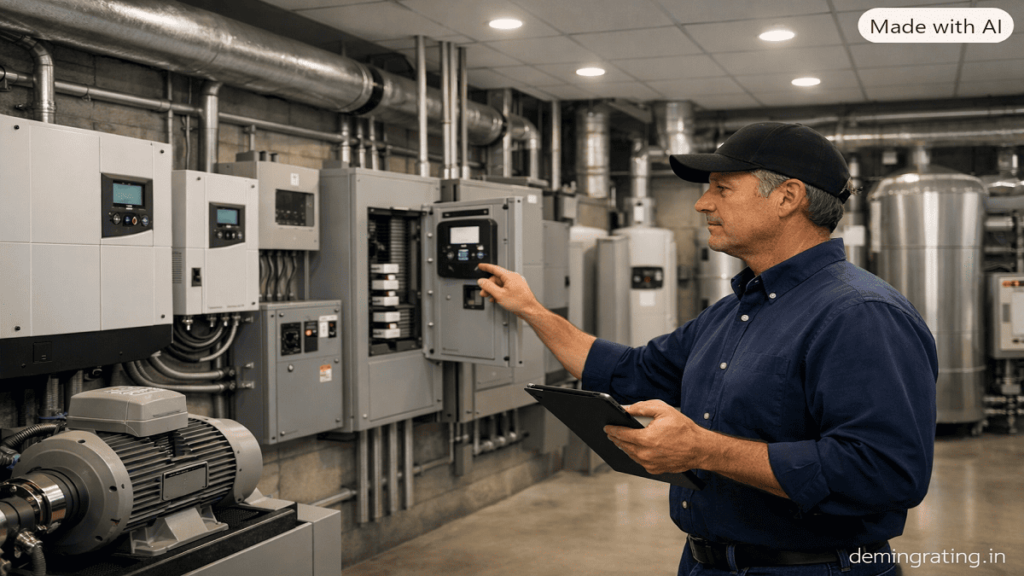
What Role Do Energy Ratings, Efficient Motors, Variable-Speed Drives, and Smart Controls Play in Energy Conservation?
Energy conservation depends not only on reducing the amount of equipment in use but also on improving how efficiently equipment performs its required tasks. Energy ratings, efficient motors, variable-speed drives (VSDs), and smart controls are four important technologies and practices that help reduce unnecessary electricity consumption. When used together, they can lower operating costs, improve equipment performance, and support long-term energy-management goals.
1. Energy Ratings Help Consumers Choose Efficient Equipment
Energy ratings provide a standardized way to compare the efficiency of appliances and equipment before purchase. In India, the Bureau of Energy Efficiency (BEE) operates the Standards & Labeling Programme, which provides energy-performance information for covered appliances. This helps consumers consider energy consumption alongside purchase price and other product features.
Choosing a higher-efficiency appliance can reduce electricity consumption throughout its operating life. For businesses, comparing the expected lifetime energy cost of equipment can also improve purchasing decisions and reduce long-term operating expenses.
2. Efficient Motors Reduce Electrical Losses
Electric motors are widely used in pumps, fans, compressors, conveyors, HVAC systems, and industrial machinery. Because motors can operate for thousands of hours, even relatively small efficiency improvements can result in significant energy savings.
High-efficiency motors are designed to reduce losses associated with resistance, friction, and other operating factors. The U.S. Department of Energy highlights efficient electric machines and drive systems as important opportunities for improving industrial energy performance.
Selecting the appropriate motor size is equally important. An oversized motor may operate inefficiently when the actual load is significantly below its rated capacity.
3. Variable-Speed Drives Match Output to Demand
Variable-speed drives, also known as variable-frequency drives (VFDs), control the speed of motors according to the required load. This is particularly valuable for pumps and fans, where demand can vary considerably.
Instead of running a motor continuously at full speed and controlling output through throttling or other mechanical methods, a VSD can reduce motor speed when less flow or airflow is required. This can substantially reduce energy consumption in suitable applications.
The DOE notes that variable-speed drives can reduce energy consumption in motor-driven systems by allowing motor speed to match system requirements.
4. Smart Controls Prevent Unnecessary Operation
Smart controls use sensors, timers, automation, occupancy information, operating schedules, and other data to determine when equipment should operate and at what level.
For example, occupancy-based controls can reduce lighting or HVAC operation when areas are unoccupied. Building automation systems can also adjust heating, cooling, ventilation, and other equipment based on actual building conditions.
The U.S. Department of Energy recommends programmable and smart thermostat technologies as a way to improve temperature control and reduce unnecessary heating and cooling.
5. Combining the Technologies
The greatest energy-saving potential often comes from using these approaches together. For example, an industrial facility could select a high-efficiency motor, install a correctly sized VFD, and use smart controls to adjust motor operation according to production demand.
Similarly, a commercial building could combine high-efficiency HVAC equipment with variable-speed drives, occupancy sensors, automated scheduling, and energy monitoring. This creates a system that not only uses efficient equipment but also operates it efficiently.
Conclusion
Energy ratings help users make informed purchasing decisions, efficient motors reduce energy losses, variable-speed drives match motor output to actual demand, and smart controls prevent unnecessary operation. Each approach addresses a different source of energy waste, making them complementary rather than competing measures.
When properly selected, installed, maintained, and monitored, these technologies can significantly reduce electricity consumption while maintaining required comfort, productivity, and equipment performance. For organizations pursuing structured energy management, they can also contribute to measurable improvements in energy performance and long-term sustainability.
#SmartEnergy
How Can Proper Operation, Maintenance, Scheduling, and Preventive Maintenance Improve Equipment Efficiency?
Proper operation, maintenance, scheduling, and preventive maintenance are essential for keeping appliances and electrical equipment operating efficiently throughout their useful life. Even highly energy-efficient equipment can consume excessive electricity if it is incorrectly operated, poorly maintained, or left running when it is not required. A structured approach to equipment management can therefore reduce energy waste, control operating costs, improve reliability, and extend equipment life.
1. Proper Operation Prevents Unnecessary Energy Use
Equipment should be operated according to manufacturer recommendations and actual demand. Incorrect settings, excessive loading, prolonged operation, or inappropriate operating conditions can increase energy consumption.
For example, HVAC equipment should be operated at suitable temperature settings rather than extreme settings that force the system to work harder. Similarly, pumps and fans should operate at the required flow or pressure instead of continuously running at maximum capacity.
Proper operation also includes switching off equipment when it is not required. Reducing unnecessary operating hours can provide energy savings without requiring major equipment upgrades.
2. Regular Maintenance Maintains Efficiency
Equipment performance can deteriorate over time because of dust, wear, poor lubrication, blocked filters, fouling, loose connections, or damaged components. As efficiency decreases, equipment may require more electricity to deliver the same output.
Regular maintenance helps identify and correct these issues. For example, cleaning HVAC filters can improve airflow, while maintaining motors and mechanical components can reduce friction and operating losses.
The U.S. Department of Energy recommends regular maintenance of air-conditioning systems because neglected maintenance can reduce performance and increase energy consumption.
3. Scheduling Reduces Unnecessary Operating Hours
Scheduling equipment according to occupancy, production requirements, and operating hours can prevent energy from being consumed when it provides no useful output.
In commercial buildings, HVAC, lighting, ventilation, and other systems can be programmed to operate during occupied periods and reduce operation during evenings, weekends, or holidays.
Industrial facilities can similarly schedule equipment according to production requirements. Automated timers, programmable controllers, building-management systems, and smart controls can help enforce these schedules consistently.
4. Preventive Maintenance Avoids Efficiency Losses
Preventive maintenance involves inspecting, servicing, cleaning, adjusting, and replacing components before equipment develops a serious fault. This approach helps prevent gradual performance deterioration and unexpected failures.
For example, a poorly maintained motor may develop increased friction or other mechanical problems, causing it to consume more energy. Identifying these issues during scheduled maintenance can prevent unnecessary energy consumption and costly downtime.
The U.S. Department of Energy’s Operations & Maintenance Best Practices Guide emphasizes effective operations and maintenance as important elements of facility performance and energy efficiency.
5. Monitoring Helps Verify Equipment Performance
Energy monitoring can strengthen operation and maintenance programs. Metering data can establish normal consumption patterns and help identify unusual increases in energy use.
For example, if a motor normally consumes a consistent amount of electricity but its consumption gradually increases, maintenance personnel can investigate possible mechanical or operational problems.
This creates a feedback loop: operate efficiently, maintain equipment, monitor performance, and correct problems when they appear.
6. Extending Equipment Life
Efficient operation and preventive maintenance can also reduce unnecessary stress on equipment. Maintaining appropriate operating conditions can extend the useful life of motors, compressors, pumps, HVAC systems, and other equipment.
Longer equipment life can reduce replacement costs while ensuring that equipment continues to operate efficiently.
Conclusion
Proper operation ensures that equipment is used correctly, maintenance keeps components performing efficiently, scheduling prevents unnecessary operating hours, and preventive maintenance addresses problems before they become major failures. Together, these practices can significantly reduce energy waste while improving reliability, productivity, and equipment lifespan.
Organizations can achieve even better results by combining these practices with energy metering and automated monitoring. Reliable consumption data makes it easier to identify inefficient equipment, evaluate maintenance results, and continuously improve energy performance.
#EnergyConservation
What Are the Environmental and Economic Benefits of Adopting Energy-Saving Appliances and Equipment?
Adopting energy-saving appliances and equipment provides both environmental and economic benefits. Efficient refrigerators, air conditioners, motors, pumps, lighting systems, office equipment, and industrial machinery can deliver the required performance while consuming less electricity. When implemented across homes, commercial buildings, and industrial facilities, these improvements can reduce operating costs, lower energy demand, and contribute to long-term sustainability.
1. Lower Electricity Costs
The most immediate economic benefit is reduced electricity consumption. Energy-efficient equipment requires less power to perform the same task, which can lower monthly utility bills.
Although efficient equipment may sometimes have a higher initial purchase price, the additional investment can be recovered through energy savings over its operating life. For businesses operating equipment for long hours, these savings can be particularly significant.
The U.S. Department of Energy’s Energy Saver provides guidance on energy-efficient products and practices that can help reduce household energy consumption and costs.
2. Reduced Operating and Maintenance Costs
Efficient equipment can also reduce long-term operating expenses. Modern systems may incorporate improved motors, compressors, insulation, controls, and monitoring technologies that help maintain performance while reducing energy consumption.
When efficient equipment is combined with proper maintenance, it can also operate more reliably and potentially reduce downtime and unexpected repair expenses.
3. Lower Greenhouse Gas Emissions
Electricity generation can involve the combustion of fossil fuels, depending on the energy mix used by a region. Reducing electricity consumption therefore can reduce the indirect greenhouse-gas emissions associated with energy production.
The International Energy Agency identifies energy efficiency as an important contributor to reducing energy demand and emissions while supporting energy security and economic development.
4. Reduced Pressure on Energy Resources
Energy-efficient appliances reduce the amount of energy required to provide everyday services such as cooling, heating, lighting, refrigeration, pumping, and manufacturing. Lower demand can reduce pressure on energy resources and help improve the resilience of energy systems.
At a larger scale, widespread adoption of efficient equipment can contribute to reducing peak electricity demand, particularly when efficient technologies are combined with smart controls and demand-management strategies.
5. Improved Productivity and Equipment Performance
Energy-efficient equipment is not simply about consuming less electricity. Modern equipment often incorporates better controls, sensors, motors, and operating systems that can improve performance and provide more precise control.
For industrial facilities, efficient motors, variable-speed drives, high-efficiency pumps, and automated controls can help equipment operate closer to actual process requirements.
6. Supports Sustainability Goals
Organizations increasingly use energy-efficiency improvements as part of their environmental and sustainability strategies. Reducing energy consumption can help businesses establish measurable energy-reduction targets and demonstrate progress toward environmental objectives.
Energy efficiency also complements renewable-energy adoption. Reducing unnecessary consumption can lower the overall energy requirement that renewable-energy systems need to supply.
In India, the Bureau of Energy Efficiency (BEE) uses its Standards & Labeling Programme to help consumers identify the energy performance of covered appliances and make more informed purchasing decisions.
7. Long-Term Financial Benefits
Energy-saving equipment can provide benefits throughout its useful life. Organizations can evaluate these investments using lifecycle costing, which considers purchase price, energy consumption, maintenance, operating expenses, and replacement costs.
This approach can reveal that an appliance with a higher initial price may be more economical over time because of its lower energy consumption.
Conclusion
Energy-saving appliances and equipment provide a combination of financial, operational, and environmental advantages. They can reduce electricity bills, lower operating costs, improve equipment performance, reduce energy-related emissions, conserve resources, and support corporate sustainability objectives.
The greatest benefits are achieved when efficient equipment is combined with proper operation, preventive maintenance, smart controls, and energy monitoring. By considering both upfront costs and long-term energy performance, households and organizations can make investment decisions that deliver measurable economic savings while contributing to a more sustainable energy future.
#EnergyManagement
Case Study of Energy Saving Measures in Appliances & Other Equipment
Energy-saving measures in appliances and electrical equipment can deliver measurable reductions in electricity consumption when efficient technology is combined with proper operation, maintenance, and monitoring. A useful real-world example is the Empire State Building energy-efficiency retrofit, which demonstrates how equipment upgrades, controls, and operational improvements can work together to reduce energy use and operating costs.
Case Study: Empire State Building Energy-Efficiency Retrofit
The Empire State Building in New York underwent a comprehensive energy-efficiency retrofit beginning in 2009. The project focused on reducing energy consumption while improving the building’s overall operational performance. Instead of relying on a single technology, the program combined improvements to windows, lighting, HVAC systems, controls, and tenant spaces.
According to the U.S. Department of Energy’s Better Buildings Solution Center, the retrofit was designed to achieve significant energy savings while providing an attractive financial return.
Equipment and System Improvements
One of the major aspects of the project involved upgrading building systems and equipment. The retrofit included improvements to lighting systems, HVAC controls, electrical systems, and tenant spaces.
The building also implemented measures to improve the performance of its heating and cooling systems. Better controls allowed building operators to manage equipment more effectively and reduce unnecessary energy consumption.
The project demonstrated an important principle of energy efficiency: equipment does not always need to be completely replaced to achieve savings. Improving controls, operating conditions, and maintenance can also produce substantial results.
Window and Building Improvements
The project included a large-scale window retrofit. Existing windows were refurbished rather than simply discarded and replaced. This helped reduce heat transfer through the building envelope and lowered the energy required for heating and cooling.
The combination of envelope improvements and mechanical-system upgrades reduced the workload placed on HVAC equipment. This illustrates how different energy-saving measures can complement one another.
Measured Energy and Financial Benefits
The Empire State Building retrofit achieved significant energy savings. According to the project’s case study, the building reduced annual energy consumption by approximately 38%, producing substantial annual energy-cost savings. The project was also designed around a three-year payback period for the energy-efficiency investment. (betterbuildingssolutioncenter.energy.gov)
The project became a widely referenced example of how energy efficiency can provide both environmental and financial benefits in a large commercial building.
Key Lessons for Appliances and Equipment
Although the Empire State Building is a commercial facility rather than a household appliance application, its approach provides several lessons that can be applied to appliances and electrical equipment.
First, efficient equipment should be combined with efficient operation. Installing efficient HVAC or lighting equipment will have limited value if systems continue operating unnecessarily.
Second, controls matter. Automated scheduling, sensors, and optimized controls can prevent equipment from consuming energy when demand is low.
Third, maintenance and monitoring are essential. Energy consumption should be monitored after efficiency improvements to verify performance and identify new opportunities.
Finally, lifecycle costs should be considered. Equipment decisions should account for purchase price, energy consumption, maintenance, operating costs, and expected service life rather than focusing only on the initial investment.
Conclusion
The Empire State Building case study demonstrates that energy-saving measures can produce substantial financial and environmental benefits when applied systematically. Efficient equipment, improved controls, better operating practices, building improvements, and ongoing monitoring can work together to reduce energy consumption.
For homes, businesses, and industrial facilities, the same principle applies: selecting energy-efficient appliances and equipment is only the first step. Combining efficient technology with proper scheduling, preventive maintenance, smart controls, and energy monitoring can maximize savings and maintain performance over the long term.
#EnergyEfficientEquipment
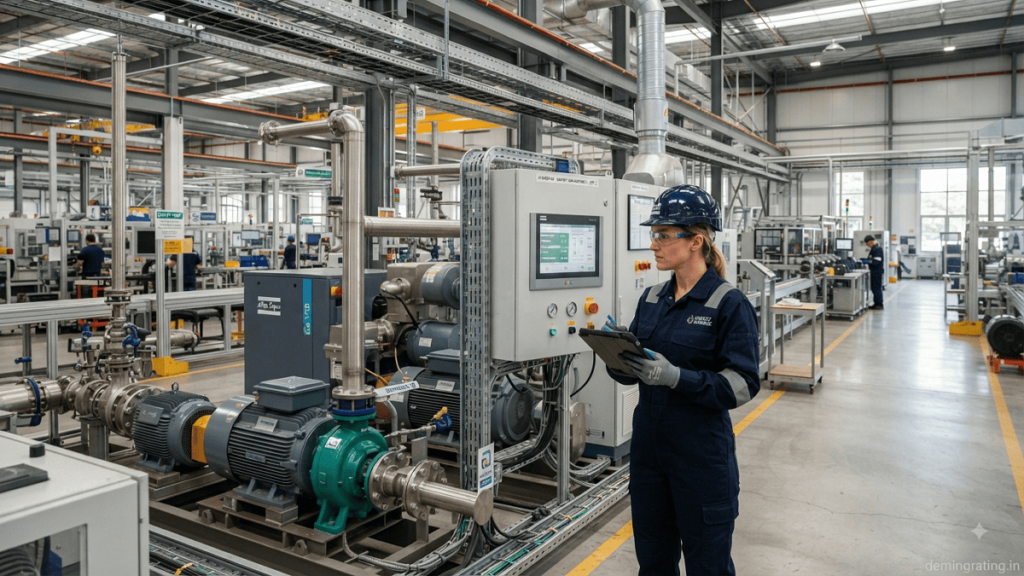
White Paper on Energy Saving Measures in Appliances & Other Equipment
Executive Summary
Energy-saving appliances and equipment play an important role in reducing electricity consumption, operating costs, and environmental impact across residential, commercial, and industrial applications. As electricity demand continues to increase, improving the efficiency of equipment can provide a practical way to reduce energy use without compromising essential services or productivity.
Energy conservation is not limited to purchasing efficient equipment. The greatest results are generally achieved through a combination of energy-efficient product selection, correct sizing, efficient motors, variable-speed drives, smart controls, proper operation, preventive maintenance, scheduling, and continuous energy monitoring.
The U.S. Department of Energy provides extensive guidance on energy-efficient technologies and practices for reducing energy consumption, while India’s Bureau of Energy Efficiency (BEE) provides energy-performance information through its Standards & Labeling Programme.
1. Introduction
Appliances and electrical equipment are responsible for a substantial share of energy consumption in homes, commercial buildings, and industrial facilities. Common energy-consuming equipment includes air conditioners, refrigerators, water heaters, lighting systems, computers, pumps, fans, compressors, motors, and production machinery.
Inefficient equipment can increase electricity consumption throughout its operating life. Furthermore, poor maintenance, incorrect settings, oversized equipment, and unnecessary operating hours can increase energy consumption even when the equipment itself is relatively efficient.
An effective energy-saving strategy therefore considers the complete equipment lifecycle—from selection and installation to operation, maintenance, monitoring, and eventual replacement.
2. Energy-Efficient Equipment Selection
Selecting energy-efficient equipment is one of the most direct methods of reducing electricity consumption. Energy labels allow users to compare the efficiency of different products before making purchasing decisions.
In India, BEE’s Standards & Labeling Programme provides energy-performance information for covered appliances. Higher-rated products generally offer better energy performance within the applicable product category. (beeindia.gov.in)
However, purchasing decisions should not be based solely on the initial price. Lifecycle cost should consider purchase price, energy consumption, maintenance expenses, expected service life, and replacement costs.
3. Efficient Motors and Variable-Speed Drives
Motors are among the most important energy-consuming components in industrial and commercial facilities. High-efficiency motors can reduce electrical losses, while variable-speed drives can adjust motor speed according to actual system demand.
Variable-speed operation is particularly useful for pumps and fans. Instead of operating continuously at full speed, a properly configured drive can reduce speed when demand decreases.
The U.S. Department of Energy’s Industrial Efficiency and Decarbonization Office provides resources on improving industrial energy efficiency, including motor-driven systems and other energy-intensive equipment.
4. Smart Controls and Automation
Smart controls can significantly reduce unnecessary equipment operation. Sensors, timers, occupancy controls, programmable thermostats, building automation systems, and energy-management platforms can adjust equipment operation based on actual requirements.
For example, lighting can automatically switch off when an area is unoccupied, while HVAC systems can reduce operation during periods of low occupancy.
Automation is particularly valuable in large facilities where manually managing hundreds or thousands of devices would be difficult.
5. Proper Operation and Scheduling
Efficient equipment must also be operated efficiently. Equipment should be switched off when not required and operated according to appropriate schedules.
Commercial and industrial facilities can coordinate operating schedules with occupancy and production requirements. Reducing unnecessary operating hours can provide energy savings without requiring major capital investment.
Correct equipment settings are equally important. Excessive heating, cooling, ventilation, pumping, or compression can increase energy consumption without providing additional value.
6. Preventive Maintenance
Maintenance plays a significant role in maintaining equipment efficiency. Dirty filters, blocked airflow, poor lubrication, worn components, and mechanical problems can cause equipment to consume more electricity.
Preventive maintenance involves regular inspection, cleaning, adjustment, lubrication, testing, and replacement of components before major failures occur.
The U.S. Department of Energy’s Operations & Maintenance Best Practices Guide highlights effective operations and maintenance as important components of facility performance.
7. Energy Monitoring and Measurement
Energy monitoring provides the data required to determine whether energy-saving measures are actually working. Digital meters, submeters, smart meters, and energy-management software can track electricity consumption at equipment, system, building, or facility level.
Monitoring can identify unusual consumption patterns and help facility managers determine which equipment requires investigation. It can also provide the baseline needed to measure energy savings after an improvement project.
The International Organization for Standardization (ISO) describes ISO 50001 as a framework for establishing, implementing, maintaining, and improving an energy management system, with the objective of achieving continual improvement in energy performance.
8. Environmental and Economic Benefits
Energy-efficient appliances and equipment provide benefits beyond lower electricity bills. Reducing electricity consumption can decrease energy-related greenhouse-gas emissions, reduce demand on energy infrastructure, and support organizational sustainability objectives.
From an economic perspective, energy efficiency can reduce operating expenses and improve the financial performance of equipment over its useful life. Organizations can evaluate projects using metrics such as annual energy savings, payback period, lifecycle cost, and return on investment.
9. Implementation Strategy
Organizations seeking to improve equipment efficiency should adopt a structured approach:
- Identify major energy-consuming equipment.
- Measure current energy consumption.
- Establish performance baselines.
- Prioritize inefficient or high-consumption equipment.
- Evaluate efficient replacement or optimization options.
- Implement appropriate controls and operating schedules.
- Establish preventive-maintenance procedures.
- Monitor energy performance after implementation.
- Verify actual savings against expected results.
- Continuously improve equipment performance.
This approach helps organizations focus resources on measures that provide the greatest energy and financial benefits.
Conclusion
Energy-saving measures in appliances and other equipment require more than simply replacing old products with new ones. Sustainable energy performance depends on the interaction between efficient technology, proper operation, intelligent controls, maintenance, scheduling, and measurement.
#EnergyEfficiency
Industry Application of Energy Saving Measures in Appliances & Other Equipment
Energy-saving measures in appliances and other equipment have wide applications across manufacturing plants, commercial buildings, hospitals, hotels, warehouses, data centers, and other industrial facilities. These measures help organizations reduce electricity consumption, lower operating costs, improve equipment reliability, and support sustainability targets. The most effective approach combines efficient equipment with proper sizing, intelligent controls, preventive maintenance, optimized scheduling, and continuous energy monitoring.
1. Manufacturing and Production Facilities
Manufacturing facilities use large numbers of motors, pumps, fans, compressors, conveyors, HVAC systems, and process equipment. Motor-driven systems are particularly important because they can represent a major share of industrial electricity consumption. The U.S. Department of Energy recommends a systems-based approach that considers equipment selection, operating conditions, maintenance, and variable-speed control rather than evaluating motors individually.
High-efficiency motors can replace older, inefficient units, while variable-frequency drives can adjust motor speed to match actual production requirements. This is particularly useful for pumps and fans with variable loads. Correct motor sizing is also important because oversized motors can operate inefficiently when their actual load is low.
2. HVAC and Refrigeration Systems
Heating, ventilation, air-conditioning, and refrigeration equipment are significant energy consumers in commercial and industrial facilities. Energy-saving measures include high-efficiency compressors, variable-speed drives, efficient fans, programmable controls, temperature sensors, and automated operating schedules.
Regularly cleaning filters, maintaining heat exchangers, checking refrigerant systems, and keeping equipment properly calibrated can maintain efficiency throughout its operating life.
Smart controls can reduce HVAC operation when buildings or production areas are unoccupied. They can also adjust equipment output according to temperature, occupancy, production requirements, or other operating conditions.
3. Pumps, Fans, and Compressors
Industrial pumps, fans, and compressors offer significant opportunities for energy conservation. Instead of operating continuously at full capacity, variable-speed drives can regulate equipment output according to actual demand.
The DOE identifies variable-speed drives as one of the widely used strategies for reducing energy consumption in motor-driven equipment. Proper operation and maintenance of these systems are also important for maintaining efficiency and reliability.
Facilities should also check for leaks, excessive pressure, blocked filters, inappropriate control settings, and unnecessary operating hours.
4. Commercial Appliances and Equipment
Hotels, restaurants, hospitals, supermarkets, and office buildings use appliances and equipment for cooking, refrigeration, laundry, water heating, lighting, computing, and other services. Efficient commercial appliances can reduce electricity consumption while maintaining required performance.
DOE research has found substantial energy-saving potential in commercial appliances used for cooking, cleaning, water heating, laundry, and related applications.
Businesses can improve efficiency by selecting high-performance equipment, using automatic controls, optimizing operating schedules, and replacing outdated appliances when lifecycle analysis demonstrates a worthwhile return.
5. Electrical Distribution Equipment
Energy efficiency measures can also be applied to electrical infrastructure. Efficient transformers can reduce electrical losses, particularly because transformers often remain energized continuously. Replacing aging equipment and improving electrical-system design can therefore provide long-term energy and reliability benefits.
The DOE has highlighted improvements to distribution transformers and motor systems as opportunities to reduce energy use and operating costs.
6. Monitoring and Preventive Maintenance
Energy metering and monitoring are essential for determining whether efficiency measures are delivering expected results. Submeters can measure individual systems, production areas, or equipment, allowing energy managers to identify abnormal consumption.
Preventive maintenance should be integrated with energy management. Equipment with deteriorating performance may consume more electricity before an obvious failure occurs. Monitoring trends can help maintenance teams investigate these changes earlier.
Conclusion
Industry applications of energy-saving measures extend from motors and pumps to HVAC systems, refrigeration, compressors, commercial appliances, and electrical distribution equipment. High-efficiency equipment reduces energy losses, while variable-speed drives and smart controls ensure that equipment operates according to actual demand. Preventive maintenance and energy monitoring then help preserve performance and identify additional savings opportunities.
The most effective strategy is therefore not simply to purchase efficient appliances or equipment. Organizations should consider the entire system and lifecycle—equipment selection, sizing, installation, controls, operation, maintenance, monitoring, and replacement. This integrated approach can reduce electricity costs, improve reliability, increase operational efficiency, and support long-term sustainability objectives.
#EnergySaving
Ask FAQs
What are energy-saving measures for appliances and equipment?
Energy-saving measures include using energy-efficient appliances, optimizing operating schedules, reducing standby consumption, improving equipment settings, installing smart controls, and carrying out regular preventive maintenance.
How can industries reduce energy consumption from equipment?
Industries can reduce consumption by using high-efficiency motors, variable-speed drives, efficient pumps and compressors, automated controls, optimized operating schedules, and regular energy monitoring.
Why is preventive maintenance important for energy efficiency?
Preventive maintenance keeps equipment operating close to its intended performance level. Cleaning filters, lubricating components, inspecting motors, and correcting faults can prevent equipment from consuming excessive energy.
How do smart controls help save energy?
Smart controls use sensors, timers, occupancy information, and automated schedules to operate equipment according to actual demand. This reduces unnecessary operation while maintaining required performance.
What are the main benefits of energy-efficient equipment?
Energy-efficient equipment can reduce electricity bills, operating and maintenance costs, energy waste, and emissions while improving equipment performance, reliability, and supporting long-term sustainability goals.
Table of Contents
Disclaimer: This content is for general informational purposes only and should not be considered professional technical or energy-management advice. Consult a qualified professional before implementing energy-saving measures.