
Solar Water Heating System
A solar water heating system is a renewable-energy technology that uses sunlight to heat water for domestic, commercial, institutional, and industrial applications. Instead of relying entirely on electricity, gas, or other conventional fuels, the system captures solar thermal energy and transfers it to water. Solar water heating is therefore an important strategy for reducing conventional energy consumption, lowering operating costs, Solar Water Heating System and improving the environmental performance of buildings.
How Does a Solar Water Heating System Work?
A typical solar water heating system consists of solar collectors, a storage tank, circulation pipes, a heat-transfer system, and control equipment. Solar collectors are installed in a location where they receive sufficient sunlight. They absorb solar radiation and transfer the resulting heat to water or another heat-transfer fluid.
Two common collector technologies are flat-plate collectors and evacuated-tube collectors. Flat-plate collectors generally use an absorber plate beneath a transparent cover, while evacuated-tube collectors use individual tubes designed to reduce heat loss. The choice depends on climate, required water temperature, available space, system size, Solar Water Heating System and application.
Once heated, water can be stored in an insulated tank for later use. Systems may use natural circulation, known as thermosiphon circulation, or pumps to circulate water between the collectors and storage tank. A backup heater can provide hot water when solar energy is insufficient.
Benefits of Solar Water Heating
The primary benefit is the reduction of conventional energy used for water heating. Because water heating can represent a significant portion of energy consumption in homes, hotels, hospitals, hostels, restaurants, Solar Water Heating System and other facilities, replacing part of this demand with solar energy can produce meaningful energy savings.
Solar water heating can also reduce greenhouse-gas emissions associated with conventional electricity or fuel consumption. The system has relatively low operating requirements after installation because sunlight is free and the primary energy input does not require fuel purchases.
The International Energy Agency (IEA) recognizes solar thermal technologies as an important renewable-energy option for providing low-carbon heat.
Applications
Solar water heating systems are suitable for residential buildings as well as facilities with consistent hot-water demand. Common applications include hotels, hospitals, educational institutions, residential complexes, sports facilities, restaurants, Solar Water Heating System and industrial processes requiring low- or medium-temperature hot water.
In India, solar water heating has been promoted as part of broader renewable-energy and energy-efficiency initiatives. The Ministry of New and Renewable Energy (MNRE) provides information on solar thermal technologies and renewable-energy programmes.
Design and Maintenance Considerations
Successful installation requires careful consideration of collector orientation, inclination, shading, storage capacity, insulation, water quality, pipe sizing, Solar Water Heating System and expected hot-water demand. The system should be designed according to the building’s actual consumption rather than simply selecting the largest possible collector area.
Regular maintenance is also important. Collectors should be kept reasonably clean, insulation should be inspected, pumps Solar Water Heating System and valves should be checked, and storage tanks and circulation systems should be maintained according to the manufacturer’s recommendations.
Conclusion
Solar water heating systems provide an effective way to use renewable solar energy for one of the most common thermal requirements in buildings: hot-water production. By reducing dependence on conventional energy sources, they can lower operating costs, reduce emissions, and support green-building objectives. When properly designed, installed, Solar Water Heating System and maintained, solar water heating can provide reliable hot water while contributing to a building’s long-term energy and sustainability performance.
Relevant External Resources
- International Energy Agency – Solar Thermal
- Ministry of New and Renewable Energy – Government of India
- International Renewable Energy Agency – Solar Heating and Cooling
#EnergyConservation
What Is a Solar Water Heating System and How Does It Work?
A solar water heating system is a renewable-energy system that uses sunlight to heat water for domestic, commercial, institutional, or industrial use. Unlike conventional water heaters that rely primarily on electricity, gas, or other fuels, a solar water heater captures thermal energy from the sun and transfers it to water. This makes it an effective technology for reducing conventional energy consumption, operating costs, Solar Water Heating System and greenhouse-gas emissions.
What Is a Solar Water Heating System?
A typical solar water heating system consists of solar collectors, a storage tank, circulation pipes, insulation, control equipment, and sometimes a circulation pump and backup heater. The solar collectors are generally installed on a roof or another location with good exposure to sunlight.
The two commonly used collector technologies are flat-plate collectors and evacuated-tube collectors. Flat-plate collectors use an absorber surface to capture solar radiation, while evacuated-tube collectors use insulated glass tubes designed to minimize heat loss. The appropriate technology depends on climate, hot-water demand, available space, and required water temperature.
How Does It Work?
The operating principle is relatively simple. First, solar radiation falls on the collector surface. The collector absorbs this energy and converts it into heat. This heat is transferred to water or a heat-transfer fluid circulating through the collector.
In a thermosiphon system, heated water naturally rises because it becomes less dense, while cooler water moves downward toward the collectors. This creates circulation without requiring an electric pump.
In a forced-circulation system, a pump moves water or heat-transfer fluid between the collectors and storage tank. A controller can operate the pump when the collector temperature is sufficiently higher than the temperature of the water in the tank.
The heated water is then stored in an insulated tank so that it can be used when required. Good tank and pipe insulation is important because it reduces heat loss between heating and consumption.
A backup heating system may also be included. During periods of insufficient sunlight, such as cloudy weather or high-demand periods, the backup system supplies additional heat to ensure a reliable hot-water supply.
Benefits of Solar Water Heating
Solar water heating can significantly reduce the amount of conventional energy required for water heating. It is particularly useful in buildings with consistent hot-water demand, including hotels, hospitals, hostels, residential complexes, restaurants, and sports facilities.
The technology also supports green-building objectives by reducing operational energy consumption and associated emissions. The International Energy Agency recognizes solar thermal technology as an important renewable source for supplying low-carbon heat.
In India, the Ministry of New and Renewable Energy (MNRE) promotes solar-energy technologies as part of the country’s broader renewable-energy transition.
Conclusion
A solar water heating system converts sunlight into useful thermal energy for heating and storing water. By combining solar collectors, efficient circulation, thermal storage, insulation, controls, Solar Water Heating System and optional backup heating, the system can provide a reliable hot-water supply while reducing dependence on conventional energy sources. When properly designed and maintained, solar water heating is a practical solution for improving building energy efficiency and supporting long-term sustainability.
Relevant External Resources
- International Energy Agency – Solar Thermal
- Ministry of New and Renewable Energy – Government of India
- International Renewable Energy Agency – Solar Heating and Cooling
#CleanEnergy
What Are the Main Components of a Solar Water Heating System?
A solar water heating system consists of several interconnected components that work together to capture solar energy, convert it into useful heat, transfer that heat to water, and store the heated water for later use. The exact configuration varies depending on whether the system is designed for a home, commercial building, institution, or industrial facility. However, most systems include solar collectors, a storage tank, circulation equipment, pipes, insulation, controls, Solar Water Heating System and safety components.
1. Solar Collectors
Solar collectors are the most important component because they capture solar radiation and convert it into thermal energy. Two widely used technologies are flat-plate collectors and evacuated-tube collectors.
Flat-plate collectors typically contain an absorber plate, fluid passages, insulation, and a transparent cover. Evacuated-tube collectors use glass tubes with an evacuated space that helps reduce heat loss. Collector selection depends on climate, required water temperature, available installation area, Solar Water Heating System and hot-water demand.
2. Storage Tank
The storage tank stores heated water so it can be used when sunlight is unavailable or when demand occurs outside peak solar-heating periods. Tanks are normally insulated to minimize heat loss.
A properly sized tank is important because insufficient storage may result in inadequate hot-water availability, while excessive storage can increase system cost and unnecessary heat losses.
3. Circulation System
The circulation system moves water or heat-transfer fluid between the solar collectors and the storage tank. Solar water heaters may use natural circulation, where temperature differences drive the flow, or forced circulation, where an electric pump circulates the fluid.
Forced-circulation systems are commonly used in larger installations because they provide greater control over flow and system operation.
4. Pipes and Heat-Transfer Components
Pipes connect the collectors, storage tank, pumps, and points of use. In systems using an indirect heat-transfer loop, a heat exchanger transfers thermal energy from the solar-heated fluid to the domestic water without mixing the two fluids.
Pipe materials must be suitable for the temperatures and water conditions expected in the system.
5. Insulation
Insulation is installed around the storage tank and hot-water pipes to reduce heat loss. Effective insulation is particularly important in larger systems where water may travel significant distances between collectors, storage tanks, Solar Water Heating System and points of use.
6. Controller and Sensors
Advanced systems use temperature sensors and controllers to regulate circulation. A controller can compare collector and tank temperatures and operate the pump when useful solar heat is available.
7. Backup Heater and Safety Components
A backup electric, gas, or other conventional heater may be provided to ensure hot-water availability during periods of low solar radiation. Safety components can include pressure-relief valves, expansion vessels, check valves, temperature controls, Solar Water Heating System and other protective devices appropriate to the system design.
Conclusion
The main components of a solar water heating system work as an integrated system rather than independently. Collectors capture solar energy, circulation equipment transfers heat, the storage tank retains hot water, insulation minimizes losses, and controls and safety devices ensure reliable operation. Proper selection and sizing of each component are essential for achieving efficient performance and a dependable hot-water supply.
The International Energy Agency (IEA) identifies solar thermal systems as an important technology for supplying renewable heat, while the International Renewable Energy Agency (IRENA) provides technical information on solar heating Solar Water Heating System and cooling applications. (IEA; IRENA)
Relevant External Resources
- International Energy Agency – Solar Thermal
- International Renewable Energy Agency – Solar Heating and Cooling
- Ministry of New and Renewable Energy – Government of India
#GreenBuilding
How Can Solar Water Heating Reduce Electricity or Fuel Consumption for Hot-Water Generation?
Solar water heating can significantly reduce electricity or fuel consumption for hot-water generation by using sunlight as the primary source of thermal energy. Instead of relying entirely on electric resistance heaters, gas boilers, or other conventional heating systems, a solar water heater captures solar radiation and converts it directly into useful heat. The conventional heating system can then serve as a backup when solar energy is insufficient.
Using Solar Energy as the Primary Heat Source
A solar water heating system uses collectors to absorb solar radiation and transfer the resulting heat to water or a heat-transfer fluid. The heated water is stored in an insulated tank and supplied when required.
This process reduces the amount of energy that would otherwise be required from conventional water heaters. For example, if a building normally uses an electric heater to raise cold water to the required temperature, a solar system can preheat the water before it reaches the electric heater. The electric heater then needs to provide only the remaining temperature increase.
The same principle applies to gas-fired or other fuel-based water-heating systems. Solar energy supplies part or, under suitable conditions, most of the required heat, reducing the amount of fuel that must be burned.
Reducing Electrical Demand
Electric resistance water heaters convert electricity into heat, making hot-water production a potentially significant electrical load. A solar thermal system reduces this demand by providing heat without consuming electricity for the primary heating process.
Electricity is still required for some system components, particularly in pumped systems. However, the electrical requirement for circulation and controls is generally much smaller than the energy that would otherwise be required for conventional water heating.
Reducing Fuel Consumption
Buildings using gas, diesel, or other fuels for water heating can also benefit. Solar collectors can supply a substantial portion of the thermal requirement, allowing boilers or fuel-fired heaters to operate for shorter periods.
The actual reduction depends on factors such as solar availability, collector efficiency, system size, hot-water demand, storage capacity, water temperature requirements, and the efficiency of the backup heater.
Applications With High Hot-Water Demand
Solar water heating can be especially valuable in buildings with consistent hot-water requirements. Hotels, hospitals, hostels, residential complexes, restaurants, educational institutions, and sports facilities may have significant daily hot-water demand. A predictable load makes it easier to size the solar system and maximize the use of collected solar heat.
The International Energy Agency (IEA) identifies solar thermal technologies as an important renewable-energy option for supplying low-carbon heat, including hot-water applications. (IEA)
Importance of Storage and Backup Systems
Thermal storage allows solar energy collected during the day to be used later. Good insulation helps preserve the stored heat and reduces the need for reheating.
A backup heater remains important because solar availability changes with weather and time of day. Instead of replacing conventional heating completely, many systems are designed so that solar energy supplies the majority of the annual requirement while the backup system covers periods of insufficient solar energy.
Long-Term Energy and Environmental Benefits
By replacing a portion of conventional electricity or fuel consumption, solar water heating can reduce operating costs and associated greenhouse-gas emissions. The financial benefit is particularly attractive in buildings with high hot-water demand and good solar availability.
Ultimately, solar water heating reduces energy consumption by shifting hot-water production from purchased electricity or fuel to renewable solar energy. When properly designed and maintained, it can provide a reliable and cost-effective method of improving building energy efficiency.
Relevant External Resources
- International Energy Agency – Solar Thermal
- International Renewable Energy Agency – Solar Heating and Cooling
- Ministry of New and Renewable Energy – Government of India
#SustainableBuildings
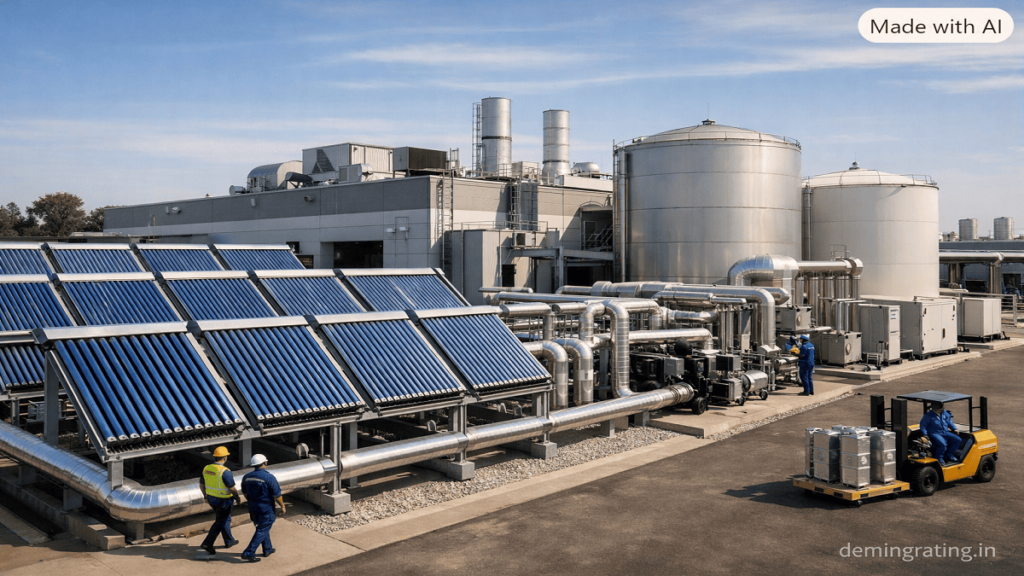
What Factors Should Be Considered When Designing and Installing a Solar Water Heating System?
Designing and installing a solar water heating system requires more than simply selecting solar collectors and placing them on a roof. A successful system must be sized according to hot-water demand, local solar conditions, building characteristics, water quality, and expected operating conditions. Proper planning helps maximize solar-energy utilization, improve reliability, and reduce long-term operating and maintenance costs.
1. Hot-Water Demand
The first consideration should be the building’s actual hot-water requirement. Designers should assess the number of occupants, daily consumption patterns, required water temperature, peak demand, and hours of operation.
Residential buildings may have relatively variable demand, while hotels, hospitals, hostels, restaurants, and industrial facilities may require large and predictable quantities of hot water. The collector area and storage capacity should be sized according to this demand rather than using a generic system size.
2. Solar Resource and Climate
Local solar availability has a direct effect on system performance. Designers should evaluate solar radiation, seasonal variations, ambient temperatures, rainfall, and expected periods of low sunlight.
The International Energy Agency (IEA) recognizes solar thermal technology as an important renewable-energy option for providing low-carbon heat.
3. Collector Type and Orientation
The appropriate collector technology should be selected based on the required water temperature, climate, available roof area, and budget. Common options include flat-plate and evacuated-tube collectors.
Collectors should be positioned to receive adequate sunlight and should be protected from significant shading caused by adjacent buildings, trees, parapets, or other structures. Orientation and inclination should be optimized for the project’s location and annual hot-water demand.
4. Storage Capacity
The storage tank must be large enough to retain useful solar-heated water while avoiding unnecessary heat losses and excessive system costs. Tank insulation is particularly important because stored water may need to remain hot for several hours before use.
5. Circulation and Piping
Designers need to determine whether natural or forced circulation is appropriate. Larger installations often use pumps and controls to regulate heat transfer.
Pipes should be correctly sized and adequately insulated to minimize pressure losses and heat loss. The system should also include suitable valves, expansion provisions, and protection against reverse circulation where necessary.
6. Water Quality
Local water quality can significantly affect system performance. Hard water can cause scaling in collectors, heat exchangers, pipes, and storage tanks. Corrosion can also reduce component life.
Water-quality conditions should therefore be assessed during design, with appropriate filtration, treatment, heat exchangers, or maintenance procedures incorporated where required.
7. Backup Heating
Solar availability varies throughout the day and year, so a backup heater is normally required for reliable hot-water supply. The backup system may use electricity, gas, or another appropriate energy source.
The objective is to ensure that the backup heater supplies only the energy that solar heating cannot provide.
8. Roof Structure, Safety, and Installation
The roof or supporting structure must be capable of carrying the collector and storage-system loads, including wind and other environmental forces. Safe access should be provided for inspection and maintenance.
Proper installation should also address waterproofing, pipe penetrations, electrical connections for pumps and controls, pressure protection, temperature protection, and other applicable safety requirements.
9. Maintenance and Monitoring
A solar water heating system should be designed for long-term maintenance. Collectors may need cleaning, pumps and valves require inspection, and insulation and storage tanks should be checked periodically.
Energy and temperature monitoring can also help identify performance problems early.
Conclusion
A successful solar water heating system depends on integrated design rather than collector selection alone. Hot-water demand, solar availability, collector technology, orientation, storage, circulation, water quality, backup heating, structural conditions, safety, and maintenance should all be considered before installation. When these factors are properly addressed, solar water heating can provide reliable renewable heat, reduce conventional energy consumption, and support the long-term energy performance of a building.
Relevant External Resources
- International Energy Agency – Solar Thermal
- International Renewable Energy Agency – Solar Heating and Cooling
- Ministry of New and Renewable Energy – Government of India
#EnergyEfficiency
What Are the Environmental, Economic, and Energy-Saving Benefits of Using Solar Water Heating?
Solar water heating offers a practical way to replace a portion of conventional energy used for hot-water production with renewable solar energy. By using sunlight as the primary heat source, these systems can reduce electricity or fuel consumption while delivering environmental and financial benefits over their operating life. The actual savings depend on factors such as solar availability, hot-water demand, system size, collector efficiency, water temperature requirements, and the performance of the backup heating system.
Environmental Benefits
The most important environmental benefit of solar water heating is the reduction in conventional energy consumption. When electricity, natural gas, diesel, or other fuels are displaced by solar thermal energy, the associated greenhouse-gas emissions can also be reduced.
Solar thermal systems are particularly useful because water heating is a direct thermal application. Instead of converting fuel or electricity into heat, solar collectors capture heat from sunlight directly. The International Energy Agency identifies solar thermal technologies as an important renewable-energy option for providing low-carbon heat. (IEA)
Reducing conventional energy demand can also decrease dependence on fossil fuels and contribute to broader building decarbonization objectives. For buildings with substantial hot-water requirements, the cumulative environmental benefit can become significant over many years.
Energy-Saving Benefits
Solar water heating can substantially reduce the energy required from conventional water heaters. During periods of adequate sunlight, solar collectors provide much or all of the heat required to bring water to the desired temperature. The conventional heater then operates only when additional heating is necessary.
This can reduce electricity consumption from electric water heaters or fuel consumption from gas- and oil-fired systems. Thermal storage allows heat collected during sunny periods to remain available for later use, while insulation reduces heat loss from the storage tank and distribution pipes.
The greatest energy savings are generally achieved in buildings with consistent hot-water demand, such as hotels, hospitals, hostels, residential complexes, restaurants, and educational institutions.
Economic Benefits
Reduced energy consumption can translate directly into lower utility bills. Although solar water heating requires an initial investment for collectors, storage, installation, controls, and supporting equipment, the system can generate operating savings over its useful life.
The financial return depends on the local cost of electricity or fuel, available solar radiation, system performance, installation cost, maintenance requirements, and hot-water consumption. Buildings with high and consistent demand can often make better use of the available solar resource.
A solar water heating system can also reduce exposure to future increases in electricity and fuel prices because part of the building’s hot-water energy requirement is supplied by sunlight rather than purchased energy.
Operational and Long-Term Benefits
Properly designed systems can provide reliable hot water while reducing the workload of conventional heating equipment. A backup heater ensures that hot-water availability is maintained during cloudy periods or when demand exceeds solar production.
Solar water heating can therefore contribute to a building’s overall energy-efficiency strategy alongside efficient HVAC systems, lighting, insulation, and other renewable-energy technologies.
Conclusion
Solar water heating provides interconnected environmental, energy, and economic benefits. It reduces dependence on conventional electricity and fuels, lowers the energy required for hot-water generation, can reduce associated emissions, and may lower long-term operating costs. The strongest results are achieved when the system is correctly sized, properly oriented, adequately insulated, and matched to the building’s actual hot-water demand.
For green buildings, solar water heating is therefore more than a renewable-energy feature. It is a practical energy-efficiency measure that can reduce operational energy demand while supporting long-term sustainability and cost management.
Relevant External Resources
- International Energy Agency – Solar Thermal
- International Renewable Energy Agency – Solar Heating and Cooling
- Ministry of New and Renewable Energy – Government of India
#SolarEnergy
Case Study of Solar Water Heating System: IIT Roorkee
A strong example of large-scale solar water heating in India is the Indian Institute of Technology Roorkee (IIT Roorkee), where solar water heating systems were installed across hostels, guest facilities, and residential areas. The project demonstrates how solar thermal technology can be integrated into a large institutional campus to reduce conventional energy consumption and greenhouse-gas emissions while providing hot water to a substantial number of users.
Project Overview
According to IIT Roorkee’s solar-energy project information, the solar water heating installation was completed in January 2015. The project uses evacuated tube collectors (ETCs) and has a cumulative collector area of approximately 5,547 square metres. The systems serve nine hostels, one guest house, and residential areas covering the institute’s staff. The reported cumulative hot-water capacity is approximately 339,700 litres per day (LPD).
The scale of the project makes it an important institutional example because hot-water demand in hostels and residential facilities can be substantial and relatively predictable. Such demand is well suited to solar water heating because solar energy collected during the day can be stored and used for bathing and other hot-water requirements.
Technology Used
The project uses evacuated tube collector technology. ETCs consist of insulated glass tubes that absorb solar radiation and transfer the resulting thermal energy to the water or heat-transfer system. Their design helps reduce heat losses and allows them to operate effectively under a range of conditions.
The IIT Roorkee installation also incorporates flow meters and temperature sensors connected with SCADA and LCD display systems. These monitoring features allow operators to observe system performance and support more effective management of the solar-heating infrastructure.
Another notable feature is the use of separate storage tanks for different groups of bathrooms. This arrangement helps distribute hot water more effectively and allows individual sections of the system to be managed according to demand.
Energy and Environmental Benefits
IIT Roorkee reports annual electricity savings of approximately 53.71 lakh units, equivalent to about 5.371 million kWh per year. The institute also reports an estimated 4,297 tonnes of CO₂ reduction per year associated with the solar water heating installation.
These results demonstrate the potential of solar thermal systems to reduce electricity consumption when they replace conventional electric water heating. Because hot-water demand occurs regularly in hostels and residential facilities, the system can make productive use of the available solar resource.
Key Lessons From the Case Study
The IIT Roorkee project highlights several important principles for successful solar water heating:
- Large, predictable hot-water demand can make solar thermal systems highly effective.
- Appropriate collector technology is essential for reliable heat collection.
- Adequate thermal storage allows solar-heated water to be used when required.
- Temperature and flow monitoring helps verify and manage system performance.
- Large institutional installations can generate substantial energy and emissions savings.
The project also demonstrates the importance of designing solar water heating as an integrated building service rather than treating it as an isolated renewable-energy installation.
Conclusion
The IIT Roorkee solar water heating project provides a practical example of how solar thermal technology can be deployed at institutional scale. With a reported capacity of nearly 340,000 litres of hot water per day, more than 5,500 square metres of collector area, and substantial reported electricity and carbon savings, the project illustrates the potential of solar water heating to reduce conventional energy demand.
For educational campuses, residential complexes, hospitals, hotels, and similar facilities, the case demonstrates that correctly sized solar water heating systems, supported by storage and performance monitoring, can provide both significant energy savings and long-term environmental benefits.
Relevant External Resources
- IIT Roorkee – Solar Water Heating Systems
- Ministry of New and Renewable Energy – Solar Thermal Overview
- International Energy Agency – Solar Thermal
#RenewableEnergy
White Paper on Solar Water Heating System
Executive Summary
A solar water heating system (SWHS) is a renewable-energy technology that uses solar radiation to produce hot water for residential, commercial, institutional, and industrial applications. Unlike conventional water heaters that depend primarily on electricity or fuels, solar water heaters use solar thermal collectors to capture heat from the sun and transfer it to water. This can reduce conventional energy consumption, operating costs, and associated greenhouse-gas emissions.
The Ministry of New and Renewable Energy (MNRE), Government of India, describes solar water heating as one of the simplest applications of solar thermal technology and notes that systems can be used for applications ranging from domestic hot water to larger commercial and industrial requirements.
This white paper examines the technology, major components, design considerations, applications, benefits, standards, maintenance requirements, and role of solar water heating in sustainable building and energy-management strategies.
1. Introduction
Water heating is an important energy requirement in many buildings. Hotels, hospitals, hostels, residential complexes, restaurants, educational institutions, and industrial facilities can have substantial and predictable hot-water demand. Traditionally, this demand is met using electric heaters, boilers, or fuel-fired systems.
Solar water heating provides an alternative by using solar energy as the primary thermal source. Solar collectors absorb sunlight and transfer the resulting heat to water or a heat-transfer fluid. The heated water is then stored and supplied when required.
MNRE identifies solar thermal technologies as suitable for residential, commercial, and industrial applications. Its solar water heater programme also recognizes both domestic systems and larger installations for facilities such as hotels, hospitals, restaurants, and canteens.
2. Working Principle
A solar water heating system generally consists of solar collectors, a storage tank, piping, circulation equipment, insulation, controls, and safety components.
During daylight hours, solar collectors absorb solar radiation and convert it into thermal energy. The heat is transferred to water or a heat-transfer fluid circulating through the collector. The heated water is then transferred to an insulated storage tank.
Systems can operate through thermosiphon circulation or forced circulation. In thermosiphon systems, differences in water temperature and density naturally circulate the water. In larger systems, pumps and controls can be used to regulate circulation and improve system control.
Stored hot water can subsequently be supplied to showers, kitchens, washing facilities, industrial processes, or other applications. A conventional backup heater may be included to provide additional heating during periods of insufficient solar radiation or unusually high demand.
The International Energy Agency identifies solar thermal as one of the technologies capable of contributing to lower-carbon heating and hot-water supply in buildings.
3. Major Components
The solar collector is the primary heat-capture component. Two common collector technologies are flat-plate collectors and evacuated-tube collectors. The selection depends on climate, water-temperature requirements, available installation space, and project economics.
The storage tank stores heated water for later use. Adequate insulation is necessary to reduce standby heat losses.
Pipes and circulation equipment transport water or heat-transfer fluid between collectors and storage tanks. Larger installations may use pumps, valves, heat exchangers, and automated controls.
Temperature sensors and controllers can regulate circulation and provide useful performance information. A backup heater ensures reliable hot-water availability when solar energy cannot meet demand.
Properly selected safety components, including pressure and temperature protection, are also essential for reliable operation.
4. Design Considerations
A solar water heating system should be designed around the building’s actual hot-water demand rather than simply maximizing collector area. Important design parameters include:
- Daily and peak hot-water demand
- Required water temperature
- Local solar radiation
- Seasonal weather conditions
- Collector type and efficiency
- Collector orientation and inclination
- Available roof or ground area
- Shading from surrounding structures
- Storage capacity
- Pipe length and insulation
- Water quality
- Backup heating requirements
- Structural capacity of the installation area
- Maintenance and accessibility
Correct sizing is particularly important. An undersized system may provide inadequate solar contribution, while an unnecessarily oversized system can increase capital cost and create additional heat-loss or stagnation-management challenges.
5. Energy and Environmental Benefits
The primary energy benefit of solar water heating is the replacement of electricity or fuel that would otherwise be required to produce hot water. When solar energy supplies part of the thermal demand, the conventional heating system operates less frequently or for shorter periods.
This can reduce electricity consumption, fuel consumption, and associated greenhouse-gas emissions. The IEA identifies solar thermal systems as an important option for reducing fossil-fuel use in water and space heating.
Solar water heating can be particularly effective in facilities with regular hot-water demand. Because the demand is relatively predictable, the system can be designed to capture and store a useful proportion of available solar energy.
6. Economic Benefits
Solar water heating requires an initial investment in collectors, storage, piping, controls, installation, and supporting infrastructure. However, once installed, the primary energy source—sunlight—is free.
The resulting reduction in electricity or fuel purchases can lower operating costs. The financial return depends on factors such as system cost, local energy prices, solar resource, hot-water demand, maintenance requirements, and system lifetime.
Buildings with high hot-water consumption can potentially achieve stronger economic benefits because a larger quantity of conventional energy can be displaced.
Solar water heating can also reduce exposure to future fluctuations in electricity and fuel prices by supplying part of the building’s thermal energy independently of purchased fuels.
7. Applications
Solar water heating can be applied across multiple sectors.
Residential Buildings
Small systems are suitable for homes and apartments where hot-water demand is relatively predictable. MNRE notes that systems in the range of approximately 100–500 litres per day (LPD) are suited to domestic applications.
Commercial and Institutional Buildings
Hotels, hospitals, hostels, restaurants, canteens, educational campuses, and sports facilities can benefit from centralized solar hot-water systems. These facilities often have substantial daily hot-water requirements, making solar thermal utilization attractive.
Industrial Applications
Industries requiring low- or medium-temperature hot water can integrate solar thermal systems into their processes. MNRE also identifies significant potential for solar thermal technologies in industrial sectors such as food processing, textiles, chemicals, pharmaceuticals, and other heat-intensive applications.
8. Standards and Quality Requirements in India
Quality and standardization are important considerations when selecting solar water heating equipment. MNRE lists several relevant Indian Standards covering evacuated-tube systems, solar collector tubes, storage tanks, flat-plate collectors, system performance, durability, reliability, and installation practices.
Among the standards listed by MNRE are IS 16544, IS 12933, IS 13129, and IS 12976:2023, the latter covering the code of practice for solar water heating systems.
MNRE also maintains information regarding quality-control requirements for solar thermal systems and components.
For projects in India, equipment selection should therefore consider current applicable BIS standards and MNRE quality-control requirements rather than relying solely on advertised collector efficiency or system capacity.
9. Monitoring and Maintenance
Long-term performance depends on appropriate installation, operation, and maintenance. Collectors should be kept reasonably clean, while pumps, valves, sensors, insulation, storage tanks, and circulation systems should be periodically inspected.
Monitoring temperatures, flow rates, and energy performance can help identify problems such as insufficient circulation, scaling, damaged insulation, sensor failures, or abnormal heat losses.
For large installations, centralized monitoring can help facility managers determine whether the solar system is delivering the expected contribution and whether maintenance is required.
10. Challenges and Limitations
Solar water heating has several limitations that should be considered during project planning. Solar availability varies by season and weather conditions, so the system cannot always provide the entire hot-water requirement.
Space and shading can also limit collector installation. Poor system sizing, inadequate insulation, water-quality problems, and insufficient maintenance can reduce performance.
For this reason, solar water heating should normally be designed with an appropriate backup heating system. The objective is not necessarily to eliminate conventional heating completely but to maximize the useful contribution from solar energy while maintaining reliable hot-water availability.
11. Future Opportunities
Solar water heating has significant potential as buildings and industries seek to reduce energy consumption and carbon emissions. The IEA reported that solar thermal technologies were already being used in hundreds of millions of dwellings worldwide and identified further deployment as part of the pathway toward zero-carbon-ready buildings.
In India, MNRE has also continued work on solar thermal technology, standards, quality control, and industry development. A 2023 MNRE workshop highlighted the need for stronger quality control, market development, and wider deployment of solar water heating systems.
Future applications can include larger centralized systems, integration with heat pumps, thermal storage, smart controls, and hybrid renewable-energy systems.
Conclusion
Solar water heating is a mature and practical renewable-energy technology capable of reducing conventional energy consumption for hot-water generation. Its applications range from individual homes to large hotels, hospitals, institutional campuses, and industrial facilities.
The strongest results depend on correct sizing, suitable collector selection, adequate storage, proper orientation, effective insulation, quality components, appropriate controls, and regular maintenance. Meeting applicable Indian standards and quality requirements is equally important for achieving reliable long-term performance.
For green buildings, solar water heating can complement energy-efficient envelopes, HVAC systems, lighting, and other renewable-energy technologies. By replacing a portion of conventional electricity or fuel demand with solar thermal energy, the technology can contribute simultaneously to lower operating costs, reduced emissions, and improved building energy performance.
Recommended External Resources
- Ministry of New and Renewable Energy – Solar Water Heaters
- MNRE – Solar Thermal Overview
- MNRE – Solar Thermal Quality Control and Standards
- International Energy Agency – Solar Thermal and Energy-Efficient Buildings
#SolarThermalEnergy

Industry Application of Solar Water Heating System
Solar water heating systems have significant applications across industries where hot water or low-temperature process heat is required on a regular basis. By using solar thermal energy instead of relying entirely on electricity, natural gas, diesel, or other conventional fuels, industries can reduce energy consumption, operating costs, and associated emissions. The technology is particularly valuable for facilities with predictable hot-water demand and suitable solar exposure.
Application in Hospitality
Hotels, resorts, restaurants, and catering facilities require substantial quantities of hot water for guest bathrooms, kitchens, laundry, and cleaning. Solar water heating can provide a significant portion of this demand, particularly during daytime hours when solar radiation is available.
Large centralized systems can combine solar collectors with insulated storage tanks and backup boilers or electric heaters. This arrangement allows solar energy to supply the majority of the thermal requirement while conventional equipment provides additional heat when necessary.
Application in Healthcare
Hospitals and healthcare facilities have continuous hot-water requirements for patient care, sanitation, laundry, kitchens, and staff facilities. Solar water heating can reduce the energy required to meet these demands.
Because hospitals generally require a reliable hot-water supply, solar systems are normally integrated with conventional backup heating and appropriate temperature-control and safety systems.
Application in Educational Institutions
Universities, colleges, boarding schools, and hostels can benefit from solar water heating because student accommodation creates predictable daily hot-water demand. Large centralized installations can supply multiple buildings from a common solar-thermal system.
A notable Indian example is IIT Roorkee, which has installed solar water heating systems across hostels, a guest house, and residential areas. The institute reports a cumulative collector area of approximately 5,547 square metres and a hot-water capacity of around 339,700 litres per day. (IIT Roorkee)
Application in Industrial Processes
Some industrial processes require hot water or relatively low-temperature heat. Potential applications include food processing, dairy operations, textile processing, laundries, pharmaceutical production, and certain chemical processes.
Solar thermal energy can be used to preheat process water, reducing the workload of conventional boilers or heaters. The solar system does not necessarily have to provide the entire process requirement; even partial solar preheating can reduce fuel consumption.
The Ministry of New and Renewable Energy (MNRE) identifies industrial applications as an important area for solar thermal technologies and notes potential applications across industries including food processing, textiles, chemicals, and pharmaceuticals. (MNRE)
Application in Textile and Laundry Operations
Textile manufacturing and commercial laundry facilities can require large quantities of hot water for washing, cleaning, dyeing, and finishing processes. Solar thermal systems can preheat incoming water before it enters conventional boilers or process heaters.
This reduces the amount of fuel required to reach the desired temperature and can improve the overall efficiency of the heating process.
Application in Food Processing
Food and beverage facilities commonly require hot water for cleaning equipment, sanitation, washing, and processing. Because hygiene requirements often create consistent thermal loads, solar water heating can be integrated into the facility’s hot-water infrastructure.
A properly designed system can supply solar-heated water to storage tanks, with conventional heating equipment operating only when additional temperature or capacity is required.
Energy Management and Monitoring
Industrial solar water heating should be treated as part of a broader energy-management strategy. Flow meters, temperature sensors, heat meters, and monitoring systems can help operators determine how much thermal energy the solar installation is providing.
Monitoring is particularly valuable for large facilities because it can reveal declining collector performance, circulation problems, excessive heat losses, or changes in hot-water demand.
Key Considerations for Industrial Applications
Industrial systems require careful assessment of hot-water demand, required temperature, operating schedules, solar availability, collector technology, storage capacity, water quality, available installation area, and backup heating.
System design should also consider process continuity. Where hot water is critical to production or hygiene, solar heating should normally operate alongside a reliable backup system rather than functioning as the sole heat source.
Conclusion
Solar water heating can be applied across hospitality, healthcare, education, food processing, textiles, laundries, pharmaceuticals, and other industries requiring regular hot-water or low-temperature thermal energy. Its greatest advantage is the ability to replace part of the electricity or fuel normally required for heating.
For industrial users, the most effective approach is to integrate solar thermal technology with existing heating infrastructure, thermal storage, efficient controls, and performance monitoring. This can reduce conventional energy consumption while supporting cost reduction, emissions reduction, and long-term sustainability goals.
Relevant External Resources
- Ministry of New and Renewable Energy – Solar Water Heaters
- MNRE – Concentrated Solar Thermal
- IIT Roorkee – Solar Water Heating Project
- International Energy Agency – Solar Thermal
#SolarWaterHeating
Ask FAQs
What is a solar water heating system?
A solar water heating system uses solar energy to heat water for residential, commercial, institutional, or industrial applications. The system typically includes solar collectors, a storage tank, circulation pipes, insulation, controls, and a backup heater. Solar collectors absorb sunlight and transfer the captured heat to water or a heat-transfer fluid. The heated water is stored for later use, reducing the need for conventional electric or fuel-based water heating. Solar water heating is particularly suitable for facilities with regular hot-water demand, such as homes, hotels, hospitals, hostels, restaurants, and educational institutions.
What are the main components of a solar water heating system?
The main components include solar collectors, a hot-water storage tank, circulation pipes, insulation, pumps where required, temperature sensors, controllers, valves, and safety devices. Flat-plate and evacuated-tube collectors are the two common collector technologies. The storage tank retains heated water for use when solar energy is unavailable. Insulation reduces heat losses from the tank and pipes. Larger systems may include pumps, heat exchangers, automated controls, flow meters, and monitoring equipment. A conventional electric or fuel-based heater may also be integrated as a backup to ensure reliable hot-water availability.
How much energy can a solar water heating system save?
Energy savings depend on the local solar resource, collector efficiency, system size, hot-water demand, storage capacity, water temperature requirements, and performance of the conventional heating system being replaced. During periods of sufficient sunlight, solar energy can provide a substantial portion of the heat required for hot-water generation. This reduces electricity or fuel consumption by the backup heater. Buildings with consistent and high hot-water demand can generally make particularly effective use of solar thermal systems. Proper system sizing, insulation, orientation, and regular maintenance are essential for achieving the expected savings.
Where can solar water heating systems be used?
Solar water heating can be used in residential buildings, apartment complexes, hotels, hospitals, hostels, schools, universities, restaurants, sports facilities, laundries, and industrial facilities. Industrial applications can include hot-water requirements in food processing, textiles, pharmaceuticals, and other sectors. The technology is particularly effective where hot-water demand occurs regularly throughout the year. India’s Ministry of New and Renewable Energy recognizes applications of solar thermal technologies across domestic, commercial, institutional, and industrial sectors. (MNRE)
Does a solar water heating system work during cloudy or rainy weather?
Solar water heating systems can still collect some solar energy during cloudy conditions, but their heat output is generally lower than during periods of strong sunlight. Because solar availability varies by weather and season, systems are normally designed with adequate thermal storage and a backup heating source. The backup heater can provide the additional energy required when solar heat is insufficient. Proper sizing and system design help maximize the solar contribution while ensuring a reliable hot-water supply throughout the year. The International Energy Agency recognizes solar thermal as an important renewable technology for supplying low-carbon heat.
Table of Contents
Disclaimer: This content is for general informational purposes only. Solar water heating performance, costs, and requirements may vary by location, system design, climate, and applicable regulations. Consult a qualified professional before installation or investment decisions.