
Greenhouse Gas Mitigation
Greenhouse gas mitigation refers to the set of strategies and actions aimed at reducing the concentration of greenhouse gases (GHGs) in the atmosphere. These gases, including carbon dioxide (CO₂), methane (CH₄), nitrous oxide (N₂O), and fluorinated gases, are the primary drivers of global climate change. Effective mitigation is essential for limiting global warming, protecting ecosystems, and ensuring long-term economic and social stability.
One of the most important mitigation approaches is the transition from fossil fuels to renewable energy sources such as solar, wind, hydroelectric, and geothermal power. The energy sector accounts for the largest share of global GHG emissions, making decarbonization a critical priority. Governments and businesses are increasingly investing in clean energy technologies to reduce dependence on coal, oil, and natural gas. According to the International Energy Agency, accelerating the deployment of renewable energy and improving energy efficiency are among the most cost-effective ways to reduce emissions. More information is available at https://www.iea.org/topics/renewables .
Energy efficiency is another key component of greenhouse gas mitigation. Improving the efficiency of buildings, transportation systems, industrial processes, and household appliances can significantly lower energy consumption and associated emissions. Measures such as better insulation, LED lighting, electric vehicles, and efficient manufacturing technologies help reduce both costs and environmental impacts.
Agriculture and land use also play a major role in mitigation efforts. Practices such as reforestation, afforestation, conservation agriculture, and improved livestock management can enhance carbon sequestration and reduce methane and nitrous oxide emissions. Forests act as natural carbon sinks by absorbing CO₂ from the atmosphere, making their protection and restoration essential for climate action.
Policy instruments are crucial for driving mitigation at scale. Carbon pricing, emissions trading systems, renewable energy incentives, and regulatory standards encourage industries and consumers to adopt cleaner practices. International cooperation is equally important, as climate change is a global challenge that requires coordinated action. The Paris Agreement provides a framework for countries to set and strengthen their emission reduction targets. Details can be found at https://unfccc.int/process-and-meetings/the-paris-agreement.
In conclusion, greenhouse gas mitigation is a multidimensional effort involving technological innovation, sustainable land management, energy transition, and supportive public policies. Achieving meaningful emission reductions will require collaboration among governments, businesses, communities, and individuals. By implementing effective mitigation strategies today, societies can reduce climate risks, improve public health, create green jobs, and build a more sustainable future for coming generations.
What Is Greenhouse Gas Mitigation and Why Is It Important?
Greenhouse gas mitigation refers to the actions taken to reduce the amount of greenhouse gases (GHGs) released into the atmosphere or to enhance their removal from the atmosphere. The main greenhouse gases include carbon dioxide (CO₂), methane (CH₄), nitrous oxide (N₂O), and fluorinated gases. These gases trap heat in the Earth’s atmosphere and contribute to global warming and climate change.
Relative greenhouse gas level changes how much outgoing infrared radiation is re-emitted back toward the surface, while incoming sunlight continues to pass through the atmosphere.
Mitigation can involve many different strategies, such as switching from fossil fuels to renewable energy, improving energy efficiency, protecting and restoring forests, adopting sustainable agricultural practices, and developing technologies that capture and store carbon emissions. For example, using solar or wind power instead of coal-fired electricity significantly reduces CO₂ emissions. Similarly, planting trees helps absorb carbon dioxide from the atmosphere and store it in biomass and soils.
The importance of greenhouse gas mitigation lies in its role in limiting climate change and its impacts. Scientific evidence shows that rising concentrations of greenhouse gases are increasing global temperatures, leading to more frequent and intense heatwaves, floods, droughts, storms, and sea-level rise. These changes threaten ecosystems, agriculture, water resources, human health, and economic development worldwide. The Intergovernmental Panel on Climate Change (IPCC) emphasizes that rapid and sustained emission reductions are necessary to keep global warming within internationally agreed limits. More information is available at https://www.ipcc.ch/ .
Mitigation is also important for public health and economic resilience. Reducing fossil fuel use decreases air pollution, which can lower the incidence of respiratory and cardiovascular diseases. Investments in clean energy and energy-efficient technologies can create jobs, stimulate innovation, and reduce long-term energy costs. According to the International Energy Agency, clean energy transitions can support both climate goals and economic growth. See https://www.iea.org/ .
In addition, greenhouse gas mitigation is essential for achieving the objectives of the Paris Agreement, under which countries aim to limit the increase in global average temperature to well below 2°C and pursue efforts to limit it to 1.5°C above pre-industrial levels. This requires cooperation among governments, businesses, and individuals. Details are available at https://unfccc.int/process-and-meetings/the-paris-agreement .
In conclusion, greenhouse gas mitigation is the process of reducing emissions and increasing carbon removal to slow climate change. It is important because it helps protect the environment, improves human health, strengthens economies, and supports a more sustainable and secure future for present and future generations.
How Can Renewable Energy Help Reduce Greenhouse Gas Emissions?
Renewable energy plays a crucial role in reducing greenhouse gas (GHG) emissions by replacing fossil fuels such as coal, oil, and natural gas with cleaner energy sources. Solar, wind, hydroelectric, geothermal, and certain forms of biomass generate electricity or heat with little or no direct carbon dioxide emissions during operation. Since the energy sector is the largest contributor to global greenhouse gas emissions, expanding renewable energy is one of the most effective strategies for mitigating climate change.
Replacing Fossil Fuel-Based Electricity
The primary way renewable energy reduces emissions is by displacing fossil fuel power generation. Coal-fired power plants release large amounts of carbon dioxide when coal is burned, while natural gas plants emit lower but still significant amounts. In contrast, solar panels convert sunlight directly into electricity, and wind turbines generate electricity from moving air without combustion.
Adjust the ball’s mass in kilograms and signed horizontal velocity in meters per second. Mass changes the ball’s size. Velocity magnitude changes its motion speed, and velocity sign changes its direction.
When renewable electricity replaces electricity from coal or gas plants, the associated greenhouse gas emissions decline substantially. The International Energy Agency reports that accelerating the deployment of renewable power is essential for achieving global climate targets. More information is available at https://www.iea.org/topics/renewables .
Reducing Emissions in Transportation
Renewable energy also supports the transition to electric transportation. Electric vehicles (EVs) produce no tailpipe emissions, and when they are charged with electricity from renewable sources, their overall carbon footprint becomes much lower than that of gasoline or diesel vehicles. As power grids become cleaner, the climate benefits of EVs continue to increase.
Supporting Clean Heating and Industry
Heating buildings and industrial processes often require large amounts of energy. Renewable technologies such as solar thermal systems, geothermal heating, and renewable electricity used in heat pumps can reduce emissions from these activities. Industries can also use renewable electricity and green hydrogen produced from renewable power to replace fossil fuels in some manufacturing processes.
Lowering Methane and Air Pollution
By reducing the extraction and combustion of fossil fuels, renewable energy can also decrease methane leaks from oil and gas operations and improve air quality. This has additional public health benefits, including lower rates of respiratory and cardiovascular diseases.
Long-Term Climate Benefits
Although manufacturing solar panels, wind turbines, and batteries requires energy and materials, their lifecycle emissions are far lower than those of fossil fuel technologies. According to the Intergovernmental Panel on Climate Change, renewable energy sources have some of the lowest lifecycle greenhouse gas emissions among electricity generation options. See https://www.ipcc.ch/ .
In conclusion, renewable energy helps reduce greenhouse gas emissions by replacing fossil fuels in electricity generation, transportation, heating, and industry. It also lowers air pollution and supports a more sustainable energy system. Expanding renewable energy is therefore a cornerstone of global efforts to limit climate change and achieve a low-carbon future.
What Role Do Industries and Governments Play in Greenhouse Gas Mitigation?
Greenhouse gas mitigation requires coordinated action from both industries and governments. These two actors have complementary responsibilities: industries are responsible for reducing emissions from their operations and supply chains, while governments create the policies, regulations, and incentives that guide and accelerate the transition to a low-carbon economy. Effective climate action is difficult to achieve without strong participation from both sectors.
Relative greenhouse gas level changes how much outgoing infrared radiation is re-emitted back toward the surface, while incoming sunlight continues to pass through the atmosphere.
The Role of Industries
Industries are among the largest sources of greenhouse gas emissions, particularly in sectors such as energy, manufacturing, transportation, construction, and agriculture. Their first responsibility is to measure, report, and reduce emissions from their activities. Many companies are adopting energy-efficient technologies, switching to renewable electricity, electrifying processes, reducing waste, and improving resource efficiency.
Innovation is another critical contribution. Businesses invest in research and development of low-carbon technologies such as green hydrogen, carbon capture and storage (CCS), advanced batteries, sustainable aviation fuels, and circular economy solutions. Large corporations can also influence emissions beyond their own facilities by setting sustainability requirements for suppliers and encouraging customers to use cleaner products.
In addition, industries increasingly publish climate-related disclosures and set net-zero or science-based emission reduction targets. Transparent reporting helps investors, regulators, and consumers evaluate corporate climate performance. Guidance on corporate climate action is available from the Science Based Targets initiative at https://sciencebasedtargets.org/ .
The Role of Governments
Governments play a central role by establishing the legal and economic framework for greenhouse gas mitigation. They can set emission standards, energy-efficiency requirements, renewable energy targets, and pollution limits. Carbon pricing mechanisms, such as carbon taxes or emissions trading systems, create financial incentives to reduce emissions.
Public investment is equally important. Governments fund renewable energy infrastructure, public transportation, electricity grids, research programs, and climate adaptation projects. They can also support workers and communities affected by the transition away from fossil fuels, ensuring that climate policies are socially equitable.
International cooperation is another key governmental responsibility. Through agreements such as the Paris Agreement, countries commit to national emission reduction targets and regularly strengthen their climate actions. Information on the Paris Agreement is available at https://unfccc.int/process-and-meetings/the-paris-agreement .
Partnership Between Government and Industry
The most effective mitigation occurs when governments and industries work together. Governments provide policy certainty, while industries provide investment, innovation, and implementation. For example, renewable energy deployment has expanded rapidly in many countries because public incentives and private investment reinforced each other.
According to the International Energy Agency, achieving global climate goals will require both strong government policies and large-scale private sector investment. See https://www.iea.org/ .
In conclusion, industries reduce emissions through efficiency, innovation, and sustainable business practices, while governments enable and accelerate these efforts through regulation, investment, and international cooperation. Their partnership is essential for achieving meaningful and lasting greenhouse gas mitigation.
What Are the Benefits and Challenges of Greenhouse Gas Mitigation Strategies?
Greenhouse gas mitigation strategies are actions designed to reduce emissions of gases such as carbon dioxide, methane, and nitrous oxide or to increase their removal from the atmosphere. These strategies include renewable energy deployment, energy efficiency, sustainable agriculture, reforestation, carbon capture technologies, and cleaner transportation systems. While mitigation offers significant environmental, economic, and social benefits, it also presents several technical, financial, and political challenges.
Relative greenhouse gas level changes how much outgoing infrared radiation is re-emitted back toward the surface, while incoming sunlight continues to pass through the atmosphere.
Benefits of Greenhouse Gas Mitigation
One of the most important benefits is the reduction of climate change risks. Lower greenhouse gas emissions help limit global warming, reducing the likelihood of extreme heatwaves, floods, droughts, storms, and sea-level rise. This protects ecosystems, agriculture, water resources, and human settlements.
Mitigation strategies also improve public health. Burning fossil fuels releases air pollutants such as particulate matter, sulfur dioxide, and nitrogen oxides. Transitioning to renewable energy and cleaner transport can reduce respiratory and cardiovascular diseases and lower healthcare costs.
Economic opportunities are another major advantage. Investments in renewable energy, energy-efficient buildings, electric vehicles, and sustainable infrastructure can create jobs and stimulate innovation. According to the International Energy Agency, clean energy transitions can support long-term economic growth while reducing dependence on imported fossil fuels. More information is available at https://www.iea.org/ .
Many mitigation measures also increase energy security and resource efficiency. Countries that develop domestic renewable energy sources become less vulnerable to fluctuations in global fuel prices. Efficient technologies reduce energy consumption and operating costs for households and businesses.
Challenges of Greenhouse Gas Mitigation
Despite these benefits, mitigation strategies face several obstacles. A major challenge is the high upfront investment cost of renewable energy systems, grid modernization, public transportation, and industrial decarbonization technologies. Although many options become cost-effective over time, initial financing can be difficult, especially in developing countries.
Technological limitations remain important in sectors such as cement, steel, aviation, and shipping, where low-carbon alternatives are not yet widely available or affordable. Carbon capture and storage and green hydrogen show promise but require further development and large-scale deployment.
Social and political factors can also slow progress. Policies such as carbon taxes, fossil fuel subsidy reform, or stricter emission standards may face resistance from affected industries, workers, or consumers. Ensuring a just transition for communities dependent on fossil fuel industries is essential.
Another challenge is the need for international cooperation. Climate change is a global problem, and uneven commitments among countries can create concerns about competitiveness and fairness. The United Nations Framework Convention on Climate Change provides a platform for coordinated action. See https://unfccc.int/ .
In conclusion, greenhouse gas mitigation strategies offer substantial benefits, including climate protection, better health, economic innovation, and energy security. However, they also involve financial, technological, social, and political challenges. Successfully addressing these challenges requires strong policies, investment, innovation, and cooperation among governments, industries, and communities worldwide.

Case Study of Greenhouse Gas Mitigation: Denmark’s Wind Energy Transition
Greenhouse gas mitigation is most effective when national policies, technological innovation, and public participation work together. A widely recognized example is Denmark’s transition toward wind energy and a low-carbon energy system. This case demonstrates how a country can significantly reduce greenhouse gas (GHG) emissions while maintaining economic growth and energy security.
Background
In the 1970s, Denmark was heavily dependent on imported fossil fuels, particularly oil. The oil crises exposed the country’s vulnerability to external energy shocks. In response, the Danish government began investing in renewable energy, energy efficiency, and district heating systems. Over several decades, these measures became the foundation of Denmark’s climate strategy.
Mitigation Strategies Implemented
1. Expansion of Wind Energy
Denmark invested heavily in both onshore and offshore wind power. Government support included feed-in tariffs, research funding, and long-term policy certainty for investors. Wind energy gradually became a major source of electricity generation.
2. Energy Efficiency
Strict building standards, efficient appliances, and industrial energy management programs reduced overall energy demand. Denmark also expanded district heating networks that use waste heat, biomass, and other low-carbon sources.
3. Carbon and Energy Taxes
Denmark introduced taxes on carbon emissions and energy consumption, encouraging households and industries to adopt cleaner technologies and reduce fuel use.
4. Public and Private Collaboration
Cooperation between government agencies, municipalities, utilities, research institutions, and private companies accelerated innovation and implementation.
Results
The Danish Energy Agency reports that wind power now supplies a substantial share of the country’s electricity, and Denmark has significantly reduced its greenhouse gas emissions compared with 1990 levels. At the same time, the country has developed a strong wind turbine manufacturing industry and created thousands of jobs in the renewable energy sector.
A simplified illustration of the long-term trend is shown below.
Chart options
Illustrative trend of Denmark’s greenhouse gas mitigation
A simplified index showing declining greenhouse gas emissions and rising wind power share over time; values are illustrative for case-study explanation.
Key Benefits
- Lower carbon dioxide emissions from electricity generation
- Improved energy security through reduced fossil fuel imports
- Growth of a globally competitive renewable energy industry
- Better air quality and public health outcomes
Challenges Faced
Denmark also encountered challenges, including the high initial cost of renewable infrastructure, the need to integrate variable wind power into the electricity grid, and public debates over the location of wind turbines. These issues were addressed through grid modernization, regional electricity trading, and community engagement.
Lessons for Other Countries
This case study highlights several important lessons for greenhouse gas mitigation:
- Long-term policy consistency encourages private investment.
- Renewable energy and energy efficiency are more effective when pursued together.
- Economic growth and emission reduction can occur simultaneously.
- Public participation and institutional cooperation are critical for success.
Denmark’s experience shows that greenhouse gas mitigation is not a single technology or policy but a comprehensive transition involving energy, industry, infrastructure, and society. Countries seeking to meet climate goals can draw valuable insights from this integrated and sustained approach.
For further reading, see the Danish Energy Agency and the International Energy Agency – Denmark .
Illustrative trend of Denmark’s greenhouse gas mitigation
A simplified index showing declining greenhouse gas emissions and rising wind power share over time; values are illustrative for case-study explanation.
White Paper on Greenhouse Gas Mitigation
Executive Summary
Greenhouse gas (GHG) mitigation refers to the policies, technologies, and practices used to reduce emissions of carbon dioxide (CO₂), methane (CH₄), nitrous oxide (N₂O), and other heat-trapping gases. As climate change intensifies, mitigation has become a strategic priority for governments, industries, and communities. This white paper outlines the importance of GHG mitigation, key mitigation pathways, economic implications, and recommendations for effective implementation.
The Need for Mitigation
Human activities—particularly fossil fuel combustion, industrial production, agriculture, and deforestation—are the primary drivers of rising GHG concentrations. The resulting increase in global temperatures contributes to extreme weather events, sea-level rise, biodiversity loss, and public health risks. The Intergovernmental Panel on Climate Change emphasizes that rapid and sustained emission reductions are essential to limit warming to 1.5–2°C. More information is available at https://www.ipcc.ch/ .
Key Mitigation Strategies
Renewable Energy
Expanding solar, wind, hydroelectric, and geothermal power can significantly reduce emissions from electricity generation. Renewable energy is now one of the fastest-growing energy sources worldwide.
Energy Efficiency
Improving the efficiency of buildings, transportation, and industrial processes lowers energy demand and reduces operating costs.
Sustainable Land Use
Reforestation, afforestation, and climate-smart agriculture enhance carbon sequestration while supporting ecosystem resilience.
Low-Carbon Industry
Electrification, green hydrogen, circular economy practices, and carbon capture technologies can reduce emissions from hard-to-abate sectors such as steel, cement, and chemicals.
Economic and Social Considerations
Mitigation requires substantial investment, but it also creates opportunities. Clean energy industries generate employment, stimulate innovation, and improve energy security. According to the International Energy Agency, the transition to net-zero emissions can support long-term economic growth when accompanied by supportive policies. See https://www.iea.org/ .
Policy Recommendations
- Establish clear national emission reduction targets.
- Implement carbon pricing or equivalent market mechanisms.
- Increase public investment in clean infrastructure and research.
- Support workforce transition and social equity measures.
- Strengthen international cooperation under the Paris Agreement.
Conclusion
Greenhouse gas mitigation is both an environmental necessity and an economic transformation opportunity. Success depends on integrating renewable energy, efficiency, sustainable land management, industrial innovation, and strong public policy. A coordinated approach can reduce climate risks, improve public health, enhance energy security, and build a more resilient and sustainable global economy.
Industry Application of Greenhouse Gas Mitigation
Greenhouse gas (GHG) mitigation has become a strategic priority across industries as organizations respond to climate change, regulatory requirements, investor expectations, and the growing demand for sustainable products. Industrial activities account for a significant share of global GHG emissions, particularly through energy consumption, manufacturing processes, transportation, and waste generation. Applying mitigation strategies in industry is therefore essential for achieving national and global climate goals.
One of the most widely adopted industrial mitigation measures is energy efficiency improvement. Manufacturers reduce emissions by upgrading to high-efficiency motors, boilers, compressors, and lighting systems, optimizing production processes, and using digital monitoring tools to minimize energy waste. These measures not only lower carbon emissions but also reduce operating costs and improve competitiveness.
Another major application is the transition to renewable energy. Many companies now purchase electricity from solar and wind projects or install on-site renewable energy systems. Industrial facilities with large roof areas often deploy solar photovoltaic panels, while energy-intensive industries increasingly enter long-term renewable power purchase agreements. According to the International Energy Agency, expanding renewable electricity is a key pathway for reducing industrial emissions. More information is available at https://www.iea.org/topics/industry .
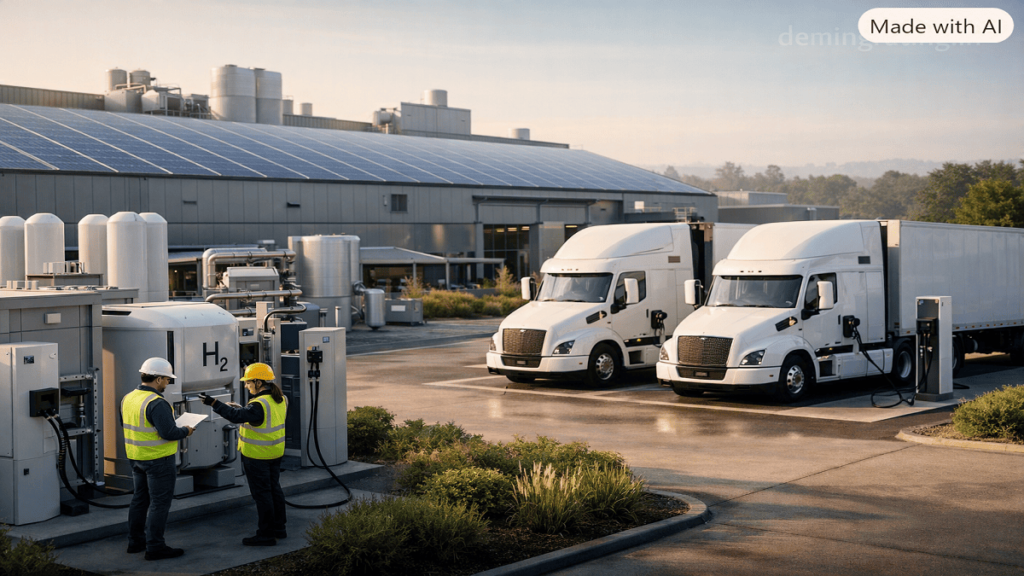
In sectors such as steel, cement, chemicals, and refining, emissions arise not only from fuel combustion but also from chemical reactions. These industries are adopting low-carbon technologies including electric furnaces, alternative raw materials, green hydrogen, and carbon capture, utilization, and storage (CCUS). For example, green hydrogen produced using renewable electricity can replace coal or natural gas in certain industrial processes, significantly reducing carbon dioxide emissions.
The circular economy is another important mitigation application. Companies reduce emissions by designing products for reuse, repair, remanufacturing, and recycling. Using recycled materials generally requires less energy than producing materials from virgin resources. In the aluminum and steel industries, recycling can lead to substantial emission reductions.
Supply chain management is increasingly recognized as a critical area for mitigation. Many corporations measure and reduce Scope 3 emissions, which include emissions from suppliers, transportation, product use, and end-of-life disposal. Sustainable procurement, low-carbon logistics, and collaboration with suppliers help extend mitigation efforts beyond direct operations.
Policy and reporting frameworks also influence industrial action. Carbon pricing, emission standards, and mandatory climate disclosures encourage companies to invest in cleaner technologies. International frameworks such as the Greenhouse Gas Protocol provide standardized methods for measuring and reporting emissions. See https://ghgprotocol.org/ .
In conclusion, industry applies greenhouse gas mitigation through energy efficiency, renewable energy adoption, low-carbon process innovation, circular economy practices, and supply chain decarbonization. These applications not only reduce environmental impacts but also enhance resilience, meet regulatory expectations, attract investment, and support the transition to a sustainable and competitive low-carbon economy.
Ask FAQs
What is greenhouse gas mitigation?
Greenhouse gas mitigation refers to actions taken to reduce the emission of greenhouse gases such as carbon dioxide, methane, and nitrous oxide, or to increase their removal from the atmosphere. Common mitigation measures include renewable energy, energy efficiency, reforestation, sustainable agriculture, and low-carbon transportation. The goal is to slow climate change and reduce its environmental and economic impacts.
Why is greenhouse gas mitigation important?
Mitigation is important because rising greenhouse gas concentrations are driving global warming, which contributes to extreme weather events, sea-level rise, ecosystem damage, and health risks. Reducing emissions helps limit future climate change, improve air quality, enhance energy security, and support sustainable development. The Intergovernmental Panel on Climate Change highlights the need for rapid emission reductions to meet global climate goals. More information:
Which sectors contribute the most to greenhouse gas emissions?
The largest sources of emissions are energy production, transportation, industry, agriculture, land-use change, and waste management. Electricity and heat generation from fossil fuels account for the biggest share globally, followed by industrial activities and transportation. Agriculture contributes significant methane and nitrous oxide emissions, while deforestation reduces the planet’s ability to absorb carbon dioxide.
How can businesses reduce their greenhouse gas emissions?
Businesses can reduce emissions by improving energy efficiency, using renewable electricity, electrifying equipment and vehicles, reducing waste, increasing recycling, adopting sustainable supply chain practices, and investing in low-carbon technologies. Many companies also measure and report emissions using frameworks such as the Greenhouse Gas Protocol. More information: https://ghgprotocol.org/ .
What are the biggest challenges in implementing mitigation strategies?
Major challenges include high upfront investment costs, technological limitations in some industries, policy uncertainty, resistance to change, and the need for international cooperation. Developing countries may face additional financial and infrastructure constraints. Despite these challenges, many mitigation measures provide long-term economic and environmental benefits, especially when supported by effective government policies and private sector investment.
Table of Contents
Disclaimer: This article is intended for informational and educational purposes only. While efforts have been made to ensure accuracy, readers should consult official sources, scientific publications, and qualified professionals for the most current and specific information on greenhouse gas mitigation policies, technologies, and practices.