
Floating Solar Energy
What Is Floating Solar Energy and How Does a Floating Solar System Work?
Floating solar energy, also known as floating photovoltaic (FPV) energy, is a method of generating electricity by installing solar photovoltaic panels on floating platforms placed on suitable bodies of water. These systems are commonly installed on reservoirs, lakes, ponds, and other relatively calm water surfaces. Floating solar provides an alternative to conventional ground-mounted solar farms, particularly in locations where land is limited or expensive.
According to the World Bank, floating solar can help expand solar generation while making use of water surfaces that may have limited competing uses. It can also complement existing hydropower infrastructure in some locations.
How Does a Floating Solar System Work?
The basic electricity-generation process is similar to a conventional solar photovoltaic system. The main difference is that the solar panels Floating solar energy and supporting equipment are installed on a floating structure rather than directly on land.
First, solar panels capture sunlight and convert it into direct-current (DC) electricity through the photovoltaic effect. Multiple panels are connected together to form floating solar arrays.
The panels are mounted on specially designed floating platforms, which are generally made from durable, buoyant materials. These platforms keep the solar modules above the water while allowing the array to remain stable.
The floating structure is secured using an anchoring and mooring system. These components help keep the solar array in its intended position despite changes in water level, wind, and other environmental conditions. The design of the anchoring system depends on factors such as water depth, reservoir characteristics, weather conditions, and the movement of the water body.
Electricity generated by the panels is collected through electrical cables and transferred to inverters. The inverter converts DC electricity into alternating-current (AC) electricity that can be used by electrical loads or supplied to the electricity grid. Transformers Floating solar energy and other electrical equipment may then adjust the voltage before the electricity is transmitted.
One potential advantage of placing solar panels over water is the cooling effect of the surrounding environment, which can improve photovoltaic performance under suitable conditions. Floating solar can also reduce the amount of land required for solar development and, in some water bodies, Floating solar energy may reduce evaporation.
However, floating solar systems require specialized engineering. Electrical safety, corrosion, anchoring, mooring, access for maintenance, water-level changes, Floating solar energy and potential environmental effects must all be considered during project development. The World Bank Floating Solar Handbook provides technical guidance on these issues.
In conclusion, floating solar energy combines conventional photovoltaic technology with floating infrastructure to generate renewable electricity from water surfaces. By using underutilized water areas, it can provide an innovative option for expanding solar power while reducing competition for valuable land.
What Are the Advantages of Installing Solar Panels on Water Bodies?
Installing solar panels on water bodies, commonly known as floating solar or floating photovoltaic (FPV) technology, offers an innovative way to generate renewable electricity while making productive use of water surfaces. Floating solar projects can be particularly valuable in regions where suitable land is limited, expensive, Floating solar energy or needed for agriculture, conservation, and other purposes. When properly designed and managed, these systems can provide several technical, economic, and environmental advantages.
1. Efficient Use of Available Space
One of the biggest advantages of floating solar is that it uses water surfaces rather than requiring large areas of land. Reservoirs, industrial ponds, irrigation lakes, Floating solar energy and other suitable water bodies can provide additional space for renewable energy generation without directly competing with agricultural or urban land.
The World Bank identifies floating solar as an emerging option for expanding solar generation, particularly where land availability is a constraint.
2. Potential Reduction in Water Evaporation
Solar panels can partially cover the surface of a water body, reducing direct exposure to sunlight Floating solar energy and wind. Under suitable conditions, this can reduce water evaporation. This potential benefit can be particularly relevant for reservoirs located in regions experiencing high temperatures or water scarcity.
The actual amount of evaporation reduction depends on factors such as climate, water-body characteristics, panel coverage, wind conditions, and system design.
3. Potentially Improved Solar Panel Performance
Solar photovoltaic panels generally perform better at lower operating temperatures. Water surrounding a floating solar installation can provide a cooling environment that may help reduce panel operating temperatures under appropriate conditions. This can potentially improve energy yield compared with similar systems operating under hotter conditions.
However, performance depends on the specific project, climate, equipment, Floating solar energy and installation design, so cooling benefits should be evaluated on a site-by-site basis.
4. Compatibility With Hydropower Facilities
Floating solar can be particularly attractive on reservoirs associated with hydropower plants. Solar generation can complement hydropower production, potentially allowing available grid infrastructure Floating solar energy and transmission connections to be used more efficiently.
Combining solar and hydropower can also help diversify renewable electricity generation because solar production and hydropower availability can vary at different times.
5. Reduced Land-Use Pressure
Large solar farms require significant land areas. Floating solar can reduce pressure on land resources by moving part of renewable energy development onto appropriate water surfaces. This may be especially valuable in densely populated regions where land has competing economic or environmental uses.
6. Renewable and Low-Carbon Electricity Generation
Like conventional photovoltaic systems, floating solar produces electricity without directly burning fossil fuels during operation. It can therefore contribute to renewable-energy targets, Floating solar energy and help organizations, utilities, and governments diversify their electricity supply.
Conclusion
Floating solar offers several potential benefits, including efficient use of water surfaces, reduced land requirements, possible evaporation savings, potential performance improvements, Floating solar energy and opportunities to complement hydropower generation. However, successful projects require careful assessment of water conditions, anchoring, electrical safety, maintenance requirements, environmental impacts, and local regulations.
How Can Floating Solar Energy Improve Renewable Energy Generation and Land Use?
Floating solar energy, also known as floating photovoltaic (FPV) technology, can help expand renewable electricity generation while reducing the need for additional land for solar development. By installing photovoltaic panels on suitable water bodies such as reservoirs, lakes, and industrial ponds, floating solar creates an alternative location for renewable-energy infrastructure. This approach can be particularly valuable in regions where land is scarce, expensive, Floating solar energy or required for agriculture and other essential activities.
Increasing Renewable Energy Generation
The primary benefit of floating solar is its ability to add new solar-generation capacity without relying entirely on land. Solar panels installed on water can convert sunlight into electricity in the same basic way as conventional photovoltaic systems. This allows unused or underutilized water surfaces to become part of the renewable-energy infrastructure.
Floating solar can also complement existing hydropower facilities. Reservoirs associated with hydropower plants may already have electrical infrastructure Floating solar energy and grid connections, potentially creating opportunities for solar generation to share certain infrastructure. Combining floating solar with hydropower can also diversify electricity production and improve the utilization of renewable-energy assets.
The World Bank has identified floating solar as an emerging technology that can support renewable-energy expansion, particularly where land availability is a constraint.
Reducing Pressure on Land Resources
Large-scale ground-mounted solar projects can require substantial areas of land. In regions with limited available land, developing solar farms may compete with agriculture, conservation areas, residential development, or other economic activities.
Floating solar provides another option by placing panels on appropriate water surfaces. This can reduce direct competition for land and allow countries, utilities, Floating solar energy and organizations to increase solar capacity without acquiring equivalent areas of terrestrial land.
However, not every water body is suitable for floating solar. Factors such as water depth, water-level fluctuations, wind conditions, ecological sensitivity, anchoring requirements, water use, and maintenance access must be carefully evaluated before development.
Potential Additional Benefits
Floating solar may also provide secondary benefits. Partial coverage of a water surface can reduce exposure to sunlight and wind, which may decrease evaporation under suitable conditions. In addition, the surrounding water can help moderate operating temperatures of photovoltaic modules, potentially supporting energy performance in certain climates.
These benefits vary according to local conditions and system design and should not be assumed for every project.
Supporting Sustainable Energy Development
Floating solar can therefore contribute to a broader strategy for expanding renewable energy while using land more efficiently. When combined with proper environmental assessment, engineering design, grid planning, and long-term maintenance, it can become an important component of a diversified clean-energy portfolio.
The International Energy Agency (IEA) provides broader research on renewable electricity and solar photovoltaic deployment, while the World Bank offers technical guidance on floating solar development.
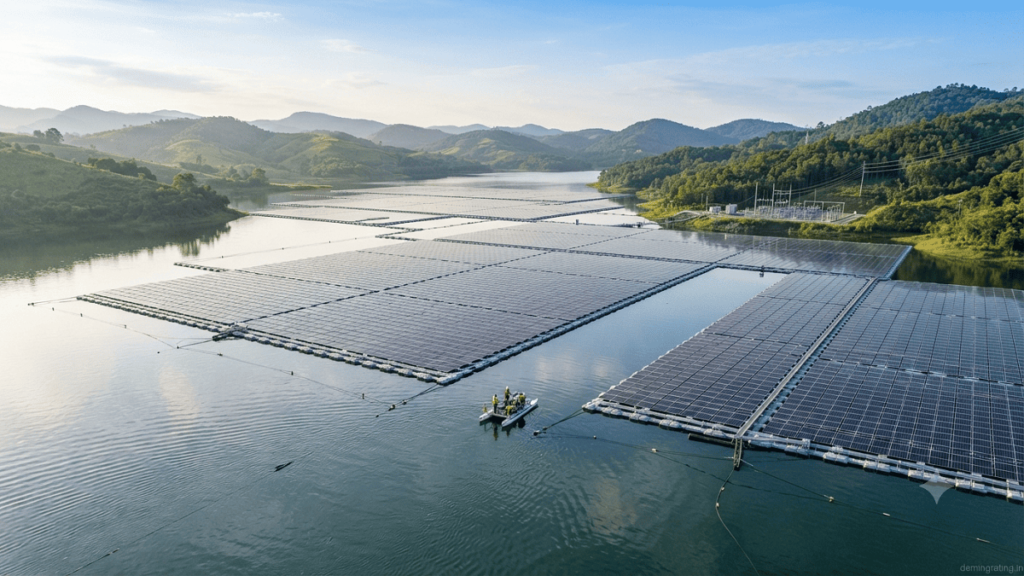
What Are the Environmental and Economic Benefits of Floating Solar Projects?
Floating solar projects, also called floating photovoltaic (FPV) systems, are increasingly being considered as an innovative way to expand renewable electricity generation while making productive use of suitable water surfaces. By installing solar panels on floating platforms over reservoirs, lakes, and other appropriate water bodies, these projects can provide both environmental and economic benefits. However, the actual benefits depend on project design, local climate, water-body characteristics, and environmental conditions.
Environmental Benefits
One important environmental advantage is reduced land use. Traditional large-scale solar farms can require significant areas of land. Floating solar uses suitable water surfaces instead, potentially reducing competition with agriculture, infrastructure, conservation areas, and other land uses.
Floating solar may also help reduce water evaporation in certain conditions. Solar panels can provide partial shade over the water surface and reduce direct exposure to sunlight and wind. This can be particularly relevant for reservoirs in warm or water-stressed regions. The extent of evaporation reduction depends on factors such as panel coverage, local weather, wind speed, and reservoir characteristics.
Another potential benefit is improved utilization of renewable resources. Floating solar can generate electricity without the direct combustion of fossil fuels during operation, supporting the transition toward lower-carbon electricity systems. When installed alongside hydropower reservoirs, floating solar can also complement existing renewable generation.
The World Bank identifies floating solar as a technology that can help address land constraints while expanding solar generation.
Economic Benefits
Floating solar can provide economic value by allowing electricity generation on water surfaces where alternative land uses may have higher costs or greater opportunity value. In areas with limited land availability, avoiding or reducing land acquisition can improve the feasibility of solar projects.
Floating solar can also potentially benefit from existing electrical infrastructure, particularly when installed on reservoirs connected to hydropower facilities. Shared transmission connections, substations, and other infrastructure may reduce the need for completely new infrastructure, although each project requires an individual technical and economic assessment.
The technology can also support energy diversification. By combining floating solar with hydropower, operators may be able to produce electricity from complementary renewable sources. Solar generation can contribute during periods of strong sunlight, while hydropower can provide additional flexibility depending on reservoir conditions and system design.
Important Considerations
Despite these advantages, floating solar projects require significant planning and investment. Costs associated with floating platforms, anchoring and mooring systems, electrical equipment, corrosion protection, installation, inspection, and maintenance must be considered. Environmental assessments are also essential to understand potential effects on water quality, aquatic ecosystems, biodiversity, recreation, and existing water uses.
The International Renewable Energy Agency (IRENA) provides research and resources on renewable-energy technologies and their role in sustainable energy development.
Conclusion
Floating solar can offer a combination of environmental benefits, efficient land use, renewable electricity generation, potential water-saving effects, and economic opportunities. With appropriate site selection, environmental assessment, engineering design, and long-term maintenance, floating photovoltaic systems can become an important part of a diversified renewable-energy strategy.
What Are the Key Challenges and Future Opportunities for Floating Solar Energy?
Floating solar energy, also known as floating photovoltaic (FPV) technology, has emerged as an innovative approach to expanding renewable electricity generation. By placing solar panels on suitable water bodies, floating solar can reduce dependence on land while creating additional opportunities for clean-energy development. However, the technology also presents engineering, environmental, financial, and operational challenges that must be addressed for wider adoption.
Key Challenges of Floating Solar Energy
One major challenge is higher engineering complexity compared with conventional ground-mounted solar. Floating systems require specialized platforms, anchoring, mooring, electrical connections, and access arrangements. These components must withstand changing water levels, wind, waves, and other environmental conditions.
Installation and maintenance can also be more difficult. Working over water requires specialized equipment, trained personnel, and appropriate safety procedures. Accessing panels, cables, inverters, and floating structures for inspection or repairs can increase operational costs.
Another challenge is environmental impact assessment. Large floating arrays can alter sunlight penetration, water movement, and other characteristics of a water body. Potential effects on aquatic ecosystems, water quality, biodiversity, recreation, and existing water uses therefore need to be assessed before construction.
Financial considerations are also important. Floating platforms, anchoring systems, corrosion-resistant components, specialized installation, and maintenance can increase project costs compared with some land-based solar installations. Project developers must carefully evaluate site conditions and expected energy output to determine economic feasibility.
Future Opportunities
Despite these challenges, floating solar has significant growth potential. One major opportunity is the availability of underutilized water surfaces. Reservoirs, irrigation ponds, industrial water bodies, and certain other suitable sites could provide additional space for renewable-energy generation without requiring equivalent areas of land.
Floating solar also has strong potential for integration with hydropower. Installing solar arrays on hydropower reservoirs may allow renewable technologies to complement one another and potentially make better use of existing electricity infrastructure.
Another opportunity is technological innovation. Improvements in floating materials, anchoring systems, electrical equipment, monitoring technologies, robotics, and remote inspection could reduce costs and improve system reliability. Better engineering methods may also enable projects to operate in a wider range of environmental conditions.
The World Bank has highlighted floating solar as an emerging renewable-energy technology, while the International Renewable Energy Agency (IRENA) provides broader research on renewable-energy development and technology deployment.
Conclusion
Floating solar energy faces challenges involving cost, engineering, maintenance, environmental assessment, and site suitability, but these challenges also create opportunities for innovation. As technology improves and project experience increases, floating solar could become an increasingly important component of renewable-energy systems, particularly in regions where land availability is limited and suitable water bodies are available.
Case Study of Floating Solar Energy: NTPC Ramagundam Floating Solar Project
The NTPC Ramagundam Floating Solar Project in Telangana, India, is an important case study demonstrating how floating photovoltaic (FPV) technology can be used to generate renewable electricity while making productive use of reservoir space. The project was developed by NTPC on the reservoir associated with its Ramagundam power station and became one of India’s major floating solar installations.
Project Overview
The Ramagundam project has a total capacity of 100 MW and is spread across approximately 600 acres of reservoir area. NTPC commissioned the project in stages, with the complete 100 MW capacity forming part of the company’s broader renewable-energy expansion strategy.
The project uses floating photovoltaic modules installed on specialized floating structures. Solar panels capture sunlight and convert it into electricity, while the floating platforms keep the modules above the reservoir surface. Electrical systems, including inverters, transformers, switchgear, monitoring equipment, and power-evacuation infrastructure, transfer the generated electricity into the grid.
NTPC’s technical specifications for the project included crystalline-silicon photovoltaic modules, inverters with maximum power point tracking, electrical cabling, transformers, switchgear, and supervisory control and data acquisition (SCADA) systems for monitoring and control.
Environmental Benefits
A key advantage identified by NTPC is the potential reduction in water evaporation resulting from partial coverage of the reservoir. NTPC estimated that the Ramagundam installation could save approximately 2 billion liters of water annually, equivalent to the yearly water requirements of around 10,000 households. The company also estimated that the project could avoid approximately 4.36 million tonnes of CO2 equivalent over its lifetime.
These figures demonstrate how floating solar can provide benefits beyond electricity generation. By using an existing reservoir rather than requiring a large new land area, the project also illustrates how renewable-energy development can reduce pressure on land resources.
Key Lessons
The Ramagundam project demonstrates several important lessons for future floating solar developments. First, large-scale floating solar is technically feasible when appropriate reservoirs and electrical infrastructure are available. Second, integrating floating solar with existing power-generation facilities can create opportunities to use established grid connections and operational infrastructure.
However, floating solar projects require careful planning. Anchoring and mooring systems, changing water levels, electrical safety, maintenance access, weather conditions, and environmental impacts must be evaluated during project development.
The World Bank’s India floating solar report highlights the potential for floating solar in India and notes that using underutilized water surfaces can avoid diverting land from other uses.
Conclusion
The NTPC Ramagundam Floating Solar Project demonstrates how floating photovoltaic technology can support India’s renewable-energy transition while making productive use of reservoir surfaces. Its scale, renewable electricity generation, potential water savings, and reduced land requirements make it a valuable reference point for future floating solar projects in India and other regions.
White Paper on Floating Solar Energy: Opportunities, Challenges, and Future Potential
Executive Summary
Floating solar energy, also known as floating photovoltaic (FPV) technology, involves installing solar photovoltaic panels on floating structures placed on suitable water bodies such as reservoirs, lakes, irrigation ponds, and industrial water facilities. The technology provides an alternative approach to expanding solar generation while reducing competition for valuable land.
The World Bank identifies floating solar as a promising option for countries where land availability is a significant constraint. Its 2018 market assessment estimated a global technical potential of approximately 400 GW under conservative assumptions.
Technology and System Design
A floating solar plant uses photovoltaic modules mounted on buoyant platforms. The platforms are connected into arrays and secured using anchoring and mooring systems designed according to water depth, water-level variation, wind conditions, waves, and reservoir characteristics.
Electricity generated by the photovoltaic modules is transmitted through electrical cables to inverters, which convert direct current into alternating current. Transformers and associated electrical infrastructure then prepare the electricity for transmission or local consumption.
Recent IEA PVPS research emphasizes that floating PV performance depends strongly on system design, environmental conditions, thermal behavior, reliability, soiling, degradation, and maintenance practices.
Environmental and Land-Use Benefits
One of the most important advantages of floating solar is reduced pressure on land resources. Solar development can use suitable water surfaces instead of requiring equivalent areas of agricultural, industrial, or undeveloped land.
Floating solar may also reduce water evaporation because panels provide partial shade and reduce direct exposure to sunlight and wind. The magnitude of this benefit varies according to climate, water-body characteristics, array coverage, and project design.
Floating PV can also complement hydropower. Solar generation can be added to existing reservoirs, potentially increasing renewable electricity production while making use of existing power infrastructure.
Key Challenges
Despite its potential, floating solar requires specialized engineering. Anchoring and mooring systems must withstand environmental forces, while electrical components require careful protection against moisture and other water-related stresses.
Operation and maintenance can also be more complex than for conventional ground-mounted solar. Access to floating arrays, inspection of electrical equipment, component replacement, and long-term reliability require specialized procedures.
Environmental assessment is equally important. Developers should evaluate potential effects on water quality, aquatic ecosystems, biodiversity, recreation, and existing water uses. The IEA PVPS highlights environmental impacts, reliability, monitoring, and maintenance as important areas for continued research.
Future Opportunities
Floating solar has significant potential for expansion, particularly in densely populated regions and countries with large reservoirs. India is one example: the World Bank’s India floating solar guidance identifies underutilized water surfaces as an opportunity to expand renewable generation without diverting land from other uses.
Future development is likely to focus on improved floating materials, stronger mooring systems, advanced monitoring, better environmental assessment, automated inspection, and integration with hydropower and energy-storage systems.
Conclusion
Floating solar energy represents a valuable addition to the renewable-energy portfolio. Its ability to generate electricity on suitable water surfaces, reduce land-use pressure, potentially reduce evaporation, and complement hydropower makes it particularly attractive in land-constrained regions.
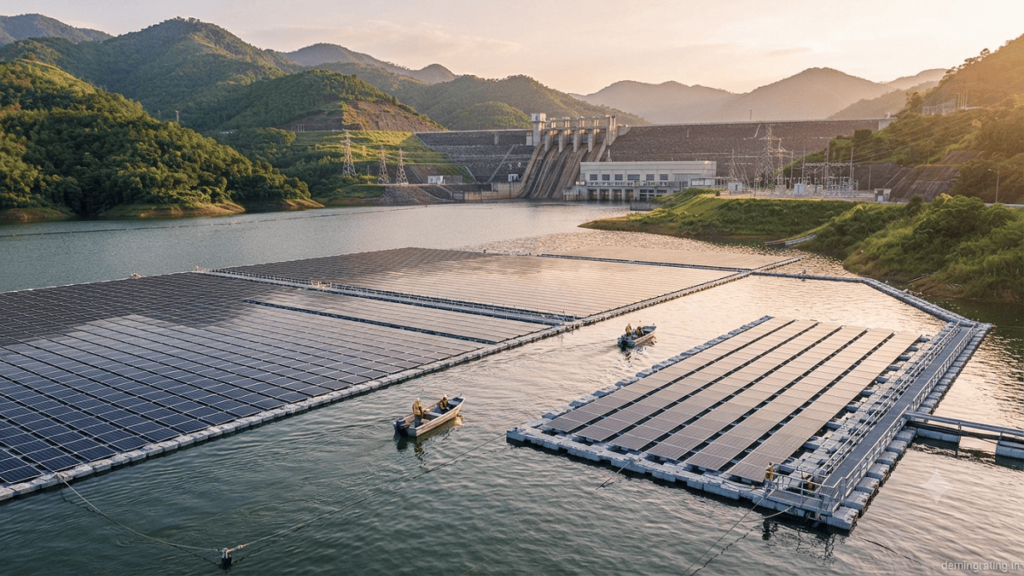
Industry Applications of Floating Solar Energy
Floating solar energy, also known as floating photovoltaic (FPV) technology, is increasingly being considered across industries as an alternative method of generating renewable electricity. By installing photovoltaic panels on suitable water surfaces, organizations can utilize underused areas while reducing dependence on conventional land-based solar installations. Its applications extend across utilities, agriculture, industrial operations, water management, and infrastructure.
1. Power Generation and Utilities
Electricity utilities can deploy floating solar projects on reservoirs, lakes, and other suitable water bodies to increase renewable generation capacity. Floating solar can be particularly valuable when available land near electrical infrastructure is limited. Large projects can supply electricity to the grid while supporting renewable-energy targets.
The World Bank identifies floating solar as an emerging technology with potential for expanding solar generation while addressing land constraints.
2. Hydropower Industry
One of the most promising applications is the integration of floating solar with hydropower reservoirs. Solar panels can be installed on existing reservoirs, allowing solar generation to complement hydropower production. In some projects, existing electrical infrastructure may also provide opportunities for more efficient grid integration.
This combination can help diversify renewable generation and potentially improve the utilization of existing power infrastructure.
3. Agriculture and Irrigation
Agricultural irrigation reservoirs and water-storage ponds can potentially host floating solar installations. Electricity generated by these systems may support irrigation pumps, agricultural processing, cold storage, and other farm operations.
Using water surfaces for solar generation can also reduce competition for agricultural land. Under appropriate conditions, partial water coverage may help reduce evaporation, although the extent of this benefit depends on local climate and project design.
4. Industrial Facilities
Industries with large water reservoirs, cooling ponds, wastewater-treatment ponds, or process-water storage areas may consider floating solar for on-site renewable electricity generation. Manufacturing plants and other energy-intensive facilities can use solar power to offset part of their electricity consumption and potentially reduce exposure to electricity-price fluctuations.
Before installation, industrial operators must assess water quality, access requirements, structural conditions, electrical safety, and environmental considerations.
5. Water and Wastewater Management
Water utilities and wastewater-treatment facilities are another potential application. Floating solar can use available water surfaces while generating electricity for pumps, treatment equipment, lighting, and other operational loads.
The technology may therefore contribute to reducing the energy costs associated with water-management infrastructure.
6. Commercial and Infrastructure Projects
Commercial facilities, industrial parks, and infrastructure operators with suitable artificial water bodies can also explore floating solar as part of their sustainability strategies. These installations can contribute to renewable-energy procurement and corporate emissions-reduction objectives.
Conclusion
Floating solar energy has applications across utilities, hydropower, agriculture, industrial facilities, water management, and commercial infrastructure. Its ability to generate electricity without requiring equivalent areas of conventional land makes it particularly attractive where land availability is limited.
Ask FAQs
What is floating solar energy?
Floating solar energy is electricity generated using photovoltaic panels installed on floating platforms placed on suitable water bodies. These systems are commonly deployed on reservoirs, lakes, irrigation ponds, and industrial water facilities. The solar panels convert sunlight into electricity, while floating structures keep the panels above the water surface. Anchoring and mooring systems help maintain the array’s position despite changes in water levels and environmental conditions.
What are the main benefits of floating solar systems?
Floating solar can provide several benefits, including reduced land requirements, renewable electricity generation, and potential reductions in water evaporation. The surrounding water may also help moderate solar-panel operating temperatures under suitable conditions. Floating solar can be particularly useful in areas where land is limited or expensive. When installed on hydropower reservoirs, it can also complement existing renewable electricity generation and potentially make better use of available electrical infrastructure.
Where can floating solar panels be installed?
Floating solar panels can be installed on suitable reservoirs, lakes, irrigation ponds, industrial water bodies, and certain wastewater-treatment facilities. However, not every water body is appropriate. Developers must consider water depth, water-level fluctuations, wind and wave conditions, water quality, environmental sensitivity, anchoring requirements, maintenance access, and existing water uses before selecting a site.
Is floating solar energy environmentally friendly?
Floating solar can support renewable-energy generation without directly burning fossil fuels during operation and can reduce pressure on land resources. Partial coverage of certain water surfaces may also reduce evaporation. However, floating solar projects can affect water conditions and aquatic environments, so environmental assessments are important. Project developers should evaluate potential effects on water quality, biodiversity, aquatic ecosystems, recreation, and other existing uses before construction.
What are the challenges of floating solar energy?
Major challenges include higher engineering complexity, installation and maintenance over water, anchoring and mooring requirements, exposure to wind and changing water levels, electrical safety, corrosion, and environmental considerations. Floating solar can also require specialized equipment and trained personnel, which may increase project costs. Careful site assessment, engineering design, regular inspection, and appropriate maintenance are essential for reliable long-term operation. Organizations can consult the World Bank and International Energy Agency Photovoltaic Power Systems Programme for additional technical information.
Table of Contents
Disclaimer: This information is for general educational purposes only and should not be considered technical, financial, environmental, or engineering advice. Floating solar projects should be assessed by qualified professionals and comply with applicable local regulations and safety standards.