
Energy Management System
What Is an Energy Management System?
An Energy Management System (EnMS) is a structured approach that helps organizations monitor, control, and improve their energy performance. It combines energy data, management processes, operational practices, and continuous improvement to reduce energy consumption, control costs, and improve overall efficiency.
An EnMS can be applied across commercial buildings, manufacturing facilities, hospitals, data centers, educational institutions, and other energy-intensive operations. It typically involves monitoring electricity, fuel, heating, cooling, compressed air, and other forms of energy to identify consumption patterns and opportunities for improvement.
One of the most widely recognized frameworks for energy management is ISO 50001, which provides requirements for establishing, implementing, maintaining, and improving an energy management system. The standard uses a continual-improvement approach, helping organizations establish energy objectives, measure performance, implement improvements, and evaluate results. ISO 50001 – Energy Management
A key component of an EnMS is energy monitoring and measurement. Organizations collect information from utility meters, submeters, sensors, building management systems, and other monitoring equipment. Analyzing this information can reveal excessive consumption, equipment inefficiencies, abnormal operating patterns, and potential savings opportunities.
Energy performance indicators (EnPIs) can then be used to measure and compare performance over time. For example, a manufacturing facility may monitor energy consumption per unit of production, while a commercial building may track energy use per square meter.
An effective EnMS also establishes clear responsibilities and targets. Management defines energy objectives, while operational teams implement energy-saving measures and monitor performance. Typical improvement initiatives may include optimizing HVAC controls, improving lighting efficiency, reducing equipment idle time, maintaining motors and compressors, and integrating renewable energy technologies.
The U.S. Department of Energy provides resources and guidance for organizations seeking to develop energy management programs and improve energy performance. U.S. Department of Energy – Energy Management
The benefits of an EnMS extend beyond reducing utility bills. A well-implemented system can improve operational efficiency, reduce energy-related emissions, support sustainability objectives, strengthen decision-making through reliable data, and increase awareness of energy performance across an organization.
In conclusion, an Energy Management System provides a systematic framework for controlling and improving energy performance. Rather than relying on isolated energy-saving projects, it establishes an ongoing process of measurement, analysis, action, and continuous improvement that can deliver lasting operational and financial benefits.
What Are the Key Components of an Effective Energy Management System?
An effective Energy Management System (EnMS) provides a structured framework for organizations to monitor energy use, improve efficiency, reduce costs, and achieve continuous performance improvements. A successful system requires more than installing energy meters or monitoring software; it combines management commitment, reliable data, defined objectives, operational controls, and ongoing evaluation.
1. Energy Policy and Management Commitment
An effective EnMS begins with a clear energy policy supported by senior management. The policy establishes the organization’s commitment to improving energy performance, complying with applicable requirements, and providing the resources necessary to achieve energy objectives.
2. Energy Review
An energy review identifies how and where energy is consumed. Organizations assess significant energy uses, consumption patterns, operating conditions, and factors affecting performance. This analysis helps determine where efficiency improvements can deliver the greatest value.
3. Energy Baseline and Performance Indicators
An energy baseline provides a reference point for evaluating changes in energy performance. Energy Performance Indicators (EnPIs) are then used to measure performance over time. For example, a manufacturing facility may measure energy consumed per unit of production, while an office building may track energy use per square meter.
4. Objectives, Targets, and Action Plans
The organization should establish measurable energy objectives and targets based on its energy review. Action plans identify specific improvement measures, responsible personnel, deadlines, required resources, and expected results.
5. Monitoring and Measurement
Reliable energy data is essential. Meters, submeters, sensors, building management systems, and monitoring platforms can provide information about energy consumption and equipment performance. Regular analysis helps identify abnormal consumption and opportunities for improvement.
6. Operational Controls
Energy-efficient operating procedures should be incorporated into everyday activities. These may include equipment shutdown procedures, HVAC optimization, preventive maintenance, lighting controls, and production-process improvements.
7. Training and Employee Awareness
Employees should understand how their activities affect energy performance. Training and awareness programs can encourage energy-efficient behavior and ensure personnel understand relevant procedures and responsibilities.
8. Performance Evaluation and Continuous Improvement
An EnMS should be regularly evaluated through monitoring, internal audits, management reviews, and corrective actions. Identified problems should be addressed systematically, while successful improvements should be maintained and expanded.
The ISO 50001 standard provides an internationally recognized framework for establishing, implementing, maintaining, and continually improving an energy management system. ISO 50001 – Energy Management Systems
The U.S. Department of Energy also provides resources for organizations seeking to improve energy management and industrial energy performance. U.S. Department of Energy – Energy Management
In conclusion, the key components of an effective EnMS work together as a continuous improvement cycle. Strong leadership, accurate energy data, measurable objectives, operational controls, employee involvement, and regular performance evaluation enable organizations to achieve lasting improvements in energy efficiency and operational performance.
How Does an Energy Management System Help Reduce Energy Consumption and Costs?
An Energy Management System (EnMS) helps organizations reduce energy consumption and operating costs by providing a systematic way to measure, analyze, control, and continuously improve energy performance. Instead of relying on occasional energy-saving initiatives, an EnMS integrates energy management into everyday operations and business decisions.
1. Identifying Energy-Wasting Activities
An EnMS provides detailed information about where and when energy is being consumed. Electricity meters, submeters, sensors, and monitoring systems can reveal excessive consumption from HVAC equipment, lighting, motors, compressors, production machinery, or other energy-intensive systems. Identifying these patterns allows organizations to focus improvement efforts where they can have the greatest financial impact.
2. Improving Equipment Efficiency
Energy data can reveal equipment operating outside expected performance levels. Organizations can then optimize operating schedules, adjust controls, improve maintenance, or replace inefficient equipment. For example, optimizing HVAC schedules can prevent unnecessary heating or cooling when areas are unoccupied.
3. Reducing Peak Energy Costs
An EnMS can help organizations understand periods of high energy demand. By shifting certain operations away from peak periods, managing equipment startup sequences, or controlling non-critical loads, businesses may reduce demand-related charges where their utility tariff includes them.
4. Establishing Measurable Performance Targets
Energy Performance Indicators (EnPIs) allow organizations to compare current performance against an established baseline. This makes it easier to determine whether energy-saving measures are actually delivering results and to identify areas requiring further improvement.
5. Supporting Preventive Maintenance
Unusual increases in energy consumption can indicate equipment deterioration or incorrect operation. Detecting these changes early allows maintenance teams to investigate problems before they lead to higher energy costs, equipment failure, or unplanned downtime.
6. Encouraging Energy-Efficient Practices
An effective EnMS assigns energy responsibilities and increases employee awareness. Staff can be trained to follow efficient operating procedures, shut down unused equipment, manage temperature settings, and identify abnormal energy consumption.
7. Driving Continuous Improvement
The continuous-improvement approach ensures that energy performance is regularly reviewed. Organizations can measure results, identify new opportunities, implement corrective actions, and establish new targets.
ISO 50001 provides an internationally recognized framework for establishing and continually improving an energy management system. ISO 50001 – Energy Management Systems
The U.S. Department of Energy also provides guidance on energy management and industrial energy efficiency. U.S. Department of Energy – Energy Management
In conclusion, an Energy Management System reduces energy consumption and costs by combining accurate measurement, performance analysis, efficient operations, preventive maintenance, employee involvement, and continuous improvement. This systematic approach helps organizations make informed decisions while improving both energy performance and long-term operational efficiency.
What Technologies Are Used to Monitor and Improve Energy Performance?
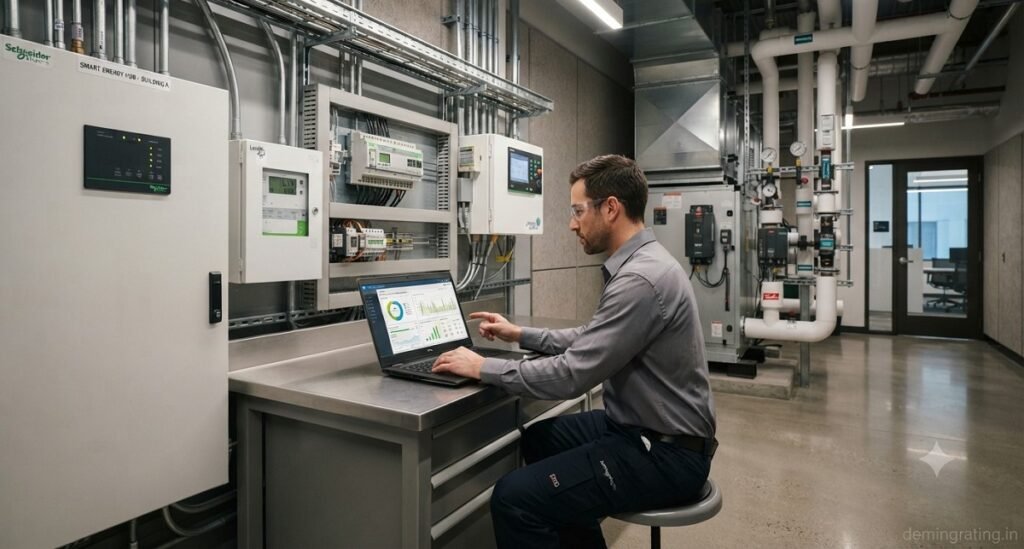
Modern Energy Management Systems (EnMS) use a combination of digital technologies to measure energy consumption, identify inefficiencies, optimize equipment operation, and support continuous improvement. These technologies provide organizations with reliable data that can be used to make informed decisions about energy use and operating costs.
1. Smart Meters and Submeters
Smart meters provide real-time or interval-based information about electricity, gas, water, steam, and other utilities. Submeters can monitor individual buildings, production lines, equipment, or departments. This detailed information helps identify where energy is being consumed and highlights unusual consumption patterns.
2. Energy Monitoring Software
Energy management software collects data from meters and other devices and presents it through dashboards, reports, and performance indicators. Facility managers can compare current consumption with historical data, budgets, baselines, or established energy targets. Automated alerts can also identify abnormal consumption or equipment performance.
3. Building Management Systems
Building Management Systems (BMS) integrate HVAC, lighting, electrical systems, sensors, and controls. They can automatically adjust equipment according to occupancy, schedules, temperature, and other operating conditions. Properly configured controls can prevent equipment from operating unnecessarily and improve overall building efficiency.
4. Internet of Things Sensors
IoT sensors provide detailed information about temperature, humidity, occupancy, equipment status, power consumption, and other operating conditions. Connected sensors allow organizations to monitor facilities remotely and identify opportunities for optimization.
5. Artificial Intelligence and Data Analytics
AI and advanced analytics can process large quantities of energy data to identify trends and anomalies. Predictive analytics can help forecast energy demand, while machine-learning algorithms can detect unusual equipment behavior and support predictive maintenance.
6. Energy Performance Monitoring Platforms
Cloud-based platforms allow organizations to consolidate energy information from multiple facilities into a centralized system. This is particularly useful for companies managing large portfolios of buildings or industrial sites because managers can compare performance and identify underperforming locations.
7. Automated Control Systems
Automated controls can adjust HVAC, lighting, motors, pumps, and other equipment based on real-time conditions. Demand-response technologies can also help organizations reduce or shift energy consumption during periods of high demand.
8. Renewable Energy and Battery Monitoring
Solar photovoltaic systems, battery energy storage systems, and smart inverters increasingly form part of modern energy management strategies. Monitoring platforms can track renewable generation, battery charging and discharging, grid imports, and overall energy performance.
ISO provides a recognized framework for managing energy performance through ISO 50001, which emphasizes measurement, monitoring, performance evaluation, and continual improvement. ISO 50001 – Energy Management Systems
The U.S. Department of Energy also provides resources covering energy management technologies, energy efficiency, and industrial energy performance. U.S. Department of Energy – Energy Management
In conclusion, technologies such as smart meters, BMS platforms, IoT sensors, energy analytics, automated controls, and renewable-energy monitoring systems provide the data and control capabilities needed to improve energy performance. When integrated into a structured Energy Management System, these technologies help organizations reduce waste, lower costs, improve operational efficiency, and support long-term sustainability goals.
What Are the Benefits and Challenges of Implementing an Energy Management System?
An Energy Management System (EnMS) provides organizations with a structured approach to monitoring, controlling, and improving energy performance. It can deliver significant financial and operational benefits, but successful implementation also requires investment, organizational commitment, accurate data, and continuous management attention.
Benefits of an Energy Management System
1. Reduced Energy Costs
One of the primary benefits is lower energy expenditure. By monitoring consumption and identifying inefficient equipment or processes, organizations can implement targeted measures to reduce unnecessary energy use.
2. Improved Energy Performance
An EnMS establishes energy baselines and Energy Performance Indicators (EnPIs), allowing organizations to measure performance and determine whether efficiency initiatives are achieving their intended results.
3. Better Equipment Performance
Energy monitoring can identify unusual consumption patterns that may indicate equipment problems. Early detection supports preventive maintenance and can reduce equipment failures and downtime.
4. Improved Operational Efficiency
Energy management encourages organizations to optimize operating schedules, equipment settings, HVAC systems, lighting, production processes, and other energy-intensive activities.
5. Environmental Benefits
Reducing energy consumption can lower associated greenhouse gas emissions. An EnMS can therefore support corporate sustainability strategies and environmental objectives.
6. Stronger Decision-Making
Reliable energy data gives managers a clearer understanding of consumption trends and helps them prioritize investments in energy-efficient equipment, controls, and operational improvements.
Challenges of Implementing an Energy Management System
1. Initial Investment
Implementation may require investment in meters, sensors, software, controls, energy audits, employee training, and professional expertise. Organizations may need to demonstrate the long-term return on this initial investment.
2. Data Quality and Availability
An effective EnMS depends on accurate and timely energy information. Inadequate metering, inconsistent data, or disconnected systems can make performance analysis difficult.
3. Employee Engagement
Energy management is not solely a technical exercise. Employees need to understand their responsibilities and follow energy-efficient operating practices. Resistance to changing established procedures can slow implementation.
4. Integration With Existing Systems
Organizations may need to connect energy monitoring technologies with existing building management, industrial control, maintenance, or enterprise systems. Compatibility and data integration can create technical challenges.
5. Maintaining Continuous Improvement
An EnMS must be actively managed after implementation. Without regular monitoring, audits, management reviews, and corrective actions, energy performance improvements may decline over time.
6. Management Commitment
Long-term success requires leadership support, clear objectives, appropriate resources, and accountability across departments.
ISO 50001 provides an internationally recognized framework for establishing and continually improving an Energy Management System. ISO 50001 – Energy Management Systems The U.S. Department of Energy’s energy management resources also provide guidance for organizations working to improve energy performance.
In conclusion, an Energy Management System can reduce energy costs, improve operational efficiency, enhance equipment performance, and support sustainability goals. Although implementation can involve financial, technical, and organizational challenges, careful planning, reliable data, employee involvement, and strong management commitment can help organizations achieve lasting energy-performance improvements.
Case Study: Implementing an Energy Management System in an Industrial Facility
Introduction
An Energy Management System (EnMS) can help industrial organizations reduce energy consumption, control operating costs, and improve overall equipment performance. This case study presents a representative example of how an industrial manufacturing facility can use an EnMS to identify energy losses, implement targeted improvements, and establish a continuous energy-performance management process.
Project Background
A medium-sized manufacturing facility operated multiple production lines, air compressors, pumps, HVAC systems, motors, lighting systems, and electrical distribution equipment. Although the facility had already implemented several energy-efficiency measures, management lacked centralized visibility into energy consumption across individual production areas.
The organization therefore decided to implement an Energy Management System based on the principles of ISO 50001. The primary objectives were to reduce energy consumption, identify significant energy uses, improve operational efficiency, and establish measurable energy-performance targets.
Energy Assessment and Data Collection
The first stage involved conducting an energy review to understand where energy was being consumed. Smart meters and submeters were installed on major production lines and energy-intensive equipment. Data from these devices was integrated into an energy monitoring platform.
The analysis identified several significant energy uses, including compressed-air systems, HVAC equipment, motors, and production machinery. The facility also discovered that some equipment continued operating during periods of low production and that compressed-air losses were contributing to unnecessary energy consumption.
Improvement Measures
Based on the findings, the organization developed an energy action plan. Operating schedules were adjusted so that non-essential equipment was automatically switched off during idle periods. HVAC temperature and operating schedules were optimized according to occupancy and production requirements.
The compressed-air system was inspected for leaks, and maintenance procedures were strengthened. Variable-speed drives were also considered for selected motor-driven applications where operating conditions varied significantly.
Employees received training on energy-efficient operating practices and were encouraged to report abnormal equipment behavior. Energy Performance Indicators (EnPIs) were established to track performance and evaluate the effectiveness of implemented measures.
Results and Continuous Improvement
Following implementation, the facility was able to monitor energy consumption more systematically and identify areas requiring further improvement. Management could compare energy performance across production periods and investigate abnormal consumption more quickly.
The organization also established regular management reviews and performance evaluations. This ensured that energy management remained an ongoing operational responsibility rather than a one-time efficiency project.
The ISO 50001 framework supports this type of systematic approach by providing requirements for establishing, implementing, maintaining, and continually improving an energy management system. ISO 50001 – Energy Management Systems
The U.S. Department of Energy also provides resources for organizations seeking to improve industrial energy management and efficiency. U.S. Department of Energy – Energy Management
Conclusion
This case study demonstrates how an Energy Management System can transform energy management from reactive monitoring into a structured continuous-improvement process. By combining accurate measurement, energy reviews, performance indicators, operational controls, employee involvement, and regular management evaluation, organizations can identify energy-saving opportunities and improve long-term operational performance.
The most important lesson is that technology alone does not create an effective EnMS. Sustainable results require reliable data, clearly defined responsibilities, management commitment, employee participation, and continuous evaluation of energy performance.

White Paper: Energy Management System
Executive Summary
An Energy Management System (EnMS) provides organizations with a structured framework for monitoring, controlling, and continuously improving energy performance. As energy prices, sustainability requirements, and operational efficiency become increasingly important, organizations across manufacturing, commercial buildings, healthcare, data centers, and other sectors are adopting systematic approaches to energy management.
An effective EnMS combines energy data, performance measurement, operational controls, management responsibilities, employee awareness, and continuous improvement. Rather than treating energy efficiency as a collection of individual projects, an EnMS integrates energy performance into everyday organizational decision-making.
1. Understanding an Energy Management System
An Energy Management System is a coordinated set of processes used to establish energy objectives, measure consumption, identify significant energy uses, implement improvements, and evaluate results.
ISO 50001 is the leading international standard for energy management systems. It provides organizations with a framework for establishing, implementing, maintaining, and continually improving energy performance. ISO 50001 – Energy Management Systems
2. Key Components
A successful EnMS typically begins with an energy policy supported by senior management. Organizations then conduct an energy review to understand consumption patterns and identify significant energy uses.
Energy baselines and Energy Performance Indicators (EnPIs) provide measurable references for evaluating performance. Organizations can establish energy objectives, targets, and action plans based on this information.
Monitoring and measurement are also essential. Smart meters, submeters, sensors, building management systems, and energy analytics platforms can provide information needed to identify abnormal consumption and improvement opportunities.
Operational controls ensure that energy-efficient practices become part of routine activities, while employee training helps personnel understand their responsibilities.
3. Benefits
An effective EnMS can reduce energy consumption and operating costs while improving equipment performance and operational efficiency. It can also support preventive maintenance by identifying unusual energy patterns that may indicate equipment problems.
Reduced energy consumption can contribute to lower greenhouse gas emissions and support broader sustainability objectives. Reliable energy data also enables management to make better-informed investment and operational decisions.
4. Implementation Challenges
Organizations may face challenges related to initial investment, data quality, technology integration, employee engagement, and management commitment. Installing meters and monitoring platforms can require capital expenditure, while inadequate historical data can make it difficult to establish accurate performance baselines.
Long-term success also depends on maintaining employee participation and regularly reviewing energy performance. An EnMS should therefore be treated as a continuous management process rather than a one-time energy-efficiency project.
5. Technology and Digitalization
Modern EnMS programs increasingly use IoT sensors, smart meters, cloud-based monitoring platforms, automated controls, and data analytics. These technologies provide real-time visibility into energy consumption and can support automated optimization.
The U.S. Department of Energy provides resources covering energy management and industrial energy efficiency. U.S. Department of Energy – Energy Management
Conclusion
An Energy Management System provides a practical framework for organizations seeking measurable and sustainable improvements in energy performance. By combining management commitment, reliable measurement, defined targets, operational controls, employee participation, and continuous evaluation, organizations can reduce energy waste while improving efficiency and long-term operational performance.
The most effective EnMS programs do not rely solely on technology. They integrate people, processes, data, and equipment into a continuous improvement cycle that makes energy performance an ongoing organizational priority.
Industry Application of Energy Management System
An Energy Management System (EnMS) has applications across industries where controlling energy consumption, reducing operating costs, and improving efficiency are important business objectives. By combining energy monitoring, performance measurement, operational controls, and continuous improvement, an EnMS helps organizations manage energy as a strategic resource rather than simply as a utility expense.
Manufacturing Industry
Manufacturing facilities are among the most important users of energy management systems because production processes often require significant amounts of electricity, gas, steam, compressed air, and other energy sources. An EnMS can monitor production equipment, motors, compressors, pumps, furnaces, and HVAC systems to identify inefficient operation. Manufacturers can use energy performance indicators to compare energy consumption against production output and identify opportunities for improvement.
Commercial Buildings
Office buildings, shopping centers, hotels, and other commercial properties use EnMS solutions to manage HVAC, lighting, elevators, electrical systems, and building automation. Smart meters and building management systems can provide real-time information about energy consumption. Automated controls can adjust equipment according to occupancy, schedules, and environmental conditions, helping reduce unnecessary energy use.
Healthcare Facilities
Hospitals require reliable energy supplies because critical medical equipment and essential building services must operate continuously. Energy management can be applied to HVAC systems, lighting, hot-water systems, medical equipment, and central utility plants. Monitoring energy consumption can help hospitals improve efficiency while maintaining the environmental conditions required for patient care.
Data Centers
Data centers have substantial energy requirements, particularly for computing equipment and cooling infrastructure. An EnMS can monitor power distribution, cooling systems, server loads, and environmental conditions. Energy data can support optimization of cooling strategies and improve overall power usage efficiency while maintaining system reliability.
Pharmaceutical and Laboratory Facilities
Pharmaceutical manufacturing plants and laboratories often require tightly controlled temperature, humidity, pressure, and ventilation conditions. Energy management systems can monitor these energy-intensive processes while helping organizations identify efficiency opportunities without compromising environmental requirements.
Energy and Utilities Sector
Power generation facilities, renewable energy plants, substations, and utility operations can use energy management technologies to monitor generation, distribution, equipment performance, and auxiliary energy consumption. These systems can support better resource utilization and operational decision-making.
Transportation and Infrastructure
Airports, railway stations, warehouses, ports, and large transportation facilities can apply EnMS principles to lighting, HVAC, pumping systems, charging infrastructure, and other major energy-consuming assets.
ISO 50001 provides an internationally recognized framework for establishing and improving energy management systems across different types of organizations. ISO 50001 – Energy Management Systems The U.S. Department of Energy also provides resources for industrial and organizational energy management. U.S. Department of Energy – Energy Management
In conclusion, Energy Management Systems can be adapted to the specific requirements of almost any energy-intensive industry. Their ability to combine measurement, analysis, automation, and continuous improvement makes them valuable tools for reducing energy waste, controlling costs, improving operational performance, and supporting long-term sustainability objectives.
Ask FAQs
What is an Energy Management System?
An Energy Management System (EnMS) is a structured framework used to monitor, control, and improve an organization’s energy performance. It combines energy monitoring, performance targets, operational procedures, employee involvement, and continuous improvement to reduce energy consumption and costs.
Which industries can use an Energy Management System?
An EnMS can be implemented across manufacturing, commercial buildings, healthcare, data centers, pharmaceuticals, laboratories, utilities, transportation, and other energy-intensive industries. The system can be adapted according to each organization’s energy requirements and operational objectives.
How does an Energy Management System reduce costs?
An EnMS identifies energy waste through monitoring, measurement, and data analysis. Organizations can then optimize equipment operation, reduce unnecessary consumption, improve maintenance, manage peak demand, and implement targeted energy-efficiency measures, resulting in lower operating costs.
Is ISO 50001 required for an Energy Management System?
ISO 50001 certification is not mandatory for every organization. However, ISO 50001 provides an internationally recognized framework for establishing, implementing, maintaining, and continually improving an Energy Management System. Organizations can use its principles whether or not they pursue formal certification.
What technologies support an Energy Management System?
Common technologies include smart meters, submeters, IoT sensors, energy monitoring software, building management systems, automated controls, data analytics platforms, and energy dashboards. These technologies provide information that helps organizations monitor consumption and improve energy performance.
Table of Contents
Disclaimer: This content is for general informational purposes only and should not be considered professional engineering, energy, or legal advice. Always consult qualified professionals and applicable standards for project-specific requirements.