
Electric Bike: The Future of Sustainable and Smart Transportation
Electric bikes, commonly known as e-bikes, are becoming one of the fastest-growing solutions in the modern transportation industry. Combining traditional cycling with electric-powered assistance, provide an efficient, eco-friendly, and convenient alternative to conventional fuel-powered vehicles.
With increasing concerns about air pollution, rising fuel costs, traffic congestion, and climate change, are gaining popularity among commuters, students, delivery professionals, and environmentally conscious riders. They offer the benefits of cycling while reducing physical effort through an integrated electric motor and battery system.
Electric bikes represent a shift toward cleaner urban mobility by helping individuals reduce their carbon footprint while enjoying faster and more accessible transportation.
What Is an Electric Bike?
An e-bike is a bicycle equipped with an electric motor, rechargeable battery, controller, and pedal-assist or throttle system. The motor provides additional power to support the rider, making it easier to travel longer distances, climb hills, and ride with less physical strain.
Unlike motorcycles and scooters powered by gasoline, e-bikes use electricity as their energy source, producing fewer direct emissions during operation.
The main components of an e-bike include:
- Electric motor: Provides assistance to the rider.
- Battery pack: Stores electrical energy and powers the motor.
- Controller: Regulates power delivery from the battery to the motor.
- Display system: Shows speed, battery level, and riding modes.
- Pedal-assist system: Activates motor support when the rider pedals.
Types of E-Bikes
1. Pedal-Assist E-Bikes
Pedal-assist e-bikes provide motor support only when the rider pedals. They are popular among commuters because they offer a natural cycling experience while reducing effort.
2. Throttle-Controlled E-Bikes
These bikes allow riders to activate the motor using a throttle without continuous pedaling. They provide greater convenience for riders who need additional assistance.
3. Electric Mountain Bikes
Electric mountain bikes are designed for off-road riding. They include stronger frames, advanced suspension systems, and powerful motors for challenging terrains.
4. Electric Folding Bikes
Folding e-bikes are compact and convenient for urban commuters who need easy storage and transportation options.
Benefits of E-Bikes
1. Environmentally Friendly Transportation
One of the biggest advantages of e-bikes is their ability to reduce environmental impact. They produce significantly fewer emissions compared with fuel-powered vehicles and help decrease dependence on fossil fuels.
By replacing short car trips with e-bike rides, individuals can contribute to cleaner air and reduced greenhouse gas emissions.
The International Energy Agency (IEA) highlights the importance of clean transportation solutions in reducing emissions from the mobility sector:
https://www.iea.org/
2. Cost-Effective Mobility
e-bikes are more affordable to operate compared with cars, motorcycles, and traditional fuel-powered vehicles. They require less maintenance, no fuel purchases, and lower operating costs.
Charging an e-bike battery typically costs much less than purchasing gasoline or diesel for daily commuting.
3. Improved Health and Fitness
Although e-bikes provide motor assistance, riders still engage in physical activity through pedaling. This makes e-bikes suitable for people who want exercise while avoiding excessive physical strain.
They encourage active transportation and can help improve cardiovascular health and overall fitness.
4. Reduced Traffic Congestion
e-bikes require less road space compared with cars and motorcycles. Increased adoption of e-bikes can help reduce urban traffic congestion and improve mobility in crowded cities.
5. Convenient Urban Transportation
e-bikes are ideal for short and medium-distance travel. They allow riders to navigate busy streets, avoid traffic delays, and reach destinations efficiently.
They are especially useful for:
- Daily commuting
- Campus transportation
- Delivery services
- Recreational riding
E-Bike Technology
Modern e-bikes include advanced technologies that improve performance and safety:
Battery Innovation
Lithium-ion batteries are commonly used because they provide high energy capacity, long lifespan, and efficient charging.
Smart Connectivity
Many modern e-bikes include smartphone connectivity, GPS tracking, digital displays, and ride-monitoring applications.
Regenerative Technology
Some e-bike systems explore regenerative braking technology to recover small amounts of energy during braking.
Challenges of Electric Bikes
Despite their advantages, electric bikes face several challenges:
Higher Initial Cost
Electric bikes generally cost more than traditional bicycles due to the motor, battery, and electronic components.
Battery Replacement
Battery performance decreases over time, and replacement costs can be a concern for some users.
Charging Infrastructure
Limited charging facilities in some areas may affect long-distance e-bike usage.
Weather and Safety Concerns
Riders must consider weather conditions, battery protection, and proper safety equipment when using e-bikes.
Future Trends of Electric Bikes
The e-bike industry is expected to continue growing due to advancements in technology and increasing demand for sustainable transportation.
Future developments may include:
- Longer-lasting batteries
- Faster charging systems
- Lightweight materials
- Artificial intelligence-based riding assistance
- Improved safety features
- Integration with smart city transportation systems
Governments and cities worldwide are also investing in cycling infrastructure and clean mobility solutions to encourage e-bike adoption.
Conclusion
Electric bikes are transforming the way people travel by providing a sustainable, affordable, and efficient transportation option. They combine the health benefits of cycling with the convenience of electric assistance, making them suitable for modern urban lifestyles.
What Is an Electric Bike and How Does It Work?
Introduction
An electric bike, commonly known as an e-bike, is a bicycle equipped with an electric motor and rechargeable battery system that provides additional power to assist the rider while cycling. It combines the traditional benefits of a bicycle with modern electric technology, making transportation easier, faster, and more environmentally friendly.
e-bikes are becoming increasingly popular as a sustainable mobility solution for urban commuters, students, delivery workers, and recreational riders. They help reduce dependence on fuel-powered vehicles while offering a convenient alternative for short and medium-distance travel.
Unlike electric scooters or motorcycles, e-bikes still function like regular bicycles. Riders can pedal normally, while the electric system provides extra assistance whenever required.
Main Components of an Electric Bike
An electric bike consists of several important components that work together to provide electric assistance.
1. Electric Motor
The motor is the main component responsible for providing additional power. It converts electrical energy from the battery into mechanical energy that helps rotate the wheels.
Common motor types include:
- Hub motors: Located inside the front or rear wheel hub and directly power the wheel.
- Mid-drive motors: Positioned near the pedals and provide power through the bicycle’s drivetrain.
Mid-drive motors are often preferred for better balance and performance, especially on hills and uneven terrain.
2. Battery Pack
The battery stores electrical energy required to operate the motor. Most modern e-bikes use lithium-ion batteries because they are lightweight, rechargeable, and provide good energy efficiency.
Battery performance depends on factors such as:
- Battery capacity
- Riding speed
- Terrain conditions
- Rider weight
- Level of motor assistance
A larger battery generally provides a longer riding range before requiring a recharge.
3. Controller System
The controller acts as the brain of the e-bike. It manages the flow of electricity between the battery and motor.
It controls:
- Motor power output
- Speed assistance levels
- Battery usage
- Safety functions
4. Pedal-Assist Sensor
The pedal-assist system detects when the rider is pedaling and automatically activates the motor to provide additional support.
This allows riders to maintain a natural cycling experience while reducing physical effort.
5. Display Panel
Many e-bikes include a digital display that provides information such as:
- Battery level
- Riding speed
- Distance traveled
- Assistance mode
Advanced models may also include smartphone connectivity and GPS features.
How Does an Electric Bike Work?
The working process of an e-bike involves converting stored electrical energy into mechanical movement.
genui{“physics_electricity_magnetism”:{“type_id”:”DC_CIRCUIT_POWER”}}
Step 1: Battery Stores Energy
The rechargeable battery stores electricity when connected to a charging source. When the bike is switched on, the battery supplies power to the electrical system.
Step 2: Rider Starts Pedaling or Uses Throttle
Depending on the type of e-bike, the motor activates when:
- The rider pedals using a pedal-assist system, or
- The rider presses a throttle control.
Sensors detect the rider’s input and determine how much assistance is needed.
Step 3: Controller Regulates Power
The controller receives signals from sensors and controls how much electricity is sent from the battery to the motor.
For example, when riding uphill, the system may provide more assistance to reduce rider effort.
Step 4: Motor Provides Assistance
The electric motor uses energy from the battery to generate rotational force. This force helps move the bicycle forward by assisting the rider’s pedaling.
The rider can usually adjust different assistance levels depending on riding conditions.
Step 5: Battery Recharges After Use
After the battery is depleted, it can be connected to a charger and restored for future rides. Charging time depends on battery size and charger capacity.
Types of Electric Bike Systems
1. Pedal-Assist System
Pedal-assist e-bikes provide motor support only when the rider pedals. They are popular because they provide a cycling experience with reduced physical effort.
2. Throttle-Based System
Throttle-controlled e-bikes allow riders to activate the motor without pedaling. They provide additional convenience, especially for starting from a stop or traveling longer distances.
3. Hybrid Electric Bikes
Hybrid e-bikes combine pedal assistance and throttle control, allowing riders to choose between manual cycling and electric support.
Benefits of Electric Bikes
Environmentally Friendly Transportation
Electric bikes produce fewer direct emissions compared with gasoline-powered vehicles. They help reduce air pollution and support cleaner urban transportation.
Lower Operating Costs
E-bikes require less maintenance and energy costs compared with cars and motorcycles. Electricity charging is generally cheaper than fuel consumption.
Easier Commuting
Electric assistance helps riders travel longer distances with less fatigue, making e-bikes suitable for daily commuting.
Improved Accessibility
Electric bikes make cycling accessible to more people, including those who may find traditional cycling physically challenging.
Reduced Traffic Congestion
Because e-bikes require less space than cars, increased adoption can help improve urban mobility and reduce road congestion.
Challenges of Electric Bikes
Despite their advantages, e-bikes also face some limitations:
- Higher purchase cost compared with traditional bicycles
- Battery replacement expenses
- Limited charging infrastructure in some areas
- Reduced performance in extreme weather conditions
- Need for proper maintenance of electrical components
Future of Electric Bike Technology
The e-bike industry continues to evolve with innovations such as:
- Longer-lasting batteries
- Faster charging technology
- Lightweight materials
- Smart connectivity features
- Improved safety systems
- AI-based riding assistance
As cities focus on sustainable transportation, e-bikes are expected to become an important part of future mobility systems.
Conclusion
An e-bike is a modern transportation solution that combines traditional cycling with electric technology. By using a battery-powered motor, controller, and smart assistance systems, e-bikes help riders travel more efficiently while reducing environmental impact.
With benefits such as lower operating costs, reduced emissions, and improved convenience, e-bikes are becoming a practical choice for sustainable transportation. As technology continues to improve, e-bikes will play a major role in creating cleaner, smarter, and more accessible mobility solutions.
What Are the Different Types of Electric Bikes Available in the Market?
Electric bikes, commonly known as e-bikes, have become a popular transportation solution due to their combination of traditional cycling and electric assistance. With advancements in battery technology, motor systems, and smart features, manufacturers now offer a wide range of e-bikes designed for different riding needs, environments, and user preferences.
From daily commuting and mountain adventures to cargo transportation and compact urban travel, each type of e-bike is designed with specific features to improve comfort, efficiency, and performance. Understanding the different types of e-bikes helps consumers choose the right model based on their lifestyle and transportation requirements.
1. Pedal-Assist Electric Bikes (Pedelecs)
Pedal-assist e-bikes are among the most common types of e-bikes available today. These bikes use sensors to detect when the rider is pedaling and automatically provide motor assistance.
The motor does not replace pedaling completely; instead, it reduces the effort required from the rider. The level of assistance can usually be adjusted through different riding modes.
Features:
- Motor activates while pedaling
- Natural cycling experience
- Improved energy efficiency
- Suitable for daily commuting
Common uses:
- Office commuting
- City travel
- Recreational cycling
- Long-distance riding
Pedal-assist bikes are popular because they provide exercise benefits while making cycling easier and more accessible.
2. Throttle-Controlled Electric Bikes
Throttle e-bikes allow riders to activate the motor without pedaling. The motor can be controlled using a throttle located on the handlebar.
These bikes are useful for riders who need immediate assistance, especially when starting from a stop or traveling through challenging conditions.
Features:
- Motor activation without pedaling
- Easy acceleration
- Convenient riding experience
- Suitable for riders needing additional support
Common uses:
- Urban transportation
- Short-distance travel
- Delivery services
- Casual riding
3. Electric Mountain Bikes (E-MTBs)
Electric mountain bikes are designed for off-road adventures and challenging terrains. They combine powerful motors with durable frames, suspension systems, and strong tires.
E-MTBs help riders handle steep climbs, rocky paths, and uneven surfaces with less physical strain.
Features:
- High-performance motors
- Strong suspension systems
- Durable frames
- Off-road tires
Common uses:
- Mountain trails
- Adventure cycling
- Outdoor recreation
- Rough terrain exploration
4. Electric Road Bikes
Electric road bikes are designed for speed, efficiency, and long-distance cycling. They are lightweight compared with many other e-bike categories and provide subtle motor assistance.
Features:
- Lightweight frame
- Thin tires
- Aerodynamic design
- Efficient battery usage
Common uses:
- Highway cycling
- Fitness riding
- Long-distance travel
- Performance cycling
These bikes are suitable for riders who want the benefits of traditional road cycling with additional electric support.
5. Electric Folding Bikes
Electric folding bikes are designed for portability and convenience. Their compact folding frames allow users to store them easily in apartments, offices, cars, or public transportation.
Features:
- Foldable frame design
- Compact storage
- Lightweight construction
- Urban-friendly performance
Common uses:
- City commuting
- Last-mile transportation
- Public transport connections
- Small-space living
Folding e-bikes are especially popular among urban commuters who need flexible transportation options.
6. Electric Cargo Bikes
Electric cargo bikes are designed to carry heavy loads while reducing physical effort. They include extended frames, larger storage areas, and powerful motors.
Features:
- High load capacity
- Strong frames
- Powerful motors
- Large storage compartments
Common uses:
- Delivery services
- Family transportation
- Business operations
- Carrying goods
Cargo e-bikes are increasingly used by businesses looking for sustainable delivery alternatives.
7. Electric Cruiser Bikes
Electric cruiser bikes focus on comfort and relaxed riding. They usually feature wider seats, upright riding positions, and comfortable handlebars.
Features:
- Comfortable seating position
- Wide tires
- Relaxed riding style
- User-friendly design
Common uses:
- Leisure riding
- Beach areas
- Neighborhood travel
- Casual commuting
8. Electric Fat Tire Bikes
Electric fat tire bikes use oversized tires that provide stability and traction on difficult surfaces such as sand, snow, mud, and gravel.
Features:
- Wide tires
- Strong grip
- Stable riding experience
- Durable construction
Common uses:
- Outdoor adventures
- Off-road riding
- Mixed terrain travel
9. Electric Hybrid Bikes
Electric hybrid bikes combine features from road bikes and mountain bikes. They are designed as versatile options for riders who need a balance between comfort, speed, and durability.
Features:
- Medium-width tires
- Comfortable geometry
- Balanced performance
- Multi-purpose design
Common uses:
- Daily commuting
- Fitness cycling
- City and light trail riding
10. Electric Tricycles
Electric tricycles include three wheels for improved stability and balance. They are suitable for riders who require additional support or need extra carrying capacity.
Features:
- Three-wheel stability
- Increased storage capacity
- Comfortable riding position
Common uses:
- Senior mobility
- Grocery transportation
- Personal assistance transportation
How to Choose the Right Electric Bike?
Selecting the right e-bike depends on several factors:
Riding Purpose
Consider whether the bike will be used for commuting, recreation, off-road riding, or carrying goods.
Distance Requirements
Longer trips require larger battery capacity and efficient motor systems.
Terrain
Mountain areas may require powerful motors, while city roads may require lightweight and efficient designs.
Comfort and Fit
Frame size, riding position, and seat design should match the rider’s comfort preferences.
Budget
e-bikes vary significantly in price depending on battery quality, motor power, materials, and features.
Future Trends in Electric Bikes
The electric bike market continues to develop with innovations such as:
- Advanced lithium-ion batteries
- Faster charging systems
- Lightweight carbon materials
- Smart connectivity features
- GPS tracking
- AI-based safety systems
According to the International Energy Agency, electric mobility solutions are becoming increasingly important in global efforts to reduce transportation emissions:
https://www.iea.org/
Conclusion
Electric bikes are available in many forms, each designed to meet specific transportation needs. From pedal-assist commuter bikes and electric mountain bikes to cargo, folding, and fat tire models, there is an e-bike option for almost every type of rider.
How Do Electric Bikes Contribute to Sustainable Transportation?
Electric bikes, commonly known as e-bikes, are becoming an important part of sustainable transportation systems by providing a cleaner, more efficient, and accessible alternative to traditional fuel-powered vehicles. As cities face challenges such as air pollution, traffic congestion, rising fuel consumption, and greenhouse gas emissions, e-bikes offer a practical solution for reducing the environmental impact of daily transportation.
By combining human-powered cycling with electric assistance, e-bikes encourage low-carbon mobility while maintaining the convenience and flexibility needed for modern lifestyles. They are increasingly used for commuting, delivery services, urban travel, and recreational transportation, helping create cleaner and more sustainable communities.
1. Reducing Greenhouse Gas Emissions
One of the most significant contributions of e-bikes to sustainable transportation is their ability to reduce carbon emissions. Unlike cars and motorcycles that rely on fossil fuels, e-bikes use rechargeable batteries powered by electricity.
For short and medium-distance trips, replacing fuel-powered vehicles with e-bikes can significantly reduce transportation-related emissions. This helps cities improve air quality and move toward climate goals.
The International Energy Agency (IEA) highlights the importance of electrification and cleaner mobility solutions in reducing emissions from the transport sector:
https://www.iea.org/
2. Lowering Dependence on Fossil Fuels
Traditional transportation systems rely heavily on gasoline and diesel, which are limited resources and major contributors to environmental pollution. e-bikes reduce dependence on fossil fuels by using electricity as their primary energy source.
As renewable energy sources such as solar and wind power become more widely available, the environmental benefits of e-bikes can increase further.
3. Improving Urban Air Quality
Transportation emissions are a major source of urban air pollution. Cars and motorcycles release pollutants that affect human health and the environment.
Electric bikes produce no direct exhaust emissions during operation, helping reduce:
- Carbon dioxide emissions
- Nitrogen oxide pollution
- Particulate matter
- Urban air contamination
Greater adoption of e-bikes can contribute to healthier and cleaner urban environments.
4. Reducing Traffic Congestion
Electric bikes require less road space compared with cars, making them an effective solution for crowded cities. Increased use of e-bikes can reduce the number of vehicles on roads and improve overall traffic flow.
They are especially effective for short-distance travel, where many car journeys could be replaced by cycling-based transportation.
5. Supporting Last-Mile Transportation
One major challenge in public transportation is the “last mile” connection between transit stations and final destinations. Electric bikes provide an efficient solution by allowing users to travel easily between:
- Homes and train stations
- Offices and bus stops
- Residential areas and commercial zones
This improves public transport accessibility and reduces reliance on private vehicles.
6. Improving Energy Efficiency
Electric bikes are highly energy-efficient compared with cars. They require significantly less energy to move a person from one location to another because of their lightweight design and smaller power requirements.
Their efficient energy use makes them a practical option for sustainable urban mobility.
7. Encouraging Active Transportation
Although e-bikes provide motor assistance, riders still engage in physical activity through pedaling. This creates a balance between convenience and exercise.
E-bikes make cycling accessible to a wider range of people, including:
- Older adults
- New cyclists
- People traveling longer distances
- Riders who may find traditional cycling difficult
This encourages healthier transportation habits.
8. Supporting Sustainable Delivery Services
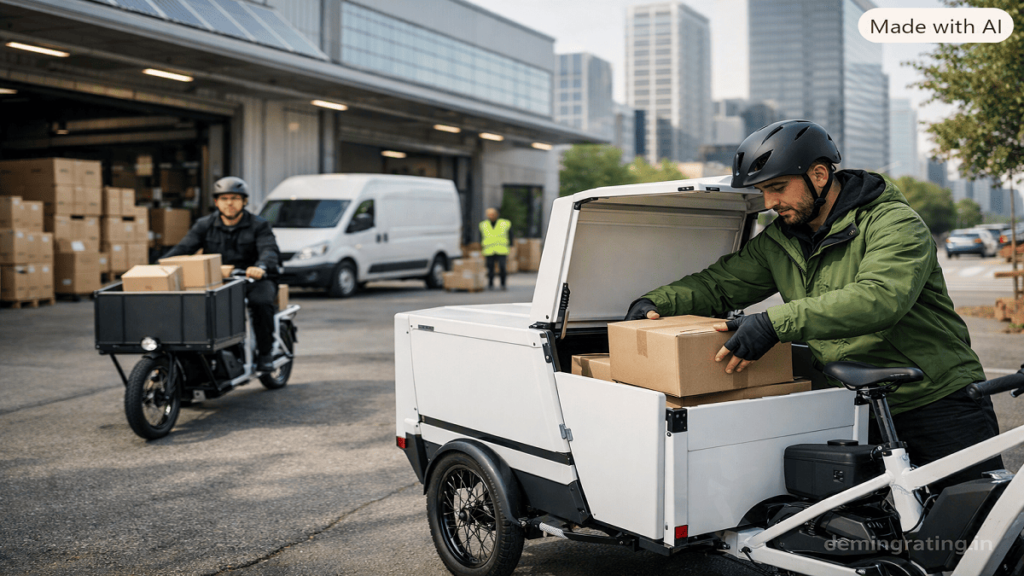
Businesses and delivery companies are increasingly using electric cargo bikes as alternatives to delivery vans and motorcycles.
Applications include:
- Food delivery
- Local logistics
- Package transportation
- Small business deliveries
Electric cargo bikes can reduce emissions and improve delivery efficiency in busy urban areas.
9. Reducing Transportation Costs
Electric bikes provide financial benefits that support sustainable adoption. Compared with cars and motorcycles, they generally have:
- Lower energy costs
- Reduced maintenance expenses
- No fuel requirements
- Lower parking needs
Affordable operation encourages more people to choose environmentally friendly transportation.
10. Supporting Smart and Sustainable Cities
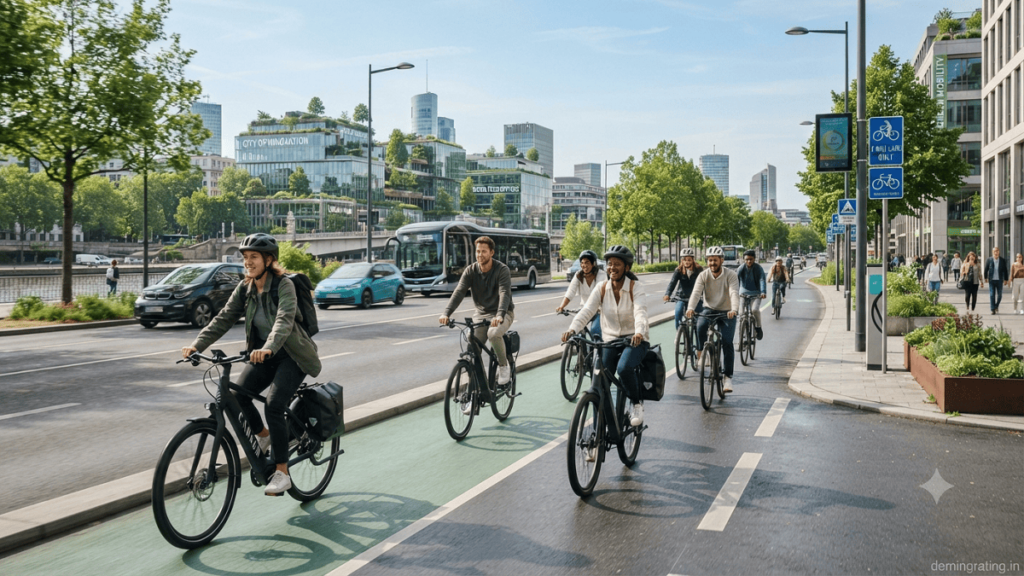
Electric bikes are an important component of future smart cities. Many urban areas are investing in:
- Dedicated cycling lanes
- Bike-sharing systems
- Charging infrastructure
- Integrated public transportation networks
These developments encourage cleaner and more connected transportation systems.
Challenges in Sustainable E-Bike Adoption
Although e-bikes offer many environmental benefits, some challenges remain:
- Battery production and recycling concerns
- Limited charging infrastructure
- Higher initial purchase costs
- Need for safe cycling infrastructure
- Battery disposal management
Addressing these challenges through improved recycling systems, renewable energy integration, and government support will increase the sustainability of e-bike transportation.
Future of Electric Bikes in Sustainable Mobility
The future of e-bikes is expected to include:
- Longer-lasting and recyclable batteries
- Lightweight sustainable materials
- Smart navigation systems
- Improved safety technologies
- Integration with public transportation networks
As cities continue to prioritize cleaner transportation, e-bikes will play an increasingly important role in reducing emissions and improving urban mobility.
Conclusion
Electric bikes contribute significantly to sustainable transportation by reducing greenhouse gas emissions, lowering fossil fuel dependence, improving air quality, and providing an efficient alternative to traditional vehicles. They support cleaner cities, healthier lifestyles, and more accessible mobility solutions.
With continued advancements in battery technology, infrastructure development, and renewable energy adoption, e- bikes will remain a key part of the transition toward sustainable and environmentally responsible transportation systems.
What Are the Benefits of Using Electric Bikes Compared to Conventional Bikes and Vehicles?
Electric bikes, commonly known as e-bikes, have become a popular transportation option because they combine the simplicity of traditional bicycles with the convenience of electric assistance. Compared with conventional bicycles and fuel-powered vehicles, e-bikes offer a unique balance of efficiency, comfort, affordability, and environmental benefits.
As cities focus on reducing emissions, improving mobility, and promoting sustainable transportation, e-bikes are increasingly being adopted by commuters, businesses, and individuals seeking practical alternatives to cars and motorcycles.
1. Reduced Physical Effort Compared to Conventional Bikes
One of the biggest advantages of e-bikes over traditional bicycles is the additional motor assistance they provide. While conventional bikes require riders to rely entirely on physical effort, e-bikes use electric motors to support pedaling.
This makes it easier to:
- Ride longer distances
- Travel uphill
- Handle strong winds
- Commute without excessive fatigue
Electric assistance allows more people to choose cycling, including individuals who may find traditional biking physically challenging.
2. Faster and More Efficient Commuting
Electric bikes allow riders to travel faster and more consistently than conventional bicycles, especially in urban environments. The motor assistance helps maintain speed while reducing the effort required from the rider.
Compared with cars, e-bikes can often be more efficient for short-distance travel because they avoid traffic delays and require less time for parking.
They are particularly useful for:
- Daily office commuting
- Campus transportation
- Short city trips
- Last-mile connections
3. Lower Environmental Impact Compared to Vehicles
Electric bikes produce significantly fewer direct emissions compared with gasoline-powered cars, motorcycles, and scooters. By replacing short vehicle trips with e-bike rides, individuals can reduce their carbon footprint and contribute to cleaner air.
The International Energy Agency (IEA) highlights the importance of cleaner transportation solutions and vehicle electrification in reducing emissions from the transport sector:
https://www.iea.org/
Unlike conventional vehicles, e-bikes do not produce exhaust emissions during operation, making them a more environmentally responsible mobility option.
4. Lower Operating Costs
Electric bikes are generally cheaper to operate compared with cars, motorcycles, and other motor vehicles.
Cost advantages include:
- Lower charging expenses
- Reduced maintenance requirements
- No fuel costs
- Lower insurance and parking expenses in many regions
Although e-bikes may have a higher initial cost than traditional bicycles, long-term savings can make them an economical transportation choice.
5. Better Accessibility Than Conventional Bikes
Traditional cycling can be challenging for some people due to distance, fitness levels, age, or physical limitations. e-bikes make cycling more accessible by reducing the physical demands of riding.
They allow a wider range of people to enjoy cycling, including:
- Older riders
- New cyclists
- Long-distance commuters
- People returning to physical activity
6. Health Benefits Compared to Motor Vehicles
Although e-bikes provide motor assistance, riders still participate in physical activity through pedaling. This creates a healthier alternative to completely inactive transportation methods such as driving.
Regular e-bike use can support:
- Increased daily movement
- Improved cardiovascular activity
- Better fitness habits
- Reduced dependence on sedentary travel
7. Reduced Traffic Problems Compared to Cars
Electric bikes require much less space than cars and motorcycles. Increased e-bike adoption can help reduce traffic congestion in crowded urban areas.
They also require less space for parking, making them suitable for cities where road and parking availability are limited.
8. Greater Convenience for Urban Travel
Electric bikes provide flexibility that many vehicles cannot match. Riders can navigate narrow streets, avoid traffic congestion, and park easily.
Advantages include:
- Easy maneuverability
- Quick short-distance travel
- Simple storage options
- Access to cycling routes
Folding e-bikes provide additional convenience for people who combine cycling with public transportation.
9. Lower Noise Pollution
Unlike fuel-powered vehicles, electric bikes operate quietly. Reduced vehicle noise contributes to more comfortable and peaceful urban environments.
Lower noise levels are especially beneficial in residential areas and city centers.
10. More Practical Than Conventional Bikes for Long Distances
While traditional bikes are effective for short trips, longer journeys can become physically demanding. e-bikes extend the practical travel range by reducing rider fatigue.
This makes them suitable for:
- Longer commutes
- Recreational rides
- Delivery operations
- Mixed-terrain travel
Comparison Between Electric Bikes, Conventional Bikes, and Vehicles
| Feature | Electric Bikes | Conventional Bikes | Cars/Motor Vehicles |
|---|---|---|---|
| Environmental impact | Low emissions | Very low emissions | Higher emissions |
| Physical effort | Moderate | High | Very low |
| Operating cost | Low | Very low | High |
| Travel speed | Medium to high | Medium | High but affected by traffic |
| Parking needs | Minimal | Minimal | High |
| Maintenance cost | Moderate | Low | Higher |
| Long-distance comfort | High | Moderate | High |
Challenges of Electric Bikes
Despite their advantages, e-bikes have some limitations:
- Higher purchase price than traditional bicycles
- Battery charging requirements
- Battery replacement costs
- Limited range depending on battery capacity
- Need for proper cycling infrastructure
However, improvements in battery technology and charging systems continue to address these challenges.
Future Role of Electric Bikes
Electric bikes are expected to become a major part of future transportation systems as cities invest in sustainable mobility solutions. Innovations such as improved batteries, lightweight designs, smart connectivity, and better safety features will make e-bikes even more efficient.
Conclusion
Electric bikes provide a practical middle ground between conventional bicycles and motor vehicles. They offer easier riding than traditional bikes while being more affordable, environmentally friendly, and efficient than cars and motorcycles.
By reducing emissions, lowering transportation costs, improving accessibility, and encouraging active mobility, e-bikes are becoming an important solution for creating cleaner and smarter transportation systems worldwide.
What Are the Challenges and Future Trends in Electric Bike Technology?
Introduction
Electric bike technology has advanced rapidly in recent years, transforming the way people travel in urban and suburban environments. With improvements in battery systems, motor efficiency, smart connectivity, and sustainable design, electric bikes (e-bikes) are becoming a key component of modern transportation.
However, despite their growing popularity, the e-bike industry still faces several challenges related to battery performance, cost, infrastructure, safety, and sustainability. Addressing these challenges through innovation and research will determine how effectively e-bikes can support the future of clean mobility.
This article explores the major challenges facing e-bike technology and examines the future trends expected to shape the next generation of e-bikes.
Challenges in Electric Bike Technology
1. Battery Performance and Limitations
The battery is one of the most important components of an e-bike, but it also remains one of the biggest technological challenges. Current lithium-ion batteries provide reliable performance but still have limitations related to:
- Limited riding range
- Long charging times
- Battery degradation over time
- High replacement costs
- Temperature sensitivity
Riders often need to plan journeys based on battery capacity, especially for longer distances or areas without charging facilities.
Future battery improvements will focus on increasing energy density, reducing charging time, and extending battery lifespan.
2. High Initial Purchase Cost
Electric bikes generally cost more than traditional bicycles because of their motors, batteries, controllers, and electronic components.
The higher upfront cost can discourage some consumers, even though e-bikes often provide long-term savings through lower fuel and maintenance expenses.
Manufacturers are working to reduce production costs through improved manufacturing methods, better supply chains, and more affordable battery technologies.
3. Charging Infrastructure Challenges
Unlike fuel stations that are widely available, electric bike charging infrastructure is still developing in many regions.
Common challenges include:
- Limited public charging stations
- Lack of standardized charging systems
- Limited charging access for apartment residents
- Dependence on home charging
Expanding urban charging networks will be important for encouraging wider e-bike adoption.
4. Battery Recycling and Environmental Concerns
Although e-bikes produce fewer operational emissions than fuel-powered vehicles, battery production and disposal create environmental challenges.
Important concerns include:
- Recycling used batteries
- Recovering valuable materials
- Reducing battery manufacturing impacts
- Developing sustainable battery alternatives
Improved recycling systems and second-life battery applications will help make e-bike technology more environmentally responsible.
5. Weight and Design Limitations
Electric bikes are generally heavier than conventional bicycles because of the motor and battery system. Additional weight can affect:
- Handling
- Transportation
- Storage
- Riding without motor assistance
Manufacturers are developing lightweight frames, compact motors, and advanced materials to improve portability and performance.
6. Safety and Regulation Challenges
As electric bike adoption increases, governments and transportation organizations are working to create appropriate safety standards.
Challenges include:
- Speed regulations
- Rider safety requirements
- Battery safety standards
- Infrastructure compatibility
- Classification differences between regions
Clear regulations help improve safety while supporting industry growth.
Future Trends in Electric Bike Technology
1. Advanced Battery Technologies
Battery innovation will be one of the most important areas of future e-bike development.
Future improvements may include:
- Solid-state batteries
- Faster charging systems
- Higher energy density
- Longer operating range
- More recyclable battery materials
These developments will allow e-bikes to travel farther while reducing charging time.
2. Smart Electric Bikes With Connected Technology
Future e-bikes will become increasingly connected through digital technology.
Expected features include:
- Smartphone integration
- GPS tracking
- Remote locking systems
- Performance monitoring
- Theft prevention technology
- Real-time navigation
Smart connectivity will improve convenience, safety, and user experience.
3. Artificial Intelligence and Adaptive Riding Systems
Artificial intelligence is expected to improve electric bike performance by automatically adjusting motor assistance based on riding conditions.
AI-powered systems may analyze:
- Terrain changes
- Rider behavior
- Battery usage
- Traffic conditions
This can improve efficiency and provide a more personalized riding experience.
4. Lightweight and Sustainable Materials
Manufacturers are focusing on reducing bike weight while maintaining strength and durability.
Future designs may use:
- Carbon fiber materials
- Recycled composites
- Advanced aluminum alloys
- Sustainable manufacturing processes
Lightweight construction will improve portability and energy efficiency.
5. Improved Motor Efficiency
Future electric motors will become smaller, quieter, and more powerful.
Advancements may include:
- Higher torque output
- Better energy efficiency
- Reduced noise
- Improved performance on hills and difficult terrain
These improvements will make e-bikes suitable for a wider range of users and environments.
6. Solar Charging Integration
Some future electric bike designs may explore solar charging technologies. Integrated solar panels could provide additional energy support and reduce dependence on traditional charging sources.
Although current solar e-bike solutions have limitations, improvements in solar efficiency may create new possibilities.
7. Growth of Electric Cargo Bikes
Electric cargo bikes are expected to expand significantly in logistics and delivery industries.
Businesses are adopting cargo e-bikes for:
- Last-mile delivery
- Local transportation
- Urban logistics
- Sustainable business operations
They offer an efficient alternative to delivery vans in crowded cities.
8. Integration With Smart Cities
As cities develop sustainable transportation networks, electric bikes will become more connected with urban infrastructure.
Future smart city integration may include:
- Dedicated cycling lanes
- Digital transportation platforms
- Bike-sharing systems
- Automated traffic management
- Public charging networks
The International Energy Agency (IEA) highlights the importance of electrification and sustainable mobility solutions in reducing transportation emissions:
https://www.iea.org/
Conclusion
Electric bike technology has significant potential to transform transportation by providing a cleaner, more efficient, and accessible mobility solution. However, challenges related to batteries, cost, charging infrastructure, recycling, and safety must be addressed for wider adoption.
Future trends such as advanced batteries, artificial intelligence, smart connectivity, lightweight materials, and sustainable manufacturing will continue to improve electric bike performance and usability.
Case Study of Electric Bike: How E-Bikes Are Transforming Urban Transportation
Introduction
Electric bikes (e-bikes) have emerged as one of the most effective solutions for sustainable urban mobility. With increasing concerns about climate change, air pollution, traffic congestion, and rising fuel costs, cities and businesses are exploring cleaner transportation alternatives. Electric bikes combine traditional cycling with electric assistance, allowing users to travel longer distances with less effort while reducing dependence on fossil-fuel-powered vehicles.
This case study examines the growth and impact of VanMoof, a company that demonstrated how innovative electric bike design, smart technology, and sustainable transportation concepts can influence modern urban mobility.
Case Study Overview: VanMoof Electric Bikes
Background
VanMoof was founded in the Netherlands with the goal of redesigning urban transportation through advanced electric bicycle technology. The company focused on creating e-bikes that combined minimalist design, integrated technology, theft protection, and everyday commuting functionality.
The brand became recognized for developing electric bikes designed specifically for city environments, targeting commuters who wanted an alternative to cars, motorcycles, and public transportation.
The Challenge
Urban transportation faces several major challenges:
- Increasing traffic congestion
- High fuel consumption
- Air pollution
- Limited parking availability
- Dependence on private vehicles
Many commuters require transportation that is faster than traditional bicycles but cleaner and more affordable than cars.
VanMoof aimed to address these challenges by developing electric bikes that could provide:
- Comfortable city commuting
- Smart security features
- Reduced environmental impact
- Easy daily transportation
Sustainable Features of Electric Bikes
1. Zero Direct Emissions Transportation
One of the biggest environmental advantages of electric bikes is that they produce no direct exhaust emissions during operation.
By replacing short car trips with e-bike journeys, users can reduce:
- Carbon emissions
- Fuel consumption
- Urban air pollution
Electric bikes support cleaner cities by encouraging low-carbon transportation.
The International Energy Agency (IEA) highlights the importance of electric mobility solutions in reducing transportation-related emissions:
https://www.iea.org/
2. Smart Technology Integration
VanMoof electric bikes incorporated advanced digital features to improve the riding experience.
Examples include:
- Smartphone connectivity
- Digital locking systems
- GPS tracking
- Anti-theft technology
- Electronic controls
These features helped position electric bikes as smart mobility devices rather than simple bicycles.
3. Urban-Friendly Design
The company focused on creating e-bikes suitable for modern city environments.
Key design elements included:
- Integrated battery systems
- Lightweight appearance
- Minimal external components
- Comfortable riding position
This approach helped attract users who wanted sustainable transportation without sacrificing style or convenience.
4. Reducing Dependence on Cars
A major goal of electric bikes is replacing unnecessary car journeys. Many urban trips are short-distance journeys where cars are inefficient.
Electric bikes provide an alternative for:
- Office commuting
- Shopping trips
- Campus travel
- Local transportation
By reducing vehicle usage, e-bikes help improve urban mobility and reduce congestion.
Impact of Electric Bike Adoption
Environmental Benefits
The adoption of electric bikes contributes to sustainability by:
- Reducing greenhouse gas emissions
- Lowering fossil fuel consumption
- Improving urban air quality
- Supporting cleaner transportation systems
Economic Benefits
Electric bikes provide financial advantages compared with cars and motorcycles:
- Lower operating costs
- Reduced maintenance expenses
- Lower charging costs
- Reduced parking requirements
Social Benefits
E-bikes improve transportation accessibility by making cycling easier for more people, including:
- Older riders
- Long-distance commuters
- New cyclists
- People seeking affordable mobility solutions
Lessons From the Case Study
1. Technology Can Improve Sustainable Transportation
The success of smart e-bike companies shows that sustainability and technology can work together. Features such as GPS, digital security, and connected applications improve user adoption.
2. Design Matters for Consumer Acceptance
Modern consumers often consider appearance, comfort, and convenience when selecting transportation options. Attractive and practical designs encourage more people to switch from cars to e-bikes.
3. Infrastructure Supports Growth
For electric bikes to become more widely adopted, cities need:
- Safe cycling infrastructure
- Charging facilities
- Parking solutions
- Supportive transportation policies
Future Opportunities for Electric Bikes
The electric bike industry is expected to continue growing with innovations such as:
- Longer-lasting batteries
- Faster charging technology
- Artificial intelligence-based assistance
- Sustainable battery recycling
- Improved smart connectivity
- Lightweight materials
Electric cargo bikes are also expected to expand in logistics and delivery industries as businesses look for cleaner alternatives to traditional delivery vehicles.
Conclusion
The case study of VanMoof demonstrates how electric bikes can transform urban transportation by combining sustainability, technology, and user-focused design. E-bikes provide a practical solution to reduce emissions, improve mobility, and create cleaner cities.
Although challenges such as battery development, infrastructure requirements, and affordability remain, continued innovation will strengthen the role of electric bikes in future transportation systems. As cities move toward sustainable mobility, electric bikes will become an increasingly important part of environmentally responsible travel.
White Paper on Electric Bikes
Executive Summary
Electric bikes (e-bikes) are becoming a significant innovation in the global transportation sector by offering a sustainable, efficient, and accessible alternative to traditional fuel-powered vehicles. Combining conventional bicycle design with electric motor assistance, e-bikes provide users with improved mobility while reducing environmental impact.
Growing concerns about climate change, urban air pollution, traffic congestion, and rising fuel costs have accelerated the adoption of electric bikes worldwide. They are increasingly used for personal commuting, public transportation integration, delivery services, tourism, and recreational activities.
This white paper examines the technology behind electric bikes, their environmental and economic benefits, industry applications, challenges, and future trends. It highlights how e-bikes can contribute to cleaner cities, reduced emissions, and more sustainable transportation systems.
1. Introduction to Electric Bikes
An electric bike is a bicycle equipped with an electric motor, rechargeable battery, controller system, and assistance technology that helps riders travel with reduced physical effort.
Unlike motorcycles and cars, electric bikes maintain the basic characteristics of bicycles while adding electric support. Riders can pedal normally while receiving additional power from the motor when needed.
The main components of an electric bike include:
- Electric motor: Provides additional power assistance.
- Battery system: Stores electrical energy for motor operation.
- Controller: Manages power delivery between battery and motor.
- Pedal-assist sensors: Detect rider movement and adjust assistance.
- Display system: Provides information such as speed, battery level, and riding modes.
Electric bikes represent a transition toward cleaner and smarter transportation solutions.
The International Energy Agency (IEA) highlights the importance of electric mobility solutions in reducing transportation emissions and supporting sustainable energy transitions:
https://www.iea.org/
2. Importance of Electric Bikes in Sustainable Transportation
2.1 Reducing Carbon Emissions
Transportation is a major contributor to global greenhouse gas emissions. Electric bikes help reduce emissions by replacing short-distance trips normally made by cars and motorcycles.
Since e-bikes use electricity instead of fossil fuels, they produce no direct exhaust emissions during operation.
Benefits include:
- Reduced carbon footprint
- Improved urban air quality
- Lower fuel consumption
- Cleaner transportation systems
2.2 Improving Urban Mobility
Cities around the world face challenges related to congestion and limited road space. Electric bikes provide an efficient solution because they require less space compared with cars.
They support:
- Faster short-distance travel
- Reduced traffic congestion
- Easier parking
- Better last-mile connectivity
2.3 Supporting Active Transportation
Although electric bikes provide motor assistance, riders still participate in physical activity through pedaling. This encourages healthier transportation habits while making cycling accessible to more people.
3. Types of Electric Bikes
3.1 Pedal-Assist Electric Bikes
These bikes provide motor support when the rider pedals. They offer a natural cycling experience and are commonly used for commuting.
Applications:
- Daily transportation
- Fitness riding
- Urban travel
3.2 Throttle-Controlled Electric Bikes
Throttle-based e-bikes allow riders to activate the motor without pedaling.
Applications:
- Short-distance travel
- Delivery services
- Convenience-focused mobility
3.3 Electric Mountain Bikes
Designed for off-road environments, electric mountain bikes include powerful motors and durable components.
Applications:
- Outdoor recreation
- Adventure cycling
- Rough terrain travel
3.4 Electric Cargo Bikes
Cargo e-bikes are designed to transport goods and passengers.
Applications:
- Delivery operations
- Business logistics
- Family transportation
3.5 Folding Electric Bikes
Folding e-bikes provide compact transportation solutions for urban users with limited storage space.
Applications:
- City commuting
- Public transport integration
- Small-space living
4. Technology Behind Electric Bikes
4.1 Battery Technology
The battery is one of the most important parts of an electric bike. Most modern e-bikes use lithium-ion batteries because they provide:
- High energy capacity
- Lightweight design
- Rechargeability
- Long service life
Future battery improvements will focus on:
- Faster charging
- Longer range
- Better recycling
- Lower production impact
4.2 Motor Systems
Electric bike motors are available in two primary designs:
Hub Motors
Located inside the wheel hub, these motors provide direct power to the wheel.
Advantages:
- Simple design
- Lower cost
- Easy maintenance
Mid-Drive Motors
Located near the pedals, these motors provide better weight distribution and performance.
Advantages:
- Improved climbing ability
- Better efficiency
- Natural riding experience
5. Industry Applications of Electric Bikes
5.1 Personal Transportation
Electric bikes are widely used for:
- Daily commuting
- Local travel
- Recreation
- Fitness activities
They provide a practical alternative to cars for short-distance journeys.
5.2 Delivery and Logistics
Businesses are adopting electric cargo bikes for sustainable delivery operations.
Applications include:
- Food delivery
- Package transportation
- Local logistics
E-bikes reduce delivery emissions and improve efficiency in crowded urban areas.
5.3 Tourism Industry
Tourism companies use electric bikes to provide environmentally friendly sightseeing options.
Applications include:
- City tours
- Adventure tourism
- Resort transportation
5.4 Public Transportation Support
Electric bikes improve connectivity between public transportation stations and final destinations.
They help solve last-mile transportation challenges by connecting:
- Homes to train stations
- Offices to bus stops
- Residential areas to commercial zones
6. Benefits of Electric Bikes
Environmental Benefits
Electric bikes help:
- Reduce emissions
- Lower fossil fuel dependency
- Improve air quality
- Support sustainable cities
Economic Benefits
Compared with cars and motorcycles, e-bikes offer:
- Lower operating costs
- Reduced maintenance expenses
- Lower energy consumption
- Reduced parking costs
Social Benefits
Electric bikes improve transportation accessibility by allowing more people to participate in cycling.
They support:
- Affordable mobility
- Healthier lifestyles
- Flexible transportation options
7. Challenges in Electric Bike Adoption
7.1 Battery Limitations
Battery-related challenges include:
- Limited riding range
- Charging time
- Replacement costs
- Recycling concerns
7.2 Higher Initial Investment
Electric bikes generally cost more than traditional bicycles due to advanced electronic components.
7.3 Infrastructure Requirements
Wider adoption requires:
- Dedicated cycling lanes
- Charging facilities
- Secure parking areas
- Safety regulations
7.4 Battery Sustainability
Improving battery recycling systems and developing environmentally friendly battery technologies remain important industry goals.
8. Future Trends in Electric Bike Technology
8.1 Advanced Battery Innovation
Future e-bikes may include:
- Solid-state batteries
- Higher energy density systems
- Faster charging technology
- Improved recycling methods
8.2 Smart Connectivity
Future electric bikes will increasingly include:
- GPS tracking
- Smartphone integration
- Digital security systems
- Performance monitoring
8.3 Artificial Intelligence Integration
AI technology may improve:
- Automatic riding assistance
- Battery optimization
- Safety monitoring
- Personalized riding experiences
8.4 Lightweight Sustainable Materials
Manufacturers are exploring:
- Recycled materials
- Advanced aluminum alloys
- Carbon fiber components
- Sustainable manufacturing methods
8.5 Integration With Smart Cities
Future urban transportation systems may combine e-bikes with:
- Digital mobility platforms
- Public transportation networks
- Smart traffic systems
- Shared mobility services
9. Recommendations for Wider Adoption
To increase electric bike adoption, governments and industries should focus on:
- Developing cycling infrastructure
- Supporting battery recycling programs
- Creating safety standards
- Encouraging sustainable transportation policies
- Investing in charging networks
Conclusion
Electric bikes represent a major step toward sustainable transportation by combining clean energy, efficient mobility, and modern technology. They provide an environmentally responsible alternative to traditional vehicles while improving accessibility and convenience for users.
Although challenges such as battery limitations, infrastructure development, and initial costs remain, continuous innovation is expected to make e-bikes more affordable, efficient, and sustainable.
Industry Applications of Electric Bikes: Transforming Sustainable Transportation Across Sectors
Introduction
Electric bikes (e-bikes) are rapidly becoming an important technology across multiple industries due to their ability to provide efficient, low-emission, and cost-effective transportation solutions. Unlike traditional bicycles, electric bikes use battery-powered motors to provide additional assistance, making them suitable for a wider range of users and applications.
As businesses and governments focus on reducing carbon emissions, improving urban mobility, and adopting sustainable practices, electric bikes are being integrated into industries such as logistics, tourism, healthcare, education, retail, and public transportation.
Electric bikes help organizations reduce fuel dependency, lower operational costs, and create environmentally responsible transportation systems.
The International Energy Agency (IEA) highlights the growing importance of electrification and sustainable mobility solutions in reducing transportation-related emissions:
https://www.iea.org/
1. Logistics and Delivery Industry
The logistics and delivery sector is one of the fastest-growing users of electric bike technology. Electric cargo bikes provide an efficient alternative to delivery vans and motorcycles, especially in crowded urban areas.
Applications:
- Food delivery services
- Package delivery
- Local courier operations
- Last-mile logistics
- Small business deliveries
Benefits:
- Reduced fuel costs
- Lower carbon emissions
- Easier navigation through traffic
- Reduced parking challenges
- Improved delivery efficiency
Electric cargo bikes are particularly effective for short-distance deliveries where traditional vehicles may be slower due to congestion.
2. Urban Transportation and Commuting
Electric bikes are increasingly used as personal transportation solutions for daily commuting.
Applications:
- Office commuting
- City travel
- Short-distance transportation
- Last-mile connectivity
Many commuters choose electric bikes because they provide a balance between traditional cycling and motorized transportation.
Advantages:
- Faster than conventional bicycles
- More affordable than cars
- Lower maintenance costs
- Reduced environmental impact
Cities are also developing cycling infrastructure and bike-sharing programs to encourage sustainable mobility.
3. Tourism and Hospitality Industry
The tourism sector is adopting electric bikes to provide eco-friendly travel experiences for visitors.
Applications:
- Guided city tours
- Resort transportation
- Adventure tourism
- Heritage site exploration
- Eco-tourism activities
Electric bikes allow tourists to explore larger areas with less physical effort while reducing pollution in sensitive natural and cultural locations.
Benefits:
- Environmentally friendly sightseeing
- Improved visitor experience
- Access to wider travel areas
- Reduced dependence on fuel-powered vehicles
4. Healthcare and Medical Services
Healthcare organizations are exploring electric bikes for improving mobility and service delivery.
Applications:
- Home healthcare visits
- Community medical services
- Medical supply transportation
- Healthcare worker commuting
Electric bikes allow healthcare professionals to travel efficiently in areas where traffic congestion may delay service.
Benefits:
- Faster local travel
- Lower transportation expenses
- Reduced emissions
- Improved accessibility
5. Retail and Small Business Operations
Small businesses are adopting electric bikes for local transportation and customer services.
Applications:
- Local product delivery
- Mobile retail services
- Store-to-customer transportation
- Inventory movement
Electric bikes help small businesses reduce operating expenses while providing flexible delivery options.
6. Education Sector Applications
Schools, colleges, and universities are using electric bikes to improve campus mobility and promote sustainable transportation.
Applications:
- Campus transportation
- Staff mobility
- Student commuting
- Facility management
Electric bikes provide convenient movement across large educational campuses while reducing vehicle usage.
They also support environmental awareness by demonstrating practical examples of clean transportation.
7. Public Transportation Integration
Electric bikes are becoming an important part of multimodal transportation systems by connecting users with public transit networks.
Applications:
- Train station connections
- Bus stop accessibility
- Bike-sharing systems
- Urban mobility programs
Electric bikes help solve the “last-mile” transportation challenge by providing convenient connections between public transit and final destinations.
8. Corporate and Workplace Mobility
Companies are introducing electric bikes as part of employee transportation programs and sustainability initiatives.
Applications:
- Employee commuting
- Office transportation
- Corporate campuses
- Green mobility programs
Benefits:
- Encourages sustainable commuting
- Reduces parking demand
- Supports corporate sustainability goals
- Improves employee mobility
9. Agriculture and Rural Applications
Electric bikes are also finding applications in rural areas and agricultural environments.
Applications:
- Farm inspections
- Rural transportation
- Small goods movement
- Field monitoring
Electric bikes provide affordable mobility solutions where traditional vehicles may be expensive or inefficient.
10. Emergency and Community Services
Some organizations use electric bikes for quick-response services in urban environments.
Applications:
- Community support programs
- Security patrols
- Event management
- Emergency assistance
Electric bikes allow workers to move quickly through crowded areas where larger vehicles may face limitations.
Future Industry Opportunities for Electric Bikes
The adoption of electric bikes is expected to expand as technology improves and industries focus on sustainability.
Future opportunities include:
- Autonomous delivery e-bikes
- AI-powered mobility systems
- Advanced battery technology
- Smart fleet management
- Solar-assisted charging systems
- Connected transportation networks
Businesses are expected to increasingly use electric bikes as part of sustainable logistics and transportation strategies.
Conclusion
Electric bikes are transforming multiple industries by providing cleaner, more efficient, and affordable transportation solutions. From logistics and tourism to healthcare, education, retail, and corporate mobility, e-bikes are helping organizations reduce emissions and improve operational efficiency.
As cities and businesses continue adopting sustainable practices, electric bikes will play a significant role in shaping the future of transportation. Their ability to combine environmental benefits, economic advantages, and practical usability makes them a valuable solution for building smarter and greener mobility systems.
Ask FAQs
What industries use electric bikes?
Electric bikes are used across various industries, including logistics, delivery services, tourism, healthcare, education, retail, corporate transportation, and public mobility. Businesses use electric bikes for tasks such as last-mile delivery, employee commuting, campus transportation, and local transportation services.
How do electric bikes benefit the delivery and logistics industry?
Electric bikes help the delivery and logistics industry by providing a faster and more sustainable alternative to traditional delivery vehicles. They are particularly effective for short-distance and last-mile deliveries where traffic congestion can slow down cars and vans.
Why are electric bikes becoming popular in urban transportation?
Electric bikes are gaining popularity in cities because they provide an efficient solution for traffic congestion, pollution, and high transportation costs. They allow commuters to travel faster than conventional bicycles while avoiding many challenges associated with cars.
Can electric bikes be used for commercial and business purposes?
Yes, electric bikes are increasingly used for commercial applications. Businesses use them for delivery services, employee transportation, tourism operations, and local product distribution.
What is the future of electric bikes in different industries?
The future of electric bikes is expected to expand as industries adopt cleaner transportation solutions. Advancements in battery technology, smart connectivity, and fleet management systems will improve their performance and usability.
Table of Contents
Disclaimer:
This content is for general informational purposes only. Electric bike performance, benefits, and applications may vary depending on models, regulations, usage conditions, and local infrastructure. Always check manufacturer specifications and applicable guidelines before making decisions.