
Eco-friendly Refrigerants And Halons
Eco-friendly refrigerants and halons have become central topics in modern environmental policy and industrial sustainability. Traditional refrigerants such as chlorofluorocarbons (CFCs) and many halons were widely used in refrigeration, air conditioning, and fire suppression systems because of their excellent chemical stability and performance. However, scientific research demonstrated that these substances contribute significantly to ozone layer depletion and global warming. As a result, governments Eco-friendly Refrigerants and industries worldwide have accelerated the transition toward environmentally safer alternatives.
The phase-out of ozone-depleting substances was driven by the Montreal Protocol, one of the most successful international environmental agreements. CFCs and several halons possess a high Ozone Depletion Potential (ODP), meaning they can destroy stratospheric ozone that protects life on Earth from harmful ultraviolet radiation. More information is available from the United Nations Environment Programme: UNEP – Montreal Protocol .
Eco-friendly refrigerants are designed to minimize both ozone depletion and climate impact. Common alternatives include hydrofluorocarbons (HFCs), hydrofluoroolefins (HFOs), and natural refrigerants such as ammonia (R-717), carbon dioxide (R-744), and hydrocarbons like propane (R-290) and isobutane (R-600a). Among these, natural refrigerants are increasingly favored because they have negligible ODP Eco-friendly Refrigerants and very low Global Warming Potential (GWP). The U.S. Environmental Protection Agency provides a useful overview of refrigerant transition policies: EPA – Significant New Alternatives Policy (SNAP) Program .
Halons, particularly Halon 1211 and Halon 1301, were extensively used in aviation, military facilities, and data centers due to their highly effective fire-extinguishing properties. Because they are potent ozone-depleting chemicals, their production has been largely phased out in many countries. Current practice emphasizes halon banking, recycling, and the use of alternative fire suppression agents such as inert gases, clean agents (for example FK-5-1-12), and water-mist systems. Guidance on halon management is available from the Ozone Secretariat: UNEP Ozone Secretariat .
The adoption of eco-friendly refrigerants and halon alternatives offers several benefits: reduced environmental damage, compliance with international regulations, improved energy efficiency in many applications, Eco-friendly Refrigerants and enhanced corporate sustainability performance. Nevertheless, the transition also requires technician training, updated equipment standards, safety measures for flammable refrigerants, and investment in new infrastructure.
In conclusion, replacing harmful refrigerants and halons with environmentally responsible alternatives is an essential step toward protecting the ozone layer and mitigating climate change. Continued innovation, regulation, and industry cooperation will determine how effectively the world achieves a sustainable cooling and fire-protection future.
What are eco-friendly refrigerants and why are they important?
Eco-friendly refrigerants are substances used in refrigeration, air conditioning, and heat pump systems that have a minimal impact on the environment. They are designed to replace older refrigerants that contribute to ozone layer depletion Eco-friendly Refrigerants and climate change. The importance of eco-friendly refrigerants has grown significantly as countries implement stricter environmental regulations and industries seek sustainable cooling solutions.
Traditional refrigerants such as chlorofluorocarbons (CFCs) and hydrochlorofluorocarbons (HCFCs) were once widely used because of their excellent thermodynamic properties. However, scientific research showed that these chemicals damage the stratospheric ozone layer, which protects Earth from harmful ultraviolet radiation. In addition, many hydrofluorocarbons (HFCs), although safer for the ozone layer, have a high Global Warming Potential (GWP), meaning they can trap heat in the atmosphere far more effectively than carbon dioxide.
Eco-friendly refrigerants are generally characterized by two key features: zero or near-zero Ozone Depletion Potential (ODP) Eco-friendly Refrigerants and low Global Warming Potential (GWP). Examples include natural refrigerants such as ammonia (R-717), carbon dioxide (R-744), and hydrocarbons like propane (R-290) Eco-friendly Refrigerants and isobutane (R-600a). Newer synthetic refrigerants, including hydrofluoroolefins (HFOs), are also being developed to provide low-GWP alternatives for various applications.
These refrigerants are important for several reasons. First, they help protect the ozone layer, supporting global efforts under the Montreal Protocol, which has successfully reduced the use of ozone-depleting substances. Second, they contribute to climate change mitigation by lowering greenhouse gas emissions associated with cooling systems. Third, many eco-friendly refrigerants can improve energy efficiency, reducing electricity consumption and operating costs over the lifetime of the equipment.
The transition to environmentally safer refrigerants is especially significant because cooling demand is increasing rapidly worldwide due to urbanization, rising temperatures, and economic growth. According to the International Energy Agency, improving the efficiency and environmental performance of cooling technologies is essential for achieving global climate goals.
Businesses that adopt eco-friendly refrigerants can also benefit from regulatory compliance, enhanced brand reputation, and long-term cost savings. However, successful implementation requires proper system design, technician training Eco-friendly Refrigerants, and adherence to safety standards, particularly for refrigerants that may be flammable or operate at higher pressures.
For further reading, consult the following authoritative resources:
- UNEP – Montreal Protocol
- U.S. EPA – Refrigerant Alternatives
- International Energy Agency – Cooling
In conclusion, eco-friendly refrigerants are a critical component of sustainable cooling technology. By reducing ozone depletion and lowering greenhouse gas emissions, they play an essential role in protecting the environment while supporting the growing global need for efficient and responsible cooling solutions.
Why are halons being phased out or replaced?
Halons are being phased out and replaced because they have a severe negative impact on the Earth’s ozone layer and contribute to environmental degradation. Although halons were once considered highly effective fire-extinguishing agents, especially in aviation, military facilities, telecommunications, and data centers, scientific evidence has shown that their environmental costs outweigh their benefits.
The most commonly used halons, such as Halon 1211 and Halon 1301, contain bromine, which is extremely destructive to stratospheric ozone. When released into the atmosphere, halons break down under ultraviolet radiation and release bromine atoms. A single bromine atom can destroy thousands of ozone molecules, making halons among the most potent ozone-depleting substances ever produced.
The ozone layer acts as a protective shield that absorbs harmful ultraviolet (UV-B) radiation from the sun. Depletion of this layer increases the risk of skin cancer, cataracts, immune system suppression, and damage to crops and marine ecosystems. Because of these risks, the international community adopted the Montreal Protocol, which mandated the phase-out of many ozone-depleting substances, including halons. According to the United Nations Environment Programme, production of halons for most uses has been eliminated in many countries under this agreement. UNEP – Montreal Protocol
In addition to ozone depletion, halons have a high Global Warming Potential (GWP). Although they are used in relatively small quantities compared with some refrigerants, their long atmospheric lifetime means they can contribute to climate change for many years after release.
Another reason for replacement is the availability of safer and more sustainable alternatives. Modern fire suppression technologies include inert gas systems (such as nitrogen and argon mixtures), clean agents like FK-5-1-12, water-mist systems, and advanced detection and suppression systems. These alternatives can provide effective fire protection with significantly lower environmental impact. The U.S. Environmental Protection Agency offers guidance on acceptable halon substitutes and fire suppression alternatives. EPA – Halon Substitutes
It is important to note that halons have not disappeared entirely. Certain critical applications, particularly in aviation and some military systems, still rely on recycled halon because suitable alternatives are not yet available for every situation. To manage existing supplies responsibly, many countries operate halon banking and recycling programs rather than producing new halon. Information on halon management is available from the UNEP Ozone Secretariat. UNEP Ozone Secretariat
In conclusion, halons are being phased out primarily because they are highly destructive to the ozone layer and contribute to climate change. Advances in fire protection technology now allow industries to use environmentally responsible alternatives while maintaining high standards of safety and reliability.
What are the common alternatives to traditional refrigerants and halons?
As environmental regulations become stricter and sustainability becomes a priority, industries are increasingly replacing traditional refrigerants and halons with alternatives that have lower ozone depletion and climate impacts. These substitutes are used in refrigeration, air conditioning, heat pumps, and fire suppression systems, and they are selected based on safety, efficiency, and environmental performance.
Traditional refrigerants such as CFCs (chlorofluorocarbons) and HCFCs (hydrochlorofluorocarbons) were phased out because they damage the ozone layer. Many HFCs (hydrofluorocarbons), although ozone-safe, have high Global Warming Potential (GWP). Common modern alternatives include natural refrigerants and low-GWP synthetic refrigerants.
Among natural refrigerants, ammonia (R-717) is widely used in industrial refrigeration because it has zero Ozone Depletion Potential (ODP) and negligible GWP. Carbon dioxide (R-744) is increasingly used in supermarkets, heat pumps, and transport refrigeration due to its very low environmental impact. Hydrocarbons, especially propane (R-290) and isobutane (R-600a), are common in domestic refrigerators and small commercial systems because they are energy efficient and have very low GWP, although they require careful handling because they are flammable.
Newer synthetic alternatives include hydrofluoroolefins (HFOs) such as R-1234yf and R-1234ze. These refrigerants have very low GWP and are being adopted in automotive air conditioning and commercial cooling applications. In some systems, manufacturers also use blended refrigerants that combine HFOs and HFCs to balance efficiency, safety, and environmental performance.
For authoritative guidance on refrigerant alternatives, see the U.S. EPA SNAP program: EPA – Refrigerant Alternatives .
Traditional halons, especially Halon 1211 and Halon 1301, were widely used for fire suppression because they were highly effective and left no residue. However, they are being replaced because bromine-containing halons are extremely destructive to the ozone layer.
Common alternatives to halons include inert gas systems (nitrogen, argon, or mixed gases), which reduce oxygen levels to suppress fire without harming the ozone layer. Clean chemical agents such as FK-5-1-12 (Novec 1230) and HFC-227ea (FM-200) are also widely used in data centers, museums, and electrical facilities. In many applications, water-mist systems provide effective fire control while using minimal water and causing less damage to sensitive equipment.
The UNEP Ozone Secretariat provides additional information on halon replacement and management: UNEP Ozone Secretariat .
In summary, the most common alternatives to traditional refrigerants and halons are ammonia, carbon dioxide, hydrocarbons, HFOs, inert gases, clean agents, and water-mist systems. These technologies help industries reduce ozone depletion, lower greenhouse gas emissions, improve energy efficiency, and comply with modern environmental regulations while maintaining reliable cooling and fire protection performance.

How do eco-friendly refrigerants help reduce environmental impact?
Eco-friendly refrigerants help reduce environmental impact by minimizing damage to the ozone layer, lowering greenhouse gas emissions, and improving the energy efficiency of cooling systems. As global demand for refrigeration and air conditioning continues to grow, the choice of refrigerant has become an important factor in addressing climate change and environmental sustainability.
Older refrigerants such as chlorofluorocarbons (CFCs) and hydrochlorofluorocarbons (HCFCs) were found to release chlorine and bromine compounds into the atmosphere. These substances break down ozone molecules in the stratosphere, weakening the Earth’s natural shield against harmful ultraviolet radiation. Eco-friendly refrigerants are designed with zero or near-zero Ozone Depletion Potential (ODP), which means they do not contribute significantly to ozone layer destruction. This supports international efforts under the Montreal Protocol, which has been instrumental in reducing the use of ozone-depleting substances. UNEP – Montreal Protocol
Another major environmental benefit is the reduction of Global Warming Potential (GWP). Many traditional HFC refrigerants can trap heat in the atmosphere thousands of times more effectively than carbon dioxide. Eco-friendly alternatives such as carbon dioxide (R-744), ammonia (R-717), propane (R-290), and newer hydrofluoroolefins (HFOs) have much lower GWPs. When leaks occur during operation, servicing, or disposal, these refrigerants contribute far less to global warming than conventional refrigerants.
Energy efficiency is also a critical factor. A large portion of the environmental impact of refrigeration and air-conditioning systems comes from the electricity they consume. Many eco-friendly refrigerants have excellent thermodynamic properties that allow systems to operate more efficiently. Higher efficiency means lower electricity consumption, which in turn reduces emissions from power generation, especially in regions that still rely heavily on fossil fuels.
In addition, eco-friendly refrigerants support the development of sustainable cooling technologies. They are increasingly used in heat pumps, green buildings, cold-chain logistics, and renewable energy applications. Their adoption encourages manufacturers to design equipment that is safer, more efficient, and compliant with future environmental regulations.
The International Energy Agency emphasizes that efficient and environmentally responsible cooling is essential for achieving global climate goals. International Energy Agency – Cooling . The U.S. Environmental Protection Agency also provides guidance on low-GWP refrigerant alternatives. EPA – SNAP Program .
In conclusion, eco-friendly refrigerants reduce environmental impact through three main mechanisms: protecting the ozone layer, lowering greenhouse gas emissions, and improving energy efficiency. By replacing harmful refrigerants with low-ODP and low-GWP alternatives, industries and consumers can significantly reduce the environmental footprint of cooling systems while supporting long-term climate and sustainability objectives.
What are the challenges and future trends in refrigerant and fire-suppression technologies?
Refrigerant and fire-suppression technologies are undergoing a major transformation as industries respond to environmental regulations, climate goals, and evolving safety requirements. While significant progress has been made in replacing ozone-depleting substances and halons, several technical and economic challenges remain.
One of the biggest challenges in refrigerant technology is balancing environmental performance, energy efficiency, safety, and cost. Natural refrigerants such as ammonia, carbon dioxide, and hydrocarbons have very low Global Warming Potential (GWP), but each presents operational challenges. Ammonia is toxic, hydrocarbons are flammable, and carbon dioxide systems often operate at much higher pressures than conventional systems. These factors require specialized equipment, technician training, and updated safety standards.
Another challenge is the retrofit of existing infrastructure. Many commercial and industrial facilities were designed for older refrigerants, and converting them to low-GWP alternatives can be expensive. In developing countries, limited access to skilled technicians and financing can slow the transition. Regulatory changes, including restrictions on high-GWP refrigerants under international agreements such as the Kigali Amendment to the Montreal Protocol, also create uncertainty for manufacturers and end users. UNEP – Montreal Protocol
In fire-suppression technology, the main challenge is finding alternatives to halons that provide the same level of effectiveness, especially in aviation, military, and critical infrastructure applications. Some alternatives may require larger storage volumes, higher installation costs, or different discharge characteristics. Environmental concerns are also expanding beyond ozone depletion to include the persistence of certain fluorinated fire-suppression chemicals in the environment.
Future trends in refrigerants point toward ultra-low-GWP solutions. Hydrofluoroolefins (HFOs), natural refrigerants, and optimized refrigerant blends are expected to become more common. Heat pumps using carbon dioxide or propane are gaining popularity because they support building decarbonization and renewable-energy integration. Digital technologies such as IoT sensors, leak detection, predictive maintenance, and AI-based system optimization will further improve efficiency and reduce refrigerant losses.
In fire suppression, future systems are moving toward sustainable clean agents, inert gas systems, water-mist technologies, and intelligent suppression systems. Advanced detection using smoke analytics, thermal imaging, and machine learning can enable earlier intervention, reducing the amount of suppressant required. Research is also focusing on agents with lower environmental persistence and reduced life-cycle impact.
Organizations such as the International Energy Agency and the U.S. Environmental Protection Agency highlight the importance of efficient cooling and environmentally responsible refrigerant management. IEA – Cooling EPA – SNAP Program
In conclusion, the future of refrigerant and fire-suppression technologies will be shaped by the need for lower environmental impact, higher energy efficiency, improved safety, and smarter system management. Although challenges related to cost, infrastructure, and technical complexity remain, ongoing innovation and international cooperation are driving the transition toward safer and more sustainable cooling and fire-protection solutions.
Case Study of Eco-friendly Refrigerants & Halons
The transition from environmentally harmful refrigerants and halons to sustainable alternatives is becoming a priority for commercial and industrial facilities worldwide. This case study examines how a large commercial complex modernized its cooling and fire-protection systems to reduce environmental impact, improve energy efficiency, and comply with international regulations.
Background
The facility, a mixed-use commercial building with offices, retail outlets, and a data center, originally used HCFC-22 (R-22) for air conditioning and Halon 1301 for fire suppression in critical electrical rooms. Rising maintenance costs, regulatory restrictions, and corporate sustainability goals prompted management to evaluate alternative technologies.
Challenges
The project team identified several challenges:
- Compliance with phase-out regulations for HCFCs.
- Reduction of greenhouse gas emissions.
- Maintaining reliable cooling for tenants and IT equipment.
- Replacing halon without compromising fire safety.
- Minimizing downtime during installation.
Refrigerant Transition
After a technical assessment, the facility replaced R-22 systems with R-32 in smaller air-conditioning units and R-744 (carbon dioxide) in the supermarket refrigeration section. R-32 offers lower GWP and higher energy efficiency than R-22, while CO₂ provides near-zero direct climate impact.
The upgrade included variable-speed compressors, improved insulation, and leak-detection systems. According to the International Energy Agency, efficient cooling technologies combined with low-GWP refrigerants can significantly reduce both electricity use and emissions. IEA – Cooling
Halon Replacement
For fire protection, the data center and electrical rooms were converted from Halon 1301 to an FK-5-1-12 clean-agent system supported by an intelligent smoke-detection network. The new agent has zero ozone depletion potential and a much lower atmospheric impact than halons.
Guidance from the U.S. EPA SNAP program was used to select acceptable halon alternatives. EPA – Halon Substitutes
Results
After twelve months of operation, the facility reported:
| Metric | Improvement |
|---|---|
| Electricity consumption | 18% reduction |
| Refrigerant-related emissions | ~65% reduction |
| Ozone depletion impact | Eliminated |
| Fire-system maintenance | 22% lower cost |
In addition, the project improved the building’s sustainability rating and strengthened its environmental reporting.
Key Lessons
- Low-GWP refrigerants can reduce both environmental impact and operating costs.
- Early leak detection is essential for maximizing climate benefits.
- Clean-agent fire suppression systems can effectively replace halons in most commercial applications.
- Staff training and preventive maintenance are critical for long-term performance.
Conclusion
This case study demonstrates that replacing traditional refrigerants and halons with eco-friendly alternatives is technically feasible and economically beneficial. By adopting low-GWP refrigerants, energy-efficient equipment, and environmentally responsible fire-suppression systems, commercial facilities can achieve substantial reductions in emissions while maintaining high standards of safety and operational reliability. Further information is available from UNEP OzonAction: UNEP OzonAction.
White Paper: Eco-Friendly Refrigerants and Halon Alternatives
Executive Summary
The global cooling and fire-protection industries are undergoing a significant transition from ozone-depleting and high-global-warming-potential (GWP) substances to environmentally sustainable alternatives. Traditional refrigerants such as chlorofluorocarbons (CFCs), hydrochlorofluorocarbons (HCFCs), and some hydrofluorocarbons (HFCs), along with halon fire-suppression agents, have been linked to ozone depletion and climate change. This white paper examines the environmental impact of these substances, the regulatory framework driving their phase-out, the leading eco-friendly alternatives, and the future direction of refrigerant and fire-suppression technologies.
Environmental Concerns
CFCs and HCFCs release chlorine compounds that destroy stratospheric ozone. Halons, which contain bromine, are even more destructive on a per-molecule basis. The depletion of the ozone layer increases exposure to harmful ultraviolet radiation, affecting human health, agriculture, and ecosystems.
Many HFCs do not damage the ozone layer but have high GWPs, contributing significantly to global warming when released into the atmosphere. The combined effect of cooling demand growth and refrigerant emissions has made sustainable refrigerant management a global priority.
Regulatory Framework
The Montreal Protocol and its Kigali Amendment are the primary international agreements governing the phase-out of ozone-depleting substances and the phasedown of high-GWP HFCs. These agreements have accelerated investment in low-GWP refrigerants and alternative fire-suppression technologies.
Authoritative references:
- UNEP – Montreal Protocol
- U.S. EPA – SNAP Program
Eco-Friendly Refrigerant Options
| Refrigerant | Key Advantage |
|---|---|
| Ammonia (R-717) | Zero ODP, negligible GWP, high efficiency |
| Carbon dioxide (R-744) | Very low GWP, suitable for commercial systems |
| Propane (R-290) | Excellent efficiency, very low GWP |
| Isobutane (R-600a) | Widely used in domestic refrigeration |
| HFO-1234yf / HFO-1234ze | Ultra-low GWP synthetic alternatives |
Halon Alternatives
Because halons are potent ozone-depleting substances, most new installations use alternative technologies:
- Inert gas systems (nitrogen, argon, mixed gases)
- FK-5-1-12 clean agents
- HFC-227ea (FM-200) where permitted
- Water-mist systems
- Advanced detection and localized suppression systems
Business and Technical Considerations
Organizations evaluating a transition should consider:
- Life-cycle climate performance
- Energy efficiency
- Safety classification (toxicity, flammability, pressure)
- Availability of trained technicians
- Regulatory compliance
- Total cost of ownership
Future Trends
Emerging trends include:
- Wider adoption of natural refrigerants
- AI-based leak detection and predictive maintenance
- Integration with heat pumps and renewable energy systems
- Development of low-persistence fire-suppression agents
- Stricter reporting and recovery requirements for refrigerants
The International Energy Agency identifies efficient and low-emission cooling as a critical component of global decarbonization strategies. IEA – Cooling
Conclusion
The transition to eco-friendly refrigerants and halon alternatives is no longer optional; it is a strategic environmental and business imperative. Natural refrigerants and ultra-low-GWP synthetic refrigerants can substantially reduce climate impact, while modern clean-agent and inert-gas fire-suppression systems provide effective protection without ozone damage. Organizations that invest early in sustainable cooling and fire-protection technologies will benefit from regulatory readiness, lower environmental risk, improved energy performance, and stronger long-term resilience.
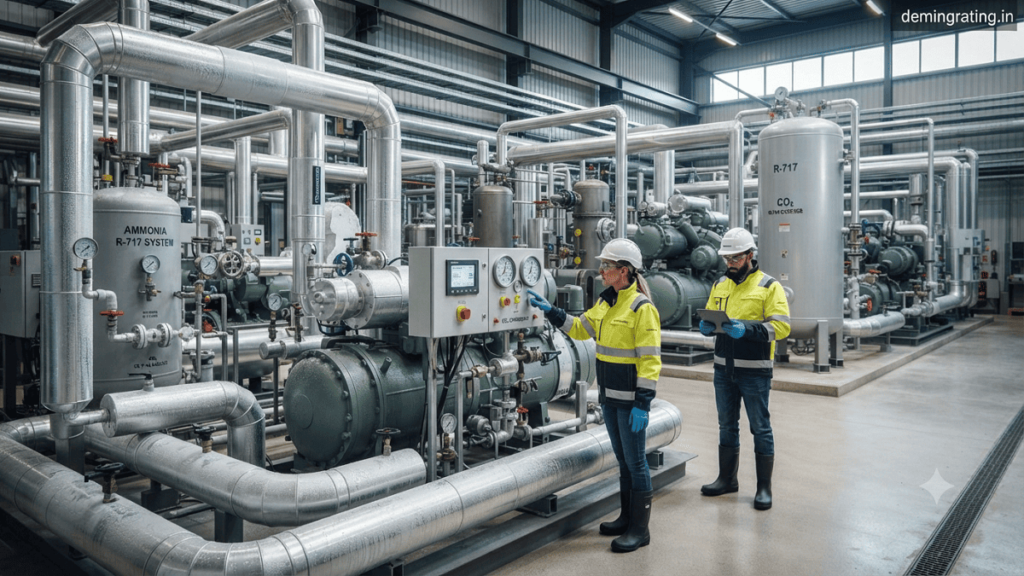
Industry Applications of Eco-Friendly Refrigerants and Halon Alternatives
Eco-friendly refrigerants and halon alternatives are increasingly being adopted across multiple industries as organizations work to reduce environmental impact, comply with international regulations, and improve energy efficiency. The transition is driven by the phase-out of ozone-depleting substances and the growing need to lower greenhouse gas emissions associated with cooling and fire-protection systems.
Commercial Refrigeration
Supermarkets, cold storage facilities, and food-processing plants are among the largest users of refrigerants. Many retailers are replacing high-GWP HFCs with carbon dioxide (R-744) and propane (R-290) systems. CO₂ is particularly suitable for centralized supermarket refrigeration because it has negligible direct climate impact, while propane is widely used in display cabinets and small commercial units due to its high efficiency.
Industrial Refrigeration
Industries such as dairy, beverage, chemical, and pharmaceutical manufacturing increasingly use ammonia (R-717). Ammonia offers excellent thermodynamic performance, zero ozone depletion potential, and negligible global warming potential. Modern industrial systems often combine ammonia with secondary refrigerants to improve safety and reduce refrigerant charge.
Air Conditioning and Heat Pumps
In residential and commercial buildings, manufacturers are adopting R-32 and newer HFO-based refrigerants with lower GWPs than traditional refrigerants. Heat pumps using propane or carbon dioxide are gaining popularity because they provide efficient heating and cooling while supporting building decarbonization goals.
Transportation and Cold Chain
Refrigerated trucks, containers, and distribution centers are critical components of the cold chain. Eco-friendly refrigerants help reduce emissions from food and medical logistics. CO₂ and low-GWP blends are increasingly used in transport refrigeration, improving sustainability across the supply chain.
Data Centers and Electronics
Data centers require reliable cooling and fire protection. For cooling, operators are adopting high-efficiency chillers with low-GWP refrigerants. For fire suppression, traditional halon systems have largely been replaced by FK-5-1-12 clean agents, inert gas systems, and advanced smoke-detection technologies that protect sensitive electronic equipment without leaving residue.
Aviation and Defense
Although some aircraft and military applications still rely on recycled halon for critical safety reasons, the industry is actively researching environmentally safer alternatives. New suppression agents and compartment-specific systems are being evaluated to maintain safety while reducing ozone impact.
Healthcare and Laboratories
Hospitals, research laboratories, and pharmaceutical facilities use eco-friendly refrigerants in medical refrigeration, vaccine storage, and HVAC systems. Clean-agent fire suppression systems are preferred in areas containing expensive equipment and sensitive materials.
Industry Benefits
The adoption of eco-friendly refrigerants and halon alternatives provides several advantages:
- Reduced greenhouse gas emissions
- Elimination of ozone-depleting substances
- Improved energy efficiency
- Compliance with environmental regulations
- Lower long-term operating costs
- Enhanced corporate sustainability performance
References
- UNEP OzonAction
- U.S. EPA – SNAP Program
- International Energy Agency – Cooling
Conclusion
Eco-friendly refrigerants and halon alternatives are transforming industries ranging from food retail and manufacturing to healthcare, data centers, and transportation. By adopting low-GWP refrigerants and environmentally responsible fire-suppression technologies, organizations can achieve regulatory compliance, reduce environmental impact, and improve operational efficiency, making sustainable cooling and fire protection a key component of future industrial development.
Ask FAQs
What is an eco-friendly refrigerant?
An eco-friendly refrigerant is a substance used in cooling systems that has zero or very low ozone depletion potential (ODP) and low global warming potential (GWP). Examples include ammonia (R-717), carbon dioxide (R-744), propane (R-290), and HFO refrigerants. These alternatives are designed to reduce environmental damage while maintaining efficient refrigeration and air-conditioning performance. More information is available from the U.S. EPA SNAP Program:
Why are traditional refrigerants being phased out?
Traditional refrigerants such as CFCs and HCFCs are being phased out because they damage the Earth’s ozone layer. Many older HFC refrigerants are also being reduced because they have a high GWP and contribute to climate change. International agreements such as the Montreal Protocol and the Kigali Amendment require countries to transition toward safer, low-GWP alternatives. See:
What are halons and why are they being replaced?
Halons are highly effective fire-suppression chemicals that contain bromine, which is extremely harmful to the ozone layer. Because of their high ozone depletion potential, the production of most halons has been phased out. They are being replaced by inert gas systems, clean agents such as FK-5-1-12, and water-mist technologies, which provide fire protection with much lower environmental impact.
Are eco-friendly refrigerants safe to use?
Yes, eco-friendly refrigerants are safe when used in properly designed and maintained systems. However, different refrigerants have different safety characteristics. Ammonia is toxic, hydrocarbons are flammable, and carbon dioxide operates at high pressure. For this reason, technicians must follow appropriate safety standards, use approved equipment, and receive proper training during installation and servicing.
Which industries benefit most from eco-friendly refrigerants and halon alternatives?
Industries that benefit significantly include supermarkets, food processing, cold storage, pharmaceuticals, healthcare, data centers, transportation, and commercial buildings. These sectors often have high cooling demands and strict safety requirements. Adopting low-GWP refrigerants and environmentally responsible fire-suppression systems can reduce emissions, improve energy efficiency, ensure regulatory compliance, and lower long-term operating costs. The International Energy Agency provides additional insights on sustainable cooling:
Table of Contents
Disclaimer: This article is intended for general informational and educational purposes only. While every effort has been made to ensure accuracy, readers should consult qualified HVAC, refrigeration, fire-safety, or environmental professionals and refer to applicable regulations and manufacturer guidelines before making technical, safety, or compliance-related decisions.