
Distributed Power Generation
Distributed power generation refers to the production of electricity close to the point where it is consumed rather than relying entirely on electricity generated at large, centralized power stations. In a green-home context, distributed generation can include rooftop solar photovoltaic systems, small-scale wind systems, micro-combined heat and power systems, battery-supported renewable-energy systems, and other appropriately sized local energy technologies.
For a green home, the most common application is rooftop solar power, where photovoltaic panels generate electricity directly at the residence. This electricity can be used by household appliances Distributed Power Generation and systems, while surplus generation may be stored in batteries or, where permitted, exported to the electricity grid.
Importance in Green Homes
Distributed power generation can reduce dependence on electricity supplied from the central grid and allow homeowners to generate part of their energy requirements on-site. When renewable sources such as solar are used, it can also reduce the environmental impact associated with conventional electricity generation.
The International Energy Agency recognises distributed solar PV as an important component of the global transition toward more flexible and decentralised electricity systems.
How It Works
A typical residential distributed-generation system may consist of:
- Solar photovoltaic panels
- An inverter to convert generated electricity into usable household electricity
- Electrical protection and monitoring equipment
- A bidirectional meter where grid export is permitted
- Battery storage, where appropriate
- The home’s existing electrical distribution system
During periods of solar generation, electricity can be consumed directly by the home. Depending on the system configuration, excess electricity can be stored or supplied to the grid. When generation is insufficient, Distributed Power Generation electricity can be drawn from storage or the grid.
Benefits
Distributed generation can provide several benefits to green-home projects. Generating electricity close to the point of consumption can reduce reliance on centralized supply and provide homeowners with greater visibility and control over energy use.
Solar generation can also reduce electricity purchased from the grid, potentially lowering long-term operating expenses. When combined with energy-efficiency measures such as efficient lighting, appliances, HVAC systems, insulation, shading, and passive cooling, a home can reduce its overall electricity demand before installing renewable generation.
Battery storage can provide additional flexibility by storing electricity when solar generation is high and making it available later. However, the economic and environmental benefits of batteries depend on their size, cost, lifespan, operating conditions, Distributed Power Generation and electricity tariff structure.
Role in Sustainable Residential Development
Distributed power generation can support a more resilient and decentralised energy system. For residential developments, rooftop solar can be incorporated into individual homes, apartment buildings, community facilities, or shared renewable-energy systems.
India’s Ministry of New and Renewable Energy provides information and programmes relating to grid-connected rooftop solar, making rooftop solar an important technology for distributed renewable-energy generation in the country.
Conclusion
Distributed power generation provides green homes with an opportunity to generate electricity closer to where it is consumed. Rooftop solar, battery storage, smart energy management, and efficient household systems can work together to reduce grid dependence and improve residential energy performance.
The most effective strategy is to combine distributed renewable generation with energy efficiency. Reducing unnecessary energy demand first allows a smaller renewable-energy system to meet a larger proportion of the home’s electricity requirements, creating a more economical and environmentally responsible energy solution.
Relevant resources:
International Energy Agency – Solar PV
Ministry of New and Renewable Energy – Rooftop Solar
#CleanEnergy
What Is Distributed Power Generation and How Does It Differ from Centralized Power Generation?
Distributed power generation is an approach in which electricity is generated close to the location where it is consumed rather than being produced exclusively at large, centralized power plants. It is an important concept in modern energy systems and sustainable building design because it allows homes, commercial buildings, industries, and communities to generate part or all of their electricity locally.
A common example is a rooftop solar photovoltaic (PV) system installed on a home. The panels generate electricity on-site, which can be used directly by household appliances and systems. Depending on the system design and local regulations, surplus electricity may be stored in batteries or exported to the electricity grid.
The International Energy Agency identifies distributed solar PV as an increasingly important part of modern electricity systems.
Distributed vs. Centralized Power Generation
The main difference is the location, scale, and method of electricity distribution.
| Feature | Distributed Power Generation | Centralized Power Generation |
|---|---|---|
| Generation location | Near consumers | Large, centralized power stations |
| Typical scale | Small to medium | Medium to very large |
| Common technologies | Rooftop solar, small wind, fuel cells, batteries | Large solar farms, coal, gas, nuclear, hydro |
| Electricity delivery | Shorter local networks | Long-distance transmission and distribution |
| Ownership | Homeowners, businesses, communities, utilities | Usually large utilities or power producers |
| Grid dependence | Can reduce dependence | Consumers generally depend on grid supply |
In a centralized system, electricity is generated at large power stations and transported through high-voltage transmission networks before reaching homes and businesses. This model benefits from economies of scale but requires extensive transmission and distribution infrastructure.
In contrast, distributed generation places smaller generating systems closer to consumers. This can reduce the distance electricity needs to travel and can provide greater flexibility in managing local energy demand.
Role in Green Homes
Distributed power generation is particularly relevant to green homes because it can allow buildings to generate renewable electricity on-site. Rooftop solar is currently the most practical and widely applicable option for many residential properties.
A home can combine solar PV with energy-efficient appliances, efficient HVAC systems, smart controls, and battery storage. This approach can reduce electricity purchased from the grid and improve the home’s overall energy performance.
The Ministry of New and Renewable Energy provides information on grid-connected rooftop solar systems in India.
Key Benefits
Distributed generation can provide several advantages:
- Increased use of renewable energy
- Reduced dependence on centralized electricity supply
- Potential reduction in electricity costs
- Local generation and consumption of electricity
- Greater flexibility when combined with battery storage
- Potential improvements in energy resilience
- Support for decentralized and cleaner energy systems
However, distributed generation also requires appropriate planning. Solar output varies with weather and time of day, while batteries add cost and require appropriate sizing and lifecycle management. Grid connection requirements and electricity regulations also vary by location.
Conclusion
Distributed power generation means producing electricity at or near the point of consumption, while centralized generation relies on large power plants that supply electricity through extensive transmission and distribution networks.
For green homes, distributed generation—particularly rooftop solar combined with energy efficiency and, where appropriate, battery storage—can provide a practical way to generate cleaner electricity locally. Rather than completely replacing the centralized grid, distributed generation can complement it by creating a more flexible, decentralized, and potentially resilient energy system.
#SmartGrid
What Renewable Energy Technologies Can Be Used for Distributed Power Generation?
Renewable energy technologies are well suited to distributed power generation because they can produce electricity close to where it is consumed. Instead of depending entirely on large centralized power plants, homes, commercial buildings, farms, institutions, and communities can install appropriately sized renewable-energy systems to generate electricity locally.
For green homes, the most practical technologies include solar photovoltaic systems, small wind turbines, micro-hydropower, biomass and biogas systems, and renewable-energy systems integrated with battery storage. The suitability of each option depends on local climate, available resources, site conditions, electricity demand, space, and applicable regulations.
1. Solar Photovoltaic Systems
Solar photovoltaic (PV) systems are among the most widely applicable distributed-generation technologies. PV panels convert sunlight directly into electricity and can be installed on rooftops, terraces, parking structures, façades, or suitable ground-mounted locations.
For residential buildings, rooftop solar is particularly attractive because it uses otherwise underutilized space and can generate electricity close to household loads. The International Energy Agency identifies solar PV as a major contributor to the expansion of renewable electricity capacity worldwide.
2. Small Wind Energy Systems
Small wind turbines can provide distributed electricity where suitable wind resources are available. They are more appropriate for locations with adequate and consistent wind speeds and sufficient open space.
Unlike rooftop solar, small wind systems require careful assessment of wind conditions, turbine placement, noise, structural requirements, and local planning considerations. They may be particularly useful in rural, coastal, or other locations with favorable wind resources.
3. Micro-Hydropower
Micro-hydropower systems generate electricity from flowing or falling water. They can be highly effective in locations with a reliable water source and suitable elevation difference.
Because electricity generation can potentially continue for long periods when adequate water flow is available, micro-hydropower can provide relatively consistent local generation. However, it requires appropriate site conditions and consideration of water-resource, environmental, and regulatory requirements.
4. Biomass and Biogas Generation
Biomass and biogas can also support distributed electricity generation. Biogas produced from organic waste can be used in an engine-generator system to produce electricity, while biomass systems can use suitable organic materials as fuel.
These technologies can be particularly valuable for agricultural facilities, food-processing operations, farms, and institutions that have a consistent supply of organic waste. They can combine waste management with local energy production when appropriately designed and operated.
5. Renewable Energy with Battery Storage
Battery storage does not generate electricity itself, but it can significantly improve the usefulness of distributed renewable generation. A battery can store excess electricity generated during periods of high renewable output and supply it when generation is lower.
For example, a residential solar system can generate electricity during daylight hours, store surplus electricity, and provide stored power during evening periods. This can improve self-consumption and provide greater flexibility in managing household energy demand.
6. Hybrid Distributed Energy Systems
Different renewable technologies can also be combined into hybrid systems. For example, a building might use solar PV, battery storage, and a small wind system where local conditions support all three.
Hybrid systems can help balance variable renewable generation and improve the reliability of local electricity supply. Smart energy-management systems can further coordinate generation, storage, and household loads.
Application in Green Homes
For most urban green homes, rooftop solar PV combined with energy-efficient appliances, efficient HVAC systems, smart controls, and appropriately sized battery storage is likely to be more practical than technologies requiring specialized natural resources.
India’s Ministry of New and Renewable Energy provides information on grid-connected rooftop solar systems, while the International Renewable Energy Agency provides broader information on renewable-energy technologies and deployment.
Conclusion
The main renewable technologies suitable for distributed power generation include solar PV, small wind, micro-hydropower, biomass, biogas, and hybrid renewable-energy systems supported by battery storage. Their suitability varies considerably by location and application.
For residential green buildings, solar PV is generally the most accessible option because it can be integrated directly into rooftops and other building surfaces. When combined with energy efficiency and smart energy management, distributed renewable generation can reduce grid dependence, lower operational energy costs, and support a more sustainable and resilient energy system.
#EnergyResilience
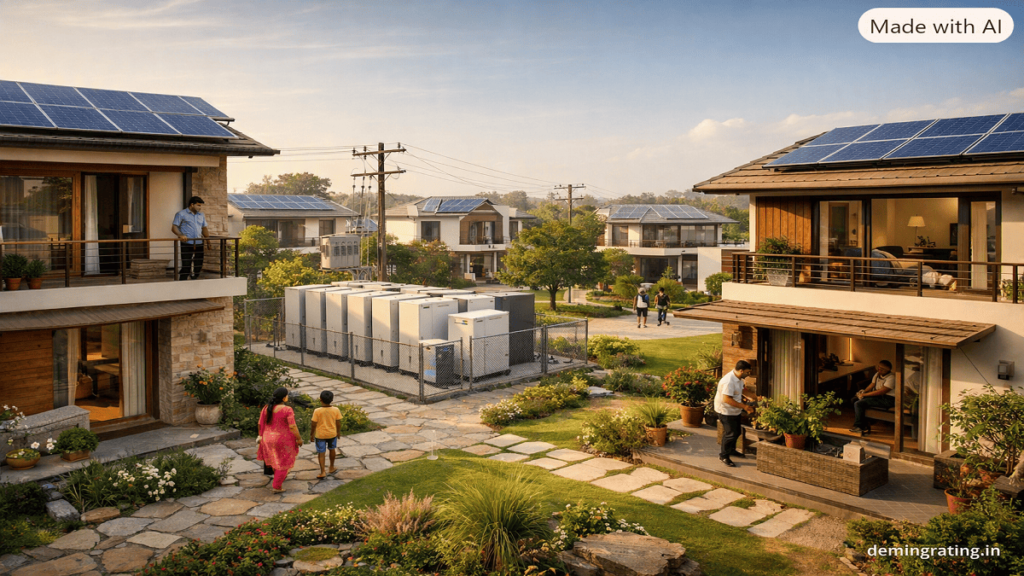
How Can Distributed Generation Improve Energy Efficiency, Reliability, and Grid Resilience?
Distributed generation can strengthen modern energy systems by producing electricity closer to where it is consumed. Instead of relying exclusively on large power plants and long-distance transmission networks, distributed resources such as rooftop solar, small wind systems, battery storage, and other local generation technologies can supply electricity directly to homes, businesses, and communities.
When properly designed and managed, distributed generation can improve energy efficiency, reliability, and grid resilience. However, these benefits depend on system design, grid infrastructure, local renewable resources, and effective energy management.
Improving Energy Efficiency
Generating electricity close to the point of consumption can reduce some electricity losses associated with transmission and distribution. In a centralized system, electricity may travel considerable distances before reaching the consumer. Local generation can reduce the distance between generation and consumption, potentially lowering network losses.
Distributed generation can also work alongside energy-efficiency measures. For example, a green home can combine rooftop solar with efficient lighting, appliances, HVAC systems, insulation, shading, and smart controls. Reducing the home’s electricity demand means that a smaller renewable-energy system can satisfy a greater proportion of its needs.
Smart energy-management systems can further improve performance by shifting flexible loads toward periods when renewable generation is available.
The International Energy Agency highlights the growing importance of distributed energy resources, flexibility, and digitalisation in modern electricity systems.
Improving Reliability
Distributed generation can provide an additional source of electricity when grid supply is interrupted or constrained. A system incorporating solar PV, battery storage, and appropriate controls can potentially continue supplying selected household loads during a grid outage.
This capability depends on system configuration. A conventional grid-connected solar installation may shut down during a power outage for safety reasons. To provide backup power, the system generally requires appropriate inverter technology, energy storage, and islanding or backup functionality.
For critical facilities, distributed generation can therefore provide an additional layer of energy security.
Strengthening Grid Resilience
Grid resilience refers to the ability of an electricity system to withstand, respond to, and recover from disruptions caused by severe weather, equipment failures, natural disasters, or other events.
Distributed energy resources can contribute to resilience by creating multiple sources of local generation rather than depending entirely on a small number of centralized power stations and major transmission corridors.
At a community scale, multiple distributed resources can be coordinated through a microgrid. A microgrid can operate alongside the main grid and, when properly designed, may disconnect and continue serving selected local loads using available generation and storage.
The U.S. Department of Energy identifies distributed energy resources, microgrids, energy storage, and advanced grid technologies as important components of grid modernization and resilience.
Role of Battery Storage
Battery storage can significantly enhance the benefits of distributed generation. Solar generation is highest during daylight hours, while household electricity demand may increase in the evening. Batteries can store surplus electricity and make it available when required.
Storage can also provide backup power, manage peak demand, and help balance fluctuations in renewable generation.
Important Considerations
Distributed generation does not automatically improve grid performance. Large amounts of variable renewable generation can create challenges involving voltage regulation, power quality, reverse power flows, and system coordination.
These challenges can be addressed through smart inverters, advanced metering, energy-management systems, demand response, battery storage, and appropriate grid planning.
Conclusion
Distributed generation can improve energy efficiency by bringing electricity production closer to consumers and reducing certain network losses. It can improve reliability by providing additional local electricity sources, particularly when paired with battery storage. It can also strengthen grid resilience by diversifying generation and enabling microgrids to maintain selected services during disruptions.
For green homes, the strongest approach is to combine distributed renewable generation, energy efficiency, battery storage, smart controls, and appropriate grid connectivity. Together, these technologies can create homes that use energy more efficiently while becoming more flexible and resilient within the wider electricity system.
#GreenEnergy
What Are the Environmental and Economic Benefits of Integrating Distributed Renewable Energy Systems?
Integrating distributed renewable energy systems can provide significant environmental and economic benefits for homes, businesses, and communities. These systems generate electricity close to the point of consumption using technologies such as rooftop solar photovoltaic (PV), small wind turbines, micro-hydropower, and renewable-energy systems supported by battery storage. For green homes, distributed renewable generation can complement energy-efficiency measures and reduce dependence on conventional grid electricity.
Environmental Benefits
The most important environmental benefit is the potential reduction in greenhouse-gas emissions. Renewable technologies such as solar and wind generate electricity without directly burning fossil fuels during operation. Greater use of renewable electricity can therefore reduce reliance on fossil-fuel-based generation, depending on the electricity mix being displaced.
Distributed generation can also reduce some transmission and distribution losses because electricity is produced closer to where it is consumed. The environmental advantage depends on system design, renewable-resource availability, equipment manufacturing, and lifecycle impacts.
Rooftop solar can make particularly effective use of existing building surfaces without requiring large additional areas of land. This makes it suitable for residential buildings, commercial properties, schools, and other structures.
The International Energy Agency identifies solar PV as a major source of renewable electricity expansion, while the International Renewable Energy Agency provides extensive information on renewable-energy deployment and sustainability.
Economic Benefits
Distributed renewable energy can reduce the amount of electricity purchased from the grid. For a homeowner, generating electricity on-site can potentially lower long-term electricity expenses, although actual savings depend on installation costs, electricity tariffs, system performance, financing, maintenance, and applicable policies.
Solar PV systems have relatively low operating requirements after installation because they have no fuel cost. This can provide greater predictability compared with electricity generation dependent on purchased fossil fuels.
Battery storage can provide additional economic value by storing surplus renewable electricity for later use. Depending on tariff structures, storage can help households reduce electricity purchases during expensive periods. However, batteries involve additional upfront costs and have a finite operating life, so their financial benefits should be evaluated carefully.
Distributed generation can also create economic activity through the installation, operation, maintenance, and servicing of renewable-energy systems. Growing deployment can support local employment and develop technical expertise in renewable energy, electrical systems, energy management, and storage technologies.
Energy Resilience and Long-Term Value
When renewable generation is combined with battery storage and appropriate controls, it can improve a building’s ability to manage electricity disruptions and changing energy demand. A properly designed system may provide backup electricity for selected loads during grid outages.
For green homes, distributed renewable generation can also increase long-term energy performance when integrated with efficient HVAC systems, insulation, passive cooling, efficient lighting, appliances, and smart controls. Reducing energy demand before installing renewable generation can allow a smaller system to meet a larger percentage of the home’s electricity requirements.
India’s Ministry of New and Renewable Energy provides information on grid-connected rooftop solar, which is one of the most accessible forms of distributed renewable generation for residential buildings.
Important Considerations
Distributed renewable energy is not automatically the most economical or environmentally beneficial option in every situation. A proper assessment should consider solar or wind resources, building energy demand, available installation space, equipment lifespan, maintenance, battery requirements, grid-connection rules, financing, and local electricity tariffs.
Conclusion
Integrating distributed renewable energy systems can provide a combination of environmental protection, lower operating costs, improved energy independence, potential resilience, and local economic benefits. For green homes, rooftop solar combined with energy efficiency and, where appropriate, battery storage offers a practical pathway toward cleaner and more efficient electricity use.
The strongest results come from treating renewable generation as part of an integrated energy strategy rather than as a standalone technology. Reducing energy demand, generating renewable electricity locally, managing loads intelligently, and using storage where economically justified can create a more sustainable and financially efficient residential energy system.
#EnergyEfficiency
What Are the Key Challenges in Planning, Operating, and Maintaining Distributed Power Generation Systems?
Distributed power generation can improve energy independence, efficiency, and resilience, but successfully implementing these systems requires careful planning, operation, and maintenance. Systems such as rooftop solar PV, small wind turbines, battery storage, biogas generators, and hybrid renewable-energy installations interact with building loads and, in many cases, the wider electricity grid. Their performance therefore depends on both the technology and the way the system is designed and managed.
1. Accurate System Planning and Sizing
One of the first challenges is determining the appropriate generation capacity. An oversized system can increase upfront costs and leave renewable capacity underutilized, while an undersized system may not meet the building’s energy requirements.
Designers need to evaluate electricity demand, seasonal variations, available roof or land area, solar or wind resources, future energy requirements, battery capacity, and grid-connection conditions.
For green homes, energy-efficiency measures should ideally be considered before sizing the renewable-energy system. Efficient HVAC systems, lighting, appliances, insulation, and passive design can reduce the required generation capacity.
2. Variable Renewable Generation
Solar and wind generation are naturally variable. Solar output changes with daylight and weather, while wind generation depends on local wind conditions.
This variability can make it difficult to match generation with electricity demand. Battery storage, demand response, smart controls, and grid connectivity can help balance these fluctuations.
The International Energy Agency highlights the increasing importance of flexibility and grid integration as variable renewable generation expands.
3. Grid Integration and Power Quality
When distributed systems are connected to the electricity grid, they must operate safely and reliably alongside existing infrastructure. Issues can include voltage fluctuations, frequency management, reverse power flows, protection coordination, and synchronization.
Advanced inverters, monitoring systems, protection equipment, and appropriate grid-interconnection standards can help address these challenges.
4. Battery Storage and Energy Management
Battery storage can improve the usefulness of renewable generation, but it introduces additional considerations. Batteries have upfront costs, limited operating lives, temperature requirements, and specific charging and discharging characteristics.
Energy-management systems must coordinate generation, storage, household loads, and grid electricity effectively. Poor control strategies can reduce the expected economic and energy benefits.
5. Maintenance and Equipment Reliability
Distributed systems contain multiple components that require inspection and maintenance. Solar systems may require monitoring of panels, wiring, inverters, mounting structures, and electrical connections. Battery systems require appropriate monitoring and safety management.
Small wind turbines, generators, and other mechanical systems may require more regular servicing because they contain moving components.
Preventive maintenance can identify problems before they cause significant performance losses or equipment failures.
6. Skilled Personnel and Safety
Proper installation and servicing require qualified professionals. Electrical systems, batteries, generators, and high-voltage equipment can present serious safety risks if incorrectly installed or maintained.
Training is therefore essential for installers, operators, maintenance personnel, and building owners.
7. Regulatory and Financial Challenges
Distributed-generation projects may be affected by permitting requirements, grid-interconnection procedures, electricity tariffs, net-metering or other compensation mechanisms, building regulations, and local renewable-energy policies.
The Ministry of New and Renewable Energy provides information related to grid-connected rooftop solar in India, including residential applications.
Conclusion
The major challenges associated with distributed power generation include accurate system sizing, variable renewable output, grid integration, energy storage, maintenance, safety, skilled workforce requirements, and regulatory and financial considerations.
Successful implementation requires an integrated approach rather than simply installing a renewable-energy generator. Proper planning, high-quality equipment, intelligent controls, preventive maintenance, qualified installation, and compliance with applicable grid requirements can help ensure that distributed generation delivers its expected environmental, economic, and resilience benefits.
For green homes, the most effective strategy is to combine energy efficiency, distributed renewable generation, appropriate storage, and smart energy management. This approach can reduce unnecessary energy demand while making locally generated electricity more useful and reliable.
#SolarPower
Case Study of Distributed Power Generation
Distributed power generation is increasingly being used in India to bring electricity production closer to consumers. A useful example is the Distributed Generation and Supply of Renewable Energy (DG&S) model studied in rural Maharashtra, where local renewable-energy generation was considered as an alternative to relying entirely on centralized electricity supply.
Background
The World Bank studied the potential for decentralized renewable-energy generation and distribution in the Radhanagari subdivision of Kolhapur district, Maharashtra. At the time of the study, rural consumers experienced only around 8–10 hours of electricity supply per day, creating significant costs for households and businesses that relied on alternatives such as kerosene and diesel. (World Bank)
The proposed model combined local renewable electricity generation with local distribution. Rather than generating electricity at a distant power station and transmitting it over long distances, a local operator would generate electricity within or near the service area and distribute it to consumers.
Proposed Distributed Generation Model
The DG&S model was designed around three key elements:
- Local renewable-energy generation
- Local electricity distribution
- Connection to the wider electricity grid
The local operator would generate electricity using available renewable resources, distribute a defined portion within the designated service area, and supply surplus electricity to the grid. The grid could also provide electricity when local generation was insufficient.
This hybrid structure is important because distributed generation does not necessarily require complete disconnection from the centralized grid. Instead, local generation and centralized electricity infrastructure can work together.
Expected Performance Improvements
The World Bank’s analysis estimated that implementing the model in Radhanagari could potentially increase electricity availability to 24 hours per day while reducing consumers’ coping costs. It also projected that transmission and distribution losses could fall from approximately 36.81% to 15%.
The model therefore demonstrated how distributed generation could potentially address several problems simultaneously:
- Improve electricity availability
- Reduce dependence on diesel and kerosene
- Lower certain transmission and distribution losses
- Increase local renewable-energy use
- Improve reliability for rural consumers
- Support local economic activity
The study also identified substantial unused wind and biomass resources in Maharashtra, indicating that locally available renewable resources could support decentralized electricity generation. (World Bank)
Broader Indian Experience
India has also developed solar mini-grids and other decentralized renewable-energy systems in areas where conventional grid infrastructure is difficult or expensive to extend.
A World Bank review reports that Husk Power Systems operates more than 200 community solar mini-grids across India, Nigeria, and Tanzania, including more than 130 mini-grids in Bihar and Uttar Pradesh with approximately 8.5 MW of installed capacity. These systems provide electricity to more than 10,000 small businesses. (World Bank)
Such systems demonstrate how distributed generation can support households and businesses while creating local energy infrastructure.
Lessons for Green Homes
The Maharashtra case provides several lessons applicable to green residential development. First, generating electricity close to consumers can potentially reduce some network losses. Second, locally generated renewable electricity can improve energy availability and reduce dependence on conventional fuels. Third, distributed generation works particularly well when combined with appropriate distribution infrastructure, monitoring, maintenance, and grid coordination.
For individual green homes, the same principle can be applied through rooftop solar PV, battery storage, smart energy controls, and efficient electrical appliances. At the community level, multiple homes can potentially participate in shared renewable-energy or microgrid arrangements.
Conclusion
The Maharashtra distributed-generation case demonstrates the potential of local renewable generation combined with local electricity distribution and grid connectivity. The proposed Radhanagari model showed that decentralized generation could improve electricity availability, reduce certain network losses, and lower the economic burden associated with unreliable power supply. (World Bank)
The broader Indian experience with solar mini-grids further demonstrates that distributed generation can serve households, businesses, and communities where conventional centralized supply may be less effective.
For green homes, distributed generation represents an opportunity to move from being purely electricity consumers toward becoming active energy producers and managers. When integrated with energy efficiency, storage, smart controls, and reliable grid connections, it can contribute to a more resilient, efficient, and sustainable residential energy system.
Relevant external resources:
- World Bank – Localized Generation and Distribution of Power in Rural India
- World Bank – Solar Mini-Grids and Distributed Energy in India
- Ministry of New and Renewable Energy – Rooftop Solar
#DistributedEnergy
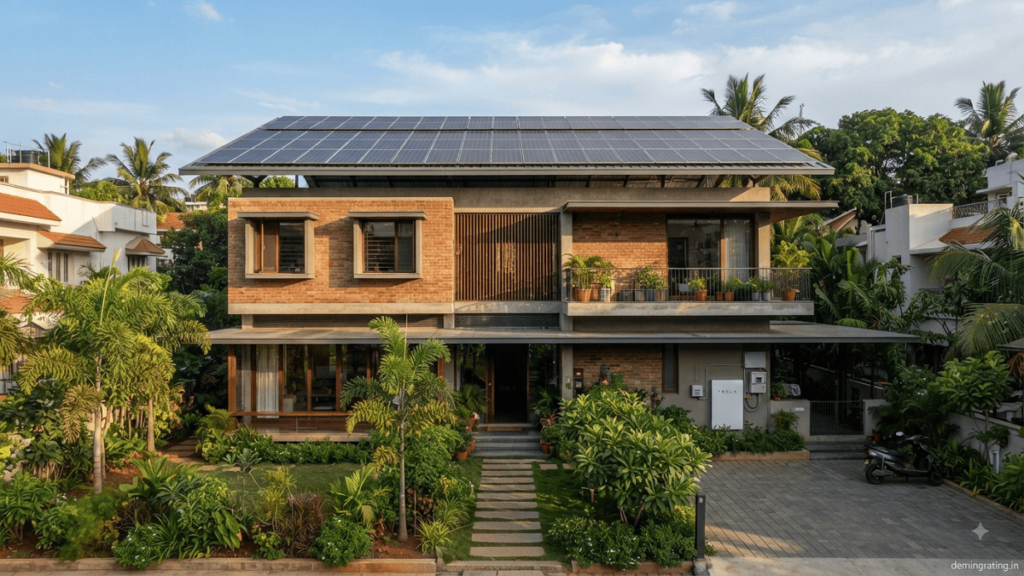
White Paper on Distributed Power Generation
Executive Summary
Distributed power generation is transforming the conventional electricity model by moving part of power production closer to the point of consumption. Instead of relying exclusively on large centralized power stations, distributed energy resources can include rooftop solar photovoltaic systems, small wind turbines, battery storage, biogas systems, fuel cells, and other appropriately sized local generation technologies.
The International Energy Agency describes distributed energy resources as small-scale resources generally located near electricity consumers, including rooftop solar and battery storage. These resources can provide consumer, system, and resilience benefits, but they also require appropriate grid planning, regulation, monitoring, and flexibility. (IEA)
For green homes, distributed power generation provides an opportunity to combine on-site renewable electricity, energy efficiency, storage, and intelligent energy management to create more sustainable residential energy systems.
1. Introduction
Traditional electricity systems are predominantly based on centralized generation. Large power plants produce electricity that travels through transmission and distribution networks before reaching consumers. Distributed generation introduces smaller generation resources within or near the electricity distribution network.
India has significant potential for distributed renewable generation, particularly solar power. The Ministry of New and Renewable Energy notes that solar PV can be deployed on a distributed basis and can support both grid-connected and off-grid applications. (Ministry of New and Renewable Energy)
This approach is especially relevant to residential development because rooftops and other building surfaces can accommodate solar generation without requiring separate generation sites.
2. Major Distributed Generation Technologies
The most common technologies include:
- Rooftop solar photovoltaic systems
- Small wind turbines
- Micro-hydropower systems
- Biomass and biogas generation
- Fuel cells using appropriate fuels
- Battery energy storage integrated with renewable generation
- Hybrid renewable-energy systems
- Community-scale renewable-energy systems and microgrids
Among these, rooftop solar is particularly suitable for many urban and residential applications because electricity can be generated directly at the building where it is consumed.
India’s rooftop solar programme supports grid-connected rooftop solar and provides financial assistance mechanisms for eligible residential consumers. (Ministry of New and Renewable Energy)
3. Contribution to Energy Efficiency
Distributed generation can support better energy management by bringing electricity production closer to consumers. Local generation can reduce some electricity losses associated with transporting power through distribution networks.
Its effectiveness increases when generation is combined with energy-efficiency measures. A green home can first reduce electricity demand through efficient HVAC systems, lighting, appliances, insulation, shading, and passive design and then meet part of the remaining demand through renewable generation.
Smart controls can further coordinate generation and consumption by operating flexible loads when renewable electricity is available.
4. Environmental Benefits
The environmental benefits depend strongly on the technology used. Renewable distributed generation, particularly solar and wind, can reduce dependence on fossil-fuel-based electricity generation and associated operational greenhouse-gas emissions.
Distributed solar can also make use of existing rooftops and building surfaces. This can provide renewable electricity without necessarily requiring dedicated land for a separate power plant.
The environmental performance should nevertheless be evaluated across the equipment lifecycle, including manufacturing, transportation, installation, maintenance, replacement, and end-of-life management.
5. Reliability and Grid Resilience
Distributed generation can diversify electricity supply by providing multiple generation sources rather than depending exclusively on centralized facilities and long transmission corridors.
When combined with battery storage and appropriate controls, distributed systems can potentially maintain selected electrical loads during grid disruptions. The IEA identifies distributed resources as potentially valuable for resilience and notes that decentralized assets can help maintain essential services when interconnected systems are disrupted. (IEA)
At a larger scale, multiple distributed resources can be coordinated through microgrids or virtual power plants.
6. Economic Benefits
Distributed generation can provide economic benefits by reducing electricity purchases from the grid, particularly when renewable electricity is consumed directly on-site.
Battery storage can increase the value of locally generated electricity by shifting consumption from periods of high renewable generation to later periods. Distributed energy resources can also reduce peak demand and, when coordinated effectively, potentially reduce pressure on electricity networks. (IEA)
However, economic performance depends on capital costs, financing, electricity tariffs, system output, maintenance, equipment lifespan, incentives, and applicable grid-export arrangements.
7. Grid Integration Challenges
Rapid growth in distributed generation also introduces technical challenges. Solar generation varies with weather and daylight, while electricity demand changes throughout the day.
High levels of distributed PV can create issues such as local voltage increases, reverse power flows, protection coordination requirements, and greater need for system flexibility. The IEA recommends improved monitoring, advanced inverters, smart meters, flexible connections, and updated grid codes to help integrate distributed resources effectively. (IEA)
Consequently, distributed generation should be treated as part of the wider electricity system rather than as an isolated building technology.
8. Battery Storage and Smart Controls
Energy storage is increasingly important because renewable generation and electricity demand do not always occur at the same time.
For example, a residential solar system may produce its highest output during the day while household electricity consumption increases during the evening. Batteries can store surplus electricity and make it available later.
Smart energy-management systems can also coordinate solar generation, batteries, appliances, HVAC systems, electric vehicles, and grid electricity. This can increase self-consumption and provide greater flexibility.
9. Indian Policy and Application
India has established several programmes supporting decentralized renewable-energy deployment. The rooftop solar programme provides a framework for grid-connected residential solar systems. (Ministry of New and Renewable Energy)
The PM-KUSUM programme also includes decentralized renewable-energy plants. Its Component-A provides for renewable-energy plants of 500 kW to 2 MW, developed by farmers, groups, cooperatives, panchayats, and other eligible entities. (Ministry of New and Renewable Energy)
These initiatives demonstrate that distributed generation can be applied at multiple scales, from individual residences to agricultural and community-level systems.
10. Application in Green Homes
For green-home projects, distributed power generation should be integrated with the building’s overall energy strategy. A comprehensive approach can include:
- Reducing energy demand through passive design.
- Improving insulation and shading.
- Installing efficient HVAC and appliances.
- Installing rooftop solar PV.
- Adding battery storage where technically and economically justified.
- Using smart meters and energy-management controls.
- Monitoring generation and consumption.
- Maintaining equipment throughout its operational life.
This integrated approach can help homes become both energy-efficient consumers and local renewable-energy producers.
11. Future Outlook
The future of distributed power generation will increasingly involve digitalisation, battery storage, smart inverters, demand response, electric vehicles, and virtual power plants.
The IEA reports that distributed resources are changing electricity systems from predominantly one-way flows toward more interactive systems in which consumers can generate, store, manage, and potentially export electricity. (IEA)
For India, continued growth in rooftop solar and decentralized renewable generation can support broader goals relating to energy security, renewable-energy deployment, and sustainable development.
Conclusion
Distributed power generation represents a significant shift toward a more decentralized, flexible, and renewable-oriented electricity system. Rooftop solar, battery storage, small-scale renewable generation, smart controls, and microgrids can provide environmental, economic, efficiency, and resilience benefits when properly integrated.
For green homes, the strongest strategy is not simply to install renewable generation but to combine low energy demand, efficient equipment, local renewable generation, intelligent controls, and appropriate storage.
Successful implementation requires careful system sizing, qualified installation, grid coordination, maintenance, regulatory compliance, and long-term performance monitoring. With these elements in place, distributed power generation can play an important role in developing sustainable and future-ready residential energy systems.
Relevant External Resources
- International Energy Agency – Distributed Energy Resources
- Ministry of New and Renewable Energy – Grid-Connected Rooftop Solar Programme
- Ministry of New and Renewable Energy – Solar Overview
- Ministry of New and Renewable Energy – PM-KUSUM
#RenewableEnergy
Industry Application of Distributed Power Generation
Distributed power generation is increasingly being adopted across industries to produce electricity close to the point of consumption. Instead of depending entirely on large centralized power stations, industrial facilities can use rooftop solar, small wind systems, biomass and biogas generation, battery storage, combined heat and power, and hybrid energy systems to meet part of their electricity requirements locally.
1. Manufacturing Industry
Manufacturing facilities often have substantial and continuous electricity demand. Distributed generation can help factories produce part of their electricity on-site, reducing dependence on grid supply.
Large factory rooftops can accommodate solar photovoltaic systems, while battery storage can help manage variations between renewable generation and industrial demand. Energy-management systems can coordinate generation with production schedules and other electrical loads.
For industries operating during daylight hours, rooftop solar can be particularly useful because electricity generation can coincide with daytime manufacturing operations.
2. Commercial Buildings
Office buildings, shopping centres, hotels, educational institutions, and hospitals can integrate distributed generation into their electrical infrastructure.
Rooftop solar can supply common-area lighting, HVAC systems, elevators, pumps, and other building loads. Battery storage can provide additional flexibility by storing excess generation and supplying electricity when solar output decreases.
The International Energy Agency identifies distributed energy resources such as solar PV and battery storage as increasingly important components of modern electricity systems.
3. Agriculture and Food Processing
Agricultural facilities can use distributed renewable generation for irrigation pumps, cold storage, processing equipment, lighting, and other electrical requirements.
Solar-powered pumping systems can reduce dependence on conventional electricity or diesel-powered pumps. Biomass and biogas systems can also be valuable where farms or food-processing facilities generate sufficient organic waste.
India’s Ministry of New and Renewable Energy supports decentralized renewable-energy applications through programmes such as PM-KUSUM, which includes renewable-energy plants and solar-powered agricultural applications.
4. Data Centres and Technology Facilities
Data centres require reliable electricity because even short interruptions can affect critical operations. Distributed generation can provide an additional layer of energy security when combined with battery storage, backup systems, and advanced controls.
Renewable generation can also help data centres address sustainability targets by supplying a portion of their electricity requirements from on-site sources.
5. Healthcare Facilities
Hospitals and healthcare facilities have critical loads that must remain operational during electricity disruptions. Distributed generation can support essential services when appropriately designed with energy storage, backup generation, automatic controls, and suitable electrical protection.
Solar PV and battery systems can supplement conventional backup arrangements, while microgrids can coordinate multiple local energy resources.
6. Industrial and Process Energy
Industries with simultaneous electricity and thermal-energy requirements can use combined heat and power (CHP) systems to generate electricity while recovering useful heat.
Although CHP may use non-renewable fuels in some applications, renewable fuels such as biogas can enable lower-carbon distributed generation where appropriate resources are available.
7. Cold Storage and Refrigeration
Cold-storage facilities require continuous electricity for compressors, fans, pumps, controls, and monitoring systems. Distributed solar generation can help offset daytime electricity consumption, while battery storage can provide additional flexibility.
For temperature-sensitive operations, reliable energy management is particularly important because prolonged electricity interruptions can cause product losses.
8. Mining and Remote Industrial Sites
Remote mines, construction sites, telecommunications facilities, and other isolated operations may face high electricity costs or limited grid access. Hybrid distributed systems combining solar, wind, batteries, and suitable backup generation can reduce dependence on fuel deliveries and improve local energy availability.
9. Microgrids and Industrial Parks
Multiple businesses can coordinate distributed energy resources through a microgrid. Such systems can combine renewable generation, storage, controllable loads, and grid connections.
A microgrid can improve operational flexibility and, where designed for islanded operation, potentially continue supplying selected loads during a wider grid outage.
The U.S. Department of Energy identifies microgrids, distributed energy resources, energy storage, and advanced controls as important elements of modern grid infrastructure.
Key Industrial Benefits
The major applications of distributed generation can provide industries with:
- Reduced dependence on grid electricity
- Greater use of renewable energy
- Potential reduction in electricity costs
- Improved energy resilience
- Better control over energy consumption
- Reduced exposure to certain electricity-price fluctuations
- Potential reduction in transmission and distribution losses
- Support for corporate sustainability objectives
However, successful implementation requires appropriate system sizing, grid-interconnection planning, electrical protection, monitoring, maintenance, and compliance with applicable regulations.
Conclusion
Distributed power generation has applications across manufacturing, commercial buildings, agriculture, healthcare, data centres, cold storage, mining, remote facilities, and industrial parks. Solar PV is particularly versatile, while biomass, biogas, wind, battery storage, CHP, and hybrid systems can provide additional solutions depending on site conditions.
For industry, the greatest value comes from integrating distributed generation with energy efficiency, smart controls, storage, demand management, and reliable grid connections. This approach can transform industrial facilities from passive electricity consumers into active participants in a more flexible and decentralized energy system.
Relevant resources: International Energy Agency – Distributed Energy Resources | Ministry of New and Renewable Energy – PM-KUSUM | U.S. Department of Energy – Grid Modernization
#DistributedPowerGeneration
Ask FAQs
What is distributed power generation?
Distributed power generation is the production of electricity close to where it is consumed. Examples include rooftop solar PV, small wind turbines, biogas systems, and battery-supported renewable-energy systems.
How does distributed generation benefit green homes?
It allows homes to generate electricity locally, particularly through rooftop solar. When combined with energy-efficient appliances, HVAC systems, and smart controls, it can reduce grid electricity consumption and support lower operating costs.
What renewable technologies can be used for distributed generation?
Common options include solar photovoltaic systems, small wind turbines, micro-hydropower, biomass, biogas, and hybrid renewable-energy systems. The appropriate technology depends on site conditions, energy demand, available resources, and local regulations.
Can distributed generation improve electricity reliability?
Yes. Distributed generation can provide an additional local electricity source. When combined with battery storage and suitable controls, it can support selected loads during grid interruptions and contribute to greater energy resilience.
What are the main challenges of distributed power generation?
Key challenges include system sizing, variable renewable generation, battery costs, grid integration, equipment maintenance, safety, regulatory requirements, and the need for qualified installation and servicing. Proper planning and energy management are essential for achieving reliable performance.
Table of Contents
Disclaimer: This content is for general informational purposes only. Distributed power generation systems should be designed, installed, and maintained by qualified professionals in accordance with applicable technical standards, safety requirements, and local regulations.