
Eco-Friendly Wood-Based Materials: Sustainable Choices for Modern Construction and Design
Eco-friendly wood-based materials are becoming increasingly important in construction, interior design, furniture manufacturing, and product development as industries look for alternatives with lower environmental impacts. These materials use wood, wood fibers, residues, or other renewable resources to create practical products while making more efficient use of forest resources.
Traditional solid wood remains a valuable renewable material, but responsible sourcing is essential. Wood certified through organizations such as the Forest Stewardship Council (FSC) can help buyers identify products originating from responsibly managed forests. Choosing certified and legally sourced wood is an important step toward reducing the environmental risks associated with unsustainable forestry.
Types of Eco-Friendly Wood-Based Materials
Several engineered wood products can contribute to more resource-efficient construction. Plywood, oriented strand board (OSB), laminated veneer lumber (LVL), glulam, particleboard, and medium-density fiberboard (MDF) are produced by combining veneers, strands, fibers, or particles with adhesives and pressure. According to the U.S. Environmental Protection Agency (EPA), composite wood products include materials such as hardwood plywood, MDF, Eco-Friendly Wood and particleboard.
One advantage of engineered wood is that manufacturers can use smaller pieces, wood residues, and fibers that may not be suitable for conventional solid timber. This can improve material efficiency Eco-Friendly Wood and provide consistent dimensions and performance for different applications.
Reclaimed wood is another environmentally attractive option. It gives previously used timber a second life, potentially reducing demand for newly harvested materials. Similarly, products made from agricultural fibers or rapidly renewable plant-based materials can expand the range of alternatives available to designers and manufacturers.
Environmental and Health Considerations
The sustainability of a wood-based product depends on more than simply its wood content. Forest management, manufacturing processes, transportation, durability, recyclability, and end-of-life disposal all influence its overall environmental performance.
Adhesives are another important consideration. Some composite wood products can release formaldehyde from resins used during manufacturing. The EPA regulates formaldehyde emissions from hardwood plywood, MDF, and particleboard under TSCA Title VI and requires applicable products to meet emission standards.
For interior applications, buyers should therefore look for low-emission or certified products and request documentation from manufacturers. The EPA also recommends considering compliant composite wood products when consumers want to reduce potential formaldehyde exposure.
Choosing Sustainable Wood Materials
When selecting an eco-friendly wood-based material, consider responsible forest certification, recycled or reclaimed content, product durability, adhesive chemistry, emissions certifications, and the material’s expected lifespan. A durable product that remains useful for decades can provide greater sustainability benefits than a less durable alternative that requires frequent replacement.
Ultimately, eco-friendly wood-based materials offer a practical way to combine renewable resources, efficient manufacturing, and modern design. However, sustainability should be evaluated across the entire product life cycle rather than based solely on the word “wood.” Responsible sourcing, efficient material use, low-emission manufacturing, long service life, Eco-Friendly Wood and appropriate end-of-life management are all important factors in making genuinely sustainable choices.
Relevant resources: Forest Stewardship Council (FSC) | U.S. EPA – Composite Wood Products | U.S. EPA – Formaldehyde Consumer Guidance
#GreenArchitecture
What Are Eco-Friendly Wood-Based Materials and Why Are They Important in Sustainable Building Design?
Eco-friendly wood-based materials are building products manufactured from sustainably sourced timber, wood fibers, veneers, chips, residues, or recycled wood. They include responsibly sourced solid wood, plywood, oriented strand board (OSB), laminated veneer lumber (LVL), glulam, cross-laminated timber (CLT), Eco-Friendly Wood and other engineered wood products. Reclaimed wood and products made from wood-processing residues can also support sustainable construction by extending the useful life of existing resources.
The key factor is that a wood-based product is not automatically sustainable simply because it comes from a tree. Its environmental performance depends on how forests are managed, how the material is manufactured, transported, used, maintained, and eventually reused or disposed of. The U.S. Forest Service notes that wood is a renewable resource when forests are managed and harvested responsibly, while forest certification can help address issues such as biodiversity and long-term forest health.
Why Are These Materials Important?
One of the main reasons eco-friendly wood materials are valuable in sustainable building design is their potential to reduce embodied carbon. Manufacturing many wood products generally requires less fossil-fuel energy than producing conventional materials such as steel and concrete. In addition, trees absorb carbon dioxide as they grow, Eco-Friendly Wood and some of that carbon remains stored in wood products throughout their useful service life.
Engineered wood products are particularly useful because manufacturing processes can efficiently convert smaller pieces of timber, veneers, strands, and fibers into strong structural components. Products such as CLT and glulam can be used for floors, walls, beams, columns, Eco-Friendly Wood and other structural applications, allowing wood to replace or reduce the amount of more carbon-intensive materials required in some building systems. Research from the U.S. Forest Service highlights engineered wood and mass timber as potential strategies for reducing the environmental impact of construction.
Eco-friendly wood can also support circular design principles. Durable timber components may be repaired, reused, reclaimed, or recycled, extending the period during which the material remains useful. This can reduce demand for virgin resources and minimize construction waste.
However, responsible specification is essential. Designers should consider certified sourcing, durability, transportation, adhesives and emissions, life-cycle assessments, and end-of-life options rather than judging sustainability solely by material type. Life-cycle assessment provides a broader method for evaluating environmental impacts from raw-material extraction through manufacturing, use, and disposal.
Overall, eco-friendly wood-based materials are important because they combine renewable sourcing, material efficiency, carbon storage, and design flexibility. When responsibly sourced and appropriately specified, they can play an important role in creating buildings with lower environmental impacts and stronger long-term sustainability performance.
Relevant External Resources
- USDA Forest Service – Wood as a Sustainable Building Material
- USDA Forest Service – Carbon Impacts of Wood Products
- USDA Forest Service – Wood as a Renewable and Sustainable Resource
- WoodWorks – Sustainability and Wood Building Design
#ResponsibleSourcing
What Types of Responsibly Sourced Wood and Engineered Wood Products Can Be Used in Green Buildings?
Green buildings can use a wide range of responsibly sourced wood and engineered wood products, provided they are selected according to factors such as forest management, product durability, environmental performance, and responsible manufacturing. Wood is a renewable building material, but choosing wood from responsibly managed forests is essential to ensure that construction does not contribute to deforestation or ecosystem degradation. The U.S. Forest Service recognizes wood as a renewable resource when sustainable forest management and harvesting practices are followed.
Responsibly Sourced Solid Wood
Certified solid timber and lumber are among the most straightforward choices for sustainable construction. They can be used for structural framing, flooring, doors, windows, roofing components, cladding, and interior finishes. Certifications such as the Forest Stewardship Council (FSC) provide a way for project teams to verify responsible forest sourcing and supply-chain practices. FSC certification can apply to both solid wood and composite products, including lumber, veneers, plywood, MDF, laminated timber, flooring, doors, and window frames.
Reclaimed wood is another valuable option. Salvaged beams, flooring, panels, and other timber products can be reused instead of requiring newly harvested material. Reuse can also support circular construction strategies by keeping existing materials in service for longer.
Plywood, OSB, and Other Panel Products
Engineered panels such as plywood and oriented strand board (OSB) are widely used for walls, floors, roofs, sheathing, cabinetry, and interior applications. These products efficiently combine veneers, strands, or other wood elements to create consistent and structurally useful materials. FSC certification is available for several composite wood products, helping designers identify responsibly sourced options.
Glulam, LVL, and Mass Timber
Engineered structural products include glued laminated timber (glulam) and laminated veneer lumber (LVL). These products can provide high strength and dimensional stability while making efficient use of wood resources.
Mass timber products such as cross-laminated timber (CLT), laminated panels, beams, and columns are increasingly used in larger sustainable buildings. The U.S. Forest Service describes mass timber as a durable structural material that can be manufactured from layers of wood and used for panels, beams, and columns. When sustainably sourced, mass timber can have lower life-cycle carbon impacts than conventional concrete and steel systems in appropriate applications.
Choosing the Right Product
For a green building project, architects and contractors should evaluate certification, supply-chain documentation, recycled or reclaimed content, durability, transportation, adhesives, and the product’s end-of-life potential. FSC also offers project certification that can verify the use of FSC-certified forest products within construction projects.
Ultimately, responsibly sourced lumber, reclaimed timber, plywood, OSB, LVL, glulam, and mass timber can all contribute to sustainable building design. The most appropriate choice depends on the building’s structural requirements, location, climate, budget, and sustainability objectives.
Relevant External Resources
- Forest Stewardship Council – Construction
- FSC – Certified Building Materials
- USDA Forest Service – Mass Timber
- USDA Forest Service – Carbon Impacts of Engineered Wood Products
#EcoFriendlyConstruction
How Can Certified, Recycled, Reclaimed, or Rapidly Renewable Wood Materials Reduce Environmental Impact?
Certified, recycled, reclaimed, and rapidly renewable wood materials can play an important role in reducing the environmental impact of buildings when they are responsibly selected and managed throughout their life cycle. These materials can help conserve forest resources, reduce waste, lower demand for virgin materials, and support more circular approaches to construction.
Certified Wood Supports Responsible Forestry
Certified wood comes from forests managed according to defined environmental, social, and economic standards. Certifications such as the Forest Stewardship Council (FSC) help building professionals identify wood sourced through responsible forestry and supply-chain practices. FSC states that responsibly sourced timber can help protect forests while allowing them to continue providing important ecosystem services, including carbon storage and biodiversity protection.
Choosing certified lumber, plywood, flooring, or engineered wood products can therefore help project teams reduce the risk of sourcing materials associated with irresponsible forest management. However, certification should be considered alongside other factors such as transportation, durability, manufacturing impacts, and end-of-life management.
Recycled Wood Reduces Waste and Virgin Resource Demand
Recycled wood gives discarded materials another productive use. Wood recovered from construction and demolition activities can be processed into engineered wood products, furniture, mulch, and other applications. The U.S. Environmental Protection Agency (EPA) identifies recycling as an important strategy for diverting construction and demolition materials from disposal and reducing the environmental impacts associated with producing new materials.
Using recycled content can reduce demand for newly extracted resources and help keep valuable wood fibers within the material cycle for longer.
Reclaimed Wood Extends Material Life
Reclaimed wood is recovered from older buildings, structures, flooring, beams, and other sources and reused in new construction or interior applications. Instead of manufacturing a completely new product, designers can preserve and repurpose an existing material. This can reduce waste, conserve resources, and avoid some of the energy and environmental impacts associated with manufacturing replacement materials. EPA recommends salvaging and reusing construction materials as part of sustainable construction and demolition practices.
Rapidly Renewable Materials Can Reduce Resource Pressure
Rapidly renewable plant-based materials can provide alternatives to materials that depend on slower-growing forest resources. Depending on the application, these may include products made from bamboo, agricultural fibers, or other fast-growing plant materials. Their environmental benefits depend on responsible cultivation, processing, transportation, durability, and end-of-life management.
Supporting Lower-Impact Building Design
Wood itself can store carbon during its service life, while responsibly produced wood products can also offer potential emissions benefits compared with some non-wood alternatives. Research from the U.S. Forest Service has found potential greenhouse-gas savings associated with using wood products in building applications, although results depend on the product, production system, forest management assumptions, and alternative materials being compared.
Ultimately, the best approach is to evaluate materials from a life-cycle perspective. Designers should consider responsible sourcing, recycled or reclaimed content, manufacturing impacts, transportation, durability, maintenance, and opportunities for reuse or recycling at the end of a building’s life. EPA’s sustainable materials management approach emphasizes looking across the entire material life cycle to identify opportunities to conserve resources and reduce environmental impacts.
Relevant External Resources
- Forest Stewardship Council – Construction and Responsible Wood
- U.S. EPA – Sustainable Management of Construction and Demolition Materials
- U.S. EPA – Best Practices for Reducing, Reusing, and Recycling Construction Materials
- USDA Forest Service – The Carbon Impacts of Wood Products
- U.S. EPA – Sustainable Materials Management
#MassTimber
What Factors Should Be Considered When Selecting Wood-Based Materials?
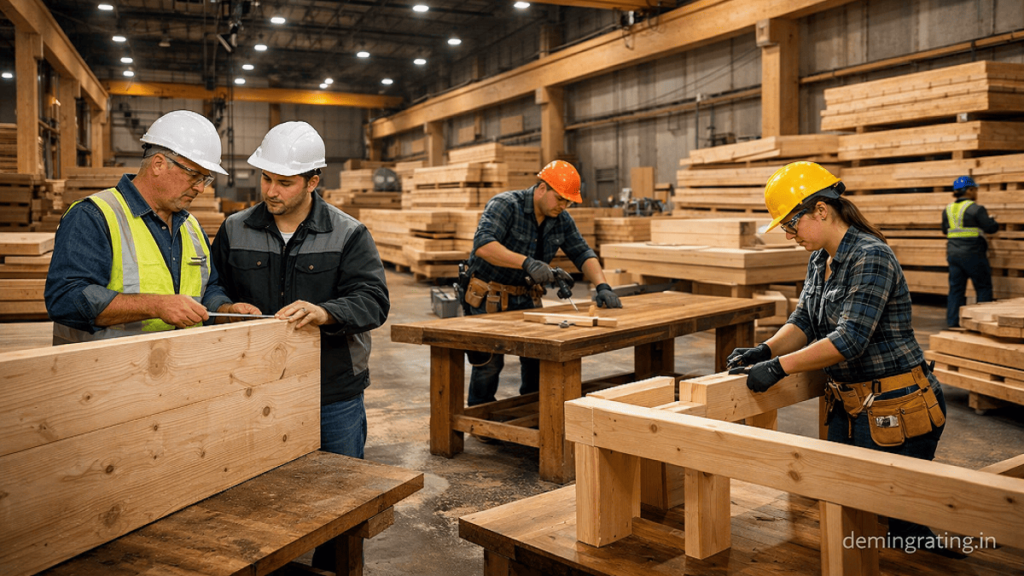
Selecting the right wood-based materials for a sustainable building requires more than simply choosing products labeled as “natural” or “eco-friendly.” Architects, designers, contractors, and homeowners should evaluate the material’s entire life cycle, including where the wood comes from, how it is manufactured, how long it will last, what chemicals it contains, and whether it can be reused or recycled.
1. Responsible Sourcing
The first consideration should be the origin of the wood. Materials should ideally come from responsibly managed forests or verified recycled and reclaimed sources. Forest certification systems such as the Forest Stewardship Council (FSC) can help buyers verify responsible forestry and supply-chain practices. Project teams should also request documentation showing the source and certification status of timber and engineered wood products.
Responsible sourcing is particularly important because the environmental benefits of wood depend heavily on forest management. A renewable material is not automatically sustainable if its production contributes to deforestation, habitat loss, or poor land-management practices.
2. Durability and Service Life
Durability is another major factor. A material that performs effectively for decades can reduce the need for replacement, additional manufacturing, transportation, and waste disposal. Selection should consider exposure to moisture, insects, temperature changes, structural loads, abrasion, and maintenance requirements.
For example, structural timber may be appropriate for one application while moisture-resistant engineered panels may be better suited to another. Choosing materials according to actual site conditions helps maximize their useful life.
3. Emissions and Indoor Air Quality
The adhesives, coatings, and resins used in engineered wood products should also be evaluated. Some composite wood products can emit formaldehyde, which makes low-emission products particularly important for interior applications. The U.S. Environmental Protection Agency (EPA) regulates formaldehyde emissions from products such as hardwood plywood, MDF, and particleboard under TSCA Title VI.
Buyers should check product certifications, emissions testing, and manufacturer documentation before specifying panels, cabinetry, flooring, or other interior wood products.
4. Recyclability, Reuse, and End-of-Life Options
Designers should consider what happens to a material after its initial use. Solid timber and some engineered products may be suitable for reuse, recycling, or recovery depending on their composition and condition. Products that are difficult to separate because they contain multiple bonded materials, coatings, or contaminants may have fewer end-of-life options.
Designing buildings for disassembly can make it easier to recover timber components rather than sending them to disposal.
5. Overall Environmental Performance
Finally, the material should be assessed using a life-cycle perspective. Transportation distance, manufacturing energy, recycled content, maintenance, expected lifespan, and disposal or reuse options can all affect environmental performance.
By considering sourcing, durability, emissions, recyclability, and life-cycle impacts together, building professionals can make better-informed material choices. The most sustainable option is generally not determined by one characteristic but by how well the material performs environmentally and technically throughout its complete service life.
Relevant External Resources
- Forest Stewardship Council – Responsible Forestry and Construction
- U.S. EPA – Formaldehyde Emission Standards for Composite Wood Products
- U.S. EPA – Consumer Guidance on Composite Wood Products
- U.S. EPA – Sustainable Management of Construction and Demolition Materials
#EngineeredWood
What Are the Environmental, Economic, and Health Benefits of Using Eco-Friendly Wood-Based Materials?
Eco-friendly wood-based materials can provide environmental, economic, and potential health benefits when they are responsibly sourced, appropriately manufactured, and correctly specified. These materials include certified timber, reclaimed wood, recycled wood products, plywood, engineered wood, and mass timber products. Their sustainability benefits should always be assessed across the material’s complete life cycle rather than simply assuming that every wood product is environmentally friendly.
Environmental Benefits
One of the most important environmental advantages of responsibly sourced wood is that it is a renewable resource. When forests are sustainably managed, new growth can replace harvested timber while maintaining important ecosystem functions. Wood products can also store carbon absorbed by trees during their growth. In addition, manufacturing wood products generally requires less fossil-fuel energy than producing several conventional alternatives, including steel, concrete, and some plastics. Research from the U.S. Forest Service identifies both carbon storage and material substitution as important factors behind the potential climate benefits of wood products.
Engineered wood can further improve material efficiency by using veneers, strands, fibers, and smaller pieces of timber to manufacture structural and architectural products. Reclaimed and recycled wood can reduce waste and extend the useful life of existing resources.
However, these benefits depend on responsible forest management, efficient manufacturing, transportation, durability, and appropriate end-of-life treatment.
Economic Benefits
Wood-based construction can provide economic advantages through material efficiency, prefabrication, construction speed, and the development of local supply chains. Engineered and mass timber components can be manufactured to precise specifications before reaching a construction site, potentially reducing on-site labor and material waste.
The wood products sector also contributes to employment and economic activity in forest-dependent and rural communities. A U.S. Forest Service review specifically identifies job creation, industry competitiveness, and long-term economic stability among potential economic benefits associated with greater use of wood products in green construction.
Long-lasting wood products can also provide value over extended periods when they are properly designed, maintained, and protected from moisture, insects, fire, and other hazards.
Health and Well-Being Benefits
Wood can contribute to attractive and comfortable indoor environments. Research reviewing wooden interior materials has found generally positive or neutral effects on indoor environmental quality, including potential humidity buffering, acoustic benefits, and positive psychological responses. (Springer Nature)
More recent research has also examined the relationship between indoor wood environments and psychological and physiological responses, with findings suggesting potential benefits for well-being and relaxation. However, these health benefits should not be overstated because outcomes depend on building design, ventilation, material selection, and individual circumstances. (ScienceDirect)
Indoor air quality is particularly important. Some engineered wood products and finishes can release volatile organic compounds or formaldehyde, so low-emission products and appropriate ventilation should be considered. The U.S. Environmental Protection Agency provides guidance on indoor air quality and pollutants associated with building materials. (U.S. EPA)
Overall, eco-friendly wood-based materials can support lower-impact construction, resource efficiency, economic activity, and occupant well-being. The greatest benefits are achieved when designers combine responsible sourcing with durable products, low-emission specifications, efficient construction methods, and opportunities for reuse or recycling.
Relevant External Resources
- USDA Forest Service – Wood as a Sustainable Building Material
- USDA Forest Service – The Carbon Impacts of Wood Products
- USDA Forest Service – Economic and Environmental Benefits of Wood in Green Building
- U.S. EPA – Green Building
- U.S. EPA – Indoor Air Quality
- Springer Nature – Wood and Indoor Environmental Quality
#SustainableConstruction
Case Study of Eco-Friendly Wood-Based Materials: 1 De Haro in San Francisco
A notable example of eco-friendly wood-based materials in modern construction is 1 De Haro, a multi-story commercial building in San Francisco, California. The project demonstrates how responsibly sourced mass timber can be incorporated into a large-scale building while addressing sustainability, construction efficiency, and occupant experience. The building uses cross-laminated timber (CLT) panels and glulam structural elements, with FSC-certified wood forming the majority of its structural timber. According to project documentation, 99% of the wood material used was FSC Mix certified. (Stok)
Use of Responsible Wood Materials
1 De Haro was designed as a pioneering mass-timber building in San Francisco. Its structural system uses CLT floor slabs together with glulam columns and beams. These engineered wood products allow smaller pieces of timber to be combined into large, strong structural components, making them suitable for commercial construction.
The project’s commitment to responsible sourcing was an important part of its sustainability strategy. FSC-certified wood was used for the main structural elements, helping provide traceability and demonstrating that the timber originated from responsibly managed forest resources. The Forest Stewardship Council also highlights the project as an example of FSC-certified mass timber being used to support lower-impact construction. (FSC)
Carbon and Waste Benefits
One of the most significant environmental outcomes of the project was the amount of carbon associated with its structural wood. Stok reports that approximately 1,806 metric tons of CO₂ were sequestered in the building’s structural wood components, while choosing mass timber instead of concrete and steel avoided an estimated 700 metric tons of CO₂. The project also diverted approximately 90% of construction waste from landfill. (Stok)
These figures illustrate two different potential advantages of wood construction: carbon can remain stored in long-lived wood products, while replacing more carbon-intensive structural materials can reduce some embodied emissions. However, these benefits should be evaluated through a complete life-cycle assessment because transportation, manufacturing, adhesives, foundations, insulation, and other building components also contribute to environmental impacts.
Design and Occupant Experience
The project also demonstrates that sustainability does not have to compromise architectural quality. The CLT and glulam structure was intentionally exposed in many interior spaces, reducing the need for additional finish materials and creating a visible connection with natural materials. Large windows and open spaces complement the exposed timber structure, supporting daylighting and a biophilic design approach.
The case study also demonstrates the importance of considering material sourcing alongside performance. The project team investigated wood species, forestry practices, certification, manufacturing locations, and transportation methods before selecting its timber supplier. (FSC)
Key Lessons for Sustainable Building Design
The 1 De Haro project shows that eco-friendly wood-based materials can be used beyond small residential buildings. Responsibly sourced CLT and glulam can serve as major structural components in multi-story commercial projects while contributing to carbon-storage and material-efficiency strategies.
The case also demonstrates that certification, life-cycle assessment, efficient design, waste reduction, and responsible sourcing should work together. Wood should not be considered sustainable solely because it is renewable; the environmental performance of the entire supply chain and building system must be evaluated.
Relevant External Resources
- Stok – 1 De Haro Case Study
- FSC – Samsara and 1 De Haro
- FSC – Building with Responsible Wood
- USDA Forest Service – Mass Timber and Environmental Research
- MDPI – Environmental Impact of a Mass Timber Building: A Case Study
#GreenBuilding
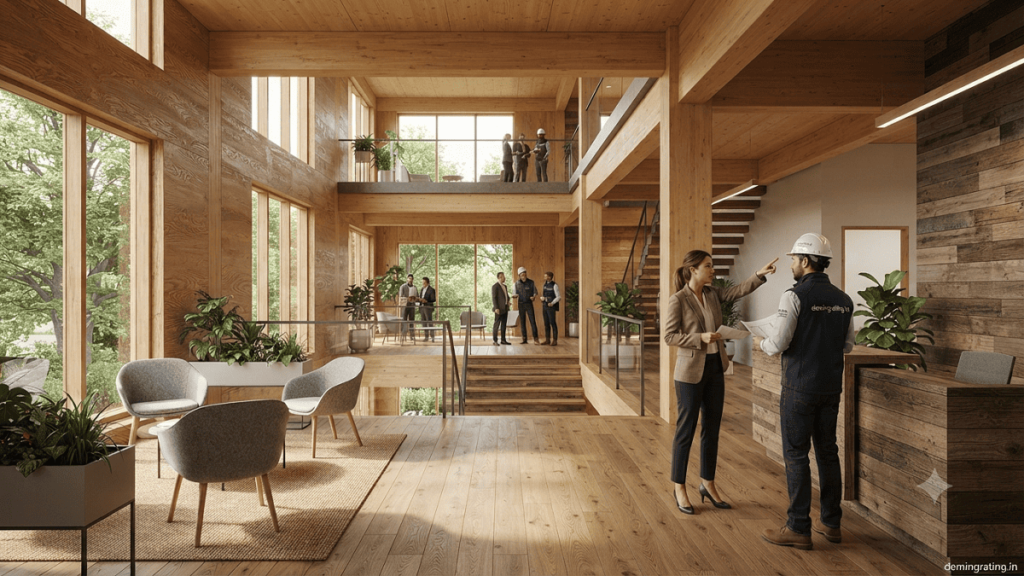
White Paper: Eco-Friendly Wood-Based Materials for Sustainable Building Design
Executive Summary
The construction industry is increasingly seeking materials that can reduce environmental impact while maintaining structural performance, durability, affordability, and occupant comfort. Eco-friendly wood-based materials offer an important opportunity because wood is a renewable biological resource that can be converted into a wide range of structural and non-structural products. These include responsibly sourced solid timber, reclaimed wood, plywood, oriented strand board (OSB), laminated veneer lumber (LVL), glued laminated timber (glulam), cross-laminated timber (CLT), and other engineered wood products.
However, wood should not automatically be considered sustainable. Its environmental performance depends on responsible forest management, manufacturing processes, transportation, product durability, chemical composition, maintenance, and end-of-life options. A comprehensive sustainability strategy therefore requires evaluating wood products across their entire life cycle.
1. Introduction
Buildings consume substantial quantities of raw materials and energy throughout their construction, operation, renovation, and eventual demolition. As sustainability becomes an increasingly important consideration in architecture and construction, material selection has moved beyond traditional concerns such as strength and cost.
Wood-based materials can contribute to sustainable building strategies because they can be sourced from renewable forests, efficiently manufactured into engineered products, and potentially reused or recycled. Long-lived wood products can also store biogenic carbon for the duration of their service life.
Engineered wood is particularly significant because manufacturing can transform veneers, strands, fibers, and smaller wood components into products with predictable structural and dimensional properties. This makes wood suitable for applications ranging from interior finishes and furniture to structural beams, columns, floors, walls, and roofs.
2. Major Categories of Eco-Friendly Wood Materials
Eco-friendly wood materials can be broadly divided into several categories.
Certified wood is sourced from forests managed according to recognized environmental and social standards. Certification systems such as the Forest Stewardship Council (FSC) provide mechanisms for verifying responsible forest management and supply chains.
Reclaimed wood involves recovering timber from existing buildings, infrastructure, or other previous uses. Reusing this material can reduce demand for newly harvested resources and keep existing materials in productive use.
Recycled wood products use recovered wood fibers, particles, or other residues to manufacture new products. This approach can reduce waste and improve resource efficiency.
Engineered wood products include plywood, OSB, LVL, glulam, and CLT. These products can efficiently use different forms of wood and provide standardized performance for modern construction.
3. Environmental Benefits
The environmental value of wood-based materials comes from several characteristics. Trees absorb carbon dioxide during growth, and some of the carbon remains stored in wood products after harvesting. In suitable applications, substituting wood for more emissions-intensive structural materials can also contribute to lower embodied greenhouse-gas emissions.
Efficient manufacturing is another potential advantage. Engineered wood products can use smaller timber pieces, veneers, strands, and fibers that may otherwise have limited applications. This can improve the utilization of harvested wood.
Reclaimed and recycled wood provide additional benefits by reducing waste and extending material life. The U.S. Environmental Protection Agency recommends reducing, reusing, and recycling construction and demolition materials as part of sustainable materials management.
These benefits must nevertheless be evaluated carefully. Transportation, adhesives, processing energy, forest management, building maintenance, and disposal can all influence the final environmental profile of a wood product.
4. Health and Indoor Environmental Quality
Material selection also affects indoor environmental quality. Wood surfaces can contribute to warm, visually appealing interiors and may support design approaches that incorporate natural materials.
At the same time, engineered wood products require careful consideration of adhesives and emissions. Some composite wood products use formaldehyde-containing resins. The U.S. EPA regulates formaldehyde emissions from hardwood plywood, MDF, and particleboard under TSCA Title VI. Current EPA standards establish maximum emission levels for these products, and compliant products are subject to certification requirements.
For interior applications, designers should therefore review manufacturer documentation, emissions certifications, applicable standards, and ventilation requirements. The EPA also proposed an update in February 2026 that would add an internationally recognized test method for measuring formaldehyde emissions from wood-based panels.
5. Durability and Performance
Sustainability is strongly connected to service life. A material that lasts for decades can avoid repeated replacement and the associated consumption of raw materials, energy, labor, and transportation.
Wood-based products should therefore be selected according to their intended environment. Moisture exposure, insects, temperature variations, structural loads, fire performance, maintenance requirements, and installation quality should all be considered.
Mass timber products such as CLT and glulam can provide substantial structural capacity when properly engineered and detailed. Their use demonstrates how wood can move beyond traditional low-rise construction into larger structural applications.
6. Economic Considerations
Eco-friendly wood products can offer economic benefits through efficient manufacturing, prefabrication, lighter construction systems, and reduced material waste. Engineered wood components can be manufactured to precise dimensions before arriving on-site, potentially simplifying installation and shortening construction activities.
Wood construction can also support forestry, manufacturing, transportation, and construction employment. However, economic performance depends on regional availability, material prices, labor costs, building codes, fire requirements, and project-specific engineering.
A sustainable material should therefore be evaluated using both initial cost and life-cycle cost. A less expensive material that requires frequent replacement may ultimately have a higher total cost than a durable alternative.
7. Responsible Material Selection
A professional material-selection strategy should examine several criteria:
- Forest sourcing: Verify responsible forestry and legal supply chains.
- Certification: Consider recognized certification systems where appropriate.
- Recycled or reclaimed content: Prioritize opportunities to reuse existing resources.
- Durability: Match products to climate, exposure, and expected service conditions.
- Chemical emissions: Specify low-emission or compliant composite wood products where required.
- Manufacturing: Consider production processes and energy requirements.
- Transportation: Evaluate the distance between forest, manufacturing facility, supplier, and project.
- Life-cycle performance: Consider impacts from extraction through end-of-life.
- Reuse and recycling: Select products and assemblies that facilitate future recovery.
- Technical performance: Confirm structural, fire, moisture, acoustic, and code requirements.
8. Challenges and Limitations
Despite its advantages, wood-based construction has limitations. Unsustainable harvesting can damage forests and biodiversity. Poorly designed timber assemblies can experience moisture problems, decay, or premature deterioration. Engineered products may also contain adhesives and coatings that influence emissions and end-of-life recyclability.
Furthermore, carbon-storage claims can vary depending on assumptions about forest growth, harvesting, product lifespan, transportation, substitution, and disposal. For this reason, sustainability claims should be supported by credible environmental data rather than generalized statements.
Environmental Product Declarations (EPDs), life-cycle assessments (LCAs), responsible-sourcing certifications, and manufacturer documentation can help project teams make more transparent comparisons.
9. Future Outlook
The development of mass timber, bio-based adhesives, improved manufacturing technologies, digital fabrication, and circular construction practices is expanding the potential of wood-based materials. Future building systems are likely to place greater emphasis on designing timber components for disassembly, reuse, and material recovery.
The combination of responsible forestry and advanced engineered wood technologies could allow the construction industry to use forest resources more efficiently while creating durable structural systems.
Conclusion
Eco-friendly wood-based materials can make an important contribution to sustainable building design when they are responsibly sourced, efficiently manufactured, appropriately specified, and managed throughout their life cycle. Certified timber, reclaimed wood, recycled products, and engineered materials such as CLT, glulam, LVL, plywood, and OSB can provide designers with versatile options for structural and architectural applications.
The central principle is that wood is not automatically sustainable simply because it is renewable. Genuine environmental performance requires responsible sourcing, efficient resource use, durability, low emissions, appropriate maintenance, and responsible end-of-life management.
For building professionals, the most effective approach is therefore to evaluate wood-based materials as part of an integrated sustainability strategy. When technical performance and environmental responsibility are considered together, wood can become a valuable component of lower-impact, resource-efficient, and durable building design.
Relevant External Resources
- U.S. Environmental Protection Agency – Formaldehyde Emission Standards for Composite Wood Products
- U.S. EPA – Consumer Questions About Formaldehyde Standards
- U.S. EPA – Sustainable Management of Construction and Demolition Materials
- Forest Stewardship Council – Responsible Forestry
- USDA Forest Service – Forest Products and Research
#SustainableWood
Industry Applications of Eco-Friendly Wood-Based Materials
Eco-friendly wood-based materials are increasingly being used across multiple industries as businesses seek renewable, resource-efficient, and lower-impact alternatives to conventional materials. These materials include responsibly sourced timber, reclaimed wood, recycled wood products, plywood, oriented strand board (OSB), laminated veneer lumber (LVL), glued laminated timber (glulam), and mass timber products such as cross-laminated timber (CLT). Their applications extend beyond traditional construction into furniture, interior design, packaging, manufacturing, and other sectors.
1. Construction and Infrastructure
Construction is one of the most important applications for eco-friendly wood-based materials. Solid timber can be used for framing, flooring, doors, windows, roofing, and exterior cladding, while engineered wood products provide solutions for structural and architectural applications.
Mass timber has expanded the role of wood in larger buildings. CLT can be manufactured into large structural panels for floors, walls, and roofs, while glulam is commonly used for beams and columns. The USDA Forest Service identifies mass timber as an emerging construction technology with potential environmental benefits when appropriately designed and responsibly sourced.
Engineered wood can also support prefabricated construction because components can be manufactured accurately in controlled factory environments before being transported to the building site.
2. Furniture Manufacturing
Furniture manufacturers use wood-based materials for tables, chairs, cabinets, shelving, beds, and office furniture. Responsibly sourced solid wood can provide durability and a long service life, while plywood, MDF, and particleboard can provide cost-effective options for specific applications.
Reclaimed wood is particularly valuable in furniture and interior design because it combines material reuse with distinctive visual characteristics. Manufacturers can transform recovered timber into furniture rather than sending usable material to disposal.
For composite wood furniture, manufacturers and consumers should also consider formaldehyde emissions and applicable product standards. The U.S. Environmental Protection Agency regulates formaldehyde emissions from certain composite wood products under TSCA Title VI.
3. Interior Design and Architecture
Wood-based materials are widely used for wall panels, ceilings, flooring, partitions, decorative elements, staircases, and acoustic treatments. Their natural appearance can support contemporary, minimalist, traditional, and biophilic design concepts.
Architects can combine exposed timber structures with wood finishes to reduce the need for additional decorative materials. Reclaimed and certified timber can also contribute to projects seeking sustainability certifications or responsible-material sourcing objectives.
4. Packaging and Product Manufacturing
Wood-based materials are also used in pallets, crates, boxes, shipping components, and protective packaging. Recycled wood fibers and wood residues can be incorporated into certain products, helping manufacturers use resources that might otherwise become waste.
Wood packaging can provide a renewable alternative for applications where appropriate durability and protection are required. Its suitability depends on product requirements, transportation conditions, hygiene considerations, and end-of-life infrastructure.
5. Pulp, Paper, and Fiber-Based Products
Wood fibers are a major raw material for paper, cardboard, tissue, and other fiber-based products. Responsible forest management and recycled fiber can help reduce pressure on virgin resources.
Recycling is particularly important because recovered paper and fiber can be returned to manufacturing systems rather than being immediately disposed of. However, fiber quality generally decreases through repeated recycling, meaning a combination of responsibly sourced virgin fiber and recovered material may be required for certain applications.
6. Renewable Energy and Biomass Applications
Wood residues from forestry and manufacturing can also be used as biomass feedstocks. Sawdust, bark, chips, and other residues may be converted into pellets or other forms of bioenergy feedstock.
The sustainability of wood energy depends heavily on the source of the biomass, harvesting practices, transportation, combustion technology, and alternative uses for the material. Therefore, using wood for energy should not automatically be considered environmentally beneficial simply because the material is renewable.
7. Industrial and Commercial Applications
Engineered wood products are increasingly used in commercial interiors, retail environments, educational buildings, hospitality projects, offices, and institutional facilities. Their combination of structural performance, appearance, prefabrication potential, and renewable material content makes them attractive for projects pursuing sustainability objectives.
The industry is also moving toward circular construction practices, where building components are designed for disassembly and future reuse. Wood products can support this approach when connections and assemblies are designed to allow components to be removed without excessive damage.
Conclusion
The industrial application of eco-friendly wood-based materials extends from structural construction and furniture to interiors, packaging, paper products, and biomass applications. Their greatest sustainability potential comes from combining responsible sourcing, efficient material use, long service life, low-emission products, and opportunities for reuse or recycling.
However, organizations should evaluate each application through a life-cycle perspective. Factors such as forest management, manufacturing energy, transportation, chemical emissions, durability, maintenance, and end-of-life recovery all influence the environmental performance of wood products.
As technologies such as mass timber, advanced engineered wood, digital fabrication, and circular construction continue to develop, eco-friendly wood-based materials are likely to become increasingly important across industries seeking practical pathways toward more resource-efficient production.
Relevant External Resources
- USDA Forest Service – Wood and Forest Products Research
- USDA Forest Service – Mass Timber Research
- Forest Stewardship Council – Responsible Forestry
- U.S. EPA – Formaldehyde Standards for Composite Wood Products
- U.S. EPA – Sustainable Management of Construction and Demolition Materials
#EcoFriendlyMaterials
Ask FAQs
What are eco-friendly wood-based materials?
Eco-friendly wood-based materials are products made from responsibly sourced, recycled, reclaimed, or efficiently processed wood. Examples include certified timber, reclaimed wood, plywood, OSB, LVL, glulam, and cross-laminated timber (CLT). Their environmental benefits depend on responsible sourcing, manufacturing, durability, and end-of-life management.
Are engineered wood products environmentally friendly?
Engineered wood products can be environmentally friendly when responsibly sourced and appropriately manufactured. Products such as CLT, glulam, and LVL can efficiently use wood resources and provide structural alternatives to conventional materials. However, adhesives, manufacturing processes, transportation, and disposal should also be considered when evaluating their overall environmental impact.
How does certified wood support sustainable construction?
Certified wood provides greater assurance that timber comes from forests managed according to recognized environmental and social standards. Certifications such as FSC can help construction professionals verify responsible sourcing and supply-chain practices. Choosing certified products can reduce the risk of using timber associated with irresponsible forestry.
Can reclaimed and recycled wood reduce construction waste?
Yes. Reclaimed wood can be recovered from older buildings and reused in flooring, furniture, structural components, and interior finishes. Recycled wood can be processed into new wood-based products. Both approaches can extend material life, reduce waste, and decrease demand for newly harvested resources.
What should buyers consider when selecting eco-friendly wood products?
Buyers should consider the material’s source, certification, recycled or reclaimed content, durability, manufacturing process, formaldehyde or other emissions, transportation requirements, maintenance needs, and end-of-life options. A life-cycle perspective provides a more accurate assessment than simply choosing a product labeled “green.”
Table of Contents
Disclaimer: The information provided is for general educational purposes only. Environmental benefits may vary depending on sourcing, manufacturing, application, and disposal practices. Always verify product specifications and certifications with qualified professionals or manufacturers before making decisions.