
Heat Island Effect on Roof and Parking Area
What Is the Heat Island Effect and How Does It Affect Roofs and Parking Areas?
The heat island effect, commonly called the urban heat island (UHI) effect, occurs when developed areas become warmer than surrounding areas because buildings, roads, roofs, parking lots, and other hard surfaces absorb and retain solar heat. Urban areas generally have fewer trees, plants, and water surfaces that naturally provide shade and cooling through evapotranspiration. According to the U.S. Environmental Protection Agency (EPA), urban daytime temperatures can be about 1–7°F higher than nearby outlying areas, while nighttime temperatures can be 2–5°F higher.
How Roofs Contribute to Heat Islands
Roofs can play a significant role because conventional dark roofing materials often absorb substantial amounts of solar radiation. During sunny conditions, the roof surface can become considerably hotter than the surrounding air. The stored heat can then be transferred into the building or released back into the surrounding environment.
This can increase indoor cooling requirements, particularly during hot weather. Greater demand for air conditioning can increase electricity consumption and operating costs. The EPA explains that roof and pavement surfaces can become dramatically hotter than the air under summer conditions, contributing to surface and atmospheric heat islands.
One approach to reducing this impact is the use of a cool roof. Cool roofs are designed to reflect more sunlight and absorb less heat than conventional roofing. High solar reflectance and thermal emittance help reduce roof temperatures, heat transfer into buildings, and surrounding air temperatures.
How Parking Areas Contribute
Parking areas are another important source of heat because they commonly use large expanses of asphalt or concrete. These materials are exposed directly to sunlight and can absorb and store substantial amounts of heat. Parking lots also tend to have limited vegetation and shade, increasing surface temperatures and reducing natural cooling.
The resulting heat can make parking areas uncomfortable for pedestrians and drivers, increase temperatures around nearby buildings, and contribute to the wider urban heat island effect. EPA identifies roads and parking lots as examples of hard, dry surfaces that contribute to higher urban temperatures.
Reducing the Heat Island Effect
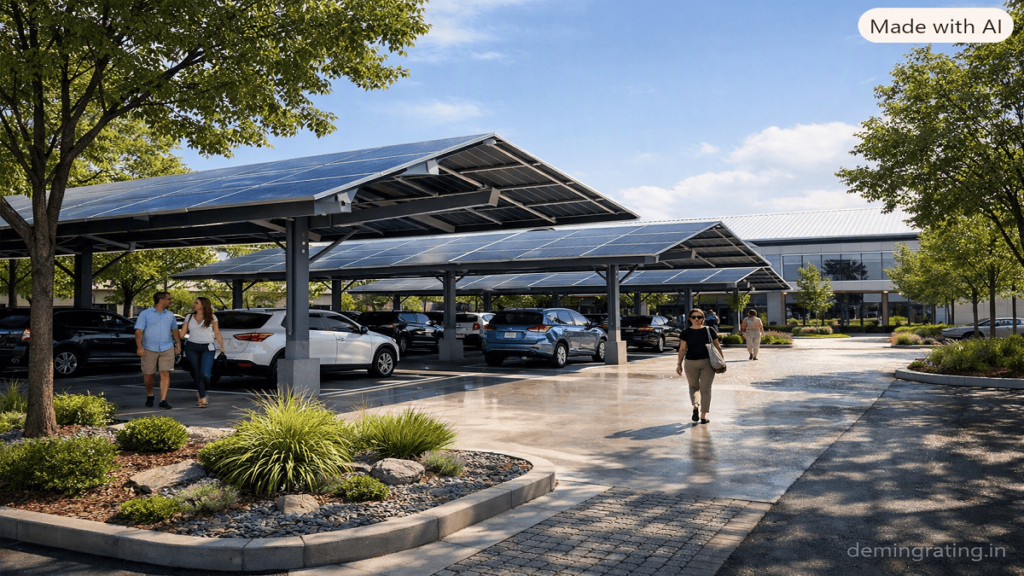
Several design strategies can reduce heat accumulation on roofs and parking areas. These include cool or reflective roofing, green roofs, shade trees, vegetated areas, reflective or permeable pavements, and solar-panel parking canopies. Increasing vegetation provides shade and supports natural cooling, while reflective materials can reduce the amount of solar energy absorbed by surfaces.
The EPA recommends strategies such as cool roofs, green roofs, trees and vegetation, and cool pavements as approaches for reducing heat islands.
In conclusion, roofs and parking areas can significantly contribute to local heat buildup when they consist primarily of dark, heat-absorbing materials. Thoughtful selection of roofing and paving materials, combined with vegetation and shading, can reduce surface temperatures, improve outdoor comfort, lower cooling demand, and contribute to more climate-resilient built environments.
Relevant External Resources
- EPA – Learn About Heat Island Effects
- EPA – Using Cool Roofs to Reduce Heat Islands
- EPA – Guide to Reducing Heat Islands
#ParkingAreaDesign
How Do Roof Materials and Surface Colors Influence Heat Absorption and Temperature?
Roof materials and surface colors have a major influence on how much solar energy a building absorbs and how hot its roof becomes. This is especially important in warm climates, where high roof temperatures can increase indoor heat gain, air-conditioning demand, and contribute to the urban heat island effect. The two most important surface characteristics are solar reflectance and thermal emittance.
Role of Surface Color
Color is an important factor because darker surfaces generally absorb more solar radiation, while lighter surfaces reflect a greater proportion of incoming sunlight. Conventional dark roofing materials can absorb a large amount of solar energy and become significantly hotter under direct sunlight. In contrast, light-colored or specially engineered reflective roofs can remain substantially cooler. The U.S. Department of Energy notes that typical dark roofs may absorb 90% or more of incoming solar energy, whereas light-colored roofs generally absorb much less.
However, visible color alone does not tell the complete story. Modern “cool-color” roofing products can be designed to reflect a significant amount of solar energy even when they appear relatively dark. Therefore, property owners should consider measured solar-reflectance values rather than relying only on visual appearance.
Importance of Solar Reflectance
Solar reflectance, sometimes called albedo, describes the fraction of sunlight reflected by a surface. A higher solar reflectance generally means that less solar energy is absorbed as heat. EPA identifies high solar reflectance as the most important characteristic when evaluating how effectively a cool roof can reduce heat absorption.
For example, a reflective white roof can reject much of the sunlight reaching its surface, reducing roof temperature and the amount of heat transferred into the building.
Role of Thermal Emittance
Material composition is also important because two roofs with similar reflectance can have different temperatures depending on how effectively they release absorbed heat. Thermal emittance describes a material’s ability to emit absorbed heat as infrared radiation.
A good cool roof generally combines high solar reflectance with high thermal emittance. ENERGY STAR explains that both properties contribute to keeping roof surfaces cooler.
Bare metal surfaces demonstrate why material selection matters. Some metal roofs can reflect substantial sunlight but have relatively low thermal emittance, limiting their ability to release absorbed heat. Consequently, reflectance and emittance should be evaluated together rather than considering color alone.
Effect on Buildings and Energy Use
Hotter roof surfaces can increase heat transfer into the building, particularly when insulation and ventilation are inadequate. This can increase cooling requirements and electricity consumption during hot weather. EPA reports that cool roofs can reduce roof, indoor, and surrounding air temperatures and can lower air-conditioning demand.
Therefore, when designing or renovating a roof, organizations should consider material type, solar reflectance, thermal emittance, insulation, roof condition, climate, and maintenance requirements. Choosing an appropriately designed cool roof can help reduce heat absorption and improve building energy performance while contributing to broader heat-island mitigation efforts.
Relevant External Resources
- EPA – Using Cool Roofs to Reduce Heat Islands
- ENERGY STAR – Cool Roofs
- U.S. Department of Energy – Cool Roof Products
- DOE – Guidelines for Selecting Cool Roofs
#HeatMitigation
What Strategies Can Be Used to Reduce Heat Buildup in Parking Areas?
Parking areas can become significant sources of heat buildup because large expanses of asphalt and concrete absorb solar radiation during the day and release stored heat into the surrounding environment. This can increase outdoor temperatures, reduce pedestrian comfort, contribute to the urban heat island effect, and increase heat exposure for drivers, workers, and visitors. The U.S. Environmental Protection Agency (EPA) identifies trees and vegetation, cool pavements, permeable surfaces, and reduced paved areas as important strategies for addressing these impacts.
1. Increase Tree and Vegetation Cover
One of the most effective strategies is to provide natural shade through strategically planted trees. Trees can shade vehicles and pavement, preventing direct solar radiation from heating the parking surface. Vegetation also provides cooling through evapotranspiration, in which plants release moisture into the atmosphere.
Trees can be positioned along parking-lot boundaries, pedestrian routes, medians, and landscaped islands. Species should be selected according to the local climate, soil conditions, available space, maintenance requirements, and root characteristics. The EPA specifically identifies strategically placed shade trees as an effective approach for cooling parking lots and streets.
2. Use Cool Pavement Materials
Traditional dark asphalt can become extremely hot under direct sunlight. Cool pavements are designed to remain cooler by reflecting more solar energy, encouraging water evaporation, or incorporating other technologies that reduce surface temperatures. EPA reports that a pilot study in Arizona found conventional pavement reaching approximately 152°F at midday, while some cool pavement surfaces were 10–16°F cooler.
Reflective coatings, lighter-colored paving materials, and appropriate concrete or pavement technologies can therefore help reduce heat accumulation.
3. Install Permeable Pavements
Permeable or porous paving allows rainwater to infiltrate through the surface rather than remaining entirely on top. Evaporation and infiltration can contribute to cooling while also reducing stormwater runoff.
Permeable pavement can be particularly useful in parking spaces, pedestrian areas, and landscaped sections where traffic and structural requirements permit its use.
4. Add Solar Parking Canopies
Solar-panel parking canopies provide dual benefits. They shade vehicles and pavement from direct sunlight while generating renewable electricity. This approach can be especially useful for commercial properties, offices, shopping centers, and institutional facilities where parking areas are large and solar-energy demand is significant. The EPA identifies photovoltaic parking canopies as one option for shading paved areas while generating electricity.
5. Reduce Unnecessary Paved Areas
Another strategy is to minimize the total amount of paved parking surface. Better site planning, shared parking, compact development, landscaped islands, and integration with public transportation can reduce the amount of asphalt exposed to sunlight. This approach addresses heat buildup at its source while potentially providing additional stormwater and landscaping benefits.
Conclusion
Reducing parking-area heat requires a combination of shade, reflective materials, vegetation, permeable surfaces, and thoughtful site planning. Rather than relying on a single solution, organizations can combine tree planting with cool pavements, landscaped areas, and solar canopies to create cooler and more comfortable parking environments. These measures can also provide additional benefits such as reduced stormwater runoff, improved pedestrian comfort, and greater climate resilience.
Relevant External Resources
- EPA – Using Cool Pavements to Reduce Heat Islands
- EPA – Heat Island Reduction Solutions
- EPA – Reduce Heat Islands with Green Infrastructure
- EPA – Guide to Reducing Heat Islands
#SustainableBuildings
How Can Green Roofs, Vegetation, Shading, and Reflective Surfaces Help Control Heat?
Green roofs, vegetation, shading, and reflective surfaces are important strategies for reducing heat buildup around buildings, roofs, parking areas, and other developed spaces. These approaches work by limiting solar radiation, increasing natural cooling, and reducing the amount of heat absorbed and stored by conventional construction materials. Together, they can help reduce the urban heat island effect, improve outdoor comfort, and potentially lower building cooling demand. The U.S. Environmental Protection Agency (EPA) recognizes trees, green roofs, and cool roofs as important heat-island reduction strategies.
Green Roofs
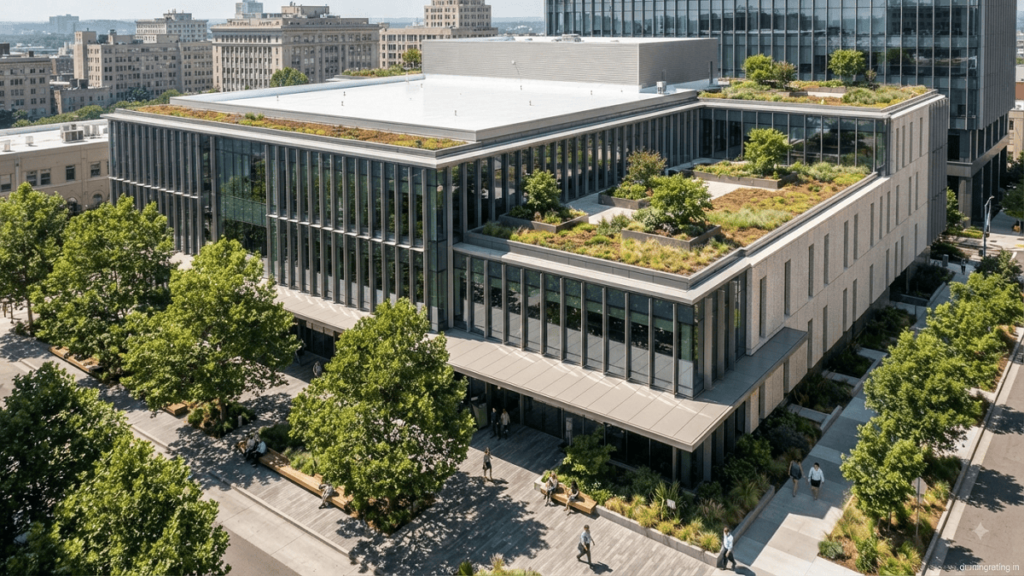
A green roof incorporates vegetation and growing media over a roof structure. Plants shade the roof membrane and reduce the amount of solar radiation reaching the underlying surface. They also cool the surrounding environment through evapotranspiration, a natural process in which plants release moisture into the atmosphere.
According to the EPA, green roofs can substantially reduce roof surface temperatures compared with conventional roofs. They can also reduce heat transfer into buildings, potentially decreasing cooling requirements during hot weather. Green roofs provide additional benefits, including stormwater management, habitat creation, and improved environmental quality.
Vegetation and Trees
Trees, shrubs, grasses, and other vegetation provide cooling primarily through shade and evapotranspiration. Tree canopies can prevent sunlight from directly reaching roofs, walls, sidewalks, and parking surfaces. This keeps those materials cooler and reduces the amount of heat they later release into the surrounding air.
The EPA reports that shaded surfaces can be substantially cooler than unshaded materials, while vegetation can also lower surrounding air temperatures through evapotranspiration.
Strategically planting trees around buildings and parking areas can therefore provide both environmental and practical benefits, including improved pedestrian comfort and reduced exposure to extreme heat.
Shading Structures
Where trees cannot provide sufficient coverage, artificial shading structures can be used. Parking canopies, covered walkways, pergolas, and other shade structures can block direct sunlight from reaching pavement and vehicles.
Solar parking canopies are particularly useful because they can combine shade with renewable electricity generation. Shading parking surfaces reduces direct solar heating while the photovoltaic panels generate electricity for the facility.
Reflective Surfaces
Reflective or cool surfaces reduce heat by reflecting a greater proportion of incoming solar radiation instead of absorbing it. Cool roofs commonly use materials with high solar reflectance and thermal emittance, helping them remain cooler than conventional dark roofing.
Reflective pavements and lighter-colored surfaces can similarly reduce heat absorption in parking areas and pedestrian spaces. However, material selection should consider local climate, glare, durability, maintenance, and application requirements.
Combining the Strategies
The greatest benefits can often come from using several approaches together. For example, a commercial facility could install a reflective roof, create a green roof section where structurally appropriate, plant shade trees around its parking area, and use solar canopies over heavily used parking spaces.
These strategies can reduce surface temperatures, improve outdoor comfort, decrease cooling demand, and strengthen resilience to extreme heat.
In conclusion, green roofs cool through vegetation and evapotranspiration, trees provide shade and natural cooling, shading structures block solar radiation, and reflective surfaces reduce heat absorption. Integrating these measures into building and site design can create cooler, more energy-efficient, and more climate-resilient environments.
Relevant External Resources
- EPA – Reduce Heat Islands
- EPA – Using Green Roofs to Reduce Heat Islands
- EPA – Benefits of Trees and Vegetation
- EPA – Heat Island Reduction Solutions
#CoolPavements
What Are the Environmental, Energy, and Comfort Benefits of Reducing the Heat Island Effect?
Reducing the heat island effect can provide significant environmental, energy, and human-comfort benefits, particularly in cities and developed areas with extensive roofs, roads, parking lots, and other heat-absorbing surfaces. Strategies such as cool roofs, green roofs, trees, vegetation, reflective pavements, and shaded parking areas can reduce surface and air temperatures. The U.S. Environmental Protection Agency (EPA) identifies heat-island reduction as an important approach for improving community resilience and reducing heat-related impacts.
Environmental Benefits
One of the most important environmental benefits is the reduction of localized temperatures. Dark roofs, asphalt, and concrete can absorb solar radiation and store heat during the day. By replacing or modifying these surfaces with reflective materials, vegetation, or shaded areas, less heat is retained and subsequently released into the surrounding environment.
Vegetation provides additional environmental benefits through evapotranspiration, in which plants release water vapor and naturally cool their surroundings. Trees and green infrastructure can also improve stormwater management by intercepting rainfall and increasing infiltration.
Reducing extreme heat can also help protect ecosystems and reduce stress on urban infrastructure. In areas where heat interacts with air pollution, lowering temperatures may contribute to improved air-quality conditions because temperature influences certain atmospheric chemical reactions.
Energy Benefits
Heat-island reduction can lower building cooling requirements. When roofs and surrounding surfaces become extremely hot, buildings may gain more heat through roofs and walls, increasing demand for air conditioning. Cool roofs and vegetation can reduce this heat transfer.
EPA reports that cool roofs can reduce peak cooling demand and produce energy savings, although the actual savings depend on factors such as climate, building design, insulation, roof characteristics, and air-conditioning systems.
Lower electricity demand during periods of extreme heat can also reduce pressure on power systems. This can be particularly valuable during peak summer periods when electricity demand for cooling is highest.
Comfort and Health Benefits
Reducing heat buildup can significantly improve outdoor thermal comfort. Shaded sidewalks, landscaped parking areas, cooler roofs, and vegetated spaces can make outdoor environments more comfortable for pedestrians, employees, residents, and visitors.
This is particularly important because excessive heat can increase the risk of heat-related illness. The EPA notes that urban heat islands can increase heat exposure for vulnerable populations, including older adults, children, and people who work or exercise outdoors.
Cooler parking areas can also make vehicles and pedestrian routes more comfortable, while shaded outdoor spaces can encourage people to spend more time outside.
Long-Term Sustainability Benefits
Heat-island reduction can support broader climate adaptation and sustainable building goals. Combining reflective surfaces, vegetation, green roofs, and shading can help facilities manage increasing temperatures while potentially reducing energy consumption and improving the usability of outdoor spaces.
For example, a commercial property could combine a cool roof with shaded parking, strategically planted trees, and permeable or reflective pavement. This integrated approach addresses heat at multiple levels rather than relying on one intervention.
In conclusion, reducing the heat island effect can deliver interconnected environmental, energy, and comfort benefits. It can reduce surface temperatures, support vegetation and stormwater management, lower cooling demand, improve outdoor conditions, and reduce heat exposure. For buildings and parking areas, these measures represent practical strategies for creating cooler, more energy-efficient, and resilient environments.
Relevant External Resources
- EPA – Learn About Heat Island Effects
- EPA – Using Cool Roofs to Reduce Heat Islands
- EPA – Reduce Heat Islands with Green Infrastructure
- EPA – Benefits of Trees and Vegetation
#GreenRoofs
Case Study of Heat Island Effect on Roof and Parking Area
The heat island effect on roofs and parking areas can be clearly demonstrated through real-world projects where reflective roofing, vegetation, shading, and improved pavement design were introduced to reduce heat accumulation. A useful case study is the City of Tucson Administration Building in Arizona, documented by the U.S. Environmental Protection Agency (EPA). The project demonstrates how modifying a roof can significantly reduce heat-related energy demand while also providing a model for addressing surrounding parking-area conditions.
Case Study: City of Tucson Administration Building
The City of Tucson, Arizona, operates in a hot, dry climate where intense solar radiation can cause roof and pavement surfaces to become extremely hot. As part of a demonstration project, the city installed a white elastomeric coating over an approximately 28,000-square-foot unshaded metal roof at one of its administration buildings. The objective was to investigate how a cool roof could reduce roof and indoor temperatures while lowering building cooling requirements.
The reflective coating increased the roof’s ability to reflect solar radiation instead of absorbing it as heat. According to the EPA case-study database, the project reduced the building’s cooling energy consumption by approximately 50–65%, representing annual energy savings of more than 400 million Btu and avoided energy costs of nearly $4,000 per year.
These results demonstrate why roof selection is important in hot climates. A conventional dark or highly absorptive roof can transfer considerable heat into a building, increasing the workload on air-conditioning systems. A properly designed cool roof can reduce this heat gain and improve energy performance.
Parking Area Application
The same Tucson project also considered cooler paving materials and additional trees and vegetation in surrounding parking lots. This is significant because parking areas can create another substantial heat source. Large areas of asphalt or concrete receive direct sunlight and store heat, while limited tree canopy reduces natural shading.
The EPA recommends combining reflective pavement strategies with vegetation and shade where appropriate. Trees can lower surface and air temperatures through shading and evapotranspiration. EPA research indicates that shaded surfaces can be 20–45°F cooler than peak temperatures of comparable unshaded materials.
A related example is Arizona State University’s PowerParasol project, where a solar structure was installed over approximately 5.25 acres of parking and provided shade for about 800 parking spaces while generating electricity. This demonstrates how parking-area heat mitigation can be combined with renewable-energy generation.
Key Lessons
The case studies demonstrate that heat-island mitigation works best as an integrated strategy. Building owners and facility managers can combine:
- Reflective or cool roofing materials
- Shade trees and vegetation
- Reflective or permeable pavement
- Solar parking canopies
- Proper building insulation
- Sustainable site planning
The University of Arizona provides another relevant example. Its parking-lot retrofit research focuses on permeable pavement, vegetation, stormwater management, pedestrian safety, and reducing urban heat-island impacts in an arid environment.
Overall, these examples show that controlling heat on roofs and parking areas can provide measurable benefits in energy efficiency, outdoor comfort, stormwater management, and climate resilience. The most appropriate solution depends on local climate, building design, pavement requirements, maintenance capacity, and project budget.
Relevant External Resources
- EPA – Heat Island Community Actions Database
- EPA – Trees and Vegetation for Heat-Island Reduction
- University of Arizona – Parking Lot Heat-Island Retrofit Case Study
- EPA – Sayre High School Green Infrastructure Case Study
#CoolRoofs
White Paper on Heat Island Effect on Roof and Parking Area
Executive Summary
The heat island effect on roofs and parking areas is an important concern in urban and highly developed environments. Large expanses of dark roofing, asphalt, and concrete absorb solar radiation, retain heat, and release it back into the surrounding environment. This can increase local temperatures, raise building cooling requirements, reduce outdoor comfort, and intensify heat-related risks.
The U.S. Environmental Protection Agency (EPA) identifies cool roofs, green roofs, trees and vegetation, and cool pavements as key strategies for reducing heat islands. These approaches can provide additional benefits such as lower energy consumption, improved stormwater management, cleaner air, and greater resilience to extreme heat.
1. Understanding the Heat Island Effect
Urban heat islands develop when natural landscapes are replaced by buildings and impervious surfaces that absorb and retain solar energy. Roofs and parking areas are particularly important because they can occupy large portions of developed sites while receiving direct sunlight for much of the day.
Dark asphalt parking surfaces and conventional roofs can become substantially hotter than the surrounding air. The stored heat is subsequently released, contributing to higher local temperatures, especially after sunset. EPA identifies roads, parking lots, and buildings as common contributors to heat-island formation.
2. Impact on Roofs
Roof surfaces influence both building temperature and energy consumption. Conventional roofs with low solar reflectance absorb more solar energy, increasing roof temperatures and transferring additional heat into the building.
Cool roofs address this problem by combining high solar reflectance with appropriate thermal emittance. These properties allow roofs to reflect more sunlight and release absorbed heat more effectively. EPA reports that cool roofs can reduce roof and indoor temperatures and lower air-conditioning demand. In air-conditioned residential buildings, solar-reflective cool roofs can reduce peak cooling demand by approximately 11–27%, although actual results vary by climate and building characteristics.
3. Green Roofs as a Heat-Mitigation Strategy
Green roofs use vegetation and growing media to provide additional thermal protection. Plants shade the roof surface and cool the surrounding environment through evapotranspiration.
EPA reports that green-roof surfaces can be significantly cooler than conventional roofs and can reduce nearby air temperatures. Green roofs can also provide additional benefits, including stormwater management, pollutant absorption, habitat, and usable green space.
However, green roofs require structural assessment, appropriate plant selection, irrigation or water management where necessary, maintenance, and careful consideration of installation costs.
4. Impact on Parking Areas
Parking areas can create substantial heat because asphalt and concrete are exposed to direct solar radiation. Large unshaded parking lots can therefore become uncomfortable for pedestrians and increase heat exposure for employees, visitors, and drivers.
Several strategies can reduce this impact:
- Planting shade trees and vegetation
- Using reflective or cool pavement
- Installing permeable pavement where appropriate
- Reducing unnecessary paved areas
- Installing solar-panel parking canopies
- Incorporating landscaped parking islands
Vegetation provides cooling through both shading and evapotranspiration, while permeable and reflective surfaces can reduce heat accumulation and improve stormwater management.
5. Energy and Environmental Benefits
Reducing heat absorption can decrease the amount of heat transferred into buildings, potentially reducing air-conditioning requirements. Lower electricity consumption can also reduce associated emissions, depending on the local energy system.
At the community level, combining cool roofs, green roofs, vegetation, and cool pavements can contribute to lower ambient temperatures and improved resilience during extreme heat events. EPA identifies reduced energy costs, improved human comfort, cleaner air, and lower greenhouse-gas emissions among the potential benefits of heat-island reduction strategies.
6. Planning and Implementation
A successful heat-island reduction program should begin with a site assessment. Facility managers and designers should evaluate roof orientation, existing roofing materials, parking-surface conditions, tree canopy, drainage, building energy consumption, and local climate.
For roofs, organizations should compare cool roofing and green roofing based on lifecycle cost, structural capacity, maintenance requirements, energy objectives, and environmental priorities. EPA notes that cool roofs can be particularly appropriate when energy savings are the primary objective, while green roofs can provide broader environmental and social benefits.
For parking areas, an integrated approach can combine trees, reflective pavement, permeable surfaces, and solar canopies. The best solution will depend on traffic requirements, climate, maintenance resources, stormwater conditions, and available space.
Conclusion
The heat island effect on roofs and parking areas is both an environmental and facility-management challenge. Conventional heat-absorbing surfaces can increase surface temperatures, building cooling requirements, and outdoor heat exposure. However, cool roofs, green roofs, shade trees, vegetation, reflective pavements, permeable surfaces, and solar parking canopies provide practical options for reducing these impacts.
The most effective strategy is not necessarily a single technology. A coordinated site design that combines reflective roofing, vegetation, shaded parking, efficient drainage, and energy-conscious building design can deliver multiple benefits simultaneously. As urban temperatures and heat events become more challenging, incorporating heat-island mitigation into building renovations and new developments can support more comfortable, efficient, and climate-resilient facilities.
Relevant External Resources
- EPA – Using Cool Roofs to Reduce Heat Islands
- EPA – Using Green Roofs to Reduce Heat Islands
- EPA – Reduce Heat Islands with Green Infrastructure
- EPA – Heat Island Reduction Solutions
- EPA – Guide to Reducing Heat Islands
#UrbanHeatIsland
Industry Application of Heat Island Effect on Roof and Parking Area
The heat island effect on roofs and parking areas is an important consideration across industries because large, exposed surfaces can absorb significant amounts of solar energy and increase surrounding and indoor temperatures. Commercial buildings, factories, hospitals, hotels, schools, warehouses, shopping centers, and institutional facilities can use heat-mitigation strategies to improve energy efficiency, occupant comfort, and climate resilience. The U.S. Environmental Protection Agency (EPA) identifies cool roofs, green roofs, vegetation, and cool pavements as key approaches for reducing heat islands.
Hospitality Industry
Hotels and resorts often have extensive rooftops, driveways, and guest parking areas exposed to direct sunlight. Installing cool roofing materials, green roofs, shade trees, and solar parking canopies can reduce heat accumulation around guest areas.
Cool roofs are particularly useful because their higher solar reflectance and thermal emittance allow them to absorb and release less heat. EPA notes that cool roofs can reduce roof and indoor temperatures while lowering air-conditioning demand.
Commercial and Office Buildings
Office complexes commonly have large flat roofs and parking lots. Facility managers can incorporate reflective roof coatings during roof maintenance or replacement and introduce shaded parking spaces, landscaped islands, and reflective or permeable pavement.
These measures can help reduce heat exposure for employees and visitors while potentially reducing cooling requirements. Combining multiple strategies is particularly useful for properties with large paved areas.
Industrial and Manufacturing Facilities
Factories and warehouses frequently feature extensive metal or membrane roofs. Because these buildings can have substantial internal heat loads, reducing solar heat gain through cool roofs or green roofs can complement mechanical cooling and insulation measures.
Green roofs can also provide environmental benefits such as stormwater management and habitat, although structural capacity, maintenance, drainage, and climate suitability must be evaluated before installation.
Healthcare Facilities
Hospitals and healthcare campuses can apply heat-island mitigation to roofs, staff parking, visitor parking, pedestrian routes, and outdoor waiting areas. Shade trees, covered walkways, cool roofs, and appropriately designed pavements can help improve thermal comfort.
These measures can be especially valuable during extreme heat because reducing heat exposure contributes to healthier and more resilient facilities. EPA identifies heat-island reduction as a strategy that can improve health, safety, and comfort during extreme heat events.
Educational Institutions
Schools, colleges, and universities can use green roofs, tree canopies, reflective roofs, and shaded parking as part of sustainable campus planning. Vegetation can shade buildings and paved surfaces while providing additional environmental and aesthetic benefits.
Campus parking areas can also incorporate permeable pavement and landscaped islands, helping address both heat and stormwater management.
Retail and Shopping Centers
Shopping centers typically have large parking areas that can become extremely hot during summer. Solar parking canopies can provide vehicle and pavement shade while generating renewable electricity. Trees, landscaped parking islands, reflective pavements, and reduced unnecessary paving can further reduce heat accumulation.
Key Industry Benefits
Across these sectors, heat-island mitigation can support:
- Lower building cooling demand
- Improved indoor and outdoor thermal comfort
- Reduced pavement and roof temperatures
- Better employee and visitor experiences
- Reduced heat exposure
- Improved stormwater management
- Lower environmental impacts
- Greater resilience during extreme heat
EPA notes that heat-island strategies can provide multiple benefits, including reduced energy costs, improved human comfort, cleaner air, and lower greenhouse-gas emissions.
In conclusion, the industry application of heat-island mitigation for roofs and parking areas extends across virtually every major built-environment sector. Organizations can achieve the strongest results by combining cool or green roofs with vegetation, shaded parking, reflective or permeable pavement, and energy-efficient building design. The appropriate combination should be selected according to local climate, building structure, operational requirements, maintenance capacity, and lifecycle costs.
Relevant External Resources
- EPA – Heat Island Reduction Solutions
- EPA – Using Cool Roofs to Reduce Heat Islands
- EPA – Using Green Roofs to Reduce Heat Islands
- EPA – Reduce Heat Islands with Green Infrastructure
#HeatIslandEffect
Ask FAQs
What is the heat island effect on roofs and parking areas?
The heat island effect occurs when built surfaces such as roofs, asphalt, and concrete absorb and retain solar heat, causing developed areas to become warmer than surrounding areas. Roofs and parking lots can become particularly hot because they are often exposed to direct sunlight and contain limited vegetation or shade. This stored heat can increase surrounding temperatures and contribute to higher cooling requirements in nearby buildings.
How can cool roofs reduce heat buildup?
Cool roofs use materials with high solar reflectance and thermal emittance. They reflect more sunlight and release absorbed heat more effectively than many conventional dark roofing materials. As a result, roof surface temperatures can be reduced, limiting heat transfer into the building and potentially lowering air-conditioning demand. The effectiveness depends on factors such as climate, insulation, roof design, building use, and the selected roofing material. EPA guidance on cool roofs
What can be done to reduce heat in parking areas?
Parking-area heat can be reduced through several approaches, including shade trees, landscaped islands, reflective pavement, permeable pavement, and solar parking canopies. Trees are particularly valuable because they provide shade and cool the environment through evapotranspiration. Solar canopies can provide shade while also generating renewable electricity. The best combination depends on local climate, available space, drainage requirements, traffic loads, and maintenance resources.
Are green roofs effective for controlling heat?
Yes. Green roofs use vegetation and growing media to shade the roof surface and provide cooling through evapotranspiration. They can reduce roof temperatures and potentially decrease heat transfer into buildings. Green roofs can also provide additional benefits such as stormwater management, biodiversity, and usable green space. However, structural capacity, waterproofing, drainage, irrigation, plant selection, and ongoing maintenance should be evaluated before installation. EPA information on green roofs
What are the main benefits of reducing the heat island effect?
Reducing heat buildup can provide environmental, energy, and comfort benefits. Cooler roofs and parking areas can improve outdoor thermal comfort, reduce heat exposure, and potentially lower building cooling requirements. Vegetation can also improve stormwater management and provide shade and habitat. For businesses and institutions, these measures can contribute to energy-efficiency objectives, climate resilience, and more sustainable site design. The EPA identifies cool roofs, green roofs, trees, vegetation, and cool pavements as important heat-island reduction strategies.
Table of Contents
Disclaimer: This content is for general informational purposes only and does not constitute professional engineering or environmental advice. Consult qualified professionals and follow applicable local standards before implementing heat-island reduction measures.