
GGBC Compliance with Local Regulations
GGBC compliance with local regulations is an important aspect of developing sustainable and legally compliant buildings. Green building certification frameworks encourage projects to improve energy efficiency, water conservation, indoor environmental quality, material selection, and overall environmental performance. However, certification requirements must be considered alongside applicable local building codes, zoning regulations, environmental standards, fire and safety requirements, and energy-efficiency laws.
Understanding local regulations at the early stages of a project helps developers, architects, engineers, and building owners identify compliance requirements before construction begins. It can also reduce delays, avoid costly modifications, GGBC Compliance and ensure that sustainability measures are integrated effectively into the building design.
A successful GGBC-compliant project therefore requires a balanced approach that combines green building objectives with mandatory legal requirements. By coordinating certification criteria with local regulations, building projects can achieve improved environmental performance while maintaining safety, functionality, and regulatory compliance.
#SustainableDevelopment
What Is GGBC Compliance and Why Is It Important for Sustainable Buildings?
GGBC compliance refers to meeting the applicable requirements of a green building certification framework while also satisfying relevant building codes, environmental standards, and local regulations. In the Indian context, GGBC may refer to the Green Guard Building Certification (GGBC), depending on the certification program being discussed. Because certification names GGBC Compliance and criteria can vary, project teams should verify the specific GGBC standard applicable to their project before making compliance claims.
Green building compliance generally focuses on improving a building’s environmental performance throughout its design, construction, operation, GGBC Compliance and maintenance. Key areas may include energy efficiency, water conservation, responsible material selection, waste management, indoor environmental quality, site planning, and reduction of environmental impacts. The U.S. Environmental Protection Agency describes green building as an approach that considers environmental impacts and resource efficiency throughout a building’s life cycle.
The importance of GGBC compliance extends beyond achieving a certification or rating. First, it can improve resource efficiency. Energy-efficient lighting, high-performance building envelopes, efficient HVAC systems, renewable energy, water-efficient fixtures, and rainwater-management strategies can reduce the resources required to operate a building.
Second, compliance can support environmental sustainability. Buildings consume significant amounts of energy and materials, so improving their efficiency can help reduce greenhouse-gas emissions, waste, and pressure on natural resources. Sustainable design can also encourage better site planning and responsible construction practices.
Third, green building measures can benefit occupants. Good ventilation, daylighting, thermal comfort, acoustic performance, and appropriate material selection can contribute to healthier and more comfortable indoor environments. The World Green Building Council highlights the relationship between green buildings, environmental performance, and human health and well-being.
GGBC compliance can also provide economic benefits. Although sustainable buildings may require additional planning or investment during design, GGBC Compliance and construction, energy and water efficiency can lower operating costs over the building’s lifetime. Efficient buildings may also become more attractive to tenants, investors, and organizations with environmental, social, and governance objectives.
Finally, compliance should be considered alongside local regulations. A green certification does not automatically replace statutory requirements such as building permissions, fire-safety rules, environmental approvals, accessibility standards, or energy codes. Developers should therefore work with qualified architects, engineers, consultants, and regulatory authorities to ensure that certification requirements and legal obligations are addressed together.
Overall, GGBC compliance provides a structured approach to improving building sustainability while encouraging better resource management, occupant well-being, operational efficiency, and long-term environmental performance.
#EnergyEfficiency
What Local Regulations and Standards Should Be Considered for GGBC Compliance?
GGBC compliance for a sustainable building should be assessed alongside the applicable national, state, and local regulations. Green building certification does not replace statutory approvals. Instead, the project must satisfy mandatory legal requirements while meeting the sustainability criteria of the applicable certification framework. For projects in India, several important regulations and standards should therefore be reviewed during planning and design.
1. National Building Code and Local Building Regulations
The National Building Code of India (NBC) provides an important reference for building planning, construction, structural safety, fire protection, accessibility, services, and other technical requirements. Projects must also comply with applicable municipal development-control regulations, zoning requirements, building permissions, setbacks, floor-area requirements, and occupancy rules. The Bureau of Indian Standards provides standardized development and building regulations that can assist with understanding state-level requirements.
2. Energy-Efficiency Requirements
Energy performance is a central component of sustainable building design. Projects should consider applicable Energy Conservation Building Code (ECBC) requirements and state-specific energy-efficiency provisions. These may address building envelopes, lighting, heating and cooling systems, equipment efficiency, controls, and energy performance. The World Bank’s building-code database identifies India’s building energy requirements and their application across jurisdictions.
3. Environmental Clearances
Depending on the project’s size, location, and characteristics, environmental approvals may be required. Environmental impact assessment requirements and clearances from the Ministry of Environment, Forest and Climate Change (MoEFCC) or the relevant State Environment Impact Assessment Authority should be reviewed where applicable. Green-building certification documentation may also require evidence of statutory environmental compliance.
4. Water and Waste Regulations
Projects should evaluate local requirements concerning water supply, rainwater harvesting, wastewater treatment, sewage management, groundwater use, and water reuse. Solid-waste management and construction-and-demolition waste requirements should also be incorporated into project planning and operations.
5. Fire, Safety, and Accessibility Standards
Fire-safety approvals, emergency access, evacuation provisions, fire detection and suppression systems, structural safety, and accessibility requirements should be addressed according to applicable national and local regulations. These requirements are essential regardless of the project’s green certification level.
6. State and Municipal Requirements
Finally, developers should check requirements imposed by the relevant municipal corporation, development authority, pollution-control authority, electricity authority, water authority, and other government bodies. Requirements can differ significantly between states and cities, making early regulatory review essential.
Overall, GGBC compliance should be approached as a combination of green certification requirements and mandatory statutory compliance. Early coordination among architects, engineers, sustainability consultants, developers, and regulatory authorities can help identify approvals, avoid delays, and ensure that the building achieves both environmental objectives and legal compliance.
#EnvironmentalCompliance
How Can Projects Ensure That GGBC Requirements Align With Local Building and Environmental Regulations?
Ensuring that GGBC requirements align with local building and environmental regulations requires early planning, detailed compliance reviews, and coordination among architects, engineers, sustainability consultants, contractors, and regulatory authorities. A green building certification should complement statutory requirements rather than be treated as a substitute for them.
1. Identify Applicable Regulations Early
The first step is to create a comprehensive list of regulations applicable to the project. Depending on its location and size, this may include the National Building Code of India, local development regulations, energy-efficiency requirements, fire-safety rules, environmental approvals, water regulations, waste-management requirements, and accessibility standards. State and municipal requirements should also be reviewed because regulatory conditions can vary between jurisdictions.
2. Conduct a Compliance Gap Analysis
Once the requirements are identified, the project team should compare them with the applicable GGBC criteria. A compliance matrix can be useful for identifying where certification requirements and statutory regulations overlap, where additional documentation is required, and where potential conflicts exist. This process should be completed during the design stage rather than after construction has started.
3. Integrate Requirements Into Building Design
Sustainability measures should be incorporated into architectural, structural, electrical, mechanical, and landscape designs. For example, energy-efficiency requirements can influence building orientation, glazing, insulation, HVAC systems, lighting, and renewable-energy installations. Water regulations and sustainability objectives can similarly influence rainwater harvesting, wastewater treatment, water-efficient fixtures, and landscape design.
The Bureau of Indian Standards provides standardized development and building regulations that can help project teams understand the regulatory framework for building development in India.
4. Maintain Complete Documentation
Documentation is essential for demonstrating both legal and certification compliance. Projects should maintain approved drawings, calculations, energy models, environmental reports, equipment specifications, material documentation, testing records, photographs, permits, and inspection reports. Maintaining these records throughout the project makes certification reviews and regulatory inspections more efficient.
5. Coordinate With Authorities and Specialists
Regular communication with local authorities can help clarify approval requirements before construction begins. Sustainability consultants and qualified technical professionals can also review designs against the relevant certification criteria and regulations. Where requirements appear inconsistent, the project team should seek formal clarification from the appropriate authority instead of assuming that certification requirements override statutory rules.
6. Monitor Compliance During Construction
Compliance should continue throughout construction. Contractors should follow approved specifications, use specified materials and systems, manage construction waste appropriately, and maintain required environmental and safety practices. Periodic inspections and internal audits can identify deviations before they become expensive to correct.
Conclusion
Successful GGBC compliance depends on treating sustainability certification and regulatory compliance as interconnected project requirements. Early regulatory identification, a detailed compliance matrix, integrated design, proper documentation, expert review, and continuous construction monitoring can help ensure that a project satisfies both GGBC criteria and applicable local building and environmental regulations.
#SustainableConstruction
What Documentation and Approvals Are Typically Required to Demonstrate GGBC Compliance?
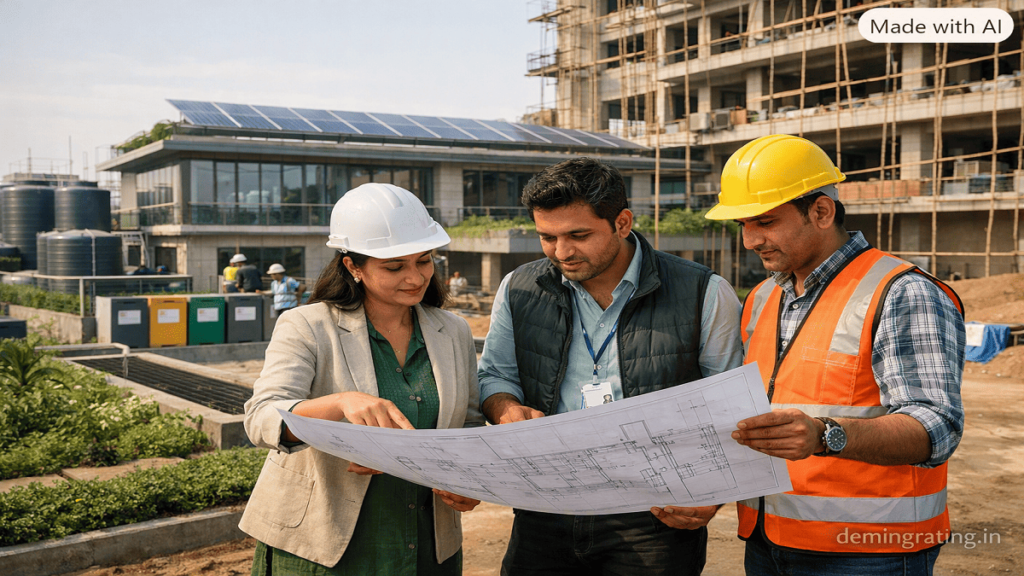
Demonstrating GGBC compliance requires more than simply completing a green-building checklist. Projects generally need to provide technical documentation, design evidence, statutory approvals, construction records, and operational information showing that the building satisfies both the applicable certification criteria and local regulatory requirements. The exact documentation varies according to the certification program, project category, location, and applicable laws.
1. Project and Design Documentation
The project team should maintain basic information describing the building, including site plans, architectural drawings, floor plans, elevations, sections, area calculations, and project specifications. These documents establish the project’s scope and provide the foundation for evaluating sustainability measures.
Energy-related documentation may include building energy models, HVAC specifications, lighting calculations, equipment efficiency data, renewable-energy calculations, and energy-performance assessments. These records help demonstrate compliance with applicable energy-efficiency requirements and green-building criteria.
2. Water and Environmental Documentation
Water-related documentation can include water-balance calculations, plumbing layouts, rainwater-harvesting designs, wastewater-treatment details, water-efficient fixture specifications, and records demonstrating water-reuse measures.
Depending on the project, environmental documentation may include environmental impact assessments, environmental-management plans, pollution-control approvals, groundwater permissions, tree-related permissions, and other environmental clearances. India’s environmental clearance framework is administered through the Ministry of Environment, Forest and Climate Change and relevant state authorities. (parivesh.nic.in)
3. Material and Construction Records
Projects may need product specifications, manufacturer declarations, material certificates, recycled-content information, responsibly sourced material documentation, and other evidence supporting sustainable-material claims.
During construction, records such as construction-waste management reports, waste disposal receipts, photographs, inspection reports, commissioning records, and site-management documentation can help demonstrate that approved sustainability measures were actually implemented.
4. Statutory Approvals
Certification documentation should be supported by applicable statutory approvals. Depending on the location and project characteristics, these may include building-plan approval, development permission, fire-safety approval, environmental clearance, consent from pollution-control authorities, water and sewage approvals, electrical approvals, occupancy or completion certificates, and other permissions required by local authorities.
The National Building Code of India and relevant local development regulations should also be considered when establishing the project’s legal compliance framework. The Bureau of Indian Standards provides standardized development and building regulations for reference.
5. Certification and Verification Records
The project should maintain completed certification forms, supporting calculations, drawings, photographs, declarations, test results, and other evidence requested by the relevant GGBC certification body. Third-party reviews or site inspections may also be required depending on the certification scheme.
Ultimately, the strongest compliance package is organized, traceable, and supported by verifiable evidence. Maintaining a compliance matrix from the beginning of the project can help teams track each GGBC requirement, corresponding regulation, responsible professional, required document, approval status, and submission deadline. This approach reduces the risk of missing evidence and makes the final certification and regulatory review process more efficient.
#GreenBuildingCertification
What Are the Benefits and Challenges of Maintaining GGBC Compliance With Local Regulations?
Maintaining GGBC compliance alongside local building and environmental regulations can help projects achieve stronger sustainability performance while meeting mandatory legal requirements. However, maintaining compliance throughout design, construction, and operation also requires careful planning, documentation, coordination, and ongoing investment.
Benefits of GGBC Compliance
One of the primary benefits is improved environmental performance. Green-building requirements can encourage efficient energy use, water conservation, responsible material selection, waste reduction, and improved indoor environmental quality. These measures can reduce a building’s environmental footprint while supporting long-term sustainability objectives.
Another important benefit is better resource efficiency. Energy-efficient equipment, high-performance building envelopes, water-efficient fixtures, renewable-energy systems, and effective waste-management practices can reduce operational resource consumption. Over time, these improvements may also contribute to lower utility and maintenance costs.
Compliance can also improve regulatory risk management. When certification requirements are systematically reviewed alongside local building, environmental, fire-safety, energy, and development regulations, project teams are better positioned to identify potential compliance issues before construction begins. India’s Bureau of Indian Standards provides standardized development and building regulations that can serve as an important reference for building-related requirements.
A further benefit is market and reputational value. Demonstrable sustainability performance can make buildings more attractive to environmentally conscious occupants, investors, tenants, and organizations. Certification can also provide a structured method for communicating a project’s environmental objectives and achievements.
Challenges of Maintaining Compliance
Despite these benefits, compliance can be challenging because regulatory requirements differ by location. Building regulations, environmental permissions, energy requirements, water rules, and approval procedures may vary between states, municipalities, and development authorities.
Another challenge is documentation and evidence management. Projects may need drawings, calculations, product information, testing reports, photographs, approval documents, and construction records. Missing or inconsistent documentation can delay certification or require additional verification.
There can also be higher initial costs and coordination requirements. Energy-efficient equipment, renewable-energy systems, water-treatment infrastructure, sustainable materials, and professional consultancy may increase upfront project expenditure. Architects, engineers, contractors, consultants, certification bodies, and government authorities must also coordinate their activities effectively.
Finally, requirements can change during a project’s development. Updates to building codes, environmental regulations, certification criteria, or local approval procedures may require design or documentation adjustments.
Conclusion
Maintaining GGBC compliance with local regulations offers significant advantages, including improved environmental performance, resource efficiency, regulatory risk management, and potential long-term economic value. However, achieving these benefits requires early planning, qualified professional support, accurate documentation, regular compliance reviews, and continuous communication with relevant authorities. A structured compliance-management process can help projects overcome these challenges and maintain both certification and legal requirements throughout the building’s lifecycle.
#SustainableBuildings
Case Study of GGBC Compliance With Local Regulations
A practical example of green-building compliance can be seen in large commercial and institutional projects in India, where sustainability certification requirements must be integrated with national building standards, state regulations, municipal approvals, and environmental requirements. The case demonstrates how early coordination can help a project achieve sustainability objectives without compromising mandatory legal requirements.
Project Planning and Regulatory Assessment
At the beginning of a sustainable building project, the development team typically identifies all applicable requirements before finalizing the design. These can include the National Building Code of India, local development-control regulations, fire-safety requirements, energy-efficiency provisions, water and wastewater regulations, environmental approvals, accessibility requirements, and construction-waste rules.
The team then compares these requirements with the applicable GGBC certification criteria. A compliance matrix can be created to identify each requirement, the responsible professional, supporting evidence, approval authority, and submission deadline. This process helps prevent situations where a sustainability measure conflicts with a mandatory local requirement.
The Bureau of Indian Standards provides standardized development and building regulations that can be used as an important reference when assessing building-related requirements.
Sustainable Design Integration
Once the regulatory framework has been established, sustainability measures can be incorporated into the building design. Energy-efficient lighting and HVAC systems, improved building envelopes, efficient water fixtures, rainwater harvesting, wastewater treatment, renewable-energy systems, and construction-waste management can be evaluated against both certification objectives and statutory requirements.
For example, installing a rooftop solar system can contribute to the project’s renewable-energy objectives while requiring appropriate electrical design and connection procedures. Similarly, rainwater-harvesting systems can support water-conservation goals while being designed according to local requirements and site conditions.
Documentation and Approvals
During construction, the project team maintains evidence demonstrating that the approved sustainability measures have actually been implemented. Typical records can include approved drawings, energy calculations, equipment specifications, material certificates, water-balance calculations, waste-management records, photographs, commissioning reports, and inspection documentation.
Statutory approvals are maintained separately but integrated into the overall compliance system. Depending on the project, these may include building-plan approval, fire-safety approval, environmental clearance, pollution-control permissions, water-related approvals, and completion or occupancy documentation. Environmental clearances, where applicable, are processed through India’s environmental approval framework administered by the Ministry of Environment, Forest and Climate Change and relevant authorities. (parivesh.nic.in)
Key Outcomes and Lessons
The main lesson from this type of project is that green certification should be integrated into the project from the planning stage rather than treated as a final-stage documentation exercise. Early regulatory mapping can reduce redesign risks, improve coordination, and make certification evidence easier to collect.
The case also demonstrates that GGBC compliance and local regulatory compliance serve different but complementary purposes. Certification focuses on sustainability performance, while statutory regulations establish minimum legal and safety requirements. A successful project addresses both through coordinated design, documentation, professional review, and regulatory engagement.
Ultimately, maintaining a structured compliance matrix, assigning responsibility for each requirement, monitoring construction implementation, and retaining verifiable evidence can help sustainable building projects achieve their environmental objectives while remaining legally compliant throughout development and operation.
#BuildingSustainability
White Paper: GGBC Compliance With Local Regulations
Executive Summary
Green building projects must balance sustainability objectives with mandatory building, environmental, safety, and development regulations. GGBC compliance with local regulations provides a structured approach for integrating green-building objectives into a project’s legal and technical framework. However, the exact meaning and requirements of “GGBC” should be verified against the specific certification or assessment program being used, as green-building standards can differ by organization, project type, and jurisdiction.
For projects in India, compliance typically involves coordinating green-building criteria with the National Building Code of India, state and municipal development regulations, energy-efficiency requirements, environmental approvals, water and wastewater requirements, fire-safety provisions, accessibility standards, and construction-waste regulations.
The objective is not simply to obtain a certification. A successful compliance strategy should produce a building that is environmentally responsible, legally compliant, technically safe, operationally efficient, and economically viable.
1. Introduction
Buildings have a significant influence on energy consumption, water use, material demand, waste generation, and environmental quality. Green-building certification provides project teams with a framework for addressing these impacts through improved design, construction, and operational practices.
However, certification requirements do not replace statutory obligations. A project must continue to satisfy applicable laws and approvals established by government authorities. This makes regulatory coordination an essential component of green-building development.
The Bureau of Indian Standards provides standardized development and building regulations that can serve as an important reference for understanding building-related requirements in India.
2. Understanding GGBC Compliance
GGBC compliance can be understood as the process of demonstrating that a project satisfies the applicable requirements of its selected green-building certification framework while also meeting relevant statutory requirements.
Typical sustainability areas include:
- Energy efficiency
- Water conservation
- Renewable-energy integration
- Sustainable materials
- Construction and operational waste management
- Indoor environmental quality
- Site and landscape management
- Resource efficiency
- Environmental performance
The project team should first confirm the applicable GGBC rating system, version, project category, mandatory prerequisites, documentation requirements, and certification process.
3. Local Regulatory Framework
Local compliance requirements can vary significantly depending on the project’s location, size, use, and environmental characteristics.
Important regulatory areas may include the National Building Code of India, municipal development regulations, zoning and land-use requirements, fire and life-safety provisions, accessibility standards, energy-efficiency rules, environmental clearances, water regulations, wastewater requirements, pollution-control permissions, and solid and construction-waste management rules.
Environmental approvals, where applicable, should be assessed through India’s environmental clearance framework and the relevant state authorities. The PARIVESH portal provides an online platform for environmental, forest, wildlife, and related clearance processes.
4. Integrating Certification and Regulation
One of the most effective strategies is to develop a regulatory and certification compliance matrix during the project’s initial planning stage.
The matrix can identify:
- The applicable GGBC requirement.
- The corresponding local or national regulation.
- The responsible architect, engineer, consultant, or contractor.
- Required technical evidence.
- Required statutory approval.
- Submission or inspection requirements.
- Current compliance status.
This approach allows project teams to identify conflicts before construction begins. For example, a proposed energy-efficiency measure should satisfy the green-building objective while also complying with applicable electrical, fire, structural, and building requirements.
5. Energy and Resource Efficiency
Energy performance is normally one of the most important components of a green-building strategy. Projects may evaluate building orientation, envelope performance, glazing, insulation, HVAC efficiency, lighting systems, controls, energy monitoring, and renewable-energy installations.
India’s energy-efficiency framework includes the Energy Conservation Building Code (ECBC) and related state-level implementation. Project teams should verify which energy provisions apply to the specific building and jurisdiction.
Water efficiency is similarly important. Rainwater harvesting, efficient fixtures, wastewater treatment, water reuse, cooling-system optimization, and landscape water management can contribute to sustainability objectives while being designed according to local requirements.
6. Environmental and Construction Compliance
Environmental considerations should be addressed throughout the project lifecycle. Depending on the project, environmental assessments, pollution-control permissions, groundwater requirements, tree-related permissions, and other approvals may apply.
Construction activities should also be managed to control dust, noise, waste, wastewater, and other environmental impacts. Construction-and-demolition waste should be handled according to applicable regulations and project requirements.
Documentation is particularly important because sustainability claims must be supported by verifiable evidence. Records may include drawings, calculations, product certificates, test reports, photographs, invoices, waste records, commissioning documents, and inspection reports.
7. Benefits of Integrated Compliance
Integrating GGBC criteria with local regulations provides several advantages.
Improved Environmental Performance
Energy-efficient systems, water conservation, renewable energy, responsible materials, and waste reduction can reduce the environmental impact of buildings.
Regulatory Risk Reduction
Early identification of approval requirements can reduce the likelihood of design changes, construction delays, penalties, or approval problems.
Operational Efficiency
Efficient energy and water systems can reduce operating expenses and improve resource management throughout the building’s life.
Market Value
Demonstrable sustainability performance can strengthen a building’s appeal to tenants, investors, organizations, and occupants seeking environmentally responsible facilities.
Better Project Management
A centralized compliance system creates clearer responsibilities and makes it easier to track requirements from design through construction and operation.
8. Major Challenges
Despite these advantages, integrated compliance can be complex.
Regulatory variation is a major challenge because requirements can differ between states, municipalities, and development authorities.
Documentation requirements can also become extensive. Missing calculations, certificates, photographs, approvals, or construction records can delay certification and verification.
Initial investment may be higher when projects incorporate efficient equipment, renewable-energy systems, water-treatment infrastructure, sustainable materials, or specialist consultancy.
Coordination is another challenge. Architects, engineers, sustainability consultants, contractors, certification professionals, and government authorities must work from consistent information.
Finally, regulations and certification criteria can change during a project’s lifecycle. Continuous monitoring is therefore necessary to identify new requirements and maintain compliance.
9. Recommended Compliance Strategy
A robust GGBC compliance strategy should follow a structured process:
Step 1: Identify the applicable certification framework.
Confirm the specific GGBC standard, version, project category, prerequisites, and documentation requirements.
Step 2: Map all statutory requirements.
Identify national, state, and local building, environmental, energy, fire, water, waste, and accessibility requirements.
Step 3: Create a compliance matrix.
Link each certification criterion to responsible personnel and supporting evidence.
Step 4: Integrate requirements into design.
Incorporate sustainability measures into architectural, structural, electrical, mechanical, landscape, and civil designs.
Step 5: Obtain approvals early.
Track planning permissions, environmental approvals, fire approvals, utility permissions, and other statutory requirements.
Step 6: Monitor construction.
Verify that approved sustainability measures and materials are actually installed and implemented.
Step 7: Maintain evidence.
Store drawings, calculations, certificates, photographs, test results, invoices, approvals, and inspection records in an organized system.
Step 8: Conduct final verification.
Review the complete project against both certification criteria and statutory requirements before completion and certification submission.
10. Future Outlook
The importance of integrated green-building compliance is likely to increase as governments, businesses, and investors place greater emphasis on energy efficiency, climate resilience, resource conservation, and emissions reduction.
Future compliance systems are also likely to benefit from digital documentation, building information modelling, energy simulation, automated monitoring, smart-metering systems, and centralized compliance-management platforms.
Greater coordination between certification programs and statutory building regulations could further simplify the approval process and reduce duplication of documentation.
Conclusion
GGBC compliance with local regulations should be treated as an integrated project-management responsibility rather than a final certification exercise. Sustainable buildings must satisfy environmental objectives while also meeting mandatory requirements related to safety, planning, energy, water, waste, construction, and environmental protection.
The most effective approach is to begin compliance planning during project conception, identify applicable regulations early, map certification requirements against statutory obligations, assign clear responsibilities, maintain reliable documentation, and monitor compliance throughout construction.
When implemented systematically, this approach can help projects achieve stronger environmental performance while reducing regulatory risk, improving operational efficiency, and supporting long-term building value. Ultimately, effective GGBC compliance is not simply about obtaining a green rating; it is about creating buildings that are sustainable, safe, efficient, legally compliant, and resilient over their entire lifecycle.
#GreenBuilding
Industry Applications of GGBC Compliance With Local Regulations
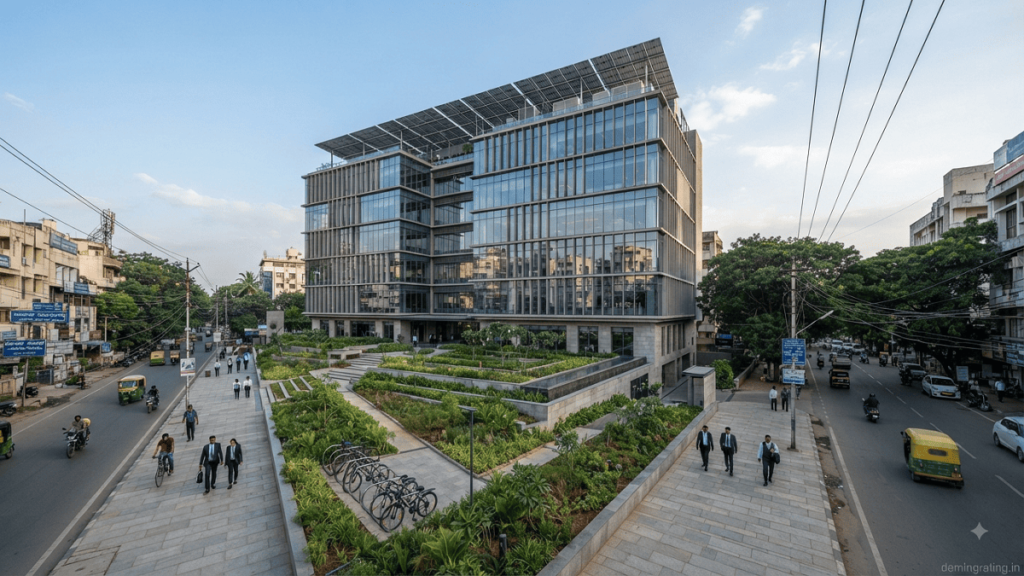
GGBC compliance with local regulations has applications across a wide range of industries where organizations are developing, renovating, or operating sustainable buildings. By combining green-building objectives with statutory requirements, companies can improve environmental performance while maintaining safety, legal compliance, operational efficiency, and long-term asset value.
1. Commercial and Office Buildings
Commercial offices are among the most common applications of green-building compliance. Businesses can integrate energy-efficient lighting, high-performance HVAC systems, efficient building envelopes, water-saving fixtures, renewable-energy systems, and waste-management practices. These measures can reduce operating costs while supporting corporate sustainability goals.
Compliance teams must also consider local building permissions, fire-safety requirements, accessibility standards, energy codes, occupancy regulations, and environmental requirements.
2. Manufacturing and Industrial Facilities
Manufacturing facilities can use green-building principles to improve energy and water efficiency while reducing waste. Sustainable industrial buildings may incorporate efficient motors, ventilation systems, heat-recovery technologies, renewable electricity, rainwater harvesting, wastewater treatment, and responsible material-management systems.
Local environmental and pollution-control regulations are particularly important for industrial projects because manufacturing activities may involve emissions, wastewater, hazardous materials, and industrial waste. Environmental approvals should therefore be coordinated with green-building objectives.
3. Healthcare Facilities
Hospitals and healthcare facilities have demanding energy, water, ventilation, hygiene, and indoor-air-quality requirements. GGBC-oriented design can support efficient HVAC systems, water conservation, daylighting, energy monitoring, sustainable materials, and improved indoor environmental conditions.
At the same time, healthcare projects must satisfy strict fire-safety, accessibility, waste-management, electrical, medical, and public-health requirements. Sustainability measures must therefore be carefully integrated without compromising patient safety or infection-control requirements.
4. Hospitality and Tourism
Hotels, resorts, and other hospitality facilities can apply green-building practices to reduce energy and water consumption. Common measures include efficient cooling systems, solar energy, water recycling, rainwater harvesting, efficient lighting, sustainable landscaping, and responsible waste management.
Local regulations relating to land use, water resources, sewage treatment, environmental protection, fire safety, and building occupancy must be considered during project development.
5. Retail and Commercial Complexes
Shopping centres, supermarkets, and mixed-use developments can benefit from energy-efficient lighting and cooling systems, efficient refrigeration, water-saving technologies, renewable-energy systems, waste segregation, and sustainable site planning.
These projects often involve large occupant populations, making compliance with fire protection, emergency evacuation, accessibility, parking, traffic, and municipal development requirements particularly important.
6. Residential and Real Estate Development
Residential developers can incorporate green-building principles through efficient building envelopes, natural ventilation, energy-efficient appliances, water conservation, rainwater harvesting, wastewater treatment, solar systems, and sustainable landscaping.
Developers must also consider local zoning, development permissions, building codes, fire safety, utility connections, and occupancy requirements. Early compliance planning can help prevent delays during project approval and completion.
7. Data Centres and Technology Facilities
Data centres are highly energy-intensive facilities and therefore have significant opportunities for sustainability improvements. Efficient cooling, power-management systems, renewable electricity, energy monitoring, and efficient building design can reduce environmental impacts.
Because these facilities require high reliability, sustainability measures must be integrated without compromising power availability, cooling performance, fire protection, and security requirements.
8. Warehousing and Logistics
Warehouses and logistics centres can apply sustainable building practices through rooftop solar installations, energy-efficient lighting, natural daylighting, efficient ventilation, rainwater harvesting, and sustainable site planning. Compliance with local development, transportation, fire-safety, and environmental requirements is essential.
Conclusion
GGBC compliance with local regulations has broad applications across commercial, industrial, healthcare, hospitality, residential, retail, technology, and logistics sectors. Although the sustainability measures vary by industry, the fundamental approach remains the same: identify applicable regulations, integrate green-building requirements into design, obtain necessary approvals, document implementation, and monitor compliance throughout the project lifecycle.
The Bureau of Indian Standards provides standardized development and building regulations that can serve as a useful reference when assessing applicable building requirements in India. For environmental approvals, projects should also review the applicable requirements through the PARIVESH portal.
#GGBC
Ask FAQs
What is GGBC compliance with local regulations?
GGBC compliance with local regulations involves meeting the applicable requirements of a green-building certification framework while also complying with mandatory building, environmental, safety, energy, water, and development regulations. Certification requirements do not replace statutory approvals.
Which local regulations are important for GGBC compliance?
Projects may need to consider the National Building Code of India, local development and zoning regulations, energy-efficiency requirements, fire-safety standards, environmental-clearance requirements, water and wastewater regulations, waste-management rules, and accessibility requirements. Exact requirements depend on the project’s location, size, and use.
What documents are typically required for GGBC compliance?
Typical documentation can include architectural and engineering drawings, energy calculations, water-balance reports, material specifications, equipment certificates, environmental approvals, fire-safety documentation, waste-management records, photographs, testing reports, commissioning records, and completion or occupancy approvals.
What are the main benefits of maintaining GGBC compliance?
Maintaining compliance can improve energy and water efficiency, reduce environmental impacts, support regulatory risk management, lower long-term operating costs, improve occupant conditions, and strengthen the sustainability credentials and market value of a building.
How can projects maintain GGBC compliance throughout construction?
Projects can maintain compliance by identifying requirements early, creating a detailed compliance matrix, assigning responsibilities to qualified professionals, coordinating with regulatory authorities, monitoring construction activities, maintaining accurate documentation, and conducting regular internal reviews. Continuous monitoring helps ensure that approved sustainability measures are implemented correctly and that regulatory requirements remain satisfied.
Table of Contents
Disclaimer: This content is for general informational purposes only. GGBC requirements and local regulations may vary by project and location, so applicable standards and approvals should be independently verified with the relevant authorities and certification body.