
Energy Efficient Fans
Energy efficient fans are designed to provide effective air circulation while consuming less electricity than conventional fan technologies. They are widely used in homes, offices, commercial buildings, factories, warehouses, schools, and other facilities where cooling and ventilation are required. By improving air movement without relying entirely on energy-intensive air-conditioning systems, efficient fans can help reduce electricity consumption and operating costs.
Modern energy efficient fans commonly use brushless DC (BLDC) motors, optimized blade designs, electronic speed controls, and improved motor technology. BLDC fans are particularly popular because their motors can operate efficiently across different speed settings while delivering the required airflow. The Bureau of Energy Efficiency (BEE) in India provides energy-efficiency information and appliance standards that help consumers compare the performance of electrical products.
How Energy Efficient Fans Work
A fan’s electricity consumption depends on factors such as motor efficiency, operating speed, blade design, airflow requirements, and operating duration. An efficient fan converts a greater proportion of electrical energy into useful air movement.
Unlike air conditioners, fans generally do not lower the actual temperature of a room. Instead, they increase air movement across the skin, improving the body’s perception of cooling. This means fans can often be used alongside air conditioning at a higher thermostat setting, potentially reducing overall cooling energy consumption.
Ceiling fans, pedestal fans, wall-mounted fans, exhaust fans, Energy Efficient Fans and industrial HVLS (High Volume Low Speed) fans are examples of fan systems that can be selected according to the application.
Major Benefits
The primary benefit of energy efficient fans is lower electricity consumption. When fans operate for several hours each day, even moderate efficiency improvements can produce meaningful energy savings over their operating life.
Lower electricity use can also reduce operating expenses and contribute to lower indirect greenhouse gas emissions, particularly in regions where electricity generation depends significantly on fossil fuels.
Efficient fans can also provide improved speed control. Variable-speed operation allows users to select an appropriate airflow level instead of continuously operating a fan at maximum speed. Smart controls, timers, occupancy sensors, Energy Efficient Fans and automation can further prevent unnecessary operation.
Applications
Energy efficient fans have applications across residential, commercial, and industrial environments. In homes, efficient ceiling and pedestal fans can provide economical air circulation. Offices, schools, hospitals, and retail buildings can use fans to improve indoor comfort and ventilation.
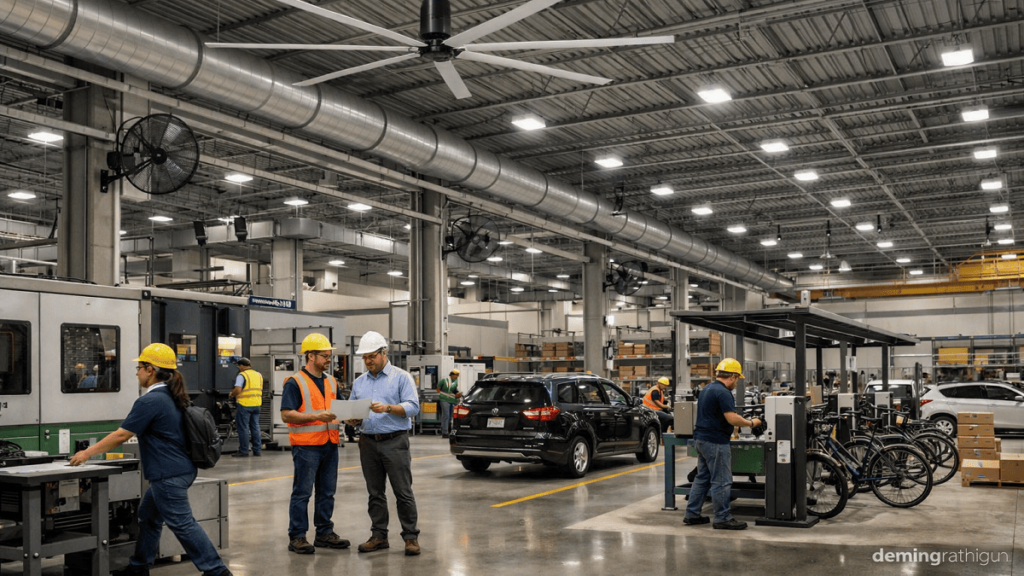
In warehouses, workshops, factories, and large commercial spaces, HVLS fans can move substantial volumes of air at relatively low rotational speeds. These systems can improve air circulation across large floor areas and may support cooling strategies in buildings with high ceilings.
Choosing an Energy Efficient Fan
When selecting a fan, consumers should consider electricity consumption, airflow performance, motor technology, operating noise, speed-control options, warranty, and expected operating hours. Looking only at the purchase price may not provide an accurate picture of long-term cost. A fan with a higher initial price may deliver greater savings if it uses substantially less electricity throughout its operating life.
Energy efficiency should therefore be evaluated together with airflow performance and the specific requirements of the space.
Conclusion
Energy efficient fans provide a practical way to improve comfort and air circulation while reducing electricity consumption. BLDC motors, aerodynamic designs, variable-speed controls, and smart operating features have made modern fans significantly more efficient than many conventional models.
For households and organizations seeking to reduce energy costs and improve sustainability, selecting efficient fans and using them appropriately can be a relatively simple but effective measure. When fans are integrated with natural ventilation, building design, Energy Efficient Fans and efficient air-conditioning strategies, they can contribute to a broader approach to energy-efficient cooling.
Relevant External Resources
- Bureau of Energy Efficiency (BEE)
- U.S. Department of Energy – Fans and Blowers
- ENERGY STAR – Heating and Cooling
#SmartEnergyManagement
What Are Energy-Efficient Fans and How Do They Differ from Conventional Fans?
Energy-efficient fans are designed to deliver effective air circulation while using less electrical power than conventional fan models. They typically incorporate more efficient motors, improved blade designs, electronic speed controls, and optimized airflow performance. BLDC (Brushless Direct Current) fans are a common example because their motor technology can provide comparable airflow while consuming substantially less electricity than many traditional induction-motor fans.
The key difference between an energy-efficient fan and a conventional fan is how effectively the fan converts electrical energy into useful airflow. A conventional ceiling fan commonly uses an AC induction motor, whereas many modern efficient fans use BLDC motors and electronic controllers. According to the Bureau of Energy Efficiency (BEE), traditional fans typically consume around 60–80 watts, while the BLDC fan example presented in its energy-efficiency handbook consumed approximately 28–32 watts. The actual consumption varies by model, speed, Energy Efficient Fans and operating conditions.
Energy Consumption and Efficiency
Energy-efficient fans are particularly beneficial when operated for long periods. For example, a fan operating several hours every day can contribute significantly to household or commercial electricity consumption. Reducing the wattage required to produce useful airflow can therefore lower electricity consumption over the fan’s operating life.
BEE evaluates ceiling fans using a service value, which is the air delivery in cubic metres per minute divided by electrical power input in watts. This approach considers both airflow and energy consumption rather than simply looking at the fan’s wattage. (Bureau of Energy Efficiency)
Motor Technology
Conventional fans generally rely on induction motors, while many high-efficiency models use BLDC motors. BLDC technology can provide efficient operation across different speed settings and may also offer advantages such as lower operating noise, improved reliability, and reduced energy consumption. BEE’s handbook identifies lower electricity consumption, longer inverter backup, reduced noise, longer life, and lower maintenance as potential advantages of BLDC ceiling fans.
Speed Control and Smart Features
Modern efficient fans may include electronic controls, remote controls, timers, sleep modes, and multiple speed settings. These features allow users to match airflow to actual comfort requirements instead of operating continuously at maximum speed. Some models can also integrate with smart-home systems for automated scheduling and control.
Star Ratings and Selection
In India, consumers can use the BEE star-labeling system when comparing applicable ceiling fans. The program uses a 1-to-5-star scale, with higher ratings indicating greater energy efficiency. BEE states that its Standards & Labeling program is intended to help consumers compare energy performance and potential cost savings.
Therefore, when purchasing an energy-efficient fan, consumers should consider not only the purchase price but also rated power consumption, airflow, service value, star rating where applicable, operating noise, warranty, and expected daily usage.
Conclusion
Energy-efficient fans provide a practical way to reduce electricity consumption without sacrificing useful air circulation. BLDC motors, optimized airflow, electronic controls, and efficient designs distinguish many modern fans from conventional models. For households, offices, commercial buildings, Energy Efficient Fans and industrial facilities where fans operate for extended periods, selecting an efficient model can contribute to lower operating costs and improved energy performance.
Relevant External Resources
- Bureau of Energy Efficiency – Standards & Labelling
- BEE – Electric Ceiling Fan Standards
- BEE – Energy-Efficient BLDC Fan Handbook
#SustainableIndustry
How Do Technologies Such as BLDC Motors and Efficient Motor Controls Reduce Fan Energy Consumption?
Technologies such as Brushless Direct Current (BLDC) motors, electronic motor controllers, and variable-speed controls can significantly improve fan energy efficiency by reducing electrical losses and allowing the motor to deliver only the airflow required for a particular application. This is especially valuable for ceiling fans, ventilation systems, commercial buildings, Energy Efficient Fans and industrial facilities where fans operate for many hours each day.
BLDC Motors Improve Motor Efficiency
A BLDC motor uses electronically controlled switching rather than the mechanical brushes and commutator used in traditional brushed DC motors. In ceiling fans, BLDC technology is generally combined with permanent magnets and electronic control circuitry to produce efficient rotational motion.
One important advantage is that BLDC motors can reduce certain electrical and mechanical losses associated with conventional motor designs. They can also maintain efficient operation across a range of speeds. The Bureau of Energy Efficiency (BEE) identifies BLDC fans as an energy-efficient alternative and notes their potential for lower electricity consumption compared with conventional ceiling fans. BEE – Energy-Efficient BLDC Fan Handbook
Electronic Motor Controls Optimize Power Use
Motor controllers regulate how much electrical power is supplied to the motor. Instead of operating a fan continuously at full power, an electronic controller can adjust motor speed according to the user’s selected setting.
For example, if a room requires moderate air circulation, the controller can operate the motor at a lower speed. This avoids unnecessarily consuming the electricity required for maximum-speed operation. Modern controllers can also provide smoother speed adjustment, remote control, timers, Energy Efficient Fans and other operating features.
Variable-Speed Operation
Variable-speed control is particularly important because fan demand changes throughout the day. A fan may need high airflow during warmer periods but considerably less airflow during cooler periods.
Efficient motor-control systems allow the fan to respond to these changing requirements. In larger ventilation and industrial systems, variable-frequency drives (VFDs) can control the speed of suitable AC motors. The U.S. Department of Energy notes that variable-speed drives can provide substantial energy savings in fan and pump applications because system output can be adjusted to match actual demand.
Reduced Standby and Operating Losses
Modern electronic controls can also incorporate timers, sleep modes, occupancy sensors, and automated scheduling. These features prevent fans from operating unnecessarily when rooms are unoccupied or when full airflow is not required.
Reducing operating time is just as important as improving motor efficiency. A highly efficient fan that runs unnecessarily can still consume significant energy, while combining efficient hardware with intelligent controls can deliver greater overall savings.
Better Airflow per Watt
Energy efficiency should not be judged only by the fan’s wattage. A more meaningful comparison considers airflow delivered for the electricity consumed. BEE’s ceiling-fan efficiency framework uses service value, which relates air delivery to power consumption.
Conclusion
BLDC motors and efficient motor controls reduce fan energy consumption through a combination of improved motor efficiency, reduced losses, precise speed regulation, and better matching of airflow to actual demand. When combined with aerodynamic blade designs and smart operating features, these technologies can significantly improve the overall efficiency of fan systems.
For homes, offices, commercial buildings, and industrial facilities, selecting an efficient motor technology and using appropriate speed controls can reduce electricity consumption while maintaining the desired level of air circulation.
#GreenBuildings
What Factors Should Be Considered When Selecting Energy-Efficient Fans for Homes, Offices, and Commercial Buildings?
Selecting an energy-efficient fan requires more than choosing the model with the lowest wattage. A suitable fan should provide the required airflow, operate efficiently, match the size and purpose of the space, and remain economical throughout its operating life. For homes, offices, and commercial buildings, several technical and practical factors should be evaluated before purchasing or installing a fan.
1. Motor Efficiency
Motor technology is one of the most important considerations. BLDC motors are commonly used in high-efficiency ceiling fans because they can provide effective airflow while consuming less electricity than many conventional induction-motor fans. The Bureau of Energy Efficiency (BEE) provides information on energy-efficient BLDC fan technology and its advantages.
2. Airflow Performance
A fan should be selected according to the amount of air it needs to move, not simply its power rating. A low-wattage fan that provides insufficient airflow may need to operate at a higher speed or be supplemented by additional fans, reducing the expected savings.
For ceiling fans, BEE uses service value, which relates air delivery to electrical power consumption. This provides a more useful indication of efficiency than wattage alone.
3. Room or Area Size
The size and layout of the space should influence fan selection. Smaller rooms may require compact ceiling or pedestal fans, while large offices, warehouses, retail facilities, Energy Efficient Fans and industrial spaces may benefit from larger commercial or HVLS fans.
Fan placement is also important because obstructions, ceiling height, furniture, and room configuration can affect airflow distribution.
4. Energy Rating and Power Consumption
In India, consumers should check the BEE star label where applicable. Higher-rated products generally indicate better energy performance under the applicable testing and labeling framework. However, buyers should compare the rated power consumption alongside airflow performance rather than relying only on the star rating.
5. Speed and Control Options
Variable-speed settings allow users to adjust airflow according to comfort requirements. Remote controls, timers, sleep modes, sensors, and smart controls can further reduce unnecessary operation.
In commercial buildings, automated controls can help coordinate fan operation with occupancy, temperature, ventilation requirements, Energy Efficient Fans or building-management systems.
6. Noise Level
Noise is particularly important in offices, classrooms, hospitals, libraries, bedrooms, and meeting spaces. An efficient fan should provide the required airflow without excessive motor or blade noise.
7. Operating Environment
Commercial and industrial fans may need to withstand dust, humidity, heat, chemicals, or continuous operation. Selecting a fan designed for the actual environmental conditions can improve reliability Energy Efficient Fans and reduce maintenance requirements.
8. Lifecycle Cost
Purchase price should not be the only financial consideration. Buyers should evaluate electricity consumption, maintenance, expected service life, replacement parts, warranty, and installation costs. A fan with a higher initial price may offer better long-term value if it consumes substantially less electricity.
Conclusion
The best energy-efficient fan is one that provides the required airflow with minimum practical energy consumption. Motor efficiency, airflow performance, room size, energy ratings, speed controls, noise, operating conditions, reliability, and lifecycle costs should all be considered.
For residential applications, efficient BLDC ceiling fans can be an attractive option. Offices and commercial buildings may benefit from centrally controlled or variable-speed systems, while large facilities can consider appropriately designed HVLS fans. Choosing the right technology for the specific application is essential for achieving meaningful energy and cost savings.
#EnergySaving
How Can Proper Sizing, Speed Control, Maintenance, and Operating Schedules Improve Fan Efficiency?
Fan efficiency is influenced not only by motor technology but also by how the fan is selected, controlled, maintained, and operated. Even a highly efficient fan can consume unnecessary electricity if it is oversized, operated at excessive speed, poorly maintained, or left running when it is not needed. Proper sizing, speed control, maintenance,Energy Efficient Fans and operating schedules can therefore improve performance while reducing energy consumption and operating costs.
Proper Fan Sizing
Selecting the correct fan size is one of the first steps toward efficient operation. A fan should provide the required airflow for the room or application without being unnecessarily large or powerful. An oversized fan may consume more electricity than necessary, while an undersized fan may need to operate continuously at high speed or require additional fans.
For commercial and industrial applications, fan selection should consider airflow requirements, room dimensions, ceiling height, occupancy, heat loads, ventilation requirements, and the intended use of the space. The U.S. Department of Energy emphasizes matching fan and blower systems to actual system requirements to avoid inefficient operation.
Speed Control
Variable-speed operation allows fans to deliver only the airflow required at a particular time. Instead of running continuously at maximum speed, users can reduce speed when conditions are cooler or when fewer occupants are present.
This can produce significant savings in systems where airflow demand varies. In larger installations, variable-frequency drives can adjust motor speed according to system requirements. For many fan applications, reducing speed can produce disproportionately large reductions in power demand because fan power is strongly related to rotational speed.
Regular Maintenance
Maintenance ensures that fans continue operating close to their intended performance. Dust accumulation on blades, blocked air passages, worn bearings, loose components, damaged blades, and electrical problems can reduce airflow and increase energy consumption.
Regular cleaning is particularly important in dusty commercial and industrial environments. Maintenance programs should include cleaning blades and guards, checking electrical connections, inspecting bearings Energy Efficient Fans and moving parts, and verifying that the fan operates smoothly. Any unusual vibration or noise should also be investigated.
Operating Schedules
Fans should operate only when their airflow is useful or required. Running fans in unoccupied rooms or outside operating hours wastes electricity without providing a corresponding benefit.
Timers, occupancy sensors, thermostatic controls, building-management systems, and automated schedules can help coordinate fan operation with occupancy and environmental conditions. Offices, classrooms, retail stores, and commercial facilities can schedule fans around their normal operating hours.
Combining All Four Strategies
The greatest efficiency improvements generally occur when these measures are implemented together. For example, a commercial building can install correctly sized fans, use variable-speed controls, schedule operation according to occupancy, and perform regular preventive maintenance.
This approach reduces unnecessary airflow, prevents equipment from operating under inefficient conditions, and helps maintain consistent performance throughout the fan’s service life.
Conclusion
Proper sizing, speed control, maintenance, and operating schedules are fundamental to efficient fan operation. Choosing the right fan prevents unnecessary capacity, speed controls match airflow to demand, maintenance minimizes performance losses, and operating schedules prevent unnecessary electricity consumption.
These measures are relatively straightforward and can be applied to residential fans as well as large commercial and industrial ventilation systems. When combined with efficient motor technologies such as BLDC motors, they can create a comprehensive strategy for reducing fan energy consumption, lowering operating costs, Energy Efficient Fans and improving overall building energy performance.
HVLSFans
What Are the Energy, Cost, Environmental, and Comfort Benefits of Using Energy-Efficient Fans?
Energy-efficient fans can provide significant benefits for homes, offices, commercial buildings, and industrial facilities by delivering effective air circulation with lower electricity consumption. Modern technologies such as BLDC motors, aerodynamic blades, variable-speed controls, and smart operating systems allow fans to operate more efficiently than many conventional models. Their advantages extend beyond electricity savings to include lower operating costs, reduced environmental impact, Energy Efficient Fans and improved indoor comfort.
Energy Benefits
The most direct benefit is reduced electricity consumption. Efficient motors convert electrical energy into useful rotational power more effectively, while variable-speed controls allow fans to operate according to actual airflow requirements.
BLDC fans are particularly useful in applications where fans operate for many hours each day. According to India’s Bureau of Energy Efficiency (BEE), BLDC ceiling fans can consume considerably less power than conventional ceiling fans, Energy Efficient Fans depending on the specific models and operating conditions.
Cost Benefits
Lower electricity consumption can translate directly into reduced energy bills. The savings become more significant in buildings with numerous fans or long daily operating hours.
For example, offices, schools, hotels, retail facilities, and industrial buildings may operate dozens or hundreds of fans. Even a modest reduction in power consumption per fan can create meaningful cumulative savings over time.
Although efficient fans can have a higher initial purchase price, Energy Efficient Fans their lower electricity consumption may reduce total ownership costs over their operating life.
Environmental Benefits
Reducing electricity consumption can also reduce the indirect environmental impact associated with electricity generation. The amount of emissions avoided depends on the local electricity mix, but lower electricity demand generally reduces the energy resources required to operate the power system.
Energy-efficient fans can therefore complement broader building-efficiency strategies and help organizations progress toward energy and carbon-reduction objectives.
Using fans effectively can also reduce reliance on air conditioning in suitable conditions. Fans do not actually lower room temperature, but they improve perceived cooling by increasing air movement across the skin. This can allow occupants to remain comfortable at a higher air-conditioning thermostat setting in appropriate conditions, potentially reducing cooling energy consumption.
Comfort Benefits
Energy efficiency does not have to come at the expense of comfort. Modern fans can provide consistent airflow with multiple speed settings, remote controls, timers, and other control options.
Variable-speed operation allows occupants to select the appropriate airflow for different conditions. In offices and commercial buildings, automated controls can adjust fan operation according to occupancy or environmental conditions.
Efficient motor designs can also provide quieter operation, which is particularly valuable in bedrooms, offices, classrooms, libraries, hospitals, and other spaces where excessive noise can be disruptive.
Additional Operational Benefits
Many modern efficient fans are designed with advanced electronics and motor systems that can provide smooth speed control and reliable operation. Some models also include features such as sleep modes, timers, remote controls, and smart-home integration.
For large facilities, efficient fans can be integrated into building-management systems, allowing facility managers to monitor and optimize operation.
Conclusion
Energy-efficient fans offer a combination of energy savings, lower operating costs, environmental benefits, and improved comfort. Efficient motors reduce electricity consumption, appropriate controls prevent unnecessary operation, and improved designs can provide effective airflow with lower noise.
For organizations, these benefits can become particularly significant when fans operate across large buildings or for extended periods. When properly selected, sized, maintained, Energy Efficient Fans and controlled, energy-efficient fans can become an important component of a broader building energy-efficiency strategy.
Relevant External Resources
- Bureau of Energy Efficiency – Energy-Efficient BLDC Fan Handbook
- Bureau of Energy Efficiency – Standards & Labelling
- U.S. Department of Energy – Fans and Blowers
- ENERGY STAR – Heating and Cooling
#IndustrialFans
Case Study of Energy Efficient Fans
A practical example of energy-efficient fan adoption can be found in India’s Bureau of Energy Efficiency (BEE) and Energy Efficiency Services Limited (EESL) initiatives promoting BLDC ceiling fans. These programs demonstrate how replacing conventional induction-motor fans with energy-efficient BLDC technology can reduce electricity consumption while maintaining useful airflow Energy Efficient Fans and improving long-term operating economics.
Background
Conventional ceiling fans commonly use induction motors and can consume approximately 70–80 watts depending on the model and operating speed. Modern BLDC fans can provide comparable air circulation at substantially lower power consumption. BEE documentation describes super energy-efficient BLDC fans operating at around 28 watts compared with approximately 80 watts for conventional fans.
This difference becomes significant when fans operate for many hours every day. Because ceiling fans are widely used in Indian homes, offices, institutions, and commercial facilities, improving their efficiency can provide considerable cumulative energy savings.
EESL BLDC Fan Pilot Program
A notable case involved Energy Efficiency Services Limited (EESL), which procured 100,000 BLDC fans as part of a pilot program. According to reports on the initiative, the project achieved approximately 16 million units (16 MU) of annual energy savings, with reported yearly monetary savings of around ₹6 crore. The BLDC fans used approximately 28–32 watts compared with roughly 70–75 watts for conventional ceiling fans.
The program illustrates the value of large-scale procurement and energy-efficiency programs. Instead of relying entirely on individual consumers to pay the higher upfront cost of efficient appliances, institutional procurement Energy Efficient Fans and efficiency programs can help accelerate market adoption.
Industrial Application: Ceramic Manufacturing
Another useful example comes from a UNIDO-BEE energy-efficiency project involving a ceramic manufacturing facility. The project replaced 400 conventional 70-watt ceiling fans with 400 BLDC fans rated at 28 watts for a drying process.
According to the project documentation, the replacement was expected to deliver approximately 60% electricity savings, with annual monetary savings of ₹4,83,840. The reported investment was ₹8,00,000, producing an estimated payback period of approximately 20 months.
This case is particularly relevant to industrial applications because fans can operate for long periods in manufacturing environments. Even relatively small reductions in power consumption per fan can therefore produce substantial cumulative savings.
What the Case Study Demonstrates
The examples demonstrate several important lessons. First, motor technology has a major influence on fan energy consumption. BLDC motors can substantially reduce power requirements compared with conventional induction motors.
Second, the economic benefit increases with operating hours. Facilities that operate hundreds of fans for extended periods can achieve faster payback because electricity savings accumulate continuously.
Third, energy efficiency should be evaluated at the system level. Correct fan sizing, appropriate speed settings, regular maintenance, and efficient controls can further improve performance.
BEE has also documented a fan replacement initiative in Delhi in which consumers could replace older fans with BEE 5-star-rated BLDC models. The program reported that replacing approximately 75-watt conventional fans with 28-watt BLDC fans could produce savings of about 63% under the stated operating conditions.
Conclusion
The adoption of energy-efficient fans demonstrates how relatively simple technology upgrades can produce measurable energy and financial benefits. The EESL program shows the potential of large-scale residential adoption, while the ceramic-industry example demonstrates how BLDC fans can reduce operating costs in industrial facilities.
For organizations considering fan replacement, the most important factors include existing fan wattage, operating hours, electricity tariffs, Energy Efficient Fansv airflow requirements, purchase and installation costs, and expected service life. A lifecycle-cost assessment can determine whether the higher initial investment in efficient fans is justified by future electricity savings.
Overall, BLDC fan technology provides a practical energy-efficiency opportunity for residential, commercial, and industrial applications, particularly where fans operate for long periods.
Relevant External Resources
- Bureau of Energy Efficiency – Energy-Efficient Fan Programs
- BEE – Compendium on DSM Measures Undertaken by DISCOMs
- BEE – Industrial Energy Audit Case Study
- India Science Technology and Innovation – Energy Efficient Ceiling Fan
#BLDCFans

White Paper on Energy Efficient Fans
Executive Summary
Energy-efficient fans are an important component of building energy management because they can provide effective air circulation while consuming less electricity than conventional fan technologies. Modern designs commonly use efficient motors, electronic controls, optimized blades, and variable-speed operation to improve airflow performance and reduce energy consumption.
In India, the Bureau of Energy Efficiency (BEE) uses a Standards & Labelling program to help consumers compare the energy performance and potential operating costs of appliances. For ceiling fans, BEE’s efficiency framework considers service value, which relates air delivery to electrical power input rather than evaluating power consumption alone.
Energy-efficient fans can be particularly valuable in residential buildings, offices, schools, hospitals, retail facilities, factories, warehouses, and other spaces where fans operate for extended periods. Their adoption can reduce electricity demand, operating expenses, Energy Efficient Fans and the indirect environmental impacts associated with electricity generation.
1. Introduction
Fans are often overlooked when organizations evaluate building energy consumption because individual fans generally have relatively modest power requirements. However, continuous or widespread operation can make fan systems a significant cumulative electricity load.
Energy efficiency therefore requires more than simply selecting a fan with a lower wattage. The objective is to deliver the required airflow and comfort using the least practical amount of electricity.
BEE’s Standards & Labelling program is designed to help consumers make informed purchasing decisions based on energy performance and potential cost savings. Its star-rating system provides a comparative benchmark, with higher ratings indicating greater efficiency within the applicable product category.
2. Technology Behind Energy-Efficient Fans
BLDC Motors
One of the most important developments in efficient ceiling fans is the use of Brushless Direct Current (BLDC) motors. BEE documentation describes BLDC fans as an energy-saving technology and reports substantially lower typical power consumption than traditional induction-motor fans under the cited conditions.
BLDC motors use electronic commutation and permanent-magnet technology to produce rotation efficiently. They can also support precise speed control, Energy Efficient Fans making them suitable for applications where airflow requirements vary.
Electronic Motor Controls
Electronic controllers regulate motor speed and power according to the selected operating level. This enables users to reduce airflow when maximum fan speed is unnecessary.
In larger ventilation applications, variable-speed drives can similarly adjust motor operation to match changing airflow requirements. Avoiding unnecessary full-speed operation can significantly improve system-level efficiency.
Aerodynamic Blade Design
Fan blades also influence energy performance. Efficient blade geometry can improve the amount of air delivered for a given amount of motor power. Therefore, buyers should consider airflow performance alongside motor wattage.
3. Measuring Fan Efficiency
A fan should not be considered efficient solely because it has a low electrical rating. A low-power fan that produces inadequate airflow may not provide the desired service.
BEE’s ceiling-fan regulations use service value, defined as air delivery in cubic metres per minute divided by electrical power input in watts. The framework uses this measure to determine the applicable star level for electric ceiling fans.
This approach provides a more meaningful comparison because it considers both electricity consumption and useful airflow.
4. Applications
Energy-efficient fans can be applied across multiple sectors.
Residential Buildings
Homes can use efficient ceiling, pedestal, wall-mounted, and exhaust fans to provide ventilation and perceived cooling while reducing electricity consumption.
Offices
Offices can use efficient ceiling fans and ventilation systems to improve thermal comfort. When appropriate, fans can complement air-conditioning systems Energy Efficient Fans and help occupants remain comfortable at higher cooling setpoints.
Commercial Buildings
Retail stores, hotels, restaurants, schools, hospitals, and other facilities can benefit from efficient fans because these buildings often operate fans for long periods.
Industrial Facilities
Factories, warehouses, workshops, and large production areas can use industrial ventilation systems and HVLS fans to circulate air over large spaces. Correct sizing and control are especially important because industrial fans may operate continuously or for extended shifts.
5. Energy and Economic Benefits
The principal advantage of efficient fans is lower electricity consumption. Even a relatively small reduction in power demand can generate substantial savings when multiplied across hundreds of units and thousands of operating hours.
For example, replacing inefficient fans throughout a large commercial or industrial facility can reduce the cumulative electrical load. The financial benefit will depend on fan quantity, operating hours, electricity tariffs, equipment cost, Energy Efficient Fans and actual power reduction.
The BEE Standards & Labelling program specifically aims to help consumers understand energy-saving and cost-saving potential when selecting appliances.
Efficient fans can also reduce the load placed on backup power systems. BEE documentation notes that BLDC fan technology can provide longer inverter backup because of lower electricity consumption.
6. Environmental Benefits
Lower electricity consumption generally means lower indirect environmental impacts associated with electricity generation. The actual emissions reduction depends on the electricity-generation mix supplying the building.
Efficient fans can also support broader building decarbonization strategies by reducing cooling-related electricity demand. When combined with efficient air conditioning, natural ventilation, insulation, shading, Energy Efficient Fans and smart controls, fans can contribute to a more comprehensive energy-management strategy.
7. Comfort and Indoor Environment
Energy efficiency should not compromise occupant comfort. The purpose of a fan is to provide useful air movement, and appropriate airflow can improve perceived thermal comfort.
Modern fans may offer multiple speed settings, remote controls, timers, sleep modes, and automated controls. These features allow occupants or building-management systems to adjust airflow according to actual requirements.
However, fans primarily improve perceived cooling through air movement rather than directly lowering room temperature. Therefore, their operation should be coordinated with ventilation Energy Efficient Fans and air-conditioning strategies.
8. Proper Sizing and Installation
Correct sizing is essential for achieving efficient operation. A fan should be selected according to room dimensions, ceiling height, occupancy, airflow requirements, heat loads, and intended use.
Oversized equipment can waste energy, while undersized fans may operate continuously at high speed without achieving sufficient airflow.
Installation quality also matters. Poor positioning, obstructions, inadequate clearance, damaged blades, or unsuitable mounting can reduce effective airflow and compromise performance.
9. Maintenance and Operating Practices
Regular maintenance can preserve efficiency throughout the fan’s service life. Dust accumulation, damaged blades, worn bearings, loose components, Energy Efficient Fans and electrical problems can reduce performance.
Organizations should establish preventive-maintenance schedules that include cleaning, inspection, electrical checks, and mechanical-condition assessments.
Operating schedules are equally important. Fans should not run unnecessarily in unoccupied spaces. Timers, occupancy sensors, thermostatic controls, Energy Efficient Fans and building-management systems can reduce unnecessary operating hours.
10. Procurement Recommendations
Organizations purchasing energy-efficient fans should evaluate:
- Motor technology
- Rated power consumption
- Air delivery
- Service value
- Applicable BEE star rating
- Speed-control capability
- Noise level
- Expected operating hours
- Warranty and maintenance requirements
- Purchase and installation costs
- Lifecycle energy costs
BEE’s current information indicates that fan products are covered within its Standards & Labelling framework, with specific product categories Energy Efficient Fans and labeling arrangements subject to applicable regulations and program status. Buyers should verify current labeling requirements before procurement.
11. Implementation Strategy
A structured fan-efficiency program can begin with an energy audit. Organizations should identify the number and type of existing fans, rated power, operating hours, Energy Efficient Fans and areas where fans are used.
The next step is to identify high-consumption equipment and assess replacement opportunities. Facilities can then compare efficient models based on airflow, service value, electricity consumption, and lifecycle cost.
After installation, energy consumption and operating performance should be monitored to verify expected savings. Maintenance and periodic performance checks should continue throughout the equipment’s service life.
Conclusion
Energy-efficient fans represent a practical opportunity to reduce electricity consumption across residential, commercial, institutional, and industrial buildings. Technologies such as BLDC motors, efficient blade designs, electronic controls, and variable-speed operation can improve the amount of useful airflow obtained from each unit of electricity.
However, technology selection alone does not guarantee maximum efficiency. Proper sizing, installation, maintenance, speed control, and operating schedules are equally important. A comprehensive approach that combines efficient equipment with effective building-management practices can deliver greater energy, financial, environmental, Energy Efficient Fans and comfort benefits.
As organizations pursue lower operating costs and stronger energy-performance targets, efficient fan systems should be considered an important part of broader building energy-efficiency strategies.
Relevant External Resources
- Bureau of Energy Efficiency – Standards & Labelling Program
- BEE – Electric Ceiling Fan Regulations
- BEE – Energy-Efficient BLDC Fan Case Study
- BEE – Energy Efficiency Information Portal
#EnergyEfficiency
Industry Application of Energy Efficient Fans
Energy-efficient fans have become an important energy-management solution across manufacturing, commercial buildings, warehouses, agriculture, hospitality, healthcare, and other industries. Technologies such as BLDC motors, high-efficiency fan blades, variable-speed controls, and high-volume low-speed (HVLS) systems can reduce electricity consumption while maintaining the airflow required for ventilation, cooling, Energy Efficient Fans and process operations.
The industrial relevance of efficient fan technology is significant because fans can operate continuously or for long shifts. India’s Bureau of Energy Efficiency (BEE) identifies energy-efficient BLDC fans as an energy-saving technology, with its published technology list indicating potential savings of approximately 35–50% in the cited building application.
Manufacturing Industry
Manufacturing facilities frequently use fans for employee comfort, ventilation, heat removal, and specific production processes. Factories with large production floors can replace conventional ceiling fans with efficient BLDC models or install appropriately sized industrial ventilation systems.
In a ceramic manufacturing cluster, a BEE-UNIDO project replaced 14,500 conventional 70 W ceiling fans with 28 W BLDC fans for drying applications. The project documentation reports approximately 60% power-consumption savings, demonstrating the potential impact of efficient fan technology when deployed at scale.
This type of application is particularly valuable where fans operate for extended production shifts.
Warehouses and Large Industrial Facilities
Warehouses, logistics centers, workshops, and factories often have large floor areas and high ceilings. Conventional small fans may provide uneven airflow Energy Efficient Fans and require numerous units.
HVLS fans can be used in these environments to circulate large volumes of air over broad areas. Properly engineered systems can improve air movement and occupant comfort while reducing the need for multiple smaller fan units.
However, fan selection should be based on building dimensions, ceiling height, heat loads, occupancy, airflow requirements, and operating schedules rather than simply selecting the largest available fan.
Textile Industry
Textile manufacturing facilities often require effective ventilation because production processes can generate heat, humidity, dust, and airborne fibers. Efficient fan systems can support air circulation and ventilation while controlling electricity consumption.
The U.S. Department of Energy identifies industrial fan-system optimization as an important energy-saving opportunity Energy Efficient Fans and provides technical resources and case studies covering industrial ventilation applications, including textile facilities.
Variable-speed control can be particularly valuable where ventilation requirements change according to production conditions.
Food Processing and Agriculture
Agricultural buildings, food-processing facilities, poultry houses, greenhouses, and storage areas require carefully controlled airflow. Efficient fans can support ventilation, temperature management, moisture control, Energy Efficient Fans and drying processes.
In these applications, fan selection must account for humidity, dust, corrosion, sanitation requirements, and continuous operating conditions. Energy efficiency should therefore be evaluated alongside durability and suitability for the operating environment.
Commercial Buildings and Offices
Offices, shopping centers, hotels, educational institutions, and other commercial buildings can use energy-efficient ceiling Energy Efficient Fans and ventilation fans to improve thermal comfort and indoor air circulation.
BEE’s building-efficiency framework emphasizes reducing building energy requirements without compromising occupant comfort, health, or productivity.
Efficient fans can also complement air-conditioning systems. Increasing air movement may allow occupants to remain comfortable at somewhat higher cooling setpoints in suitable conditions, potentially reducing overall cooling demand.
Hospitals and Healthcare Facilities
Hospitals require reliable ventilation and air movement, but fan selection must consider hygiene, noise, air-quality requirements, and applicable healthcare ventilation standards. Energy-efficient motors and variable-speed controls can reduce unnecessary electricity consumption while maintaining required airflow.
In critical areas, however, energy efficiency should never override required ventilation, pressure, filtration, or infection-control specifications.
Retail and Hospitality
Hotels, restaurants, retail stores, and entertainment facilities can use efficient fans in public areas, kitchens, service spaces, warehouses, and back-of-house areas. These facilities often operate for long hours, making electricity savings particularly valuable.
Occupancy-based controls, timers, and building-management systems can prevent fans from running unnecessarily during periods of low occupancy.
Key Implementation Practices
Organizations considering energy-efficient fan systems should begin with an energy audit. Important parameters include existing fan power ratings, operating hours, airflow requirements, maintenance conditions, and electricity tariffs.
A successful implementation should include:
- Correct fan sizing
- High-efficiency motor selection
- Appropriate airflow design
- Variable-speed controls where applicable
- Automated operating schedules
- Regular cleaning and maintenance
- Performance monitoring
- Lifecycle-cost evaluation
BEE’s current industrial energy-efficiency initiatives also emphasize technical guidance, energy audits, project planning, implementation, and monitoring for energy-efficiency technologies in MSMEs. (Bureau of Energy Efficiency)
Conclusion
Energy-efficient fans have broad applications across industry. Manufacturing plants can use BLDC fans for production-floor cooling and process applications, warehouses can use HVLS systems for large-area air circulation, textile facilities can optimize ventilation, and commercial buildings can combine efficient fans with air-conditioning and smart controls.
The greatest benefits occur when organizations treat fan efficiency as a complete system-efficiency project rather than simply replacing individual motors. Correct sizing, efficient motors, suitable controls, proper installation, maintenance, and performance monitoring can collectively reduce electricity consumption and operating costs.
For organizations planning an upgrade, the ceramic-industry example provides a useful demonstration of how large-scale BLDC fan replacement can generate measurable savings. At the same time, the actual savings for each facility should be calculated using its own operating hours, electricity tariff, airflow requirements, and existing equipment performance.
Relevant External Resources
- Bureau of Energy Efficiency – Industrial Energy Efficiency
- Bureau of Energy Efficiency – Energy-Efficient Technologies
- BEE-UNIDO – Energy-Efficient BLDC Fans in Ceramic Industry
- U.S. Department of Energy – Fan Systems
#EnergyEfficientFans
Ask FAQs
What are energy-efficient fans?
Energy-efficient fans are designed to provide effective airflow while consuming less electricity than conventional fans. They commonly use technologies such as BLDC motors, optimized blades, electronic speed controls, and smart operating features. These fans are suitable for homes, offices, commercial buildings, factories, warehouses, and other facilities where reducing electricity consumption is important.
How much electricity can energy-efficient fans save?
The actual savings depend on the fan’s motor technology, operating speed, daily usage, and comparison with the existing fan. BLDC fans can consume substantially less power than conventional induction-motor fans. BEE documentation provides examples of BLDC fans operating at around 28–32 watts compared with conventional fans using significantly higher power. Individual savings should therefore be calculated based on actual operating conditions.
Where can energy-efficient fans be used?
Energy-efficient fans have applications across residential, commercial, and industrial environments. They can be used in homes, offices, schools, hospitals, hotels, retail stores, factories, workshops, warehouses, agricultural facilities, and other large spaces. HVLS fans are particularly suitable for large industrial and commercial areas because they are designed to circulate large volumes of air across broad spaces.
Are BLDC fans better than conventional fans?
BLDC fans can offer several advantages over conventional induction-motor fans, including lower electricity consumption, efficient speed control, quieter operation in many models, and potentially lower long-term operating costs. However, performance depends on the specific product. Buyers should compare airflow, power consumption, applicable energy ratings, service value, warranty, and lifecycle cost rather than selecting a fan based solely on motor type.
How can businesses improve fan energy efficiency?
Businesses can improve fan efficiency by selecting correctly sized equipment, using high-efficiency motors, installing variable-speed controls where appropriate, maintaining clean blades and components, and using timers or occupancy-based controls. Regular energy audits can identify inefficient equipment and unnecessary operating hours. Combining efficient fans with proper ventilation, building design, and air-conditioning controls can further improve overall energy performance.
Table of Contents
Disclaimer: This content is for general informational purposes only. Actual energy savings, costs, and performance may vary depending on the fan model, operating conditions, installation, and usage.