
Handling of Construction Waste Management
What Is Construction Waste Management and Why Is It Important for Sustainable Building Projects?
Construction waste management is the systematic process of reducing, segregating, storing, transporting, reusing, recycling, and safely disposing of materials generated during construction, renovation, repair, and demolition activities. Construction waste can include concrete, bricks, wood, metals, glass, gypsum, plastics, packaging, excavated materials, and other debris. The objective is to prevent unnecessary disposal while recovering materials that can be reused or recycled.
The U.S. Environmental Protection Agency (EPA) identifies construction and demolition materials as a significant waste stream and promotes a sustainable materials management approach that prioritizes source reduction, reuse, recycling, and recovery over disposal. (US EPA)
Why Is Construction Waste Management Important?
Construction projects consume substantial quantities of raw materials and generate considerable amounts of waste. Poorly managed waste can occupy landfill space, increase transportation requirements, create pollution risks, and result in the loss of valuable resources. Effective waste management addresses these impacts by keeping materials in productive use for as long as possible.
The first priority should be waste prevention. Accurate material estimation, efficient design, prefabrication, careful procurement, and appropriate storage can reduce material losses before they become waste. The EPA considers source reduction the highest-priority approach because preventing waste eliminates the environmental impacts associated with processing, transportation, and disposal. (US EPA)
When waste cannot be prevented, materials should be segregated at the construction site. Concrete and masonry, metals, wood, plastics, cardboard, and other recoverable materials can be separated to improve recycling and reuse opportunities. Salvaging doors, windows, fixtures, Waste Management structural components, and other usable products can also reduce demand for new materials.
Environmental and Economic Benefits
Effective construction waste management provides both environmental and financial benefits. Recycling and reuse reduce demand for virgin resources and can lower the environmental impacts associated with extracting and manufacturing new construction materials. They can also reduce disposal Waste Management and transportation costs. EPA notes that reducing and recycling construction and demolition materials can conserve landfill capacity, reduce environmental impacts, create economic opportunities, and potentially reduce project expenses.
Waste management also supports circular economy principles by treating construction materials as resources rather than disposable products. Designing buildings for adaptability, disassembly, and future reuse can further reduce waste over the building’s life cycle. (US EPA)
Importance in Indian Projects
For projects in India, construction and demolition waste management must also consider applicable national and local regulations. The Environment (Construction and Demolition) Waste Management Rules, 2025 were notified by the Government of India and came into force on 1 April 2026, replacing the 2016 rules. The framework addresses segregation, collection, recycling, treatment, disposal, resource efficiency, Waste Management and compliance. (Central Pollution Control Board)
Conclusion
Construction waste management is therefore much more than removing debris from a project site. It is an integrated sustainability strategy covering planning, material procurement, source reduction, segregation, reuse, recycling, transportation, and responsible disposal. When incorporated from the design stage through construction and eventual demolition, it can reduce environmental impacts, conserve resources, lower costs, and support circular construction practices.
#CircularConstruction
What Types of Construction Waste Materials Are Commonly Generated During Building Activities?
Construction activities generate a wide variety of waste materials depending on the type of project, construction methods, building materials, and stage of development. Construction waste can arise from material cutting, packaging, installation, demolition, renovation, excavation, and site preparation. Proper identification and segregation of these materials are essential for effective waste management and sustainable building practices.
According to the U.S. Environmental Protection Agency (EPA), common construction and demolition materials include concrete, wood, asphalt, gypsum, metals, bricks, glass, plastics, and salvaged building components. (US EPA)
1. Concrete and Masonry Waste
Concrete is one of the most common materials generated during construction and demolition. Waste can include leftover concrete, broken concrete elements, blocks, mortar, and masonry debris. These materials can often be crushed and reused as aggregate or road-base material rather than being sent to landfill.
2. Wood Waste
Wood waste includes timber off-cuts, plywood, formwork, framing materials, pallets, and damaged wooden products. Clean wood can potentially be reused, recycled into engineered products, or recovered for other applications. EPA identifies wood as one of the major components of the construction and demolition waste stream. (US EPA)
3. Metal Waste
Construction sites commonly generate steel reinforcement bars, structural steel off-cuts, aluminium sections, copper wire, pipes, flashing, and other metal scraps. Metals are highly recyclable and can generally be separated and sent to appropriate recycling facilities.
4. Gypsum and Drywall
Gypsum board, plasterboard, and drywall scraps are frequently produced during interior construction and partition installation. Excess sheets and cutting waste should be collected separately where recycling facilities are available.
5. Brick, Tile, and Ceramic Waste
Broken bricks, clay tiles, ceramic tiles, sanitary fixtures, and other masonry products can result from cutting, installation, renovation, and demolition. Uncontaminated brick and masonry materials may be suitable for reuse or crushing and recycling.
6. Glass and Plastic Waste
Glass waste may include broken windows, mirrors, glazing pieces, and glass panels. Plastics can include pipes, insulation packaging, protective films, flooring materials, containers, and product packaging. Proper segregation improves the possibility of recycling.
7. Roofing and Asphalt Materials
Roofing projects may generate asphalt shingles, roofing felt, tiles, and other roofing materials. Road and external works can additionally produce asphalt concrete. EPA identifies asphalt shingles and asphalt concrete among major C&D material categories. (US EPA)
8. Excavated and Site-Clearance Materials
Site preparation can generate soil, sand, rocks, vegetation, tree stumps, and other natural materials. EPA includes earth, rock, trees, and stumps among materials that may occur in C&D waste streams. (US EPA)
9. Packaging and Miscellaneous Waste
Construction sites also generate cardboard, paper, plastic wrapping, pallets, containers, insulation off-cuts, carpets, and other packaging materials. These materials should be separated from mineral and hazardous waste wherever practical.
10. Hazardous Materials
Some projects may generate potentially hazardous materials such as lead-containing materials, asbestos-containing materials, certain paints, solvents, adhesives, fluorescent lamps, and contaminated materials. These require special handling, storage, transportation, and disposal procedures rather than being mixed with ordinary construction waste. (US EPA)
Conclusion
The most common construction waste materials include concrete, masonry, wood, metals, gypsum, bricks, tiles, glass, plastics, roofing materials, asphalt, soil, and packaging. Identifying these categories at the planning stage allows contractors to establish appropriate segregation, reuse, recycling, and disposal procedures.
The EPA emphasizes that many C&D materials can be recovered for productive uses instead of being disposed of, supporting resource conservation and reducing the environmental impact associated with producing new construction materials. (US EPA)
#ConstructionSustainability
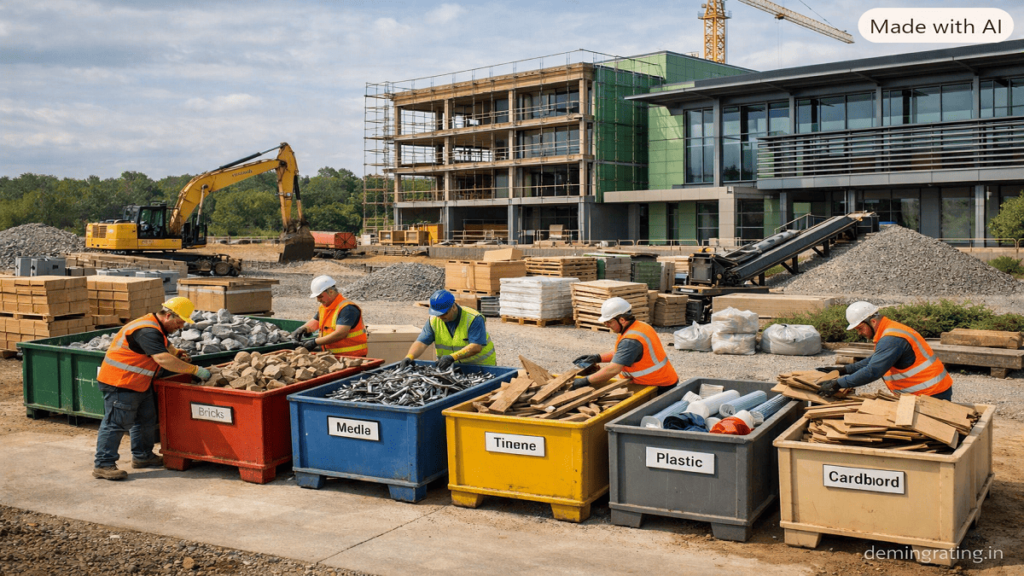
How Can Construction Waste Be Reduced, Segregated, Reused, Recycled, and Safely Disposed of?
Effective construction waste management requires a planned approach that begins before construction starts and continues throughout the project. The preferred hierarchy is to reduce waste first, then reuse materials, recycle suitable waste, recover value where possible, and safely dispose of only the residual material. The U.S. Environmental Protection Agency (EPA) identifies source reduction and reuse as the most environmentally preferable strategies, followed by recycling and other recovery options. (US EPA)
1. Reduce Waste at the Source
Waste reduction should begin during the design and procurement stages. Accurate quantity estimation, optimized building dimensions, modular construction, prefabrication, and careful material ordering can prevent excessive material purchases and off-cuts.
Designers can also select standard-sized materials, design for adaptability and future disassembly, and avoid unnecessary finishes. EPA recommends design approaches that make buildings easier to adapt, dismantle, and reuse, helping reduce waste over the building’s life cycle. (US EPA)
Proper material storage is equally important. Cement, timber, gypsum boards, insulation, tiles, and other products should be protected from moisture, damage, contamination, and improper handling.
2. Segregate Waste at the Construction Site
Construction waste should be separated at the point where it is generated whenever practical. Dedicated collection areas or containers can be provided for concrete and masonry, metals, wood, cardboard, plastics, gypsum, glass, and other materials.
Source segregation improves the quality and value of recyclable materials and makes subsequent processing easier. EPA guidance notes that separating uncontaminated materials can improve recycling and reuse opportunities and may also reduce waste-management costs. (EPA Nepis)
Clear signage, designated collection points, worker training, and regular monitoring can help maintain effective segregation.
3. Reuse Materials Wherever Possible
Reusable materials should be identified before they become waste. Doors, windows, fixtures, timber, bricks, pavers, metal components, and other construction products may be reused on the same project or transferred to another project.
During renovation or demolition, selective deconstruction can be more effective than conventional demolition because components are carefully removed rather than destroyed. This maximizes the recovery of materials for reuse. (US EPA)
4. Recycle Suitable Materials
Materials that cannot be directly reused should be evaluated for recycling. Concrete, masonry, asphalt, metals, wood, cardboard, glass, and certain plastics can often be processed into new products where suitable recycling facilities and markets exist. For example, concrete and rubble can be crushed into aggregate, while metals can be recovered and processed into new metal products. (US EPA)
Contractors should verify that recycling facilities are properly authorized and that recovered materials are handled according to applicable requirements.
5. Safely Dispose of Residual and Hazardous Waste
Some materials cannot be reused or recycled and must be sent to an appropriately authorized disposal facility. Hazardous or potentially contaminated materials require special handling and should never be mixed with ordinary construction debris. Materials such as asbestos, lead-containing products, and certain contaminated substances may be subject to specific regulatory requirements. (US EPA)
Waste should be transported using authorized waste handlers and disposed of only at approved facilities.
6. Follow Indian Regulatory Requirements
For projects in India, the Environment (Construction and Demolition) Waste Management Rules, 2025 came into force on 1 April 2026. The rules cover construction, demolition, remodeling, renovation, and repair activities and establish requirements related to segregation, collection, recycling, treatment, utilization, and disposal. (Central Pollution Control Board)
The Central Pollution Control Board (CPCB) provides regulatory resources and a dedicated C&D waste management platform, while the Maharashtra Pollution Control Board (MPCB) provides state-level information relevant to projects in Maharashtra. (CPCB)
Conclusion
A successful construction waste strategy follows a clear sequence: prevent waste, segregate materials, reuse recoverable components, recycle suitable materials, and safely dispose of unavoidable residual waste. Integrating these practices into project design, procurement, construction, demolition, and facility management can conserve resources, reduce landfill demand, lower disposal costs, and support circular construction.
#WasteRecycling
How Can Site Practices Improve the Storage, Handling, and Transportation of Construction Waste?
Effective on-site practices are essential for managing construction waste safely, efficiently, and sustainably. Poorly stored or handled waste can create safety hazards, obstruct construction activities, contaminate soil and water, and increase the amount of material sent to disposal facilities. A well-planned waste-management system should therefore address segregation, storage, handling, collection, transportation, and documentation from the beginning of the project.
1. Establish Dedicated Waste Collection Areas
Construction sites should provide clearly identified waste-collection and storage areas. These locations should be positioned away from stormwater drainage routes, water bodies, major pedestrian movement, and areas where materials could be displaced by wind or rain. The U.S. Environmental Protection Agency (EPA) recommends designated collection areas and appropriate containers as part of good construction-site waste-management practices. (US EPA)
Separate containers should be provided for materials such as concrete and masonry, metals, wood, cardboard, plastics, and general waste. Clear signage and color coding can make segregation easier for workers.
2. Protect Waste From Weather
Waste containers should be covered where necessary, particularly during periods of rainfall. Lightweight materials such as plastic sheets, insulation, cardboard, and packaging can easily become windblown debris.
Covered containers and properly located storage areas also help prevent rainwater from carrying pollutants into storm drains or surrounding land. EPA guidance recommends keeping waste containers covered during rain and locating collection areas where they are not directly exposed to stormwater flows. (US EPA)
3. Maintain Safe and Organized Storage
Waste should not be allowed to accumulate randomly around the construction site. Storage areas should have adequate space for safe movement of workers and equipment, stable surfaces, and suitable barriers where required.
Hazardous or potentially contaminated materials, including asbestos-containing materials, lead-containing materials, solvents, and certain chemicals, should be identified and stored separately according to applicable regulations. EPA emphasizes that materials containing asbestos, lead, PCBs, and other regulated substances require appropriate management. (US EPA)
4. Use Proper Handling Procedures
Workers should be trained to handle construction waste according to its material type and potential hazards. Manual handling should be minimized where heavy or sharp materials are involved, while suitable equipment such as carts, skips, forklifts, or mechanical lifting systems should be used where appropriate.
Regular housekeeping is also important. Prompt removal of debris from work areas reduces trip hazards, improves productivity, and keeps recyclable materials from becoming contaminated.
5. Plan Waste Transportation
Waste should be transported according to its type and destination. Recyclable materials should be sent to appropriate recycling facilities, reusable materials should be directed toward reuse opportunities, and residual waste should go only to authorized disposal facilities.
Vehicles carrying loose construction debris should be appropriately secured and, where necessary, covered to prevent materials and dust from escaping during transportation. EPA guidance specifically recommends covering trucks carrying debris when necessary to prevent the release of dust and materials during transport. (US EPA)
Hazardous waste requires additional controls, including appropriate containers, labeling, documentation, and authorized transportation arrangements under applicable regulations. (US EPA)
6. Keep Records and Monitor Performance
A construction waste-management plan should record the quantities of materials generated, reused, recycled, transported, and disposed of. Contractors can use these records to calculate waste-diversion rates and identify opportunities for improvement.
Regular site inspections should verify that waste is properly segregated, containers are not overflowing, storage areas remain clean, and collection schedules are being followed.
7. Follow Indian Regulations
For projects in India, the Environment (Construction and Demolition) Waste Management Rules, 2025 came into force on 1 April 2026 and apply to construction, demolition, remodeling, renovation, and repair activities. The rules establish requirements for environmentally sound management, including segregation, collection, recycling, treatment, utilization, and disposal. (Central Pollution Control Board)
The Central Pollution Control Board (CPCB) provides the official regulatory resources for construction and demolition waste management.
Conclusion
Good site practices can significantly improve construction waste management by keeping materials segregated, protected, accessible, and properly documented. Dedicated collection areas, covered containers, safe handling procedures, scheduled collection, secure transportation, worker training, and regular inspections help prevent pollution while improving recycling and reuse opportunities.
The most effective approach is to integrate waste management into the project before construction begins. Careful planning can identify recyclable materials, establish appropriate storage locations, select authorized waste contractors, and determine suitable destinations for recovered materials. EPA guidance similarly emphasizes early planning to identify reuse and recycling opportunities, protect health and the environment, and control project costs. (US EPA)
#WasteReduction
Case Study of Handling of Construction Waste Materials
Effective handling of construction waste can be demonstrated through the development of construction and demolition (C&D) waste processing facilities in Delhi, India. The case illustrates how systematic collection, transportation, processing, recycling, and reuse can convert construction debris from a disposal problem into a source of secondary construction materials.
Case Study: Delhi C&D Waste Processing System
Delhi has historically generated substantial quantities of construction and demolition waste. According to Central Pollution Control Board (CPCB) guidance, Delhi generated approximately 3,000 tonnes of C&D waste per day at the time of the documented case study. To address this challenge, a C&D waste processing facility was established at Burari, Jahangirpuri, in collaboration with the municipal authority and a private operator. The facility was commissioned in 2009 with a processing capacity of approximately 500 tonnes per day. (Central Pollution Control Board)
The project demonstrated how a structured waste-management system could improve the handling of construction materials at the city scale.
Collection and Transportation
A key element of the Delhi approach was organized collection of C&D waste from designated locations. Instead of allowing construction debris to be dumped indiscriminately, waste could be directed toward designated processing facilities.
Proper transportation is important because uncontrolled dumping can create dust, obstruct roads and drains, and contaminate surrounding areas. A planned collection system ensures that materials reach authorized processing facilities where they can be sorted and recovered.
Processing and Material Recovery
At the processing facility, incoming C&D waste is processed to recover useful materials. Concrete, bricks, masonry, and other mineral-based materials can be crushed and processed into recycled aggregates and other construction products.
This approach changes the conventional waste-management model from “collect and dispose” to “collect, process, recover, and reuse.” The CPCB case study also documented additional C&D processing facilities in Delhi, including facilities at East Kidwai Nagar and Shastri Park, demonstrating the potential for expanding decentralized processing capacity. (Central Pollution Control Board)
Reuse of Recycled Materials
An important part of the case was the promotion of products manufactured from recycled C&D waste. The CPCB guidance notes that the Delhi government issued an advisory encouraging public works agencies to incorporate products made from recycled C&D materials.
Reusing recovered aggregates and other materials can reduce dependence on virgin resources while decreasing the volume of waste requiring final disposal.
Lessons for Sustainable Construction
The Delhi case demonstrates several important principles for construction projects:
- Segregation and organized collection are essential for recovering useful materials.
- Dedicated processing facilities can convert construction debris into usable secondary materials.
- Recycling markets and government procurement can create demand for recovered products.
- Authorized transportation and processing reduce uncontrolled dumping.
- Material recovery conserves natural resources and reduces landfill requirements.
These principles are consistent with the broader approach promoted by the. Net Zero Waste to Landfill framework promotes the reduce, reuse, and recycle (3R) approach and identifies waste diversion, resource efficiency, and reduced disposal costs as important benefits.
Conclusion
The Delhi C&D waste-management case demonstrates how construction waste can be transformed into a valuable resource through planned collection, secure transportation, processing, recycling, and reuse. Rather than treating concrete, masonry, and other debris as materials with no further value, a structured system can recover useful resources and reduce dependence on landfill disposal.
For individual building projects, the same principles can be applied at a smaller scale through a project-specific waste-management plan. Contractors can establish segregated collection areas, identify reusable materials, partner with authorized recyclers, maintain transportation records, and track the percentage of waste diverted from disposal.
#SustainableConstruction
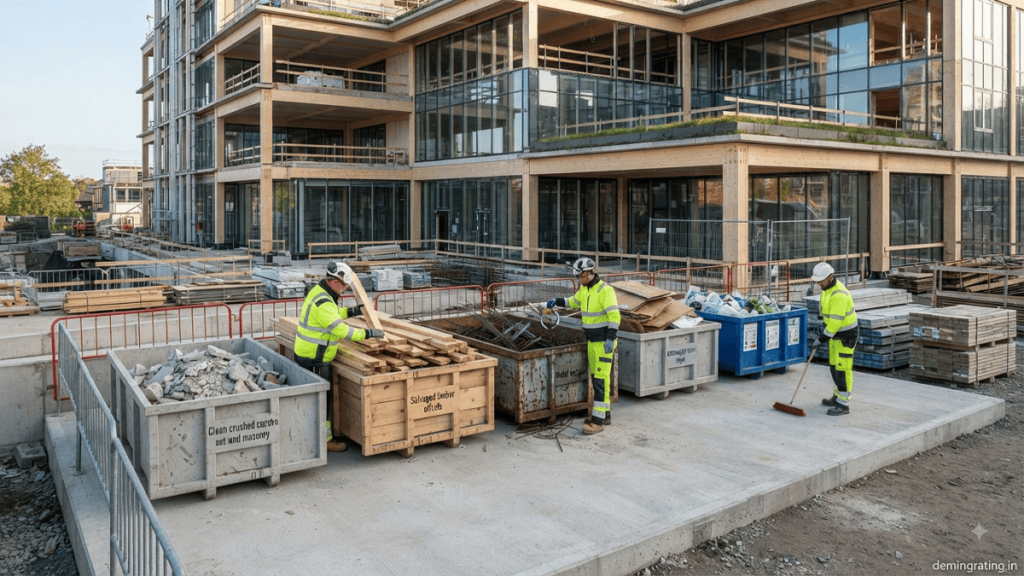
White Paper on Handling of Construction Waste Materials
Executive Summary
The handling of construction waste materials is a critical component of sustainable construction, resource efficiency, and environmental protection. Construction activities generate materials such as concrete, masonry, wood, metals, gypsum, glass, plastics, packaging, excavated soil, and other debris. Instead of treating these materials as unwanted waste, modern construction practices increasingly focus on preventing waste, recovering usable materials, recycling suitable products, and responsibly managing unavoidable residuals.
The U.S. Environmental Protection Agency (EPA) promotes a sustainable materials-management approach that prioritizes source reduction, reuse, recycling, and recovery. This approach can conserve resources, reduce disposal requirements, and create economic benefits. (US EPA)
In India, the Environment (Construction and Demolition) Waste Management Rules, 2025 strengthen the regulatory framework for C&D waste management and came into force on 1 April 2026. The rules apply to construction, demolition, remodeling, renovation, and repair activities and emphasize segregation, collection, recycling, treatment, utilization, and environmentally sound disposal. (Central Pollution Control Board)
1. Introduction
Construction waste management should begin during the design and planning stage, rather than after waste has already been generated. Decisions about building dimensions, material selection, prefabrication, procurement, construction techniques, and future adaptability can significantly influence the quantity and type of waste produced.
The EPA identifies source reduction as the most environmentally preferred strategy because preventing waste avoids the environmental impacts associated with transportation, processing, recycling, and disposal. Designing buildings for adaptability, disassembly, and material reuse can further reduce waste throughout the building life cycle. (US EPA)
2. Major Construction Waste Materials
Construction and demolition activities can generate a broad range of materials, including:
- Concrete and reinforced concrete
- Bricks and masonry
- Timber and wood products
- Steel and other metals
- Gypsum and plasterboard
- Glass
- Plastics
- Asphalt and roofing materials
- Soil, rocks, and excavated materials
- Packaging materials
- Doors, windows, fixtures, and other salvageable components
The EPA identifies concrete, wood, asphalt, gypsum, metals, bricks, glass, plastics, and salvaged building components among common C&D material categories. (US EPA)
3. Waste Reduction at Source
The most effective waste-management strategy is to avoid generating unnecessary waste. Project teams can achieve this through accurate quantity calculations, optimized design, modular construction, prefabrication, efficient cutting plans, careful procurement, and appropriate material storage.
Purchasing should be based on realistic project requirements rather than excessive quantities. Suppliers can also be encouraged to minimize packaging or accept reusable packaging materials.
Designing for adaptability and future disassembly is particularly valuable because building components can potentially be recovered rather than destroyed during future renovations or demolition. (US EPA)
4. Segregation and Storage
Once waste is generated, it should be segregated as close as possible to the point of generation. Separate storage areas or containers can be established for concrete, masonry, wood, metals, plastics, cardboard, gypsum, and other materials.
Segregation improves material quality and increases the likelihood of successful recycling or reuse. Mixed waste is generally more difficult and costly to recover because recyclable materials can become contaminated.
Storage areas should be clearly marked, stable, accessible, and protected from unnecessary weather exposure. Hazardous or potentially contaminated materials require separate handling and must not be mixed with ordinary construction debris.
5. Reuse and Material Recovery
Reuse should be considered before recycling. Materials such as doors, windows, timber, fixtures, bricks, structural components, and architectural elements may be suitable for direct reuse.
Deconstruction provides an effective method for recovering materials from existing buildings. Instead of demolishing everything simultaneously, components are carefully removed and assessed for reuse or recycling. EPA identifies deconstruction as an approach that can maximize material recovery and significantly reduce disposal. (US EPA)
Recovered materials can be reused on the same project, transferred to another construction project, donated, or sold through appropriate material-reuse markets.
6. Recycling and Processing
Materials that cannot be directly reused should be evaluated for recycling. Concrete, asphalt, metals, wood, brick, and certain plastics may have established recycling pathways depending on local infrastructure and market conditions.
Concrete and masonry can often be processed into recycled aggregate, while metals such as steel, aluminium, copper, and brass can be recovered for manufacturing. Wood may be processed into engineered products, mulch, or other applications where appropriate. (US EPA)
Contractors should verify that recycling facilities and waste contractors are properly authorized and capable of handling the specific materials.
7. Safe Handling of Hazardous Materials
Not all construction materials can be handled as ordinary C&D waste. Some buildings may contain asbestos, lead-containing materials, PCBs, contaminated materials, chemicals, solvents, or other hazardous substances.
These materials require identification, controlled removal, appropriate packaging, trained personnel, authorized transportation, and compliant treatment or disposal. EPA emphasizes that potentially harmful materials must be managed according to applicable regulatory requirements. (US EPA)
A pre-construction or pre-demolition assessment can help identify hazardous materials before major work begins.
8. Transportation and Disposal
Construction waste should be transported using suitable vehicles and sent to authorized destinations. Loads should be secured to prevent material loss, dust generation, and environmental contamination during transportation.
The project team should maintain documentation showing the quantity and destination of waste materials. This creates traceability and helps verify whether materials were reused, recycled, recovered, or disposed of.
Final disposal should be reserved for materials that cannot reasonably be prevented, reused, recycled, or recovered. The objective is to minimize the residual waste stream rather than relying on disposal as the primary management strategy.
9. Regulatory Framework in India
India’s Environment (Construction and Demolition) Waste Management Rules, 2025 provide a strengthened national framework for C&D waste management. The rules supersede the 2016 framework and introduce measures addressing waste management, utilization, resource efficiency, extended producer responsibility, environmental compensation, and online monitoring and compliance. (Central Pollution Control Board)
For Indian projects, project owners, contractors, architects, consultants, and waste-management agencies should review the latest requirements applicable to their project location and type.
The official Central Pollution Control Board (CPCB) provides regulatory information and resources relating to waste management. (Central Pollution Control Board)
10. Economic and Environmental Benefits
Proper construction-waste handling can reduce material purchasing, transportation, and disposal costs. On-site reuse can reduce the need to purchase new products, while recycling can generate value from materials that would otherwise require disposal.
Environmental benefits include reduced landfill demand, conservation of natural resources, reduced extraction of virgin materials, and potentially lower environmental impacts associated with manufacturing new construction products. EPA identifies avoided purchase and disposal costs, resource conservation, economic activity, and reduced disposal requirements among the benefits of sustainable C&D material management. (US EPA)
EPA’s Waste Reduction Model can also be used to compare potential greenhouse-gas, energy, and economic impacts associated with different material-management strategies. (US EPA)
11. Recommended Construction Waste Management Strategy
A practical project strategy should follow this hierarchy:
- Prevent unnecessary material use and waste generation.
- Plan procurement and material quantities accurately.
- Segregate waste at the point of generation.
- Store materials safely and prevent contamination.
- Reuse suitable materials and components.
- Recycle materials through authorized facilities.
- Recover remaining material value where feasible.
- Transport waste safely and maintain documentation.
- Dispose only of unavoidable residual waste.
- Monitor and report waste quantities and diversion performance.
Conclusion
Handling construction waste materials is an essential part of responsible and sustainable building practice. A successful approach moves beyond simple waste disposal and focuses on resource recovery and waste prevention. By integrating waste planning into design, procurement, construction, renovation, and demolition, project teams can reduce material losses and increase opportunities for reuse and recycling.
The most effective strategy is to treat construction materials as valuable resources rather than disposable products. Source reduction, selective deconstruction, segregation, reuse, recycling, safe transportation, and compliant disposal can collectively reduce environmental impacts while improving project efficiency and resource conservation.
#ConstructionWaste
Industry Application of Handling of Construction Waste Materials
The handling of construction waste materials has become an important operational and sustainability practice across the construction, infrastructure, manufacturing, real-estate, demolition, and facility-management industries. Effective handling involves reducing waste at the source, segregating materials, protecting and storing them properly, transporting them safely, and directing reusable or recyclable materials toward appropriate recovery channels.
Construction and demolition materials can include concrete, masonry, metals, wood, gypsum, asphalt, glass, plastics, packaging, and excavated materials. The U.S. Environmental Protection Agency (EPA) recommends prioritizing source reduction, reuse, recycling, and recovery to conserve resources and reduce disposal. (epa.gov)
1. Building Construction Industry
In residential, commercial, and institutional construction, waste handling begins with project planning and material procurement. Contractors can reduce waste through accurate quantity estimation, prefabrication, modular construction, optimized cutting, and proper material storage.
During construction, separate collection areas can be established for concrete, metal, wood, cardboard, plastics, and other materials. Reusable components should be identified before being treated as waste.
This approach can reduce material purchasing costs, improve site organization, and increase the percentage of waste diverted from disposal.
2. Infrastructure and Civil Engineering
Roads, bridges, railways, airports, and other infrastructure projects can generate large volumes of concrete, asphalt, soil, aggregates, and excavation materials.
These materials provide significant opportunities for on-site and off-site recovery. Reclaimed asphalt pavement can be incorporated into appropriate road applications, while processed concrete and masonry can potentially be used as recycled aggregates.
Excavated soil and rock may also be reused for grading, filling, landscaping, or other approved applications, reducing the need to transport material away from the project and import replacement materials.
3. Demolition and Renovation
Demolition and renovation projects require careful planning because existing buildings may contain both valuable reusable components and hazardous materials.
A pre-demolition assessment can identify doors, windows, timber, metal components, fixtures, bricks, and other materials suitable for recovery. Selective deconstruction can then be used to remove these components before structural demolition.
The EPA identifies deconstruction and salvage as effective approaches for maximizing the recovery and reuse of building materials. (epa.gov)
4. Real-Estate Development
Large residential and commercial developments can incorporate construction waste management into their overall sustainability strategy. Developers can establish project-wide waste-management plans containing targets for waste reduction and recycling.
Contractors can also use waste-tracking systems to monitor how much material is generated, reused, recycled, or disposed of. This information can help developers evaluate contractor performance and identify opportunities for improved resource efficiency.
5. Manufacturing and Prefabrication
Off-site manufacturing and prefabrication can significantly improve material efficiency because production occurs in controlled environments. Precise cutting, standardized dimensions, inventory management, and reuse of production off-cuts can reduce material losses.
Manufacturing facilities can establish dedicated collection streams for steel, timber, plastics, packaging, and other materials, allowing recyclable materials to be recovered before they become contaminated.
6. Green Building and Certification
Construction waste management is also relevant to green-building certification. Projects seeking sustainability recognition can incorporate waste-reduction, material-recovery, and recycling strategies into their construction management plans.
The promotes resource efficiency and waste-management practices through its various green-building rating systems. Its waste-related frameworks encourage reduction, reuse, recycling, and diversion from landfill.
7. Facility Management and Building Renovation
Construction waste handling does not end when a building is occupied. Facility managers regularly manage renovation waste, replacement materials, packaging, furniture, fixtures, and maintenance-related debris.
A planned system can identify materials suitable for reuse or recycling and ensure that residual waste is transferred to authorized facilities. This creates a continuous resource-management process throughout the building’s operational life.
8. Industrial and Large-Scale Projects
Industrial facilities, warehouses, power projects, and manufacturing plants can generate substantial quantities of concrete, steel, piping, insulation, packaging, and excavation materials. Large projects can benefit from centralized waste-management areas, digital tracking, scheduled collection, and dedicated recycling contractors.
Hazardous materials must be handled separately and according to applicable regulations. Materials such as asbestos-containing products, lead-containing materials, contaminated soil, chemicals, and certain industrial substances should never be mixed with ordinary construction waste.
9. Application in India
India’s Environment (Construction and Demolition) Waste Management Rules, 2025, which came into force on 1 April 2026, establish a national framework covering construction, demolition, renovation, remodeling, and repair activities. The rules address segregation, collection, recycling, treatment, utilization, resource efficiency, and environmentally sound disposal. (cpcb.nic.in)
The Central Pollution Control Board (CPCB) provides official information and resources relating to construction and demolition waste management. Project teams should review the latest national, state, and local requirements applicable to their activities.
Conclusion
The industry application of construction waste handling extends across building construction, infrastructure, demolition, real-estate development, manufacturing, facility management, and industrial projects. The most effective systems integrate waste management into project planning rather than treating it as an end-of-project disposal activity.
A practical industry strategy should prioritize waste prevention, source segregation, safe storage, material reuse, recycling, recovery, authorized transportation, and responsible disposal. These practices can reduce project costs, conserve natural resources, improve site safety, and minimize environmental impacts.
#ConstructionWasteManagement
Ask FAQs
What is construction waste management?
Construction waste management is the planned process of reducing, segregating, storing, reusing, recycling, transporting, and safely disposing of materials generated during construction, renovation, and demolition. It aims to minimize waste while maximizing the recovery and reuse of valuable resources.
What are the most common types of construction waste?
Common construction waste includes concrete, bricks, masonry, wood, metals, gypsum, glass, plastics, asphalt, packaging materials, and excavated soil. Some projects may also generate hazardous materials such as asbestos, lead-containing products, solvents, or contaminated materials that require specialized handling.
How can construction waste be reduced on a project site?
Waste can be reduced through accurate material estimation, efficient design, prefabrication, modular construction, careful procurement, proper material storage, optimized cutting, and reuse of suitable materials. Early planning is important because preventing waste is generally more effective than managing it after generation.
Why is segregation important in construction waste management?
Segregating waste at the point of generation keeps materials such as concrete, metals, wood, plastics, and cardboard from becoming contaminated. Clean, separated materials are easier to reuse and recycle, which can reduce disposal costs, conserve resources, and increase the project’s waste-diversion rate.
What are the benefits of proper construction waste handling?
Proper handling can reduce landfill waste, conserve natural resources, lower material and disposal costs, improve site safety, reduce environmental impacts, and support circular construction practices. It can also help projects meet applicable regulatory requirements and sustainability objectives.
Table of Contents
Disclaimer: This content is for general informational purposes only. Construction waste requirements may vary by project, location, and applicable regulations. Always consult qualified professionals and current local requirements for project-specific guidance.