
GGBC Heat Island Effect on Roof and Parking Areas
The Heat Island Effect is an important consideration in sustainable building and site planning because conventional roofs, roads, driveways, and parking areas can absorb and retain substantial amounts of solar heat. In densely developed areas, these surfaces can become significantly hotter than surrounding vegetated areas, increasing local temperatures and reducing outdoor thermal comfort. According to the U.S. Environmental Protection Agency (EPA), roof and pavement surface temperatures can be substantially higher than the surrounding air temperature during hot, GGBC sunny conditions.
Within the GGBC approach to green building, addressing heat accumulation on exposed roofs and parking areas can help create a more climate-responsive site. The objective is to reduce the temperature difference between developed and naturally vegetated areas while improving the overall environmental performance of the project. More information about GGBC can be found at globalgbc.org.
Heat Island Effect on Roofs
Conventional dark-coloured roofs typically absorb solar radiation and convert it into heat. This heat can increase roof surface temperatures GGBC and transfer additional heat into the building. A practical GGBC-oriented strategy is to use high-reflectance and high-emittance roofing materials, commonly referred to as cool roofing systems. These materials reflect a greater portion of incoming solar radiation and release absorbed heat more effectively.
Green roofs provide another effective approach. Vegetation and growing media provide shading and cooling through evapotranspiration. The EPA notes that green roofs can significantly reduce roof temperatures compared with conventional roofs and can contribute to reducing the urban heat island effect.
Projects may also consider appropriate combinations of reflective roofing, vegetation, rooftop gardens, and other climate-responsive design measures. The GGBC guidance available through its published green-building material also identifies highly reflective roof materials and vegetation as approaches for reducing heat island impacts.
Heat Island Effect on Parking Areas
Large uncovered parking areas can contribute significantly to heat accumulation because asphalt and other impervious surfaces absorb solar radiation and store heat. They can also reduce natural ground cover, GGBC and shade. EPA guidance identifies parking lots and other hard surfaces as contributors to higher urban temperatures.
To address this issue, projects can incorporate tree canopies, landscaped islands, permeable or open-grid paving, high-reflectance paving materials, and covered parking. Parking structures or shaded parking canopies can reduce direct solar exposure. Vegetation provides additional benefits by offering shade and cooling through evapotranspiration.
Conclusion
Managing heat on roofs and parking areas is therefore an important component of climate-responsive site planning. By combining reflective roof materials, green roofs, shaded parking, vegetation, GGBC and suitable paving strategies, projects can reduce surface temperatures, improve outdoor comfort, support energy efficiency, and contribute to a more sustainable urban environment. These measures should be considered during the early stages of site and building design so that heat reduction becomes an integrated part of the project’s overall sustainability strategy.
#EnergyEfficiency
What Is the Heat Island Effect and How Does It Affect Roofs and Parking Areas?
The heat island effect is a phenomenon in which developed urban areas become significantly warmer than nearby areas with more vegetation and natural surfaces. Buildings, roads, pavements, parking lots, and conventional roofs absorb solar radiation during the day, GGBC and gradually release the stored heat back into the surrounding environment. According to the U.S. Environmental Protection Agency (EPA), urban areas can experience daytime temperatures around 1–7°F higher than surrounding areas, while nighttime temperatures can remain approximately 2–5°F higher.
The effect is particularly noticeable in areas with extensive concrete, asphalt, GGBC and dark-coloured roofing and paving materials. These surfaces generally absorb more solar energy than vegetation and natural ground surfaces, while limited greenery reduces the cooling benefits of shade and evapotranspiration.
How Does the Heat Island Effect Affect Roofs?
Roofs are one of the major surfaces exposed directly to solar radiation. Conventional dark roofs can absorb considerable amounts of heat, causing roof surface temperatures to rise substantially above the surrounding air temperature. The accumulated heat can transfer through the roof assembly into the building, increasing indoor temperatures and placing additional demand on air-conditioning systems. EPA research notes that conventional roofing materials can become substantially hotter than the surrounding air during warm conditions.
A practical approach to reducing this impact is the use of cool roofs, which are designed with higher solar reflectance and thermal emittance. These characteristics allow the roof to reflect more solar energy and release absorbed heat more efficiently. This can reduce roof temperatures, GGBC cooling requirements, and indoor heat gain.
Green roofs provide another solution. Vegetation and growing media shade the roof surface and cool the surrounding environment through evapotranspiration. EPA reports that green roof surfaces can be substantially cooler than conventional roofs.
How Does It Affect Parking Areas?
Large parking areas can also contribute significantly to heat accumulation. Asphalt and concrete absorb solar radiation and retain heat, creating hot surfaces that can make pedestrian areas uncomfortable and increase temperatures around parked vehicles GGBC and adjacent buildings.
Strategies such as tree shading, landscaped parking islands, reflective paving, permeable surfaces, GGBC and covered parking can help reduce heat buildup. Shading parking spaces with trees or suitable structures can limit direct solar exposure, while vegetation provides additional cooling through evapotranspiration.
For sustainable building projects, controlling heat accumulation on roofs and parking areas can therefore improve outdoor thermal comfort, reduce cooling demand, GGBC and contribute to a more climate-responsive site design.
#UrbanHeatIsland
How Can Reflective and High-Albedo Roofing Materials Help Reduce Heat Buildup?
Reflective and high-albedo roofing materials are effective strategies for reducing heat buildup on buildings and mitigating the heat island effect. The term albedo refers to the ability of a surface to reflect solar radiation. A roof with high solar reflectance reflects a greater portion of the sunlight that reaches it instead of absorbing that energy as heat. This is one of the key characteristics of a cool roof. The U.S. Environmental Protection Agency (EPA) identifies high solar reflectance and high thermal emittance as important properties for reducing roof temperatures.
How High-Albedo Roofs Work
Conventional dark-coloured roofing materials generally absorb a large amount of incoming solar radiation. During hot and sunny conditions, this absorbed energy increases the roof surface temperature and can transfer heat into the building through the roof assembly. High-albedo roofing materials work differently by reflecting a larger proportion of solar energy away from the roof.
Thermal emittance is another important characteristic. While solar reflectance determines how much sunlight a roof reflects, thermal emittance determines how effectively the roof releases the heat it has absorbed. A roof with both high solar reflectance and high thermal emittance can remain significantly cooler than a conventional roof.
According to the EPA, cool roofs can remain up to approximately 50–60°F (28–33°C) cooler than conventional roofing materials during peak summer conditions, although actual performance depends on climate, roof construction, material properties, GGBC and other site conditions.
Benefits for Buildings
Reducing roof temperature can decrease the amount of heat transferred into occupied spaces. As a result, buildings may require less air conditioning during hot weather. EPA information indicates that cool roofs can reduce peak cooling demand in air-conditioned residential buildings, while also helping improve indoor thermal comfort.
High-albedo roofing can also contribute to reducing the heat island effect when implemented across a large number of buildings. Lower roof temperatures mean less heat is stored and subsequently released into the surrounding environment.
Suitable Roofing Solutions
Depending on the building design, high-albedo solutions may include white or light-coloured roof coatings, reflective membranes, cool-coloured roofing products, reflective metal roofing with suitable coatings, GGBC and other materials designed for high solar reflectance. Importantly, a cool roof does not necessarily have to be white; modern products can use reflective pigments that reflect significant amounts of solar energy while providing different visible colours.
For GGBC-oriented sustainable design, reflective roofing should be considered along with insulation, appropriate roof design, vegetation, and overall building energy efficiency. Project teams should evaluate the roofing material’s solar reflectance, thermal emittance, durability, maintenance requirements, GGBC and suitability for the local climate.
#SustainableParking
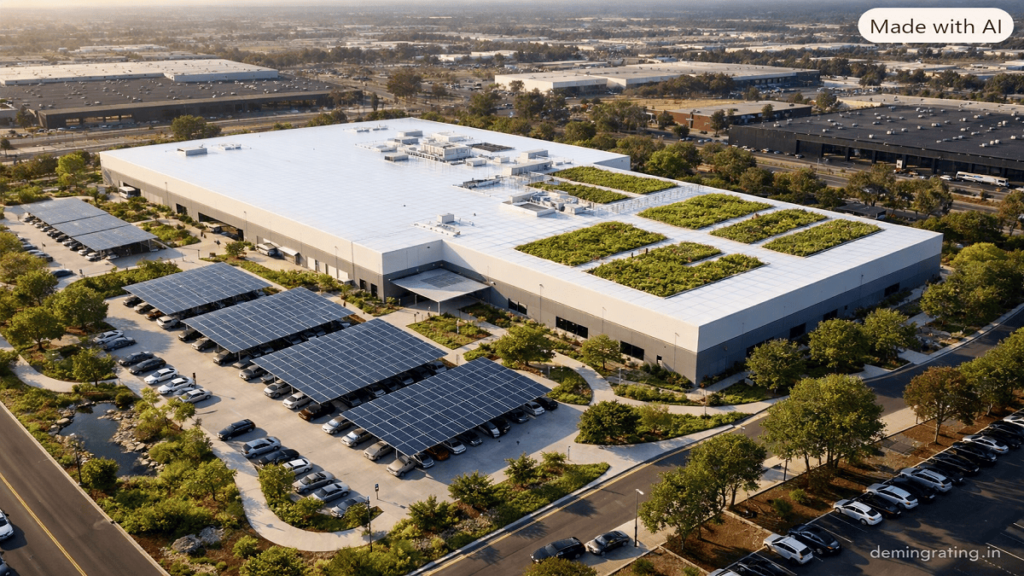
What Strategies Can Be Used to Minimize Heat Absorption in Parking Areas?
Parking areas are often constructed using asphalt and concrete, which can absorb significant amounts of solar radiation and store heat throughout the day. Large expanses of these hard surfaces can contribute to the heat island effect, increase surface temperatures, and reduce thermal comfort for pedestrians GGBC and vehicle occupants. The U.S. Environmental Protection Agency (EPA) identifies parking lots as important contributors to urban heat because conventional pavements generally absorb and retain solar energy.
For GGBC-oriented sustainable site planning, several strategies can be adopted to reduce heat absorption and create cooler, more comfortable parking environments.
1. Provide Tree Shading
Planting trees throughout parking areas is one of the most effective ways to reduce direct solar exposure. Trees shade parking spaces GGBC and pavement, preventing surfaces from receiving the full intensity of solar radiation. They also cool the surrounding environment through evapotranspiration. EPA guidance indicates that strategically planted trees can be particularly useful for shading parking lots and other paved surfaces.
Parking layouts can incorporate landscaped islands, perimeter planting, and rows of shade trees between parking bays. Selecting native or climate-appropriate species can help reduce irrigation and maintenance requirements.
2. Use High-Reflectance or Cool Pavements
Conventional dark asphalt absorbs substantial solar energy. High-reflectance or cool paving materials can reflect more sunlight and reduce surface temperatures. Available solutions include reflective pavement coatings, lighter-coloured concrete, GGBC and other pavement systems designed to remain cooler than conventional surfaces.
According to the EPA, cool pavements can reflect more solar energy, enhance water evaporation, or use modified materials to remain cooler. In one Arizona pilot study, cool pavement surfaces were measured at approximately 10–16°F cooler than conventional pavement during certain midday conditions.
3. Incorporate Permeable and Pervious Paving
Permeable paving systems allow rainwater to infiltrate through or between paving units rather than rapidly running off the surface. Depending on the system and moisture conditions, evaporation can contribute to cooling while reducing the amount of conventional impervious surface. Permeable paving can also provide stormwater-management benefits.
4. Use Covered Parking and Solar Canopies
Covered parking structures and solar-panel canopies can provide shade over vehicles and pavement, reducing direct solar exposure. Solar canopies can provide the additional benefit of generating renewable electricity while creating shaded parking spaces.
5. Increase Landscape Coverage
Replacing unnecessary paved areas with landscaped zones, groundcover, shrubs, and trees reduces the overall amount of heat-absorbing surface. Green infrastructure can provide shade, moisture, and evaporative cooling, helping reduce local temperatures.
Conclusion
The most effective approach is to combine tree shading, reflective paving, permeable surfaces, landscaped areas, and covered parking rather than relying on a single measure. Proper parking-area planning can reduce heat buildup, improve pedestrian comfort, protect vehicles from excessive solar exposure, and contribute to broader heat-island reduction objectives.
#GreenRoofs
How Do Green Roofs, Shading, and Vegetation Help Control the Heat Island Effect?
The heat island effect occurs when buildings, roofs, roads, parking areas, and other hard surfaces absorb and retain solar heat, causing developed areas to become warmer than locations with more natural land cover. Green roofs, shading, and vegetation are effective strategies for reducing this effect because they replace or protect heat-absorbing surfaces while introducing natural cooling processes. According to the U.S. Environmental Protection Agency (EPA), trees, green roofs, and vegetation can reduce heat island effects by providing shade, deflecting solar radiation, and releasing moisture into the atmosphere.
Role of Green Roofs
A green roof consists of vegetation and growing media installed over a suitable roof structure. Plants provide shade to the roof surface and reduce the amount of solar radiation directly absorbed by conventional roofing materials. More importantly, plants release moisture through evapotranspiration, a natural process that uses heat energy to evaporate water and thereby cool the surrounding environment.
Green roofs can also reduce heat transfer into the building and help lower cooling requirements. The EPA reports that green roof surfaces can be substantially cooler than conventional roofs under hot conditions. Their performance depends on factors such as plant selection, growing-medium depth, moisture availability, roof design, and local climate.
Role of Shading
Shading is particularly important for parking areas, walkways, courtyards, and building façades. Trees, pergolas, canopies, and other shade structures can prevent direct sunlight from reaching asphalt, concrete, and other hard surfaces. This reduces surface temperatures and improves outdoor thermal comfort.
According to the EPA, shaded surfaces can be significantly cooler than unshaded materials during peak heat conditions. Strategically positioned trees can also shade building walls and windows, reducing solar heat gain and potentially lowering air-conditioning demand.
Role of Vegetation
Trees, shrubs, grasses, and other landscape vegetation provide cooling through a combination of shade and evapotranspiration. Vegetation absorbs water through its roots and releases moisture through its leaves, using heat from the surrounding environment in the process. This can reduce both surface and air temperatures.
For parking areas, planting trees within landscaped islands and along parking edges can provide shade to vehicles and pavement while improving the overall site environment. Vegetated areas can also replace unnecessary impervious surfaces, reducing the amount of heat-absorbing material across the site.
Integrated GGBC Approach
For GGBC-oriented sustainable design, the most effective strategy is to combine green roofs, shaded parking, tree planting, landscaped areas, and appropriate surface materials rather than depending on a single measure. These strategies can reduce surface temperatures, improve outdoor comfort, lower cooling demand, and create more environmentally responsive developments.
#CoolRoofs
What Are the GGBC Benefits of Reducing Heat Island Effects on Roofs and Parking Areas?
Reducing the heat island effect on roofs and parking areas is an important aspect of sustainable site and building design. Roofs, asphalt parking lots, concrete pavements, and other exposed surfaces can absorb significant amounts of solar radiation and release stored heat into the surrounding environment. Implementing heat-reduction measures can therefore improve building performance, outdoor comfort, and the overall environmental quality of a project. The Global GBC website provides additional information and resources related to green-building practices.
1. Improved Microclimate
One of the primary benefits of reducing heat buildup is the improvement of the local microclimate. Reflective roofs, shaded parking areas, green roofs, and vegetation can reduce surface temperatures and limit the amount of heat released into the surrounding air. This can create a more comfortable environment for occupants, pedestrians, and visitors.
The U.S. Environmental Protection Agency (EPA) identifies cool roofs, trees, vegetation, and cool pavements as effective heat-island reduction strategies.
2. Lower Building Cooling Demand
A high-reflectance roof reflects more solar radiation and absorbs less heat than a conventional dark roof. This reduces heat transfer through the roof and can lower the building’s cooling requirements during hot weather. EPA guidance indicates that cool roofs can reduce peak cooling demand in air-conditioned residential buildings by approximately 11–27%, depending on conditions.
Lower cooling demand can contribute to reduced electricity consumption and improved operational efficiency.
3. Better Outdoor Thermal Comfort
Parking areas can become extremely hot when large expanses of asphalt or concrete are exposed to direct sunlight. Providing trees, landscaped islands, covered parking, or reflective paving can reduce surface temperatures and make parking and pedestrian areas more comfortable.
Trees and vegetation provide shade and cool the surrounding environment through evapotranspiration. EPA research notes that shaded surfaces can be substantially cooler than unshaded materials under peak conditions.
4. Reduced Environmental Impact
Lower cooling energy consumption can also reduce the greenhouse-gas emissions associated with electricity generation. At a larger scale, heat-island mitigation can contribute to improved air quality and climate resilience.
Green roofs can provide additional environmental benefits, including stormwater management, habitat creation, and reduction of surrounding temperatures.
5. Support for Sustainable Building Objectives
For GGBC-oriented projects, reducing heat island effects demonstrates an integrated approach to energy efficiency, site sustainability, occupant comfort, and environmental responsibility. Measures such as high-reflectance roofing, green roofs, shaded parking, vegetation, and suitable paving materials can be combined according to the project’s climate, site conditions, and design requirements.
Overall, controlling heat on roofs and parking areas can deliver benefits beyond temperature reduction. It can help create cooler surroundings, reduce cooling energy demand, improve outdoor comfort, support environmental performance, and contribute to a more sustainable built environment.
#SustainableBuilding
Case Study of GGBC Heat Island Effect on Roof and Parking Areas
A practical approach to the GGBC heat island strategy can be demonstrated through a hypothetical commercial building project that includes a large exposed roof and an extensive surface parking area. Such a project provides a useful example of how reflective roofing, vegetation, shaded parking, and appropriate paving can work together to reduce heat accumulation and improve the site’s environmental performance. For additional information on sustainable building practices.
Project Background
Consider a commercial development located in a warm urban environment with a large concrete or built-up roof and an approximately 5,000-square-metre surface parking area. Before implementing heat-island mitigation measures, the project uses a conventional dark-coloured roof and predominantly asphalt parking surfaces. During summer afternoons, these surfaces absorb substantial solar radiation and become significantly hotter than surrounding landscaped areas.
The roof contributes to heat transfer into the building, increasing the demand for mechanical cooling. Similarly, the parking area becomes uncomfortable for pedestrians and increases the amount of heat released into the surrounding environment.
Roof Heat-Island Measures
As part of the GGBC-oriented improvement strategy, the project replaces the conventional roof finish with a high-reflectance, high-emittance cool-roof system. Cool roofs reflect more solar radiation and release absorbed heat more effectively, helping reduce roof and building temperatures. The U.S. Environmental Protection Agency (EPA) identifies solar reflectance and thermal emittance as important characteristics of cool-roof performance.
Where structural capacity and maintenance requirements permit, sections of the roof can also be developed as green roofs. Vegetation shades the roof surface and cools it through evapotranspiration. EPA information indicates that green roof surfaces can be substantially cooler than conventional roofs and can also provide additional environmental benefits such as stormwater management and habitat creation.
Parking-Area Improvements
For the parking area, the project introduces shade trees, landscaped islands, reflective paving materials, and selected permeable surfaces. Trees reduce direct solar exposure on asphalt and vehicles, while vegetation provides additional cooling through evapotranspiration. Permeable surfaces can also help manage rainwater while reducing the extent of conventional impervious paving.
An alternative strategy is to install solar parking canopies, which provide shade while generating renewable electricity. Combining multiple measures can provide greater overall benefits than relying on a single intervention. EPA guidance recommends considering trees and vegetation, green roofs, cool roofs, and cool pavements as complementary heat-island reduction strategies.
Results and GGBC Benefits
After implementing these measures, the project can expect several performance benefits: reduced roof surface temperatures, lower heat transfer into occupied spaces, improved parking-area comfort, reduced cooling requirements, increased vegetation, and better stormwater management. The exact temperature and energy savings should be established through project-specific measurements or simulation rather than assumed as universal values.
The case demonstrates that GGBC heat-island management is most effective when roof and site strategies are planned together. A reflective or green roof can address heat accumulation at the building level, while shaded and landscaped parking areas address heat generated across the site. This integrated approach can contribute to energy efficiency, occupant comfort, environmental quality, and long-term climate resilience.
#GreenBuilding
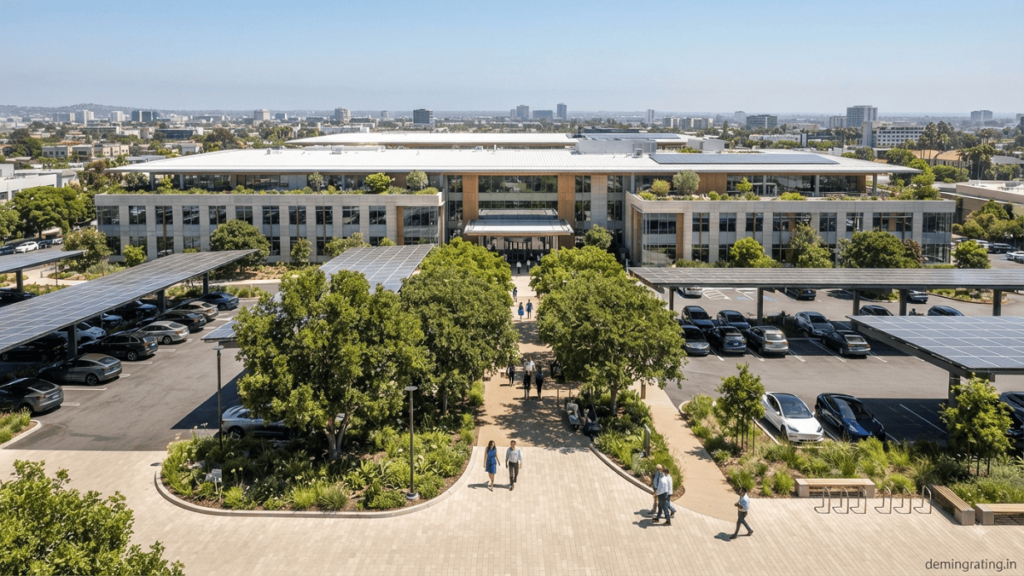
White Paper on GGBC Heat Island Effect on Roof and Parking Areas
Executive Summary
The heat island effect is an important environmental concern in rapidly developing urban areas. Conventional roofs, asphalt parking areas, concrete pavements, and other impervious surfaces absorb solar radiation during the day and release stored heat over time. As vegetation and natural surfaces are replaced by built infrastructure, developed areas can become considerably warmer than surrounding areas. The U.S. Environmental Protection Agency (EPA) reports that urban daytime temperatures can be approximately 1–7°F higher than nearby outlying areas, while nighttime temperatures can remain 2–5°F higher.
For projects following GGBC-oriented sustainable design principles, reducing heat accumulation on roofs and parking areas can support improved microclimate, energy efficiency, outdoor thermal comfort, and environmental performance. Effective measures include high-reflectance roofing, green roofs, shaded parking, trees and vegetation, reflective paving, and permeable surfaces.
1. Introduction
Urban development typically increases the quantity of hard, impervious surfaces while reducing natural vegetation. Roofs and parking areas are particularly significant because they are often extensive and exposed directly to solar radiation. Conventional dark roofing and asphalt absorb solar energy efficiently, resulting in high surface temperatures. These surfaces subsequently release heat into the surrounding environment, contributing to elevated local temperatures.
The objective of heat-island mitigation is therefore to reduce solar heat absorption, increase shading and evapotranspiration, and introduce materials and landscape strategies that maintain lower surface temperatures.
2. Heat Island Effect on Roofs
Roofs receive direct solar radiation for much of the day. Conventional low-reflectance roofing materials can become substantially hotter than the surrounding air and transfer heat into the building. This can increase indoor heat gain and consequently increase air-conditioning demand.
A key GGBC strategy is the use of high-albedo or cool roofing materials. A cool roof combines high solar reflectance with appropriate thermal emittance, allowing it to reflect more solar radiation and release absorbed heat more efficiently. EPA guidance confirms that cool roofs can reduce roof and building temperatures and decrease air-conditioning energy requirements. In air-conditioned residential buildings, solar-reflective cool roofs have been reported to reduce peak cooling demand by approximately 11–27%, although actual performance varies by climate, building design, insulation, and other factors.
The GGBC approach can also incorporate green roofs where structural capacity, waterproofing, drainage, irrigation requirements, and maintenance conditions are suitable. Vegetation provides shading and cooling through evapotranspiration. EPA reports that green roof surfaces can be substantially cooler than conventional roofs and can provide additional benefits such as stormwater management and habitat creation.
3. Heat Island Effect on Parking Areas
Large uncovered parking areas are another significant source of heat accumulation. Asphalt and conventional concrete absorb solar radiation and can remain hot for extended periods. This creates uncomfortable conditions for pedestrians and can increase the temperature of the surrounding microclimate.
GGBC-oriented design can address this issue through a combination of shade trees, landscaped parking islands, reflective paving, permeable paving, and covered parking.
Trees are particularly valuable because they provide direct shade to pavement and vehicles while cooling the environment through evapotranspiration. EPA identifies trees and vegetation as practical measures for reducing heat-island effects.
Reflective or cool pavements can reduce the amount of solar energy absorbed by parking surfaces. Permeable paving can also contribute to stormwater management and, depending on its design and moisture conditions, provide additional cooling benefits. EPA specifically identifies cool pavements and permeable/pervious paving as strategies that can be integrated into parking lots and other paved areas.
4. Integrated Heat-Island Mitigation Strategy
A successful GGBC strategy should not depend on a single technology. An integrated approach can combine:
- High-reflectance roofing materials
- Green roof areas where appropriate
- Adequate roof insulation
- Trees and vegetation
- Shaded pedestrian pathways
- Landscaped parking islands
- Reflective or cool paving
- Permeable paving systems
- Covered or structured parking
- Solar parking canopies where appropriate
Combining these measures allows the project to address heat at both the building level and site level. EPA similarly recommends combining trees and vegetation, green roofs, cool roofs, and cool pavements as complementary heat-island reduction strategies.
5. Performance and Environmental Benefits
Reducing heat accumulation can provide several benefits. Cooler roofs can reduce heat transfer into buildings and potentially lower cooling energy consumption. Shaded parking can improve pedestrian comfort and reduce the temperature of parked vehicles and pavement. Vegetation can provide shade, evapotranspiration, habitat, and stormwater benefits.
At the community scale, reducing heat-island intensity can also contribute to lower peak energy demand, improved thermal comfort, and reduced heat-related environmental and health impacts.
Importantly, project teams should avoid assuming fixed temperature or energy savings. Actual performance should be evaluated based on the local climate, roof orientation, material properties, building envelope, vegetation, irrigation, parking configuration, and operational conditions.
6. Documentation and Project Implementation
For a GGBC-oriented project, documentation should demonstrate that heat-island mitigation measures have been intentionally incorporated into the site and building design. Useful documentation can include roof plans, site plans, landscape plans, material specifications, product data sheets, solar reflectance information, and calculations showing the extent of treated roof and parking areas.
The project team should also consider long-term maintenance. Reflective roof surfaces can lose performance if they accumulate dirt or biological growth, while vegetation requires appropriate irrigation, pruning, replacement, and soil management. Parking-area trees should be selected according to local climate, root-zone requirements, canopy development, safety, and maintenance considerations.
Conclusion
The heat island effect on roofs and parking areas can be effectively addressed through an integrated combination of reflective roofing, green roofs, vegetation, shaded parking, cool paving, and permeable surfaces. These strategies reduce solar heat absorption and introduce natural cooling mechanisms while improving the environmental performance of the development.
For GGBC-focused projects, heat-island mitigation should be considered during the early stages of site planning rather than treated as an isolated finishing measure. Coordinating architects, landscape designers, civil engineers, structural engineers, and building-services professionals can help ensure that roof and parking strategies work together effectively.
#HeatIslandEffect
Industry Application of GGBC Heat Island Effect on Roof and Parking Areas
The GGBC approach to heat island reduction has practical applications across a wide range of industries, particularly in commercial, residential, industrial, institutional, healthcare, hospitality, and mixed-use developments. Roofs and parking areas represent significant portions of exposed built surfaces, and their design can strongly influence site temperatures, building energy performance, and outdoor thermal comfort. The U.S. Environmental Protection Agency (EPA) identifies buildings, roads, parking lots, and other impervious surfaces as important contributors to heat island formation.
1. Commercial and Office Buildings
Commercial buildings often have large flat roofs and extensive parking facilities. These projects can apply high-reflectance roofing, cool roof coatings, green roofs, shaded parking, and landscape planting to reduce heat absorption.
High-albedo roofing reflects a greater proportion of incoming solar radiation, while high thermal emittance helps release absorbed heat. According to the EPA, cool roofs can reduce roof and indoor temperatures and decrease air-conditioning energy requirements. In air-conditioned residential buildings, solar-reflective cool roofs have been associated with reductions in peak cooling demand of approximately 11–27%, although actual results depend on climate and building characteristics.
2. Industrial Facilities and Warehouses
Industrial facilities and warehouses commonly have very large roof areas. Because these roofs are exposed to intense solar radiation for long periods, reflective roofing can be particularly useful.
Industries can use reflective roof membranes, high-albedo coatings, insulated roof assemblies, and rooftop vegetation where structurally and operationally feasible. Green roofs can provide additional cooling through shading and evapotranspiration. EPA research indicates that green roofs can significantly reduce roof surface temperatures and provide additional benefits such as stormwater management and habitat.
For industrial sites, parking and loading areas can also incorporate shade trees, landscaped buffers, reflective paving, and permeable surfaces.
3. Residential Developments
Large residential developments can integrate heat-island reduction into both individual buildings and common areas. High-reflectance roofs can reduce solar heat gain, while trees and landscape areas can shade pedestrian routes, driveways, and parking spaces.
Residential communities can also use permeable paving, landscaped parking islands, green spaces, and shaded outdoor areas. These measures reduce the extent of heat-absorbing surfaces while improving the comfort and visual quality of the development.
4. Healthcare and Institutional Buildings
Hospitals, educational campuses, and institutional facilities often have extensive roof and parking areas. Reducing surface temperatures can help create more comfortable outdoor environments for patients, visitors, students, and staff.
Covered parking, tree canopies, reflective paving, green roofs, and strategically placed vegetation can be incorporated into campus planning. EPA notes that trees, green roofs, and vegetation reduce heat island effects by shading surfaces, deflecting solar radiation, and releasing moisture into the atmosphere.
5. Retail, Hospitality, and Mixed-Use Developments
Shopping centres, hotels, and mixed-use developments frequently contain large parking areas. These sites can experience substantial heat accumulation because of extensive asphalt and concrete surfaces.
Industry applications may include solar parking canopies, shade trees, cool pavements, permeable paving, landscaped islands, and reflective roofs. Solar canopies can provide dual functionality by shading parking spaces while generating renewable electricity.
EPA guidance specifically identifies parking lots, cool pavements, trees, green roofs, and cool roofs as opportunities for integrated heat-island mitigation.
6. Recommended Integrated Approach
The most effective GGBC-oriented application is to combine multiple measures rather than treating roof and parking areas independently. A typical project strategy can include:
- High-albedo or cool roofing
- Green roofs where appropriate
- Adequate roof insulation
- Tree-lined parking areas
- Landscaped parking islands
- Reflective or cool paving
- Permeable paving systems
- Covered parking
- Solar parking canopies
- Native or climate-appropriate vegetation
This integrated approach can reduce surface temperatures, improve outdoor thermal comfort, lower cooling demand, and support long-term climate resilience. EPA guidance similarly recommends combining green roofs, cool roofs, vegetation, and cool pavements as complementary heat-island strategies.
Conclusion
The industry application of GGBC heat-island strategies extends well beyond simply selecting a reflective roof material. Effective projects consider the entire site, including roofs, parking areas, pedestrian zones, landscaping, and pavement. Commercial buildings can prioritize cool roofs and shaded parking, industrial facilities can address extensive roof areas, while residential and institutional developments can combine vegetation, reflective surfaces, and landscape planning.
By integrating these measures during the early design stage, industries can create cooler, more energy-efficient, comfortable, and environmentally responsible developments. The approach can also support broader sustainability and climate-resilience objectives.
#GGBC
Ask FAQs
What is the heat island effect on roofs and parking areas?
The heat island effect occurs when roofs, asphalt parking lots, concrete pavements, and other built surfaces absorb solar radiation and release stored heat into the surrounding environment. Dark-coloured roofs and parking surfaces can become significantly hotter than shaded or vegetated areas. This can increase surrounding temperatures, reduce outdoor thermal comfort, and contribute to higher cooling requirements in buildings. GGBC-oriented design addresses this issue through measures such as reflective roofing, green roofs, vegetation, shaded parking, and appropriate paving materials. The U.S. Environmental Protection Agency (EPA) provides additional information about heat islands and mitigation strategies.
How do reflective roofs reduce heat buildup?
Reflective or high-albedo roofing materials reflect a greater portion of incoming solar radiation instead of absorbing it as heat. A roof with high solar reflectance and suitable thermal emittance can remain cooler than a conventional dark roof. This reduces heat transfer through the roof and may lower the building’s cooling demand during hot weather. Reflective roof coatings, membranes, and suitably designed roofing products can be considered according to the project’s climate and technical requirements. More information about cool-roof strategies is available through the EPA’s cool roof resources.
What measures can reduce heat absorption in parking areas?
Several strategies can be combined to reduce parking-area temperatures. These include shade trees, landscaped parking islands, reflective paving, permeable paving, covered parking, and solar parking canopies. Trees are particularly effective because they shade asphalt and vehicles while providing evaporative cooling. Reflective pavements can reduce solar heat absorption, while permeable surfaces can provide additional stormwater-management benefits. The EPA discusses these approaches in its heat-island reduction resources.
Can green roofs help control the heat island effect?
Yes. Green roofs use vegetation and growing media to shade the roof surface and provide cooling through evapotranspiration. They can reduce roof temperatures and may help reduce heat transfer into buildings. Green roofs can also provide additional benefits, including stormwater management, improved biodiversity, and potentially increased roof-system durability when properly designed and maintained. Their suitability should be evaluated based on structural capacity, waterproofing, drainage, irrigation, vegetation selection, and maintenance requirements. Refer to the EPA’s green roof guidance for additional information.
What are the main GGBC benefits of reducing heat island effects?
Reducing heat accumulation on roofs and parking areas can support lower surface temperatures, improved outdoor thermal comfort, reduced cooling demand, better site conditions, and improved environmental performance. Combining reflective roofs with vegetation, shaded parking, and appropriate paving can provide greater overall benefits than relying on a single measure. Project-specific performance should be evaluated according to local climate, materials, building design, landscape conditions, and maintenance requirements. For further information about GGBC, visit Global GBC.
Table of Contents
Disclaimer: This content is for general informational purposes only and should not be considered professional, technical, or certification advice. GGBC requirements and project criteria should be verified with the latest official guidelines at globalgbc.org.