
Food Forest
What Is a Food Forest and How Does It Support Sustainable Living?
A food forest is a designed growing system that imitates the structure and functions of a natural forest while producing food and other useful resources. Instead of relying on a single crop, a food forest combines trees, shrubs, vines, herbs, groundcovers, root crops, and other plants in multiple layers. The goal is to create a diverse, productive ecosystem that can provide food while working with natural ecological processes.
Food forests are often associated with permaculture, an approach to land management that emphasizes sustainable resource use, biodiversity, soil health, and long-term resilience. The Permaculture Association provides resources on permaculture principles and ecological design.
How Does a Food Forest Work?
A food forest generally uses several vegetation layers, similar to those found in a natural woodland. The upper layer may contain fruit or nut trees, while smaller trees, shrubs, climbing plants, herbs, and groundcovers occupy lower levels. Root crops can grow beneath the soil surface.
Each layer can perform a different function while contributing to the overall ecosystem. For example, taller plants can provide shade, groundcovers can protect soil from erosion, and flowering plants can provide resources for pollinators. Choosing compatible species allows plants to occupy available space efficiently.
Unlike conventional agricultural systems that may depend heavily on repeated tillage, fertilizers, pesticides, and irrigation, food forests aim to establish a relatively self-supporting ecosystem. Once established, perennial plants can provide food for many years with appropriate maintenance.
Supporting Sustainable Living
Food forests can support sustainable living in several ways. First, they can increase local food production, allowing households and communities to grow fruits, vegetables, herbs, nuts, and other edible products close to where they are consumed. This can strengthen local food resilience and reduce dependence on distant supply chains.
They can also contribute to biodiversity. A diverse food forest can provide habitat and food resources for insects, birds, microorganisms, and other organisms. Greater plant diversity can help create a more balanced ecosystem.
Another important benefit is soil improvement. Organic matter from leaves, roots, and plant residues can contribute to soil structure and nutrient cycling. Deep-rooted perennial plants may also help stabilize soil and reduce erosion.
Food forests can support water conservation as well. Groundcover plants and organic matter can improve the soil’s ability to retain moisture, potentially reducing irrigation requirements once the system becomes established.
Conclusion
A food forest is more than a collection of edible plants. It is a designed, diverse ecosystem that combines food production with ecological functions. By encouraging biodiversity, improving soil health, supporting pollinators, conserving resources, and producing food locally, food forests can become a practical component of sustainable living.
The USDA Natural Resources Conservation Service provides additional information about soil health, conservation practices, biodiversity, and sustainable land management that can complement food-forest planning.
What Are the Key Plants and Layers Commonly Found in a Food Forest?
A food forest is designed to imitate the structure of a natural woodland while producing edible crops and other useful resources. Instead of growing plants in a single horizontal layer, a food forest uses several vertical layers. Each layer contains plants with different heights, functions, and growth patterns, allowing gardeners to make efficient use of sunlight, soil, moisture, and available space.
The exact plants used depend on climate, soil, rainfall, water availability, and local ecology. Native and well-adapted species are generally preferred because they can require fewer resources once established.
1. Canopy Layer
The canopy layer contains the tallest plants, usually large fruit, nut, or multipurpose trees. Examples may include mango, avocado, walnut, chestnut, mulberry, apple, or other locally suitable trees.
These trees provide food while creating shade and shelter for plants growing beneath them. When selecting canopy species, growers should consider mature tree size, sunlight requirements, root systems, and local growing conditions.
2. Sub-Canopy or Small Tree Layer
The small-tree layer contains shorter trees and large shrubs that can tolerate some shade. Examples may include dwarf fruit trees, citrus varieties, pomegranate, guava, or other regionally appropriate species.
This layer helps fill the vertical space beneath taller trees without creating excessive competition for sunlight.
3. Shrub Layer
The shrub layer consists of smaller woody plants, including berry-producing and edible shrubs. Depending on the climate, examples can include currants, gooseberries, blueberries, raspberries, coffee, or other locally adapted food-producing shrubs.
Shrubs can provide food, habitat, and structural diversity while occupying areas that may not be suitable for large trees.
4. Herbaceous Layer
The herbaceous layer includes non-woody plants such as culinary herbs, vegetables, medicinal plants, and flowering species. Examples include mint, oregano, basil, perennial onions, leafy greens, and other suitable plants.
Flowering herbs can also provide resources for pollinators and beneficial insects.
5. Groundcover Layer
Groundcovers grow close to the soil surface and help protect soil from direct sunlight, heavy rainfall, and erosion. Examples may include strawberries, clover, creeping herbs, sweet potatoes, and other suitable low-growing plants.
Groundcovers can also help suppress unwanted vegetation and contribute organic matter to the soil.
6. Root Layer
The root layer includes crops that produce food underground. Common examples include potatoes, sweet potatoes, carrots, radishes, onions, garlic, and other root or tuber crops.
7. Vertical Layer
Climbing plants occupy the vertical layer by growing on trees, trellises, or other supports. Examples include passionfruit, grapes, beans, kiwifruit, and other suitable vines.
Conclusion
The strength of a food forest comes from combining these layers rather than relying on a single crop type. Trees, shrubs, herbs, groundcovers, root crops, and vines can work together to create a diverse and productive growing system. The Permaculture Association provides additional resources on ecological design and permaculture principles, while the USDA Natural Resources Conservation Service offers guidance on soil conservation and sustainable land management.
How Can Food Forests Improve Biodiversity, Soil Health, and Water Conservation?
Food forests are designed ecosystems that combine food-producing trees, shrubs, herbs, groundcovers, vines, and root crops in multiple layers. By imitating some of the structures and ecological functions of natural forests, they can support biodiversity, improve soil conditions, and help conserve water. These benefits make food forests a potential approach for sustainable land management when they are appropriately designed for local environmental conditions.
Supporting Biodiversity
One of the main benefits of a diverse food forest is the variety of habitats it can provide. Different plant heights, flowering periods, root structures, and vegetation types create resources for insects, birds, soil organisms, and other wildlife.
Flowering plants can provide nectar and pollen for pollinators such as bees and butterflies, while trees and shrubs can provide shelter and nesting opportunities for birds and other organisms. A diverse plant community can also support beneficial insects and soil microorganisms that contribute to nutrient cycling and ecosystem functions.
Using locally adapted and, where appropriate, native plant species can further strengthen ecological value. However, food forests should be carefully planned to avoid introducing invasive species or disrupting sensitive ecosystems.
The USDA Natural Resources Conservation Service (NRCS) provides information on conservation practices that support biodiversity, soil health, and natural-resource management.
Improving Soil Health
Food forests can contribute to soil health by keeping the soil covered with living plants and organic material. Leaves, fallen branches, roots, and other plant residues gradually add organic matter to the soil.
Organic matter can improve soil structure, water-holding capacity, and biological activity. Plant roots also help hold soil together and can reduce erosion caused by wind and rainfall.
Perennial plants are particularly useful because their roots remain in the soil for extended periods. Different plants also explore different soil depths, potentially supporting more diverse root activity and nutrient cycling.
Avoiding unnecessary soil disturbance can further protect soil structure and organisms. Instead of repeatedly tilling the ground, food-forest systems often rely on mulching, perennial vegetation, natural decomposition, and biological processes.
Conserving Water
Food forests can support water conservation through several mechanisms. A layered canopy can provide shade and reduce direct exposure of soil to sunlight and wind. Groundcovers and organic mulch can also help slow evaporation and protect the soil surface.
Improved soil structure and increased organic matter can increase the soil’s ability to absorb and retain water. This can help rainfall infiltrate the soil rather than rapidly flowing away as surface runoff.
Deep-rooted plants may also access moisture from lower soil layers, while diverse vegetation can help create a more stable soil environment.
However, water conservation benefits depend heavily on plant selection, climate, soil type, rainfall, and management practices. A poorly designed food forest can still require substantial irrigation, particularly during establishment.
Conclusion
Food forests can support sustainable land management by combining plant diversity, continuous soil cover, perennial root systems, organic matter, and efficient use of available resources. These characteristics can create habitat for wildlife, strengthen soil health, reduce erosion, and improve water retention.
What Are the Benefits of Developing Food Forests in Urban and Rural Communities?
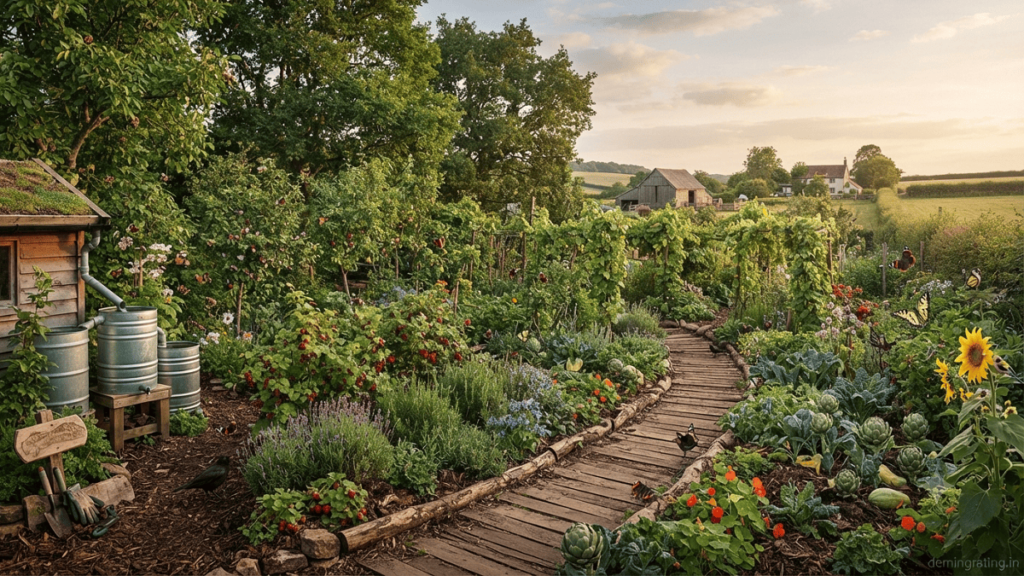
Food forests can provide a range of environmental, social, and economic benefits in both urban and rural communities. By combining fruit and nut trees, shrubs, herbs, vegetables, groundcovers, and other useful plants, food forests can turn available land into productive and ecologically diverse spaces. Their benefits vary according to local climate, land availability, community needs, and management practices.
Benefits in Urban Communities
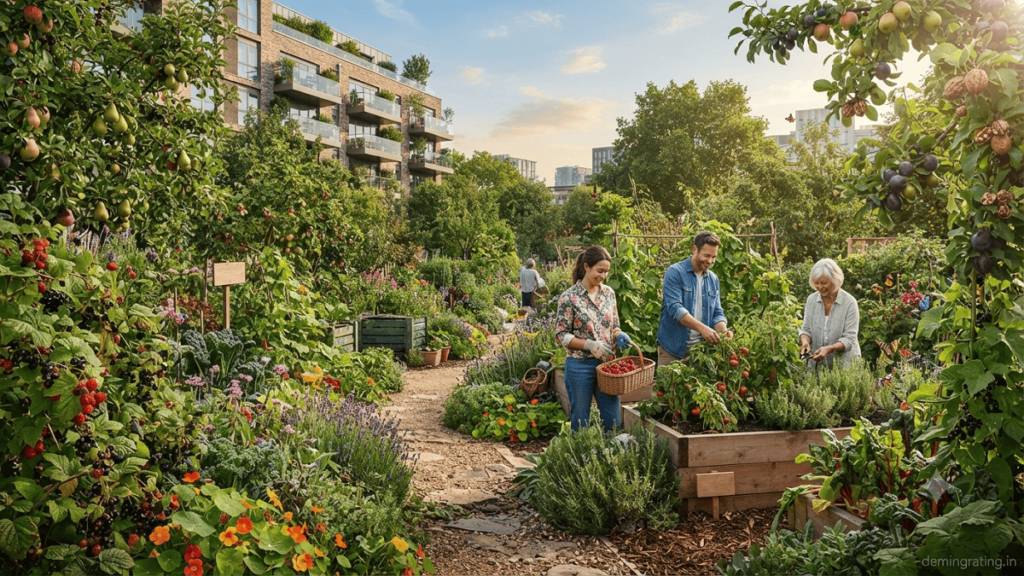
In cities, food forests can make productive use of vacant lots, community gardens, school grounds, parks, and other suitable spaces. One of their most important benefits is local food production. Residents can grow fruits, herbs, vegetables, and other edible crops closer to where they live, potentially improving access to fresh food.
Food forests can also contribute to urban biodiversity. A mixture of trees, shrubs, flowering plants, and groundcovers can create habitat and food sources for pollinators, birds, and beneficial insects.
Another benefit is improved local environmental conditions. Trees and vegetation can provide shade, increase green space, and help reduce the effects of heat in built-up areas. Vegetated soil can also help absorb rainfall and reduce surface runoff.
Food forests can additionally serve as educational spaces. Schools, community organizations, and local residents can use them to learn about ecology, gardening, nutrition, soil health, and sustainable resource management.
The USDA Urban Agriculture and Innovative Production Program provides resources related to urban agriculture and community food production.
Benefits in Rural Communities
Rural communities often have greater access to land, making food forests suitable for farms, homesteads, community spaces, and agroforestry projects. They can diversify agricultural production by combining perennial trees and shrubs with other crops.
This diversity can provide multiple sources of food and potential income rather than depending entirely on a single crop. Fruit, nuts, herbs, timber, seeds, and other products may be harvested at different times of the year.
Food forests can also support soil conservation. Permanent vegetation and extensive root systems can help reduce erosion and contribute organic matter to the soil. Depending on design and local conditions, they may also improve water infiltration and soil moisture retention.
Rural food forests can contribute to wildlife habitat and landscape diversity while supporting agricultural resilience. The USDA National Agroforestry Center provides resources on agroforestry practices that integrate trees and shrubs with agricultural production.
Social and Economic Opportunities
In both urban and rural settings, food forests can strengthen community participation. Shared growing spaces can encourage cooperation, skill development, environmental education, and local food initiatives.
They may also create opportunities for small-scale enterprises based on locally produced food, plants, seeds, or educational activities.
Conclusion
Food forests can provide food production, biodiversity, educational opportunities, soil protection, water-management benefits, and community engagement. Urban projects can help increase access to green space and local food, while rural projects can diversify production and support long-term land stewardship.
Successful food forests require careful planning based on local climate, soil, water availability, suitable plant species, maintenance capacity, and community objectives. When these factors are considered, food forests can become valuable components of more resilient and sustainable communities.
What Are the Challenges and Best Practices for Designing and Maintaining a Food Forest?
Designing and maintaining a food forest requires careful planning, appropriate plant selection, ongoing observation, and long-term management. Although food forests can provide food, biodiversity, soil improvement, and other ecological benefits, they are not completely maintenance-free. Successful development depends on understanding local environmental conditions and designing a system that can remain productive and manageable over time.
Key Challenges
One of the first challenges is selecting suitable plants. Food forests often contain many species with different requirements for sunlight, soil, water, temperature, and nutrients. Plants that are poorly matched to local conditions may struggle or require excessive maintenance.
Competition between plants is another challenge. As trees and shrubs mature, they can compete for sunlight, water, nutrients, and space. A planting plan that works when plants are young may need to be adjusted as the canopy develops.
Water management can also be difficult, particularly during the establishment period. Young trees and shrubs may require regular irrigation until their root systems become established. At the same time, excessive watering can create drainage and plant-health problems.
Pests, diseases, invasive plants, and wildlife damage can also affect food forests. Because food forests contain diverse species, monitoring is important for identifying problems before they become widespread.
Finally, food forests require long-term management. Pruning, mulching, harvesting, replacing damaged plants, managing pathways, and controlling unwanted vegetation all require time and resources.
Best Practices for Design
A successful food forest should begin with a site assessment. Evaluate sunlight, soil type, drainage, rainfall, water availability, prevailing winds, existing vegetation, and available space before selecting plants.
Choose species that are well adapted to the local climate and soil conditions. Where appropriate, incorporate native or locally adapted plants that support local biodiversity while providing useful products.
Design the system in layers, using canopy trees, smaller trees, shrubs, herbs, groundcovers, root crops, and climbing plants. This allows the available vertical and horizontal space to be used efficiently.
Start on a manageable scale rather than planting an unnecessarily large area. Establishing a smaller, well-maintained food forest can provide valuable experience before expansion.
Best Practices for Maintenance
Use organic mulch around plants to help protect soil, conserve moisture, and add organic matter as it decomposes. Keep mulch away from direct contact with tree trunks to reduce potential problems.
Regularly monitor plant health, soil moisture, pests, diseases, and unwanted competition. Prune plants when necessary to maintain appropriate structure, access, and light distribution.
Water efficiently during establishment and adjust irrigation as plants mature. Where practical, rainwater harvesting and other water-management strategies can supplement irrigation.
Maintain records of plant performance and seasonal changes. This helps identify which species thrive and which require replacement or redesign.
The USDA Natural Resources Conservation Service provides resources on soil health and conservation, while the USDA National Agroforestry Center provides information on integrating trees and shrubs into productive landscapes.
Conclusion
A productive food forest requires a balance between ecological diversity and practical management. Careful site assessment, suitable plant selection, layered design, efficient water management, soil protection, regular monitoring, and adaptive maintenance are essential for long-term success.
Case Study of Food Forest: The Beacon Food Forest, Seattle
The Beacon Food Forest in Seattle, Washington, is a notable community-based example of food-forest development in an urban environment. Located near Seattle’s Beacon Hill neighborhood, the project was designed to transform public land into a productive landscape where edible plants, community spaces, and ecological functions could coexist.
Project Overview
The Beacon Food Forest began as a community initiative with the goal of creating an urban food-producing landscape based on principles associated with permaculture and ecological design. The project envisioned a diverse planting system containing fruit and nut trees, shrubs, herbs, groundcovers, and other edible plants.
Unlike a conventional agricultural field, a food forest uses multiple vegetation layers to make use of available sunlight and growing space. This approach can create a more diverse habitat while producing food for community members.
The project’s organizers have emphasized community participation, education, ecological stewardship, and access to locally grown food. The Beacon Food Forest provides information about the project’s history, vision, design, and community activities.
Community and Environmental Objectives
One of the major objectives of the project is to increase access to locally grown food within an urban environment. Instead of treating urban land solely as ornamental space, the food forest concept demonstrates how public landscapes can also contribute to food production and environmental education.
The project also aims to support biodiversity. A variety of edible and supporting plants can provide habitat and resources for insects, birds, and other organisms. Trees and vegetation can additionally contribute shade, soil protection, and urban green space.
Another important feature is community engagement. Food forests can provide opportunities for residents to participate in planting, maintenance, harvesting, workshops, and educational activities. This can help develop practical knowledge about gardening, food systems, sustainability, and ecological management.
Key Lessons
The Beacon Food Forest demonstrates that developing a food forest in an urban area requires more than simply planting edible species. Successful projects need careful consideration of land ownership, community expectations, site conditions, maintenance responsibilities, accessibility, and long-term management.
It also highlights the importance of starting with a clear vision and involving stakeholders throughout the planning process. Community participation can help ensure that the design reflects local needs while encouraging shared responsibility for the landscape.
From an environmental perspective, the project illustrates how urban food production can be combined with biodiversity and green-space objectives rather than treating food production and ecological restoration as separate activities.
The Permaculture Association provides additional information on permaculture principles and ecological design approaches relevant to food-forest development.
Conclusion
The Beacon Food Forest is a valuable case study of how food-forest principles can be applied within an urban community. Its emphasis on local food production, biodiversity, education, community participation, and sustainable land use demonstrates the broader potential of food forests.
The project also shows that long-term success depends on appropriate planning, community involvement, site-specific design, and ongoing stewardship. For other communities considering similar initiatives, the Beacon Food Forest provides useful lessons about combining food production with environmental and social objectives.
White Paper on Food Forests: Sustainable Food Production and Ecological Resilience
Executive Summary
A food forest is a deliberately designed growing system that imitates the structure and functions of a natural forest while producing food and other useful resources. It typically combines multiple layers of vegetation, including canopy trees, smaller trees, shrubs, herbs, groundcovers, root crops, and climbing plants. This diverse structure can support food production while contributing to biodiversity, soil health, water management, and community resilience.
Food forests are closely associated with agroforestry and permaculture, although specific designs vary considerably depending on local conditions and objectives. The USDA National Agroforestry Center provides technical information on agroforestry systems that integrate trees and shrubs with agriculture and natural-resource management.
Ecological Benefits
One of the main strengths of food forests is biological diversity. Multiple plant species can create different habitats and food resources for pollinators, birds, beneficial insects, and soil organisms. A diverse plant community can also improve the resilience of the system by reducing dependence on a single crop.
Food forests can contribute to soil health by maintaining continuous plant cover and adding organic material through leaves, roots, and plant residues. Perennial vegetation can reduce soil disturbance and help protect against erosion.
Water management is another potential benefit. Vegetation and organic matter can improve infiltration and water retention, while shade and groundcover can reduce exposure of the soil surface to drying conditions. However, water requirements depend on climate, soil, species selection, and management.
The USDA Natural Resources Conservation Service provides resources on soil health, conservation practices, and sustainable land management.
Food Production and Community Resilience
Food forests can provide a diverse range of products, including fruits, nuts, herbs, vegetables, seeds, and other useful plant materials. Because different species produce at different times, a well-designed system can potentially provide food across multiple seasons.
In communities, food forests can also serve as educational and social spaces. They can support environmental education, gardening skills, community participation, and awareness of local food systems.
Urban food forests may be developed on community land, school grounds, parks, or other suitable sites, while rural food forests can be integrated into farms, homesteads, and broader agroforestry landscapes.
Design and Management Challenges
Food forests require careful site assessment and long-term management. Important considerations include climate, soil, sunlight, water availability, plant compatibility, mature plant size, pests, diseases, invasive species, accessibility, and maintenance requirements.
A successful design should use plants suited to local conditions and arrange them according to their ecological functions and resource requirements. Regular observation, pruning, mulching, irrigation management, harvesting, and replacement of unsuccessful plants may be necessary.
The FAO provides international resources on agroforestry and sustainable land management.
Conclusion
Food forests offer a promising approach to combining food production with biodiversity conservation, soil improvement, water management, and community engagement. They do not eliminate the need for management, but thoughtful design can encourage natural ecological processes to perform more functions over time.
Their success depends on adapting the concept to local environmental conditions rather than applying a single universal model. With appropriate planning, species selection, community involvement, and long-term stewardship, food forests can contribute to more diverse, productive, and resilient landscapes.
Industry Applications of Food Forests
Food forests are increasingly relevant to industries and organizations seeking sustainable approaches to food production, land management, biodiversity, and community development. By combining trees, shrubs, herbs, groundcovers, root crops, and climbing plants in a multi-layered system, food forests can produce useful resources while supporting ecological functions. Their applications extend beyond household gardening into agriculture, hospitality, education, urban development, tourism, and environmental management.
1. Agriculture and Agroforestry
The agricultural sector can integrate food-forest principles into farms and agroforestry systems. Fruit trees, nut trees, shrubs, and other perennial crops can be combined with compatible agricultural activities to diversify production.
This approach can provide multiple products and may improve soil protection, biodiversity, and long-term land resilience. The USDA National Agroforestry Center provides technical resources on agroforestry practices involving trees, crops, livestock, and natural-resource management.
2. Urban Development
Property developers and urban planners can incorporate food forests into residential communities, parks, public spaces, and mixed-use developments. These landscapes can combine green infrastructure with local food production and community recreation.
Urban food forests may also contribute shade, habitat, and improved environmental conditions while providing educational and social opportunities for residents.
3. Hospitality and Restaurants
Hotels, resorts, restaurants, and wellness centers can develop food forests to grow fresh fruits, herbs, vegetables, and edible flowers for their kitchens. Locally grown ingredients can support farm-to-table programs and provide visitors with a more sustainable food experience.
Food forests can also become part of the visual identity and sustainability initiatives of hospitality businesses.
4. Education and Research
Schools, universities, agricultural colleges, and research institutions can use food forests as outdoor learning environments. Students can study ecology, horticulture, soil science, biodiversity, food systems, and sustainable land management through practical activities.
Research organizations can also use these systems to evaluate plant interactions, perennial crop production, soil health, and ecological management.
5. Community and Nonprofit Organizations
Community organizations can establish food forests to improve access to locally produced food and create shared green spaces. These projects can support environmental education, volunteer participation, gardening skills, and community engagement.
The USDA Urban Agriculture and Innovative Production Program provides resources relevant to community-based food production and urban agriculture.
6. Ecotourism and Sustainable Tourism
Food forests can become attractions for eco-resorts, nature centers, educational farms, and sustainable tourism projects. Visitors can learn about local plants, food production, biodiversity, and ecological design while experiencing a productive landscape.
Conclusion
Food forests have potential applications across agriculture, urban development, hospitality, education, community projects, research, and sustainable tourism. Their value comes from combining food production with ecological and social functions rather than treating these objectives separately.
However, successful implementation requires site-specific planning, suitable plant selection, water management, maintenance strategies, and consideration of local regulations. The FAO provides additional resources on agroforestry, sustainable land management, and resilient food systems.
Ask FAQs
What is a food forest?
A food forest is a designed growing system that imitates the structure of a natural forest while producing food and other useful resources. It typically includes multiple layers such as canopy trees, smaller trees, shrubs, herbs, groundcovers, root crops, and climbing plants. This diverse structure can support food production while also promoting biodiversity, soil health, and efficient use of available space.
What are the main benefits of a food forest?
Food forests can provide several environmental, social, and food-production benefits. They can support biodiversity, improve soil health, reduce erosion, conserve moisture, and create habitat for pollinators and other wildlife. They can also provide fruits, nuts, herbs, vegetables, and other edible products. In communities, food forests can support local food production, environmental education, and community participation.
How long does it take to establish a food forest?
The establishment period varies depending on climate, soil, plant species, water availability, and the size of the project. Annual crops may produce food within a single growing season, while shrubs and smaller fruit trees may take several years to become productive. Large canopy trees can require many years to mature. During the early stages, regular watering, mulching, weed management, pruning, and plant protection are often necessary.
Can food forests be developed in urban areas?
Yes. Food forests can be designed for suitable urban spaces such as community gardens, school grounds, parks, vacant lots, residential properties, and other available land. Urban food forests can provide local food, green space, habitat, shade, and educational opportunities. However, projects should consider factors such as soil quality, sunlight, water availability, public access, local regulations, maintenance responsibilities, and potential conflicts with existing infrastructure.
Are food forests difficult to maintain?
Food forests require ongoing management, particularly during establishment, but their maintenance approach differs from conventional gardens. Regular activities may include watering, mulching, pruning, harvesting, monitoring pests and diseases, controlling unwanted vegetation, and replacing unsuccessful plants. Careful design and selection of plants suited to local conditions can reduce long-term maintenance requirements. Resources from the USDA Natural Resources Conservation Service and the USDA National Agroforestry Center can provide additional guidance on sustainable land management and agroforestry practices.
Table of Contents
Disclaimer: This information is for general educational purposes only and should not be considered professional agricultural, environmental, or horticultural advice. Plant selection and food-forest design should be adapted to local climate, soil conditions, regulations, and expert recommendations.