
Eco-Vision (EC): Creating a Sustainable Future Through Environmental Innovation
Eco-Vision (EC) represents a forward-thinking approach toward building a sustainable future by integrating environmental awareness, innovative technologies, and responsible practices across industries and communities. It focuses on creating a balance between human development and environmental protection by encouraging solutions that reduce ecological damage, conserve natural resources, and support long-term sustainability.
Eco-Vision is not only about protecting nature but also about developing a mindset where sustainability becomes a core part of decision-making. From renewable energy and green infrastructure to sustainable business models and responsible lifestyles, encourages individuals, organizations, and governments to adopt strategies that benefit both society and the planet.
Understanding Eco-Vision (EC)
Eco-Vision can be defined as a strategic environmental perspective that focuses on achieving sustainable growth through innovation and conservation. It combines ecological responsibility with modern solutions to address global challenges such as climate change, pollution, resource depletion, and biodiversity loss.
The concept encourages the development of environmentally conscious systems where economic progress does not come at the cost of environmental degradation. promotes the idea that sustainability should be integrated into industries such as tourism, agriculture, manufacturing, transportation, and urban development.
Organizations worldwide are adopting sustainability frameworks to support this vision. The United Nations Environment Programme (UNEP) works toward global environmental protection and supports initiatives that promote sustainable development.
Key Elements of Eco-Vision
1. Sustainable Resource Management
Eco-Vision emphasizes efficient use of natural resources such as water, energy, and raw materials. Businesses and communities are adopting recycling systems, circular economy models, and conservation strategies to reduce waste and improve resource efficiency.
2. Renewable Energy Adoption
A major component is the transition from fossil fuels to clean energy sources. Solar power, wind energy, and other renewable technologies help reduce greenhouse gas emissions and support energy independence.
3. Green Technology Innovation
Technology plays an important role in achieving goals. Smart energy systems, artificial intelligence, sustainable transportation, and environmental monitoring tools help organizations make better decisions while reducing their environmental impact.
4. Environmental Awareness and Education
Eco-Vision promotes awareness among individuals and communities by encouraging responsible consumption and environmentally friendly behaviors. Education helps people understand their role in protecting ecosystems and creating sustainable communities.
Applications of Eco-Vision Across Industries
Eco-Vision principles are being applied across multiple sectors:
- Tourism: Development of sustainable destinations, eco-friendly accommodations, and conservation-based travel experiences.
- Energy: Expansion of renewable energy systems and energy-efficient technologies.
- Manufacturing: Adoption of sustainable production methods and waste reduction strategies.
- Agriculture: Use of organic farming, precision agriculture, and resource-efficient practices.
- Urban Development: Creation of smart cities with green infrastructure and sustainable transportation.
The United Nations Sustainable Development Goals (SDGs) provide a global framework that supports environmental sustainability and responsible development.
Benefits of Eco-Vision
Eco-Vision provides several environmental, economic, and social benefits:
- Reduces environmental pollution and carbon emissions
- Protects biodiversity and natural ecosystems
- Encourages innovation and sustainable business growth
- Improves resource efficiency
- Creates healthier living environments
- Supports long-term economic resilience
By adopting Eco-Vision strategies, organizations can improve sustainability performance while meeting the growing demand for environmentally responsible solutions.
Challenges in Implementing Eco-Vision
Despite its benefits, implementing faces challenges such as high initial investment costs, limited awareness, technological barriers, and resistance to changing traditional practices. Small organizations may require financial support and technical guidance to adopt sustainable solutions effectively.
Another challenge is ensuring genuine sustainability efforts and preventing greenwashing. Clear standards, transparent reporting, and responsible environmental policies are necessary to maintain trust and achieve meaningful results.
Future of Eco-Vision (EC)
The future of will be shaped by advancements in clean technology, artificial intelligence, renewable energy, and sustainable innovation. Businesses and governments are expected to focus more on regenerative approaches that restore ecosystems rather than simply reducing environmental harm.
As environmental challenges continue to grow, will become increasingly important in guiding global development toward a more sustainable and resilient future.
Conclusion
Eco-Vision (EC) represents a powerful approach to achieving harmony between technological progress, economic development, and environmental protection. By encouraging sustainable innovation, responsible resource management, and environmental awareness, provides a pathway toward a cleaner and more sustainable world.
What Is Eco-Vision (EC) and Why Is It Important for Sustainability?
Eco-Vision (EC) is a strategic approach that focuses on creating a sustainable future by combining environmental responsibility, innovative technologies, and long-term planning. It represents a vision where economic development and human progress are achieved while protecting natural resources and maintaining ecological balance. encourages individuals, businesses, and governments to adopt environmentally conscious practices that reduce pollution, conserve resources, and support sustainable growth.
Unlike traditional approaches that often prioritize short-term economic benefits, focuses on long-term environmental and social value. It promotes the idea that sustainability should be integrated into every decision-making process, from business operations and urban planning to energy production and consumer behavior. The goal is to create systems that allow communities and industries to grow without causing irreversible damage to the planet.
Understanding Eco-Vision (EC)
Eco-Vision combines ecological awareness with innovation to address major environmental challenges such as climate change, biodiversity loss, waste accumulation, and resource depletion. It encourages the development of sustainable solutions, including renewable energy systems, green technologies, circular economy models, and responsible consumption practices.
For example, businesses following an approach may reduce carbon emissions by adopting clean energy, improving energy efficiency, and implementing sustainable supply chains. Cities may apply principles through smart infrastructure, green buildings, and sustainable transportation networks.
The United Nations Environment Programme (UNEP) highlights the importance of environmental innovation and sustainable development strategies in addressing global ecological challenges.
Why Is Eco-Vision Important for Sustainability?
1. Protects Natural Resources
Eco-Vision helps ensure that essential resources such as water, forests, minerals, and energy sources are used responsibly. By promoting conservation and efficient resource management, it reduces environmental pressure and supports the availability of resources for future generations.
2. Reduces Environmental Impact
A major objective of minimizing negative environmental effects. Sustainable practices such as renewable energy adoption, waste reduction, recycling, and low-carbon technologies help reduce greenhouse gas emissions and pollution.
3. Encourages Green Innovation
Eco-Vision drives technological advancement by encouraging the creation of environmentally friendly solutions. Innovations in renewable energy, electric transportation, sustainable agriculture, and smart technologies help industries become more efficient and environmentally responsible.
4. Supports Sustainable Economic Growth
Eco-Vision demonstrates that economic development and environmental protection can work together. Sustainable businesses can reduce operational costs, improve efficiency, attract environmentally conscious consumers, and create new employment opportunities in green industries.
5. Improves Quality of Life
Sustainable practices inspired by contribute to cleaner air, healthier communities, and improved living conditions. Green infrastructure, sustainable cities, and responsible resource management create environments that benefit both people and nature.
The United Nations Sustainable Development Goals (SDGs) provide a global framework that supports many principles, including climate action, clean energy, responsible consumption, and ecosystem protection.
The Role of Eco-Vision in the Future
As environmental challenges continue to increase, will become an essential framework for sustainable development. Future applications will include artificial intelligence for environmental monitoring, smart energy systems, carbon-neutral industries, and regenerative solutions that restore ecosystems.
Organizations and communities adopting principles can create stronger resilience against climate-related risks while supporting responsible innovation. It provides a pathway toward balancing technological advancement, economic progress, and environmental protection.
Conclusion
Eco-Vision (EC) is an important sustainability concept that guides the transition toward a greener and more responsible future. By integrating environmental awareness, innovation, and sustainable practices, it helps reduce ecological damage while supporting economic and social development. As the world faces increasing environmental challenges, adopting an approach will be crucial for creating a sustainable future where people and the planet can thrive together.
What Are the Key Principles and Goals of Eco-Vision (EC)?
Eco-Vision (EC) is based on the idea of creating a sustainable future by aligning human development, technological innovation, and environmental protection. It provides a framework for organizations, communities, and individuals to make decisions that support ecological balance while encouraging economic and social progress. The key principles and goals of focus on reducing environmental impact, improving resource efficiency, promoting innovation, and creating a healthier planet for future generations.
Key Principles of Eco-Vision (EC)
1. Environmental Responsibility
The primary principle of is protecting the environment through responsible actions. It encourages individuals and organizations to reduce pollution, conserve ecosystems, and minimize activities that contribute to climate change. This includes adopting sustainable practices in energy use, transportation, production, and consumption.
Environmental responsibility ensures that development does not compromise the ability of future generations to access clean air, water, and natural resources.
2. Sustainable Resource Management
Eco-Vision promotes the efficient and responsible use of natural resources. This principle focuses on reducing waste, improving recycling systems, and encouraging circular economy models where materials are reused and regenerated instead of discarded.
Sustainable resource management helps maintain ecological balance while reducing pressure on limited resources such as water, minerals, and forests.
3. Innovation and Green Technology
Innovation is a central element. The approach encourages the development and adoption of technologies that support sustainability, including renewable energy, smart systems, clean transportation, and environmental monitoring solutions.
Green technology enables industries and communities to reduce their environmental footprint while improving efficiency and productivity.
4. Long-Term Sustainability Planning
Eco-Vision focuses on long-term thinking rather than short-term solutions. It encourages governments, businesses, and communities to create strategies that consider future environmental, economic, and social impacts.
Long-term planning helps build resilient systems capable of adapting to challenges such as climate change and resource shortages.
5. Collaboration and Community Participation
Achieving sustainability requires cooperation among governments, businesses, researchers, and communities. emphasizes collective action and encourages stakeholders to work together toward shared environmental goals.
Community involvement ensures that sustainability initiatives address local needs and create inclusive benefits.
Key Goals of Eco-Vision (EC)
1. Reducing Carbon Emissions
One of the major goals of reducing greenhouse gas emissions through clean energy adoption, energy efficiency, sustainable transportation, and low-carbon technologies.
These efforts support global climate action and help limit the effects of climate change.
2. Protecting Biodiversity and Ecosystems
Eco-Vision aims to protect natural habitats, wildlife, and ecosystems by promoting conservation practices and responsible land management. Maintaining biodiversity is essential for ecological stability and human well-being.
3. Promoting Renewable Energy
A key goal is increasing the use of renewable energy sources such as solar, wind, and other clean energy technologies. This reduces dependence on fossil fuels and supports a cleaner energy future.
4. Encouraging Sustainable Economic Development
Eco-Vision seeks to create economic growth that does not harm the environment. It supports green businesses, sustainable industries, and innovation-driven solutions that provide economic opportunities while protecting natural resources.
5. Improving Environmental Awareness
Education and awareness are important goals. By increasing understanding of sustainability issues, individuals and organizations can make more responsible choices.
The United Nations Environment Programme (UNEP) promotes environmental awareness, sustainable practices, and global cooperation to address ecological challenges.
Importance of Eco-Vision Principles and Goals
The principles and goals of provide a roadmap for addressing modern environmental challenges. They help organizations move from reactive approaches to proactive sustainability strategies. By focusing on innovation, conservation, and responsible development, supports a future where economic progress and environmental protection can exist together.
The United Nations Sustainable Development Goals (SDGs) also reflect many objectives, including climate action, responsible consumption, clean energy, and ecosystem protection.
Conclusion
Eco-Vision (EC) is built on principles of environmental responsibility, sustainable resource management, innovation, collaboration, and long-term planning. Its goals focus on reducing emissions, protecting biodiversity, promoting renewable energy, and creating sustainable economic systems. By following these principles, societies can develop solutions that support both human progress and environmental preservation, creating a balanced and sustainable future.
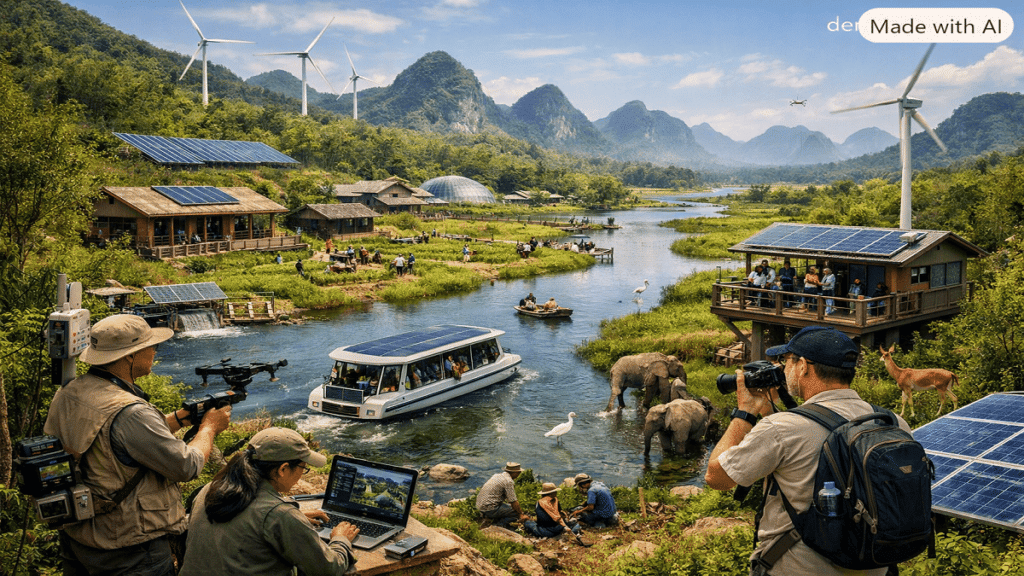
How Does Eco-Vision (EC) Support Environmental Protection and Sustainable Development?
Eco-Vision (EC) supports environmental protection and sustainable development by promoting a balanced approach where economic growth, technological advancement, and ecological preservation work together. It encourages individuals, businesses, and governments to adopt sustainable strategies that reduce environmental damage, conserve natural resources, and create long-term solutions for global challenges such as climate change, pollution, and biodiversity loss.
Unlike traditional development models that often prioritize short-term economic gains, focuses on responsible growth that considers the impact of present actions on future generations. It provides a framework for implementing green technologies, sustainable practices, and innovative solutions that protect ecosystems while improving quality of life.
1. Promoting Renewable Energy Solutions
One of the major ways Eco-Vision supports environmental protection is by encouraging the transition from fossil fuels to renewable energy sources. Solar power, wind energy, hydropower, and other clean energy technologies help reduce greenhouse gas emissions and decrease dependence on limited natural resources.
Businesses and communities following principles can improve energy efficiency by using smart energy systems, energy-saving technologies, and sustainable infrastructure. This reduces carbon emissions and supports global climate action.
The United Nations Environment Programme (UNEP) highlights the importance of clean energy adoption and environmental innovation in achieving sustainable development goals.
2. Supporting Sustainable Resource Management
Eco-Vision promotes responsible management of natural resources such as water, forests, minerals, and agricultural resources. It encourages practices that reduce waste, improve recycling, and support circular economy models.
For example, industries can redesign production processes to reuse materials, reduce waste generation, and improve resource efficiency. Sustainable resource management helps protect ecosystems while ensuring that essential resources remain available for future generations.
3. Encouraging Green Technology and Innovation
Technology is a key component. Innovative solutions such as artificial intelligence, smart monitoring systems, electric transportation, and environmental data platforms help organizations reduce their environmental impact.
Smart technologies can monitor energy consumption, track pollution levels, manage waste systems, and support conservation efforts. These innovations allow decision-makers to develop more effective strategies for environmental protection.
4. Protecting Biodiversity and Ecosystems
Eco-Vision supports biodiversity conservation by promoting responsible land use, habitat protection, and ecosystem restoration. Healthy ecosystems provide essential services such as clean water, climate regulation, food production, and natural disaster protection.
Conservation initiatives inspired by include sustainable forestry, wildlife protection programs, marine conservation, and restoration of damaged ecosystems.
5. Supporting Sustainable Urban Development
Cities play an important role in sustainability because they consume significant amounts of energy and resources. encourages the development of smart cities with green buildings, sustainable transportation, efficient waste management, and improved public spaces.
Green infrastructure, such as urban forests and energy-efficient buildings, helps reduce pollution while improving living conditions for communities.
6. Creating Sustainable Economic Opportunities
Eco-Vision demonstrates that environmental protection and economic development can support each other. Sustainable businesses can create new opportunities through green industries, renewable energy projects, eco-tourism, and environmentally responsible products.
By encouraging sustainable innovation, helps industries become more competitive while reducing their environmental footprint.
7. Increasing Environmental Awareness
Education and awareness are essential parts. By promoting environmental responsibility, it encourages people to make sustainable choices in their daily lives.
Awareness programs help communities understand the importance of conservation, responsible consumption, and climate action. This creates a stronger culture of sustainability.
The United Nations Sustainable Development Goals (SDGs) provide a global framework that aligns with principles, including climate action, clean energy, sustainable cities, and responsible consumption.
Conclusion
Eco-Vision (EC) supports environmental protection and sustainable development by integrating conservation, innovation, and responsible decision-making. It encourages renewable energy adoption, sustainable resource management, green technology development, biodiversity protection, and community participation.
What Role Do Organizations and Communities Play in Implementing Eco-Vision (EC)?
Organizations and communities play a critical role in implementing by transforming sustainability goals into practical actions that protect the environment, encourage innovation, and support long-term development. Eco-Vision is not achieved through individual efforts alone; it requires collaboration between businesses, governments, non-governmental organizations, researchers, and local communities. Together, these stakeholders help create sustainable systems that balance economic progress with environmental responsibility.
Organizations contribute by integrating sustainability into their strategies, operations, and decision-making processes. Businesses, industries, and institutions can reduce their environmental impact by adopting renewable energy, improving resource efficiency, reducing waste, and investing in green technologies. These actions help organizations move toward more sustainable production and consumption models.
Role of Organizations in Implementing Eco-Vision
1. Adopting Sustainable Business Practices
Organizations are responsible for implementing environmentally friendly practices within their operations. This includes reducing carbon emissions, improving energy efficiency, managing waste responsibly, and using sustainable materials.
For example, manufacturing companies can adopt cleaner production methods, while service-based organizations can reduce energy consumption through smart infrastructure and digital solutions. Sustainable business practices not only protect the environment but also improve operational efficiency and long-term competitiveness.
2. Investing in Green Innovation
Innovation is a major component of Eco-Vision. Organizations support sustainability by investing in research and development of technologies that reduce environmental impact. These include renewable energy systems, electric transportation, artificial intelligence-based environmental monitoring, and circular economy solutions.
Technology-driven sustainability initiatives help industries address environmental challenges while creating new opportunities for growth.
3. Promoting Environmental Responsibility
Organizations can influence employees, customers, and partners by promoting environmental awareness. Sustainability training programs, green policies, and responsible supply chain management encourage wider adoption of Eco-Vision principles.
Companies that communicate transparent sustainability goals also help build trust and encourage responsible consumer behavior.
4. Supporting Sustainable Development Initiatives
Organizations can collaborate with governments, research institutions, and environmental groups to support conservation projects, climate action programs, and community development initiatives. Partnerships help combine resources, knowledge, and expertise to achieve larger sustainability goals.
The United Nations Environment Programme (UNEP) encourages cooperation between organizations and communities to address environmental challenges through sustainable solutions.
Role of Communities in Implementing Eco-Vision
1. Encouraging Sustainable Lifestyles
Communities play an important role by adopting environmentally responsible behaviors. Actions such as recycling, conserving energy and water, reducing waste, and supporting sustainable products contribute significantly to environmental protection.
Community participation ensures that sustainability becomes part of everyday life rather than only an organizational goal.
2. Protecting Local Ecosystems
Local communities often have valuable knowledge about natural resources and ecosystems. Their involvement in conservation activities, biodiversity protection, and environmental restoration projects helps maintain ecological balance.
Community-led initiatives such as forest conservation, sustainable agriculture, and local environmental programs are essential for successful Eco-Vision implementation.
3. Supporting Local Sustainability Projects
Communities can participate in projects related to renewable energy, sustainable tourism, waste management, and green infrastructure. Local involvement ensures that sustainability solutions meet the needs and conditions of specific regions.
For example, community-based eco-tourism programs can protect natural areas while creating economic opportunities for residents.
4. Increasing Environmental Awareness
Education and awareness are key responsibilities of communities. Schools, local organizations, and community groups can promote environmental knowledge and encourage future generations to participate in sustainability efforts.
The United Nations Sustainable Development Goals (SDGs) emphasize the importance of partnerships, climate action, sustainable communities, and responsible resource management.
Importance of Collaboration Between Organizations and Communities
The success of Eco-Vision depends on strong collaboration between organizations and communities. Businesses may provide technology and investment, while communities contribute local knowledge and participation. Governments can create policies and frameworks that support sustainable development.
When organizations and communities work together, they can develop effective solutions for challenges such as climate change, pollution, resource scarcity, and ecosystem degradation.
Conclusion
Organizations and communities are essential drivers of Eco-Vision (EC) implementation. Organizations contribute through sustainable business practices, innovation, and responsible operations, while communities support sustainability through awareness, conservation, and local participation.
What Are the Future Opportunities and Challenges Associated With Eco-Vision (EC)?
Eco-Vision (EC) represents a forward-looking approach to sustainability that combines environmental protection, technological innovation, and responsible development. As global concerns around climate change, resource scarcity, pollution, and biodiversity loss continue to increase, Eco-Vision provides opportunities for organizations, governments, and communities to create sustainable solutions. However, implementing this vision also involves several challenges, including financial limitations, technological barriers, and the need for widespread behavioral change.
The future of Eco-Vision will depend on how effectively societies can integrate sustainability into economic systems, industrial operations, and everyday lifestyles. By addressing existing challenges and utilizing emerging opportunities, Eco-Vision can support a more resilient and environmentally responsible future.
Future Opportunities of Eco-Vision (EC)
1. Growth of Green Technologies
One of the biggest opportunities associated with Eco-Vision is the rapid growth of green technologies. Innovations in renewable energy, artificial intelligence, electric mobility, smart infrastructure, and environmental monitoring systems can help reduce environmental impact while improving efficiency.
Technologies such as smart energy grids, carbon tracking platforms, and automated resource management systems allow organizations to make more sustainable decisions. These innovations can accelerate the transition toward low-carbon economies.
2. Expansion of Renewable Energy Systems
Eco-Vision creates significant opportunities in the renewable energy sector. Solar, wind, hydro, and other clean energy solutions are becoming more accessible and cost-effective. Increased adoption of renewable energy can reduce dependence on fossil fuels and support global climate goals.
Governments and businesses investing in clean energy infrastructure can create new industries, employment opportunities, and sustainable economic growth.
3. Development of Sustainable Cities
Future cities will increasingly adopt Eco-Vision principles through smart urban planning, green buildings, sustainable transportation, and efficient resource management. Smart city technologies can help reduce energy consumption, improve waste management, and create healthier environments for residents.
Sustainable urban development will become essential as global populations continue to grow.
4. Growth of Circular Economy Models
Eco-Vision supports the transition from a traditional linear economy to a circular economy, where products and materials are reused, repaired, and recycled. This creates opportunities for businesses to develop sustainable products, reduce waste, and improve resource efficiency.
Circular economy practices can benefit industries while reducing pressure on natural resources.
5. Increased Environmental Awareness
Growing awareness among consumers and communities creates opportunities for sustainable businesses and initiatives. People are increasingly choosing environmentally responsible products, services, and lifestyles, encouraging organizations to adopt Eco-Vision strategies.
The United Nations Sustainable Development Goals (SDGs) provide a global framework supporting many Eco-Vision objectives, including climate action, responsible consumption, clean energy, and sustainable communities.
Challenges of Eco-Vision (EC)
1. High Implementation Costs
One of the biggest challenges of Eco-Vision is the initial cost of adopting sustainable technologies and infrastructure. Renewable energy systems, green buildings, and advanced environmental technologies often require significant investment.
Small businesses and developing communities may face difficulties implementing these solutions without financial support or incentives.
2. Technological Limitations
Although technology plays an important role in Eco-Vision, some sustainable solutions are still developing. Limited access to advanced technologies, technical expertise, and infrastructure can slow adoption.
Continuous research and innovation are necessary to overcome these barriers.
3. Resistance to Change
Changing traditional practices and behaviors can be challenging. Organizations and individuals may resist adopting sustainable approaches due to lack of awareness, uncertainty, or concerns about costs and efficiency.
Education and effective communication are essential for encouraging wider acceptance of Eco-Vision principles.
4. Greenwashing Concerns
As sustainability becomes more important, some organizations may make misleading environmental claims without implementing meaningful changes. This practice, known as greenwashing, can reduce trust in sustainability initiatives.
Transparent reporting, sustainability standards, and certifications are necessary to ensure genuine environmental progress. Organizations such as the Global Sustainable Tourism Council (GSTC) provide sustainability criteria that help organizations follow responsible practices.
5. Policy and Coordination Challenges
Successful implementation of Eco-Vision requires cooperation between governments, industries, communities, and international organizations. Differences in policies, regulations, and priorities can create challenges for large-scale sustainability initiatives.
Strong collaboration and clear sustainability frameworks are necessary to achieve long-term results.
Conclusion
Eco-Vision (EC) offers significant opportunities to create a sustainable future through green technology, renewable energy, circular economy practices, and responsible development. It can support environmental protection while creating new economic and social benefits.
Case Study of Eco-Vision (EC): Singapore’s Smart and Sustainable Development Model
Introduction
Singapore is a leading example of how Eco-Vision (EC) principles can be implemented through innovative technology, sustainable urban planning, and environmental responsibility. As a densely populated city-state with limited natural resources, Singapore has developed a long-term sustainability strategy focused on balancing economic growth, urban development, and environmental protection.
The country’s Eco-Vision approach demonstrates how governments, organizations, and communities can work together to create a sustainable future through smart infrastructure, renewable energy adoption, resource efficiency, and green innovation.
Background of Singapore’s Sustainability Journey
Singapore faces unique environmental challenges, including limited land availability, high energy demand, and dependence on imported resources. To address these issues, the country developed a sustainability-focused development model that integrates environmental protection into urban planning and economic strategies.
Through initiatives focused on clean energy, sustainable buildings, water management, and biodiversity conservation, Singapore has transformed itself into a global example of sustainable city development.
The Singapore Green Plan 2030 represents a national framework that supports sustainable development through initiatives in energy, transportation, nature conservation, and resource management.
1. Sustainable Urban Planning and Green Infrastructure
A major component of Singapore’s Eco-Vision model is the integration of nature into urban environments. The city has developed green buildings, rooftop gardens, vertical greenery, and environmentally friendly public spaces to improve urban sustainability.
The use of green infrastructure helps reduce urban heat, improve air quality, and create healthier living environments. Buildings are designed with energy-efficient technologies that reduce electricity consumption and environmental impact.
The Building and Construction Authority (BCA) Singapore promotes green building standards that encourage sustainable construction practices.
2. Smart Technology and Digital Innovation
Technology plays an important role in Singapore’s Eco-Vision strategy. The country uses smart systems to improve resource management, transportation efficiency, and environmental monitoring.
Examples include:
- Smart energy management systems
- Digital monitoring of water consumption
- Intelligent transportation solutions
- Data-driven urban planning tools
Artificial intelligence and data analytics help authorities understand environmental patterns and develop more efficient solutions for managing resources.
3. Sustainable Water Management
Water sustainability is a key challenge for Singapore due to limited freshwater resources. The country developed innovative solutions such as water recycling, rainwater collection, and advanced purification technologies.
One of the most successful initiatives is NEWater, which treats used water through advanced purification processes and converts it into high-quality reclaimed water. This approach demonstrates how innovation can improve resource security while reducing environmental pressure.
4. Renewable Energy and Clean Technology
Singapore is investing in renewable energy solutions, particularly solar power, to reduce carbon emissions and improve energy sustainability. Solar panels are being installed across buildings, industrial areas, and public infrastructure.
The adoption of clean energy technologies supports Singapore’s goal of reducing greenhouse gas emissions while encouraging innovation in the renewable energy sector.
5. Sustainable Transportation
Transportation is another important area where Singapore applies Eco-Vision principles. The country promotes public transportation, electric vehicles, and smart mobility solutions to reduce emissions and improve urban efficiency.
Initiatives include:
- Expansion of electric vehicle charging infrastructure
- Efficient public transportation networks
- Digital transportation management systems
These solutions help reduce dependence on private vehicles and contribute to cleaner urban environments.
6. Community Participation and Environmental Awareness
Eco-Vision requires active participation from communities. Singapore encourages residents, businesses, and organizations to adopt sustainable lifestyles through environmental education programs and community initiatives.
Public participation in recycling, energy conservation, and sustainability campaigns helps create a culture of environmental responsibility.
Challenges in Singapore’s Eco-Vision Approach
Despite its progress, Singapore faces several challenges, including limited land availability, high energy demand, and the need to balance economic growth with environmental protection. Achieving long-term sustainability requires continuous innovation, investment, and public cooperation.
Climate change impacts, such as rising temperatures and sea-level risks, also require ongoing adaptation strategies.
Future Opportunities
Singapore’s Eco-Vision model has opportunities for further development through:
- Expansion of renewable energy systems
- Increased use of artificial intelligence for sustainability management
- Development of circular economy solutions
- Growth of sustainable industries
- Advanced climate adaptation technologies
These opportunities can strengthen Singapore’s position as a global leader in sustainable urban development.
Conclusion
Singapore’s Eco-Vision (EC) case study demonstrates how sustainability can be achieved through strategic planning, technological innovation, and community involvement. By combining smart infrastructure, green technologies, renewable energy, and responsible resource management, Singapore has created a model for sustainable development.
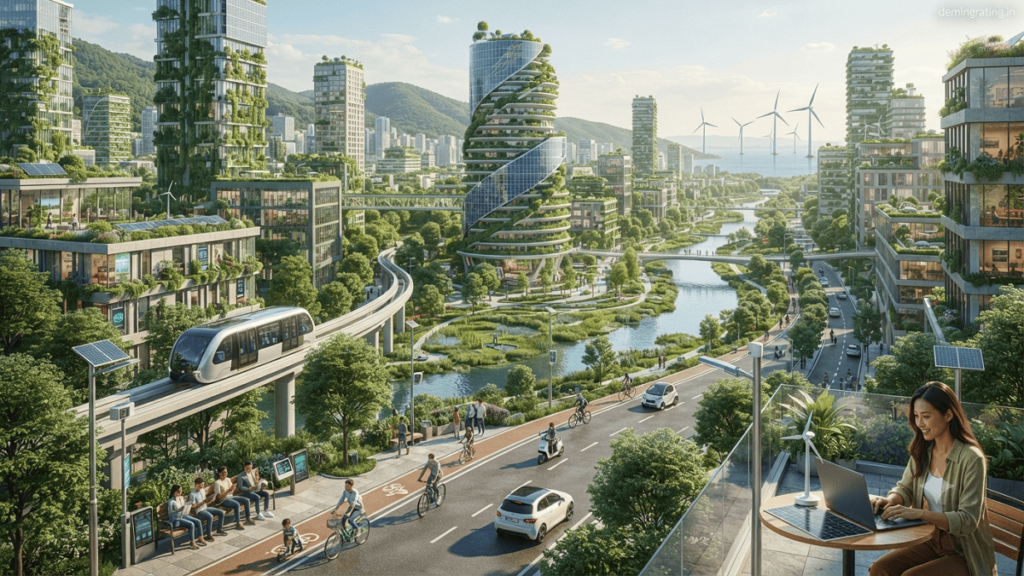
White Paper on Eco-Vision (EC): A Strategic Framework for Sustainable Development and Environmental Innovation
Executive Summary
Eco-Vision (EC) represents a future-oriented sustainability framework designed to integrate environmental protection, technological innovation, and responsible development. It focuses on creating a balance between economic progress and ecological preservation by encouraging organizations, governments, and communities to adopt sustainable solutions.
As climate change, resource depletion, pollution, and biodiversity loss become critical global challenges, Eco-Vision provides a roadmap for developing systems that reduce environmental impact while improving social and economic resilience. It promotes renewable energy, green technology, circular economy practices, sustainable infrastructure, and environmental awareness as key drivers of long-term sustainability.
Eco-innovation approaches supported by organizations such as the United Nations Environment Programme (UNEP) emphasize integrating sustainability into business models, products, processes, and organizational strategies to create environmental and economic value. (UNEP – UN Environment Programme)
1. Introduction to Eco-Vision (EC)
Eco-Vision (EC) is a sustainability-focused concept that encourages a proactive approach toward environmental challenges. Instead of addressing environmental problems after they occur, Eco-Vision promotes preventive strategies that integrate sustainability into planning, innovation, and decision-making.
The primary objective of Eco-Vision is to create a future where human activities operate within ecological limits. It encourages industries and communities to reduce resource consumption, adopt cleaner technologies, and develop solutions that support environmental regeneration.
Eco-Vision is based on the understanding that sustainability is not only an environmental responsibility but also an opportunity for innovation, economic growth, and social development.
2. Core Principles of Eco-Vision (EC)
2.1 Environmental Responsibility
The foundation of Eco-Vision is responsible interaction with nature. It encourages organizations and individuals to reduce pollution, protect ecosystems, and minimize activities that contribute to environmental degradation.
This principle focuses on maintaining ecological balance while ensuring sustainable use of natural resources.
2.2 Sustainable Resource Management
Eco-Vision promotes efficient management of resources such as water, energy, forests, and raw materials. It supports circular economy approaches where resources are reused, recycled, and optimized instead of being wasted.
Sustainable resource management reduces environmental pressure and improves long-term resource availability.
2.3 Green Innovation and Technology
Innovation is a central pillar of Eco-Vision. Advanced technologies such as artificial intelligence, renewable energy systems, smart infrastructure, and environmental monitoring tools help organizations improve sustainability performance.
Eco-innovation strategies can help businesses increase efficiency, reduce waste, and develop environmentally responsible products and services. (UNEP – UN Environment Programme)
2.4 Long-Term Sustainability Planning
Eco-Vision encourages organizations and governments to focus on long-term environmental and social outcomes rather than short-term benefits.
Strategic sustainability planning helps create resilient systems capable of adapting to climate change, resource challenges, and changing environmental conditions.
2.5 Collaboration and Shared Responsibility
Sustainability requires cooperation between governments, businesses, researchers, and communities. Eco-Vision promotes partnerships that combine knowledge, resources, and innovation to achieve environmental goals.
3. Key Goals of Eco-Vision (EC)
3.1 Reducing Carbon Emissions
A major goal of Eco-Vision is reducing greenhouse gas emissions through renewable energy adoption, energy efficiency, and low-carbon technologies.
These efforts support global climate action and help organizations transition toward cleaner operations.
3.2 Protecting Biodiversity
Eco-Vision aims to preserve ecosystems, wildlife, forests, and marine environments. Conservation initiatives help maintain biodiversity and protect essential ecological services.
3.3 Promoting Renewable Energy
The transition toward renewable energy is a key objective of Eco-Vision. Solar, wind, and other clean energy solutions reduce dependence on fossil fuels and support sustainable energy systems.
3.4 Supporting Circular Economy Development
Eco-Vision encourages industries to move from traditional waste-producing models toward circular systems where materials are reused and resources remain in circulation.
3.5 Improving Environmental Awareness
Education and awareness programs are essential for encouraging sustainable behaviors among individuals, organizations, and communities.
4. Industry Applications of Eco-Vision
4.1 Manufacturing Sector
Manufacturing industries can apply Eco-Vision through:
- Sustainable production methods
- Waste reduction systems
- Energy-efficient machinery
- Recycling and material recovery programs
These practices improve efficiency while reducing environmental impact.
4.2 Energy Industry
The energy sector can implement Eco-Vision through:
- Renewable energy projects
- Smart energy networks
- Carbon reduction technologies
- Energy storage solutions
Clean energy innovation is essential for achieving sustainability targets.
4.3 Tourism Industry
Eco-Vision supports sustainable tourism through:
- Eco-friendly accommodations
- Conservation-based travel experiences
- Sustainable transportation
- Community-focused tourism models
These approaches reduce tourism-related environmental pressure.
4.4 Agriculture Sector
Agriculture can benefit from Eco-Vision through:
- Precision farming technologies
- Sustainable irrigation systems
- Organic farming methods
- Soil conservation practices
These solutions improve productivity while protecting natural resources.
5. Role of Organizations and Communities
Organizations play a major role in implementing Eco-Vision by adopting sustainable policies, investing in green technologies, and reducing environmental impacts.
Businesses can contribute through:
- Sustainable supply chains
- Renewable energy adoption
- Environmental reporting
- Green product development
Communities contribute by:
- Supporting conservation initiatives
- Practicing responsible consumption
- Participating in environmental programs
- Promoting sustainability awareness
Collaboration between organizations and communities creates stronger and more effective sustainability solutions.
6. Benefits of Eco-Vision (EC)
Environmental Benefits
- Reduced pollution
- Lower carbon emissions
- Improved resource conservation
- Protection of biodiversity
Economic Benefits
- Development of green industries
- Creation of sustainable jobs
- Improved operational efficiency
- Increased innovation opportunities
Social Benefits
- Healthier communities
- Increased environmental awareness
- Better quality of life
- Stronger community participation
7. Challenges in Implementing Eco-Vision
High Implementation Costs
Sustainable technologies often require significant initial investment. Organizations may face difficulties adopting advanced solutions without financial support.
Limited Awareness
Lack of knowledge about sustainability practices can slow adoption among businesses and communities.
Technology Barriers
Some regions may have limited access to advanced technologies and infrastructure needed for sustainability transformation.
Greenwashing Risks
Organizations may promote sustainability claims without making meaningful environmental improvements. Transparent reporting and recognized sustainability standards are important to maintain credibility.
8. Future Opportunities of Eco-Vision
The future of Eco-Vision will be influenced by emerging technologies and sustainability-focused innovations.
Key opportunities include:
- Artificial intelligence for environmental management
- Smart cities and sustainable infrastructure
- Advanced renewable energy systems
- Carbon-neutral industries
- Regenerative environmental solutions
The global sustainability movement, including frameworks such as the United Nations Sustainable Development Goals (SDGs), provides direction for environmental protection, responsible consumption, and sustainable development.
Conclusion
Eco-Vision (EC) provides a comprehensive framework for creating a sustainable future through environmental responsibility, technological innovation, and collaborative action. It helps organizations and communities address global environmental challenges while creating economic and social opportunities.
Ask FAQs
What is Eco-Vision (EC)?
Eco-Vision (EC) is a sustainability-focused approach that combines environmental responsibility, technological innovation, and long-term planning to create a balance between economic development and ecological protection. It encourages organizations, governments, and communities to adopt sustainable practices such as renewable energy, efficient resource management, green technologies, and conservation strategies.
How does Eco-Vision support sustainable development?
Eco-Vision supports sustainable development by promoting solutions that reduce carbon emissions, conserve natural resources, and encourage responsible innovation. It helps industries adopt renewable energy, circular economy practices, smart technologies, and environmentally friendly processes.
What industries can benefit from Eco-Vision principles?
Eco-Vision principles can be applied across various industries, including manufacturing, energy, tourism, agriculture, transportation, construction, healthcare, and technology.
For example, manufacturers can reduce waste through circular production models, energy companies can adopt renewable sources, tourism businesses can develop eco-friendly experiences, and agriculture can use precision farming technologies to improve resource efficiency.
What technologies are used in Eco-Vision implementation?
Eco-Vision uses several advanced technologies to improve sustainability, including artificial intelligence, Internet of Things (IoT), renewable energy systems, smart infrastructure, electric transportation, and environmental monitoring tools.
These technologies help organizations track resource usage, reduce emissions, improve efficiency, and develop innovative solutions for environmental challenges.
What are the main challenges of implementing Eco-Vision?
The major challenges of implementing Eco-Vision include high initial investment costs, limited access to advanced technologies, lack of sustainability awareness, and resistance to changing traditional practices.
Another challenge is avoiding greenwashing, where organizations make environmental claims without implementing meaningful sustainability actions. Clear sustainability standards, transparent reporting, and collaboration between stakeholders are essential for successful Eco-Vision implementation.
Table of Contents
Disclaimer:
This content is for informational and educational purposes only. Readers should verify information with relevant experts or official sources before making sustainability, business, or investment decisions.