
sustainable waste management
Sustainable waste management is a comprehensive approach to handling waste in a way that minimizes environmental impact, conserves natural resources, and supports long-term ecological balance. It focuses on reducing waste generation, improving recycling and recovery, promoting reuse, and ensuring safe disposal of materials that cannot be recovered. Unlike traditional waste disposal methods that rely heavily on landfills, sustainable waste management aims to create a circular system where resources remain in use for as long as possible.
The growing volume of waste generated by households, industries, and businesses has become a major global challenge. Improper waste disposal can lead to pollution, greenhouse gas emissions, resource depletion, and public health concerns. Sustainable waste management addresses these issues by prioritizing waste prevention, segregation, recycling, composting, and responsible treatment methods.
One of the key principles of sustainable waste management is the waste hierarchy, which prioritizes reducing waste generation first, followed by reuse, recycling, recovery, and safe disposal. Waste reduction involves minimizing unnecessary consumption and designing products with longer lifespans. Reuse encourages extending the life of materials and products, while recycling converts waste materials such as paper, plastic, glass, and metals into new resources.
Proper waste segregation is another essential component of sustainable waste management. Separating organic waste, recyclables, hazardous materials, and electronic waste at the source improves recycling efficiency and prevents contamination. The U.S. Environmental Protection Agency emphasizes sustainable materials management practices that focus on reducing waste and improving resource recovery: https://www.epa.gov/smm.
Sustainable waste management also promotes resource recovery through methods such as composting, anaerobic digestion, and material recycling. Organic waste can be transformed into compost or renewable energy, while recyclable materials can be reintroduced into manufacturing processes. These practices reduce dependence on virgin resources and lower the environmental impact associated with extraction and production.
Businesses and industries are increasingly adopting sustainable waste management strategies to improve operational efficiency and meet environmental goals. Manufacturing facilities, construction companies, healthcare organizations, and retail businesses are implementing waste reduction programs, recycling initiatives, and circular economy models to reduce their ecological footprint.
Despite its benefits, sustainable waste management faces challenges such as limited infrastructure, lack of public awareness, improper segregation practices, and high initial investment costs. Addressing these challenges requires collaboration between governments, businesses, communities, and individuals. The United Nations Environment Programme promotes integrated waste management solutions to reduce pollution and support sustainable development: https://www.unep.org/.
In conclusion, sustainable waste management is essential for creating a cleaner environment, conserving resources, and reducing the negative impacts of waste generation. By focusing on prevention, reuse, recycling, and responsible disposal, societies can move toward a circular economy and develop waste systems that support both current and future generations.
What Is Sustainable Waste Management and Why Is It Important?
Sustainable waste management is an approach to managing waste that focuses on reducing waste generation, maximizing resource recovery, minimizing environmental damage, and ensuring safe disposal of materials that cannot be reused or recycled. It involves a combination of practices such as waste reduction, reuse, recycling, composting, waste segregation, and responsible treatment methods. The goal is to move away from traditional disposal-based systems and create a circular economy where materials are kept in use for as long as possible.
Traditional waste management often depends heavily on landfills, where large amounts of waste are permanently discarded. This approach can lead to environmental problems such as soil contamination, water pollution, greenhouse gas emissions, and loss of valuable resources. Sustainable waste management provides a more efficient alternative by treating waste as a resource rather than a burden.
One of the main reasons sustainable waste management is important is its ability to reduce environmental pollution. Proper waste handling prevents harmful substances from entering ecosystems and reduces the negative impacts of improper disposal. Separating recyclable materials such as paper, plastics, glass, and metals allows them to be processed into new products, reducing the need for extracting new raw materials. The U.S. Environmental Protection Agency highlights sustainable materials management as an important strategy for conserving resources and reducing waste impacts: https://www.epa.gov/smm.
Sustainable waste management also plays a major role in resource conservation. Many materials thrown away as waste still contain valuable resources. Recycling metals, recovering plastics, and composting organic waste help preserve natural resources and reduce energy consumption associated with producing new materials. This approach supports the principles of a circular economy, where resources are reused and maintained within the production cycle.
Another important benefit is climate change mitigation. Landfills produce methane when organic waste breaks down without sufficient oxygen. By separating organic waste and using composting or anaerobic digestion methods, sustainable waste management helps reduce greenhouse gas emissions. It also lowers carbon emissions by reducing the need for energy-intensive extraction and manufacturing processes.
Sustainable waste management is equally important for public health and community well-being. Proper collection, segregation, and treatment of waste reduce exposure to hazardous materials, control disease risks, and create cleaner living environments. Effective systems also improve workplace safety for waste management workers.
Businesses and industries benefit from sustainable waste practices through reduced disposal costs, improved resource efficiency, regulatory compliance, and stronger environmental performance. Many organizations are adopting waste reduction strategies as part of their sustainability goals.
The United Nations Environment Programme promotes sustainable waste management practices as a key solution for addressing pollution and supporting environmental sustainability: https://www.unep.org/.
In conclusion, sustainable waste management is important because it reduces pollution, conserves resources, protects public health, lowers greenhouse gas emissions, and supports a more sustainable future. By reducing waste, reusing materials, and improving recycling systems, individuals, businesses, and governments can contribute to a more responsible and circular approach to resource management.
What are the key principles and practices of sustainable waste management?
Sustainable waste management is based on a set of principles and practices designed to reduce waste generation, conserve resources, minimize environmental impacts, and promote efficient use of materials. Instead of treating waste as an unwanted by-product, sustainable waste management views discarded materials as potential resources that can be recovered, reused, or recycled. These approaches support a circular economy by keeping materials in circulation for longer periods and reducing dependence on natural resource extraction.
1. Waste Prevention and Reduction
The most important principle of sustainable waste management is preventing waste before it is created. Waste reduction involves minimizing unnecessary consumption, improving product design, using durable materials, and reducing excessive packaging. Businesses can adopt efficient production methods, while individuals can make responsible purchasing decisions to reduce the amount of waste entering the system.
2. Reuse of Materials and Products
Reuse focuses on extending the lifespan of products and materials instead of disposing of them after a single use. Examples include repairing damaged products, donating unwanted items, using reusable containers, and incorporating reclaimed materials into construction projects. Reuse reduces demand for new resources and decreases waste disposal requirements.
3. Waste Segregation at Source
Proper waste segregation is a critical practice that involves separating waste into categories such as organic waste, recyclable materials, hazardous waste, electronic waste, and general waste. Source segregation improves recycling efficiency, prevents contamination, and ensures that each waste type receives the appropriate treatment. The U.S. Environmental Protection Agency promotes sustainable materials management practices that focus on reducing waste and improving resource recovery: https://www.epa.gov/smm.
4. Recycling and Resource Recovery
Recycling converts waste materials into new products, reducing the need for virgin raw materials. Common recyclable materials include paper, glass, plastics, and metals. Resource recovery also includes processes such as composting and anaerobic digestion, which transform organic waste into useful products like compost and renewable energy.
5. Responsible Waste Treatment and Disposal
Some waste materials cannot currently be reused or recycled and require safe disposal methods. Sustainable waste management ensures that non-recyclable and hazardous waste is treated using environmentally responsible methods to minimize risks to human health and ecosystems.
6. Circular Economy Approach
A circular economy is a key principle of sustainable waste management that aims to eliminate waste by designing products and systems that allow materials to be reused, repaired, refurbished, and recycled. This approach reduces resource consumption and supports long-term environmental sustainability.
7. Public Awareness and Participation
Successful waste management depends on the involvement of communities, businesses, and governments. Education programs, clear waste collection systems, and awareness campaigns encourage responsible waste disposal habits and improve participation in recycling and segregation programs.
8. Sustainable Technology and Innovation
Modern waste management increasingly uses advanced technologies such as automated sorting systems, digital waste tracking, waste-to-energy solutions, and smart collection systems. These innovations improve efficiency and help organizations manage waste more effectively.
The United Nations Environment Programme emphasizes integrated waste management strategies that combine prevention, recycling, resource recovery, and sustainable disposal practices: https://www.unep.org/.
In conclusion, the key principles of sustainable waste management include waste reduction, reuse, segregation, recycling, responsible disposal, circular economy practices, public participation, and technological innovation. Implementing these practices helps conserve resources, reduce pollution, lower greenhouse gas emissions, and create a more sustainable future for communities and industries.
How Can Recycling, Reuse, and Waste Reduction Support Sustainability?
Recycling, reuse, and waste reduction are three fundamental practices that support sustainability by minimizing waste generation, conserving natural resources, reducing pollution, and improving resource efficiency. These approaches help shift society away from a traditional linear model of “take, make, dispose” toward a circular economy where materials are continuously reused, recovered, and maintained within the system for as long as possible.
Role of Recycling in Sustainability
Recycling supports sustainability by converting waste materials into new products instead of extracting additional raw resources. Materials such as paper, plastic, glass, metals, and electronics can be collected, processed, and transformed into usable materials for manufacturing. This reduces the demand for virgin resources, lowers energy consumption, and decreases environmental damage caused by mining, logging, and resource extraction.
For example, recycling metals reduces the need for mining operations, while recycling paper helps conserve forests and water resources. Recycling also reduces the amount of waste sent to landfills, helping minimize land use and greenhouse gas emissions. The U.S. Environmental Protection Agency highlights recycling and sustainable materials management as important strategies for conserving resources and reducing waste impacts: https://www.epa.gov/smm.
Importance of Reuse
Reuse involves extending the lifespan of products and materials by using them multiple times instead of disposing of them after a single use. This practice reduces the demand for new products and lowers the environmental impact associated with manufacturing, transportation, and disposal.
Examples of reuse include repairing electronics, donating clothing, using reusable packaging, refurbishing furniture, and incorporating salvaged materials into construction projects. Reclaimed wood, reused bricks, and restored fixtures are examples of how material reuse can support sustainable building practices while preserving valuable resources.
Reuse also provides economic benefits by reducing purchasing costs and creating opportunities for repair, refurbishment, and resale industries. It encourages more responsible consumption patterns and supports a culture of resource conservation.
Benefits of Waste Reduction
Waste reduction focuses on preventing waste from being generated in the first place. It involves designing products with fewer materials, reducing unnecessary packaging, improving production efficiency, and encouraging responsible consumption. Preventing waste is often more effective than managing waste after it has already been created.
Businesses can reduce waste through efficient manufacturing processes, digital documentation, sustainable packaging solutions, and improved inventory management. Individuals can contribute by purchasing durable products, avoiding single-use items, and making informed consumption choices.
Contribution to Environmental Sustainability
Together, recycling, reuse, and waste reduction help lower greenhouse gas emissions, conserve natural resources, reduce pollution, and protect ecosystems. They also support the principles of a circular economy by keeping materials in use and reducing dependence on finite resources.
The United Nations Environment Programme promotes resource efficiency and circular economy approaches as important solutions for addressing global waste and environmental challenges: https://www.unep.org/.
Conclusion
Recycling, reuse, and waste reduction are essential practices for achieving sustainability. Recycling recovers valuable materials, reuse extends product lifespans, and waste reduction prevents unnecessary resource consumption. By adopting these practices, individuals, businesses, and governments can reduce environmental impacts, improve resource efficiency, and create a more sustainable future.
What are the environmental and economic benefits of sustainable waste management?
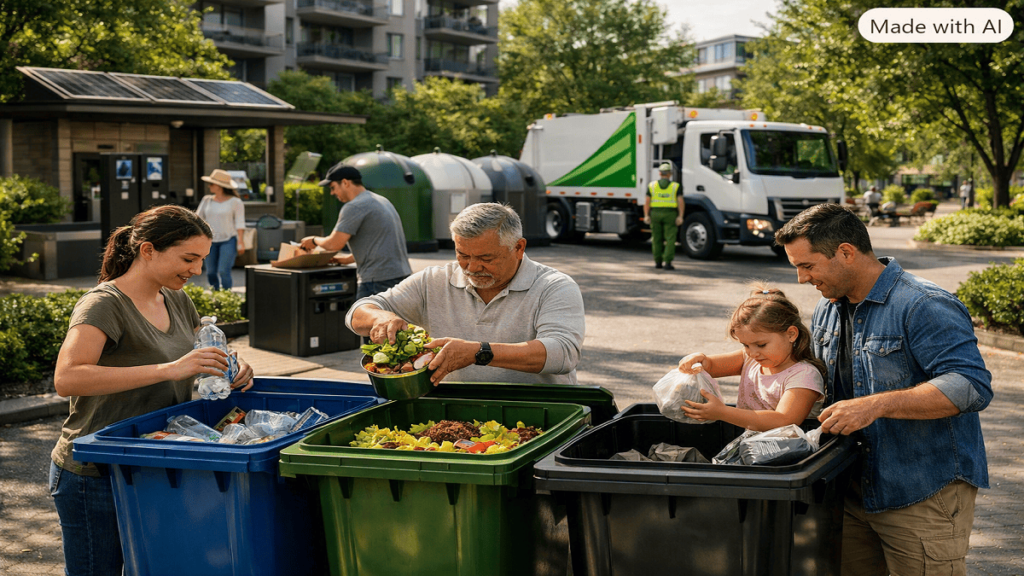
Sustainable waste management provides significant environmental and economic benefits by reducing waste generation, improving resource efficiency, and creating opportunities for cost savings and economic growth. Unlike traditional waste disposal systems that focus mainly on collecting and dumping waste, sustainable approaches emphasize prevention, reuse, recycling, resource recovery, and responsible treatment. These practices help protect ecosystems while supporting long-term economic development.
Environmental Benefits of Sustainable Waste Management
1. Reduction of Pollution
One of the most important environmental benefits of sustainable waste management is the reduction of pollution. Proper waste segregation, recycling, and treatment prevent harmful materials from contaminating soil, water, and air. Separating hazardous waste such as chemicals, batteries, and electronic waste ensures that these materials are handled safely and do not create risks for ecosystems or human health.
2. Conservation of Natural Resources
Sustainable waste management helps conserve natural resources by recovering and reusing valuable materials. Recycling paper, metals, plastics, and glass reduces the need for extracting new raw materials through mining, logging, and other resource-intensive activities. This helps protect biodiversity, reduce habitat destruction, and maintain natural ecosystems.
3. Reduction of Greenhouse Gas Emissions
Waste management practices such as recycling, composting, and anaerobic digestion help reduce greenhouse gas emissions. Organic waste sent to landfills produces methane, a powerful greenhouse gas. By diverting organic materials toward composting or energy recovery, sustainable waste systems reduce emissions and support climate change mitigation. The U.S. Environmental Protection Agency highlights sustainable materials management as a strategy for reducing waste impacts and conserving resources: https://www.epa.gov/smm.
4. Reduced Landfill Dependency
Sustainable waste management decreases the amount of waste sent to landfills by encouraging recycling, reuse, and recovery. This extends landfill capacity, reduces land degradation, and minimizes the environmental challenges associated with long-term waste storage.
Economic Benefits of Sustainable Waste Management
1. Cost Savings
Efficient waste management can reduce disposal costs for businesses and municipalities. Recycling and waste reduction programs lower the volume of waste requiring treatment and disposal, resulting in reduced transportation and landfill expenses.
2. Resource Recovery and Revenue Generation
Waste materials can become valuable resources through recycling and recovery processes. Industries can recover metals, plastics, paper, and other materials for reuse in manufacturing. This creates economic opportunities and reduces dependence on expensive raw materials.
3. Job Creation
Sustainable waste management supports employment opportunities in areas such as recycling, composting, waste processing, repair services, material recovery, and environmental technology. These activities contribute to the development of green industries and local economies.
4. Business Sustainability and Brand Value
Companies that adopt sustainable waste management practices can improve operational efficiency, meet environmental regulations, and strengthen their reputation among environmentally conscious customers. Sustainable practices are increasingly becoming an important part of corporate responsibility strategies.
The United Nations Environment Programme promotes sustainable resource management and circular economy approaches to reduce waste and improve environmental performance: https://www.unep.org/.
Conclusion
Sustainable waste management delivers both environmental protection and economic value. It reduces pollution, conserves resources, lowers greenhouse gas emissions, creates jobs, and improves operational efficiency. By adopting waste reduction, recycling, reuse, and resource recovery strategies, communities and industries can build more resilient systems that support environmental sustainability and long-term economic growth.
What Are the Challenges and Future Trends in Sustainable Waste Management?
Sustainable waste management has become a critical priority as waste generation continues to increase due to population growth, urbanization, industrial development, and changing consumption patterns. While sustainable approaches such as recycling, reuse, waste reduction, and resource recovery offer effective solutions, several challenges continue to limit their widespread implementation. At the same time, emerging technologies, circular economy strategies, and policy developments are creating new opportunities for improving waste management systems worldwide.
Challenges in Sustainable Waste Management
1. Increasing Waste Generation
One of the biggest challenges is the continuous growth in waste production. Rapid urbanization and increased consumption have resulted in higher volumes of municipal, industrial, electronic, and construction waste. Managing these growing waste streams requires improved infrastructure, efficient collection systems, and long-term planning.
2. Lack of Proper Waste Segregation
Effective recycling and resource recovery depend heavily on waste segregation at the source. In many regions, mixed waste disposal remains common due to limited public awareness, inadequate collection systems, and insufficient recycling facilities. Contaminated waste streams reduce recycling efficiency and increase processing costs.
3. Limited Infrastructure and Investment
Many communities lack the necessary facilities for recycling, composting, waste treatment, and material recovery. Developing sustainable waste management infrastructure requires significant financial investment, skilled workers, and effective policy support.
4. Low Public Awareness and Participation
Successful waste management depends on active participation from households, businesses, and industries. Lack of awareness about proper disposal practices, recycling methods, and waste reduction strategies can reduce the effectiveness of sustainability programs.
5. Management of Complex Waste Streams
The increasing volume of electronic waste, plastic waste, and hazardous materials creates additional challenges. These waste types require specialized treatment technologies and strict safety procedures to prevent environmental and health risks.
Future Trends in Sustainable Waste Management
1. Growth of Circular Economy Practices
The future of waste management is moving toward a circular economy model, where products are designed for durability, repair, reuse, and recycling. This approach reduces waste generation and keeps valuable materials in circulation for longer periods.
2. Advanced Recycling Technologies
Innovative technologies such as artificial intelligence-based sorting systems, chemical recycling, automated waste collection, and advanced material recovery facilities are improving recycling efficiency and helping recover more resources from waste streams.
3. Smart Waste Management Systems
Digital technologies are transforming waste management through smart bins, sensors, data analytics, and automated collection systems. These solutions help optimize waste collection routes, reduce operational costs, and improve efficiency.
4. Extended Producer Responsibility (EPR)
Governments are increasingly adopting extended producer responsibility policies, requiring manufacturers to take greater responsibility for the collection, recycling, and disposal of their products. This encourages companies to design products that generate less waste and are easier to recycle.
5. Waste-to-Energy Solutions
Waste-to-energy technologies are gaining attention as a method for converting non-recyclable waste into electricity or heat. When implemented responsibly, these systems can reduce landfill dependence and recover energy from waste materials.
The U.S. Environmental Protection Agency promotes sustainable materials management approaches that focus on reducing waste, improving recycling, and increasing resource recovery: https://www.epa.gov/smm. The United Nations Environment Programme also highlights innovation and circular economy strategies as essential solutions for global waste challenges: https://www.unep.org/.
Conclusion
Although sustainable waste management faces challenges such as increasing waste volumes, limited infrastructure, poor segregation practices, and complex waste streams, future trends offer promising solutions. Circular economy models, advanced technologies, smart systems, and stronger environmental policies are transforming how waste is managed. By combining innovation, public participation, and responsible resource use, sustainable waste management can help create cleaner communities, conserve resources, and support a more environmentally responsible future.
Case Study of Sustainable Waste Management: Singapore’s Integrated Waste Management System
Introduction
Singapore is widely recognized as a successful example of sustainable waste management due to its integrated approach that combines waste reduction, recycling, resource recovery, and advanced treatment technologies. With limited land availability and a high population density, Singapore developed a comprehensive waste management strategy focused on reducing landfill dependency while maximizing resource recovery. The country’s approach demonstrates how effective planning, technology, and public participation can create a sustainable waste management system.
Background
Singapore faces unique waste management challenges because of its limited land resources. Traditionally, increasing waste generation created pressure on disposal capacity. To address this issue, the government implemented a long-term strategy focused on waste minimization, recycling, and energy recovery rather than relying solely on landfills.
The country introduced an integrated waste management system where waste is collected, processed, and converted into useful resources wherever possible. The National Environment Agency (NEA) oversees Singapore’s waste management policies and sustainability initiatives: https://www.nea.gov.sg/.
Implementation of Sustainable Waste Management Practices
A major component of Singapore’s waste management model is waste-to-energy technology. Non-recyclable waste is transported to waste-to-energy plants, where it is incinerated under controlled conditions to generate electricity. This process significantly reduces the volume of waste requiring disposal and helps recover energy from materials that cannot be recycled.
Singapore also focuses on recycling and resource recovery. Households, businesses, and industries participate in recycling programs where materials such as paper, plastics, metals, and glass are collected for processing. The separation and recovery of recyclable materials help reduce dependence on raw resources and support circular economy principles.
Another important element is the use of Semakau Landfill, Singapore’s offshore landfill designed to safely manage the remaining waste after recycling and energy recovery. The facility represents a controlled approach to final waste disposal while minimizing environmental impact.
Environmental Benefits
Singapore’s integrated waste management system has delivered several environmental benefits. Waste-to-energy facilities reduce the amount of waste sent to landfill by significantly decreasing waste volume. Energy recovery reduces reliance on conventional energy sources, while recycling programs help conserve natural resources.
The system also supports climate protection by reducing landfill-related emissions. Efficient waste processing and resource recovery contribute to lower environmental impacts compared with traditional disposal methods.
Social and Economic Benefits
The sustainable waste management approach has created economic opportunities through recycling industries, waste processing technologies, and environmental services. It has also encouraged innovation in waste management infrastructure and created skilled employment opportunities.
Public education campaigns have played an important role in improving recycling awareness and encouraging responsible waste disposal habits among residents.
Key Lessons from the Case Study
The Singapore model highlights several important lessons for sustainable waste management:
- Integrated systems are more effective: Combining recycling, recovery, and safe disposal creates a balanced approach.
- Technology improves efficiency: Advanced treatment methods help recover energy and reduce waste volume.
- Public participation is essential: Community awareness supports successful recycling programs.
- Long-term planning creates resilience: Sustainable waste systems require continuous investment and innovation.
The United Nations Environment Programme emphasizes integrated waste management and circular economy strategies as important solutions for reducing waste impacts globally: https://www.unep.org/.
Conclusion
Singapore’s sustainable waste management system demonstrates how innovation, infrastructure development, and public participation can address complex waste challenges. Through waste-to-energy facilities, recycling initiatives, and controlled disposal methods, the country has created an efficient model that reduces landfill dependence and promotes resource recovery. This case study shows that sustainable waste management is achievable when governments, industries, and communities work together toward long-term environmental goals.
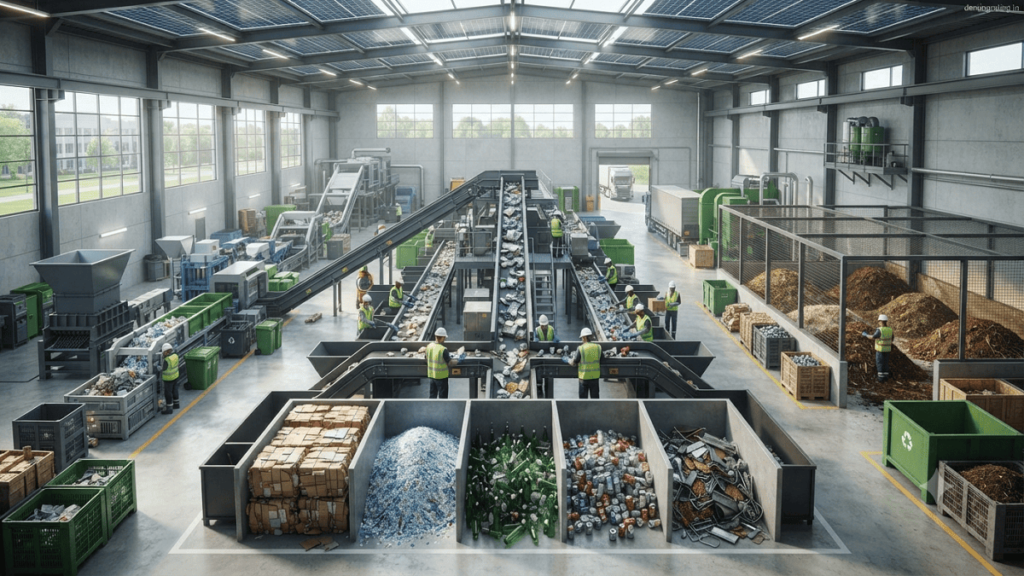
White Paper on Sustainable Waste Management: Strategies for a Circular and Resource-Efficient Future
Executive Summary
Sustainable waste management is an integrated approach that focuses on reducing waste generation, improving resource recovery, minimizing environmental impacts, and promoting responsible disposal practices. As global waste volumes continue to increase due to urbanization, industrial growth, and changing consumption patterns, traditional waste disposal methods are becoming increasingly unsustainable. This white paper explores the principles, challenges, strategies, and future opportunities associated with sustainable waste management and highlights its role in building a circular economy.
Introduction
Waste management has evolved from a disposal-focused activity into a resource management strategy. Traditional systems that depend heavily on landfills contribute to environmental issues such as greenhouse gas emissions, land degradation, pollution, and resource depletion. Sustainable waste management aims to address these challenges by prioritizing waste prevention, reuse, recycling, recovery, and safe treatment.
The goal is to create a system where waste materials are considered valuable resources rather than discarded materials. This approach supports environmental protection, economic efficiency, and long-term sustainability.
The U.S. Environmental Protection Agency promotes sustainable materials management as a framework that focuses on reducing waste generation and improving the efficient use of resources throughout a product’s lifecycle: https://www.epa.gov/smm.
Key Principles of Sustainable Waste Management
1. Waste Prevention and Reduction
The foundation of sustainable waste management is preventing waste before it is created. This includes designing durable products, reducing unnecessary packaging, improving production efficiency, and encouraging responsible consumption. Waste prevention reduces environmental impacts and decreases the demand for raw materials.
2. Reuse and Product Life Extension
Reuse extends the lifespan of products and materials through repair, refurbishment, and repurposing. Examples include repairing electronics, reusing packaging, donating unwanted items, and incorporating reclaimed materials into construction projects.
3. Waste Segregation and Recycling
Proper waste segregation allows different waste streams to be processed efficiently. Separating recyclable materials such as paper, plastics, glass, and metals improves recovery rates and prevents contamination. Recycling reduces the need for virgin resources and lowers energy consumption.
4. Organic Waste Management
Organic waste, including food scraps and agricultural waste, can be processed through composting and anaerobic digestion. These methods reduce landfill dependency while producing valuable outputs such as compost and renewable energy.
5. Responsible Disposal
Materials that cannot be reused or recycled require safe and environmentally responsible disposal. Sustainable systems ensure hazardous and non-recyclable waste is treated properly to minimize risks to ecosystems and public health.
Environmental Benefits
Sustainable waste management provides significant environmental advantages, including:
- Reduced landfill waste and pollution
- Lower greenhouse gas emissions
- Conservation of natural resources
- Improved recycling and resource recovery
- Protection of ecosystems and biodiversity
By keeping materials in circulation, sustainable waste management supports the transition toward a circular economy.
Economic Benefits
Sustainable waste management also creates economic opportunities through:
- Reduced waste disposal costs
- Recovery of valuable materials
- Development of recycling industries
- Creation of green jobs
- Improved operational efficiency for businesses
Industries that adopt sustainable waste practices can reduce resource dependency and improve their environmental performance.
Challenges in Implementation
Despite its benefits, sustainable waste management faces several challenges:
- Increasing global waste generation
- Limited recycling infrastructure
- Poor waste segregation practices
- Lack of public awareness
- High initial investment requirements
- Complex management of electronic and hazardous waste
Addressing these challenges requires collaboration between governments, industries, communities, and technology providers.
Future Trends and Opportunities
The future of sustainable waste management is being shaped by technological innovation and circular economy principles. Key trends include:
Smart Waste Management
Digital technologies such as smart bins, sensors, artificial intelligence-based sorting systems, and data analytics are improving collection efficiency and resource recovery.
Circular Economy Models
Businesses are increasingly adopting circular economy strategies that focus on designing products for reuse, repair, and recycling.
Extended Producer Responsibility (EPR)
EPR policies encourage manufacturers to take responsibility for their products throughout their lifecycle, promoting better design and improved recycling systems.
Advanced Recycling Technologies
New recycling technologies are improving the recovery of complex materials, including plastics, electronics, and industrial waste.
The United Nations Environment Programme highlights sustainable waste management and circular economy approaches as essential strategies for reducing pollution and achieving environmental sustainability: https://www.unep.org/.
Conclusion
Sustainable waste management is essential for addressing the environmental and economic challenges associated with increasing waste generation. By focusing on waste prevention, reuse, recycling, resource recovery, and responsible disposal, societies can reduce pollution, conserve resources, and create more resilient systems.
The transition toward sustainable waste management requires investment, innovation, policy support, and active participation from individuals, businesses, and governments. As circular economy principles continue to grow, sustainable waste management will play a vital role in building a cleaner, more resource-efficient, and environmentally responsible future.
Industry Application of Sustainable Waste Management
Sustainable waste management has become an essential practice across industries as organizations aim to reduce environmental impacts, improve resource efficiency, and meet sustainability goals. Instead of treating waste as a disposal problem, industries are increasingly adopting strategies that focus on waste reduction, reuse, recycling, resource recovery, and responsible treatment. These practices help businesses lower operational costs, comply with environmental regulations, and contribute to a circular economy.
1. Construction and Real Estate Industry
The construction industry generates significant amounts of waste, including concrete, wood, metals, glass, plastics, and packaging materials. Sustainable waste management practices help companies recover and reuse these materials through waste segregation, recycling, and deconstruction methods.
Concrete and bricks can be crushed and reused as construction aggregates, metals can be recovered for recycling, and reclaimed wood can be incorporated into new building projects. These practices reduce landfill waste, conserve natural resources, and lower the carbon footprint of construction activities.
The U.S. Environmental Protection Agency highlights construction and demolition material recovery as an important part of sustainable materials management: https://www.epa.gov/smm/sustainable-management-construction-and-demolition-materials.
2. Manufacturing Industry
Manufacturing facilities apply sustainable waste management to improve production efficiency and reduce material losses. Industrial waste such as metal scraps, plastic residues, packaging materials, and chemical by-products can often be recovered, recycled, or reused.
Many manufacturers implement waste reduction programs, lean production methods, and closed-loop systems where waste from one process becomes an input for another. This reduces raw material consumption, lowers disposal costs, and improves overall resource efficiency.
3. Healthcare Industry
Healthcare facilities generate various waste streams, including biomedical waste, pharmaceutical waste, plastics, and general waste. Sustainable waste management is essential for protecting healthcare workers, patients, and the environment.
Hospitals use waste segregation systems to separate infectious waste, recyclable materials, hazardous substances, and general waste. Proper treatment methods such as sterilization, recycling, and controlled disposal help reduce environmental risks while maintaining safety standards.
4. Hospitality and Food Service Industry
Hotels, restaurants, and food service businesses produce large quantities of food waste, packaging waste, and recyclable materials. Sustainable waste management practices help these businesses reduce waste and improve resource recovery.
Food waste can be composted or converted into renewable energy through anaerobic digestion. Packaging materials such as cardboard, glass, and plastics can be collected for recycling. Many hospitality businesses also adopt waste reduction strategies by minimizing food waste and using sustainable packaging solutions.
5. Retail and Commercial Sector
Retail stores and offices generate waste such as packaging materials, paper, electronic equipment, and general waste. Sustainable waste management helps organizations improve recycling rates and reduce disposal costs.
Businesses can implement paper reduction programs, electronic waste recycling initiatives, and responsible packaging management systems. These practices also strengthen corporate sustainability commitments and environmental reputation.
6. Agriculture and Food Processing Industry
Agriculture and food processing industries generate organic waste, crop residues, and processing by-products. Sustainable waste management enables these materials to be converted into compost, animal feed, bioenergy, or other useful products.
These practices reduce waste disposal challenges while improving soil health and supporting renewable resource generation.
7. Electronics and Technology Industry
The technology industry faces growing challenges related to electronic waste. Sustainable waste management helps recover valuable materials such as metals, plastics, and glass from discarded electronics.
Proper e-waste management prevents hazardous substances from entering the environment and supports responsible recycling and material recovery.
Future Opportunities
Emerging technologies such as artificial intelligence-based sorting, digital waste tracking, smart collection systems, and advanced recycling technologies are improving industrial waste management efficiency. Companies are also adopting circular economy models and extended producer responsibility approaches to reduce waste throughout product lifecycles.
The United Nations Environment Programme promotes sustainable resource management and circular economy practices to reduce waste generation and improve material recovery: https://www.unep.org/.
Conclusion
Sustainable waste management has wide applications across construction, manufacturing, healthcare, hospitality, retail, agriculture, and technology industries. By implementing waste reduction, recycling, reuse, and resource recovery strategies, industries can reduce environmental impacts, improve operational efficiency, and support a more sustainable future. As sustainability becomes a key business priority, effective waste management will continue to play an important role in achieving environmental and economic goals.
Ask FAQs
What is sustainable waste management?
Sustainable waste management is an approach that focuses on reducing waste generation, promoting reuse and recycling, recovering valuable resources, and ensuring safe disposal of unavoidable waste. It aims to minimize environmental impacts while conserving natural resources and supporting a circular economy.
Why is sustainable waste management important?
Sustainable waste management is important because it reduces pollution, lowers greenhouse gas emissions, conserves natural resources, and decreases dependence on landfills. It also improves public health, supports recycling industries, and helps businesses and communities create more efficient and environmentally responsible waste systems.
What are the main practices involved in sustainable waste management?
The key practices include waste prevention, source segregation, reuse, recycling, composting, resource recovery, and responsible disposal. These methods help keep materials in circulation, reduce waste generation, and improve the efficiency of waste treatment systems.
How do industries benefit from sustainable waste management?
Industries benefit from sustainable waste management through reduced disposal costs, improved resource efficiency, regulatory compliance, and enhanced sustainability performance. Manufacturing, construction, healthcare, hospitality, and other sectors can recover valuable materials, reduce waste, and improve their environmental reputation.
What are the future trends in sustainable waste management?
Future trends include smart waste management technologies, artificial intelligence-based sorting systems, circular economy models, advanced recycling methods, waste-to-energy solutions, and extended producer responsibility programs. These innovations are helping organizations improve resource recovery and create more sustainable waste management systems.
Table of Contents
Disclaimer: This content is for informational purposes only. Sustainable waste management practices may vary based on location, regulations, and industry requirements. Consult relevant professionals or authorities for specific waste management guidance.