
Salvaged Materials
Salvaged materials are reclaimed resources recovered from existing buildings, infrastructure, industrial sites, or discarded products and reused in new construction, manufacturing, or design projects. These materials may include timber, bricks, steel, doors, windows, tiles, fixtures, and architectural components that still possess structural or aesthetic value. As sustainability becomes a priority across industries, salvaged materials are gaining attention for their environmental, economic, and creative benefits.
One of the most significant advantages of using salvaged materials is waste reduction. Construction and demolition activities generate enormous amounts of debris, much of which ends up in landfills. By recovering usable materials, businesses and homeowners can reduce the volume of waste while conserving natural resources that would otherwise be extracted to produce new products. The U.S. Environmental Protection Agency highlights material reuse as an important strategy for reducing environmental impact and supporting a circular economy. More information is available at https://www.epa.gov/smm/sustainable-management-construction-and-demolition-materials .
Salvaged materials can also offer substantial cost savings. Reclaimed bricks, wood flooring, or metal components are often less expensive than newly manufactured alternatives, especially when sourced locally. In addition, older materials may be of higher quality than some modern mass-produced products. For example, reclaimed hardwood from historic buildings is frequently denser and more durable because it came from mature trees that are no longer widely available.
From a design perspective, salvaged materials add character and authenticity. Architects and interior designers often use reclaimed wood beams, vintage doors, or antique tiles to create unique spaces that cannot be replicated with standard materials. This approach is particularly popular in adaptive reuse projects, boutique hotels, restaurants, and sustainable residential developments.
However, successful use of salvaged materials requires careful evaluation. Materials should be inspected for structural integrity, contamination, moisture damage, or hazardous substances such as lead paint or asbestos. Proper cleaning, treatment, and certification may be necessary before reuse in commercial projects. Organizations such as the Building Materials Reuse Association provide guidance on best practices for material recovery and reuse: https://www.bmra.org/ .
In conclusion, salvaged materials represent a practical and environmentally responsible approach to construction and design. They reduce waste, conserve resources, lower costs, and contribute distinctive visual appeal. As governments, businesses, and consumers increasingly embrace sustainable building practices, the use of reclaimed and salvaged materials is likely to become an essential component of future development strategies.
What are salvaged materials and why are they important in sustainable practices?
Salvaged materials are items that have been recovered from existing buildings, infrastructure, industrial facilities, or discarded products and reused instead of being sent to landfills. Common examples include reclaimed wood, bricks, steel beams, doors, windows, tiles, plumbing fixtures, and other construction components that still retain functional or aesthetic value. Rather than manufacturing new materials from raw resources, salvaging allows these existing materials to be incorporated into new projects, extending their useful life and reducing environmental impact.
The importance of salvaged materials in sustainable practices lies primarily in their ability to support a circular economy. Traditional construction and manufacturing often follow a linear model: extract resources, produce materials, use them, and dispose of them. This process consumes large amounts of energy, water, and natural resources while generating significant waste. Salvaging interrupts this cycle by keeping valuable materials in use for a longer period. The U.S. Environmental Protection Agency identifies reuse and recovery of construction materials as key strategies for reducing waste and conserving resources. More information is available at https://www.epa.gov/smm/sustainable-management-construction-and-demolition-materials .
One major environmental benefit is the reduction of landfill waste. Construction and demolition debris represents a substantial portion of global solid waste. When materials such as timber, metal, and masonry are recovered and reused, fewer materials are discarded, and the pressure on landfill space decreases. In addition, salvaging reduces the demand for new raw materials, helping preserve forests, mineral reserves, and other natural ecosystems.
Energy conservation is another critical advantage. Manufacturing new building materials often requires energy-intensive processes, including extraction, transportation, processing, and production. Reusing existing materials avoids many of these stages, resulting in lower greenhouse gas emissions. This is particularly significant for materials such as steel and aluminum, whose production has a high carbon footprint.
Salvaged materials also provide economic and social value. They can lower project costs, especially when sourced locally, and they create opportunities for specialized recovery, restoration, and resale businesses. Many architects and designers prefer reclaimed materials because they offer unique textures, craftsmanship, and historical character that are difficult to replicate with modern products.
However, sustainable use requires proper inspection and treatment. Materials must be assessed for structural safety, contamination, and durability before reuse. Guidance on responsible material reuse can be found through organizations such as the Building Materials Reuse Association: https://www.bmra.org/ .
In conclusion, salvaged materials are an essential component of sustainable practices because they reduce waste, conserve natural resources, save energy, lower emissions, and promote a more circular and responsible approach to construction and manufacturing.
What types of materials can be salvaged and reused?
A wide range of materials can be salvaged and reused from buildings, industrial facilities, infrastructure projects, and consumer products. Reusing these materials helps reduce waste, conserve natural resources, and lower the environmental impact associated with manufacturing new products. In sustainable construction and renovation, material recovery is increasingly viewed as a practical and economically beneficial strategy.
One of the most commonly salvaged materials is wood. Reclaimed timber from old houses, barns, factories, and warehouses can be reused for flooring, furniture, wall paneling, beams, and decorative features. Older wood is often valued for its durability, density, and unique appearance. Proper cleaning and treatment are essential before reuse.
Bricks and masonry materials are also frequently recovered. Bricks, stone blocks, concrete pavers, and roof tiles can often be cleaned and reused in new construction, landscaping, or restoration projects. Reusing masonry reduces the need for new extraction and manufacturing, which can be energy intensive.
Metals are among the most valuable salvage materials. Steel beams, aluminum frames, copper pipes, brass fixtures, and iron components can be reused directly or recycled into new products. Because metal production has a high carbon footprint, recovering existing metal provides significant environmental benefits. Information on sustainable management of construction materials is available from the U.S. Environmental Protection Agency: https://www.epa.gov/smm/sustainable-management-construction-and-demolition-materials .
Doors, windows, and architectural fixtures are popular in both residential and commercial projects. Solid wood doors, vintage windows, shutters, railings, and hardware can be restored and incorporated into new designs. These items often add character and historical value to a space.
Plumbing and electrical components may also be reusable when they meet current safety standards. Sinks, bathtubs, faucets, lighting fixtures, and certain conduit or cable systems can sometimes be refurbished for continued use. However, all such components should be carefully inspected for code compliance and performance.
In addition, glass, ceramics, and countertops can be salvaged. Glass panels, mirrors, ceramic tiles, and stone countertops may be reused in renovations, artistic projects, or secondary applications. Industrial projects may also recover materials such as pallets, containers, machinery parts, and structural components.
Successful salvage depends on careful deconstruction rather than demolition. Materials should be removed in a way that preserves their integrity, then sorted, cleaned, and stored properly. Organizations such as the Building Materials Reuse Association provide guidance on best practices for material recovery and reuse: https://www.bmra.org/ .
In conclusion, wood, masonry, metals, architectural elements, fixtures, glass, and many industrial components can be successfully salvaged and reused. Their recovery supports sustainability by reducing landfill waste, conserving resources, saving energy, and extending the life of valuable materials.
How do salvaged materials help reduce waste and conserve resources?
Salvaged materials play a crucial role in reducing waste and conserving natural resources by extending the life of products that would otherwise be discarded. In construction, renovation, and manufacturing, large quantities of usable materials are often removed during demolition or replacement projects. Instead of sending these materials to landfills, salvaging allows them to be recovered, processed, and reused in new applications. This approach supports sustainable development and helps shift industries away from the traditional “take, make, dispose” model.
One of the most direct benefits of salvaged materials is waste reduction. Construction and demolition debris represents a significant portion of global solid waste. Materials such as wood, brick, metal, glass, and fixtures can occupy valuable landfill space for decades. By recovering these items before demolition, the amount of waste requiring disposal is substantially reduced. The U.S. Environmental Protection Agency identifies reuse as one of the most effective strategies for managing construction and demolition materials sustainably. More information is available at https://www.epa.gov/smm/sustainable-management-construction-and-demolition-materials .
Salvaged materials also help conserve raw resources. Producing new construction materials requires extracting timber, minerals, ores, sand, and other natural resources. These activities can contribute to deforestation, habitat destruction, soil erosion, and water pollution. When reclaimed wood, steel, or bricks are reused, the demand for newly extracted materials decreases. This reduces pressure on ecosystems and preserves resources for future generations.
Another important advantage is energy conservation. Manufacturing new materials often involves energy-intensive processes such as mining, transportation, refining, and fabrication. Reusing an existing steel beam or wooden door requires far less energy than producing a new one from raw materials. Lower energy consumption leads to reduced greenhouse gas emissions, making salvaged materials an effective tool for climate change mitigation.
In addition to environmental benefits, salvaging can provide economic value. Recovered materials are often less expensive than new products, especially when sourced locally. Salvage operations also create jobs in deconstruction, sorting, cleaning, restoration, and resale. These activities support local circular economies and encourage more efficient use of materials.
To maximize these benefits, materials must be carefully inspected and processed to ensure safety and performance. Proper deconstruction techniques preserve the quality of reusable components and increase recovery rates. Guidance on responsible material reuse can be found through organizations such as the Building Materials Reuse Association: https://www.bmra.org/ .
In conclusion, salvaged materials reduce landfill waste, decrease the need for raw material extraction, save energy, lower carbon emissions, and support local economic activity. By keeping valuable materials in circulation, they contribute significantly to more sustainable and resource-efficient building and manufacturing practices.

What are the benefits of using salvaged materials in construction and interior design?
Using salvaged materials in construction and interior design offers a combination of environmental, economic, and aesthetic benefits. As sustainability becomes a central concern in the building industry, architects, designers, and homeowners are increasingly turning to reclaimed wood, bricks, metals, fixtures, and other recovered materials to create spaces that are both functional and environmentally responsible.
One of the most important benefits is environmental sustainability. Salvaged materials reduce the amount of construction and demolition waste sent to landfills. Instead of discarding usable components, these materials are recovered and incorporated into new projects, extending their life cycle. Reuse also decreases the demand for newly manufactured products, which helps conserve natural resources such as timber, minerals, and energy. The U.S. Environmental Protection Agency recognizes material reuse as a key strategy for sustainable construction. More information is available at https://www.epa.gov/smm/sustainable-management-construction-and-demolition-materials .
Another significant advantage is energy and carbon reduction. Manufacturing new building materials often requires extraction, processing, transportation, and fabrication, all of which consume substantial amounts of energy. Reusing existing materials avoids many of these steps, resulting in lower greenhouse gas emissions. This is especially beneficial for materials such as steel, aluminum, and hardwood, which have relatively high embodied energy.
From a financial perspective, salvaged materials can provide cost savings. Reclaimed doors, flooring, bricks, and lighting fixtures are often less expensive than comparable new products, particularly when sourced locally. In addition, high-quality older materials may offer better durability than some modern mass-produced alternatives, reducing long-term replacement and maintenance costs.
In interior design, salvaged materials add character and uniqueness. Reclaimed wood beams, vintage tiles, antique hardware, and restored windows bring texture, history, and craftsmanship into a space. These elements help create interiors that feel distinctive rather than standardized. Many designers use salvaged materials to achieve industrial, rustic, traditional, or eclectic aesthetics while maintaining a sustainable design approach.
Salvaged materials can also contribute to historical preservation. Reusing components from older buildings helps retain architectural heritage and reduces the loss of valuable craftsmanship. This is particularly important in restoration and adaptive reuse projects, where maintaining the original character of a structure is a priority.
However, successful implementation requires careful inspection. Materials should be evaluated for structural integrity, moisture damage, contamination, and compliance with current building codes. Organizations such as the Building Materials Reuse Association provide guidance on safe and effective reuse practices: https://www.bmra.org/ .
In conclusion, salvaged materials offer substantial benefits in construction and interior design by reducing waste, conserving resources, lowering energy use and emissions, saving money, enhancing aesthetic appeal, and supporting the preservation of architectural heritage. These advantages make them an increasingly valuable component of sustainable and creative building practices.
What are the challenges and future opportunities of using salvaged materials?
The use of salvaged materials is becoming increasingly important in sustainable construction and design, but it also presents several challenges that must be addressed to unlock its full potential. At the same time, technological advances, policy support, and growing environmental awareness are creating significant opportunities for the future of material reuse.
One of the main challenges is material availability and consistency. Unlike newly manufactured products, salvaged materials are often available in limited quantities and may vary in size, quality, color, or condition. This can make it difficult for architects, contractors, and designers to plan large projects that require uniform materials. Additional time may be needed to source, sort, and match reclaimed components.
Another major issue is quality assurance and safety. Salvaged materials must be carefully inspected for structural damage, moisture, pests, corrosion, or contamination. Older building components may contain hazardous substances such as lead-based paint or asbestos, requiring specialized testing and treatment before reuse. Compliance with modern building codes and performance standards can also be complex, particularly for structural elements.
Labor and processing costs present another challenge. Recovering materials through deconstruction is often more labor-intensive than conventional demolition. Cleaning, repairing, storing, and transporting salvaged items can increase upfront costs, even if the materials themselves are inexpensive. In some regions, the lack of established supply chains and reuse marketplaces further limits economic viability.
Despite these obstacles, the future opportunities are substantial. Growing interest in the circular economy is encouraging industries to keep materials in use for as long as possible. Governments and environmental organizations are increasingly promoting construction waste reduction through regulations, incentives, and green building standards. The U.S. Environmental Protection Agency emphasizes reuse and recovery as essential strategies for sustainable materials management. More information is available at https://www.epa.gov/smm/sustainable-management-construction-and-demolition-materials .
Digital technology is creating new possibilities for material tracking and reuse. Building Information Modeling (BIM), material passports, and online salvage marketplaces can help identify reusable components, document their properties, and connect suppliers with buyers. These tools improve transparency and make large-scale reuse more practical.
There is also growing demand for low-carbon construction. Reusing steel, timber, bricks, and other materials can significantly reduce embodied carbon, helping developers meet climate targets and sustainability certifications. Designers are increasingly valuing reclaimed materials not only for environmental reasons but also for their unique appearance and historical character.
Organizations such as the Building Materials Reuse Association are working to expand industry knowledge, standards, and collaboration: https://www.bmra.org/ .
In conclusion, while salvaged materials face challenges related to supply, quality control, regulation, and processing costs, future opportunities driven by circular economy principles, digital innovation, policy support, and demand for low-carbon buildings make material reuse a promising and increasingly important strategy for sustainable development.
Case Study of Salvaged Materials
A useful case study demonstrating the value of salvaged materials is the redevelopment of the Bullitt Center in Seattle, Washington, often regarded as one of the world’s most sustainable commercial buildings. Although the project incorporated many advanced green technologies, it also emphasized the recovery and reuse of materials from existing structures and regional sources, showing how salvaged materials can contribute to environmental performance, economic efficiency, and architectural quality.
During the planning and construction process, the project team prioritized materials with low embodied energy and sought opportunities to reuse existing resources wherever feasible. Reclaimed wood, recycled steel content, and reused building components were incorporated to reduce dependence on newly manufactured materials. This approach aligned with the broader goal of minimizing the building’s environmental footprint throughout its life cycle. Information about the Bullitt Center’s sustainability strategies is available from the Bullitt Foundation: https://bullittcenter.org/ .
One of the key benefits observed in this project was waste reduction. By recovering usable materials rather than sending them to landfill, the construction team reduced demolition waste and conserved valuable resources. Reclaimed wood elements were used for interior finishes and detailing, providing both functional and aesthetic value. The use of recycled and salvaged materials also helped lower the embodied carbon associated with extraction, manufacturing, and transportation of new products.
Another important outcome was enhanced architectural character. Salvaged materials introduced textures and visual qualities that would have been difficult to achieve with standard contemporary products. The natural aging of reclaimed wood and the authenticity of reused components contributed to a distinctive interior environment, demonstrating that sustainability and high-quality design can complement each other.
The project also revealed several practical challenges. Sourcing sufficient quantities of consistent reclaimed materials required additional coordination and time. Each material had to be inspected for structural integrity, moisture content, and compliance with current building standards. These steps increased planning complexity, but they also ensured long-term performance and safety.
From an economic perspective, the case study showed that salvaged materials do not always guarantee immediate cost savings. Labor for deconstruction, cleaning, and preparation can be higher than for new materials. However, long-term benefits such as reduced environmental impact, improved market appeal, and alignment with green building certifications can offset these initial costs.
The Bullitt Center illustrates how salvaged materials can support broader sustainable construction goals, including reduced waste, lower embodied carbon, resource conservation, and improved design quality. The U.S. Environmental Protection Agency also highlights material reuse as a key strategy for sustainable construction and demolition management: https://www.epa.gov/smm/sustainable-management-construction-and-demolition-materials .
In conclusion, this case study demonstrates that the successful use of salvaged materials requires careful planning, quality control, and collaboration, but it can deliver significant environmental, architectural, and long-term economic benefits, making it a powerful model for future sustainable building projects.
White Paper on Salvaged Materials
Introduction
Salvaged materials are reclaimed resources recovered from buildings, infrastructure, industrial facilities, and discarded products for reuse in new construction, manufacturing, and design applications. Common examples include reclaimed timber, bricks, steel, doors, windows, fixtures, and architectural components. As industries seek to reduce environmental impact and improve resource efficiency, salvaged materials have emerged as a critical element of sustainable development and circular economy strategies.
Environmental Significance
The construction sector is one of the largest consumers of raw materials and generators of waste worldwide. Reusing salvaged materials reduces the demand for virgin resources such as timber, minerals, and metals, thereby decreasing habitat destruction, energy consumption, and greenhouse gas emissions. The U.S. Environmental Protection Agency identifies material reuse as a key strategy for sustainable management of construction and demolition debris. More information is available at https://www.epa.gov/smm/sustainable-management-construction-and-demolition-materials .
Economic Benefits
Salvaged materials can provide significant economic value. Reclaimed products are often less expensive than new alternatives, particularly when sourced locally. They also create employment opportunities in deconstruction, sorting, cleaning, restoration, and resale. In addition, many reclaimed materials, especially old-growth timber and high-quality masonry, offer durability that can reduce long-term maintenance and replacement costs.
Design and Cultural Value
Architects and interior designers increasingly use salvaged materials to create distinctive spaces. Reclaimed wood, vintage tiles, antique hardware, and restored windows contribute texture, craftsmanship, and historical character. Material reuse also supports preservation of architectural heritage by retaining elements from older structures rather than discarding them.
Challenges
Despite these advantages, several barriers limit widespread adoption. Salvaged materials may be available in inconsistent quantities and conditions, making procurement more complex. Quality assurance is essential because materials must be inspected for structural integrity, contamination, moisture damage, and compliance with current building codes. Labor-intensive deconstruction and processing can increase upfront costs.
Future Opportunities
Emerging technologies such as Building Information Modeling, material passports, and digital salvage marketplaces are improving traceability and accessibility of reusable materials. Government incentives, green building certifications, and corporate sustainability commitments are further accelerating adoption. Organizations such as the Building Materials Reuse Association provide guidance and industry support for responsible material recovery and reuse: https://www.bmra.org/ .
Conclusion
Salvaged materials represent a practical and scalable solution for reducing waste, conserving natural resources, lowering embodied carbon, and enhancing design quality. While challenges related to supply, quality control, and regulation remain, continued innovation and policy support are expanding opportunities for reuse. Integrating salvaged materials into mainstream construction and manufacturing is not only an environmental imperative but also a strategic pathway toward a more resilient and circular economy.
Industry Application of Salvaged Materials
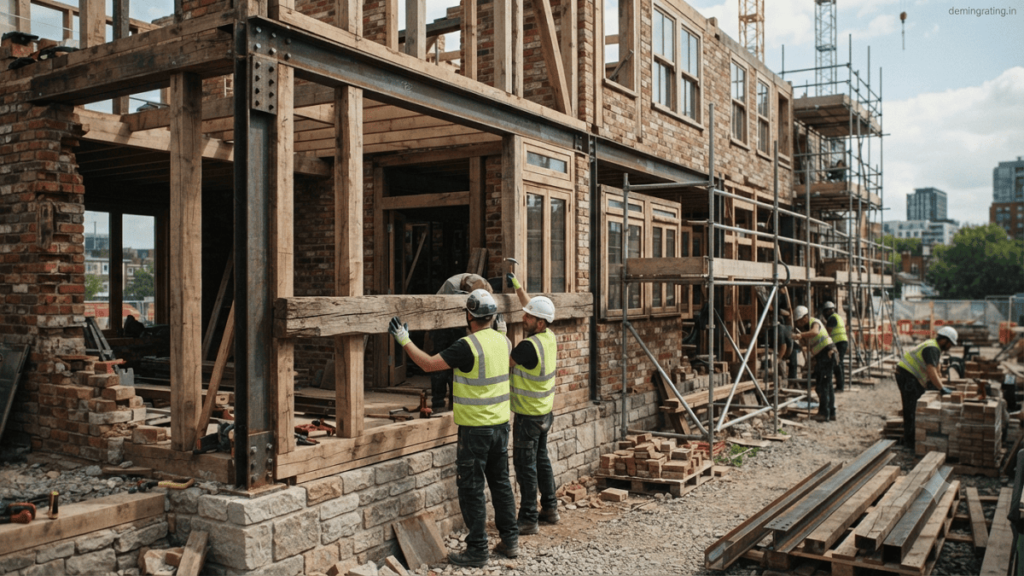
Salvaged materials are increasingly being adopted across multiple industries as organizations seek to reduce waste, lower costs, and meet sustainability goals. These materials, recovered from buildings, infrastructure, industrial equipment, and discarded products, are no longer viewed merely as demolition leftovers. Instead, they are becoming valuable resources that support circular economy practices and help industries reduce their environmental footprint.
Construction Industry
The construction industry is the largest user of salvaged materials. Reclaimed timber, bricks, steel beams, concrete aggregates, doors, windows, and roofing materials are commonly reused in residential, commercial, and institutional projects. Deconstruction practices allow contractors to recover components before demolition, preserving their value and reducing landfill disposal. Reused structural steel and reclaimed wood can significantly reduce embodied carbon compared with newly manufactured materials. The U.S. Environmental Protection Agency highlights construction material reuse as a key sustainability strategy. More information is available at https://www.epa.gov/smm/sustainable-management-construction-and-demolition-materials .
Interior Design and Furniture
Interior designers and furniture manufacturers use salvaged wood, metal, glass, and vintage fixtures to create unique products and spaces. Reclaimed barn wood, factory flooring, and antique hardware are frequently incorporated into tables, shelving, cabinetry, and decorative elements. This approach appeals to consumers seeking sustainable products with distinctive character and historical value.
Manufacturing and Industrial Use
Manufacturing industries recover metals, machinery parts, pallets, containers, and industrial components for refurbishment or remanufacturing. Salvaged aluminum, copper, and steel are especially valuable because recycling and reuse require far less energy than producing these metals from raw ore. Remanufacturing extends product life while reducing material and energy consumption.
Infrastructure and Public Projects
Governments and public agencies are also applying salvaged materials in infrastructure projects. Reclaimed asphalt pavement, crushed concrete, steel guardrails, and reused utility components can be incorporated into roads, bridges, drainage systems, and public facilities. These practices reduce construction costs and support public sustainability objectives.
Hospitality and Retail
Hotels, restaurants, and retail brands increasingly use reclaimed materials to strengthen environmental branding. Exposed reclaimed wood, reused bricks, salvaged lighting fixtures, and restored architectural elements help create memorable customer experiences while demonstrating commitment to sustainability.
Challenges and Outlook
Despite growing adoption, industries face challenges related to supply consistency, quality certification, storage, and regulatory compliance. Digital marketplaces, material passports, and improved deconstruction techniques are helping address these barriers. Organizations such as the Building Materials Reuse Association provide guidance on best practices for recovery and reuse: https://www.bmra.org/ .
Conclusion
Salvaged materials are being successfully applied in construction, interior design, manufacturing, infrastructure, hospitality, and retail sectors. Their use reduces waste, conserves natural resources, lowers energy consumption, and supports circular economy goals. As sustainability requirements become more stringent, salvaged materials are likely to become an increasingly important resource across modern industries.
Ask FAQs
What are salvaged materials?
Salvaged materials are reusable items recovered from buildings, infrastructure, industrial facilities, or discarded products instead of being sent to landfill. Common examples include reclaimed wood, bricks, steel, doors, windows, tiles, and plumbing fixtures. These materials are cleaned, inspected, and reused in new construction, renovation, manufacturing, or interior design projects.
Are salvaged materials safe to use in construction?
Yes, salvaged materials can be safe when they are properly inspected and processed. Structural components such as steel beams or timber should be evaluated for strength, damage, moisture, pests, and contamination. Older materials may require testing for hazardous substances such as lead paint or asbestos. Compliance with local building codes and safety standards is essential before reuse.
How do salvaged materials benefit the environment?
Salvaged materials reduce construction and demolition waste, conserve natural resources, and lower energy consumption associated with manufacturing new products. Reusing existing materials also helps reduce greenhouse gas emissions and supports circular economy practices. The U.S. Environmental Protection Agency provides guidance on sustainable management of construction materials.
Are salvaged materials cheaper than new materials?
In many cases, salvaged materials can be less expensive than new products, especially when sourced locally. However, costs may vary depending on the type of material, its condition, transportation, cleaning, and restoration requirements. Some reclaimed materials, such as old-growth timber or antique architectural elements, may even be more valuable than new alternatives because of their quality and uniqueness.
Where can I find salvaged materials for a project?
Salvaged materials can be obtained from architectural salvage yards, building material reuse centers, demolition contractors, online marketplaces, and specialized recycling organizations. Local reuse networks and sustainability groups may also help connect buyers with available materials. Organizations such as the Building Materials Reuse Association offer resources and information about responsible material recovery and reuse practices.
Table of Contents
Disclaimer: This article is intended for informational and educational purposes only. While every effort has been made to ensure accuracy, readers should verify technical, safety, and regulatory requirements with qualified professionals and local authorities before using salvaged materials in construction, renovation, or commercial projects.