
Public Transportation Proximity
Public Transportation Proximity refers to the closeness of a property, building, or development to public transit facilities such as bus stops, railway stations, metro stations, tram lines, and other shared transportation services. In modern urban planning and real estate development, proximity to public transportation is considered a key factor influencing accessibility, convenience, and overall quality of life.
As cities continue to grow and traffic congestion increases, efficient public transportation networks have become essential for sustainable urban development. Buildings and communities located near transit hubs allow people to travel more easily to workplaces, schools, healthcare facilities, and commercial areas without relying heavily on private vehicles. This not only reduces travel time and transportation costs but also contributes to lower carbon emissions and improved environmental performance.
Public transportation proximity is important for residential, commercial, and mixed-use developments. For residents, it provides better connectivity and mobility. For businesses, it can increase customer access and employee convenience. Urban planners and developers often prioritise transit-oriented development strategies that integrate housing, offices, retail spaces, and public amenities around transportation networks.
In addition to economic and environmental benefits, good transit access can enhance social inclusion by providing mobility options for people who may not own private vehicles, including students, elderly individuals, and lower-income groups.
Overall, public transportation proximity is a critical element of modern city planning, supporting accessibility, sustainability, economic growth, and more connected communities.
What is public transportation proximity and why is it important?
Public transportation proximity refers to the distance between a property, building, or development and nearby public transit services such as bus stops, metro stations, railway stations, tram lines, or other shared transportation facilities. In urban planning, real estate, and architectural design, it is used to measure how easily people can access public transportation from a specific location.
This factor is important because it directly affects mobility, convenience, and connectivity. When homes, offices, schools, hospitals, and commercial areas are located close to public transportation, people can travel more efficiently without relying heavily on private vehicles. Shorter walking distances to transit stations often reduce travel time, lower transportation costs, and make daily commuting easier.
Public transportation proximity also supports sustainable urban development. Increased use of public transit can help reduce traffic congestion, fuel consumption, and greenhouse gas emissions. Cities that encourage transit-oriented development often create more compact, walkable, and environmentally responsible communities.
From an economic perspective, properties located near reliable transit networks frequently experience higher demand and better long-term value. Businesses benefit from improved customer access and a larger potential workforce, while residents gain better access to employment, education, healthcare, and recreational opportunities.
Accessibility is another key reason why public transportation proximity matters. It provides mobility options for people who do not own private vehicles, including students, elderly individuals, and lower-income groups, promoting greater social inclusion.
Overall, public transportation proximity is an essential element of modern planning because it improves accessibility, supports sustainability, enhances economic opportunities, and contributes to more connected and livable communities.
How does proximity to public transport affect daily commuting?
Proximity to public transport has a significant impact on daily commuting because it determines how easily and efficiently people can access transportation services such as buses, metro systems, trains, and trams. When a home or workplace is located close to a transit stop or station, commuters usually spend less time walking, driving, or arranging other transportation to reach the network.
One of the most noticeable benefits is reduced travel time. Shorter distances to public transport make it easier to catch services on time and can shorten the overall commute. This is especially important in large cities where traffic congestion can make private vehicle travel unpredictable.
Living near public transport can also lower transportation costs. Commuters may spend less on fuel, parking, tolls, vehicle maintenance, or ride-hailing services. For many households, regular use of public transit is more economical than relying entirely on a private car.
Convenient transit access can reduce stress and improve daily comfort. Predictable schedules, fewer transfers, and easier access to stations help create a smoother commuting experience. Some commuters can use travel time for reading, working, or resting rather than focusing on driving.
Proximity to public transport also increases flexibility. People have more options for reaching workplaces, schools, shopping areas, healthcare facilities, and recreational destinations, even if they do not own a vehicle.
From a broader perspective, higher public transport use can reduce traffic congestion and environmental impact by decreasing the number of private vehicles on the road.
Overall, being close to public transportation generally leads to faster, cheaper, more convenient, and less stressful daily commuting while supporting more sustainable urban mobility.
What are the economic benefits of being close to public transportation?
Living or operating a business close to public transportation offers several important economic benefits for individuals, businesses, and communities. One of the most immediate advantages is lower transportation costs. Residents who have easy access to buses, metro systems, or trains often spend less on fuel, parking, vehicle maintenance, insurance, and tolls. In some cases, households may be able to reduce the number of cars they own, creating substantial long-term savings.
Proximity to public transportation can also increase property value and market demand. Homes and commercial spaces located near reliable transit stations are frequently more attractive to buyers and tenants because they provide convenient access to employment centers, schools, healthcare facilities, and shopping areas. This higher demand can support stronger rental income and better resale value.
For businesses, good transit access can expand the customer base. Customers are more likely to visit locations that are easy to reach without a private vehicle. Employers also benefit because public transportation improves access to a larger workforce, making recruitment easier and reducing issues related to commuting.
At the community level, transit-oriented development can stimulate local economic growth. Increased pedestrian activity around stations often supports restaurants, retail stores, services, and other small businesses. Infrastructure investment in transit areas can attract additional private investment and encourage mixed-use development.
Public transportation proximity may also reduce the economic costs associated with traffic congestion. Fewer cars on the road can improve travel efficiency for goods and services, reduce fuel consumption, and lower the need for extensive parking infrastructure.
Overall, being close to public transportation can generate financial savings, strengthen property values, support business activity, attract investment, and contribute to more efficient and economically resilient urban communities.
How does public transportation proximity contribute to environmental sustainability?
Public transportation proximity contributes significantly to environmental sustainability by encouraging people to use shared transit systems instead of relying heavily on private vehicles. When homes, offices, schools, and commercial developments are located close to bus stops, metro stations, or railway stations, people are more likely to choose public transportation for their daily travel.
One of the main environmental benefits is the reduction of greenhouse gas emissions. Public transit can carry many passengers in a single vehicle, which lowers emissions per person compared with individual car travel. Increased transit use can help reduce carbon dioxide emissions and support climate change mitigation efforts.
Proximity to public transportation also helps decrease traffic congestion. Fewer private vehicles on the road mean less fuel consumption, reduced air pollution, and lower levels of noise pollution in urban areas. This can improve overall environmental quality and public health.
Another important contribution is the promotion of compact and walkable development. Areas near transit stations often support higher-density, mixed-use communities where people can walk or cycle to shops, services, and workplaces. This reduces the need for long car trips and helps preserve land by limiting urban sprawl.
Public transportation systems are generally more energy-efficient than private vehicles, especially electric rail and metro networks. Concentrating development around transit hubs allows cities to use infrastructure more efficiently and reduce the environmental impact of transportation and land use.
In addition, better transit access can encourage sustainable lifestyle choices by making walking, cycling, and shared mobility options more practical.
Overall, public transportation proximity supports environmental sustainability by reducing emissions, conserving energy, improving air quality, limiting urban sprawl, and encouraging more sustainable patterns of travel and development.
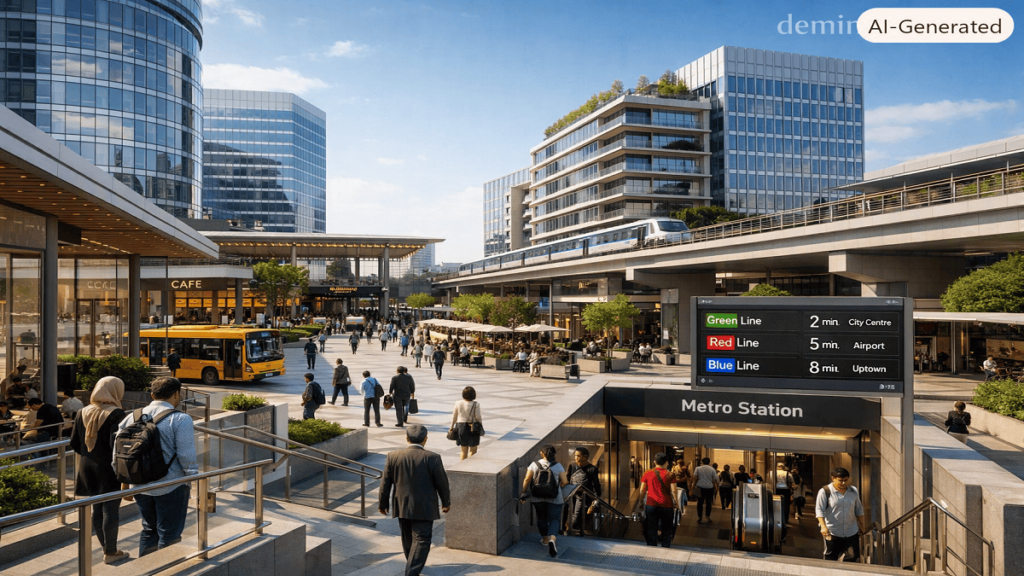
What factors should be considered when choosing a location near public transport?
When choosing a location near public transport, several factors should be considered to ensure that the area provides real convenience, accessibility, and long-term value. The first consideration is the distance to transit facilities. A location within a comfortable walking distance of a bus stop, metro station, or railway station is generally more practical than one that still requires additional transportation.
The quality and reliability of the transit service are equally important. Frequent schedules, extended operating hours, low delays, and good connectivity to major destinations such as workplaces, schools, healthcare facilities, and commercial centers can significantly improve daily mobility.
Another key factor is network connectivity. A station that offers multiple routes or easy transfers to other lines provides greater flexibility and reduces overall travel time. Locations connected to major transportation corridors are often more valuable than those served by a single limited route.
Safety and accessibility should also be evaluated. Well-lit streets, secure stations, pedestrian-friendly pathways, ramps, elevators, and clear signage are essential for comfortable use by people of all ages and abilities.
Consider the surrounding infrastructure and amenities. Access to grocery stores, schools, hospitals, parks, and other essential services can reduce the need for additional travel and improve quality of life.
Potential noise, crowding, and traffic impacts should not be overlooked. Being very close to a major station may offer convenience but can also bring higher noise levels and congestion.
Finally, assess the future development plans of the area. Upcoming transit expansions, commercial projects, or residential developments can influence property values, accessibility, and neighborhood character over time.
Overall, the best location near public transport balances convenience, connectivity, safety, amenities, and long-term sustainability rather than focusing only on proximity alone.
Case Study of Public Transportation Proximity
A well-known example of the impact of public transportation proximity is the development around Hong Kong’s Mass Transit Railway (MTR) network. Hong Kong has become one of the world’s most successful transit-oriented cities, where residential, commercial, and public facilities are closely integrated with high-capacity public transportation.
Background
Hong Kong faces limited land availability and a very high population density. To address these challenges, the government and the MTR Corporation adopted a Transit-Oriented Development (TOD) approach, concentrating development around railway stations.
Location and Design
Areas such as Kowloon Station, Tseung Kwan O, and Tung Chung were planned with:
- Residential towers directly above or adjacent to stations
- Shopping centers connected to transit facilities
- Pedestrian bridges and covered walkways
- Offices, schools, and community services within walking distance
This design minimizes the distance between daily activities and public transport.
Impact on Daily Commuting
Residents in these developments can often reach the MTR within 5–10 minutes on foot. As a result:
- Car ownership rates are lower than in many major cities.
- Commute times are more predictable.
- Dependence on private vehicles is reduced.
The MTR network carries millions of passengers daily and forms the backbone of urban mobility in Hong Kong.
Economic Benefits
Properties located near MTR stations generally command higher market values and rental demand. Businesses benefit from increased foot traffic and easy customer access. The integration of retail and transit has also created strong commercial activity around stations.
Environmental Benefits
Because a large share of the population uses public transport, Hong Kong achieves:
- Lower per-capita transportation emissions
- Reduced traffic congestion
- More efficient land use through compact development
Key Lessons
This case study demonstrates that public transportation proximity is most effective when combined with mixed-use development, pedestrian-friendly design, reliable transit service, and long-term urban planning. Hong Kong shows how integrating transportation and land use can improve mobility, support economic growth, and enhance environmental sustainability.
For more information on Hong Kong’s transit-oriented development approach, visit MTR Corporation and the UN-Habitat resources on sustainable urban development.
White Paper: Public Transportation Proximity and Its Role in Sustainable Urban Development
Executive Summary
Public transportation proximity has become a critical factor in modern urban planning, real estate development, and infrastructure policy. As cities face increasing population growth, traffic congestion, environmental challenges, and rising transportation costs, the location of residential, commercial, and mixed-use developments relative to public transit networks significantly influences economic performance, social inclusion, and sustainability outcomes.
This white paper examines the concept of public transportation proximity, its benefits, key planning considerations, industry applications, challenges, and future trends. It highlights how integrating land use with transit infrastructure can create more connected, efficient, and environmentally responsible communities.
Introduction
Public transportation proximity refers to the closeness of a property or development to public transit services such as bus stops, metro stations, railway stations, tram lines, and other shared mobility facilities. In contemporary planning practice, proximity is not measured solely by distance; it also includes accessibility, connectivity, service quality, and the ease with which people can reach transit infrastructure.
Cities worldwide are increasingly adopting Transit-Oriented Development (TOD) strategies that encourage higher-density, mixed-use development around public transportation hubs. This approach aims to reduce dependence on private vehicles while improving mobility and access to opportunities.
According to the UN-Habitat , integrated transport and land-use planning is essential for creating sustainable and inclusive urban environments.
Why Public Transportation Proximity Matters
Improved Mobility
Developments located near transit facilities provide residents, employees, and visitors with convenient access to transportation networks. This reduces travel time and improves access to employment, education, healthcare, and recreational destinations.
Economic Value
Properties with good transit access often experience:
- Higher demand
- Stronger rental performance
- Better long-term appreciation potential
Businesses benefit from increased customer accessibility and access to a larger workforce.
Environmental Sustainability
Public transportation proximity encourages a shift from private vehicle use to shared transit, helping reduce greenhouse gas emissions, fuel consumption, and traffic congestion.
Social Inclusion
Reliable transit access supports mobility for people who may not own private vehicles, including students, elderly individuals, lower-income households, and people with disabilities.
Economic Impact
Household Savings
Residents near public transportation may spend less on:
- Fuel
- Parking
- Vehicle maintenance
- Insurance
- Tolls
Property and Investment Benefits
Research consistently shows that proximity to high-quality transit can increase property values and attract private investment. Mixed-use developments around transit stations often stimulate local economic activity.
Business Advantages
Employers located near transit hubs may experience:
- Easier recruitment
- Reduced employee commuting challenges
- Increased visitor and customer access
For additional insights on transportation and economic development, see the World Bank Transport Overview .
Environmental Benefits
Public transportation proximity contributes to sustainability through:
- Reduced carbon emissions
- Lower air pollution
- Reduced noise pollution
- More efficient land use
- Support for walking and cycling
Compact development around transit stations can also help limit urban sprawl and preserve open space.
Planning Considerations
Effective transit-oriented planning should evaluate several factors:
| Factor | Importance |
|---|---|
| Walking distance | Ideally 400–800 meters to transit |
| Service frequency | Reduces waiting time and improves convenience |
| Network connectivity | Enables efficient transfers and broader access |
| Safety | Encourages regular transit use |
| Accessibility | Supports users of all abilities |
| Mixed-use amenities | Reduces need for additional travel |
| Future development plans | Influences long-term value and mobility |
Industry Applications
Residential Development
Transit proximity is increasingly marketed as a premium feature in urban housing projects.
Commercial Real Estate
Office developments near transit hubs can improve employee access and reduce parking requirements.
Retail and Hospitality
Hotels, restaurants, and retail centers benefit from high pedestrian activity around stations.
Healthcare and Education
Hospitals and universities rely on transit access to serve large and diverse populations.
Case Example: Hong Kong MTR
Hong Kong’s MTR system demonstrates successful integration of transportation and land use. Residential towers, retail centers, offices, and public amenities are directly connected to transit stations, resulting in:
- High public transport usage
- Lower car dependence
- Strong property values
- Efficient land utilization
More information is available from the MTR Corporation .
Challenges
Despite its benefits, public transportation proximity presents challenges:
Unequal Access
Not all neighborhoods have access to high-quality transit.
Affordability Pressures
Transit-rich areas may experience rising housing costs and potential displacement.
Infrastructure Capacity
Growing populations can strain transit systems if investment does not keep pace.
Last-Mile Connectivity
Poor pedestrian, cycling, or feeder transport connections can reduce the value of transit proximity.
Future Trends
Emerging trends include:
- Electric and autonomous transit systems
- Mobility-as-a-Service (MaaS)
- Integrated ticketing platforms
- Smart wayfinding and real-time information
- Data-driven transit planning
- Climate-resilient transportation infrastructure
These innovations will strengthen the relationship between transit access and urban development.
Policy Recommendations
Governments and planners should:
- Encourage mixed-use development around transit hubs
- Invest in safe pedestrian and cycling infrastructure
- Preserve affordable housing near transit
- Improve service frequency and reliability
- Use data analytics to guide infrastructure investment
- Coordinate transportation and land-use planning across agencies
Conclusion
Public transportation proximity is more than a convenience; it is a strategic tool for creating economically vibrant, environmentally sustainable, and socially inclusive cities. When combined with thoughtful land-use planning, reliable transit service, and accessible urban design, proximity to public transportation can improve quality of life, reduce environmental impact, and support long-term urban resilience.
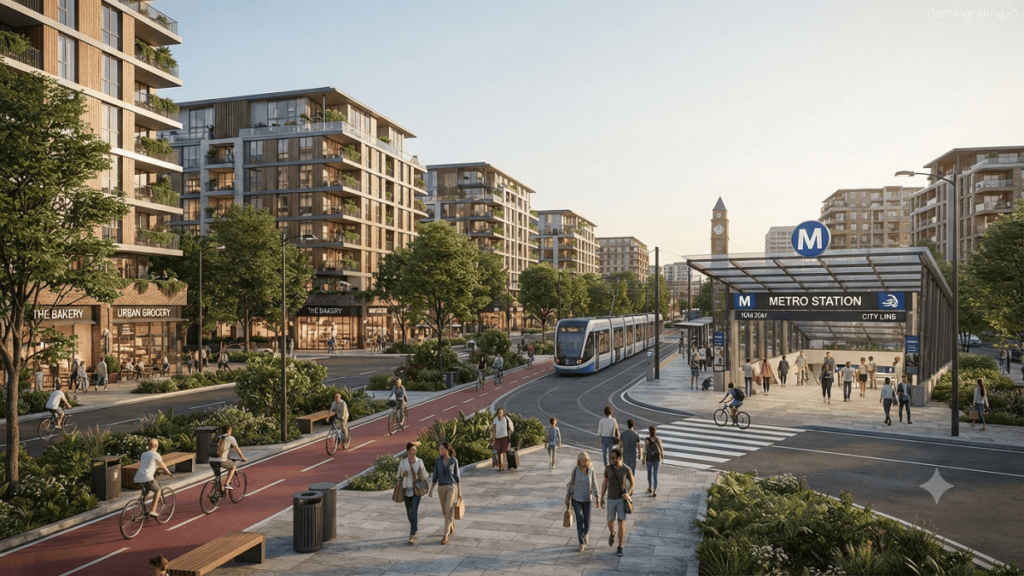
Industry Application of Public Transportation Proximity
Public transportation proximity has become a strategic consideration across multiple industries because it influences accessibility, operational efficiency, customer reach, workforce mobility, and sustainability performance. The integration of developments with public transit networks is no longer limited to urban planning; it is now a key factor in business and infrastructure decision-making.
1. Real Estate and Housing
Residential developers increasingly prioritize locations near metro stations, railway stations, and major bus corridors. Properties with strong transit access are often easier to market and may achieve higher occupancy and rental demand. Transit-oriented housing also supports compact and walkable communities.
2. Commercial Office Development
Companies benefit from locating offices near public transportation because employees can commute more easily, reducing parking requirements and improving recruitment. Office districts connected to reliable transit networks often attract a larger talent pool and support flexible work patterns.
3. Retail and Shopping Centers
Retail businesses rely heavily on customer accessibility. Shopping centers located near transit hubs typically receive higher pedestrian traffic, which can increase sales opportunities. Easy transit access also benefits visitors who do not own private vehicles.
4. Hospitality and Tourism
Hotels, convention centers, and tourist attractions gain a competitive advantage when connected to airports, metro systems, or railway networks. Guests can travel conveniently without relying on taxis or rental cars, improving overall visitor experience.
5. Healthcare Facilities
Hospitals and clinics require convenient access for patients, staff, and emergency visitors. Proximity to public transportation is especially important for elderly patients, low-income households, and people with limited mobility.
6. Educational Institutions
Universities, colleges, and schools use transit accessibility to improve student and staff mobility. Good public transport connections can reduce traffic congestion around campuses and support sustainable transportation goals.
7. Industrial and Logistics Sectors
While freight movement is critical, employee transportation is also important. Industrial parks near transit corridors can improve workforce access and reduce commuting challenges, particularly in large metropolitan regions.
8. Government and Public Infrastructure
Public agencies often place administrative offices, civic centers, and service facilities near transit networks to maximize accessibility and encourage public transport use.
Overall, public transportation proximity supports economic growth, improves accessibility, enhances sustainability, and strengthens the long-term performance of developments across a wide range of industries.
What does public transportation proximity mean?
Public transportation proximity refers to how close a property, building, or development is to public transit services such as bus stops, metro stations, railway stations, or tram lines. It indicates how easily people can access public transportation from that location.
Why is living near public transportation beneficial?
Living near public transportation can reduce commuting time, lower transportation expenses, improve access to jobs and services, and decrease dependence on private vehicles. It can also contribute to a more convenient and sustainable lifestyle.
Does proximity to public transport increase property value?
In many urban areas, properties located near reliable public transportation tend to have higher demand and may experience better rental performance and long-term value appreciation due to improved accessibility and connectivity.
How does public transportation proximity support sustainability?
Good transit access encourages the use of shared transportation instead of private cars, which can reduce traffic congestion, fuel consumption, greenhouse gas emissions, and overall environmental impact.
What should I check before choosing a property near public transport?
Consider the walking distance to the station or stop, service frequency, connectivity to important destinations, safety of the surrounding area, accessibility features, noise levels, and future transportation or development plans in the neighborhood.
Table of Contents
Disclaimer: The information provided in this article is for general educational and informational purposes only. Public transportation access, property values, and development impacts may vary depending on location, infrastructure quality, government policies, and market conditions. Always consult local planning authorities, transportation agencies, and real estate professionals for project-specific guidance.