
E-vehicle innovation
The electric vehicle (EV) industry is undergoing a period of rapid innovation, transforming the future of transportation through advances in battery technology, software integration, charging infrastructure, and sustainable manufacturing. These innovations are not only making EVs more efficient and affordable but are also helping governments and industries reduce greenhouse gas emissions and dependence on fossil fuels.
One of the most significant developments is the improvement in lithium-ion batteries. Modern EV batteries offer higher energy density, faster charging, and longer life spans than earlier generations. Companies are also investing in solid-state battery technology, which promises greater safety, reduced charging times, E-vehicle innovation and increased driving range. According to the International Energy Agency, global EV adoption continues to grow as battery costs decline and performance improves.
Software has become another major area of innovation. Many electric vehicles now support over-the-air updates, advanced driver-assistance systems, and intelligent energy management. These features allow manufacturers to improve vehicle performance and add new capabilities without requiring a physical service visit. Connected vehicle technology is also enabling better navigation, remote diagnostics, and integration with smart grids.
Charging infrastructure is evolving alongside vehicle technology. Ultra-fast chargers, battery-swapping systems, and renewable-energy-powered charging stations are making EV ownership more practical for both urban and long-distance drivers. Governments worldwide are supporting this transition through incentives and infrastructure investments.
Sustainability is increasingly central to EV innovation. Manufacturers are developing recycling systems for used batteries and exploring the use of recycled materials in vehicle production.
Useful resources:
- International Energy Agency – Electric Vehicles
- U.S. Department of Energy – Electric Vehicles
- McKinsey – Electric Vehicle Industry Insights
E-vehicle innovation is therefore not limited to replacing gasoline engines; it represents a broader transformation of mobility, energy, and environmental sustainability.
What is e-vehicle innovation and why is it important?
-vehicle innovation refers to the development and improvement of technologies used in electric vehicles, including batteries, electric motors, charging systems, software, and energy management. It encompasses everything from longer-lasting batteries and faster charging to connected vehicle features and sustainable manufacturing processes. Unlike conventional vehicles that rely on internal combustion engines, electric vehicles use electricity stored in batteries to power the motor, making them a cleaner alternative for transportation.
The importance of e-vehicle innovation lies primarily in its environmental impact. Transportation is one of the largest contributors to greenhouse gas emissions worldwide. By replacing fossil-fuel-powered vehicles with electric alternatives, countries can significantly reduce carbon emissions and improve air quality. According to the International Energy Agency, the rapid growth of electric vehicles is playing a key role in the global transition to cleaner energy systems.
Innovation is also making electric vehicles more practical and affordable. Advances in battery technology have increased driving range and reduced charging time, addressing two of the biggest concerns for consumers. Improvements in software and connectivity enable features such as over-the-air updates, intelligent navigation, and better energy efficiency. These developments enhance the overall driving experience while reducing maintenance requirements.
From an economic perspective, e-vehicle innovation creates new opportunities for industries, startups, and skilled workers. It supports the growth of battery manufacturing, charging infrastructure, renewable energy integration, and digital mobility services. Governments around the world are investing heavily in this sector because it contributes to energy security and technological competitiveness.
For further reading:
- International Energy Agency – Electric Vehicles
- U.S. Department of Energy – Electric Vehicles
- World Economic Forum – Electric Vehicles
In summary, e-vehicle innovation is important because it helps reduce pollution, improves transportation efficiency, stimulates economic growth, and supports the transition toward a more sustainable and energy-efficient future.
What are the latest technologies used in electric vehicles?
The latest technologies used in electric vehicles (EVs) are transforming them into smarter, safer, and more efficient modes of transportation. These innovations focus on improving battery performance, charging speed, energy efficiency, and digital connectivity.
One of the most important advancements is solid-state battery technology. Unlike conventional lithium-ion batteries, solid-state batteries use a solid electrolyte, which can increase energy density, improve safety, and reduce charging time. Although still in the commercialization phase, major automakers are investing heavily in this technology.
Another significant innovation is ultra-fast charging. Modern EVs can now charge from 10% to 80% in less than 20 minutes using high-power DC chargers. Charging networks are also integrating renewable energy sources and smart-grid technology to optimize electricity use.
Silicon carbide (SiC) power electronics are increasingly replacing traditional silicon components. SiC improves energy efficiency, reduces heat generation, and allows smaller and lighter power systems, which can extend vehicle range.
EVs are also becoming highly software-driven. Over-the-air (OTA) updates enable manufacturers to improve battery management, performance, and infotainment systems remotely. Advanced battery management systems (BMS) use artificial intelligence to monitor cell health, predict degradation, and maximize battery life.
In terms of driving technology, many new EVs include advanced driver-assistance systems (ADAS) such as adaptive cruise control, lane-keeping assistance, automatic emergency braking, and parking automation. Some vehicles are moving toward higher levels of autonomous driving.
Vehicle-to-grid (V2G) technology is another emerging trend. It allows EVs to send electricity back to the grid, helping balance energy demand and support renewable energy integration.
For more information:
- IEA – Global EV Outlook 2026
- U.S. Department of Energy – EV Basics
- McKinsey Automotive Insights
These technologies are making electric vehicles more practical, intelligent, and sustainable, accelerating the global shift toward cleaner transportation.
What are the latest technologies used in electric vehicles?
The latest technologies used in electric vehicles (EVs) are transforming them into smarter, safer, E-vehicle innovation and more efficient modes of transportation. These innovations focus on improving battery performance, charging speed, energy efficiency, and digital connectivity.
One of the most important advancements is solid-state battery technology. Unlike conventional lithium-ion batteries, solid-state batteries use a solid electrolyte, which can increase energy density, improve safety, and reduce charging time. Although still in the commercialization phase, major automakers are investing heavily in this technology.
Another significant innovation is ultra-fast charging. Modern EVs can now charge from 10% to 80% in less than 20 minutes using high-power DC chargers. Charging networks are also integrating renewable energy sources and smart-grid technology to optimize electricity use.
Silicon carbide (SiC) power electronics are increasingly replacing traditional silicon components. SiC improves energy efficiency, reduces heat generation, and allows smaller and lighter power systems, which can extend vehicle range.
EVs are also becoming highly software-driven. Over-the-air (OTA) updates enable manufacturers to improve battery management, performance, and infotainment systems remotely. Advanced battery management systems (BMS) use artificial intelligence to monitor cell health, predict degradation, and maximize battery life.
In terms of driving technology, many new EVs include advanced driver-assistance systems (ADAS) such as adaptive cruise control, lane-keeping assistance, automatic emergency braking, and parking automation. Some vehicles are moving toward higher levels of autonomous driving.
Vehicle-to-grid (V2G) technology is another emerging trend. It allows EVs to send electricity back to the grid, helping balance energy demand and support renewable energy integration.
For more information:
- IEA – Global EV Outlook 2026
- U.S. Department of Energy – EV Basics
- McKinsey Automotive Insights
These technologies are making electric vehicles more practical, intelligent, and sustainable, accelerating the global shift toward cleaner transportation.
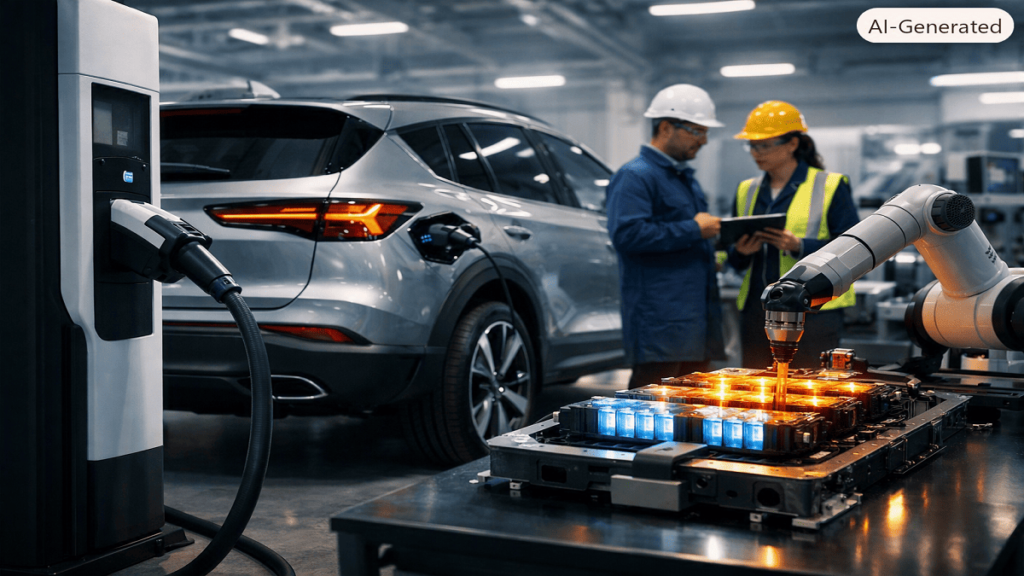
How do e-vehicle innovations improve battery performance and charging?
E-vehicle innovations are significantly improving battery performance and charging efficiency, making electric vehicles more practical for everyday use and long-distance travel. These advancements focus on increasing energy storage, reducing charging time, extending battery lifespan, and enhancing overall safety.
One of the most important innovations is the development of higher-energy-density batteries. Modern lithium-ion batteries use improved cathode and anode materials, allowing them to store more energy in the same physical space. This increases driving range without making the battery pack larger or heavier. Researchers are also developing solid-state batteries, which replace liquid electrolytes with solid materials, offering better safety, faster charging, and potentially much longer range.
Charging technology has also advanced rapidly. Ultra-fast DC charging systems can now deliver 150 kW to 350 kW of power, enabling many EVs to charge from 10% to 80% in about 15–25 minutes. Improved thermal management systems keep batteries at optimal temperatures during charging, preventing overheating and protecting battery health.
Another key innovation is the battery management system (BMS). Modern BMS software monitors individual battery cells, balances their charge levels, and predicts degradation patterns. This helps maximize usable capacity, improve safety, and extend the battery’s service life. Artificial intelligence and machine learning are increasingly being used to optimize charging behavior based on driving habits and environmental conditions.
Innovations in charging infrastructure also contribute to better performance. Smart charging allows vehicles to charge when electricity demand is low or renewable energy is abundant, reducing costs and supporting grid stability. Emerging technologies such as vehicle-to-grid (V2G) enable EVs to return stored energy to the grid when needed.
For further reading:
- U.S. Department of Energy – Fast Charging EV Batteries
- International Energy Agency – Electric Vehicles
- NREL – Battery Thermal Management
These innovations are reducing range anxiety, lowering operating costs, and accelerating the global adoption of electric vehicles by making batteries more reliable, efficient, and convenient to charge.
What are the environmental and economic benefits of electric vehicle innovation?
Electric vehicle (EV) innovation offers significant environmental and economic benefits, making it one of the most important developments in modern transportation. As governments and industries work to reduce carbon emissions and improve energy efficiency, advances in EV technology are playing a central role in creating a more sustainable future.
From an environmental perspective, electric vehicles produce zero tailpipe emissions, which helps reduce air pollutants such as nitrogen oxides and particulate matter. This is especially important in urban areas where vehicle pollution contributes to respiratory and cardiovascular diseases. When powered by renewable energy sources such as solar or wind, EVs can substantially lower overall greenhouse gas emissions compared with conventional gasoline or diesel vehicles. Improvements in battery efficiency, recycling, and sustainable manufacturing are further reducing the environmental footprint of electric mobility.
Economically, EV innovation lowers operating and maintenance costs for consumers. Electricity is generally cheaper than fossil fuels on a per-kilometer basis, and electric motors have fewer moving parts than internal combustion engines, resulting in less wear and reduced servicing requirements. Over time, these savings can offset the higher initial purchase price of many EVs.
At a broader level, the EV industry creates new economic opportunities. Investment in battery manufacturing, charging infrastructure, software development, and renewable energy integration generates jobs and stimulates technological innovation. Countries that develop strong EV supply chains can enhance their industrial competitiveness and reduce dependence on imported oil, improving energy security.
Innovation also supports the growth of smart energy systems. Technologies such as vehicle-to-grid (V2G) and smart charging can help balance electricity demand and make better use of renewable energy resources.
For further reading:
- International Energy Agency – Electric Vehicles
- U.S. EPA – Electric Vehicle Benefits
- World Bank – Electric Mobility
In summary, electric vehicle innovation delivers cleaner air, lower carbon emissions, reduced fuel and maintenance costs, job creation, and greater energy security. These combined environmental and economic advantages are accelerating the global transition toward sustainable transportation.
What challenges and future trends are shaping e-vehicle innovation?
Electric vehicle (EV) innovation is advancing rapidly, but several challenges and emerging trends are shaping its future. Understanding these factors is essential for manufacturers, policymakers, investors, and consumers as the global transportation sector moves toward electrification.
One of the biggest challenges is battery cost and raw material supply. Lithium, nickel, cobalt, and other critical minerals are essential for current battery technologies, and fluctuations in supply can affect production costs. Developing sustainable mining practices and expanding battery recycling are becoming increasingly important to ensure long-term resource availability.
Another major challenge is charging infrastructure. Although charging networks are growing, many regions still lack sufficient fast-charging stations, particularly in rural and developing areas. Grid capacity and electricity distribution systems must also be upgraded to support large-scale EV adoption.
Battery degradation and recycling remain important concerns. Consumers expect long battery life and high resale value, while governments are pushing for circular-economy solutions that recover valuable materials from used batteries.
Looking ahead, several trends are likely to define the next phase of EV innovation. Solid-state batteries are expected to improve safety, energy density, and charging speed. Artificial intelligence and advanced battery management systems will optimize performance, predict maintenance needs, and extend battery life.
Vehicle-to-grid (V2G) technology is gaining attention because it allows EVs to store and return electricity to the grid, supporting renewable energy integration and grid stability. Another important trend is the increasing role of software-defined vehicles, where features and performance can be updated remotely through over-the-air software updates.
Autonomous driving, lightweight materials, and sustainable manufacturing processes are also becoming central to future EV development.
For further reading:
- IEA – Global EV Outlook 2026
- McKinsey Automotive Insights
- U.S. Department of Energy – Electric Vehicles
In summary, e-vehicle innovation is being shaped by challenges related to batteries, infrastructure, and sustainability, while future trends such as solid-state batteries, AI-driven systems, V2G integration, and software-defined vehicles are expected to make electric mobility more efficient, intelligent, and environmentally responsible.
Case Study of E-vehicle innovation
A strong case study of e-vehicle innovation is Tesla’s development of integrated battery, software, and charging technologies, which has significantly influenced the global electric vehicle industry. Tesla did not succeed by producing only electric cars; it created an ecosystem that addressed major barriers such as range anxiety, charging convenience, and software performance.
One of Tesla’s key innovations was its high-energy-density battery packs combined with advanced thermal management. These improvements enabled longer driving ranges and better battery durability than many early competitors. The company also invested heavily in battery manufacturing through Gigafactories, helping reduce production costs and improve supply-chain control.
Another major innovation is Tesla’s software-defined vehicle architecture. Through over-the-air (OTA) updates, Tesla can improve battery efficiency, add features, enhance safety systems, and optimize vehicle performance without requiring customers to visit a service center. This approach has changed consumer expectations across the automotive industry.
Tesla also addressed infrastructure challenges by building the Supercharger network, a fast-charging system designed specifically for long-distance travel. The integration of vehicle software with charging stations allows automatic route planning, charger availability checks, and battery preconditioning for faster charging.
The impact has been substantial. Tesla helped accelerate global EV adoption, pushed traditional automakers to increase their electric vehicle investments, and contributed to falling battery costs across the industry. Its innovations have influenced areas such as battery management, power electronics, connected vehicles, and charging infrastructure.
However, the case also highlights ongoing challenges, including battery raw material sourcing, manufacturing scale, and recycling requirements.
For further reading:
- Tesla – Innovation
- IEA – Global EV Outlook 2026
- McKinsey Automotive Insights
This case study demonstrates that successful e-vehicle innovation requires more than an electric motor; it depends on the integration of batteries, software, charging infrastructure, manufacturing efficiency, and sustainability. Tesla’s approach has become a benchmark for how technological innovation can transform an entire transportation ecosystem.
White Paper on E-vehicle innovation
Electric vehicle (EV) innovation is reshaping the transportation sector through advancements in battery technology, intelligent software, charging infrastructure, and sustainable manufacturing. As countries pursue decarbonization goals and energy security, EVs have become a strategic technology for reducing dependence on fossil fuels and lowering greenhouse gas emissions.
Recent innovations have significantly improved vehicle performance. Higher-energy-density lithium-ion batteries and emerging solid-state batteries are increasing driving range while reducing charging time and safety risks. Advanced battery management systems use real-time data and artificial intelligence to optimize charging, monitor cell health, and extend battery life.
Charging infrastructure is evolving rapidly. Ultra-fast DC chargers, smart charging systems, and vehicle-to-grid (V2G) technologies are making EVs more convenient and enabling better integration with renewable energy sources. These developments support grid stability and improve overall energy efficiency.
Software is becoming a defining feature of modern EVs. Over-the-air updates, connected vehicle platforms, and advanced driver-assistance systems allow continuous performance improvements and new functionality throughout the vehicle lifecycle. This shift toward software-defined vehicles is changing both customer expectations and automotive business models.
Despite this progress, challenges remain. Critical mineral supply chains, battery recycling, charging accessibility, and grid capacity require coordinated action from governments, industry, and research institutions. Sustainable sourcing and circular-economy approaches will be essential for long-term scalability.
Industry leaders such as Tesla, BYD, Hyundai, and Volkswagen are investing heavily in next-generation battery technologies, autonomous driving capabilities, and digital mobility ecosystems.
Key references:
- IEA – Global EV Outlook 2026
- U.S. Department of Energy – Electric Vehicles
- McKinsey Automotive Insights
E-vehicle innovation is no longer limited to replacing combustion engines; it represents a broader transformation of transportation, energy systems, and industrial sustainability.
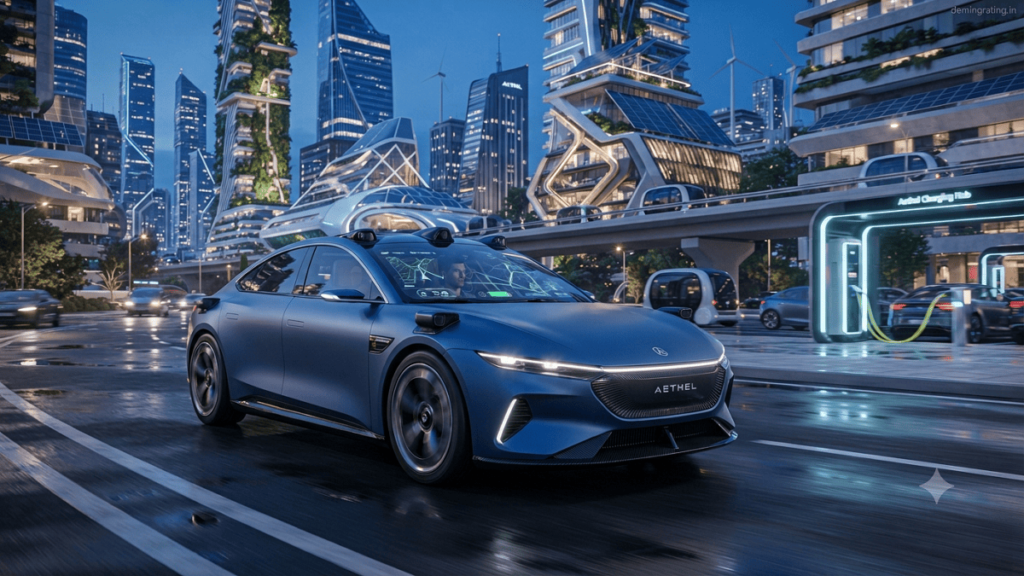
Industry Application of E-Vehicle Innovation
E-vehicle innovation is transforming multiple industries beyond personal transportation by improving energy efficiency, reducing operating costs, and supporting sustainability goals. Advances in batteries, power electronics, software, and charging infrastructure are enabling electric mobility solutions across logistics, public transport, manufacturing, agriculture, and energy sectors.
In the logistics and delivery industry, electric vans and trucks are increasingly used for last-mile and urban deliveries. Companies benefit from lower fuel costs, reduced maintenance requirements, and compliance with emission regulations. Fleet management software integrated with EVs helps optimize routes, charging schedules, and vehicle utilization.
The public transportation sector is adopting electric buses to reduce air pollution and noise in cities. Modern e-buses use regenerative braking and high-capacity batteries, lowering operating costs over their lifetime. Governments are supporting this transition through subsidies and charging infrastructure investments.
In manufacturing and industrial operations, electric forklifts, automated guided vehicles (AGVs), and warehouse transport systems improve indoor air quality and energy efficiency. These vehicles are particularly valuable in enclosed facilities where diesel emissions are a concern.
The agriculture sector is beginning to use electric tractors, utility vehicles, and irrigation support vehicles. Although adoption is still emerging, these technologies can reduce fuel dependency and integrate with on-farm renewable energy systems.
E-vehicle innovation is also influencing the energy industry. Vehicle-to-grid (V2G) technology allows electric vehicles to store electricity and return it to the grid during peak demand, supporting renewable energy integration and grid stability.
Useful references:
- International Energy Agency – Electric Vehicles
- U.S. Department of Energy – Electric Vehicles
- McKinsey Automotive Insights
Overall, industry applications of e-vehicle innovation demonstrate that electric mobility is not limited to consumer cars. It is becoming a foundational technology for cleaner logistics, smarter cities, efficient manufacturing, sustainable agriculture, and more resilient energy systems, creating both environmental and economic value across industries.
Ask FAQs
What is e-vehicle innovation?
E-vehicle innovation refers to the development of new technologies that improve electric vehicles, including batteries, motors, charging systems, software, and energy management. It aims to make EVs more efficient, affordable, safe, and environmentally friendly. Innovations such as solid-state batteries, fast charging, and intelligent battery management are driving the next generation of electric mobility.
How do electric vehicles help the environment?
Electric vehicles produce zero tailpipe emissions, which helps reduce air pollution and greenhouse gas emissions. When charged using renewable energy sources such as solar or wind power, their overall environmental impact becomes even lower. EVs also support the transition away from fossil fuels and contribute to cleaner urban air.
What is the biggest challenge facing e-vehicle innovation?
The biggest challenges include battery cost, availability of critical minerals such as lithium and cobalt, charging infrastructure, and battery recycling. Governments and manufacturers are investing in new battery technologies, recycling systems, and charging networks to address these issues and support large-scale EV adoption.
How fast can modern electric vehicles charge?
With ultra-fast DC charging technology, many modern EVs can charge from 10% to 80% in approximately 15 to 30 minutes, depending on the vehicle and charger capacity. Charging speed is influenced by battery design, temperature, and the power output of the charging station.
What are the future trends in e-vehicle innovation?
Future trends include solid-state batteries, vehicle-to-grid (V2G) technology, AI-based battery management, autonomous driving, and software-defined vehicles with over-the-air updates. These technologies are expected to improve range, charging speed, safety, and integration with renewable energy systems.
Table of Contents
Disclaimer: This article is intended for informational and educational purposes only. While every effort has been made to ensure accuracy, technologies, regulations, and market conditions related to electric vehicles may change over time. Readers should consult official industry sources, manufacturers, or qualified professionals before making technical, financial, or purchasing decisions.