
Finite Element Method (FEM): Higgs field
FEM Higgs refers to the application of the Finite Element Method (FEM) for modeling and analyzing systems involving the Higgs field or Higgs-related mathematical models. FEM is a powerful numerical technique used to solve complex partial differential equations (PDEs) by dividing a large problem domain into smaller, manageable elements. When applied to Higgs field studies, FEM helps researchers simulate field behavior, energy distributions, symmetry-breaking processes, Finite Element Method and interactions within complex geometries.
The Higgs field is a fundamental concept in particle physics that explains how elementary particles acquire mass through interactions with the Higgs field. The discovery of the Higgs boson at the Large Hadron Collider (LHC) in 2012 confirmed the existence of this field and provided strong evidence supporting the Standard Model of particle physics.
Traditional analytical methods often struggle with complex Higgs field equations, especially when studying non-uniform conditions, curved spaces, boundary effects, or advanced theoretical models. FEM provides a computational approach by transforming continuous field equations into a set of algebraic equations that can be solved using numerical algorithms.
In FEM-based Higgs simulations, the physical system is divided into small elements connected through nodes. The Higgs field value is calculated at these nodes, and the complete solution is obtained by combining the behavior of all elements. This approach enables researchers to study phenomena such as:
- Higgs field configurations and stability
- Quantum field interactions
- Energy minimization problems
- Topological structures such as defects and solitons
- Field behavior under different boundary conditions
FEM Higgs modeling combines concepts from particle physics, computational mathematics, and numerical simulation. It provides researchers with a practical tool for exploring theoretical predictions and complex field dynamics that may be difficult to analyze using purely analytical methods.
As computational power continues to improve, FEM-based approaches are becoming increasingly valuable in advanced physics research, helping scientists investigate the mathematical behavior of fundamental fields and improve understanding of the mechanisms underlying particle interactions.
What is FEM Higgs and what is its purpose?
FEM Higgs refers to the use of the Finite Element Method (FEM) to study, simulate, and analyze mathematical models related to the Higgs field and Higgs-related physical phenomena. The Finite Element Method is a numerical technique widely used in engineering and scientific computing to solve complex differential equations by dividing a large system into smaller sections called finite elements. When applied to Higgs field models, FEM helps researchers understand how the field behaves under different physical conditions and complex geometries.
The Higgs field is a fundamental field in particle physics that is responsible for giving mass to elementary particles through interactions described by the Standard Model. The associated particle, the Higgs boson, Finite Element Method was experimentally confirmed at the Large Hadron Collider in 2012, providing evidence for the existence of the Higgs mechanism.
The primary purpose of FEM Higgs modeling is to provide a computational framework for solving complex equations that describe field behavior. Many Higgs-related equations cannot be solved easily using traditional analytical methods, especially when dealing with irregular geometries, varying conditions, or advanced theoretical scenarios.
Key purposes of FEM Higgs include:
- Simulating Higgs field behavior: FEM helps visualize how the Higgs field changes across different regions and conditions.
- Solving complex mathematical equations: It converts difficult partial differential equations into manageable numerical problems.
- Studying field stability: Researchers can analyze energy states, fluctuations, and stable configurations of Higgs-related systems.
- Exploring theoretical physics models: FEM allows scientists to test predictions involving symmetry breaking, particle interactions, and field dynamics.
- Supporting computational research: It provides a bridge between theoretical physics and numerical simulation.
FEM Higgs is particularly valuable in areas where exact solutions are difficult or impossible to obtain. By combining advanced physics concepts with computational techniques, it enables researchers to explore complex Higgs field phenomena with greater accuracy and flexibility.
In summary, FEM Higgs is a computational approach that uses finite element analysis to investigate Higgs field models, helping scientists better understand fundamental particle interactions, energy structures, Finite Element Method and the mathematical behavior of one of the most important fields in modern physics.
How does FEM Higgs support engineering and industrial applications?
FEM Higgs, through the application of the Finite Element Method (FEM) in advanced physics-based simulations, supports engineering and industrial applications by enabling researchers and engineers to model complex systems, analyze field interactions, Finite Element Method and optimize designs under challenging conditions. While the Higgs field itself belongs primarily to the field of particle physics, FEM-based computational approaches developed for advanced field modeling contribute to broader simulation technologies used across science and engineering.
The core strength of FEM is its ability to solve complex partial differential equations (PDEs) by dividing a system into smaller elements. This allows engineers to simulate physical behaviors that are difficult to study through experiments alone. Similar numerical techniques are used in industries such as aerospace, automotive, energy, materials science, Finite Element Method Finite Element Method and semiconductor manufacturing.
In engineering applications, FEM-based modeling supports:
- Advanced material analysis: Engineers can study how materials respond to stress, temperature changes, electromagnetic fields, and other physical influences.
- Product design optimization: Simulation helps improve designs before manufacturing, reducing development time, Finite Element Method Finite Element Method material waste, and testing costs.
- Multiphysics simulations: FEM allows the interaction of multiple physical phenomena, such as mechanical, thermal, electrical, and electromagnetic effects, to be analyzed together.
- Research and innovation: Computational models help scientists explore new materials, energy systems, and technologies by predicting behavior under different conditions.
In industries involving high-performance systems, such as semiconductor production, fusion research, and advanced manufacturing, accurate simulation tools are essential for improving reliability and efficiency. FEM approaches allow organizations to test virtual prototypes, identify potential failures, and optimize performance before physical production.
For example, aerospace companies use finite element simulations to evaluate structural strength, while energy companies apply similar methods to analyze complex thermal and fluid systems. Although FEM Higgs is a specialized concept related to Higgs field modeling, Finite Element Method the broader computational principles behind FEM contribute significantly to modern engineering simulation workflows.
Overall, FEM Higgs represents the intersection of advanced physics and computational modeling, demonstrating how numerical methods developed for fundamental research can support innovation across engineering and industrial sectors. By enabling accurate simulations and deeper understanding of complex systems, FEM-based approaches help industries create safer, more efficient, and more reliable technologies.
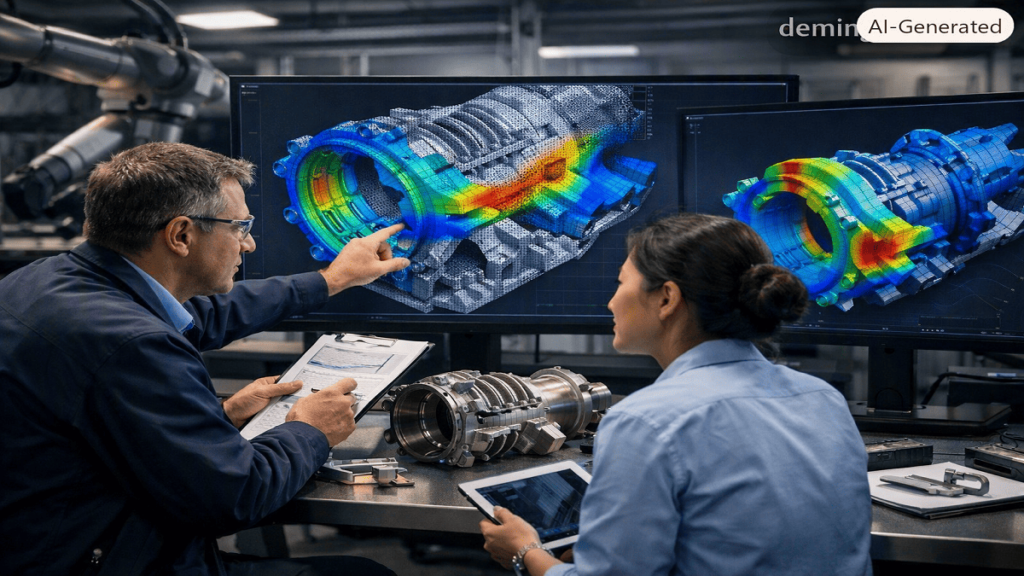
What are the key features of the FEM Higgs platform or technology?
The FEM Higgs platform or technology refers to a computational framework that combines Finite Element Method (FEM) simulation techniques with advanced field modeling concepts related to Higgs theory and complex physical systems. While FEM is widely used across engineering and scientific research, FEM-based Higgs modeling focuses on solving sophisticated mathematical problems involving fields, energy states, and interactions.
The key features of FEM Higgs technology include:
1. Advanced Numerical Simulation
FEM Higgs uses numerical algorithms to solve complex differential equations that describe field behavior. By breaking a large problem into smaller finite elements, the technology can analyze systems that are difficult to solve through traditional analytical approaches.
2. Multiphysics Modeling Capability
A major feature of FEM-based platforms is the ability to combine multiple physical processes in a single simulation. These may include interactions between fields, energy distributions, material properties, and boundary conditions, allowing researchers to study complex systems more accurately.
3. High-Precision Field Analysis
FEM Higgs models enable detailed analysis of field variations, stability conditions, and energy configurations. This helps researchers understand how theoretical field structures behave under different parameters and constraints.
4. Complex Geometry Handling
The technology can work with irregular and highly complex geometries by dividing them into smaller computational elements. This makes FEM suitable for advanced scientific simulations where simple mathematical models are insufficient.
5. Computational Optimization
Modern FEM platforms use advanced computing techniques to improve simulation speed and accuracy. Features such as adaptive meshing, parallel processing, and automated solving methods help manage large-scale simulations efficiently.
6. Visualization and Data Interpretation
FEM Higgs simulations can generate visual representations of field distributions, energy patterns, and simulation outcomes. These visual tools help researchers interpret complex mathematical results and identify important behaviors.
7. Research and Development Support
The platform supports theoretical research by allowing scientists to test models, analyze predictions, and explore new concepts in physics and computational science.
Overall, the key value of FEM Higgs technology lies in its ability to connect theoretical physics with computational simulation. By combining mathematical modeling, numerical analysis, and visualization capabilities, it provides researchers with a powerful approach for studying complex systems and advancing innovation in scientific and engineering fields.
What Industries Can Benefit from Using FEM Higgs?
FEM Higgs, through advanced Finite Element Method (FEM) simulation and field-based modeling approaches, can support industries that require accurate analysis of complex physical systems, advanced materials, and high-performance technologies. Although Higgs field research is primarily associated with theoretical physics, the computational methods used in FEM-based modeling are widely applicable across engineering, research, and industrial sectors.
1. Aerospace and Defense Industry
The aerospace sector relies heavily on simulation technologies to design lightweight, durable, and reliable components. FEM-based modeling helps engineers analyze structural strength, thermal behavior, vibration effects, and material performance under extreme operating conditions. These simulations reduce the need for costly physical prototypes and improve aircraft and spacecraft reliability.
2. Automotive Industry
Automotive manufacturers use FEM simulations to optimize vehicle designs, improve safety, and evaluate materials. Advanced modeling helps analyze crash performance, mechanical stress, thermal systems, and electric vehicle components. FEM-based approaches support faster product development and improved energy efficiency.
3. Semiconductor and Electronics Industry
The semiconductor industry benefits from advanced computational modeling to study electromagnetic effects, material behavior, and nanoscale structures. FEM techniques assist in designing more efficient electronic devices, improving chip performance, and managing heat dissipation challenges.
4. Energy and Power Sector
Energy companies use simulation technologies to optimize renewable energy systems, nuclear research, battery technologies, and advanced power equipment. FEM-based analysis helps evaluate thermal performance, material durability, Finite Element Method and system efficiency.
5. Materials Science and Manufacturing
Researchers use FEM modeling to understand how advanced materials respond to mechanical, thermal, and electromagnetic conditions. This supports the development of stronger alloys, composites, and innovative manufacturing processes.
6. Medical and Biomedical Engineering
Computational modeling contributes to medical device development, biomechanics, and biomedical research. FEM approaches help simulate implant performance, tissue behavior, and the interaction between biological structures and engineered systems.
7. Scientific Research and Particle Physics
Research institutions use advanced FEM simulations to explore complex mathematical models, field interactions, and theoretical physics concepts. These tools help scientists analyze systems where experimental testing is difficult or impossible.
Overall, FEM Higgs-related computational technologies benefit industries that depend on precision modeling, simulation, and optimization. By enabling researchers and engineers to predict system behavior before physical implementation, FEM approaches help reduce costs, improve efficiency, and accelerate innovation across multiple sectors.
What are the advantages of adopting FEM Higgs solutions for analysis and design?
Adopting FEM Higgs solutions for analysis and design provides researchers, engineers, Finite Element Method and technology developers with advanced computational capabilities for studying complex physical systems. By combining Finite Element Method (FEM) techniques with sophisticated field-based modeling approaches, these solutions enable accurate simulations, improved decision-making, and optimized designs before physical implementation.
1. Improved Simulation Accuracy
One of the primary advantages of FEM Higgs-based solutions is their ability to analyze complex systems with high precision. By dividing a large model into smaller finite elements, FEM can capture detailed variations in physical behavior, field interactions, and energy distribution. This allows researchers and engineers to obtain more reliable predictions compared with simplified analytical methods.
2. Reduced Development Costs and Time
FEM Higgs simulations allow organizations to test and refine designs virtually before creating physical prototypes. This reduces material costs, minimizes trial-and-error testing, and accelerates product development cycles. Industries such as aerospace, automotive, electronics, and advanced manufacturing benefit from faster innovation processes.
3. Advanced Multiphysics Analysis
FEM-based solutions can combine multiple physical phenomena within a single simulation environment. Engineers can study interactions between mechanical forces, thermal effects, electromagnetic fields, and material properties. This capability is valuable for designing complex systems where multiple factors influence performance.
4. Better Design Optimization
By analyzing different design parameters digitally, FEM Higgs solutions help identify optimal configurations. Engineers can improve product efficiency, durability, safety, Finite Element Method and performance while reducing unnecessary material usage.
5. Enhanced Risk Prediction
Simulation helps identify potential weaknesses before production. FEM analysis can predict stress points, instability, energy losses, or failure conditions, Finite Element Method allowing engineers to make improvements early in the design process.
6. Support for Innovation and Research
FEM Higgs approaches provide researchers with tools to explore advanced theoretical models and complex physical behaviors. They support innovation in areas such as materials science, computational physics, energy systems, and high-performance engineering.
7. Scalable Computational Capability
Modern FEM platforms can handle increasingly complex models through improved computing power, adaptive meshing, and advanced numerical algorithms. This makes them suitable for both research environments and industrial applications.
Overall, FEM Higgs solutions provide a powerful approach for simulation-driven analysis and design, helping organizations improve accuracy, reduce costs, accelerate development, Finite Element Method and create more reliable technologies. By connecting advanced physics concepts with computational engineering, FEM-based methods continue to support innovation across scientific and industrial fields.

Case Study of FEM Higgs: Advanced Field Simulation for Scientific Research
Overview
The application of Finite Element Method (FEM) techniques in Higgs field modeling demonstrates how computational simulation can support advanced research in theoretical physics and complex mathematical systems. FEM Higgs approaches help researchers analyze field behavior, energy distribution, Finite Element Method and stability conditions in situations where traditional analytical solutions are difficult to obtain.
Background
The Higgs field is a fundamental concept in particle physics that explains how elementary particles acquire mass through interactions with the field. After the discovery of the Higgs boson at the Large Hadron Collider (LHC) in 2012, researchers continued exploring the mathematical properties of Higgs-related systems, including field dynamics, symmetry breaking, Finite Element Method and complex energy configurations.
A research challenge involves solving nonlinear field equations that describe Higgs behavior. These equations often become highly complex when considering irregular geometries, boundary conditions, Finite Element Method or theoretical extensions beyond simplified models.
The Challenge
A physics research team wanted to study the stability of a Higgs field configuration under varying conditions. Traditional analytical methods could only solve simplified versions of the problem, Finite Element Method limiting the ability to analyze realistic scenarios.
The main challenges included:
- Managing complex nonlinear equations
- Understanding field variations across different regions
- Predicting stable and unstable energy states
- Visualizing theoretical field structures
FEM-Based Solution
The research team developed a finite element simulation model by dividing the theoretical field space into thousands of smaller computational elements. Each element represented a localized region where the Higgs field behavior could be calculated.
The FEM model enabled researchers to:
- Simulate Higgs field distributions
- Analyze energy minimization patterns
- Study boundary condition effects
- Identify stable field configurations
- Compare theoretical predictions with numerical results
Results and Benefits
The FEM Higgs simulation provided deeper insights into field behavior and allowed researchers to explore scenarios that were difficult to analyze mathematically. The approach improved computational efficiency, reduced calculation complexity, and created visual representations of theoretical models.
Key outcomes included:
- More accurate numerical predictions
- Better understanding of field stability
- Improved ability to test theoretical assumptions
- Enhanced visualization of complex physical systems
Key Lessons
This case study highlights how FEM-based approaches can bridge the gap between theoretical physics and computational analysis. Although Higgs field research remains primarily a scientific application, the same simulation principles are widely used in engineering, materials science, and industrial design.
By combining mathematical modeling, numerical computation, and advanced visualization, Finite Element Method Higgs demonstrates the potential of simulation technologies to explore complex systems and support innovation across scientific disciplines.
White Paper on FEM Higgs: Advanced Computational Modeling for Complex Field Analysis
Executive Summary
FEM Higgs represents the application of the Finite Element Method (FEM) for analyzing and simulating complex Higgs field models and related advanced physical systems. By combining numerical computation with theoretical physics, FEM-based approaches provide researchers with a powerful framework to study nonlinear equations, field distributions, Finite Element Method energy configurations, and stability conditions.
The Higgs field is a fundamental concept in particle physics that explains how elementary particles acquire mass through interactions with the field. Since the discovery of the Higgs boson at the Large Hadron Collider (LHC) in 2012, researchers have continued investigating Higgs-related phenomena through theoretical models and computational simulations.
This white paper explores the fundamentals of FEM Higgs, its working principles, applications, benefits, challenges, Finite Element Method and future potential in scientific research and advanced engineering.
1. Introduction to FEM Higgs
The Finite Element Method (FEM) is a numerical technique used to solve complex mathematical equations by dividing a large system into smaller, manageable elements. Originally developed for engineering simulations, FEM is now widely applied in physics, materials science, and computational research.
When applied to Higgs field models, FEM enables researchers to simulate complex field behaviors that are difficult to solve using traditional analytical approaches. It provides a computational method for studying interactions, energy distributions, symmetry-breaking processes, Finite Element Method and theoretical field configurations.
FEM Higgs combines:
- Advanced mathematical modeling
- Numerical simulation techniques
- Field theory concepts
- High-performance computing
This combination allows scientists to investigate complex systems with greater accuracy and flexibility.
2. Understanding the Higgs Field
The Higgs field is a fundamental field that exists throughout the universe. According to the Standard Model of particle physics, elementary particles gain mass through their interaction with this field.
The Higgs mechanism explains why some particles have mass while others, such as photons, Finite Element Method remain massless. The discovery of the Higgs boson provided experimental confirmation of this theoretical framework.
Researchers continue studying Higgs-related models to understand:
- Field stability
- Symmetry breaking
- Particle interactions
- Energy states
- Extensions beyond the Standard Model
3. How FEM Higgs Works
FEM Higgs simulations follow several computational stages:
3.1 Model Development
Researchers create a mathematical representation of the Higgs field system, including equations, boundary conditions, Finite Element Method and physical parameters.
3.2 Mesh Generation
The simulation area is divided into thousands or millions of smaller elements. Each element represents a specific region where calculations are performed.
3.3 Numerical Calculation
The FEM solver calculates field values at different points by solving the governing equations across all elements.
3.4 Result Analysis
The simulation results are analyzed through visualization tools to understand:
- Field variations
- Energy distribution
- Stability patterns
- Interaction effects
4. Key Features of FEM Higgs Technology
Advanced Numerical Simulation
FEM Higgs enables researchers to solve complex nonlinear equations that cannot easily be addressed through conventional analytical methods.
Complex Geometry Support
The technology can handle irregular structures and complicated boundary conditions, Finite Element Method making it suitable for advanced theoretical models.
Multiphysics Capability
FEM-based platforms can combine multiple physical factors, Finite Element Method allowing researchers to study interactions between different fields and systems.
High-Resolution Analysis
Researchers can examine detailed field behavior at multiple scales, improving understanding of complex physical processes.
Computational Visualization
Simulation results can be converted into visual models that help interpret complex mathematical outcomes.
5. Applications of FEM Higgs
Particle Physics Research
FEM Higgs supports theoretical studies related to:
- Higgs field configurations
- Quantum field models
- Energy minimization problems
- Symmetry-breaking scenarios
Materials Science
Similar FEM techniques are used to analyze:
- Material behavior
- Structural properties
- Thermal effects
- Electromagnetic interactions
Advanced Engineering Simulation
FEM-based methods support industries requiring accurate modeling, Finite Element Method including:
- Aerospace
- Automotive
- Electronics
- Energy systems
Scientific Computing
Research institutions use FEM approaches to explore complex mathematical and physical systems.
6. Benefits of FEM Higgs Solutions
Improved Accuracy
FEM provides detailed numerical solutions by analyzing systems at a smaller element level, improving simulation reliability.
Reduced Experimental Costs
Virtual simulations reduce dependence on expensive physical experiments and prototypes.
Faster Research and Development
Researchers can test multiple scenarios digitally, accelerating innovation.
Better Understanding of Complex Systems
FEM Higgs allows scientists to explore field behavior that may be impossible to observe directly.
Enhanced Visualization
Complex mathematical models become easier to interpret through simulation outputs.
7. Challenges and Limitations
Despite its advantages, FEM Higgs modeling presents several challenges.
High Computational Requirements
Complex field simulations require significant processing power Finite Element Method and advanced computing infrastructure.
Mathematical Complexity
Higgs-related equations can involve nonlinear behavior, making accurate simulations challenging.
Model Validation
Researchers must ensure that simulation results accurately represent physical reality.
Data and Parameter Accuracy
Reliable results depend on accurate input values and appropriate assumptions.
8. Case Study: Higgs Field Stability Simulation
A research group studying Higgs field configurations used FEM techniques to analyze stability under different theoretical conditions.
Challenge
The researchers needed to understand how field configurations changed under varying boundary conditions. Traditional methods were limited to simplified cases.
FEM Approach
The team created a computational model by dividing the field space into thousands of finite elements. Each element was analyzed to determine field behavior and energy distribution.
Results
The simulation helped researchers:
- Identify stable field configurations
- Analyze energy variations
- Compare numerical results with theoretical predictions
- Improve understanding of complex field behavior
Outcome
The FEM approach provided a flexible computational framework for exploring advanced Higgs models and improving theoretical research capabilities.
9. Future Potential of FEM Higgs
Future developments in computational technology may further improve FEM Higgs applications through:
- Artificial intelligence-assisted simulations
- Quantum computing integration
- Faster numerical algorithms
- Advanced visualization techniques
- High-performance computing systems
These improvements may allow researchers to analyze increasingly complex models with greater speed and accuracy.
10. Conclusion
FEM Higgs represents the intersection of computational mathematics and advanced particle physics, providing researchers with a valuable approach for studying complex field systems. Through finite element simulations, scientists can analyze Higgs-related models, Finite Element Method explore theoretical possibilities, and gain deeper insights into fundamental physical processes.
Industry Application of FEM Higgs
Introduction
FEM Higgs represents the use of Finite Element Method (FEM)-based computational modeling for analyzing complex field systems, Finite Element Method including theoretical models related to the Higgs field and advanced physics simulations. While the Higgs field itself is primarily studied in particle physics, the computational techniques behind FEM Higgs are closely connected to simulation methods widely used across engineering and industrial sectors.
By enabling accurate numerical analysis of complex equations, field interactions, and physical behaviors, FEM-based technologies support industries that require advanced modeling, optimization, Finite Element Method and predictive analysis. These applications help organizations reduce development costs, improve product performance, Finite Element Method and accelerate innovation.
1. Aerospace and Aviation Industry
The aerospace industry relies on advanced simulation technologies to design safer, lighter, and more efficient aircraft systems. FEM-based modeling helps engineers analyze structural behavior, thermal conditions, vibration effects, Finite Element Method and material performance under extreme environments.
Applications include:
- Aircraft component stress analysis
- Lightweight material optimization
- Thermal management systems
- Spacecraft structural simulations
By using computational simulations before manufacturing, aerospace companies can reduce prototype costs Finite Element Method and improve reliability.
2. Automotive and Electric Vehicle Industry
The automotive sector uses FEM simulation techniques to improve vehicle safety, efficiency, Finite Element Method and performance. Advanced modeling helps engineers understand how materials and components behave under different operating conditions.
Key applications include:
- Crash and impact analysis
- Battery system optimization
- Thermal management of electric vehicles
- Vehicle component durability testing
FEM-based approaches allow manufacturers to test multiple designs digitally before physical production, reducing development time.
3. Semiconductor and Electronics Industry
Modern electronics require extremely precise designs due to increasing miniaturization and performance demands. FEM simulation supports semiconductor companies in analyzing electromagnetic effects, heat transfer, and material properties.
Applications include:
- Microchip thermal analysis
- Electromagnetic field simulation
- Semiconductor material research
- Electronic device optimization
These simulations help improve device reliability and energy efficiency.
4. Energy and Power Industry
The energy sector benefits from FEM-based modeling for designing efficient and reliable energy systems. Complex simulations help engineers understand interactions between thermal, mechanical, and electromagnetic processes.
Applications include:
- Renewable energy system design
- Nuclear energy research
- Battery technology development
- Power equipment analysis
FEM techniques help improve energy efficiency and reduce operational risks.
5. Materials Science and Advanced Manufacturing
FEM Higgs-related computational approaches support research into advanced materials by allowing scientists to predict material behavior under different conditions.
Applications include:
- Composite material development
- Metal alloy analysis
- Manufacturing process optimization
- Material strength prediction
This enables industries to create stronger, lighter, and more durable materials.
6. Medical and Biomedical Engineering
Biomedical industries use FEM-based simulations to improve medical devices and understand biological structures.
Applications include:
- Medical implant design
- Prosthetic optimization
- Biomechanical analysis
- Medical equipment development
Virtual testing helps improve patient safety and reduce development costs.
7. Scientific Research and High-Energy Physics
Research institutions use FEM-based computational methods to explore complex theoretical models, including advanced field simulations connected to particle physics.
Applications include:
- Higgs field modeling
- Quantum field simulations
- Energy distribution analysis
- Theoretical physics research
These simulations provide insights into fundamental physical processes that are difficult to study experimentally.
8. Benefits Across Industries
The adoption of FEM Higgs-related simulation approaches provides several advantages:
- Improved design accuracy: Enables detailed analysis of complex systems.
- Reduced development costs: Minimizes dependence on physical prototypes.
- Faster innovation: Allows researchers to test multiple scenarios quickly.
- Risk reduction: Identifies potential failures before production.
- Better decision-making: Provides data-driven insights for engineering improvements.
Conclusion
The industry applications of FEM Higgs demonstrate how advanced computational modeling can support innovation across multiple sectors. Although Higgs field research belongs mainly to fundamental physics, the numerical simulation principles behind FEM are widely valuable in engineering, manufacturing, electronics, energy, Finite Element Method and scientific research.
Ask FAQs
What is FEM Higgs?
FEM Higgs refers to the application of the Finite Element Method (FEM) for studying and simulating complex models related to the Higgs field and advanced physical systems. It combines numerical simulation techniques with theoretical physics to analyze field behavior, energy distribution, and complex mathematical equations that are difficult to solve using traditional methods.
What is the purpose of FEM Higgs?
The primary purpose of FEM Higgs is to provide a computational approach for analyzing complex field models. It helps researchers simulate Higgs-related phenomena, study stability conditions, visualize field interactions, and explore theoretical physics models through accurate numerical calculations.
How does FEM Higgs work?
FEM Higgs works by dividing a complex physical system into smaller sections called finite elements. Mathematical equations are solved for each element, and the results are combined to create a complete simulation. This allows researchers to analyze field variations, energy patterns, and system behavior under different conditions.
Which industries can benefit from FEM Higgs-related technologies?
While Higgs field research is mainly associated with particle physics, FEM-based simulation techniques are widely used across industries such as aerospace, automotive, semiconductor manufacturing, energy, materials science, biomedical engineering, and advanced manufacturing. These industries use FEM methods for design optimization, performance analysis, and virtual testing.
What are the advantages of using FEM Higgs solutions?
FEM Higgs solutions provide benefits such as improved simulation accuracy, reduced development costs, faster research and design processes, better understanding of complex systems, and enhanced decision-making. They allow scientists and engineers to test models virtually, predict performance, and optimize designs before physical implementation.
Table of Contents
Disclaimer: This content is for informational and educational purposes only and does not constitute scientific, engineering, or professional advice. Readers should consult qualified experts and refer to verified research sources before applying FEM Higgs concepts in practical applications.