
Container Loading Check (CLC)
Container Loading Check (CLC) is the final on-site inspection carried out at the factory or warehouse during loading of goods into a container, with the aim of ensuring that the correct products, in the right quantity and condition, are properly packed, stowed, and sealed before shipment. It significantly reduces risks of cargo damage, short shipment, mix-ups, and customer complaints by verifying both the goods and the loading process at the last possible control point. CLC is especially critical for full-container-load (FCL) exports, fragile or high-value items, and direct-to-customer shipments where post-arrival rework is impractical.
What a CLC Typically Covers
A standard CLC covers four broad areas: the container, the goods, the packaging, and the loading operation. Inspectors first check the container’s physical condition to ensure it is clean, dry, structurally sound, and free of strong odors, holes, or contamination that could damage goods in transit. They then confirm that the SKU mix, quantities, and basic product characteristics match the purchase order and packing list, often by counting cartons and sampling units to verify style, color, dimensions, labeling, and visible workmanship. Packaging is reviewed to confirm that inner and outer cartons, cushioning, and sealing meet agreed specifications and can withstand the planned transport and handling conditions. Finally, the loading itself is supervised: inspectors observe palletization or floor loading, stacking patterns, weight distribution, use of dunnage and lashings, and correct application and recording of seals once loading is complete.
Deming Perspective and “Ratings”
Viewed through Deming’s quality philosophy, CLC is a control activity that must be integrated into a broader system rather than treated as a standalone policing step. Deming emphasized building quality into the process and reducing dependence on final inspection; in this context, CLC should verify that upstream processes (production, packing, and logistics planning) are stable and capable, not compensate for their failures. Applying Deming’s lens, “ratings” for a CLC program can be framed around the Plan–Do–Check–Act (PDCA) cycle: organizations plan standards for loading and packaging, execute them in operations, check conformance via CLC, and then act on findings to improve supplier processes, packaging design, and loading SOPs. A high “Deming rating” for CLC would therefore reflect not only low defect rates at loading but also evidence that CLC data is analyzed and fed back into continuous improvement, leading over time to fewer nonconformities, less rework at loading, and more stable logistics performance.
Key Criteria for Assessing CLC Effectiveness
To operationalize such ratings, companies often evaluate CLC performance against measurable criteria. Typical dimensions include: frequency and severity of nonconformities found at loading; rate of cargo claims or damage on arrival attributable to loading or packaging; accuracy of shipped vs ordered quantities; and on-time shipment performance after CLC intervention. Process-oriented indicators are also important, such as how consistently inspectors follow defined checklists, the clarity and timeliness of reporting, and how many corrective and preventive actions are raised and closed based on CLC findings. Suppliers and logistics partners can be scored or graded against these indicators, and ratings can inform sourcing decisions, vendor development plans, and incentives. In a Deming-aligned system, the goal of such ratings is not to punish suppliers but to understand variation, remove systemic causes of defects, and gradually make the entire supply and logistics chain more predictable and robust.
What is Required Container Loading Check (CLC)
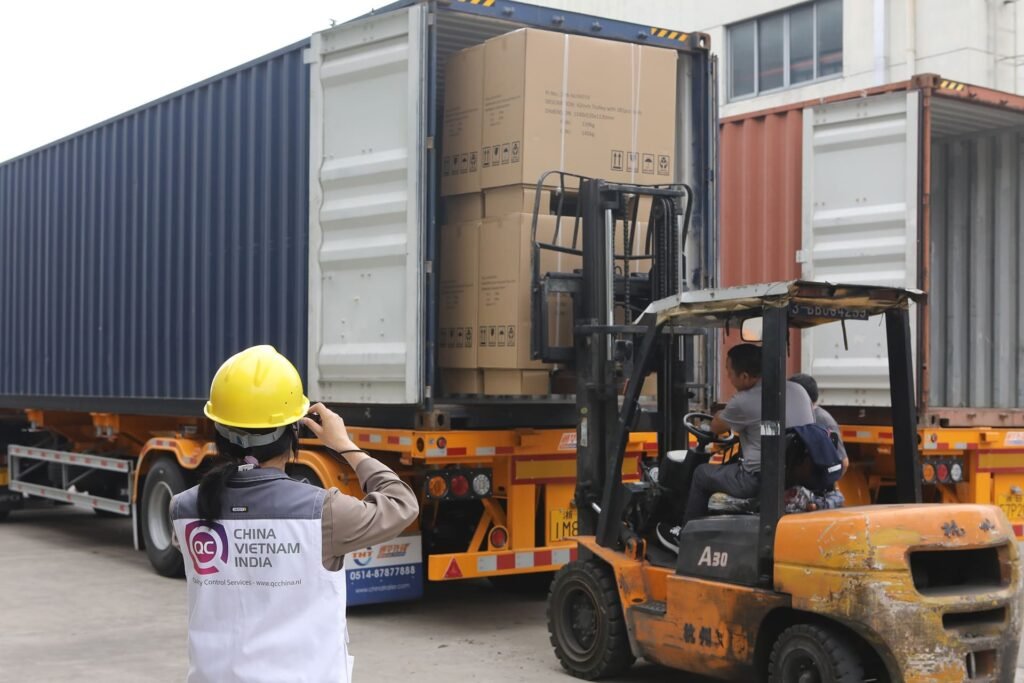
Container Loading Check (CLC) is a supervised inspection carried out during the actual loading of cargo into a container to verify that the right products, in correct quantity and condition, are packed, stowed, and sealed in line with agreed requirements. When viewed through Deming’s quality philosophy, CLC should function as a feedback and improvement mechanism within a wider quality system, not as an isolated policing step.
Core requirements of CLC
A proper CLC begins with inspection of the empty container to ensure it is structurally sound, clean, dry, free of strong odors, and without holes, heavy dents, or contamination that could damage goods. Inspectors also verify that container and truck identification numbers are recorded correctly so that traceability is maintained throughout the shipment.
Next, the inspector checks products against the purchase order, packing list, and other shipping documents to confirm that SKUs, assortments, and quantities match what must be shipped. This often includes random inspection of outer and inner packaging, labeling, barcodes, and basic product attributes (style, color, size) to ensure conformity before loading proceeds.
Loading process and documentation
During loading, the inspector supervises or monitors how cartons or pallets are placed in the container, paying attention to stacking pattern, weight distribution, use of dunnage, and compatibility of different cargo types. Proper loading techniques aim to avoid crushing, shifting, or water damage during transport and to use available space effectively. Once loading is complete, doors are closed, seals are applied, and seal numbers are recorded; photos and a container loading report or certificate are typically issued as evidence of the inspection.
Deming-oriented “ratings” concept
From a Deming perspective, CLC effectiveness can be “rated” by how well it supports continual improvement rather than by pass/fail results alone. Deming’s Plan–Do–Check–Act (PDCA) cycle implies that CLC data should feed back into planning packaging standards, loading SOPs, and supplier training so that nonconformities steadily decrease over time. This means a high Deming-style rating for CLC would be reflected in stable processes, fewer surprises at loading, and reduced cargo damage or quantity discrepancies on arrival.
In practice, organizations can convert CLC outcomes into vendor or lane ratings using metrics such as frequency of loading-related defects, damage rates at destination, documentation accuracy, and on-time shipment after CLC. These ratings are then used to drive system-level improvements: suppliers with recurring problems receive corrective-action requests and support, while best performers become benchmarks for standard methods. Seen this way, CLC is not just a checkpoint but a structured learning loop that aligns logistics execution with Deming’s principles of reducing variation and building quality into the process.
Who is Required Container Loading Check (CLC)
Container Loading Check (CLC) is required by the buyer or brand owner whenever the risk of shipping the wrong, damaged, or poorly packed goods is high, and the cost of failure at destination is significant. In Deming terms, those “who are required” to use CLC are the parties responsible for the overall system of quality and logistics, not just the people physically loading the container.
Who typically orders CLC
- Importers, retailers, and brand owners usually mandate CLC for high‑value, fragile, or critical shipments, because they bear the direct financial and reputational risk if cargo arrives short, mixed, or damaged.
- Buying offices or sourcing agents acting on behalf of overseas customers also commonly require CLC and coordinate inspection bookings with independent third‑party inspection companies.
Who performs and attends CLC
- Third‑party inspection firms or in‑house quality teams send qualified inspectors to the factory, warehouse, or consolidation center to supervise loading, verify quantities and condition, and document the process.
- Factory staff, warehouse loaders, and sometimes freight forwarder or trucking representatives are physically present; they execute the loading but are still accountable to the buyer’s requirements and the inspector’s findings.
Deming view of “who is responsible”
From a Deming perspective, responsibility for CLC lies with management that designs and controls the end‑to‑end system, not just with inspectors at the dock door. Deming’s philosophy expects top management, supply‑chain leaders, and supplier management teams to require CLC where process variation and risk are high, then use CLC data to improve packaging standards, loading methods, and supplier capability over time.
In this sense, a “Deming rating” of who is required to use CLC would emphasize:
- Buyers and senior managers who decide when CLC is mandatory for certain products, suppliers, or lanes and integrate it into standard operating procedures.
- Supplier and logistics managers who act on CLC results, reduce repeated nonconformities, and gradually make CLC a confirmation step rather than a firefighting tool, reflecting a mature, well‑controlled system aligned with Deming’s focus on continuous improvement.
When is Required Container Loading Check (CLC)
Container Loading Check (CLC) is typically required at the very end of production, when 100% of the goods are finished, packed, and ready to be stuffed into the export container. From a Deming perspective, the decision of “when” to use CLC should be driven by risk, process capability, and the goal of continuous improvement, rather than by habit or blame.
Situations when CLC is required
- When product risk is high: CLC is commonly required for expensive, fragile, regulated, or brand‑critical items where damage, mix‑ups, or shortages would have a major financial or reputational impact (for example glassware, electronics, medical devices, or high‑end fashion).
- When logistics complexity is high: Importers often mandate CLC when goods from multiple factories are consolidated into one container, or when there is a strict container stuffing plan that must be followed exactly for cost or safety reasons.
Timing in the shipment flow
- After upstream inspections: CLC is normally scheduled after in‑process and pre‑shipment inspections have confirmed product quality, so its focus can be on quantity, packaging, container condition, and loading execution rather than basic workmanship.
- Just before container departure: The check is done at the factory, warehouse, or consolidation hub during the actual loading window, before the container is sealed and dispatched to the port, because once sealed the opportunity to correct errors is essentially gone.
Deming‑style “when” and ratings
In Deming terms, CLC should be required whenever process variation and consequence of failure are both high, and the data from each CLC should be used to improve the system so that reliance on intensive final checks can gradually be reduced. Management can create a “Deming rating” framework where product categories, suppliers, and trade lanes are classified by risk; high‑risk combinations automatically trigger CLC, while consistently capable suppliers with good CLC histories may need it less frequently. Over time, fewer critical findings at CLC, fewer cargo claims, and more stable loading performance would indicate a higher Deming rating for that part of the system, signaling that the “when” for CLC can shift from routine firefighting to targeted, evidence‑based use aligned with continuous improvement principles.
Where is Required Container Loading Check (CLC)
Container Loading Check (CLC) is required at the physical point where goods are actually stuffed into the container, typically at the shipper’s factory, export warehouse, or consolidation center. In Deming terms, “where” is not only the physical place but the step in the process where variation in loading, packaging, and handling can still be detected and corrected, before the system becomes locked in by sealing the container.
Physical locations where CLC is done
- Shipper’s factory: Many CLCs are carried out at the manufacturing site’s loading bay, where finished goods move directly from warehouse or production to the container, allowing immediate verification of product, packaging, and loading method.
- Third‑party or logistics warehouse: When products from several suppliers are consolidated, CLC is done at the central warehouse or 3PL facility where all goods are gathered and the final loading plan is executed.
Process point in the logistics chain
- Just before container sealing: The CLC is positioned at the last control point before the container doors close and seals are applied, because after sealing, any mix‑up, damage risk, or quantity error becomes an in‑transit or destination problem.
- At the interface between supplier and carrier: Functionally, CLC sits at the handover point between the seller’s responsibility and the international transport leg, making it the logical “where” to verify that the system upstream has produced the right, ready‑to‑ship output.
Deming view of “where” and ratings
From a Deming perspective, CLC should occur where it provides maximum information for improvement with minimum disruption—close to the source of variation in packing and loading, not late at destination where only sorting and claims are possible. Locating CLC at factories and consolidation hubs enables management to capture data on recurring layout, packaging, and handling problems and then redesign processes, standards, and training at those sites.
A Deming‑oriented “rating” of where CLC is deployed would favor systems that:
- Place CLC at controlled, standardized loading points with clear work instructions, visual standards, and feedback loops.
- Use results from each CLC location (factory A, warehouse B, lane X–Y) to compare performance, focus improvement efforts, and progressively lower defect and damage rates, showing that the choice of “where” supports continuous learning rather than one‑off policing.
How is Required Container Loading Check (CLC)
Container Loading Check (CLC) is carried out through a structured sequence of steps: preparation, inspection, supervision of loading, and feedback into the quality system. Interpreted through Deming’s philosophy, “how” CLC is done should follow a Plan–Do–Check–Act (PDCA) logic, so that each inspection not only protects a shipment but also improves the underlying process.
Operational steps of CLC
Inspectors begin by arriving at the loading facility before loading starts, reviewing contracts, packing lists, and specific buyer instructions to understand exactly what must be loaded and how. The empty container is then examined externally and internally for structural damage, leaks, contamination, odors, and overall suitability for the cargo, using checklists aligned with ISO or internal standards.
Next, product and packaging are verified: inspectors count cartons or pallets, spot‑check SKUs and assortments against documents, and examine packaging strength, sealing, and labeling to confirm they match requirements and can withstand transport. During actual loading, the inspector supervises how cargo is placed—checking stacking patterns, weight distribution, use of dunnage and bracing, and execution of any detailed loading plan—then oversees sealing of the container and recording of seal and container numbers, often with photos and a formal report.
How “required” is determined
CLC is typically required when buyers specify it in purchase contracts or quality plans, especially for high‑risk products, complex consolidations, or new or weak suppliers. Practically, that means CLC is built into the standard process: the buyer or sourcing office books an independent inspection or sends in‑house staff, the supplier prepares fully packed goods and documentation, and no container may be sealed without the inspection being completed and accepted.
Deming‑style “ratings” for how CLC is done
In a Deming framework, “how well” CLC is performed can be rated using both outcome and process measures, then used to drive improvement. For example, organizations can track frequency and severity of nonconformities found at loading, later cargo damage or shortage rates, and how often loading has to stop for corrections, alongside process metrics such as checklist completion, report quality, and closure of corrective actions raised from CLC findings. These indicators effectively form a Deming‑style rating of the CLC system’s maturity: high ratings correspond to stable, standardized loading practices, few surprises during inspection, and evidence that CLC data feeds back into better packaging design, clearer work instructions, and supplier training—reducing dependence on last‑minute inspection over time.
Case Study on Container Loading Check (CLC)
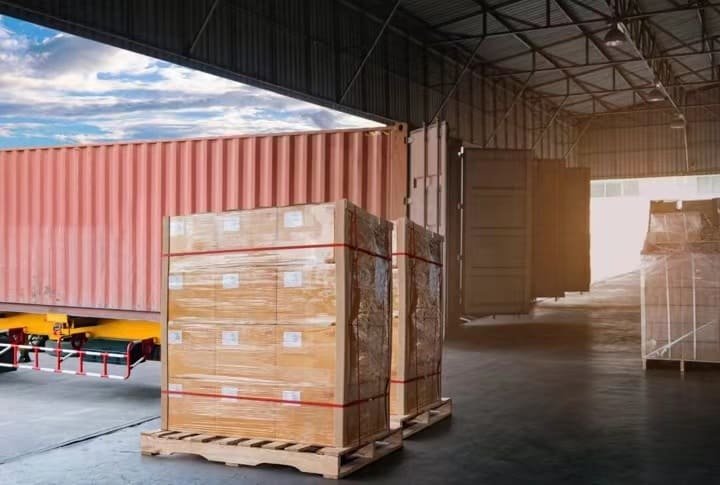
A useful way to present this is as a fictional but realistic case study that shows how a company uses Container Loading Checks (CLC) within a Deming/PDCA mindset. The data and situation below are illustrative, not taken from a specific published case.
Company background and problem
A mid‑size European home‑decor retailer sourced ceramic tableware from three factories in Asia. Over 18 months, the company saw a rising trend of shipment issues: cartons arrived crushed, mixed SKUs were found in the same master cartons, and destinations reported quantity shortages of 1–3% per container. Internally, this translated into re‑picking, re‑labeling, markdowns, and delayed store launches. Senior management suspected problems during loading and decided to introduce a formal Container Loading Check program as part of a Deming‑style improvement effort.
Before CLC, the company relied mainly on pre‑shipment inspections focused on product workmanship. Containers were loaded under factory supervision only, with no independent verification of container condition, stacking pattern, or sealing. Damage claims and shortage disputes with suppliers were frequent, and there was little objective data to identify root causes or patterns.
Plan: Designing CLC and Deming metrics
In the “Plan” phase, the quality and logistics teams mapped the export process and identified the container loading point as the last opportunity to control variation in packaging performance, handling practices, and shipping documentation. They defined clear CLC objectives: verify container suitability, confirm correct SKUs and quantities, check packaging integrity, and supervise loading and sealing. They also created standard checklists covering container inspection, product verification, packaging checks, loading pattern, weight distribution, and seal control, and required photographic evidence for each step.
To align with Deming’s philosophy, the team built a rating framework that went beyond pass/fail. For each container, they scored: (1) number and severity of nonconformities found at loading, (2) time lost due to corrections, (3) adherence to the documented loading plan, and (4) completeness and timeliness of the inspection report. At supplier level, rolling three‑month CLC scores were converted into a “Deming rating” from 1 (unstable, reactive) to 5 (stable, continuously improving), intended as a management signal rather than a punitive grade.
Do: Implementing CLC in operations
In the “Do” phase, the company piloted CLC on one high‑value product line across two factories. An independent inspection partner was contracted to attend every loading, with authority to pause loading if major issues were found. Inspectors arrived before loading, checked the empty container for structural problems or contamination, verified SKUs and counts against packing lists, and sampled cartons to check packaging quality and labelling. They then supervised loading to ensure even stacking, adequate dunnage, and protection of fragile items, and recorded seal numbers and photos before dispatch.
Initial implementation revealed recurring issues: some containers had water stains and odor from prior cargo; mixed SKUs were placed on the same pallet against instructions; and overhanging cartons created crush risk. Correcting these at the dock caused delays and minor trucking rescheduling, but the team accepted this as learning cost. All findings were logged in a central database tied to shipment and supplier codes so that future analysis would support Deming‑style, system‑level improvement.
Check: Analysing results and rating performance
After three months, the “Check” phase focused on comparing the new CLC data with pre‑pilot performance. Containers under CLC showed a clear reduction in destination nonconformities: short shipment incidents dropped; damage to ceramics decreased markedly; and claims related specifically to poor loading almost disappeared for the pilot suppliers. Just as important, the CLC scorecards showed that one factory consistently needed carton re‑stacking and extra bracing, while the other rarely required corrections but occasionally used sub‑standard pallets.
Using the Deming ratings, management classified Factory A as level 2 (many problems revealed at CLC, unstable loading practices) and Factory B as level 3 (generally stable but with specific weaknesses). Rather than treating the scores as grounds for penalty, the company used them as a basis for structured conversations with suppliers: sharing data, photos, and trends, and jointly identifying process, training, and packaging changes.
Act: Continuous improvement and system changes
In the “Act” phase, the retailer and suppliers implemented targeted improvements. Factory A redesigned its loading SOPs, introduced visual standards at the loading bay (photos of acceptable stacking and bracing), and retrained loaders. It also upgraded some secondary packaging for heavy SKUs. Factory B focused on pallet quality and introduced a simple internal check before pallets were staged for export. The retailer updated its packaging and loading specifications, integrating lessons from CLC findings and clarifying expectations in purchase contracts.
Over the next year, the company gradually expanded CLC from the pilot line to other high‑risk products and new suppliers, while reducing inspection frequency for factories that consistently maintained high Deming ratings. Suppliers that reached level 4–5 on the internal scale showed very few CLC findings, stable loading times, and almost no loading‑related claims at destination. For them, CLC evolved from intensive supervision to more of a periodic verification step, consistent with Deming’s idea of reducing reliance on end‑of‑line inspection as processes become capable.
Lessons from the case
This case illustrates how CLC, when seen through a Deming lens, shifts from being a transactional “policing” activity to a structured feedback mechanism embedded in the PDCA cycle. The key success factors were: defining CLC with clear objectives and data capture; translating results into supplier‑level ratings that signal process capability; using those ratings to drive collaboration rather than blame; and adapting inspection intensity as the system matured. In effect, the Deming‑style CLC program created visibility into a previously opaque process step, allowed systematic reduction of variation in loading practices, and supported a gradual move from reactive firefighting at the dock to proactive, design‑in quality in packaging and logistics.
White paper on Container Loading Check (CLC)
Container Loading Check (CLC) can be framed in a white‑paper style as a structured quality and risk‑management practice that verifies products, packaging, and loading at the last control point before a container is sealed. CLC aligns naturally with Deming’s philosophy by embedding the loading operation into a Plan–Do–Check–Act (PDCA) cycle instead of treating it as a one‑time policing activity.
1. Executive overview
CLC (also called container loading inspection or loading supervision) is an on‑site inspection performed at the factory, warehouse, or consolidation center while goods are being loaded into a container. Its purpose is to confirm that the correct products, in the right quantities and condition, are loaded into a suitable container, following agreed loading plans and documentation, and that the container is properly sealed. This control point reduces damage, shortages, and disputes in international supply chains by preventing errors from being “sealed in” and shipped worldwide.
2. CLC scope and process
A robust CLC program covers four domains: container, goods, packaging, and loading execution. First, the inspector assesses container integrity (structure, cleanliness, odor, moisture, visible defects) and suitability for the specific cargo, often following standardized condition checklists. Second, products and quantities are verified against purchase orders, packing lists, and shipping documents, using counts and sampling to confirm SKUs, assortments, and basic attributes.
Third, packaging is checked for strength, proper sealing, labelling, and compliance with buyer and transport requirements, because inadequate packaging is a major driver of in‑transit damage. Finally, the inspector supervises the loading pattern, weight distribution, use of dunnage and bracing, seal application, and documentation (including photos and loading reports), ensuring that execution matches the agreed loading plan.
3. Risk‑based “required” CLC
In practice, CLC is “required” (made mandatory by policy or contract) when the risk and impact of loading errors justify the cost of inspection. Typical triggers include high‑value or fragile goods, complex multi‑supplier consolidations, new or low‑maturity suppliers, or trade lanes with a history of damage and shortages. Many buyers formalize this in their quality plans, specifying that certain product categories or suppliers cannot ship without a passed CLC and valid loading report, effectively placing CLC as a gate in the logistics process.
A risk‑based approach is consistent with Deming’s emphasis on understanding variation and managing the system rather than reacting case by case. High‑risk combinations (e.g., fragile goods from a new supplier) receive systematic CLC, while consistently capable suppliers may be sampled less frequently once their process performance is demonstrated.
4. Integrating CLC with Deming’s PDCA
Deming’s PDCA cycle provides a useful framework for elevating CLC from a transactional service to a learning mechanism:
- Plan: Define standard container, packaging, and loading requirements, along with checklists, sampling plans, and reporting formats.
- Do: Execute CLC on live shipments, using independent or in‑house inspectors to gather structured data on findings, corrections, and loading performance.
- Check: Analyse CLC reports alongside arrival data (damage, shortages, claims) to identify patterns in container condition, packaging failures, or loading practices by supplier, product, or lane.
- Act: Update specifications, SOPs, training, and supplier development plans to remove root causes, not just fix individual shipments; then refine the risk‑based rules for when CLC is required.
In this way, each inspection becomes an input to system improvement rather than an end in itself, which is central to Deming’s thinking.
5. Deming‑style CLC “ratings”
A Deming‑oriented rating system for CLC focuses on the capability of the loading process and the effectiveness of feedback, not only on defect counts. Organizations can define indicators such as frequency and severity of CLC findings, rate of on‑site corrections, damage and shortage rates at destination linked to loading, adherence to loading plans, and timeliness/completeness of reports. Aggregated over time, these metrics can be turned into supplier or lane “maturity” ratings that show whether CLC is mainly uncovering chaos or merely confirming a stable process.
High ratings correspond to suppliers and routes where containers regularly pass CLC with minimal findings, load plans are respected, and post‑shipment issues are rare; such contexts may justify reducing inspection frequency, in line with Deming’s goal of minimizing dependence on final inspection as processes mature. Lower ratings signal unstable systems where CLC is still crucial and where management should invest in packaging redesign, process standardization, and staff training rather than relying on more inspection alone.
6. Strategic benefits
When embedded within a Deming framework, CLC delivers both tactical and strategic value. Tactically, it prevents immediate losses by catching wrong products, poor containers, and unsafe loading before shipment, thus avoiding delays, claims, and customer dissatisfaction. Strategically, CLC produces structured data on how well suppliers and logistics partners execute at the physical loading node, enabling continuous improvement of packaging, supplier management, and logistics design.
A white‑paper approach therefore positions CLC not merely as a cost or compliance requirement, but as a feedback‑rich control point that supports Deming’s broader aims: understanding variation, improving the system, and ultimately reducing the need for intensive inspection because the process itself has become capable and predictable.
Industrial Application of Container Loading Check (CLC)
Industrial application of Container Loading Check (CLC) means embedding systematic loading inspections into real supply chains—retail, manufacturing, and logistics—so that container stuffing becomes a controlled, continuously improving process rather than a variable, operator‑dependent activity. Interpreted through Deming’s philosophy, “Deming ratings” are essentially maturity or capability scores for how well each industrial setting plans, executes, measures, and improves its loading process using PDCA (Plan–Do–Check–Act).
Typical industrial sectors using CLC
Industries with fragile, high‑value, or configuration‑sensitive products (electronics, machinery, automotive parts, ceramics, furniture) rely heavily on CLC to avoid damage, shortages, and mis‑shipments, because the cost of failure at destination is high. Large retailers and brand owners use CLC at origin hubs and supplier factories to protect direct‑to‑store or omni‑channel flows, where rework after arrival is very costly or impossible.
Logistics providers, freight forwarders, and port operators increasingly deploy CLC—often in digital or automated form—to ensure load compliance, safe weight distribution, and adherence to regulatory and carrier rules, reducing accidents and fines. In bulk and scrap, equipment makers supply tilters and automated loading systems where integrated CLC‑style checks (container angle, fill level, load stability) ensure repeatable, safe loading cycles for industrial shippers.
How CLC is industrially implemented
Operationally, CLC in industry combines process standards, human inspection, and growing automation. Many firms codify container suitability, packaging, and loading patterns into SOPs and digital checklists, then require on‑site verification before the container is sealed and released to the carrier. Real‑world programs record container IDs, seal numbers, photos, nonconformities, and corrections per shipment, building a data set that links specific factories, products, and trade lanes with loading quality.
Advanced operations add technology: 3D vision and scanners measure free space, detect interference and collision risks, and compare actual loading to reference models, feeding results into quality systems. Optimization software generates step‑by‑step loading plans that respect stacking and stability constraints while maximizing utilization, and operators follow these plans on terminals at the dock, effectively turning “how to load” into a reproducible industrial process rather than trial‑and‑error on the warehouse floor.
Deming/PDCA use of CLC data
Seen through Deming’s lens, industrial CLC is valuable not just because it catches errors, but because it produces structured feedback that drives system improvement. In the Plan phase, companies define risk‑based rules for when CLC is mandatory (by product, supplier, or lane), plus standard container and loading criteria. In the Do phase, they execute CLC on live shipments, capturing standardized observations and metrics; in the Check phase, they analyse correlations between CLC findings, container utilization, and downstream damage/claim data; and in the Act phase, they change packaging specs, loading patterns, supplier training, or even sourcing strategies to reduce recurring causes.
“Deming ratings” in industrial use are often implicit capability scores: for each plant or supplier, firms track frequency and severity of CLC findings, need for on‑site corrections, space‑utilization performance, and damage/shortage rates at destination, then classify locations from low maturity (frequent intervention, unstable outcomes) to high maturity (CLC mostly confirms a stable, capable process). High‑rated operations may shift from 100% CLC to sampling plus strong in‑process controls, while low‑rated ones remain under tighter CLC coverage and receive focused improvement support.
Emerging trends in industrial CLC
Industrial CLC is moving from manual, paper‑based checks toward integrated, data‑driven systems. Digital CLC platforms are being linked with warehouse management (WMS) and transport management (TMS) systems, so planned loads, execution data, and inspection results form one continuous information flow. IoT sensors, RFID, and camera systems support remote or automated verification of load configuration, securing, and seal status, enabling central quality teams to monitor multiple sites in real time.
Operations research and AI models that historically focused on container loading optimization are now being embedded directly into industrial tools that generate feasible, quality‑constrained load plans, closing the loop between planning and on‑the‑ground CLC. In Deming terms, this convergence of planning algorithms, automated checks, and structured feedback allows industrial shippers and logistics providers to rate and continually upgrade their container loading systems, steadily reducing variation, dependence on end‑of‑line inspection, and the total cost of poor loading in global supply chains.