
GGBC Night Sky Pollution Reduction
GGBC Night sky pollution, also known as light pollution, occurs when artificial lighting is excessive, poorly directed, or unnecessarily bright. It can create unwanted skyglow, glare, light trespass, and disruption to natural nighttime conditions. In sustainable building design, reducing unnecessary outdoor lighting can improve energy efficiency, protect nocturnal ecosystems, and create a more comfortable nighttime environment. A GGBC-oriented approach to night sky pollution reduction focuses on designing outdoor lighting that provides adequate illumination while minimizing light directed upward GGBC and beyond the intended area.
What Is Night Sky Pollution?
Night sky pollution is primarily caused by artificial light escaping into the atmosphere or illuminating areas where it is not required. Excessive outdoor lighting can brighten the night sky, reduce visibility of stars, create glare for pedestrians and drivers, and affect wildlife that depends on natural day-night cycles.
The International Dark-Sky Association identifies several forms of light pollution, including skyglow, glare, light trespass, GGBC and excessive or unnecessary lighting. These effects can be reduced through better lighting design and responsible operation.
GGBC Approach to Reducing Light Pollution
A sustainable lighting strategy should begin with the principle of providing the right amount of light in the right place at the right time. Outdoor fixtures should be selected and positioned to illuminate pathways, entrances, parking areas, roads, GGBC and other required spaces without unnecessarily directing light toward the sky or neighbouring properties.
Full-cutoff or fully shielded luminaires can help direct light downward rather than upward. Appropriate fixture mounting heights, beam angles, spacing, and aiming should be considered during lighting design.
The GGBC material available through Global GBC identifies measures related to minimizing light pollution and reducing glare as part of sustainable site and building considerations. For project-specific requirements, designers should consult the applicable and current GGBC documentation available through Global GBC.
Key Strategies
Several practical measures can reduce night sky pollution:
- Use fully shielded outdoor lighting fixtures.
- Direct light only toward the required surface.
- Avoid unnecessary upward light.
- Select appropriate lighting levels instead of over-lighting.
- Use timers, astronomical controls, or occupancy sensors where suitable.
- Reduce lighting during periods of low activity.
- Use warm-colour lighting where appropriate for the application.
- Minimize glare at pedestrian and vehicle eye level.
- Prevent light trespass onto neighbouring properties and natural areas.
- Regularly maintain fixtures to ensure correct aiming and performance.
Benefits of Night Sky Protection
Reducing unnecessary artificial lighting can provide both environmental and operational benefits. Lower lighting levels and better controls can reduce electricity consumption and associated operating costs. Shielded fixtures can also improve visual comfort by reducing glare.
Nighttime lighting can affect insects, birds, bats, and other wildlife. The U.S. National Park Service notes that artificial light at night can disrupt wildlife behaviour, migration, feeding, GGBC and reproduction. (nps.gov)
Responsible lighting can therefore contribute to ecological protection while maintaining the functional lighting required for safety and security.
Importance for Sustainable Development
Night sky pollution reduction should be integrated into the overall site and landscape lighting design rather than treated as an afterthought. Lighting designers, architects, electrical engineers, landscape designers, GGBC and facility managers should coordinate fixture selection, lighting levels, controls, operating schedules, and maintenance requirements.
The objective is not to eliminate outdoor lighting but to use lighting efficiently and responsibly. A well-designed GGBC-oriented lighting system can provide safety and functionality while limiting glare, skyglow, light trespass, and unnecessary energy consumption.
Conclusion
GGBC Night Sky Pollution Reduction promotes a balanced approach to outdoor illumination. By using shielded fixtures, appropriate lighting levels, smart controls, suitable colour characteristics, and careful fixture placement, projects can significantly reduce unnecessary artificial light.
These strategies can help protect the night environment, reduce energy consumption, improve visual comfort, and support biodiversity. Early integration of lighting considerations into site planning is essential for achieving effective results.
What Is Night Sky Pollution and Why Is Reducing It Important in GGBC Projects?
Night sky pollution, commonly called light pollution, is the excessive, poorly directed, or unnecessary use of artificial light at night. It occurs when outdoor lighting creates unwanted skyglow, glare, light trespass, or excessive brightness, affecting the natural darkness of the nighttime environment. Common sources include streetlights, building façades, parking-area lighting, illuminated signs, security lights, GGBC and landscape lighting.
In a GGBC project, reducing night sky pollution is important because sustainable development considers not only energy efficiency but also the environmental and social impacts of artificial lighting. Properly designed outdoor lighting can provide necessary safety and visibility while limiting unnecessary light directed toward the sky, neighbouring properties, GGBC and natural habitats.
Understanding Night Sky Pollution
Skyglow is the brightening of the night sky caused by artificial light scattering in the atmosphere. Glare occurs when excessive or poorly controlled brightness reduces visual comfort or visibility. Light trespass happens when unwanted artificial light enters areas where it is not required, such as neighbouring properties or natural habitats.
The International Dark-Sky Association identifies these effects as major forms of light pollution and promotes responsible outdoor lighting practices that direct light only where it is needed.
Why Is Reduction Important in GGBC Projects?
1. Reduces Energy Consumption
Unnecessary outdoor lighting consumes electricity without providing corresponding functional benefits. Using efficient fixtures, appropriate illumination levels, timers, sensors, and other controls can reduce energy consumption GGBC and operating costs.
2. Protects Nocturnal Ecosystems
Artificial light can interfere with the natural behaviour of nocturnal wildlife. Birds, insects, bats, and other species may depend on natural darkness for feeding, navigation, migration, and reproduction. The U.S. National Park Service notes that artificial light at night can affect wildlife behaviour and ecological processes. (nps.gov)
3. Improves Visual Comfort
Excessive glare can make it difficult for pedestrians and drivers to see clearly. Properly shielded and carefully positioned lighting can improve visibility while reducing discomfort.
4. Minimizes Light Trespass
Outdoor lighting should remain within the intended site area. Controlling spill light can prevent unnecessary illumination of neighbouring properties, windows, roads, and environmentally sensitive areas.
5. Supports Sustainable Site Design
Night sky pollution reduction complements other GGBC sustainability objectives, including energy efficiency, responsible site planning, environmental protection, and occupant comfort. The goal is not to eliminate outdoor lighting but to ensure that lighting is efficient, controlled, purposeful, and appropriately directed.
Conclusion
Reducing night sky pollution is an important part of responsible outdoor lighting design. GGBC projects can address this issue through fully shielded fixtures, appropriate lighting levels, controlled beam angles, automatic controls, reduced operating hours, and careful fixture placement.
By providing light only where and when it is needed, projects can reduce energy waste, protect nocturnal ecosystems, minimize glare and light trespass, and create a more sustainable nighttime environment.
How Can Outdoor Lighting Design Help Minimize Light Pollution?
Outdoor lighting is essential for safety, security, navigation, and usability, but poorly designed lighting can create unnecessary skyglow, glare, light trespass, and excessive brightness. A GGBC-oriented lighting strategy aims to provide sufficient illumination while ensuring that light is directed only toward the areas where it is needed. Good lighting design can therefore reduce environmental impact without compromising safety or functionality.
1. Use Fully Shielded Fixtures
One of the most effective strategies is to use fully shielded or full-cutoff luminaires. These fixtures direct light downward and limit light emitted above the horizontal plane. This reduces the amount of artificial light escaping into the night sky.
For parking areas, pathways, driveways, and building entrances, fixture selection should be based on the required illumination, mounting height, beam distribution, and surrounding conditions rather than simply using higher-output lamps.
The International Dark-Sky Association recommends shielding outdoor lighting so that illumination is directed where it is needed and unwanted upward light is minimized.
2. Avoid Over-Lighting
More light does not necessarily mean better visibility or greater safety. Excessive illumination can create glare and contrast problems while increasing energy consumption. Lighting levels should be determined according to the actual function of each area.
For example, a pedestrian pathway may require a different lighting level from a vehicle entrance or parking area. Using appropriate lighting levels prevents unnecessary energy use and reduces the overall amount of artificial light emitted at night.
3. Control Light Direction
Outdoor luminaires should be carefully positioned and aimed to prevent light from spilling onto neighbouring properties, roads, windows, or natural areas. Proper beam angles and mounting arrangements can significantly reduce light trespass.
Lighting simulations can be used during design to evaluate illumination patterns and identify areas receiving excessive light.
4. Use Smart Lighting Controls
Timers, photocells, astronomical controls, occupancy sensors, and dimming systems can reduce lighting when full illumination is unnecessary. For example, lighting in a low-traffic parking area can be dimmed during periods of limited activity while maintaining appropriate safety levels.
Smart controls can therefore reduce both energy consumption and nighttime light exposure.
5. Select Appropriate Colour Characteristics
Lighting colour can also influence environmental impact. Where suitable, warmer-colour lighting can reduce short-wavelength emissions and may be preferable in areas close to wildlife habitats or environmentally sensitive zones. The appropriate colour specification should consider the project’s safety, visibility, ecological, and operational requirements.
6. Maintain Lighting Systems
Lighting performance can change over time because of damaged fixtures, vegetation growth, dirt accumulation, or incorrect fixture alignment. Regular maintenance and periodic inspections can ensure that luminaires continue directing light as intended.
Conclusion
Effective outdoor lighting design does not require eliminating nighttime illumination. Instead, the objective is to use the right amount of light, in the right location, at the right time. Fully shielded fixtures, appropriate illumination levels, controlled beam angles, smart controls, suitable colour characteristics, and regular maintenance can collectively minimize light pollution.
For GGBC projects, these measures can help reduce energy consumption, improve visual comfort, protect neighbouring properties, and limit disturbance to nocturnal ecosystems. Outdoor lighting should therefore be integrated into the overall sustainable site strategy from the early design stage.
What Types of Lighting Fixtures and Controls Are Effective for Protecting the Night Sky?
Protecting the night sky requires outdoor lighting that provides adequate visibility without creating unnecessary skyglow, glare, light trespass, or excessive illumination. In GGBC-oriented projects, fixture selection and lighting controls should be considered together so that light is provided only where and when it is required. Responsible outdoor-lighting guidance recommends targeted, low-level, controlled, and warmer-colour lighting.
1. Fully Shielded Fixtures
Fully shielded or full-cutoff luminaires are among the most effective fixture types for reducing upward light. They direct illumination downward toward roads, pathways, parking areas, entrances, and other intended surfaces. The light source is shielded so that it is not directly visible at typical viewing angles.
The U.S. National Park Service recommends recessed and fully shielded fixtures because they reduce direct upward light and glare.
2. Directional and Well-Aimed Fixtures
Lighting should be carefully aimed toward the required task area. Adjustable or directional fixtures can help prevent illumination from spilling onto neighbouring properties, windows, vegetation, or natural habitats.
Floodlights that project light laterally or upward should generally be avoided where they create unnecessary spill.
3. Warm-Coloured Lighting
Warm-colour LED lighting with a suitable correlated colour temperature can reduce the amount of short-wavelength blue light emitted at night. DarkSky recommends warmer-colour outdoor lighting where possible and identifies limiting blue-violet light as an important responsible-lighting principle.
The exact colour specification should be selected according to the project’s safety, visibility, ecological, and local regulatory requirements.
4. Dimming Controls
Dimmers allow lighting levels to be reduced when full illumination is unnecessary. This can be particularly useful in parking areas, pathways, campuses, and commercial properties where nighttime activity changes throughout the evening.
Reducing illumination during low-activity periods can lower energy consumption while also reducing the amount of artificial light entering the nighttime environment.
5. Motion and Occupancy Sensors
Motion sensors can activate or increase lighting when people or vehicles are detected. After the activity ends, fixtures can return to a lower setting or switch off.
This approach prevents outdoor areas from remaining fully illuminated throughout the night and is especially useful for security areas, service zones, pathways, and low-traffic parking spaces.
6. Timers and Photocells
Timers, astronomical controls, and photocells can automate lighting schedules. They can ensure that lights operate during required nighttime periods while avoiding unnecessary operation during daylight or low-use hours.
For more advanced projects, programmable lighting-management systems can combine scheduling, dimming, occupancy detection, and monitoring.
Conclusion
The most effective night-sky protection strategy combines fully shielded fixtures, precise light distribution, warm-colour lighting, appropriate illumination levels, dimming, motion sensors, and automated scheduling. No single fixture or control is sufficient on its own; the overall lighting system should be designed around the principle of using the right amount of light, in the right place, at the right time.
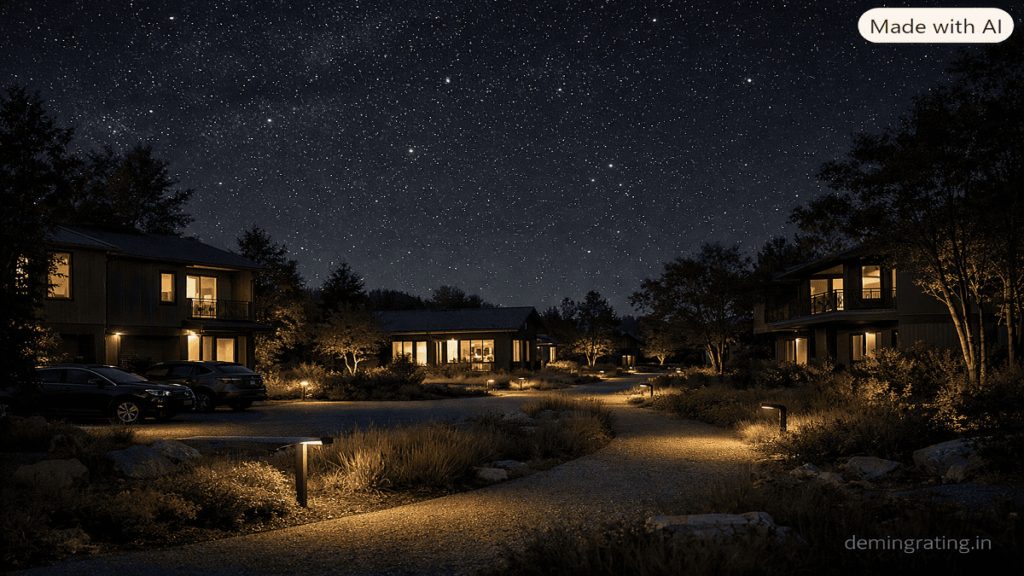
How Can Smart Lighting Systems Reduce Unnecessary Energy Use and Light Spill?
Smart lighting systems can play an important role in GGBC night sky pollution reduction by automatically controlling where, when, and how much outdoor lighting is used. Instead of operating fixtures continuously at maximum brightness, smart systems can respond to occupancy, time, daylight conditions, and activity levels. This approach can reduce unnecessary electricity consumption while limiting glare, light trespass, and upward light that contributes to skyglow.
DarkSky International recommends that responsible outdoor lighting be useful, targeted, low-level, controlled, and warm-coloured. Its guidance specifically identifies timers, motion detectors, and dimming as effective controls for reducing unnecessary lighting and energy use.
1. Occupancy and Motion Sensors
Motion and occupancy sensors can detect people or vehicles and activate lighting only when an area is being used. In parking areas, pedestrian pathways, service zones, and building entrances, lights can remain at a lower setting during inactive periods and increase when movement is detected.
This prevents spaces from being fully illuminated throughout the night when there is little or no activity.
2. Automated Dimming
Smart systems can automatically reduce lighting intensity during low-activity periods. For example, a parking area may operate at a higher lighting level during peak evening hours and automatically dim later at night.
Dimming reduces both electricity consumption and the amount of artificial light entering surrounding areas. DarkSky notes that active controls capable of reducing illumination or switching lighting off based on time or occupancy can substantially reduce light pollution and save energy.
3. Timers and Scheduling
Programmable timers and astronomical controls can establish lighting schedules based on sunset, sunrise, or specific operating hours. Decorative, landscape, signage, and security lighting can therefore be switched off or reduced when illumination is no longer necessary.
4. Targeted Lighting
Smart controls are most effective when combined with properly designed and shielded fixtures. Light should be directed toward the intended surface rather than toward neighbouring properties or the sky. This combination of shielding, precise aiming, and automated control can significantly reduce light spill.
5. Zone-Based Control
A smart lighting system can divide a site into separate zones. Parking areas, pathways, entrances, landscape areas, and service zones can each have different lighting schedules and intensity settings. This prevents the entire site from being illuminated at the same level regardless of actual use.
6. Energy and Environmental Benefits
Reducing operating hours and illumination levels can lower electricity consumption and operating costs. At the same time, limiting unnecessary artificial light can reduce impacts on nocturnal environments. DarkSky reports that quality outdoor lighting combined with controls such as dimmers, motion sensors, and timers can reduce energy use while helping protect the night environment.
Conclusion
For GGBC projects, smart lighting should follow a simple principle: use light only where it is needed, at the level required, and only for as long as necessary. Combining occupancy sensors, timers, astronomical controls, automated dimming, zone-based programming, and well-shielded fixtures can reduce unnecessary energy use while minimizing light spill and skyglow.
What Are the Environmental and Energy-Saving Benefits of Reducing Night Sky Pollution?
Reducing night sky pollution is an important part of responsible outdoor lighting and sustainable building design. Excessive artificial lighting can create skyglow, glare, light trespass, and unnecessary energy consumption. For GGBC projects, controlling outdoor illumination can provide benefits that extend beyond energy efficiency by supporting biodiversity, improving nighttime environmental conditions, and reducing unnecessary operating costs.
1. Reduces Electricity Consumption
One of the most direct benefits is lower electricity use. Outdoor lighting that operates continuously or at unnecessarily high brightness consumes energy even when spaces are unoccupied. Using efficient fixtures, appropriate illumination levels, dimming systems, timers, and occupancy sensors can reduce operating hours and energy demand.
DarkSky International recommends outdoor lighting that is useful, targeted, low-level, controlled, and warm-coloured. Its guidance also highlights controls such as timers, motion detectors, and dimming as ways to reduce unnecessary energy use.
2. Reduces Greenhouse Gas Emissions
Reducing electricity consumption can indirectly reduce greenhouse gas emissions associated with electricity generation, particularly where electricity is produced using fossil fuels. Efficient lighting and automated controls therefore support broader energy and climate objectives.
DarkSky notes that reducing unnecessary outdoor lighting can help lower energy consumption and associated carbon emissions.
3. Protects Nocturnal Wildlife
Natural darkness is an important part of many ecological systems. Artificial light at night can interfere with the behaviour of insects, birds, bats, reptiles, and other nocturnal species. It may affect feeding, navigation, migration, reproduction, and predator-prey relationships.
The U.S. National Park Service explains that artificial light can disrupt wildlife and ecological processes, particularly for species that rely on natural darkness.
Reducing unnecessary lighting around landscaped areas, water bodies, forests, and other sensitive habitats can therefore help minimize ecological disturbance.
4. Reduces Skyglow
Skyglow occurs when artificial light is scattered by particles and moisture in the atmosphere, creating a brightened nighttime sky. Upward-directed and poorly shielded lighting contributes significantly to this effect.
Using fully shielded fixtures and directing light toward the intended surface can reduce upward light and help preserve darker night skies. DarkSky identifies shielding and appropriate light direction as key principles for responsible outdoor lighting.
5. Minimizes Glare and Light Trespass
Reducing excessive lighting can improve visual comfort for pedestrians, drivers, and building occupants. Properly controlled fixtures can also prevent light from entering neighbouring properties or illuminating areas where it is not required.
This can create a more comfortable and visually balanced nighttime environment without sacrificing necessary safety lighting.
6. Lowers Operating and Maintenance Costs
Lower energy consumption can translate into reduced electricity expenses. Smart controls can further reduce operating hours and unnecessary fixture usage. Efficient lighting systems may also reduce maintenance requirements when appropriately designed and managed.
Conclusion
Reducing night sky pollution provides energy, environmental, ecological, and operational benefits. Efficient fixtures and smart controls can reduce electricity consumption and associated emissions, while shielded and appropriately directed lighting can minimize skyglow, glare, and light trespass.
For GGBC projects, the objective should not be to eliminate outdoor lighting but to ensure that it is necessary, targeted, controlled, and efficient. By using the right lighting level in the right location for the required period, projects can support energy conservation while protecting natural nighttime conditions and nocturnal ecosystems.
Case Study of GGBC Night Sky Pollution Reduction
A practical case study for GGBC Night Sky Pollution Reduction can be developed from the experience of a sustainable resort that incorporated energy-efficient outdoor lighting to reduce electricity consumption while also limiting unnecessary nighttime illumination. Global GBC’s published green-building material documents a resort project where energy-efficient compact fluorescent lamps were used for garden lighting specifically to reduce energy consumption and light pollution that could affect wildlife. The project also implemented an energy monitoring system that produced approximately 10% energy savings from controlled systems.
Project Background
The project was designed as a hospitality development where outdoor and garden lighting was important for guest experience, circulation, safety, and landscape aesthetics. However, conventional or excessive lighting could increase electricity consumption and create unnecessary illumination beyond the areas requiring visibility.
The project therefore incorporated energy-efficient lighting as part of its broader sustainability strategy. Garden lighting was selected with consideration for both energy performance and the potential impact of artificial light on wildlife.
Lighting Strategy
A key intervention was the replacement or use of energy-efficient lamps for garden lighting. According to the Global GBC case material, this approach helped minimize energy consumption while reducing light pollution that could affect wildlife. The project also incorporated an energy monitoring system capable of controlling timers for lighting, pumps, and other systems. This contributed to approximately 10% savings in energy use.
For a contemporary GGBC-oriented project, the strategy can be further strengthened through fully shielded fixtures, appropriate lighting levels, dimming, occupancy sensors, and astronomical timers.
Environmental Benefits
Reducing unnecessary landscape illumination can help protect nocturnal environments. Artificial light at night can affect wildlife behaviour and ecological processes, particularly for species that depend on darkness for navigation, feeding, migration, or reproduction.
This is particularly relevant for resorts, campuses, residential developments, and other projects containing significant vegetation or natural habitats.
Energy Benefits
Efficient lighting reduces the electricity required to illuminate outdoor spaces. Automated controls can provide additional savings by switching lights off or reducing illumination during periods when areas are unoccupied.
The Global GBC case study also reported that energy-efficient lighting produced substantial economic benefits, with the documented lighting investment having a relatively short payback period.
Lessons From Other Projects
A useful international example is the Highland Center in New Hampshire, where exterior lighting was replaced with LED-based dark-sky-friendly fixtures. DarkSky International reports that the 2013 retrofit produced a significant improvement in glare and skyglow while improving the effectiveness of astronomy programming at the facility.
Similarly, Tucson, Arizona, implemented an outdoor lighting ordinance requiring fully shielded lighting and limits on nighttime light output, demonstrating how lighting policy and fixture design can work together to protect night skies.
Key GGBC Strategies
Based on these examples, a GGBC-oriented project can incorporate:
- Fully shielded outdoor luminaires.
- Energy-efficient LED fixtures.
- Appropriate lighting levels instead of over-lighting.
- Warm-colour lighting where appropriate.
- Timers and astronomical controls.
- Occupancy and motion sensors.
- Dimming during low-activity periods.
- Careful fixture placement around landscaped and ecological areas.
- Regular inspection and aiming of outdoor fixtures.
- Energy monitoring for outdoor lighting systems.
Current DarkSky guidance similarly emphasizes minimizing skyglow, light trespass, and obtrusive light through responsible luminaire design.
Conclusion
This case study demonstrates that GGBC Night Sky Pollution Reduction can be achieved by combining efficient lighting technology with responsible lighting controls and fixture placement. The documented resort example shows that energy-efficient garden lighting can simultaneously address energy consumption and concerns about light pollution and wildlife.
The broader lesson for developers is that night-sky protection should not be treated as simply switching lights off. Instead, projects should provide the right amount of light, in the right location, for the required period. Combining efficient fixtures, shielding, controls, and appropriate operating schedules can create safer and more functional outdoor spaces while reducing energy waste and environmental disturbance.
White Paper on GGBC Night Sky Pollution Reduction
Executive Summary
Night sky pollution, or artificial light pollution, is an increasingly important consideration in sustainable site and building design. Excessive or poorly directed outdoor lighting can produce skyglow, glare, light trespass, energy waste, and ecological disturbance. A GGBC-oriented approach seeks to provide necessary illumination for safety and functionality while minimizing unnecessary light entering the atmosphere or surrounding environments.
The National Park Service defines light pollution as excess or inappropriate artificial outdoor light and identifies glare, light trespass, and skyglow as its principal forms. (National Park Service) DarkSky International similarly recommends that responsible outdoor lighting should be useful, targeted, low-level, controlled, and warm-coloured. (DarkSky International)
For GGBC projects, night sky protection should therefore be integrated into site planning, landscape design, electrical design, building façades, parking areas, security lighting, signage, and operational controls.
1. Introduction
Artificial lighting is essential for modern buildings and communities. Outdoor illumination supports pedestrian movement, vehicle circulation, security, entrances, public spaces, and nighttime activities. However, excessive lighting can create environmental impacts when fixtures are overpowered, poorly positioned, operated for unnecessarily long periods, or allowed to emit light upward and sideways.
The objective of night sky pollution reduction is not to eliminate outdoor lighting. Instead, it is to ensure that lighting is provided where it is needed, at the appropriate intensity, for the required duration, and with minimal unwanted spill.
The National Park Service recognizes natural night skies as important ecological and cultural resources and recommends minimizing artificial light from facilities to protect natural lightscapes. (National Park Service)
2. Understanding Night Sky Pollution
Night sky pollution occurs when artificial illumination changes the natural darkness of the nighttime environment. Three major forms are:
- Skyglow: Brightening of the night sky caused by artificial light scattering in the atmosphere.
- Glare: Excessive brightness that interferes with visual comfort or visibility.
- Light trespass: Unwanted light entering areas where illumination is not required.
Outdoor fixtures that emit light upward or sideways are significant contributors to skyglow. Shielded fixtures that direct light downward can substantially reduce direct upward emissions. (National Park Service)
3. Importance in GGBC Projects
Night sky pollution reduction supports several sustainability objectives simultaneously.
Energy Efficiency
Unnecessary outdoor lighting consumes electricity without providing additional functional value. Reducing operating hours, illumination levels, and excessive lighting can lower energy demand and operating costs.
The National Park Service identifies properly designed outdoor lighting as a means of improving energy efficiency and reducing carbon footprint. (National Park Service)
Ecological Protection
Artificial light at night can interfere with wildlife behaviour and ecological processes. Research reviewed by the National Park Service includes hundreds of studies documenting effects of artificial nighttime light on wildlife and ecosystems. (National Park Service)
This makes night sky protection particularly relevant for projects near vegetation, water bodies, forests, wildlife habitats, and other ecologically sensitive locations.
Visual Comfort
Poorly controlled lighting can create glare and reduce nighttime visibility. Increasing light output does not necessarily improve safety; excessive brightness can create contrast and glare problems. The National Park Service therefore recommends using the minimum lighting level necessary for the task. (National Park Service)
4. GGBC Night Sky Pollution Reduction Strategies
4.1 Use Fully Shielded Fixtures
Fully shielded or full-cutoff luminaires direct light downward rather than toward the sky. They are particularly suitable for parking areas, pedestrian pathways, roads, entrances, service areas, and landscape lighting.
Shielding also helps reduce light trespass and glare.
4.2 Avoid Over-Lighting
Lighting levels should correspond to the actual function of the space. Higher brightness should not automatically be considered better.
Designers should evaluate the task, surrounding conditions, pedestrian and vehicle movement, security requirements, and applicable lighting standards before determining illumination levels.
4.3 Use Smart Lighting Controls
Timers, motion sensors, photocells, astronomical controls, and dimming systems can reduce lighting when areas are unoccupied or when full illumination is unnecessary.
DarkSky International recommends controls that allow lighting to be available when needed, dimmed when possible, and switched off when it is no longer required.
4.4 Select Appropriate Colour Temperature
Warm-colour lighting can reduce short-wavelength blue-violet emissions. The National Park Service identifies warm-colour LEDs as appropriate for many outdoor applications and notes that warmer lighting can reduce unintended impacts compared with higher-colour-temperature sources.
The appropriate colour temperature should nevertheless be determined according to project requirements, local regulations, safety needs, and ecological sensitivity.
4.5 Control Light Direction
Fixtures should be positioned and aimed so that illumination remains within the intended area. This is especially important near property boundaries, residential windows, landscaped areas, water bodies, and wildlife habitats.
4.6 Reduce Decorative Uplighting
Architectural and landscape uplighting can contribute substantially to unnecessary upward illumination. Where decorative lighting is required, designers should consider alternatives such as low-level, shielded, carefully aimed fixtures and limited operating schedules.
5. Lighting Controls and Automation
Smart controls provide an opportunity to combine energy efficiency with night sky protection. A building or campus can divide lighting into separate zones and establish different schedules for parking, pathways, entrances, landscape areas, and security zones.
For example, lighting can operate at normal levels during periods of high activity, automatically dim during quieter periods, and increase temporarily when occupancy or movement is detected.
The National Park Service specifically recommends timers, motion detectors, and dimmers to provide appropriate lighting only when required. (National Park Service)
6. Parking and Outdoor Areas
Parking areas can be significant sources of nighttime light pollution because they often contain numerous high-mounted fixtures. GGBC-oriented design should consider:
- Fully shielded luminaires.
- Appropriate pole heights and spacing.
- Controlled beam distribution.
- Lower lighting levels during low-activity periods.
- Motion detection where appropriate.
- Automatic scheduling.
- Prevention of light spill beyond property boundaries.
- Warm-colour lighting where suitable.
These measures can reduce both energy consumption and unnecessary illumination.
7. Landscape and Ecologically Sensitive Areas
Landscape lighting should be carefully evaluated because vegetation and natural areas may provide habitat for nocturnal species. Lighting should be avoided or minimized near sensitive ecological zones where illumination is not necessary.
DarkSky International emphasizes considering how outdoor lighting affects wildlife and their habitats when determining whether lighting is necessary.
8. Measurement and Documentation
A professional GGBC project should document its night-lighting strategy during design and construction. Useful documentation can include:
- Outdoor lighting layouts.
- Fixture specifications.
- Photometric calculations.
- Fixture mounting heights.
- Beam distribution information.
- Lighting control schedules.
- Lighting power calculations.
- Photographs of installed fixtures.
- Evidence of shielding.
- Site lighting simulations where appropriate.
- Commissioning and maintenance records.
Where applicable, project teams should verify requirements against the current GGBC documentation rather than relying on older rating-system versions.
9. Benefits of Night Sky Pollution Reduction
A well-designed outdoor lighting system can provide multiple benefits:
Environmental: Reduced disturbance to nocturnal ecosystems and preservation of natural darkness.
Energy: Lower electricity consumption through efficient fixtures, appropriate lighting levels, dimming, and reduced operating hours.
Economic: Lower energy and potentially reduced maintenance costs.
Occupant Comfort: Less glare and improved nighttime visual conditions.
Community: Reduced light trespass onto neighbouring properties and public areas.
Astronomical: Improved visibility of stars and celestial features by reducing skyglow.
DarkSky International reports that responsible outdoor lighting can save energy and money while reducing light pollution and wildlife disruption.
10. Implementation Framework
A successful GGBC-oriented approach can follow a simple sequence:
- Assess existing and proposed outdoor lighting.
- Identify areas where lighting is genuinely necessary.
- Define appropriate lighting levels for each activity.
- Select shielded and efficiently distributed fixtures.
- Control operating hours using timers, sensors, and dimming.
- Minimize upward and sideways light emissions.
- Protect sensitive ecological and neighbouring areas.
- Commission the system after installation.
- Monitor energy performance and lighting conditions.
- Maintain fixtures and controls throughout the building’s operational life.
This approach reflects the widely accepted principle of using light only when necessary, directing it where required, keeping it no brighter than necessary, controlling its duration, and selecting suitable colour characteristics. (DarkSky International)
Conclusion
GGBC Night Sky Pollution Reduction represents an important intersection of energy efficiency, environmental protection, responsible site planning, and occupant comfort. The most effective strategy is not simply to reduce the number of fixtures but to improve the quality and control of the entire outdoor lighting system.
Fully shielded luminaires, appropriate lighting levels, precise aiming, warm-colour sources, dimming, occupancy sensors, timers, and careful operating schedules can collectively reduce skyglow, glare, light trespass, energy waste, and ecological disturbance.
The fundamental principle is straightforward: use the right amount of light, in the right place, at the right time. Integrating this principle during the early design stage allows GGBC projects to maintain safety and functionality while protecting the natural nighttime environment.
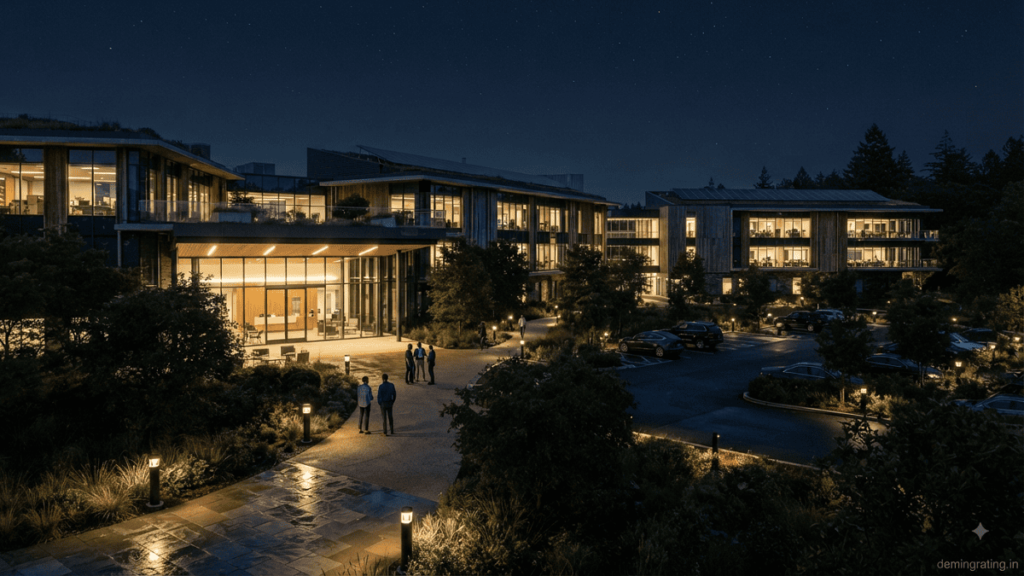
Industry Application of GGBC Night Sky Pollution Reduction
The application of GGBC Night Sky Pollution Reduction extends across residential, commercial, hospitality, healthcare, industrial, institutional, infrastructure, and urban-development projects. Outdoor lighting is necessary for safety, circulation, security, and nighttime activities, but poorly designed systems can create skyglow, glare, light trespass, energy waste, and disturbance to wildlife. A GGBC-oriented approach focuses on providing useful illumination while controlling its direction, intensity, duration, and colour.
DarkSky International and the Illuminating Engineering Society recommend five principles for responsible outdoor lighting: lighting should be useful, targeted, low-level, controlled, and warm-coloured. Applying these principles across different industries can reduce light pollution while maintaining functional and safe outdoor environments.
1. Residential Development
Residential communities can reduce night sky pollution through shielded pathway lights, controlled entrance lighting, low-level landscape illumination, and automated security lighting. Motion sensors can activate lighting when movement is detected, while timers can reduce unnecessary illumination during low-activity periods.
Lighting should also be positioned to prevent glare entering homes or neighbouring properties. This improves nighttime visual comfort while reducing unnecessary electricity consumption.
2. Commercial and Office Buildings
Commercial buildings often have extensive parking areas, pedestrian routes, façades, signage, and entrances requiring nighttime illumination. These areas can become significant sources of light pollution if fixtures are overpowered or poorly aimed.
Projects can use fully shielded luminaires, carefully designed photometric layouts, dimming systems, occupancy controls, and scheduled lighting. Façade lighting should be limited to areas where architectural illumination is genuinely required.
DarkSky guidance recommends directing light downward and preventing illumination from spilling beyond the intended area.
3. Hospitality and Resort Projects
Hotels and resorts frequently use decorative landscape lighting, pathway illumination, façade lighting, and recreational-area lighting. Because these developments may contain extensive landscaping and natural habitats, excessive nighttime illumination can have ecological consequences.
A GGBC-oriented resort can use warm-coloured, shielded fixtures, low-level pathway lighting, and scheduled landscape illumination. Lighting near natural vegetation and wildlife-sensitive areas should be minimized wherever practical.
DarkSky notes that responsible lighting can reduce light pollution while minimizing wildlife disruption and conserving energy.
4. Industrial and Warehouse Facilities
Industrial sites generally require lighting for loading areas, service roads, storage yards, security zones, and worker circulation. These spaces can require significant illumination, particularly at night.
Instead of continuously operating all fixtures at maximum output, facilities can use zoned lighting, occupancy sensors, dimming, and automated schedules. Shielded high-efficiency luminaires can direct light toward work surfaces while reducing upward and sideways emissions.
5. Healthcare Facilities
Hospitals and healthcare campuses operate around the clock, making outdoor lighting essential for patients, visitors, staff, emergency access, and security. However, lighting does not need to be equally intense throughout the entire site.
A zone-based strategy can maintain appropriate illumination around emergency entrances and critical access routes while reducing lighting in low-traffic areas. Carefully controlled lighting can also reduce glare for patients and surrounding residents.
6. Educational and Institutional Campuses
Schools, universities, and research campuses can use smart lighting systems to coordinate illumination across pedestrian paths, sports areas, parking facilities, and building entrances.
Lighting schedules can correspond with campus operating hours, while motion sensors and dimming can reduce illumination after activities conclude. Landscape lighting should be carefully controlled around trees, gardens, and ecological areas.
7. Parking Areas and Transportation Facilities
Parking lots, garages, roads, and transportation facilities are particularly important because they often use numerous outdoor fixtures. A 2026 DarkSky technical paper highlights that unnecessary and untargeted light from applications such as streets, sidewalks, and parking lots contributes to light pollution and wasted illumination.
Industry strategies include:
- Fully shielded fixtures.
- Appropriate pole heights and spacing.
- Controlled beam distribution.
- Lower illumination during low-activity periods.
- Dimming and occupancy detection.
- Automated operating schedules.
- Prevention of light spill beyond site boundaries.
8. Ports and Industrial Infrastructure
Ports and marine terminals require substantial lighting for safety, cargo handling, navigation, and security. However, excessive illumination can affect surrounding communities and aquatic or terrestrial ecosystems.
DarkSky International has developed specific guidance for port marine terminal lighting that addresses skyglow, light trespass, glare, and potential impacts on people, flora, and fauna.
This demonstrates how responsible lighting principles can be adapted to specialized industrial applications without compromising operational requirements.
9. Urban and Mixed-Use Development
Large urban developments can integrate night sky protection into master planning through lighting zones, municipal requirements, controlled signage, pedestrian-lighting strategies, and coordinated building and landscape illumination.
DarkSky provides outdoor-lighting code guidance developed with lighting professionals, environmental specialists, and city planners, demonstrating how responsible lighting principles can be incorporated into broader planning frameworks.
Key Industry Benefits
Implementing GGBC-oriented night sky strategies can provide:
- Reduced outdoor lighting energy consumption.
- Lower operating costs.
- Reduced glare and light trespass.
- Better nighttime visual comfort.
- Protection of nocturnal ecosystems.
- Reduced skyglow.
- Improved visibility of natural night skies.
- More efficient lighting management.
- Better integration of lighting with sustainable site planning.
DarkSky’s responsible-lighting principles emphasize that properly designed lighting can conserve energy, reduce light pollution, and minimize wildlife disruption.
Conclusion
The industry application of GGBC Night Sky Pollution Reduction demonstrates that sustainable outdoor lighting is relevant across virtually every type of development. Residential communities can control security and landscape lighting, commercial buildings can optimize parking and façade illumination, resorts can protect natural surroundings, industries can manage large service areas, and institutions can coordinate lighting with operating schedules.
The most effective approach is to combine shielded fixtures, appropriate light levels, precise aiming, smart controls, suitable colour characteristics, and regular maintenance. Rather than eliminating necessary outdoor lighting, GGBC-oriented projects should ensure that light is used only where it provides a clear purpose.
The fundamental principle is simple: use light where it is needed, at the level required, for the time necessary, while preventing unnecessary spill into the sky and surrounding environment. This approach can help create safer, more energy-efficient, environmentally responsible, and visually comfortable developments.
Ask FAQs
What is night sky pollution in GGBC projects?
Night sky pollution refers to excessive or poorly directed artificial light that creates skyglow, glare, light trespass, and unnecessary illumination. In GGBC projects, reducing it involves designing outdoor lighting to provide adequate visibility while minimizing light directed toward the sky and surrounding areas.
How can GGBC projects reduce outdoor light pollution?
Projects can use fully shielded fixtures, appropriate illumination levels, warm-colour lighting, precise fixture placement, and automated controls. Timers, dimmers, photocells, and occupancy sensors can further reduce unnecessary lighting during low-activity periods.
Can reducing night sky pollution save energy?
Yes. Reducing excessive lighting, shortening operating hours, and using efficient fixtures can lower electricity consumption. Smart controls can automatically dim or switch off lighting when areas are unoccupied, reducing both energy use and operating costs.
How does night sky protection benefit wildlife?
Artificial light at night can disrupt nocturnal wildlife by affecting navigation, feeding, migration, reproduction, and predator-prey relationships. Minimizing unnecessary lighting near vegetation, water bodies, and natural habitats can help reduce these ecological impacts.
What lighting fixtures are best for protecting the night sky?
Fully shielded or full-cutoff luminaires are highly effective because they direct light toward the intended surface rather than upward. Combining these fixtures with dimming, motion sensors, timers, and suitable warm-colour lighting can further reduce glare, skyglow, light trespass, and energy waste.
Table of Contents
Disclaimer: This content is for general informational purposes only and does not constitute professional or certification advice. Refer to the latest applicable GGBC guidelines at globalgbc.org for project-specific requirements.