
GGBC Natural Topography and Landscape
Natural topography and landscape are important components of sustainable site planning. The existing shape of the land, vegetation, soil, drainage patterns, and natural features of a site can significantly influence building design, water management, biodiversity, thermal comfort, and long-term environmental performance. A GGBC-oriented approach encourages project teams to understand and work with the existing site rather than unnecessarily modifying natural conditions.
What Is Natural Topography?
Natural topography refers to the existing physical form and elevation of land, including slopes, contours, valleys, ridges, and relatively level areas. Understanding topography before construction allows architects GGBC and engineers to position buildings, roads, parking areas, and drainage systems more efficiently.
Instead of extensively cutting and filling the land, sustainable site planning can follow existing contours wherever practical. This can reduce soil disturbance, minimize excavation, lower construction impacts, and help preserve natural drainage patterns. The U.S. Environmental Protection Agency (EPA) highlights the importance of protecting natural landscape features and using site planning approaches that reduce stormwater impacts.
Importance of Natural Landscape
Natural landscapes include existing trees, shrubs, groundcover, grasslands, water features, and other ecological elements. Preserving these features can provide several environmental benefits. Vegetation can reduce surface temperatures through shade and evapotranspiration, stabilize soil, support biodiversity, GGBC and improve the visual quality of a development.
Existing mature trees are particularly valuable because they can provide immediate shade and contribute to carbon storage and habitat. Where removal is unavoidable, projects can consider appropriate replacement planting and landscape restoration.
GGBC-Oriented Site Planning
A sustainable approach to natural topography and landscape can include:
- Conducting a detailed site assessment before design
- Preserving existing contours wherever feasible
- Minimizing unnecessary excavation and filling
- Protecting mature trees and significant vegetation
- Maintaining natural drainage patterns
- Using native or climate-appropriate plant species
- Reducing unnecessary impervious surfaces
- Integrating landscaped open spaces
- Controlling soil erosion during construction
- Incorporating rainwater and stormwater-management measures
Green infrastructure techniques such as bioswales, rain gardens, vegetated areas, and permeable surfaces can work with the site’s natural characteristics to manage stormwater. The EPA identifies green infrastructure as an approach that can help manage rainfall while providing environmental and community benefits. (epa.gov)
Benefits of Preserving Natural Features
Maintaining natural topography and landscape can reduce construction-related environmental disturbance and support more efficient water management. Vegetation can help reduce heat buildup, improve air quality, provide habitat, GGBC and enhance outdoor comfort. Working with existing slopes can also help reduce the quantity of soil that needs to be excavated, transported, or disposed of.
From a broader sustainability perspective, protecting natural site characteristics can contribute to climate resilience, biodiversity conservation, water management, and improved occupant experience.
Conclusion
Natural topography and landscape should be considered fundamental elements of sustainable development rather than obstacles to construction. A GGBC-oriented project can achieve better environmental performance by understanding the existing site and integrating its natural characteristics into the building and landscape design.
#GreenInfrastructure
What Is Natural Topography and Why Is It Important in GGBC Site Planning?
Natural topography refers to the existing physical form and elevation of a site, including its slopes, contours, ridges, valleys, low-lying areas, and relatively level zones. It also relates closely to natural drainage patterns, soil conditions, vegetation, GGBC and other physical characteristics of the land. In GGBC-oriented site planning, understanding these existing conditions before construction is essential for developing a sustainable and environmentally responsive project.
Why Is Natural Topography Important?
Natural topography influences where buildings, roads, parking areas, landscape zones, and stormwater-management systems can be located. Instead of significantly reshaping the land through extensive excavation, cutting, and filling, sustainable site planning seeks to work with existing site conditions wherever practical. Minimizing unnecessary changes to natural topography can reduce soil disturbance, erosion, compaction, GGBC and construction-related environmental impacts. EPA guidance on sustainable development similarly recommends minimizing changes to natural topography, soils, and vegetation where possible.
1. Reduces Land Disturbance
Working with existing contours can reduce the requirement for large-scale earthwork. Less excavation and filling can mean lower construction impacts, reduced soil displacement, and better preservation of existing site characteristics.
2. Supports Natural Drainage
Topography determines how rainwater moves across a site. Maintaining natural slopes and drainage patterns can help direct runoff appropriately and create opportunities for rain gardens, bioswales, infiltration areas, GGBC and other green infrastructure. EPA notes that site-specific physical characteristics should be evaluated when selecting and designing green infrastructure systems.
3. Protects Vegetation and Soil
Natural topography often supports existing trees, vegetation, and healthy soil systems. Preserving these features can support biodiversity, reduce erosion, provide shade, and improve the ecological quality of the site.
4. Improves Sustainable Site Design
Building orientation and site layout can be adjusted to respond to existing slopes, vegetation, sunlight, wind, and drainage. This can create a more integrated relationship between the building and its surroundings. EPA recognizes that sustainable site planning can incorporate natural areas and green infrastructure to provide environmental and community benefits.
5. Supports Stormwater Management
Preserving natural landscape features and reducing unnecessary impervious surfaces can help manage rainfall closer to where it falls. Green infrastructure can use vegetation, soil, and permeable surfaces to infiltrate, store, and manage stormwater while providing additional environmental benefits.
GGBC-Oriented Best Practices
A project can incorporate natural topography and landscape by conducting a detailed site assessment, preserving existing contours where feasible, protecting mature trees, minimizing mass grading, maintaining natural drainage pathways, using native or climate-appropriate vegetation, and integrating green infrastructure into the landscape design.
The objective is not simply to leave the site untouched, but to design with the site’s natural characteristics rather than unnecessarily working against them. This approach can improve environmental performance while creating a more resilient and visually integrated development.
#WaterManagement
How Can Preserving the Existing Landscape Reduce Environmental Impact?
Preserving the existing landscape is an important strategy in sustainable site development because natural vegetation, mature trees, soil, and existing ecological features already provide valuable environmental functions. Instead of removing these features and rebuilding the landscape after construction, a GGBC-oriented approach seeks to retain suitable existing vegetation and natural areas wherever practical. This can reduce construction impacts while maintaining important ecosystem services.
1. Reduces Land Disturbance
Preserving existing vegetation generally requires less clearing, grading, and soil disturbance. Large-scale removal of trees and vegetation can expose soil to erosion and increase the amount of earthwork required during construction. Retaining natural site features can therefore reduce the environmental disturbance associated with development.
EPA guidance recommends protecting natural features and minimizing unnecessary site disturbance as part of environmentally responsible development. (epa.gov)
2. Protects Mature Trees and Vegetation
Mature trees provide benefits that newly planted trees may take many years to achieve. Existing trees can provide shade, absorb carbon dioxide, intercept rainfall, filter pollutants, and provide habitat for birds and insects. Their canopies can also reduce surface temperatures around buildings, pedestrian areas, and parking spaces.
Preserving established vegetation therefore supports both ecological and human benefits. The U.S. Department of Agriculture’s Forest Service highlights the role of urban trees in providing cooling, stormwater, air-quality, and other ecosystem benefits. (fs.usda.gov)
3. Helps Control Stormwater
Existing vegetation and healthy soil can absorb and retain rainfall, reducing the volume and speed of surface runoff. Tree canopies can intercept rainfall before it reaches paved surfaces, while roots and soil can support infiltration.
Maintaining these natural systems can reduce pressure on conventional drainage infrastructure and support more sustainable stormwater management. EPA identifies vegetation, soil, and other natural systems as important components of green infrastructure. (epa.gov)
4. Reduces Heat Buildup
Trees and vegetation provide shade and cool the surrounding environment through evapotranspiration. Preserving existing landscaped areas can therefore help reduce surface temperatures and contribute to mitigation of the urban heat island effect. This can be particularly valuable around roofs, parking areas, walkways, and outdoor gathering spaces.
5. Supports Biodiversity
Existing vegetation can provide established habitats for birds, insects, microorganisms, and other organisms. Preserving native trees and natural landscape areas can help maintain local biodiversity and ecological connectivity. Removing natural vegetation and replacing it entirely with ornamental landscaping can reduce these ecological functions.
6. Reduces Resource Consumption
Preserving an existing landscape can reduce the resources required for site restoration, including new soil, plants, irrigation systems, fertilizers, and maintenance. It can also reduce the transportation and disposal associated with removed vegetation and excavated materials.
Conclusion
Preserving the existing landscape can significantly reduce the environmental impact of development by minimizing land disturbance, protecting mature vegetation, supporting biodiversity, improving stormwater management, reducing heat buildup, and conserving natural resources. For GGBC-oriented site planning, the most effective approach is to evaluate existing site conditions at the beginning of the design process and integrate valuable natural features into the proposed development.
#Biodiversity
What Strategies Can Be Used to Protect Natural Vegetation, Soil, and Landforms During Development?
Protecting natural vegetation, soil, and landforms during construction is an important part of sustainable site planning. A GGBC-oriented approach should begin with a detailed assessment of existing site conditions and seek to minimize unnecessary disturbance. Preserving natural features can reduce erosion, protect biodiversity, maintain natural drainage, and reduce the environmental impacts associated with extensive clearing, grading, and excavation. The U.S. Environmental Protection Agency (EPA) recommends limiting land disturbance, protecting vegetation, and avoiding unnecessary modification of natural drainage features during site development.
1. Conduct a Detailed Site Assessment
Before construction begins, the project team should identify existing trees, vegetation, soil types, slopes, drainage channels, wetlands, natural habitats, and other sensitive landforms. This information can guide building placement, road alignment, grading, and landscape planning.
2. Preserve Existing Vegetation
Mature trees and valuable vegetation should be retained wherever practical. Clearly marked protection zones can be established around trees and sensitive landscape areas so that construction equipment, material storage, and excavation do not damage roots or vegetation.
3. Minimize Clearing and Grading
Construction should disturb only the area necessary for the proposed development. Excessive clearing, cutting, filling, and grading can increase erosion and sediment movement. Designing buildings and infrastructure to respond to existing contours can help reduce unnecessary earthwork. EPA guidance specifically recommends limiting clearing, grading, and cut-and-fill activities to reduce erosion and sediment loss.
4. Protect Topsoil
Existing topsoil should be protected from unnecessary removal and compaction. Where topsoil must be removed, it can be carefully stockpiled and reused during landscape restoration. Heavy equipment should be kept away from designated soil-protection areas because soil compaction can reduce infiltration and negatively affect vegetation growth.
5. Implement Erosion and Sediment Controls
During construction, measures such as silt fencing, sediment barriers, stabilized construction entrances, temporary drainage controls, mulching, and vegetation establishment can reduce soil erosion and prevent sediment from entering drainage systems. EPA emphasizes erosion and sediment control during installation to prevent sediment accumulation and protect green infrastructure.
6. Preserve Natural Landforms and Drainage
Natural slopes, valleys, drainage channels, and other significant landforms should be retained wherever feasible. Altering natural drainage can increase runoff, erosion, flooding, and downstream impacts. Protecting natural areas such as wetlands, riparian zones, and steep hillsides can provide important water-quality and stormwater benefits.
7. Use Native and Climate-Appropriate Vegetation
Where landscape restoration or additional planting is required, selecting native or locally appropriate species can support biodiversity and reduce long-term irrigation and maintenance requirements. Vegetation can also stabilize soil and contribute to stormwater management.
8. Integrate Green Infrastructure
Rain gardens, bioswales, permeable surfaces, vegetated areas, and other green infrastructure can work with natural site characteristics to manage rainfall. These systems use plants, soil, and natural processes such as infiltration and evapotranspiration to manage stormwater.
Conclusion
Protecting natural vegetation, soil, and landforms requires an integrated strategy that begins before construction and continues throughout the project lifecycle. Site assessment, vegetation protection, limited grading, topsoil management, erosion control, preservation of natural drainage, appropriate planting, and green infrastructure can collectively reduce environmental disturbance.
#LandscapeDesign
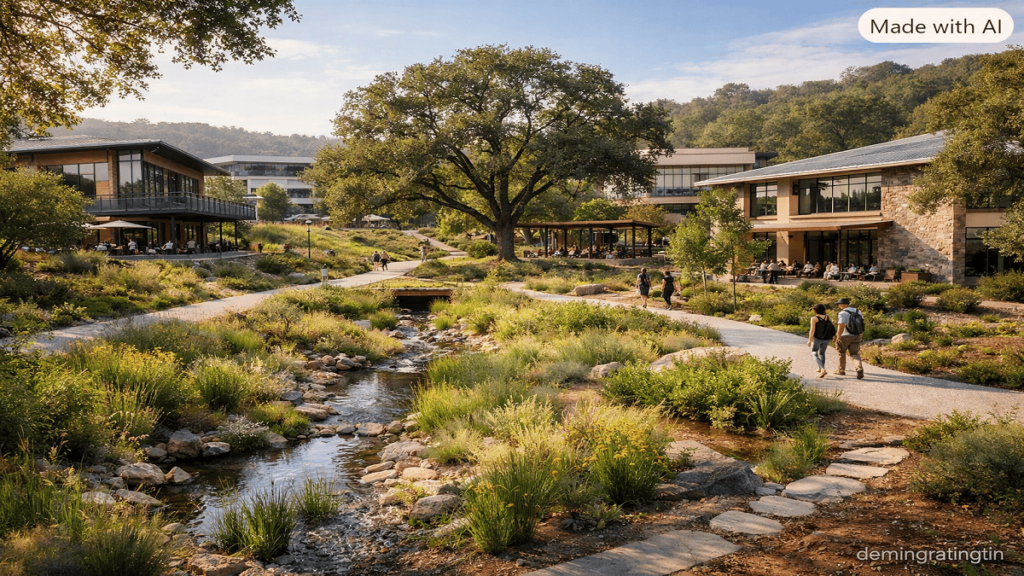
How Does Natural Landscaping Support Biodiversity, Water Management, and Occupant Well-Being?
Natural landscaping is an important element of sustainable site planning because it can provide environmental, water-management, and social benefits at the same time. A GGBC-oriented landscape approach can incorporate existing vegetation, native or climate-appropriate plants, trees, shrubs, groundcover, permeable areas, rain gardens, and other nature-based features. When carefully planned, these elements can help create healthier and more resilient developments.
1. Supporting Biodiversity
Natural landscaping can create valuable habitats for birds, butterflies, bees, insects, and other wildlife. A diverse combination of trees, shrubs, grasses, flowering plants, and groundcover provides food, shelter, and nesting opportunities.
Using native and locally appropriate plant species can be particularly beneficial because these plants are generally better adapted to local environmental conditions and can support regional ecological systems. The U.S. Environmental Protection Agency (EPA) notes that vegetation incorporated into green infrastructure can provide habitat for birds, mammals, amphibians, reptiles, and insects, particularly pollinators. Connected green spaces can also improve habitat connectivity and support wildlife movement.
2. Improving Water Management
Natural landscaping can help manage rainwater closer to where it falls. Vegetated soil areas, rain gardens, bioswales, and other landscape features can slow runoff, encourage infiltration, and reduce the amount of water flowing directly toward drainage systems.
Green infrastructure uses natural processes such as infiltration, evaporation, and evapotranspiration to manage stormwater. These approaches can also filter pollutants and improve water quality. Where site conditions permit, infiltration can contribute to groundwater recharge.
Reducing unnecessary paved surfaces and incorporating permeable landscaped areas can further improve the site’s ability to absorb rainfall and reduce surface runoff.
3. Improving Occupant Well-Being
Natural landscaping can also improve the experience of people using a building or development. Trees and vegetation provide shade, reduce exposure to excessive heat, improve visual quality, and create more comfortable outdoor spaces.
Green areas can provide opportunities for walking, relaxation, informal interaction, and outdoor activities. EPA research highlights the connection between access to green spaces and improved health and well-being, including reduced mental fatigue and stress. Vegetation can also contribute to improved air quality and reduced noise pollution.
4. Reducing Heat and Improving Microclimate
Trees and vegetation can reduce local temperatures by shading buildings, walkways, parking areas, and other hard surfaces. Plants also release moisture through evapotranspiration, providing an additional cooling effect. EPA identifies vegetation and green infrastructure as effective measures for reducing heat-island impacts.
Conclusion
Natural landscaping provides multiple benefits through a single integrated design approach. It can support biodiversity, improve stormwater management, reduce heat buildup, enhance outdoor comfort, and promote occupant well-being. For GGBC-oriented developments, landscape planning should therefore be considered an integral part of site design rather than simply an aesthetic feature.
The most effective strategy is to combine existing landscape preservation with appropriate native or climate-responsive planting, permeable surfaces, rainwater-management features, shade trees, and accessible green spaces. This approach can help create developments that are environmentally responsible, resilient, and comfortable for occupants.
#SustainableSitePlanning
What Are the GGBC Benefits of Integrating Natural Topography and Landscape Into Building Design?
Integrating natural topography and landscape into building design is an important strategy for creating environmentally responsive and resource-efficient developments. Instead of extensively altering the existing site, a GGBC-oriented approach seeks to retain natural landforms, vegetation, soil characteristics, and landscape features wherever practical. This can reduce site disturbance while providing environmental, water-management, energy, and occupant-comfort benefits.
1. Minimizes Site Disturbance
Designing around existing contours can reduce unnecessary excavation, cutting, filling, and grading. This helps preserve the natural character of the site and can reduce soil disturbance during construction. The GGBC material available through the Global GBC website emphasizes retaining natural topography and landscaping as a strategy for minimizing long-term environmental impacts.
A building with a compact footprint and appropriate orientation can often be positioned to respond to existing site conditions rather than requiring extensive land modification.
2. Supports Natural Stormwater Management
Natural slopes, vegetation, and permeable soil can help manage rainfall close to its source. Integrating rain gardens, bioswales, landscaped areas, and permeable surfaces into the site can slow runoff and encourage infiltration.
The U.S. Environmental Protection Agency (EPA) notes that green infrastructure can capture and absorb stormwater, reduce localized flooding, improve water quality, and, where conditions allow, support groundwater recharge.
3. Reduces Heat-Island Effects
Trees and vegetation incorporated around buildings can provide shade to roofs, walls, walkways, and parking areas. Vegetation also cools the environment through evapotranspiration. EPA identifies trees, green roofs, and vegetation as effective measures for reducing heat-island effects.
This can contribute to improved outdoor thermal comfort and potentially reduce cooling requirements, depending on building design and local climate.
4. Protects Biodiversity
Preserving existing trees and natural landscape areas can maintain habitats for birds, insects, pollinators, and other organisms. EPA notes that vegetation and interconnected green spaces can provide habitat and support wildlife movement.
Using native or climate-appropriate vegetation can further strengthen the ecological value of the landscape while potentially reducing long-term maintenance and irrigation requirements.
5. Improves Occupant Well-Being
Natural landscapes can make buildings more comfortable and visually appealing. Shaded outdoor spaces, planted areas, walking paths, courtyards, and views of vegetation can encourage interaction with nature and provide opportunities for relaxation and outdoor activity. Green infrastructure can also contribute to healthier and more attractive communities.
6. Supports Climate Resilience
Preserving natural landforms and integrating green infrastructure can help developments respond to challenges such as intense rainfall, localized flooding, excessive heat, and loss of habitat. EPA identifies green infrastructure as a multi-benefit approach that can support stormwater management, heat reduction, habitat, and community resilience.
Conclusion
Integrating natural topography and landscape into building design can provide environmental, ecological, water-management, energy, and occupant-comfort benefits. By preserving existing contours, protecting mature vegetation, minimizing paved surfaces, and incorporating appropriate landscape systems, GGBC-oriented projects can reduce site disturbance and create stronger connections between buildings and their natural surroundings.
The key principle is to design with the site rather than unnecessarily reshape the site. This approach can support sustainable development while preserving valuable natural resources for the long term.
#GreenBuilding
Case Study of GGBC Natural Topography and Landscape
A practical example of GGBC natural topography and landscape principles can be demonstrated through a sustainable institutional development that integrates the existing landform, vegetation, soil, and drainage characteristics into its design. The objective is to minimize site disturbance while creating a functional landscape that supports biodiversity, stormwater management, thermal comfort, and occupant well-being. The GGBC guidance available through its published green-building material specifically identifies retaining natural topography and/or providing landscaped areas as a strategy for reducing long-term environmental impacts.
Project Background
Consider an institutional campus located on a gently sloping site with mature trees, natural soil, existing drainage patterns, and several areas of undisturbed vegetation. Instead of completely clearing and leveling the site before construction, the project team conducts a detailed site assessment to identify valuable natural features.
The building footprint is positioned to avoid significant mature trees and minimize major changes to the existing contours. This approach reduces the requirement for extensive cutting and filling while retaining important landscape characteristics.
Preservation of Natural Topography
The project retains portions of the existing slopes and natural landforms wherever technically feasible. Building levels and circulation routes are carefully coordinated with the site’s contours to reduce unnecessary excavation.
This approach is consistent with GGBC guidance that recommends minimizing the building footprint, retaining natural topography where possible, avoiding destruction of fully grown trees, and limiting paved surfaces. The published guidance also recognizes parking areas and walkways as site disturbances.
By reducing earthwork, the project can minimize soil disturbance and preserve the site’s natural drainage characteristics.
Landscape and Vegetation Strategy
Existing mature trees are retained as important landscape assets. Additional planting uses native or climate-appropriate species that can adapt to local conditions. Vegetated areas are incorporated around buildings, pedestrian routes, and open spaces.
A comparable documented project demonstrates the value of retaining existing trees and incorporating native species. A green-building case study published through Global GBC describes an existing home where trees were retained during renovation and native species were added to strengthen landscape and biodiversity.
The landscape therefore becomes more than an aesthetic element; it contributes to habitat, shade, soil stabilization, and outdoor comfort.
Water Management
The natural slope of the site is used to guide stormwater toward landscaped areas, bioswales, rain gardens, and infiltration zones. Rather than directing all rainfall immediately into conventional drainage systems, the landscape helps slow, capture, and infiltrate runoff.
This approach is supported by broader green-infrastructure practice. The EPA explains that green infrastructure can use natural processes to manage stormwater, reduce flooding, improve water quality, and provide additional environmental benefits.
Environmental and Occupant Benefits
The integrated landscape provides multiple benefits. Retained trees and vegetation help reduce solar exposure and local heat, while landscaped areas provide more comfortable outdoor spaces. Native vegetation can support local biodiversity and reduce irrigation requirements when appropriately selected.
The preserved landscape also improves the visual relationship between the building and its surroundings. Shaded walking paths, planted courtyards, and natural open spaces can encourage occupants to spend time outdoors and provide opportunities for relaxation and interaction with nature.
Key Lessons for GGBC Projects
This case study demonstrates that natural topography and landscape should be considered design assets rather than obstacles to construction. A successful GGBC-oriented project can:
- Preserve existing natural contours wherever practical.
- Protect mature trees and valuable vegetation.
- Minimize unnecessary excavation and grading.
- Reduce excessive paved surfaces.
- Maintain natural drainage patterns.
- Use native or climate-appropriate vegetation.
- Integrate green infrastructure for stormwater management.
- Provide shaded and accessible outdoor spaces.
Conclusion
The case demonstrates how integrating natural topography and landscape into building design can reduce environmental disturbance while improving site performance. By working with existing landforms, protecting vegetation, and using landscape systems for water management and cooling, a project can achieve a stronger connection between the built environment and natural surroundings.
For GGBC projects, early site analysis is critical. Understanding the site’s contours, soil, vegetation, drainage, and ecological characteristics before design begins allows the project team to preserve valuable natural features and integrate them into the final development.
#SustainableLandscape
White Paper on GGBC Natural Topography and Landscape
Executive Summary
Natural topography and landscape are fundamental elements of sustainable site planning. The existing contours, slopes, vegetation, soil, drainage patterns, and ecological features of a site can influence building orientation, stormwater management, biodiversity, thermal comfort, and construction impacts. A GGBC-oriented approach encourages development that responds to these natural characteristics rather than unnecessarily replacing or modifying them.
The GGBC material available through Global GBC identifies Natural Topography or Landscape as a site-planning consideration. It describes the objective as minimizing disturbance to the building site to reduce long-term environmental impacts and recommends retaining natural topography and/or providing landscaped areas. The referenced guidance identifies thresholds of more than 15% and more than 25% of site area for progressively higher recognition, while also noting that parking areas and walkways are considered site disturbances.
1. Introduction
Rapid development can significantly modify natural landscapes through clearing, grading, excavation, soil compaction, paving, and alteration of drainage patterns. These changes can reduce vegetation, increase stormwater runoff, disturb habitats, and create additional environmental pressures.
Natural topography should therefore be considered during the earliest stages of project planning. Global GBC describes green-building design as an approach that considers the relationship between architecture and landscape and recognizes that topographical conditions can influence site microclimate.
A sustainable project does not necessarily require complete preservation of every natural feature. Instead, the objective is to identify valuable characteristics and integrate them into the development wherever technically, legally, and economically feasible.
2. Importance of Natural Topography
Natural topography includes the existing contours, slopes, ridges, valleys, depressions, and natural levels of a site. These characteristics influence how water moves across the land and can affect building placement, road design, drainage, and landscape planning.
Preserving natural contours can reduce unnecessary cut-and-fill operations and help maintain existing drainage patterns. A documented green-building case study available through Global GBC found that preserving contours and topography can help maintain natural drainage patterns and reduce the amount of stormwater infrastructure required compared with extensive cut-and-fill development.
Working with the land can therefore reduce construction disturbance while allowing the building and landscape to respond more naturally to the site’s characteristics.
3. Natural Landscape and Vegetation
Natural landscape includes existing trees, shrubs, groundcover, soil, and other vegetation. Mature trees are particularly valuable because they provide shade, support habitat, intercept rainfall, stabilize soil, and contribute to local microclimate regulation.
The GGBC guidance recommends avoiding the destruction of fully grown trees where possible and limiting unnecessary paved surfaces. It also defines landscape in the relevant site-credit context as soft landscaping consisting of vegetative materials.
Preserving existing vegetation can also reduce the resources required to recreate landscapes after construction. A Global GBC case study on the Good Earth Malhar project identifies tree protection and soil preservation as sustainable site-planning measures, noting their benefits for microclimate, soil erosion, and preservation of the natural biome.
4. Soil Protection
Soil is an important component of a functioning landscape. Construction activities can damage soil through stripping, compaction, contamination, and uncontrolled erosion.
A GGBC-oriented strategy should therefore include topsoil preservation, controlled construction access, defined construction footprints, erosion and sediment controls, and appropriate soil restoration. Where topsoil must be removed, it can be stored carefully and reused during landscape development.
Protecting soil also supports water infiltration and vegetation establishment. This makes soil preservation relevant not only to landscape quality but also to stormwater management and long-term ecological performance.
5. Stormwater and Water Management
Natural topography and landscape can play an important role in managing rainfall. Vegetated areas, permeable soils, natural depressions, rain gardens, bioswales, and other green infrastructure systems can help slow, capture, infiltrate, and filter stormwater.
The U.S. Environmental Protection Agency (EPA) explains that green infrastructure uses natural processes to manage stormwater where it falls and can include rain gardens, planter boxes, green roofs, and permeable pavements.
Preserving natural drainage patterns can also reduce the need to completely redirect runoff through conventional drainage infrastructure. EPA guidance recommends minimizing changes to natural topography, soils, and vegetation because these relationships are important for sustaining plant and animal habitats.
6. Biodiversity and Ecological Benefits
Natural landscapes can provide habitat for birds, insects, pollinators, and other organisms. Maintaining connected green areas can improve ecological continuity and reduce the fragmentation of natural habitats.
EPA identifies green infrastructure as capable of restoring wildlife habitat and enhancing natural systems while providing social and economic benefits.
Projects can strengthen these benefits by retaining mature trees, protecting sensitive natural areas, using native or climate-appropriate species, and creating connected landscaped zones rather than isolated ornamental planting areas.
7. Occupant Comfort and Well-Being
Landscape is also important for the human experience of a development. Trees and vegetation can provide shade, reduce exposure to excessive heat, improve visual quality, and create attractive outdoor spaces.
Green infrastructure can provide broader community benefits by increasing access to green space and improving environmental quality. EPA notes that green infrastructure can protect the environment and human health while delivering social and economic benefits.
For buildings, this can translate into shaded pedestrian routes, landscaped courtyards, outdoor gathering areas, and views of greenery.
8. GGBC-Oriented Design Strategies
A comprehensive natural-topography and landscape strategy can include:
- Conducting a detailed pre-design site assessment
- Mapping existing contours and drainage patterns
- Preserving mature trees and valuable vegetation
- Minimizing building footprint where feasible
- Reducing unnecessary cut-and-fill operations
- Protecting and reusing suitable topsoil
- Limiting unnecessary paved surfaces
- Maintaining natural drainage pathways
- Using native or climate-appropriate vegetation
- Incorporating rain gardens, bioswales, and permeable surfaces
- Creating connected landscaped and ecological areas
- Establishing clearly defined construction limits
The relevant GGBC guidance specifically recommends a minimal building footprint, retaining natural topography, avoiding destruction of fully grown trees, and avoiding paved surfaces as much as possible.
9. Implementation and Documentation
Natural topography and landscape should be addressed during the site-analysis and conceptual-design stages, rather than after the building layout has already been finalized.
Documentation can include existing-condition surveys, contour plans, tree surveys, landscape plans, site calculations, photographs, drainage studies, and drawings showing retained natural areas. The referenced GGBC guidance specifically calls for drawings, calculations, and photographs demonstrating the relevant site area with natural topography and/or landscaped areas.
The design team should also verify that landscape areas remain functional after construction and that maintenance, irrigation, soil quality, and vegetation requirements are considered throughout the project’s operational life.
Conclusion
Natural topography and landscape should be treated as valuable design resources rather than obstacles to development. Preserving existing contours, mature vegetation, soil, drainage patterns, and ecological features can reduce construction disturbance while improving stormwater management, biodiversity, microclimate, and occupant experience.
For GGBC-oriented projects, the strongest approach is to begin with a detailed understanding of the site and then position the building, circulation, parking, drainage, and landscape systems around its natural characteristics. This can reduce unnecessary land modification and support a more resilient relationship between the built environment and its surroundings.
The objective is ultimately to design with the land rather than unnecessarily reshape it. This principle can help projects achieve stronger environmental performance while preserving valuable natural resources.
#NaturalTopography
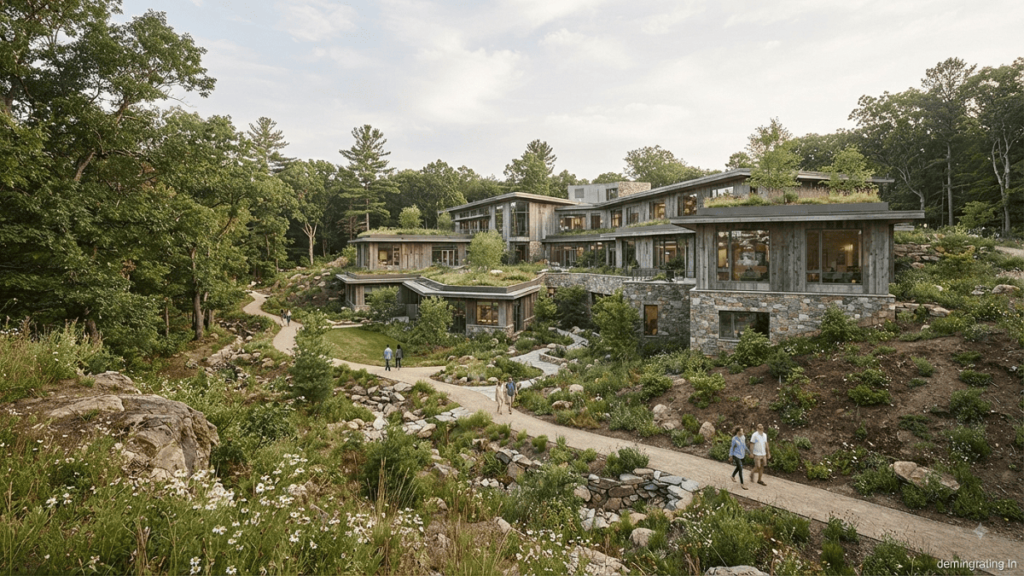
Industry Application of GGBC Natural Topography and Landscape
The integration of natural topography and landscape into development is increasingly relevant across the construction, real estate, infrastructure, hospitality, institutional, healthcare, and industrial sectors. A GGBC-oriented approach focuses on reducing unnecessary disturbance to the site while preserving valuable natural features and using landscape systems to improve environmental performance. The GGBC guidance available through Global GBC identifies retaining natural topography and/or providing landscaped areas as a strategy for minimizing long-term environmental impacts.
1. Residential Developments
Residential projects can incorporate natural topography by positioning buildings according to existing contours rather than extensively leveling the site. Mature trees can be retained, while landscaped open spaces can be integrated between buildings and around pedestrian areas.
This approach can reduce excavation and soil disturbance while creating shaded outdoor spaces. Native or climate-appropriate vegetation can also support biodiversity and potentially reduce irrigation requirements.
For residential developments, natural landscape can become an important part of the community design rather than simply a decorative feature. Global GBC’s green-building resources emphasize site selection, land use, open space, and preservation of natural features as components of sustainable development.
2. Commercial and Office Buildings
Commercial developments often have large building footprints, parking areas, and circulation networks. Integrating natural topography into the site plan can help reduce unnecessary grading and preserve existing landscape features.
Office campuses can retain mature trees around buildings and pedestrian routes while incorporating rain gardens, bioswales, permeable surfaces, and landscaped areas. These measures can support stormwater management and improve outdoor thermal comfort.
The U.S. Environmental Protection Agency (EPA) identifies trees, rain gardens, vegetated roofs, and other green infrastructure as approaches that can manage rainfall while providing environmental and community benefits.
3. Industrial and Warehouse Facilities
Industrial sites frequently require large buildings, service roads, loading areas, and parking facilities. Although these requirements can create substantial site disturbance, natural topography and landscape can still be incorporated into perimeter zones, drainage corridors, buffer areas, and open spaces.
Projects can preserve suitable existing vegetation, minimize unnecessary grading, and use vegetated swales or infiltration areas for stormwater management. EPA guidance notes that sustainable stormwater practices can use vegetation, soils, and natural processes to absorb and filter runoff while reducing erosion and flooding.
4. Hospitality and Resort Projects
Hotels, resorts, and recreational developments can benefit significantly from preserving natural landscapes because the surrounding environment is often an important part of the guest experience.
Buildings can be positioned to respond to existing slopes, mature vegetation, views, and natural features. Walking paths can follow existing contours, while native landscaping can create a stronger connection between built and natural environments.
Preserving landscape can also improve shade, outdoor comfort, biodiversity, and the visual character of the property.
5. Healthcare and Institutional Campuses
Hospitals, universities, schools, and research campuses can use natural topography and landscape to create comfortable and accessible outdoor environments. Existing trees can provide shaded pedestrian routes, while landscaped courtyards and green spaces can provide areas for relaxation and interaction with nature.
Natural landscape also has practical water-management functions. Green infrastructure can capture, absorb, and reduce stormwater runoff while filtering pollutants.
6. Infrastructure and Mixed-Use Development
Large infrastructure and mixed-use projects can apply natural-topography principles during master planning. Roads, pedestrian routes, drainage systems, and buildings can be coordinated with existing contours to reduce excessive earthwork.
Where appropriate, interconnected green spaces can preserve ecological connections across developed areas. EPA research indicates that interconnected landscape systems can provide stormwater, habitat, recreational, and community benefits.
Key Industry Strategies
Across different sectors, practical GGBC-oriented strategies include:
- Conducting detailed topographic and ecological site assessments.
- Preserving mature trees and valuable vegetation.
- Minimizing unnecessary cut-and-fill operations.
- Designing building footprints around significant natural features.
- Maintaining natural drainage patterns.
- Reducing unnecessary paved surfaces.
- Using native or climate-appropriate plant species.
- Incorporating rain gardens, bioswales, and permeable surfaces.
- Protecting and reusing suitable topsoil.
- Creating connected landscaped and open-space networks.
These strategies allow development to work more closely with natural systems instead of completely replacing them.
Conclusion
The industry application of GGBC natural topography and landscape principles extends across residential, commercial, industrial, hospitality, healthcare, institutional, and infrastructure projects. The fundamental principle is to understand the existing site before design and then use its natural characteristics as assets.
Preserving topography and vegetation can reduce land disturbance, support stormwater management, protect biodiversity, improve outdoor comfort, and strengthen the visual relationship between buildings and their surroundings. Green infrastructure can further enhance these outcomes by using soil, vegetation, and landscape systems to manage water naturally.
For developers and design teams, integrating these strategies at the master-planning and early design stages is generally more effective than attempting to restore natural features after construction. A well-planned GGBC approach can therefore help create developments that are more environmentally responsible, resilient, functional, and connected to their surrounding landscape.
#GGBC
Ask FAQs
What is natural topography in GGBC site planning?
Natural topography refers to the existing contours, slopes, elevations, valleys, and landforms of a site. GGBC-oriented planning encourages development that works with these natural characteristics instead of unnecessarily leveling or reshaping the land. This can help reduce excavation, soil disturbance, and changes to natural drainage patterns.
How does preserving natural vegetation benefit a GGBC project?
Preserving existing trees and vegetation can reduce construction-related environmental impacts while providing shade, supporting biodiversity, protecting soil, and improving outdoor comfort. Mature vegetation can also contribute to natural stormwater management and help maintain the ecological character of the site.
How can natural landscapes improve stormwater management?
Natural landscapes can help slow, capture, and infiltrate rainfall through vegetation, permeable soil, rain gardens, bioswales, and other green infrastructure features. Preserving existing drainage patterns can also reduce the need for extensive conventional drainage systems. The U.S. EPA
What strategies can developers use to protect natural site features?
Key strategies include conducting a detailed site assessment, retaining mature trees, minimizing cut-and-fill operations, protecting topsoil, maintaining natural drainage routes, limiting unnecessary paving, and using native or climate-appropriate vegetation. These measures should be incorporated during the early planning and design stages.
What are the main GGBC benefits of natural topography and landscape?
Integrating natural topography and landscape can help reduce site disturbance, support biodiversity, improve stormwater management, enhance outdoor thermal comfort, preserve ecological features, and create healthier and more attractive environments. The relevant guidance available through Global GBC.
Table of Contents
Disclaimer: This content is for general informational purposes only and should not be considered professional, technical, or certification advice. GGBC requirements should be verified with the latest official guidelines at globalgbc.org.