
Organic Waste Management
Organic waste management is the process of collecting, treating, recycling, and converting biodegradable waste materials into valuable resources while minimizing environmental impact. Organic waste includes naturally decomposable materials such as food scraps, agricultural residues, garden waste, animal manure, and other biological materials. Effective management of these resources plays a crucial role in reducing landfill waste, lowering greenhouse gas emissions, and supporting sustainable resource recovery.
Globally, organic waste represents a significant portion of total waste generation. When organic materials are disposed of in landfills, they decompose under anaerobic conditions and release methane, a powerful greenhouse gas that contributes to climate change. Proper organic waste management methods help prevent these emissions by diverting biodegradable waste from landfills and converting it into useful products such as compost, biogas, and organic fertilizers.
One of the most common approaches to organic waste management is composting. Composting is a natural biological process where microorganisms break down organic materials into nutrient-rich compost. This compost can be used as a soil amendment to improve soil structure, increase fertility, and reduce the need for chemical fertilizers. The U.S. Environmental Protection Agency highlights composting as an important strategy for reducing food waste and improving sustainable materials management. https://www.epa.gov/recycle/composting-home.
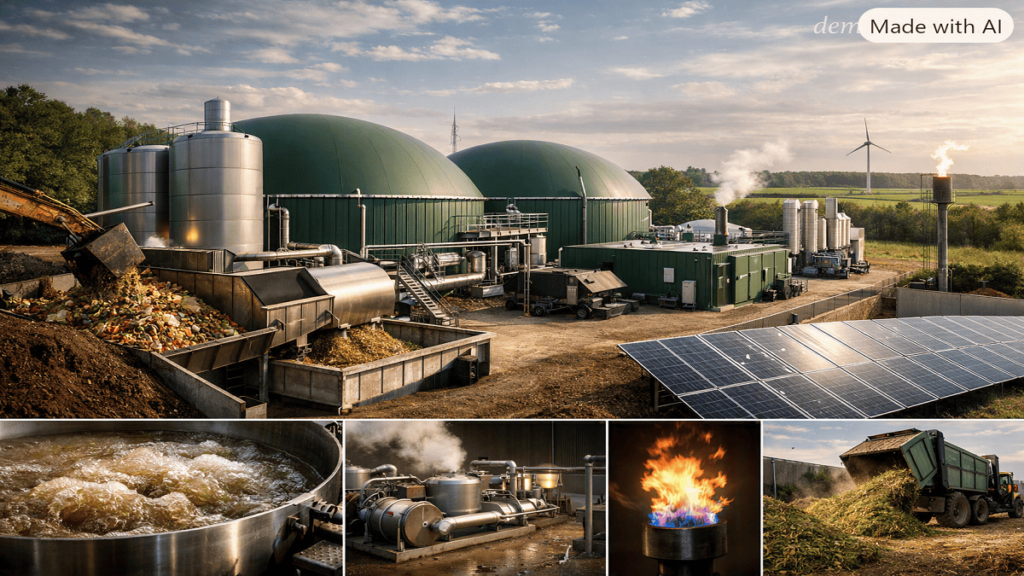
Another important method is anaerobic digestion, which uses microorganisms to break down organic waste in the absence of oxygen. This process produces biogas, which can be used as a renewable energy source, and digestate, which can be used as a nutrient-rich soil product. Anaerobic digestion helps recover energy from waste while reducing greenhouse gas emissions.
Organic waste management also supports the principles of the circular economy by transforming waste into valuable resources. Instead of following a linear system where materials are produced, consumed, and discarded, circular approaches focus on reuse, recycling, and regeneration. Organic waste can be returned to natural systems through composting or converted into renewable energy through advanced treatment technologies.
In agriculture, organic waste management helps improve soil health by returning nutrients and organic matter to farmland. Farmers can use composted agricultural residues and animal waste to enhance soil productivity, reduce erosion, and support sustainable farming practices.
Despite its benefits, organic waste management faces challenges such as inadequate collection systems, contamination of organic waste streams, limited processing infrastructure, and lack of public awareness. Effective waste segregation, improved recycling facilities, and community participation are essential for successful implementation.
Overall, organic waste management is a key component of sustainable development. By reducing landfill waste, recovering valuable resources, improving soil quality, and generating renewable energy, it provides an environmentally responsible solution for managing biodegradable waste. As cities and industries move toward more sustainable practices, organic waste management will continue to play an important role in building a cleaner and more circular future.
What Is Organic Waste Management and Why Is It Important?
Organic waste management is the process of collecting, treating, recycling, and converting biodegradable waste materials into useful resources while reducing environmental impact. Organic waste includes materials that come from living organisms and can naturally decompose, such as food scraps, agricultural residues, garden waste, animal manure, and other biological materials. Instead of being discarded in landfills, these materials can be processed through methods such as composting, anaerobic digestion, and organic recycling to create valuable products.
The importance of organic waste management comes from its ability to address major environmental challenges associated with waste disposal. When organic waste is sent to landfills, it decomposes without sufficient oxygen and produces methane, a greenhouse gas that contributes significantly to climate change. Proper management helps divert organic waste from landfills, reducing methane emissions and lowering the overall environmental footprint of waste systems.
One of the most important benefits of organic waste management is resource recovery. Organic materials are not simply waste; they contain valuable nutrients and energy that can be recovered. Through composting, organic waste is transformed into nutrient-rich compost that improves soil health, increases agricultural productivity, and reduces the need for chemical fertilizers. Composting also helps improve soil structure, water retention, and biodiversity. The U.S. Environmental Protection Agency provides guidance on composting and sustainable organic waste management practices: https://www.epa.gov/recycle/composting-home.
Another important method is anaerobic digestion, where microorganisms break down organic waste in an oxygen-free environment to produce biogas and nutrient-rich digestate. Biogas can be used as a renewable energy source for electricity, heating, or fuel, while digestate can be applied as a soil amendment. This process helps recover energy from waste and supports renewable energy development.
Organic waste management also plays an important role in supporting the circular economy. Instead of following a traditional linear model of producing, using, and disposing of materials, circular systems focus on keeping resources in use and returning nutrients to natural cycles. Organic waste can be converted into compost, fertilizers, renewable energy, and other useful products.
In agriculture, effective organic waste management helps create sustainable farming systems. Crop residues, animal manure, and food processing waste can be converted into organic fertilizers, reducing dependence on synthetic chemicals and improving long-term soil fertility.
Beyond environmental benefits, organic waste management provides economic and social advantages by creating jobs in waste collection, compost production, recycling facilities, and renewable energy industries. It also helps communities develop cleaner waste management systems and improve public health.
However, successful organic waste management requires proper waste segregation, efficient collection systems, adequate processing infrastructure, and public awareness. Contamination from plastics and other non-organic materials can reduce the quality of recovered products.
Overall, organic waste management is important because it reduces landfill waste, lowers greenhouse gas emissions, recovers valuable resources, and supports sustainable development. By treating organic waste as a resource rather than a disposal problem, communities and industries can move toward a more environmentally responsible and circular future.
What Are the Common Methods Used for Managing Organic Waste?
Organic waste management involves various processes designed to reduce, recycle, and transform biodegradable waste into useful resources. Organic waste from households, agriculture, food industries, and commercial activities contains valuable nutrients and energy that can be recovered through sustainable treatment methods. Effective management reduces landfill dependency, lowers greenhouse gas emissions, and supports circular economy practices.
1. Composting
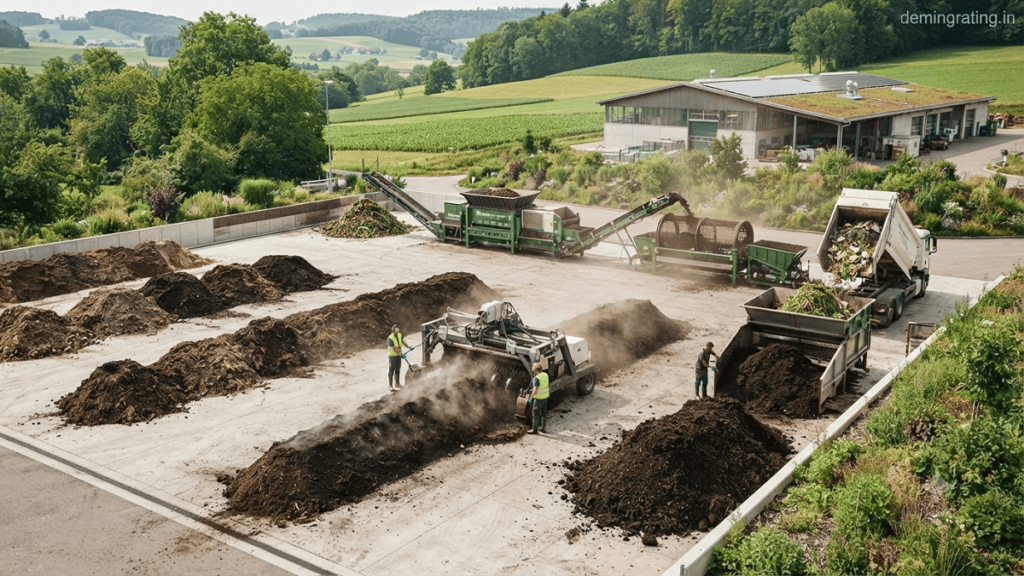
Composting is one of the most common and environmentally friendly methods of managing organic waste. It is a natural biological process where microorganisms break down organic materials such as food scraps, leaves, grass clippings, and agricultural residues into nutrient-rich compost.
The resulting compost can be used as a natural soil amendment to improve soil fertility, increase moisture retention, and support healthy plant growth. Composting reduces the amount of organic waste sent to landfills while returning valuable nutrients back to the environment. The U.S. Environmental Protection Agency recognizes composting as an effective approach for reducing food waste and managing organic materials sustainably. https://www.epa.gov/recycle/composting-home.
2. Anaerobic Digestion
Anaerobic digestion is a biological process where microorganisms break down organic waste in an oxygen-free environment. This method is commonly used for food waste, agricultural residues, wastewater sludge, and animal manure.
The process produces two valuable outputs:
- Biogas: A renewable energy source that can be used for electricity generation, heating, or fuel production.
- Digestate: A nutrient-rich material that can be used as fertilizer or soil conditioner.
Anaerobic digestion helps reduce methane emissions from landfills while recovering energy from organic waste.
3. Vermicomposting
Vermicomposting uses earthworms to convert organic waste into nutrient-rich compost. The worms consume biodegradable materials and produce a high-quality soil amendment known as vermicompost.
This method is commonly used in homes, gardens, schools, and small-scale agricultural systems because it requires limited space and produces valuable organic fertilizer.
4. Mulching
Mulching involves placing organic materials such as leaves, grass clippings, wood chips, and agricultural residues on the surface of soil. These materials gradually decompose and improve soil quality.
Mulching helps conserve soil moisture, reduce weed growth, regulate soil temperature, and return nutrients to the soil.
5. Animal Feed Conversion
Some organic waste, particularly certain food by-products, can be safely processed and converted into animal feed. This approach reduces food waste while creating an alternative resource for livestock production.
Strict safety regulations and proper processing methods are required to ensure that converted feed is suitable for animals.
6. Bioenergy Production
Organic waste can be used to generate renewable energy through technologies such as anaerobic digestion, biomass conversion, and biogas production. Agricultural waste, food processing residues, and organic industrial waste can be converted into heat, electricity, or fuel.
This method helps reduce dependence on fossil fuels while recovering energy from waste materials.
7. Industrial Organic Waste Processing
Industries such as food processing, agriculture, and hospitality generate large amounts of organic waste. Specialized treatment systems are used to process these materials through composting facilities, digestion plants, and resource recovery systems.
These methods help industries reduce disposal costs and meet sustainability goals.
Conclusion
The common methods of organic waste management, including composting, anaerobic digestion, vermicomposting, mulching, animal feed conversion, and bioenergy production, provide sustainable alternatives to landfill disposal. Each method helps recover valuable resources, reduce environmental impacts, and support a circular economy. As waste generation increases globally, adopting effective organic waste management practices will become increasingly important for creating cleaner and more sustainable communities.
How Does Composting Help in Reducing Organic Waste?
Composting is a natural recycling process that converts organic waste into a nutrient-rich material called compost. It plays an important role in sustainable waste management by reducing the amount of biodegradable waste sent to landfills and transforming discarded organic materials into a valuable resource. Through the action of microorganisms, fungi, and other decomposers, composting breaks down materials such as food scraps, garden waste, agricultural residues, and other biodegradable matter into stable organic matter that can improve soil health.
One of the main ways composting reduces organic waste is by diverting biodegradable materials from landfills. Organic waste makes up a significant portion of household, commercial, and agricultural waste streams. When these materials are disposed of in landfills, they often decompose without enough oxygen, producing methane, a greenhouse gas that contributes to climate change. Composting provides an oxygen-rich environment where organic materials can break down naturally while significantly reducing methane emissions. The U.S. Environmental Protection Agency identifies composting as an effective strategy for managing organic waste and improving sustainable materials management. https://www.epa.gov/recycle/composting-home.
Another important benefit of composting is resource recovery. Instead of treating organic waste as useless material, composting transforms it into a valuable soil amendment. The finished compost contains nutrients and organic matter that can improve soil structure, increase water retention, and support plant growth. This reduces the need for chemical fertilizers, which can have environmental impacts associated with production and use.
Composting also helps reduce the environmental impact of waste transportation and disposal. When organic waste is processed locally through home composting, community composting programs, or commercial composting facilities, the amount of waste transported to distant landfill sites decreases. This helps lower fuel consumption, transportation costs, and associated carbon emissions.
In agriculture and landscaping, composting supports sustainable soil management. Farmers and gardeners use compost to restore soil fertility, improve microbial activity, reduce erosion, and maintain healthier growing conditions. Agricultural residues, animal manure, and food processing waste can be converted into useful compost instead of being burned or discarded.
Composting also supports the circular economy by creating a closed-loop system where organic materials return to the natural cycle. Food scraps and plant waste are transformed into compost, which helps grow new plants that eventually produce more organic materials. This reduces dependence on external resources and promotes efficient use of natural nutrients.
Despite its advantages, effective composting requires proper waste separation and management. Contamination from plastics, chemicals, or non-organic materials can reduce compost quality. Successful composting programs depend on public awareness, appropriate collection systems, and suitable processing conditions.
Overall, composting helps reduce organic waste by converting biodegradable materials into valuable resources, lowering landfill dependency, reducing greenhouse gas emissions, and improving soil health. It is a simple yet powerful waste management solution that supports environmental sustainability and promotes a more circular approach to resource use.
What Are the Environmental and Economic Benefits of Effective Organic Waste Management?
Effective organic waste management provides significant environmental and economic benefits by transforming biodegradable waste into valuable resources while reducing the negative impacts associated with traditional waste disposal methods. Organic waste from households, agriculture, food industries, and commercial activities can be processed through methods such as composting, anaerobic digestion, and recycling to create useful products including compost, renewable energy, and organic fertilizers.
Environmental Benefits of Organic Waste Management
1. Reduction of Greenhouse Gas Emissions
One of the most important environmental benefits of organic waste management is the reduction of greenhouse gas emissions. When organic waste is disposed of in landfills, it decomposes under oxygen-limited conditions and produces methane, a greenhouse gas with a strong impact on climate change. By diverting organic waste to composting or anaerobic digestion facilities, methane emissions can be significantly reduced.
The U.S. Environmental Protection Agency highlights organic waste management strategies such as composting as important approaches for reducing waste-related environmental impacts and improving sustainable materials management. https://www.epa.gov/recycle/composting-home.
2. Reduced Landfill Dependency
Effective organic waste management decreases the amount of waste sent to landfills. Organic materials often occupy a large percentage of municipal waste streams, and removing them from landfill systems extends landfill capacity and reduces the environmental challenges associated with waste disposal.
3. Improved Soil Health
Composting converts organic waste into nutrient-rich compost that improves soil structure, fertility, and water retention. Adding compost to agricultural and landscaping soils increases organic matter, supports beneficial microorganisms, and reduces dependence on synthetic fertilizers.
4. Resource Recovery and Circular Economy Support
Organic waste management supports the circular economy by recovering nutrients and energy from waste materials. Composting returns organic matter to the soil, while anaerobic digestion converts organic waste into biogas, a renewable energy source. These processes help maintain natural resource cycles and reduce waste generation.
5. Conservation of Natural Resources
By recycling organic materials into compost and fertilizers, industries and agricultural systems can reduce the need for chemical fertilizers and other resource-intensive products. This helps conserve natural resources and reduces environmental impacts linked to production processes.
Economic Benefits of Organic Waste Management
1. Cost Reduction in Waste Disposal
Managing organic waste through recycling and recovery programs can reduce the costs associated with landfill transportation, disposal fees, and long-term landfill management. Organizations can save resources by processing waste into valuable materials instead of paying for disposal.
2. Creation of Jobs and New Industries
Organic waste management creates employment opportunities in waste collection, composting facilities, recycling operations, renewable energy production, and sustainable agriculture. The growth of organic resource recovery industries supports local economic development.
3. Production of Valuable Resources
Organic waste can be converted into commercially useful products such as compost, biofertilizers, and biogas. These resources generate economic value while reducing reliance on conventional fertilizers and fossil fuel-based energy sources.
4. Support for Sustainable Agriculture
Farmers benefit from affordable organic soil amendments created through composting and waste recycling. Improved soil quality can increase agricultural productivity, reduce input costs, and support long-term farming sustainability.
5. Improved Business Sustainability
Businesses that implement effective organic waste management systems can improve their environmental performance, reduce operational costs, and meet sustainability goals. Food industries, restaurants, and agricultural companies can benefit from efficient waste recovery programs.
Conclusion
Effective organic waste management provides a wide range of environmental and economic advantages. It reduces greenhouse gas emissions, minimizes landfill waste, improves soil health, conserves resources, creates jobs, and generates valuable products such as compost and renewable energy. By treating organic waste as a resource rather than a disposal problem, communities and industries can move toward a more sustainable and circular economy
What Are the Future Trends and Challenges in Organic Waste Management?
Organic waste management is becoming an increasingly important part of sustainable development as communities, industries, and governments focus on reducing waste generation, lowering greenhouse gas emissions, and improving resource recovery. With rising urbanization, population growth, and increased food consumption, the demand for efficient organic waste management systems is expected to grow significantly. Future advancements will focus on innovative technologies, circular economy approaches, and improved waste management infrastructure. However, several challenges must be addressed to achieve widespread adoption.
Future Trends in Organic Waste Management
1. Expansion of Circular Economy Practices
A major future trend in organic waste management is the transition from traditional disposal methods to circular economy models. Instead of treating organic waste as unwanted material, industries are increasingly focusing on recovering valuable resources such as compost, biofertilizers, biogas, and other bio-based products.
This approach helps maintain natural nutrient cycles by returning organic matter to agriculture and reducing dependence on synthetic resources.
2. Growth of Anaerobic Digestion and Renewable Energy Production
Anaerobic digestion is expected to become more widely adopted as organizations seek renewable energy solutions. This technology converts food waste, agricultural residues, and organic industrial waste into biogas that can be used for electricity generation, heating, or renewable fuels.
The process also produces nutrient-rich digestate that can be used as a soil amendment, creating a valuable resource recovery system.
3. Smart Waste Management Technologies
Digital technologies are expected to improve organic waste collection and processing. Smart bins, sensors, artificial intelligence-based sorting systems, and data monitoring platforms can help optimize waste collection routes, reduce contamination, and improve operational efficiency.
These technologies will allow cities and businesses to manage organic waste more effectively while reducing costs.
4. Increased Use of Industrial Composting Systems
Large-scale composting facilities are expected to expand as governments and organizations introduce stricter waste diversion policies. Industrial composting can process large volumes of organic waste from households, restaurants, agriculture, and food industries while producing high-quality compost.
5. Development of Bio-Based Products
Future organic waste management will focus beyond compost and energy recovery. Researchers are exploring methods to convert organic waste into bio-based chemicals, packaging materials, animal feed alternatives, and other sustainable products.
These innovations can create new economic opportunities while reducing dependence on fossil-based materials.
Challenges in Organic Waste Management
1. Waste Segregation and Contamination
One of the biggest challenges is the improper separation of organic waste from plastics, metals, chemicals, and other non-biodegradable materials. Contaminated organic waste reduces the quality of compost and limits recycling efficiency.
Improved public awareness, source separation programs, and better collection systems are necessary to overcome this challenge.
2. Limited Infrastructure and Investment
Many regions lack adequate facilities for composting, anaerobic digestion, and organic waste processing. Developing effective infrastructure requires significant investment, technical expertise, and long-term planning.
3. High Operational Costs
Although organic waste management provides long-term environmental and economic benefits, initial setup and operational costs can be high. Expenses related to transportation, processing equipment, maintenance, and workforce training can limit adoption.
4. Lack of Awareness and Participation
Successful organic waste management depends heavily on community participation. Lack of knowledge about waste segregation, composting practices, and recycling benefits can reduce program effectiveness.
5. Regulatory and Market Challenges
Inconsistent regulations, limited markets for compost and bio-based products, and unclear quality standards can create barriers for organic waste recovery industries. Strong policies and market development are needed to encourage investment.
Conclusion
The future of organic waste management will be shaped by advanced recycling technologies, renewable energy production, smart waste systems, and circular economy strategies. While challenges such as contamination, infrastructure limitations, costs, and public participation remain, continued innovation and policy support will improve waste recovery systems worldwide. Effective organic waste management will play a vital role in reducing environmental impacts, conserving resources, and creating sustainable solutions for future generations.
Case Study of Organic Waste Management: San Francisco’s Zero Waste Program, USA
San Francisco’s organic waste management program is considered one of the leading examples of large-scale sustainable waste management. The city has developed an integrated system focused on waste reduction, composting, recycling, and resource recovery. The program demonstrates how effective organic waste management can reduce landfill dependency, recover valuable resources, and support a circular economy.
Background of the Program
San Francisco, California, introduced mandatory composting and recycling programs to address increasing waste generation and reduce environmental impacts. The city implemented a three-stream waste collection system that separates materials into:
- Green bins: Organic waste such as food scraps, yard waste, and compostable materials
- Blue bins: Recyclable materials such as paper, glass, and metals
- Black bins: Remaining landfill waste
This approach encourages waste segregation at the source, making organic waste recovery more efficient.
The city’s organic waste management system is supported by local waste organizations and municipal policies designed to reduce landfill disposal and increase resource recovery. More information about San Francisco’s zero waste initiatives is available through the city’s official sustainability resources: https://www.sfenvironment.org/.
Organic Waste Collection and Composting Process
The program collects organic waste from households, restaurants, businesses, and institutions. The collected materials are transported to industrial composting facilities, where food scraps, plant materials, and other biodegradable waste are processed under controlled conditions.
During composting, microorganisms break down organic materials and transform them into nutrient-rich compost. This finished compost is then used in agriculture, landscaping, and soil restoration projects, returning nutrients back to the environment.
Environmental Benefits
The program has delivered several environmental benefits by reducing the amount of organic waste sent to landfills. Diverting organic materials from landfill disposal helps reduce methane emissions, which are generated when organic waste decomposes without sufficient oxygen.
Composting also improves soil health by producing organic fertilizer that increases soil fertility, improves water retention, and supports sustainable agriculture. By recovering organic resources, the program supports circular economy principles and reduces dependence on chemical fertilizers.
The U.S. Environmental Protection Agency recognizes composting and organic waste diversion as important strategies for sustainable materials management and reducing waste-related environmental impacts. https://www.epa.gov/recycle/composting-home.
Economic and Social Benefits
San Francisco’s organic waste management system has created economic opportunities through waste collection services, composting operations, and sustainable resource industries. The program supports jobs related to recycling, compost production, and environmental services.
The use of locally produced compost also benefits farmers, landscapers, and gardeners by providing a sustainable soil improvement product. Additionally, public participation in waste segregation has increased environmental awareness among residents and businesses.
Challenges and Lessons Learned
Despite its success, the program faces challenges such as contamination of organic waste streams, public education requirements, and the need for continuous improvement in waste collection systems. Ensuring that residents properly separate organic waste from plastics and other materials remains an ongoing challenge.
The case study demonstrates that successful organic waste management requires strong policies, efficient infrastructure, community participation, and continuous awareness programs.
Conclusion
San Francisco’s Zero Waste Program highlights the potential of organic waste management as a sustainable solution for reducing landfill waste and recovering valuable resources. Through composting, source separation, and community involvement, the city has shown how organic waste can be transformed into a beneficial resource rather than treated as waste.
This case study demonstrates that effective organic waste management can reduce greenhouse gas emissions, support soil health, create economic opportunities, and contribute to a more sustainable circular economy. As cities worldwide face increasing waste challenges, similar approaches can provide practical models for building efficient and environmentally responsible waste management systems.
White Paper on Organic Waste Management: Building Sustainable Resource Recovery Systems
Executive Summary
Organic waste management is a critical component of sustainable waste management strategies focused on reducing environmental impacts, recovering valuable resources, and supporting circular economy principles. Organic waste includes biodegradable materials such as food scraps, agricultural residues, garden waste, animal manure, and organic by-products from industries. Instead of being treated as disposable materials, these resources can be transformed into valuable outputs such as compost, biofertilizers, renewable energy, and bio-based products.
With increasing urbanization, population growth, and rising waste generation, traditional landfill-based disposal systems are becoming environmentally and economically challenging. Organic waste sent to landfills contributes to methane emissions, resource loss, and increased waste management costs. Effective organic waste management provides an alternative approach by diverting biodegradable waste from disposal systems and converting it into useful resources.
The adoption of sustainable organic waste management practices supports climate action, soil restoration, renewable energy generation, and resource conservation. It represents an essential pathway toward achieving a more resilient and circular economy.
Introduction to Organic Waste Management
Organic waste management involves the systematic collection, treatment, processing, and recovery of biodegradable waste materials. The primary goal is to minimize waste disposal while maximizing the recovery of nutrients and energy from organic resources.
Common organic waste sources include:
- Food waste from households, restaurants, and food industries
- Agricultural residues such as crop waste and plant materials
- Garden and landscape waste
- Animal manure and livestock waste
- Organic industrial by-products
Instead of sending these materials to landfills, sustainable management approaches focus on recycling and resource recovery through methods such as composting, anaerobic digestion, and bioenergy production.
Environmental Importance of Organic Waste Management
Reduction of Greenhouse Gas Emissions
One of the most significant environmental benefits of organic waste management is reducing methane emissions. When organic waste decomposes in landfills without oxygen, methane is produced and released into the atmosphere. Methane is a powerful greenhouse gas that contributes to climate change.
By diverting organic waste to composting and anaerobic digestion facilities, emissions can be reduced while recovering valuable resources.
The U.S. Environmental Protection Agency identifies composting and sustainable organic waste management as effective strategies for reducing waste-related environmental impacts.
https://www.epa.gov/recycle/composting-home
Soil Health Improvement
Composting transforms organic waste into nutrient-rich compost that improves soil quality. Compost increases soil organic matter, improves moisture retention, supports beneficial microorganisms, and enhances agricultural productivity.
This reduces dependence on synthetic fertilizers and promotes sustainable farming practices.
Resource Recovery and Circular Economy
Organic waste management supports circular economy principles by returning biological resources back into productive systems. Compost can be used in agriculture and landscaping, while anaerobic digestion can produce renewable energy through biogas generation.
This approach reduces resource depletion and creates closed-loop systems where waste becomes a valuable input.
Organic Waste Management Technologies
Composting
Composting is a biological process where microorganisms break down organic materials into stable organic matter. It is widely used for household waste, agricultural residues, and commercial food waste.
Benefits include:
- Reduced landfill waste
- Production of natural fertilizer
- Improved soil health
- Lower greenhouse gas emissions
Anaerobic Digestion
Anaerobic digestion uses microorganisms to decompose organic materials without oxygen. The process produces:
- Biogas: Renewable energy used for electricity, heat, or fuel
- Digestate: Nutrient-rich material used as fertilizer
This technology helps combine waste management with renewable energy production.
Vermicomposting
Vermicomposting uses earthworms to convert organic waste into high-quality compost. It is suitable for small-scale applications such as homes, gardens, and educational institutions.
Industry Applications of Organic Waste Management
Agriculture Industry
Farmers use compost and organic fertilizers produced from agricultural waste and animal manure to improve soil fertility and reduce chemical fertilizer use.
Food Industry
Restaurants, food manufacturers, and supermarkets use organic waste management systems to reduce food waste and recover resources through composting and anaerobic digestion.
Municipal Waste Management
Cities implement organic waste collection programs to separate food and garden waste from general waste streams. These programs reduce landfill dependency and improve resource recovery.
Energy Sector
Anaerobic digestion facilities convert organic waste into biogas, providing renewable energy alternatives to fossil fuels.
Challenges in Organic Waste Management
Despite its benefits, organic waste management faces several challenges:
Waste Contamination
Mixing organic waste with plastics, chemicals, and non-biodegradable materials reduces recycling efficiency and affects compost quality.
Limited Infrastructure
Many regions lack sufficient composting facilities, collection systems, and processing technologies.
High Initial Investment
Developing organic waste treatment facilities requires investment in equipment, transportation systems, and operational management.
Public Awareness
Successful organic waste programs depend on proper waste segregation and community participation.
Market Development
Creating demand for compost, biofertilizers, and bioenergy products is essential for long-term economic sustainability.
Future Trends in Organic Waste Management
Smart Waste Management Systems
Digital technologies such as sensors, artificial intelligence, and data analytics will improve waste collection efficiency and reduce operational costs.
Advanced Resource Recovery
Emerging technologies will enable the conversion of organic waste into bio-based chemicals, renewable fuels, and sustainable materials.
Expansion of Circular Economy Models
Businesses and governments are increasingly adopting systems that focus on reducing waste and maximizing resource recovery.
Integration with Renewable Energy
Anaerobic digestion and biogas production will continue to grow as industries seek renewable energy solutions.
Conclusion
Organic waste management is a key solution for addressing global waste challenges while supporting environmental sustainability and economic development. By converting biodegradable waste into compost, renewable energy, and valuable resources, organic waste management reduces landfill dependency, lowers greenhouse gas emissions, and promotes circular economy practices.
Although challenges related to infrastructure, contamination, and public participation remain, advancements in technology and increased sustainability awareness will continue to improve organic waste management systems. As communities and industries move toward greener practices, effective organic waste management will play an essential role in creating cleaner, healthier, and more sustainable environments.
Industry Applications of Organic Waste Management
Organic waste management has become an essential practice across industries as organizations seek sustainable solutions for reducing waste, recovering resources, and minimizing environmental impacts. Organic waste generated from agriculture, food production, households, manufacturing processes, and commercial activities contains valuable nutrients and energy that can be recovered through methods such as composting, anaerobic digestion, and bioenergy production.
By transforming organic waste into useful resources, industries can reduce landfill dependency, lower greenhouse gas emissions, improve operational efficiency, and support circular economy principles.
1. Agriculture Industry
The agriculture sector is one of the largest generators and users of organic waste management solutions. Agricultural activities produce large amounts of organic residues, including crop leftovers, animal manure, plant materials, and processing by-products.
Through composting and anaerobic digestion, these wastes can be converted into valuable resources:
- Compost: Used as a natural soil conditioner to improve fertility, moisture retention, and soil structure.
- Biofertilizers: Provide nutrients to crops while reducing dependence on synthetic fertilizers.
- Biogas: Generated from animal manure and agricultural residues for renewable energy production.
Organic waste management helps farmers reduce waste disposal costs, improve soil health, and create additional revenue opportunities through resource recovery.
2. Food and Beverage Industry
The food and beverage industry generates significant amounts of organic waste during production, packaging, distribution, and consumption. Food scraps, expired products, processing residues, and organic by-products can be managed through sustainable recovery systems.
Common applications include:
- Composting food waste into soil amendments
- Anaerobic digestion for renewable energy generation
- Conversion of food by-products into animal feed or bio-based products
Effective organic waste management helps food businesses reduce disposal costs, meet sustainability targets, and improve their environmental performance.
The U.S. Environmental Protection Agency promotes food waste reduction, composting, and sustainable materials management as important strategies for reducing organic waste impacts. https://www.epa.gov/recycle/composting-home.
3. Municipal Waste Management
Cities and municipalities use organic waste management systems to handle household food waste, garden waste, and biodegradable materials. Many communities implement separate organic waste collection programs to prevent biodegradable materials from entering landfills.
Municipal organic waste programs include:
- Residential compost collection
- Community composting facilities
- Large-scale organic waste processing plants
These systems help cities reduce landfill use, lower methane emissions, and create compost products for public landscaping and agriculture.
4. Hospitality and Restaurant Industry
Hotels, restaurants, and catering businesses generate large amounts of food waste daily. Organic waste management helps these businesses manage waste responsibly while reducing operational costs.
Applications include:
- Food waste segregation programs
- On-site composting systems
- Partnerships with composting and biogas facilities
- Food waste reduction initiatives
These practices improve sustainability performance and support environmentally responsible hospitality operations.
5. Wastewater Treatment Industry
Wastewater treatment facilities generate organic sludge and biological waste during treatment processes. Through anaerobic digestion, this organic material can be converted into biogas and nutrient-rich digestate.
Benefits include:
- Renewable energy generation
- Reduced waste disposal requirements
- Improved resource recovery
Many modern wastewater facilities are moving toward becoming resource recovery centers rather than simple waste treatment plants.
6. Industrial Manufacturing Sector
Manufacturing industries such as paper production, food processing, textiles, and bio-based industries generate organic by-products that require effective management.
Organic waste can be converted into:
- Biomass energy
- Compost materials
- Industrial raw materials
- Bio-based products
This approach reduces waste generation and improves resource efficiency within industrial operations.
7. Renewable Energy Industry
Organic waste management plays an important role in renewable energy production through anaerobic digestion and biomass conversion technologies.
Organic materials such as agricultural waste, food waste, and manure can produce:
- Biogas for electricity generation
- Renewable natural gas
- Biofuels
This reduces dependence on fossil fuels and supports clean energy development.
8. Landscaping and Urban Development
Landscape companies, parks, and urban development projects use organic waste management practices to recycle green waste such as leaves, grass clippings, and branches.
Processed organic materials are used for:
- Soil improvement
- Mulching
- Plant growth support
- Urban gardening projects
This helps maintain healthier urban environments while reducing waste disposal.
Future Industry Trends
Future applications of organic waste management will focus on advanced recycling technologies, smart waste monitoring systems, and improved resource recovery methods. Artificial intelligence, automated sorting systems, and bio-refinery technologies are expected to increase the efficiency of organic waste processing.
Industries are also moving toward circular economy models where organic waste is viewed as a valuable resource rather than a disposal challenge.
Conclusion
Organic waste management provides sustainable solutions across agriculture, food production, municipalities, hospitality, manufacturing, energy, and urban development sectors. By converting biodegradable waste into compost, renewable energy, and valuable resources, industries can reduce environmental impacts, improve efficiency, and support sustainable development goals. As technology advances and sustainability requirements increase, organic waste management will continue to play a vital role in building a cleaner and more circular economy.
Ask FAQs
What is organic waste management?
Organic waste management is the process of collecting, treating, recycling, and converting biodegradable waste materials such as food scraps, agricultural residues, garden waste, and animal manure into useful resources. It includes methods like composting, anaerobic digestion, and bioenergy production to reduce waste and recover valuable nutrients.
Why is organic waste management important?
Organic waste management is important because it reduces landfill waste, lowers greenhouse gas emissions, and prevents methane generation from decomposing organic materials. It also helps recover valuable resources such as compost, organic fertilizers, and renewable energy while supporting sustainable and circular economy practices.
What are the common methods used for managing organic waste?
The most common organic waste management methods include composting, anaerobic digestion, vermicomposting, mulching, and biomass energy production. These methods convert organic waste into useful products such as nutrient-rich compost, biogas, soil conditioners, and renewable energy.
How does composting help reduce organic waste?
Composting reduces organic waste by naturally breaking down biodegradable materials into nutrient-rich compost. This process diverts food scraps, garden waste, and agricultural residues from landfills while creating a valuable soil amendment that improves soil fertility and reduces the need for chemical fertilizers.
What are the future trends in organic waste management?
Future trends in organic waste management include smart waste collection systems, advanced composting technologies, anaerobic digestion expansion, bioenergy production, and the development of bio-based products. Increased adoption of circular economy practices will help industries and communities recover more value from organic waste while reducing environmental impacts.
Table of Contents
Disclaimer:
The information provided in this article is for general informational purposes only. Organic waste management practices and benefits may vary depending on local conditions, regulations, and available technologies. Professional guidance should be considered for specific waste management projects.