
Eco-friendly Wood Based Materials
Eco-friendly wood-based materials are becoming increasingly important in sustainable construction, furniture manufacturing, and interior design. These materials are derived from responsibly managed forests, recycled wood products, or engineered wood that minimizes waste and reduces environmental impact. As concerns about climate change and resource depletion continue to grow, industries are shifting toward wood products that support a circular economy and lower carbon emissions.
One of the most widely used sustainable wood materials is cross-laminated timber (CLT). CLT is manufactured by bonding layers of wood at right angles, creating a strong and lightweight structural material suitable for buildings, bridges, and modular construction. Because wood stores carbon throughout its life cycle, CLT can significantly reduce the carbon footprint of construction projects compared with concrete and steel. More information is available from the Forest Products Laboratory: https://www.fpl.fs.usda.gov/ .
Another important category is medium-density fiberboard (MDF) and particleboard made from recycled wood fibers. Modern manufacturers increasingly use post-consumer wood waste, sawdust, and agricultural residues to produce these panels. When combined with low-formaldehyde or formaldehyde-free adhesives, these products become safer for indoor air quality and more environmentally responsible. The U.S. Environmental Protection Agency provides guidance on formaldehyde emissions and wood products: https://www.epa.gov/formaldehyde .
Bamboo-based panels and composites are also gaining popularity. Although bamboo is technically a grass, it grows rapidly and regenerates without replanting, making it a highly renewable resource. Bamboo plywood, flooring, and composite boards offer durability and aesthetic appeal while requiring less time to mature than traditional hardwood species.
Certification plays a crucial role in identifying genuinely sustainable wood products. Look for materials certified by organizations such as the Forest Stewardship Council (FSC) or the Programme for the Endorsement of Forest Certification (PEFC). These certifications ensure that the wood comes from forests managed according to environmental, social, and economic standards. FSC: https://fsc.org/ ; PEFC: https://www.pefc.org/ .
Eco-friendly wood-based materials offer several advantages, including reduced waste, lower embodied energy, carbon storage, and improved resource efficiency. They are suitable for residential, commercial, and industrial applications, from flooring and cabinetry to structural components. As technology advances, the availability of high-performance sustainable wood products will continue to expand, making them a practical and responsible choice for environmentally conscious consumers and businesses seeking long-term sustainability in design and construction.
What are eco-friendly wood-based materials and why are they important?
Eco-friendly wood-based materials are products made from wood, wood fibers, recycled wood, or rapidly renewable plant resources that are produced using environmentally responsible methods. These materials are designed to reduce the negative impact on forests, conserve natural resources, minimize waste, and lower greenhouse gas emissions throughout their life cycle. They are widely used in construction, furniture manufacturing, interior design, packaging, and other industries seeking sustainable alternatives to conventional materials.
Examples of eco-friendly wood-based materials include cross-laminated timber (CLT), recycled particleboard, low-formaldehyde MDF, bamboo composites, plywood from certified forests, and wood-plastic composites containing recycled content. Many of these products use wood residues such as sawdust, wood chips, and post-consumer wood waste, which helps divert materials from landfills and improves resource efficiency. When sourced from responsibly managed forests certified by organizations such as the Forest Stewardship Council (FSC) or PEFC, these materials support sustainable forestry practices and biodiversity conservation. FSC: https://fsc.org/ ; PEFC: https://www.pefc.org/ .
The importance of eco-friendly wood-based materials lies primarily in their environmental benefits. Traditional construction materials such as concrete, steel, and plastics often require large amounts of energy to produce and generate significant carbon emissions. In contrast, wood is a renewable resource that stores carbon absorbed from the atmosphere during tree growth. According to the Food and Agriculture Organization, sustainably managed forests can contribute to climate change mitigation by maintaining and enhancing carbon stocks. https://www.fao.org/forestry/en/ .
These materials are also important for improving indoor environmental quality. Conventional wood products may contain adhesives that release volatile organic compounds (VOCs), including formaldehyde. Eco-friendly alternatives increasingly use low-emission or formaldehyde-free binders, helping create healthier indoor spaces. Guidance on formaldehyde and indoor air quality is available from the U.S. Environmental Protection Agency: https://www.epa.gov/formaldehyde .
From an economic perspective, eco-friendly wood products encourage innovation, support sustainable forestry industries, and create opportunities for recycling and circular manufacturing. They can also contribute to green building certifications such as LEED and BREEAM, which are increasingly valued in real estate and infrastructure projects.
In summary, eco-friendly wood-based materials are important because they combine renewable resource use, carbon storage, waste reduction, and healthier indoor environments. By choosing these materials, businesses and consumers can reduce environmental impact while supporting a more sustainable and resource-efficient future for construction, manufacturing, and everyday products.
What are the common types of sustainable wood-based materials used today?
Sustainable wood-based materials are widely used in modern construction, furniture production, and interior applications because they combine environmental responsibility with strong performance. These materials are designed to reduce pressure on natural forests, minimize waste, and lower carbon emissions. The most common types used today include both solid wood products from certified forests and engineered materials made from recycled or renewable resources.
Cross-laminated timber (CLT) is one of the fastest-growing sustainable building materials. It is made by bonding layers of lumber at right angles to create large structural panels. CLT offers high strength, dimensional stability, and a lower carbon footprint than many conventional building materials. It is increasingly used in multi-story buildings and modular construction. Information on CLT is available from the Forest Products Laboratory: https://www.fpl.fs.usda.gov/ .
Glue-laminated timber (Glulam) is another important engineered wood product. Thin layers of lumber are glued together with the grain running in the same direction, producing beams and columns capable of spanning long distances. Glulam uses smaller pieces of wood efficiently and is commonly used in commercial and residential structures.
Plywood from certified forests remains a popular sustainable material. It is manufactured by bonding thin wood veneers in alternating grain directions, which improves strength and reduces warping. When sourced from FSC- or PEFC-certified forests, plywood supports responsible forest management. FSC: https://fsc.org/ ; PEFC: https://www.pefc.org/ .
Medium-density fiberboard (MDF) and particleboard are widely used for furniture, cabinetry, and interior panels. Sustainable versions are produced using recycled wood fibers, sawmill residues, or post-consumer wood waste. Manufacturers increasingly offer low-formaldehyde or no-added-formaldehyde options, which improve indoor air quality. The U.S. EPA provides guidance on formaldehyde emissions: https://www.epa.gov/formaldehyde .
Bamboo-based panels and composites are also considered sustainable because bamboo grows rapidly and regenerates naturally. Bamboo plywood, flooring, and laminated bamboo products provide durability and an attractive appearance while relying on a highly renewable resource.
Oriented strand board (OSB) is another efficient material made from small wood strands arranged in specific orientations and bonded with adhesives. It uses fast-growing species and makes effective use of wood that might otherwise be discarded.
Finally, wood-plastic composites (WPCs) combine recycled wood fibers with recycled plastics to create durable products for decking, cladding, and outdoor applications.
How do eco-friendly wood materials help protect forests and the environment?
Eco-friendly wood materials help protect forests and the environment by promoting responsible resource use, reducing waste, lowering carbon emissions, and encouraging sustainable forest management. As demand for construction and furniture materials continues to grow, choosing environmentally responsible wood products can significantly reduce pressure on natural ecosystems and contribute to long-term environmental conservation.
One of the most important ways these materials protect forests is through sustainable sourcing. Many eco-friendly wood products are certified by organizations such as the Forest Stewardship Council (FSC) and the Programme for the Endorsement of Forest Certification (PEFC). These certifications ensure that forests are managed in a way that protects biodiversity, water resources, soil quality, and the rights of local communities. Certified forestry practices also require replanting, controlled harvesting, and monitoring of forest health. FSC: https://fsc.org/ ; PEFC: https://www.pefc.org/ .
Eco-friendly wood materials also reduce the need to harvest large quantities of virgin timber. Products such as recycled particleboard, MDF made from recovered fibers, and oriented strand board (OSB) use wood residues, sawdust, wood chips, and post-consumer wood waste. By utilizing materials that would otherwise be discarded or burned, these products improve resource efficiency and reduce landfill waste.
Another major environmental benefit is carbon storage. Trees absorb carbon dioxide from the atmosphere during growth, and much of this carbon remains stored in wood products throughout their service life. Using wood in buildings and furniture can therefore help keep carbon out of the atmosphere for decades. In many cases, replacing energy-intensive materials such as concrete, steel, and certain plastics with sustainably sourced wood can lower the overall carbon footprint of a project. The Food and Agriculture Organization provides information on forests and climate change: https://www.fao.org/forestry/en/ .
Eco-friendly wood materials can also improve indoor and outdoor environmental quality. Low-formaldehyde or formaldehyde-free adhesives reduce emissions of harmful volatile organic compounds (VOCs), contributing to healthier indoor air. The U.S. Environmental Protection Agency offers guidance on formaldehyde and indoor air quality: https://www.epa.gov/formaldehyde .
In addition, sustainable wood products support a circular economy by encouraging recycling, reuse, and longer product life cycles. Durable engineered wood products can often be repaired, repurposed, or recycled at the end of their use.
Overall, eco-friendly wood materials protect forests and the environment by combining responsible forestry, efficient use of resources, carbon storage, reduced pollution, and waste minimization, making them a key component of sustainable construction and manufacturing.

What are the benefits of using sustainable wood-based materials in construction and furniture?
Sustainable wood-based materials offer numerous benefits in both construction and furniture manufacturing, making them an increasingly preferred choice for environmentally responsible projects. These materials include certified solid wood, cross-laminated timber (CLT), glue-laminated timber (Glulam), recycled particleboard, low-emission MDF, and other engineered wood products designed to reduce environmental impact while maintaining high performance.
One of the most significant benefits is environmental sustainability. Wood is a renewable resource when harvested from responsibly managed forests. Certified products from organizations such as the Forest Stewardship Council (FSC) and PEFC help ensure that forests are replanted, biodiversity is protected, and natural ecosystems are preserved. Using these materials reduces pressure on unmanaged forests and supports long-term forest conservation. FSC: https://fsc.org/ ; PEFC: https://www.pefc.org/ .
Another major advantage is lower carbon emissions. Wood stores carbon absorbed by trees during growth, and this carbon remains locked within the material throughout its service life. Compared with concrete, steel, and many synthetic materials, sustainable wood products often require less energy to manufacture, transport, and process. This can significantly reduce the embodied carbon of buildings and furniture. The Food and Agriculture Organization provides further information on forests and climate change: https://www.fao.org/forestry/en/ .
In construction, engineered wood products such as CLT and Glulam provide excellent structural performance. They are strong, lightweight, and dimensionally stable, allowing faster installation and reduced foundation loads. Their prefabricated nature can shorten construction schedules, reduce on-site waste, and improve overall project efficiency.
For furniture manufacturing, sustainable wood-based materials offer versatility and cost efficiency. Recycled MDF, particleboard, and plywood make effective use of wood residues and post-consumer waste, reducing raw material consumption. Modern low-formaldehyde and no-added-formaldehyde panels also contribute to better indoor air quality by reducing emissions of volatile organic compounds. Guidance on formaldehyde emissions is available from the U.S. Environmental Protection Agency: https://www.epa.gov/formaldehyde .
Sustainable wood materials also provide aesthetic and functional benefits. Natural wood surfaces create warm, attractive interiors and can be finished, repaired, and refinished over time, extending product life. Durable wood furniture often has a longer usable life than many low-cost synthetic alternatives, which supports a circular economy and reduces waste.
Finally, using sustainable wood-based materials can help projects achieve green building certifications such as LEED and BREEAM, enhancing property value and demonstrating environmental responsibility.
Overall, sustainable wood-based materials combine environmental protection, carbon reduction, structural performance, healthier indoor spaces, durability, and economic efficiency, making them a highly beneficial choice for modern construction and furniture applications.
What are the challenges and future trends in eco-friendly wood-based material development?
The development of eco-friendly wood-based materials has made significant progress in recent years, but the industry still faces several technical, economic, and environmental challenges. At the same time, emerging technologies and sustainability goals are driving important future trends that are likely to transform construction, furniture manufacturing, and material science.
One of the main challenges is sustainable raw material supply. Demand for wood products is increasing globally, and ensuring that timber comes from responsibly managed forests remains essential. Illegal logging, deforestation, and poor forest management can undermine the environmental benefits of wood-based materials. Certification systems such as the Forest Stewardship Council (FSC) and PEFC help address this issue, but implementation and verification can be difficult in some regions. FSC: https://fsc.org/ ; PEFC: https://www.pefc.org/ .
Another challenge involves adhesives and chemical binders. Many engineered wood products, including MDF, particleboard, and plywood, traditionally rely on synthetic resins that may release formaldehyde or other volatile organic compounds (VOCs). Although low-emission and bio-based adhesives are being developed, achieving the same durability, moisture resistance, and cost competitiveness remains a technical hurdle. The U.S. EPA provides information on formaldehyde emissions from composite wood products: https://www.epa.gov/formaldehyde .
Recycling and end-of-life management also present difficulties. Wood products bonded with adhesives, coatings, or mixed materials can be challenging to separate and recycle efficiently. Contamination from paints, laminates, and preservatives may limit reuse options and increase processing costs.
From an economic perspective, some advanced sustainable materials such as cross-laminated timber (CLT) and bio-based composites still face higher initial costs than conventional alternatives in certain markets. Limited manufacturing capacity, transportation constraints, and the need for specialized design expertise can slow adoption.
Despite these challenges, several important future trends are emerging. One major trend is the development of bio-based and biodegradable adhesives derived from lignin, tannins, soy, and other renewable sources. These alternatives aim to reduce dependence on petrochemicals and improve recyclability.
Another trend is the growth of mass timber construction, including CLT and Glulam, for mid-rise and high-rise buildings. As building codes evolve and carbon reduction targets become stricter, mass timber is gaining recognition as a low-carbon structural solution. Information on wood innovation is available from the USDA Forest Products Laboratory: https://www.fpl.fs.usda.gov/ .
Researchers are also exploring nanocellulose, wood-based biocomposites, and circular manufacturing systems that maximize resource efficiency and enable material recovery.
Overall, the future of eco-friendly wood-based materials will depend on advances in sustainable forestry, bio-based chemistry, recycling technologies, and low-carbon construction, positioning wood as a key material in the transition toward a more circular and climate-resilient economy.
Case Study of Eco-friendly Wood Based Materials
A notable case study of eco-friendly wood-based materials is the use of cross-laminated timber (CLT) and other engineered wood products in the Brock Commons Tallwood House at the University of British Columbia, Canada. This project is widely recognized as an important example of how sustainable wood materials can be used in large-scale construction while reducing environmental impact.
Brock Commons is an 18-story student residence that combines CLT floor panels, glue-laminated timber (Glulam) columns, and prefabricated wood components. The building was designed to demonstrate that wood can be a viable alternative to conventional concrete and steel in mid- and high-rise structures. Because the structural wood elements were manufactured off-site and assembled rapidly on-site, construction time and material waste were significantly reduced. The University of British Columbia provides detailed information about the project: https://brockcommons.ubc.ca/ .
The environmental benefits of this project are substantial. Wood is a renewable resource, and the timber used in the building came from responsibly managed forests. During tree growth, carbon dioxide is absorbed from the atmosphere and stored in the wood. By using mass timber instead of more carbon-intensive materials, the project reduced embodied greenhouse gas emissions and created a long-term carbon storage system within the building. The U.S. Forest Service explains the role of wood products in carbon storage and climate mitigation: https://www.fs.usda.gov/ .
Another important aspect of the case study is resource efficiency. CLT panels are produced from layers of lumber bonded together, allowing smaller pieces of wood to be used effectively. Prefabrication improved precision, minimized off-cuts, and reduced on-site waste generation. This aligns with circular economy principles that emphasize efficient use of natural resources.
The project also addressed concerns related to safety and performance. Engineered wood products such as CLT and Glulam are designed to meet strict structural and fire-resistance standards. Extensive testing and regulatory review were carried out before construction, helping build confidence in mass timber technology for future urban developments.
Beyond environmental benefits, the building delivered economic and social advantages. Faster assembly reduced labor time, and the warm appearance of exposed wood created a comfortable indoor environment for residents. The project has since influenced building codes, research programs, and investment in sustainable timber construction worldwide.
This case study demonstrates that eco-friendly wood-based materials can successfully combine sustainability, structural performance, and practical construction benefits. It highlights the potential of engineered wood to reduce carbon emissions, improve resource efficiency, and support the transition toward greener buildings and more sustainable urban development.
White Paper on Eco-friendly Wood Based Materials
Executive Summary
Eco-friendly wood-based materials are emerging as a critical solution for reducing the environmental impact of construction, furniture manufacturing, packaging, and interior applications. These materials include sustainably sourced solid wood, cross-laminated timber (CLT), glue-laminated timber (Glulam), recycled particleboard, low-emission medium-density fiberboard (MDF), bamboo composites, and other engineered wood products designed to maximize resource efficiency and minimize carbon emissions.
The global push toward decarbonization and circular economy practices has increased demand for renewable materials that can replace energy-intensive alternatives such as concrete, steel, and virgin plastics. Sustainably managed forests not only provide renewable raw materials but also act as carbon sinks, while wood products continue to store carbon throughout their service life. According to the Food and Agriculture Organization, sustainable forest management plays an important role in climate change mitigation and biodiversity conservation. https://www.fao.org/forestry/en/ .
A key advantage of eco-friendly wood-based materials is their ability to utilize recycled wood fibers, sawmill residues, and post-consumer waste, thereby reducing landfill disposal and improving resource efficiency. Modern manufacturing technologies also enable the production of low-formaldehyde and no-added-formaldehyde panels, contributing to healthier indoor environments. Guidance on formaldehyde emissions is available from the U.S. Environmental Protection Agency. https://www.epa.gov/formaldehyde .
However, the sector faces challenges related to sustainable raw material supply, adhesive chemistry, recycling of composite products, and cost competitiveness in some markets. Certification systems such as the Forest Stewardship Council (FSC) and PEFC are essential for ensuring responsible sourcing and maintaining consumer confidence. FSC: https://fsc.org/ ; PEFC: https://www.pefc.org/ .
This white paper concludes that eco-friendly wood-based materials represent a strategic pathway toward low-carbon construction and sustainable manufacturing. Continued investment in bio-based adhesives, mass timber technologies, recycling infrastructure, and sustainable forestry will be necessary to unlock their full environmental and economic potential.
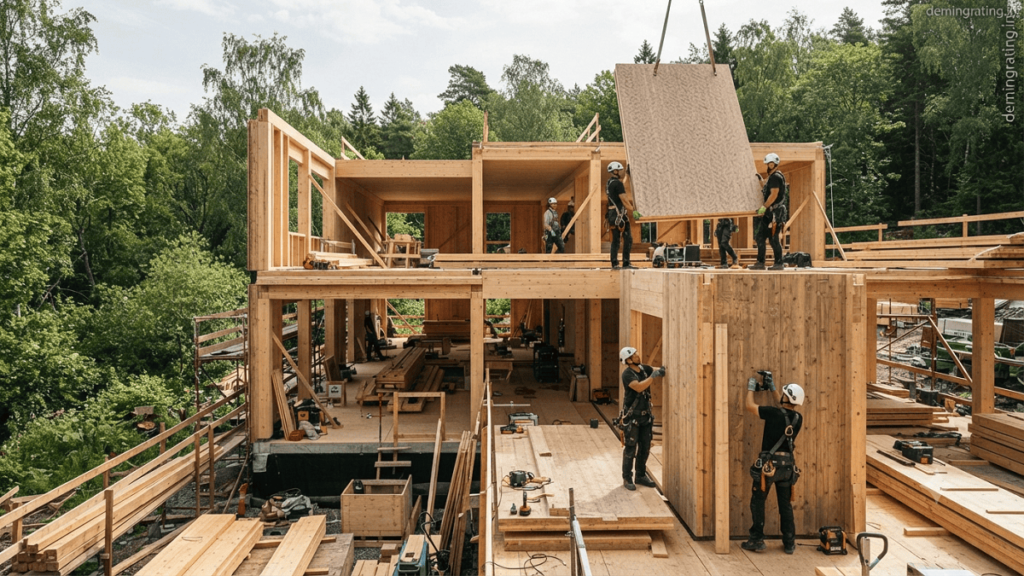
Industry Applications of Eco-Friendly Wood-Based Materials
Eco-friendly wood-based materials are increasingly being adopted across multiple industries due to their renewable nature, lower environmental impact, and ability to support sustainable manufacturing practices. These materials include engineered wood products, recycled wood composites, certified timber, bamboo-based materials, and low-emission panels. Their applications extend beyond traditional woodworking, supporting industries such as construction, furniture, packaging, automotive, and interior design.
1. Construction Industry
The construction sector is one of the largest users of eco-friendly wood-based materials. Engineered wood products such as cross-laminated timber (CLT), glue-laminated timber (Glulam), laminated veneer lumber (LVL), and structural plywood are increasingly used for residential, commercial, and institutional buildings.
CLT and Glulam provide high strength, durability, and design flexibility while reducing dependence on carbon-intensive materials such as concrete and steel. These materials are used in walls, floors, roofs, beams, and structural frames. Their prefabricated manufacturing process also helps reduce construction waste and improve project efficiency.
Mass timber construction has gained global attention because wood stores carbon absorbed during tree growth, helping reduce the overall carbon footprint of buildings. The USDA Forest Products Laboratory provides research and information on innovative wood products and applications: https://www.fpl.fs.usda.gov/.
2. Furniture Manufacturing
The furniture industry widely uses sustainable wood-based materials to create environmentally responsible products. Materials such as recycled MDF, particleboard, plywood, bamboo panels, and reclaimed wood are commonly used for tables, cabinets, chairs, wardrobes, and office furniture.
Manufacturers are increasingly adopting low-formaldehyde and formaldehyde-free panels to improve indoor air quality and meet consumer demand for healthier living spaces. Recycled wood composites also reduce the need for virgin timber by converting wood waste into valuable products. The U.S. Environmental Protection Agency provides information on formaldehyde emissions from composite wood products: https://www.epa.gov/formaldehyde.
3. Interior Design and Architecture
Eco-friendly wood materials are widely used in interior applications such as flooring, wall panels, ceilings, decorative surfaces, and acoustic solutions. Natural wood finishes create visually appealing spaces while supporting sustainable design principles.
Wood-based acoustic panels made from recycled fibers are increasingly used in offices, educational facilities, hotels, and public buildings to improve sound quality while reducing environmental impact.
4. Packaging Industry
The packaging sector is exploring sustainable alternatives to petroleum-based materials. Wood fibers, molded pulp, and cellulose-based packaging are being used for food containers, protective packaging, and consumer goods packaging.
These materials are biodegradable, recyclable, and often produced from renewable resources, helping companies reduce plastic waste and meet sustainability goals.
5. Automotive and Transportation Industry
Automotive manufacturers are using wood-based composites in vehicle interiors, including door panels, dashboards, flooring systems, and decorative components. Natural fiber composites made from wood fibers or agricultural residues help reduce vehicle weight and improve fuel efficiency.
The use of lightweight bio-based materials supports the automotive industry’s transition toward lower-emission transportation solutions.
6. Renewable Energy and Bio-Based Industries
Wood residues from manufacturing processes are increasingly used in bioenergy production, including wood pellets and biomass fuels. This helps improve resource utilization by converting waste materials into renewable energy sources.
Future Industry Trends
Future applications of eco-friendly wood-based materials will focus on advanced engineered products, bio-based adhesives, recyclable composites, and circular manufacturing systems. Growing demand for sustainable buildings and green certifications such as LEED and BREEAM is expected to accelerate adoption across industries.
In conclusion, eco-friendly wood-based materials are transforming multiple industries by providing renewable, durable, and low-carbon alternatives. Their applications in construction, furniture, packaging, transportation, and interior design demonstrate their potential to support a more sustainable and resource-efficient economy. Sustainable forestry practices, technological innovation, and responsible manufacturing will continue to drive the growth of wood-based materials worldwide.
Ask FAQs
What are eco-friendly wood-based materials?
Eco-friendly wood-based materials are products made from responsibly sourced wood, recycled wood fibers, or renewable plant-based resources that have a lower environmental impact compared with conventional materials. These include cross-laminated timber (CLT), glue-laminated timber (Glulam), recycled MDF, particleboard, bamboo composites, plywood from certified forests, and wood fiber panels. These materials are designed to reduce waste, conserve natural resources, and support sustainable manufacturing practices. Certification systems such as the Forest Stewardship Council (FSC) help ensure that wood products come from responsibly managed forests.
Why are sustainable wood-based materials important for the environment?
Sustainable wood-based materials help reduce environmental impact by promoting responsible forest management, storing carbon, and reducing reliance on energy-intensive materials. Trees absorb carbon dioxide during growth, and wood products continue to store carbon throughout their useful life. Using recycled wood fibers and manufacturing by-products also reduces landfill waste and improves resource efficiency. These materials support the transition toward low-carbon construction and circular economy practices.
What are the common applications of eco-friendly wood-based materials?
Eco-friendly wood materials are used across several industries, including construction, furniture, interior design, packaging, and transportation. In construction, engineered wood products such as CLT and Glulam are used for structural frames, walls, floors, and roofs. In furniture manufacturing, recycled MDF, plywood, and bamboo panels are used for cabinets, tables, and office furniture. Wood fiber products are also used in sustainable packaging solutions and automotive interior components.
Are eco-friendly wood-based materials durable and reliable?
Yes, many sustainable wood-based materials offer excellent durability and structural performance. Engineered wood products such as CLT, Glulam, and laminated veneer lumber are designed to provide strength, stability, and long service life. Advanced manufacturing techniques improve resistance to moisture, fire, and mechanical stress. Proper maintenance and responsible material selection can ensure that sustainable wood products perform effectively for decades.
What are the future trends in eco-friendly wood-based materials?
The future of eco-friendly wood-based materials is focused on advanced engineering, renewable adhesives, improved recycling technologies, and circular manufacturing systems. Researchers are developing bio-based adhesives made from natural materials such as lignin and soy to reduce dependence on synthetic chemicals. Mass timber construction, wood-based composites, and biodegradable materials are expected to grow as industries seek sustainable alternatives to traditional materials. Organizations such as the USDA Forest Products Laboratory continue to research innovations that improve wood product sustainability and performance.
Table of Contents
Disclaimer:
The information provided in this article is for general informational purposes only and is based on publicly available resources. Readers should consult industry experts or professionals before making decisions related to sustainable wood materials, construction, or product selection. The author does not guarantee specific outcomes from the use of any materials or practices discussed.