
Eco-Friendly District: Building Sustainable Communities for the Future
Introduction
An eco-friendly district is a planned urban area designed to reduce environmental impact while improving the quality of life for residents, businesses, and communities. Unlike traditional urban developments that often consume excessive energy and natural resources, eco-friendly districts focus on sustainability, renewable energy, efficient resource management, green infrastructure, and environmentally responsible living.
With increasing challenges such as climate change, pollution, rapid urbanization, and resource depletion, cities worldwide are adopting sustainable development models. Eco-friendly districts represent a practical approach to creating healthier, smarter, and more resilient communities that balance economic growth with environmental protection.
What Is an Eco-Friendly District?
An eco-friendly district is a neighborhood or urban zone developed according to sustainable principles. It integrates environmentally conscious technologies, green architecture, efficient transportation systems, and responsible waste management practices.
The primary goal of such districts is to minimize carbon emissions, reduce dependency on non-renewable resources, and create a healthier environment for residents. These areas are designed to support sustainable lifestyles by making environmentally friendly choices more accessible and convenient.
Examples of eco-friendly district features include:
- Energy-efficient buildings
- Renewable energy systems such as solar and wind power
- Green spaces and urban forests
- Sustainable public transportation
- Water conservation systems
- Recycling and waste reduction programs
- Smart technology for resource management
Organizations such as the United Nations promote sustainable urban development through initiatives like the Sustainable Development Goals (SDGs), particularly SDG 11, which focuses on creating sustainable cities and communities.
External resource: https://sdgs.un.org/goals/goal11
Key Features of an Eco-Friendly District
1. Sustainable Buildings and Green Architecture
Buildings are one of the largest contributors to global energy consumption. Eco-friendly districts prioritize green construction methods that reduce energy usage and environmental impact.
Sustainable buildings often include:
- Energy-efficient lighting and appliances
- Natural ventilation systems
- High-quality insulation
- Green roofs and walls
- Environmentally friendly construction materials
Green building certifications such as LEED (Leadership in Energy and Environmental Design) help measure the sustainability performance of buildings. More information is available at:
https://www.usgbc.org/leed
2. Renewable Energy Integration
A major component of eco-friendly districts is the use of clean energy sources. Solar panels, wind turbines, and other renewable technologies help reduce dependence on fossil fuels.
Many sustainable communities generate part of their electricity locally through rooftop solar systems and community energy projects. This approach reduces greenhouse gas emissions and improves energy security.
According to the International Energy Agency, renewable energy plays a critical role in achieving global climate goals.
External resource: https://www.iea.org/topics/renewables
3. Green Transportation Systems
Transportation is a significant source of urban pollution. Eco-friendly districts encourage low-carbon mobility options such as:
- Walking and cycling paths
- Electric vehicle charging stations
- Efficient public transportation
- Shared mobility services
By reducing reliance on private vehicles, these districts help decrease air pollution, traffic congestion, and carbon emissions.
Many sustainable urban planning projects follow principles promoted by organizations such as the World Green Building Council.
External resource: https://worldgbc.org
4. Efficient Water Management
Water conservation is essential for sustainable urban development. Eco-friendly districts use advanced systems to reduce water waste and improve resource efficiency.
Common solutions include:
- Rainwater harvesting
- Wastewater recycling
- Smart irrigation systems
- Water-efficient fixtures
These methods help communities manage water resources responsibly, especially in regions facing water shortages.
Benefits of Eco-Friendly Districts
Environmental Benefits
The most significant advantage of eco-friendly districts is environmental protection. These communities help:
- Reduce greenhouse gas emissions
- Improve air quality
- Protect biodiversity
- Reduce waste generation
- Conserve natural resources
By adopting sustainable practices, eco-friendly districts contribute to global efforts to address climate change.
Economic Advantages
Although sustainable infrastructure may require initial investment, it often creates long-term financial benefits. Energy-efficient buildings reduce utility costs, renewable energy lowers operational expenses, and sustainable transportation reduces infrastructure pressure.
Eco-friendly districts can also attract businesses, investors, and residents who value sustainability and innovation.
Improved Quality of Life
Sustainable districts are designed around human well-being. Access to green spaces, cleaner air, safer transportation, and healthier buildings improves physical and mental health.
Features such as parks, community gardens, and pedestrian-friendly areas encourage social interaction and create stronger communities.
Examples of Eco-Friendly Districts Around the World
Several cities have developed successful eco-friendly districts that demonstrate the potential of sustainable urban planning.
Hammarby Sjöstad, Sweden
Located in Stockholm, Hammarby Sjöstad is recognized as one of the world’s leading sustainable urban districts. The area focuses on renewable energy, efficient waste management, and environmentally friendly transportation.
More information:
https://international.stockholm.se
Vauban District, Germany
The Vauban district in Freiburg is a famous example of sustainable community design. It emphasizes energy-efficient housing, renewable energy, cycling infrastructure, and reduced car dependency.
More information:
https://www.freiburg.de
Masdar City, UAE
Masdar City in Abu Dhabi was developed as a model for low-carbon urban living. It incorporates renewable energy systems, sustainable buildings, and smart city technologies.
More information:
https://masdar.ae
Challenges in Developing Eco-Friendly Districts
Despite their advantages, creating sustainable districts involves several challenges:
- High initial investment costs
- Need for advanced technology and infrastructure
- Public awareness and participation requirements
- Coordination between governments, developers, and communities
Successful implementation requires long-term planning, strong policies, and collaboration among different stakeholders.
The Future of Eco-Friendly Districts
As urban populations continue to grow, eco-friendly districts will become increasingly important. Future developments are expected to combine renewable energy, artificial intelligence, smart infrastructure, and nature-based solutions to create more sustainable cities.
Governments and private organizations are investing in green urban development because sustainable communities offer a pathway toward economic growth while protecting the planet.
Conclusion
Eco-friendly districts represent the future of urban development by combining environmental responsibility with modern living. Through sustainable buildings, renewable energy, efficient transportation, and responsible resource management, these communities help reduce environmental impact while improving residents’ quality of life.
What Is an Eco-Friendly District and Why Is It Important?
Introduction
As cities continue to expand, environmental challenges such as air pollution, climate change, resource depletion, and waste generation are becoming increasingly serious. Traditional urban development often places heavy pressure on natural resources and contributes significantly to carbon emissions. To address these challenges, many cities around the world are adopting the concept of eco-friendly districts—sustainable urban areas designed to reduce environmental impact while creating healthier and more efficient communities.
An eco-friendly district is not just a collection of green buildings; it is a complete approach to urban planning that combines sustainable architecture, renewable energy, efficient transportation, waste management, and resource conservation. These districts aim to create a balance between human development and environmental protection, ensuring that cities remain livable for current and future generations.
What Is an Eco-Friendly District?
An eco-friendly district is a neighborhood or urban area developed with sustainability as a central priority. It is designed to minimize negative effects on the environment by using renewable resources, reducing energy consumption, protecting natural ecosystems, and encouraging sustainable lifestyles.
Unlike conventional urban areas that often depend heavily on fossil fuels and inefficient systems, eco-friendly districts use innovative planning strategies to reduce carbon footprints and improve overall environmental performance.
Key characteristics of an eco-friendly district include:
- Energy-efficient buildings
- Renewable energy sources such as solar and wind power
- Green spaces, parks, and urban forests
- Sustainable transportation options
- Smart water management systems
- Waste reduction and recycling programs
- Environmentally responsible construction methods
The goal is to create communities where residents can live, work, and interact while consuming fewer resources and producing less pollution.
The United Nations highlights the importance of sustainable urban development through Sustainable Development Goal 11, which focuses on creating inclusive, safe, resilient, and sustainable cities and communities.
Source: https://sdgs.un.org/goals/goal11
Key Elements of an Eco-Friendly District
1. Sustainable Buildings
Buildings are responsible for a significant portion of global energy consumption. Eco-friendly districts focus on constructing buildings that use less energy and produce fewer emissions.
Green buildings often include features such as:
- Energy-efficient lighting and appliances
- Natural ventilation systems
- Solar panels
- Green roofs and walls
- Sustainable building materials
These features help reduce electricity consumption, lower operational costs, and create healthier indoor environments.
Green building standards, such as LEED certification, provide guidelines for designing environmentally responsible buildings.
Source: https://www.usgbc.org/leed
2. Renewable Energy Usage
One of the most important aspects of an eco-friendly district is reducing dependence on fossil fuels. Renewable energy sources such as solar, wind, and geothermal power help communities generate clean energy while lowering greenhouse gas emissions.
Many sustainable districts use rooftop solar panels, smart energy grids, and energy storage systems to improve efficiency and reduce their carbon footprint.
The International Energy Agency explains that renewable energy plays a major role in global efforts to transition toward cleaner energy systems.
Source: https://www.iea.org/topics/renewables
3. Sustainable Transportation
Transportation is a major contributor to urban pollution. Eco-friendly districts encourage cleaner and more efficient ways of moving around.
Common transportation solutions include:
- Walking-friendly streets
- Dedicated cycling paths
- Electric vehicle charging stations
- Reliable public transportation
- Shared mobility services
Reducing dependence on private cars helps decrease traffic congestion, air pollution, and greenhouse gas emissions.
4. Efficient Water and Waste Management
Eco-friendly districts focus on responsible management of essential resources. Water-saving technologies, rainwater harvesting, and wastewater treatment systems help reduce water waste.
Similarly, advanced recycling systems, composting programs, and waste reduction strategies help minimize the amount of waste sent to landfills.
These practices support a circular economy where resources are reused instead of continuously consumed and discarded.
Why Are Eco-Friendly Districts Important?
1. They Help Fight Climate Change
Cities are responsible for a large percentage of global carbon emissions. Eco-friendly districts reduce emissions through renewable energy, efficient buildings, and sustainable transportation systems.
By lowering carbon footprints at the community level, these districts contribute to global climate action efforts.
2. They Improve Air Quality and Public Health
Pollution from vehicles, industries, and inefficient buildings can negatively affect human health. Eco-friendly districts reduce pollution levels by promoting cleaner energy, greener transportation, and increased vegetation.
More trees and green spaces improve air quality, reduce urban heat, and create healthier environments for residents.
3. They Conserve Natural Resources
Modern cities consume large amounts of energy, water, and raw materials. Eco-friendly districts are designed to use these resources efficiently.
Energy-saving technologies, water conservation systems, and sustainable materials help protect natural resources and reduce environmental damage.
4. They Create Better Living Conditions
A sustainable district focuses not only on environmental protection but also on improving residents’ quality of life.
Benefits include:
- More green spaces for recreation
- Safer walking and cycling environments
- Cleaner air
- Reduced noise pollution
- Stronger community connections
These features create healthier and more enjoyable places to live.
5. They Support Economic Growth
Although developing eco-friendly infrastructure requires investment, it can provide long-term economic benefits. Energy-efficient buildings reduce operating expenses, renewable energy creates new industries, and sustainable development attracts businesses and investors.
Green urban projects also create employment opportunities in areas such as renewable energy, construction, technology, and environmental management.
Examples of Eco-Friendly Districts
Several cities have successfully implemented sustainable district models.
Hammarby Sjöstad, Sweden
Hammarby Sjöstad in Stockholm is recognized as a leading sustainable urban development project. It integrates renewable energy, efficient waste management, and environmentally friendly transportation systems.
Vauban District, Germany
The Vauban district in Freiburg focuses on energy-efficient housing, renewable energy use, and pedestrian-friendly planning. It is widely considered an example of sustainable community design.
Masdar City, United Arab Emirates
Masdar City in Abu Dhabi aims to demonstrate low-carbon urban development through renewable energy, smart technologies, and sustainable construction.
Challenges of Developing Eco-Friendly Districts
While eco-friendly districts provide many benefits, they also face challenges. The initial cost of sustainable infrastructure can be high, and successful implementation requires cooperation between governments, developers, businesses, and residents.
Other challenges include:
- Limited public awareness
- Need for advanced technology
- Complex urban planning requirements
- Maintaining affordability for residents
However, as sustainable technologies improve and environmental awareness increases, eco-friendly districts are becoming more achievable and practical.
Conclusion
An eco-friendly district is a sustainable urban community designed to reduce environmental impact while improving the quality of life for residents. By combining renewable energy, green architecture, sustainable transportation, and responsible resource management, these districts provide a solution to many challenges faced by modern cities.
What are the key features of a sustainable eco-friendly district?
Introduction
Rapid urbanization has transformed cities into major centers of economic activity, innovation, and population growth. However, traditional urban development has also contributed to environmental problems such as carbon emissions, air pollution, excessive energy consumption, and resource depletion. To address these challenges, the concept of sustainable eco-friendly districts has emerged as a modern approach to urban planning.
A sustainable eco-friendly district is a carefully designed urban area that minimizes environmental impact while improving residents’ health, comfort, and overall quality of life. These districts combine advanced technology, green infrastructure, renewable energy solutions, and responsible resource management to create communities that can support both people and the planet.
The key features of a sustainable eco-friendly district include energy efficiency, sustainable transportation, green architecture, water conservation, waste management, biodiversity protection, and smart technology integration.
1. Energy-Efficient Buildings and Green Architecture
One of the most important features of an eco-friendly district is the development of sustainable buildings. Buildings consume a significant amount of global energy, so reducing their energy demand is essential for lowering carbon emissions.
Green buildings are designed to use fewer resources while providing comfortable living and working spaces. Common features include:
- Energy-efficient lighting and appliances
- Natural ventilation and daylight optimization
- High-quality insulation
- Solar panels and renewable energy systems
- Green roofs and vertical gardens
- Sustainable construction materials
These designs reduce electricity consumption, lower maintenance costs, and create healthier indoor environments.
Green building standards such as LEED provide frameworks for designing and evaluating sustainable buildings.
Source: https://www.usgbc.org/leed
2. Renewable Energy Integration
A sustainable eco-friendly district focuses on reducing dependence on fossil fuels by incorporating renewable energy sources. Clean energy solutions help decrease greenhouse gas emissions and improve energy security.
Common renewable energy features include:
- Solar power systems on rooftops and public spaces
- Wind energy solutions where suitable
- Smart energy grids
- Energy storage systems
- Community renewable energy projects
Many modern sustainable districts generate part of their own electricity through renewable sources, helping reduce their environmental footprint.
The International Energy Agency provides global information on renewable energy development and its role in sustainable transitions.
Source: https://www.iea.org/topics/renewables
3. Sustainable Transportation Systems
Transportation is a major contributor to urban pollution and carbon emissions. Eco-friendly districts prioritize transportation options that reduce reliance on private vehicles and encourage cleaner mobility.
Important transportation features include:
- Pedestrian-friendly streets
- Dedicated cycling lanes
- Electric vehicle charging infrastructure
- Efficient public transportation networks
- Shared mobility solutions
Walkable neighborhoods not only reduce emissions but also encourage healthier lifestyles by promoting physical activity and social interaction.
Sustainable transportation planning is a key component of creating low-carbon cities and reducing urban congestion.
4. Efficient Water Management
Water conservation is a critical element of sustainable urban development. Eco-friendly districts use advanced systems to manage water resources responsibly and reduce unnecessary consumption.
Important water management features include:
- Rainwater harvesting systems
- Greywater recycling
- Water-efficient fixtures
- Smart irrigation technologies
- Wastewater treatment and reuse
These solutions help conserve freshwater resources and reduce pressure on local water supplies, especially in areas facing water scarcity.
5. Effective Waste Management and Recycling Systems
A sustainable district follows the principles of waste reduction and resource recovery. Instead of treating waste as useless material, eco-friendly communities aim to reuse, recycle, and repurpose resources.
Key waste management practices include:
- Waste segregation at the source
- Recycling facilities
- Composting programs
- Organic waste management
- Reduced use of single-use materials
These systems help minimize landfill waste and support a circular economy where materials remain in use for longer periods.
The concept of a circular economy is promoted by organizations such as the Ellen MacArthur Foundation.
Source: https://www.ellenmacarthurfoundation.org
6. Green Spaces and Biodiversity Protection
A major feature of sustainable districts is the integration of nature into urban environments. Green spaces improve environmental quality while creating healthier communities.
Examples of green infrastructure include:
- Public parks
- Urban forests
- Community gardens
- Green corridors
- Tree-lined streets
- Biodiversity conservation areas
Vegetation helps reduce urban heat, improve air quality, manage stormwater, and support local wildlife.
Green spaces also provide recreational areas where residents can connect with nature and improve their physical and mental well-being.
7. Smart Technology and Digital Infrastructure
Technology plays an important role in improving the efficiency of eco-friendly districts. Smart systems allow communities to monitor and optimize resource consumption.
Examples include:
- Smart electricity meters
- Intelligent lighting systems
- Automated waste collection monitoring
- Smart water management
- Digital platforms for transportation services
Data-driven solutions help reduce energy waste, improve infrastructure performance, and create more efficient urban environments.
Smart city technologies are increasingly being used worldwide to support sustainable urban development.
8. Climate-Resilient Urban Planning
A sustainable eco-friendly district must be prepared for environmental challenges such as extreme weather events, rising temperatures, and flooding.
Climate-resilient features include:
- Flood-resistant infrastructure
- Sustainable drainage systems
- Heat-reducing building designs
- Increased tree coverage
- Emergency preparedness systems
These strategies help communities adapt to changing climate conditions and maintain long-term sustainability.
9. Community-Centered Design
Sustainability is not only about technology and infrastructure; it also involves creating communities where people can live comfortably and interact socially.
Eco-friendly districts encourage:
- Mixed-use development combining homes, workplaces, and services
- Affordable housing options
- Community spaces
- Local businesses
- Public participation in sustainability programs
A strong sense of community helps residents adopt environmentally responsible habits and contributes to the long-term success of sustainable projects.
10. Sustainable Resource Management
Efficient use of resources is a fundamental principle of eco-friendly districts. These communities aim to reduce consumption while maximizing efficiency.
Resource management strategies include:
- Sustainable material selection
- Local sourcing of resources
- Energy conservation programs
- Responsible land use planning
By managing resources carefully, sustainable districts reduce environmental pressure and support long-term ecological balance.
Examples of Sustainable Eco-Friendly Districts
Several projects around the world demonstrate successful implementation of these features.
Hammarby Sjöstad, Sweden
This Stockholm district integrates renewable energy, efficient waste management, sustainable transportation, and water recycling systems.
Vauban District, Germany
Located in Freiburg, Vauban is known for energy-efficient homes, pedestrian-friendly planning, and reduced dependence on private vehicles.
Masdar City, UAE
Masdar City focuses on renewable energy, sustainable architecture, and smart technologies to create a low-carbon urban environment.
Conclusion
A sustainable eco-friendly district combines environmental responsibility with modern urban living. Its key features—including green buildings, renewable energy, sustainable transportation, efficient water management, waste reduction, biodiversity protection, and smart technology—help create communities that are healthier, more efficient, and more resilient.
How do green buildings and renewable energy support eco-friendly districts?
Introduction
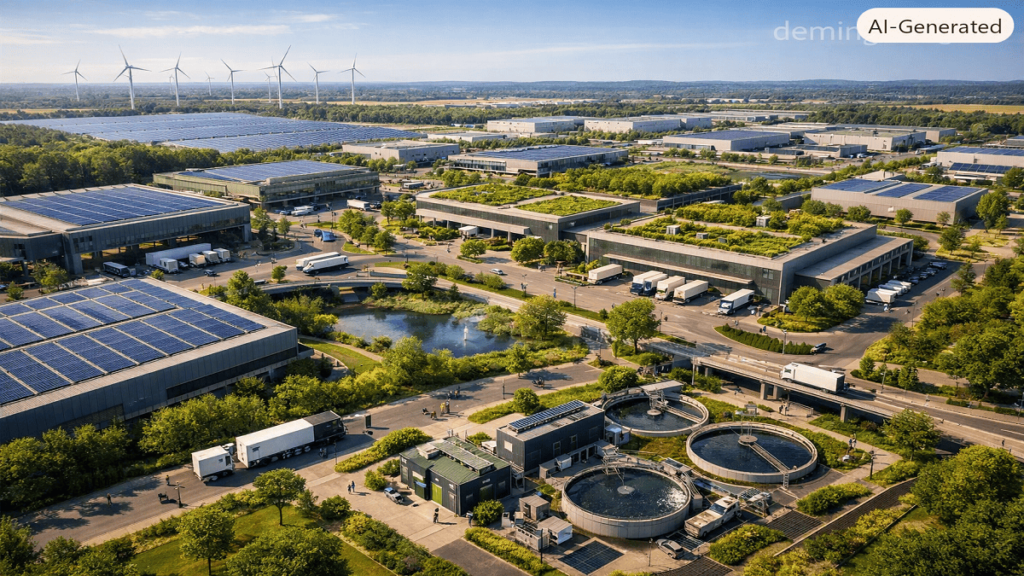
The development of eco-friendly districts depends on the successful integration of sustainable infrastructure, energy-efficient systems, and environmentally responsible practices. Among the most important elements of these districts are green buildings and renewable energy solutions. Together, they reduce environmental impact, improve energy efficiency, lower operating costs, and create healthier living environments.
As cities face challenges such as climate change, increasing energy demand, and resource shortages, sustainable construction and clean energy technologies have become essential components of modern urban planning. Green buildings provide efficient spaces for people to live and work, while renewable energy ensures that these spaces operate with minimal reliance on fossil fuels.
By combining these two approaches, eco-friendly districts can achieve lower carbon emissions, improved resource management, and long-term sustainability.
What Are Green Buildings?
Green buildings are structures designed, constructed, and operated to minimize their environmental impact throughout their lifecycle. They focus on efficient use of energy, water, materials, and land while creating comfortable and healthy spaces for occupants.
Unlike conventional buildings that often consume large amounts of energy and resources, green buildings use advanced design strategies and technologies to reduce waste and improve efficiency.
Key features of green buildings include:
- Energy-efficient lighting and appliances
- Natural lighting and ventilation systems
- Sustainable construction materials
- Smart energy management systems
- Water-saving technologies
- Green roofs and vertical gardens
- Improved indoor air quality
Green building practices are supported by international standards such as LEED (Leadership in Energy and Environmental Design), which provides guidelines for sustainable building design and performance.
Source: https://www.usgbc.org/leed
Role of Green Buildings in Eco-Friendly Districts
1. Reducing Energy Consumption
Buildings are among the largest consumers of energy in urban areas. Green buildings reduce energy demand by using efficient designs and technologies.
For example:
- Proper insulation reduces the need for heating and cooling.
- Energy-efficient windows help maintain indoor temperatures.
- Smart lighting systems automatically adjust energy usage.
- Efficient appliances consume less electricity.
By reducing energy consumption, green buildings lower greenhouse gas emissions and decrease pressure on energy systems.
When multiple green buildings are developed within an eco-friendly district, the combined energy savings significantly improve the district’s overall sustainability.
2. Lowering Carbon Emissions
Traditional buildings often depend heavily on electricity generated from fossil fuels, which contributes to climate change. Green buildings reduce their carbon footprint through efficient designs and integration with clean energy systems.
Features such as rooftop solar panels, energy-efficient heating and cooling systems, and sustainable materials help decrease emissions throughout the building lifecycle.
Lower carbon emissions contribute to cleaner air and support global climate goals.
3. Conserving Water Resources
Water conservation is another important function of green buildings. Eco-friendly districts use buildings designed with advanced water-saving systems, including:
- Low-flow faucets and toilets
- Rainwater collection systems
- Greywater recycling
- Smart irrigation systems
These technologies reduce unnecessary water consumption and help communities manage limited water resources more effectively.
4. Improving Health and Comfort
Green buildings are designed not only for environmental benefits but also for human well-being. Features such as natural ventilation, improved air filtration, and access to daylight create healthier indoor environments.
Benefits include:
- Better indoor air quality
- Increased comfort
- Reduced exposure to harmful materials
- Improved productivity and well-being
Healthy buildings contribute to better living standards within eco-friendly districts.
The Role of Renewable Energy in Eco-Friendly Districts
Renewable energy refers to energy generated from natural sources that can be continuously replenished. Common renewable energy sources include solar, wind, hydro, and geothermal energy.
In eco-friendly districts, renewable energy systems replace or reduce dependence on fossil fuels, helping create cleaner and more sustainable communities.
The International Energy Agency highlights renewable energy as a critical component of global efforts to reduce carbon emissions and transition toward cleaner energy systems.
Source: https://www.iea.org/topics/renewables
1. Providing Clean and Sustainable Power
Renewable energy allows eco-friendly districts to generate electricity with fewer environmental impacts.
Common renewable energy applications include:
- Solar panels installed on buildings
- Community solar farms
- Small-scale wind energy systems
- Renewable-powered public infrastructure
For example, solar panels on residential and commercial buildings can generate electricity locally, reducing dependence on external power sources.
2. Reducing Dependence on Fossil Fuels
Traditional energy systems rely heavily on coal, oil, and natural gas, which produce greenhouse gases and contribute to climate change.
Renewable energy reduces this dependence by providing cleaner alternatives. Eco-friendly districts powered by renewable energy produce fewer emissions and become more resilient against energy price fluctuations.
3. Supporting Energy Independence
Renewable energy systems help districts become more self-sufficient. Instead of relying completely on centralized energy networks, communities can generate and manage their own power.
Smart energy systems can:
- Monitor electricity usage
- Balance energy supply and demand
- Store excess renewable energy
- Improve overall efficiency
This creates more reliable and flexible energy networks.
4. Supporting Smart City Development
Renewable energy works together with smart technologies to improve urban sustainability.
Examples include:
- Smart electricity meters
- Automated energy management systems
- Battery storage solutions
- Digital monitoring platforms
These technologies allow eco-friendly districts to optimize energy consumption and reduce unnecessary waste.
How Green Buildings and Renewable Energy Work Together
Green buildings and renewable energy are most effective when combined. Buildings designed for energy efficiency require less power, while renewable energy provides cleaner sources of electricity.
For example:
- A green building reduces electricity demand through efficient design.
- Solar panels provide clean energy to meet remaining electricity needs.
- Smart systems monitor and optimize energy consumption.
- Excess energy can be stored or shared within the district.
This integrated approach creates a sustainable energy cycle that benefits both residents and the environment.
Examples of Sustainable Districts Using Green Buildings and Renewable Energy
Masdar City, United Arab Emirates
Masdar City is designed as a low-carbon urban development that incorporates renewable energy systems, sustainable buildings, and smart technologies. It demonstrates how clean energy and green architecture can work together to create environmentally responsible communities.
More information:
https://masdar.ae
Hammarby Sjöstad, Sweden
This sustainable district in Stockholm integrates energy-efficient buildings, renewable energy solutions, waste management systems, and sustainable transportation networks.
More information:
https://international.stockholm.se
Vauban District, Germany
The Vauban district in Freiburg emphasizes energy-efficient housing, renewable energy use, and environmentally friendly urban planning.
More information:
https://www.freiburg.de
Benefits for Eco-Friendly Districts
The combination of green buildings and renewable energy provides several advantages:
Environmental Benefits
- Lower carbon emissions
- Reduced energy consumption
- Less pollution
- Better resource conservation
- Protection of natural ecosystems
Economic Benefits
- Lower energy costs
- Reduced maintenance expenses
- Creation of green technology jobs
- Increased property value
Social Benefits
- Healthier living environments
- Improved comfort
- Better community spaces
- Higher quality of life
Conclusion
Green buildings and renewable energy are fundamental pillars of eco-friendly districts. Green buildings reduce resource consumption through efficient design, while renewable energy provides clean power to support sustainable urban living.
What are the environmental and social benefits of developing eco-friendly districts?
Introduction
Urban growth has transformed cities into major hubs of economic activity and innovation, but rapid development has also created significant environmental and social challenges. Increasing pollution, climate change, traffic congestion, waste generation, and pressure on natural resources have made traditional urban development models less sustainable. To overcome these challenges, cities around the world are increasingly adopting the concept of eco-friendly districts.
An eco-friendly district is a sustainably planned urban area that combines green infrastructure, renewable energy, efficient resource management, sustainable transportation, and community-focused design. These districts aim to reduce environmental damage while creating healthier, safer, and more inclusive spaces for people.
The benefits of developing eco-friendly districts extend beyond environmental protection. They contribute to improved public health, stronger communities, economic opportunities, and long-term urban resilience.
Environmental Benefits of Eco-Friendly Districts
1. Reduction in Carbon Emissions
One of the most important environmental benefits of eco-friendly districts is the reduction of greenhouse gas emissions. Traditional urban areas often depend on fossil fuels for electricity generation, transportation, and industrial activities, leading to increased carbon emissions.
Eco-friendly districts reduce emissions through:
- Renewable energy systems such as solar and wind power
- Energy-efficient buildings
- Low-carbon transportation options
- Smart energy management systems
Green buildings consume less energy, while renewable energy reduces dependence on fossil fuels. Together, these solutions help cities move toward climate-friendly development.
The United Nations recognizes sustainable cities as a key part of global climate action through Sustainable Development Goal 11, which focuses on creating sustainable and resilient urban communities.
Source: https://sdgs.un.org/goals/goal11
2. Improved Air Quality
Air pollution is one of the biggest environmental and health challenges in urban areas. Vehicle emissions, industrial activities, and fossil fuel consumption contribute to poor air quality.
Eco-friendly districts improve air quality by encouraging:
- Electric vehicles
- Public transportation
- Walking and cycling
- Increased vegetation and green spaces
- Cleaner energy sources
Trees and plants naturally absorb pollutants and carbon dioxide while releasing oxygen. Urban forests, parks, and green corridors help create cleaner and healthier environments for residents.
3. Efficient Use of Natural Resources
Eco-friendly districts are designed to use resources more responsibly. Instead of following a traditional model of excessive consumption and waste generation, sustainable districts focus on efficiency and conservation.
Resource-saving strategies include:
- Water recycling systems
- Rainwater harvesting
- Energy-efficient infrastructure
- Sustainable construction materials
- Smart resource monitoring
These practices reduce pressure on natural resources and support long-term environmental sustainability.
4. Better Waste Management
Waste management is a major challenge in growing cities. Eco-friendly districts promote a circular economy approach where materials are reused, recycled, and managed efficiently.
Sustainable waste practices include:
- Waste segregation
- Recycling programs
- Composting organic waste
- Reducing single-use materials
- Resource recovery systems
These methods reduce landfill dependency and minimize environmental pollution.
The circular economy approach is supported by organizations such as the Ellen MacArthur Foundation, which promotes systems that eliminate waste and encourage resource reuse.
Source: https://www.ellenmacarthurfoundation.org
5. Protection of Biodiversity
Urban expansion often leads to the destruction of natural habitats. Eco-friendly districts focus on protecting biodiversity by integrating nature into city planning.
Environmental features include:
- Urban forests
- Community gardens
- Green rooftops
- Wildlife-friendly spaces
- Ecological corridors
These features provide habitats for plants and animals while improving the overall environmental balance of urban areas.
6. Climate Change Adaptation
Eco-friendly districts help cities become more resilient against climate-related challenges such as extreme heat, flooding, and changing weather patterns.
Climate adaptation strategies include:
- Sustainable drainage systems
- Flood-resistant infrastructure
- Heat-reducing building designs
- Increased tree coverage
- Water conservation systems
These measures help communities prepare for future environmental risks.
Social Benefits of Eco-Friendly Districts
1. Improved Public Health and Well-Being
One of the greatest social benefits of eco-friendly districts is improved health for residents. Cleaner air, reduced pollution, and access to green spaces contribute to better physical and mental well-being.
Benefits include:
- Lower exposure to harmful pollutants
- More opportunities for outdoor activities
- Reduced stress levels
- Improved overall quality of life
Green areas such as parks and gardens encourage physical activity and social interaction, creating healthier communities.
2. Better Quality of Life
Eco-friendly districts are designed around human needs rather than only infrastructure development. They create comfortable and attractive environments where people can live, work, and interact.
Quality-of-life improvements include:
- Walkable neighborhoods
- Safe public spaces
- Reduced traffic congestion
- Improved accessibility
- Better recreational facilities
A well-planned sustainable district allows residents to access essential services while reducing dependence on private vehicles.
3. Stronger Community Connections
Sustainable districts often include shared public spaces that encourage social interaction and community participation.
Examples include:
- Community gardens
- Public parks
- Shared recreational areas
- Local cultural spaces
- Neighborhood events
These spaces help build stronger relationships among residents and create a greater sense of belonging.
4. Increased Social Inclusion
Eco-friendly urban planning can support more inclusive communities by creating accessible public spaces and providing opportunities for diverse groups of people.
Inclusive features may include:
- Affordable housing options
- Accessible transportation
- Safe pedestrian areas
- Community services
When sustainability is combined with social planning, districts become more equitable and beneficial for all residents.
5. Improved Transportation Accessibility
Eco-friendly districts encourage sustainable mobility solutions that benefit residents socially and economically.
Features such as:
- Public transportation networks
- Cycling infrastructure
- Pedestrian pathways
- Electric mobility options
make transportation safer, more affordable, and more accessible.
Reduced dependence on private cars also helps decrease congestion and creates more pleasant urban environments.
6. Economic and Employment Opportunities
Although primarily focused on environmental sustainability, eco-friendly districts also create economic benefits.
They support industries such as:
- Renewable energy
- Green construction
- Sustainable technology
- Environmental management
- Smart city solutions
The development and maintenance of sustainable infrastructure create new job opportunities and encourage innovation.
7. Increased Awareness of Sustainable Living
Eco-friendly districts encourage residents to adopt environmentally responsible habits. Living in a sustainable environment makes practices such as recycling, energy conservation, and public transportation easier and more convenient.
These communities can become examples of sustainable lifestyles and inspire wider environmental awareness.
Examples of Eco-Friendly Districts Creating Environmental and Social Benefits
Hammarby Sjöstad, Sweden
This sustainable district in Stockholm integrates renewable energy, efficient waste management, and green transportation solutions. It demonstrates how environmental planning can improve urban living conditions.
More information:
https://international.stockholm.se
Vauban District, Germany
Located in Freiburg, Vauban focuses on energy-efficient housing, sustainable transportation, and community-oriented planning. It is widely recognized as a successful example of sustainable neighborhood development.
More information:
https://www.freiburg.de
Masdar City, UAE
Masdar City combines renewable energy, green architecture, and smart technologies to create a low-carbon urban environment.
More information:
https://masdar.ae
Conclusion
Developing eco-friendly districts provides significant environmental and social advantages. These sustainable communities help reduce carbon emissions, improve air quality, conserve resources, protect biodiversity, and prepare cities for climate challenges.
What are the future trends and challenges in creating sustainable districts?
Introduction
As urban populations continue to grow, cities face increasing pressure on energy resources, transportation systems, housing, and the environment. Climate change, resource shortages, pollution, and rapid urban expansion have made traditional urban development models less effective. To address these challenges, the concept of sustainable districts is becoming an essential part of future city planning.
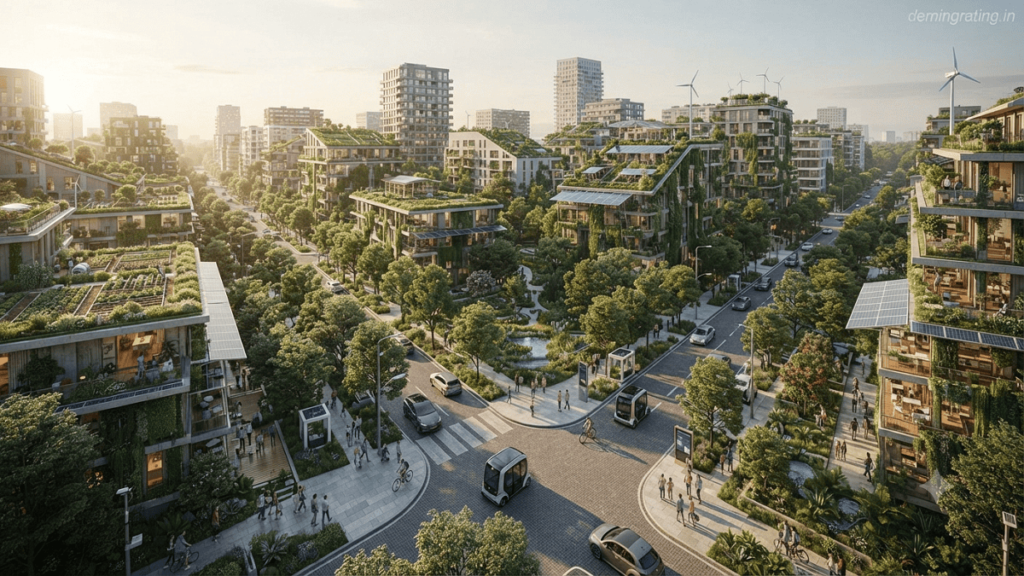
A sustainable district is an urban area designed to minimize environmental impact while improving the quality of life for residents. These districts integrate renewable energy, green buildings, smart technologies, sustainable transportation, efficient waste management, and nature-based solutions.
The future of sustainable districts will be shaped by technological innovation, climate adaptation strategies, and community-focused planning. However, creating these districts also involves significant challenges, including financial barriers, infrastructure limitations, and the need for coordinated efforts among governments, developers, and citizens.
Future Trends in Creating Sustainable Districts
1. Smart Technology Integration
One of the biggest trends in sustainable district development is the increasing use of smart technologies. Digital solutions allow cities to monitor resources, improve efficiency, and make better planning decisions.
Future sustainable districts are expected to use:
- Smart energy management systems
- Artificial intelligence for urban planning
- Internet of Things (IoT) sensors
- Automated waste management systems
- Smart traffic management solutions
For example, smart sensors can monitor electricity and water consumption in real time, helping residents and authorities identify areas where resources can be saved.
Smart city technologies are becoming an important part of sustainable urban development by improving efficiency and reducing environmental impact.
2. Net-Zero and Carbon-Neutral Districts
A major future trend is the development of net-zero districts that aim to balance the amount of greenhouse gases produced with the amount removed from the atmosphere.
These districts focus on:
- Renewable energy generation
- Energy-efficient buildings
- Low-carbon transportation
- Carbon reduction strategies
- Sustainable construction materials
Solar energy, wind power, and advanced energy storage systems will play an increasingly important role in helping districts achieve carbon neutrality.
The International Energy Agency highlights the importance of clean energy transitions in reducing global emissions and achieving climate targets.
Source: https://www.iea.org/topics/renewables
3. Greater Use of Renewable Energy Systems
Future sustainable districts will rely more heavily on renewable energy sources. Instead of depending completely on centralized fossil-fuel-based power systems, communities will increasingly generate their own clean energy.
Emerging trends include:
- Building-integrated solar panels
- Community energy networks
- Battery storage technology
- Microgrids
- Renewable-powered public infrastructure
These systems improve energy independence and make districts more resilient during energy disruptions.
4. Climate-Resilient Urban Design
Climate change is increasing risks such as extreme heat, flooding, storms, and water shortages. Future sustainable districts will focus on designing communities that can adapt to these challenges.
Climate-resilient strategies include:
- Flood-resistant infrastructure
- Sustainable drainage systems
- Urban forests
- Heat-resistant building designs
- Water conservation systems
Nature-based solutions, such as restoring wetlands and increasing urban greenery, will become increasingly important in reducing climate risks.
5. Expansion of Green Buildings
Green buildings will remain a major component of sustainable districts. Future construction will focus on creating buildings that consume fewer resources and produce fewer emissions.
New trends include:
- Zero-energy buildings
- Modular sustainable construction
- Low-carbon materials
- Advanced insulation technologies
- Smart building systems
Green buildings will increasingly combine renewable energy generation, automation, and environmentally friendly materials to improve efficiency.
Organizations such as the U.S. Green Building Council provide global frameworks for sustainable building practices through LEED certification.
Source: https://www.usgbc.org/leed
6. Circular Economy-Based Districts
Future sustainable districts will move away from the traditional “take, use, dispose” model and adopt circular economy principles.
Circular districts will focus on:
- Recycling and reuse systems
- Resource recovery
- Waste-to-energy solutions
- Sustainable production methods
- Reduced material consumption
This approach helps minimize waste and ensures resources remain valuable for longer periods.
The Ellen MacArthur Foundation promotes circular economy approaches that support sustainable resource management.
Source: https://www.ellenmacarthurfoundation.org
7. Nature-Based Urban Development
Future districts will integrate natural systems into urban planning rather than separating cities from nature.
Important features include:
- Green roofs
- Vertical gardens
- Urban forests
- Biodiversity corridors
- Community gardens
These solutions help reduce urban heat, improve air quality, manage stormwater, and support wildlife.
8. Sustainable Mobility Solutions
Transportation systems will continue to evolve as sustainable districts become more common.
Future mobility trends include:
- Electric public transportation
- Autonomous electric vehicles
- Expanded cycling infrastructure
- Pedestrian-friendly communities
- Shared mobility services
Reducing dependence on private vehicles will help lower emissions and create healthier urban environments.
Challenges in Creating Sustainable Districts
1. High Initial Investment Costs
One of the biggest challenges in developing sustainable districts is the high upfront cost. Green buildings, renewable energy systems, smart infrastructure, and advanced transportation networks require significant investment.
Although these systems provide long-term savings, the initial financial requirements can discourage developers and governments from adopting sustainable solutions.
Solutions include:
- Government incentives
- Public-private partnerships
- Green financing programs
- Long-term investment strategies
2. Complex Urban Planning Requirements
Creating a sustainable district requires coordination between multiple sectors, including:
- Architecture
- Transportation
- Energy management
- Environmental planning
- Public services
Poor coordination can lead to inefficient systems and reduced sustainability outcomes.
Successful sustainable districts require integrated planning from the earliest stages of development.
3. Limited Public Awareness and Participation
Sustainable districts depend on residents adopting environmentally responsible behaviors. Even the most advanced infrastructure cannot achieve full sustainability without community involvement.
Challenges include:
- Lack of awareness about sustainable practices
- Resistance to lifestyle changes
- Limited participation in recycling and conservation programs
Education and community engagement are essential for long-term success.
4. Balancing Sustainability and Affordability
A major challenge is ensuring that sustainable districts remain accessible to people from different income groups.
Eco-friendly developments can sometimes become expensive due to advanced technologies and high-quality materials.
Future planning must focus on:
- Affordable green housing
- Inclusive transportation systems
- Equal access to public spaces
- Socially responsible development
Sustainability should benefit all residents rather than only higher-income groups.
5. Technology and Infrastructure Limitations
Advanced sustainable districts often depend on emerging technologies. However, challenges may include:
- High technology costs
- Maintenance requirements
- Lack of technical expertise
- Data security concerns
Cities need reliable infrastructure and skilled professionals to operate and maintain these systems effectively.
6. Policy and Regulatory Challenges
Successful sustainable district development requires supportive government policies and regulations.
Challenges include:
- Slow approval processes
- Lack of sustainability standards
- Limited funding support
- Inconsistent environmental policies
Strong regulations and long-term government commitment are essential for encouraging sustainable development.
7. Managing Existing Urban Areas
While building new sustainable districts is easier, transforming existing neighborhoods presents additional challenges.
Retrofitting older urban areas may require:
- Upgrading infrastructure
- Improving energy efficiency
- Redesigning transportation systems
- Renovating existing buildings
Many future sustainability efforts will focus on making existing cities more environmentally friendly.
The Future Outlook for Sustainable Districts
The future of sustainable districts will depend on combining environmental responsibility with technological innovation and social inclusion. Advances in renewable energy, artificial intelligence, smart infrastructure, and sustainable construction will make these communities more efficient and adaptable.
Governments, businesses, urban planners, and citizens will need to collaborate to overcome challenges and create sustainable urban environments.
As climate challenges become more urgent, sustainable districts will move from being experimental projects to becoming essential models for future cities.
Conclusion
Future sustainable districts will be shaped by trends such as smart technology, renewable energy integration, carbon-neutral development, circular economy systems, green buildings, and climate-resilient design. These innovations provide opportunities to create healthier and more efficient communities.
Case Study of an Eco-Friendly District: Hammarby Sjöstad, Stockholm, Sweden
Introduction
The rapid growth of urban populations has created significant environmental challenges, including increased energy consumption, waste generation, traffic congestion, and greenhouse gas emissions. To address these issues, cities around the world are developing sustainable urban communities known as eco-friendly districts. These districts demonstrate how innovative planning, renewable energy, efficient resource management, and environmentally responsible design can transform urban living.
One of the most successful examples of an eco-friendly district is Hammarby Sjöstad in Stockholm, Sweden. Originally planned as an industrial and polluted area, Hammarby Sjöstad has been transformed into a modern sustainable neighborhood that integrates green buildings, renewable energy, efficient waste management, and sustainable transportation.
This case study explores the development, features, environmental strategies, social benefits, and lessons from Hammarby Sjöstad as a model for future eco-friendly districts.
Overview of Hammarby Sjöstad
Hammarby Sjöstad is a waterfront district located in Stockholm, Sweden. The area was previously used for industrial activities and was affected by pollution and environmental degradation. In the 1990s, Stockholm City planned to redevelop the area into a sustainable urban district.
The vision was to create a neighborhood with significantly lower environmental impact compared to traditional urban developments. The project introduced an integrated sustainability model known as the Hammarby Model, which connects energy, water, and waste management systems to create a circular resource cycle.
The district covers approximately 250 hectares and includes residential buildings, commercial spaces, public transportation facilities, parks, and waterfront areas.
More information about Stockholm’s sustainable urban development initiatives is available at:
https://international.stockholm.se
Background and Development Goals
The original goal of Hammarby Sjöstad was to create a sustainable neighborhood that would demonstrate how cities could reduce environmental impacts while maintaining high living standards.
The main objectives included:
- Reducing energy consumption
- Minimizing waste generation
- Improving water management
- Increasing renewable energy use
- Promoting sustainable transportation
- Creating attractive public spaces
The district was initially planned as part of Stockholm’s bid for the 2004 Olympic Games, but although the city did not host the Olympics, the sustainability vision continued and became a long-term urban development project.
The Hammarby Model: A Circular Sustainability Approach
The most important feature of Hammarby Sjöstad is the Hammarby Model, an integrated system that connects different urban resource flows.
Traditional cities often operate through a linear system:
Resources → Consumption → Waste
Hammarby Sjöstad follows a circular approach:
Resources → Efficient Use → Recycling → Energy Recovery → Reuse
This model connects:
- Energy production
- Water treatment
- Waste management
- Recycling systems
The goal is to reduce waste and maximize resource efficiency.
1. Sustainable Energy Systems
Energy efficiency is a major component of Hammarby Sjöstad’s sustainability strategy. Buildings are designed to consume less energy through improved insulation, efficient heating systems, and smart energy management.
The district uses renewable and recovered energy sources, including:
- Solar energy
- District heating systems
- Energy recovered from wastewater treatment
- Biogas production from organic waste
Waste materials that would normally be discarded are converted into useful energy resources, reducing dependence on fossil fuels.
The integration of renewable energy and energy recovery systems helps reduce greenhouse gas emissions and supports Stockholm’s climate goals.
2. Green Buildings and Sustainable Construction
The buildings in Hammarby Sjöstad are designed according to sustainable construction principles. Developers focused on creating energy-efficient homes that provide comfortable living environments while reducing environmental impact.
Key green building features include:
- Energy-efficient heating systems
- Natural daylight utilization
- Environmentally friendly construction materials
- Water-saving technologies
- Improved indoor air quality
The district demonstrates how urban housing can combine modern comfort with environmental responsibility.
Green building standards and sustainable construction practices are promoted globally by organizations such as the U.S. Green Building Council.
Source: https://www.usgbc.org/leed
3. Advanced Waste Management System
Waste management is one of the strongest aspects of Hammarby Sjöstad. Instead of relying only on traditional waste collection methods, the district uses an underground vacuum waste collection system.
Residents separate waste into different categories, including:
- Organic waste
- Recyclable materials
- General waste
The waste is transported through underground pipelines to collection facilities, reducing:
- Garbage truck traffic
- Noise pollution
- Transportation emissions
Organic waste is processed to produce biogas, which can be used as fuel for vehicles and energy production.
This approach demonstrates how waste can become a valuable resource rather than an environmental burden.
4. Sustainable Water Management
Water conservation and wastewater treatment are essential parts of the Hammarby Model.
The district uses advanced water management systems to:
- Reduce water consumption
- Treat wastewater efficiently
- Recover energy from wastewater
- Recycle useful materials
Wastewater treatment produces biogas, while treated water is returned safely to the environment.
These systems help conserve water resources and reduce pollution in surrounding ecosystems.
5. Sustainable Transportation
Hammarby Sjöstad was designed to encourage environmentally friendly transportation options.
Transportation features include:
- Light rail connections
- Bus services
- Ferry transportation
- Cycling paths
- Pedestrian-friendly streets
The district reduces dependence on private cars by providing convenient public transportation and encouraging walking and cycling.
This approach helps reduce:
- Traffic congestion
- Air pollution
- Carbon emissions
6. Green Spaces and Biodiversity
Although located in an urban environment, Hammarby Sjöstad incorporates natural areas and green infrastructure.
The district includes:
- Parks
- Waterfront spaces
- Green corridors
- Public recreational areas
These features improve biodiversity, reduce urban heat, and provide residents with access to nature.
Green spaces also contribute to improved mental health and stronger community interaction.
Social Benefits of Hammarby Sjöstad
The success of Hammarby Sjöstad is not limited to environmental performance. The district also provides significant social benefits.
Improved Quality of Life
Residents benefit from:
- Cleaner surroundings
- Better air quality
- Accessible public transportation
- Attractive public spaces
- Safe pedestrian environments
Community Engagement
The district encourages residents to participate in sustainable practices such as recycling and energy conservation.
Healthier Living Environment
Reduced pollution, increased green areas, and active transportation options contribute to healthier lifestyles.
Environmental Achievements
Hammarby Sjöstad has achieved several sustainability improvements compared with conventional urban developments.
Major outcomes include:
- Reduced energy consumption
- Lower carbon emissions
- Efficient waste recycling
- Increased renewable energy use
- Improved water management
The project has become an international example of sustainable urban development and has inspired similar projects worldwide.
Lessons Learned from Hammarby Sjöstad
The development of Hammarby Sjöstad provides several important lessons for future eco-friendly districts:
1. Integrated Planning Is Essential
Sustainability works best when energy, transportation, waste, and water systems are planned together rather than separately.
2. Technology and Nature Must Work Together
Advanced technologies are valuable, but combining them with green spaces and natural systems creates more balanced communities.
3. Community Participation Matters
Residents play an important role in achieving sustainability goals through responsible consumption and waste management.
4. Long-Term Planning Creates Better Results
Sustainable districts require commitment over many years. Short-term approaches cannot achieve meaningful environmental transformation.
Conclusion
Hammarby Sjöstad is one of the world’s leading examples of an eco-friendly district that successfully combines environmental innovation with high-quality urban living. Through its integrated approach to energy, waste, water management, transportation, and green infrastructure, the district demonstrates how cities can become more sustainable.
The success of Hammarby Sjöstad shows that eco-friendly districts are not only about reducing environmental impact but also about creating healthier, more connected, and resilient communities. As cities worldwide face increasing environmental challenges, the principles demonstrated by Hammarby Sjöstad provide valuable guidance for designing the sustainable cities of the future.
White Paper: Eco-Friendly Districts – A Framework for Sustainable Urban Development
Executive Summary
Rapid urbanization, climate change, resource depletion, and increasing environmental pressures have created an urgent need to rethink how cities are planned and developed. Traditional urban models often depend on high energy consumption, fossil fuels, inefficient resource management, and transportation systems that contribute to pollution and greenhouse gas emissions.
An eco-friendly district represents a new approach to urban development that integrates environmental sustainability, technological innovation, economic efficiency, and social well-being. These districts are designed to reduce ecological impact while improving the quality of life for residents through green buildings, renewable energy, sustainable mobility, efficient waste management, water conservation, and smart infrastructure.
This white paper explores the concept of eco-friendly districts, their core components, benefits, implementation strategies, challenges, and future opportunities. It provides a framework for governments, urban planners, developers, and communities seeking to create sustainable and resilient urban environments.
1. Introduction: The Need for Sustainable District Development
Cities are home to more than half of the world’s population, and urban areas continue to expand rapidly. While cities contribute significantly to economic development and innovation, they also consume large amounts of energy and natural resources.
Major urban challenges include:
- Rising carbon emissions
- Air and water pollution
- Increasing energy demand
- Waste generation
- Traffic congestion
- Loss of biodiversity
- Climate-related risks
According to the United Nations, sustainable urban development is essential for creating inclusive, safe, resilient, and sustainable communities under Sustainable Development Goal 11.
Reference:
https://sdgs.un.org/goals/goal11
Eco-friendly districts provide a practical solution by transforming neighborhoods into sustainable ecosystems where buildings, infrastructure, transportation, and natural systems work together efficiently.
2. Definition of an Eco-Friendly District
An eco-friendly district is a planned urban area designed to minimize environmental impact while maximizing social and economic benefits. It applies sustainable design principles throughout the entire lifecycle of development, including planning, construction, operation, and maintenance.
Unlike conventional neighborhoods, eco-friendly districts focus on:
- Low carbon emissions
- Efficient resource consumption
- Renewable energy generation
- Sustainable transportation
- Waste reduction
- Environmental conservation
- Community participation
The objective is to create a balanced relationship between human activities and the natural environment.
3. Core Principles of Eco-Friendly District Development
3.1 Sustainable Urban Planning
Sustainable planning is the foundation of eco-friendly districts. It focuses on creating compact, connected, and accessible communities.
Key planning strategies include:
- Mixed-use development combining residential, commercial, and recreational spaces
- Reduced dependence on private vehicles
- Walkable neighborhood design
- Protection of natural landscapes
- Efficient land utilization
Well-planned districts reduce unnecessary travel, conserve land resources, and encourage healthier lifestyles.
4. Green Buildings and Sustainable Architecture
Buildings are among the largest consumers of energy and resources in urban areas. Green buildings reduce environmental impact through efficient design and operation.
Important features include:
- Energy-efficient lighting and appliances
- Natural ventilation systems
- Solar energy integration
- Sustainable construction materials
- Green roofs and vertical gardens
- Smart building management systems
Green buildings help reduce energy consumption, operating costs, and greenhouse gas emissions while improving indoor environmental quality.
The Leadership in Energy and Environmental Design (LEED) framework provides internationally recognized standards for sustainable building development.
Reference:
https://www.usgbc.org/leed
5. Renewable Energy Integration
Renewable energy is a critical component of eco-friendly districts. By replacing fossil fuel-based energy sources, sustainable districts can significantly reduce carbon emissions.
Common renewable energy solutions include:
- Solar photovoltaic systems
- Wind energy where suitable
- Geothermal energy
- Community energy systems
- Battery storage technologies
Future eco-friendly districts are expected to become increasingly energy-independent through decentralized renewable energy networks.
The International Energy Agency highlights renewable energy as a key driver of global clean energy transitions.
Reference:
https://www.iea.org/topics/renewables
6. Sustainable Transportation Systems
Transportation contributes significantly to urban pollution and carbon emissions. Eco-friendly districts prioritize low-carbon mobility solutions.
Key transportation strategies include:
- Public transportation networks
- Cycling infrastructure
- Pedestrian-friendly streets
- Electric vehicle charging facilities
- Shared mobility services
A sustainable transportation system improves air quality, reduces congestion, and encourages healthier lifestyles.
7. Water Conservation and Management
Water scarcity is becoming a major global challenge. Eco-friendly districts use innovative water management systems to reduce consumption and improve efficiency.
Solutions include:
- Rainwater harvesting
- Wastewater recycling
- Smart irrigation systems
- Water-efficient fixtures
- Sustainable drainage systems
These practices help conserve water resources and improve climate resilience.
8. Waste Management and Circular Economy Approach
Traditional waste systems follow a linear model where resources are extracted, consumed, and discarded. Eco-friendly districts adopt circular economy principles that focus on reuse and recovery.
Key strategies include:
- Waste segregation
- Recycling systems
- Composting facilities
- Organic waste conversion
- Waste-to-energy technologies
The circular economy reduces landfill waste and promotes efficient resource utilization.
Reference:
https://www.ellenmacarthurfoundation.org
9. Green Infrastructure and Biodiversity Protection
Nature-based solutions are essential for sustainable urban development. Eco-friendly districts integrate natural elements into the built environment.
Examples include:
- Urban forests
- Parks
- Green corridors
- Community gardens
- Green roofs
Benefits include:
- Improved air quality
- Reduced urban heat
- Better stormwater management
- Increased biodiversity
- Enhanced resident well-being
Green infrastructure creates a healthier relationship between cities and nature.
10. Smart Technologies for Sustainable Districts
Digital technologies improve the efficiency and performance of eco-friendly districts.
Smart solutions include:
- Internet of Things (IoT) sensors
- Smart energy monitoring
- Intelligent transportation systems
- Automated waste management
- Data-driven urban planning
These technologies allow cities to monitor resource consumption and optimize operations.
11. Social Sustainability and Community Development
A truly sustainable district must support social well-being along with environmental goals.
Important social elements include:
- Affordable housing
- Inclusive public spaces
- Community facilities
- Accessible transportation
- Resident participation programs
Social sustainability ensures that environmental improvements benefit all sections of society.
12. Economic Benefits of Eco-Friendly Districts
Eco-friendly districts provide long-term economic advantages, including:
- Reduced energy and operating costs
- Increased property value
- Creation of green jobs
- Attraction of sustainable businesses
- Improved infrastructure efficiency
Although initial investment may be higher, sustainable development often produces significant long-term savings.
13. Case Studies of Successful Eco-Friendly Districts
13.1 Hammarby Sjöstad, Sweden
Hammarby Sjöstad in Stockholm is a globally recognized sustainable district. It uses an integrated system connecting energy, water, and waste management.
Major features include:
- Renewable energy systems
- Waste recycling
- Sustainable transportation
- Green buildings
Reference:
https://international.stockholm.se
13.2 Vauban District, Germany
Located in Freiburg, Vauban is known for sustainable housing, renewable energy use, and reduced car dependency.
Key achievements include:
- Energy-efficient homes
- Extensive cycling infrastructure
- Community-oriented planning
Reference:
https://www.freiburg.de
13.3 Masdar City, United Arab Emirates
Masdar City focuses on low-carbon development through renewable energy, sustainable architecture, and smart technologies.
Reference:
https://masdar.ae
14. Challenges in Developing Eco-Friendly Districts
Despite their advantages, sustainable districts face several challenges.
14.1 High Initial Investment
Green infrastructure, renewable energy systems, and advanced technologies require significant upfront funding.
Possible solutions:
- Government incentives
- Green financing programs
- Public-private partnerships
14.2 Technology and Infrastructure Limitations
Advanced sustainability solutions require:
- Skilled professionals
- Reliable infrastructure
- Continuous maintenance
- Technology investment
14.3 Policy and Regulatory Barriers
Successful implementation requires supportive government policies, sustainability standards, and long-term planning frameworks.
14.4 Public Awareness and Participation
Residents must actively participate in sustainable practices such as recycling, energy conservation, and responsible consumption.
Education and awareness programs are essential for long-term success.
15. Future Trends in Eco-Friendly District Development
Future sustainable districts are expected to incorporate:
- Artificial intelligence-based urban management
- Net-zero energy communities
- Carbon-neutral infrastructure
- Autonomous electric transportation
- Advanced recycling technologies
- Climate-adaptive architecture
- Nature-based urban solutions
These innovations will help cities become more resilient and environmentally responsible.
16. Implementation Framework for Developing an Eco-Friendly District
A successful eco-friendly district can be developed through the following stages:
Stage 1: Planning and Assessment
- Analyze environmental conditions
- Identify sustainability goals
- Study community requirements
Stage 2: Sustainable Design
- Plan green buildings
- Develop transportation networks
- Integrate renewable energy systems
Stage 3: Infrastructure Development
- Build sustainable utilities
- Implement smart technologies
- Establish waste and water systems
Stage 4: Community Engagement
- Educate residents
- Encourage sustainable behaviors
- Monitor performance
Stage 5: Continuous Improvement
- Measure environmental performance
- Upgrade technologies
- Improve resource efficiency
Conclusion
Eco-friendly districts represent a transformative approach to urban development by combining environmental protection, technological innovation, and social responsibility. These districts provide a pathway toward reducing carbon emissions, conserving resources, improving public health, and creating resilient communities.
Industry Applications of Eco-Friendly Districts: Transforming Urban Development Across Sectors
Introduction
The concept of eco-friendly districts is becoming increasingly important across industries as organizations seek sustainable solutions to address climate change, resource shortages, rising energy costs, and environmental regulations. An eco-friendly district is not limited to residential communities; it can serve as a sustainable framework for industries, commercial hubs, technology parks, healthcare zones, educational campuses, and mixed-use developments.
By integrating renewable energy, green infrastructure, smart technologies, efficient resource management, and sustainable transportation systems, eco-friendly districts help industries reduce their environmental footprint while improving operational efficiency and long-term profitability.
Industries worldwide are adopting sustainable district models to achieve carbon reduction goals, comply with environmental standards, and create healthier environments for employees, customers, and surrounding communities.
1. Real Estate and Construction Industry Applications
The real estate and construction industry is one of the largest contributors to global resource consumption and carbon emissions. Eco-friendly districts provide a framework for developing sustainable buildings and communities.
Key Applications:
Green Building Development
Construction companies use eco-friendly district principles to design:
- Energy-efficient commercial buildings
- Sustainable residential complexes
- Low-carbon office spaces
- Green-certified infrastructure
These buildings incorporate:
- Solar energy systems
- Energy-efficient materials
- Smart lighting and cooling systems
- Water-saving technologies
- Green roofs
Green building practices reduce operational costs and improve property value while meeting sustainability requirements.
The U.S. Green Building Council’s LEED certification provides global standards for sustainable construction and building performance.
Source: https://www.usgbc.org/leed
Sustainable Construction Materials
The construction industry is increasingly adopting:
- Recycled materials
- Low-carbon concrete
- Sustainable timber
- Environmentally friendly insulation materials
These materials reduce the environmental impact of construction activities.
2. Manufacturing Industry Applications
Manufacturing industries consume significant amounts of energy, water, and raw materials. Eco-friendly industrial districts help manufacturers operate more sustainably.
Key Applications:
Renewable Energy-Powered Industrial Zones
Industrial districts can integrate:
- Solar power plants
- Wind energy systems
- Energy storage solutions
- Smart electricity networks
These systems reduce dependence on fossil fuels and lower manufacturing emissions.
Industrial Symbiosis
Eco-friendly industrial districts encourage companies to share resources and convert waste from one industry into useful inputs for another.
Examples:
- Waste heat from one factory used for heating nearby facilities
- Industrial by-products reused as raw materials
- Shared water recycling systems
This approach supports a circular economy and reduces waste generation.
The circular economy model is promoted by the Ellen MacArthur Foundation as a strategy for eliminating waste and maximizing resource efficiency.
Source: https://www.ellenmacarthurfoundation.org
3. Technology and Data Center Industry Applications
Technology companies and data centers require large amounts of electricity for operations. Eco-friendly districts help create sustainable digital infrastructure.
Key Applications:
Green Data Centers
Sustainable technology districts use:
- Renewable energy sources
- Energy-efficient servers
- Advanced cooling systems
- Smart energy monitoring
These solutions reduce electricity consumption and operational costs.
Smart Technology Integration
Technology companies contribute to eco-friendly districts through:
- Internet of Things (IoT) systems
- Artificial intelligence-based monitoring
- Smart building management
- Digital resource tracking
These technologies help optimize energy, water, and transportation systems.
4. Energy Industry Applications
The energy sector plays a central role in developing eco-friendly districts by providing cleaner and more efficient power solutions.
Key Applications:
Renewable Energy Networks
Energy companies support sustainable districts through:
- Solar farms
- Wind power systems
- Microgrids
- Battery storage technologies
Microgrids allow districts to generate and manage their own electricity, improving energy independence.
Smart Energy Management
Advanced energy systems monitor:
- Electricity demand
- Renewable energy production
- Consumption patterns
This helps reduce energy waste and improve efficiency.
The International Energy Agency highlights renewable energy expansion as a key strategy for reducing global emissions.
Source: https://www.iea.org/topics/renewables
5. Transportation and Mobility Industry Applications
Transportation is a major source of urban pollution. Eco-friendly districts create opportunities for sustainable mobility solutions.
Key Applications:
Electric Mobility Infrastructure
Sustainable districts support:
- Electric vehicle charging stations
- Electric public transportation
- Battery-powered delivery systems
Smart Transportation Systems
Technology-driven mobility solutions include:
- Intelligent traffic management
- Shared mobility platforms
- Digital transportation services
- Real-time public transit information
These systems reduce congestion, fuel consumption, and emissions.
6. Healthcare Industry Applications
Healthcare facilities require reliable energy, water, and waste management systems. Eco-friendly districts support sustainable healthcare infrastructure.
Key Applications:
Green Hospitals
Sustainable healthcare facilities use:
- Renewable energy systems
- Efficient medical equipment
- Water conservation technologies
- Sustainable waste disposal methods
Benefits include:
- Reduced operational costs
- Improved patient environments
- Lower environmental impact
Healthy Community Design
Eco-friendly districts improve public health through:
- Better air quality
- Increased green spaces
- Reduced pollution exposure
- Active transportation options
7. Education Sector Applications
Educational institutions are increasingly adopting sustainable campus models within eco-friendly districts.
Key Applications:
Green Campuses
Sustainable educational areas include:
- Energy-efficient classrooms
- Solar-powered facilities
- Rainwater harvesting
- Waste recycling systems
Environmental Awareness Programs
Eco-friendly districts provide opportunities for students and researchers to study:
- Renewable energy
- Climate solutions
- Sustainable engineering
- Environmental management
These campuses help develop future sustainability leaders.
8. Retail and Commercial Industry Applications
Retail and commercial businesses can benefit from sustainable district development through improved efficiency and customer experience.
Key Applications:
Sustainable Shopping Centers
Eco-friendly commercial areas include:
- Energy-efficient lighting
- Solar-powered operations
- Waste reduction programs
- Sustainable parking solutions
Green Business Operations
Companies can reduce costs through:
- Efficient energy management
- Recycling programs
- Sustainable supply chains
Consumers increasingly prefer businesses that demonstrate environmental responsibility.
9. Agriculture and Food Industry Applications
Eco-friendly districts can integrate sustainable food systems within urban environments.
Key Applications:
Urban Farming
Sustainable districts may include:
- Rooftop farms
- Vertical agriculture
- Community gardens
- Hydroponic systems
Benefits include:
- Reduced food transportation emissions
- Improved local food security
- Efficient land use
Sustainable Food Management
Food waste can be reduced through:
- Composting
- Organic waste recycling
- Local food networks
10. Tourism and Hospitality Industry Applications
The tourism sector is increasingly adopting sustainable development practices.
Key Applications:
Eco-Friendly Hotels and Resorts
Sustainable hospitality facilities use:
- Renewable energy
- Water-saving systems
- Waste reduction programs
- Sustainable materials
Green Tourism Districts
Eco-friendly tourism areas promote:
- Nature conservation
- Low-impact transportation
- Sustainable visitor experiences
These practices attract environmentally conscious travelers.
11. Government and Public Sector Applications
Governments play a major role in implementing eco-friendly districts through policy, infrastructure, and planning.
Key Applications:
Sustainable Government Zones
Public areas can integrate:
- Energy-efficient offices
- Smart infrastructure
- Renewable energy systems
- Green transportation
Climate Action Planning
Governments use eco-friendly districts to achieve:
- Carbon reduction targets
- Environmental regulations
- Sustainable development goals
12. Benefits of Eco-Friendly District Applications Across Industries
Environmental Benefits
Eco-friendly districts help industries:
- Reduce greenhouse gas emissions
- Improve energy efficiency
- Reduce waste generation
- Protect natural resources
- Support biodiversity
Economic Benefits
Industries benefit through:
- Lower operational costs
- Improved resource efficiency
- New business opportunities
- Increased investment potential
- Enhanced brand reputation
Social Benefits
Eco-friendly districts create:
- Healthier workplaces
- Improved employee satisfaction
- Better community relationships
- Safer urban environments
13. Future Industry Trends in Eco-Friendly Districts
Future industrial applications are expected to focus on:
- Artificial intelligence-powered sustainability management
- Carbon-neutral industrial parks
- Renewable energy communities
- Circular economy systems
- Smart manufacturing facilities
- Autonomous electric transportation
- Climate-resilient infrastructure
Industries will increasingly collaborate to create interconnected ecosystems where resources are shared and environmental impacts are minimized.
Conclusion
Eco-friendly districts are becoming an important solution for industries seeking sustainable growth and environmental responsibility. From construction and manufacturing to technology, healthcare, transportation, and tourism, these districts provide a framework for reducing emissions, improving efficiency, and creating healthier environments.
Ask FAQs
What is an eco-friendly district?
An eco-friendly district is a sustainably planned urban area designed to reduce environmental impact while improving the quality of life for residents, businesses, and communities. These districts integrate green buildings, renewable energy systems, sustainable transportation, efficient waste management, water conservation technologies, and smart infrastructure.
How do eco-friendly districts reduce environmental impact?
Eco-friendly districts reduce environmental impact by using sustainable technologies and resource-efficient systems. They minimize greenhouse gas emissions through renewable energy adoption, energy-efficient buildings, and low-carbon transportation options.
What are the main features of a sustainable eco-friendly district?
A sustainable eco-friendly district includes several interconnected features that support environmental, social, and economic sustainability.
What industries can benefit from eco-friendly districts?
Eco-friendly districts provide benefits across multiple industries by creating sustainable environments for business operations and innovation.
What are the challenges in developing eco-friendly districts?
Although eco-friendly districts provide significant environmental and social benefits, their development involves several challenges.
Table of Contents
Disclaimer:
The information provided in this content is for educational and informational purposes only. It is based on general sustainability concepts and does not constitute professional advice. Readers should consult qualified experts for specific planning, environmental, or development decisions related to eco-friendly districts.