
SMETA (Sedex): Overview and Compliance Framework
What is SMETA?
SMETA (Sedex Members Ethical Trade Audit) is one of the world’s most widely used ethical trade audit methodologies, developed by Sedex to help organizations evaluate and improve responsible business practices across their supply chains.
SMETA focuses on assessing workplace conditions, labor standards, health and safety practices, environmental performance, and ethical business conduct. It enables companies to identify risks, improve supplier transparency, SMETA (Sedex) and promote responsible sourcing practices.
Official reference:
Sedex – SMETA Audit Methodology
Purpose of SMETA Audits
A SMETA audit helps organizations assess whether suppliers comply with internationally recognized ethical standards SMETA (Sedex) and responsible business requirements.
The main objectives are:
- Ensure fair and safe working conditions
- Identify labor and human rights risks
- Improve supplier accountability
- Promote ethical business practices
- Strengthen supply chain transparency
- Support responsible sourcing programs
SMETA audits are commonly used by retailers, manufacturers, brands, SMETA (Sedex) and global organizations to evaluate supplier performance.
SMETA Audit Types
SMETA is available in two main formats:
1. SMETA 2-Pillar Audit
The SMETA 2-Pillar audit covers:
Labor Standards
Evaluation areas include:
- Freedom of employment
- Working hours
- Wages and benefits
- Child labor prevention
- Forced labor prevention
- Discrimination prevention
- Worker rights
Health and Safety
Auditors assess:
- Workplace safety conditions
- Emergency preparedness
- Fire safety
- Personal protective equipment
- Worker training
- Hazard management
2. SMETA 4-Pillar Audit
The SMETA 4-Pillar audit includes all 2-Pillar requirements plus:
Environmental Assessment
Covers:
- Environmental management systems
- Waste management
- Energy consumption
- Pollution prevention
- Resource efficiency
Business Integrity
Reviews:
- Anti-corruption practices
- Ethical business behavior
- Transparency controls
- Responsible management systems
Key Areas Covered in a SMETA Audit
1. Labor Standards Compliance
SMETA evaluates whether workers receive fair treatment.
Audit areas include:
- Employment contracts
- Working hours
- Overtime management
- Minimum wage compliance
- Employee benefits
- Worker grievance mechanisms
Evidence reviewed:
- Payroll records
- Employee files
- Attendance records
- Employment agreements
2. Health and Safety Management
Workplace safety is a major component of SMETA compliance.
Auditors review:
- Workplace hazards
- Safety procedures
- Emergency exits
- Fire prevention systems
- Safety equipment
- Employee training
Examples of evidence:
- Safety inspection reports
- Training records
- Emergency drills
- Accident records
3. Forced Labor and Child Labor Prevention
SMETA requires organizations to maintain controls preventing unethical labor practices.
Companies must ensure:
- No child labor is used
- No forced or bonded labor exists
- Workers are free to leave employment according to legal requirements
- Recruitment practices are ethical
4. Environmental Responsibility
The environmental pillar evaluates how companies manage their environmental impact.
Areas include:
- Waste disposal
- Energy usage
- Water management
- Emissions control
- Environmental permits
Organizations should maintain:
- Environmental policies
- Waste records
- Compliance documentation
5. Business Ethics and Integrity
SMETA evaluates whether companies operate responsibly.
Key areas:
- Anti-bribery controls
- Ethical decision-making
- Transparency
- Fraud prevention
- Reporting mechanisms
SMETA Audit Process
Step 1: Pre-Audit Preparation
The company prepares by:
- Reviewing SMETA requirements
- Conducting internal assessments
- Preparing required documents
- Informing employees about the audit
Step 2: Opening Meeting
Auditors discuss:
- Audit scope
- Methodology
- Schedule
- Required information
Step 3: Site Inspection
Auditors evaluate:
- Workplace conditions
- Production areas
- Worker facilities
- Safety systems
- Environmental practices
Step 4: Employee Interviews
Auditors confidentially interview workers to understand:
- Working conditions
- Management practices
- Safety concerns
- Workplace treatment
Step 5: Documentation Review
Auditors examine:
- Payroll records
- Employee documentation
- Training records
- Safety procedures
- Environmental records
Step 6: Audit Report and Corrective Actions
The company receives:
- Audit findings
- Non-conformities
- Improvement recommendations
Corrective actions are developed to address identified issues.
Conclusion
SMETA (Sedex Members Ethical Trade Audit) provides organizations with a structured approach to evaluate ethical, social, environmental, SMETA (Sedex) and business integrity practices across their supply chains. By implementing SMETA requirements, companies can improve supplier transparency, SMETA (Sedex) protect worker rights, reduce compliance risks, SMETA (Sedex) and strengthen responsible sourcing strategies.
SMETA is not only an audit requirement but also a continuous improvement framework that helps organizations build more ethical, sustainable, SMETA (Sedex) and resilient global supply chains.
References
- Sedex – SMETA Audit Methodology
Sedex SMETA Audit - Sedex Responsible Sourcing Platform
Sedex Official Website - Ethical Trading Initiative (ETI) Base Code
Ethical Trading Initiative Base Code
What are SMETA audit requirements?
SMETA (Sedex Members Ethical Trade Audit) requirements define the criteria used to evaluate an organization’s ethical, social, environmental, SMETA (Sedex) and business practices. These requirements help companies assess whether suppliers operate responsibly, protect worker rights, maintain safe workplaces, and follow ethical business standards.
SMETA audits are based on the ETI Base Code (Ethical Trading Initiative) principles SMETA (Sedex) and Sedex best-practice guidance. The audit requirements vary depending on whether the organization undergoes a SMETA 2-Pillar or SMETA 4-Pillar audit.
Official references:
Sedex – SMETA Audit Methodology
Ethical Trading Initiative – ETI Base Code
1. Labor Standards Requirements
Labor practices are a core component of every SMETA audit. Companies must demonstrate that workers are treated fairly SMETA (Sedex) and legally.
Key Requirements:
Freedom of Employment
Organizations must ensure:
- No forced labor or bonded labor
- Workers are free to leave employment according to legal requirements
- No retention of personal documents
- No recruitment-related exploitation
Evidence may include:
- Employment contracts
- Recruitment procedures
- Worker interviews
Child Labor Prevention
Companies must ensure:
- No employment of underage workers
- Age verification processes are implemented
- Young workers receive appropriate protection
Required controls:
- Identity verification procedures
- Employee age records
- Recruitment policies
Working Hours Compliance
Organizations must monitor:
- Regular working hours
- Overtime hours
- Rest periods
- Legal working time limits
Required records:
- Attendance logs
- Shift schedules
- Overtime records
Wages and Benefits
Companies must ensure workers receive:
- Legally compliant wages
- Overtime compensation
- Required benefits
- Accurate payroll payments
Evidence includes:
- Payroll records
- Wage calculations
- Benefit documentation
No Discrimination
Organizations must prevent discrimination based on:
- Gender
- Race
- Religion
- Nationality
- Disability
- Age
- Other legally protected characteristics
Requirements include:
- Equal employment opportunities
- Anti-discrimination policies
- Complaint mechanisms
Freedom of Association
Companies should respect workers’ rights to:
- Join worker organizations
- Participate in collective discussions
- Raise workplace concerns
2. Health and Safety Requirements
SMETA evaluates whether organizations provide a safe SMETA (Sedex) and healthy workplace.
Key Requirements:
Workplace Safety Management
Companies should maintain:
- Safety policies
- Risk assessments
- Hazard identification procedures
- Safety improvement plans
Emergency Preparedness
Required controls include:
- Fire safety systems
- Emergency exits
- Evacuation procedures
- Emergency drills
Evidence:
- Fire inspection records
- Drill reports
- Emergency plans
Personal Protective Equipment (PPE)
Organizations must provide:
- Appropriate PPE
- Employee safety training
- PPE maintenance procedures
Examples:
- Safety helmets
- Gloves
- Protective clothing
- Safety footwear
Health and Safety Training
Employees should receive training on:
- Workplace hazards
- Safe operating procedures
- Emergency response
- Equipment safety
Records required:
- Training attendance
- Training materials
- Competency records
3. Environmental Requirements (SMETA 4-Pillar)
The environmental section applies to SMETA 4-Pillar audits.
Organizations are assessed on:
Environmental Management Systems
Requirements include:
- Environmental policies
- Defined responsibilities
- Environmental objectives
- Compliance monitoring
Waste Management
Companies should control:
- Waste segregation
- Waste disposal
- Hazardous materials handling
- Recycling practices
Required evidence:
- Waste records
- Disposal certificates
- Environmental procedures
Energy and Resource Management
Auditors may review:
- Energy consumption
- Water usage
- Resource efficiency programs
- Reduction initiatives
Pollution Prevention
Organizations should manage:
- Air emissions
- Water discharge
- Chemical handling
- Environmental risks
Conclusion
SMETA audit requirements provide a structured framework for evaluating responsible business practices across global supply chains. Compliance requires organizations to demonstrate effective controls for labor rights, workplace safety, environmental responsibility, ethical conduct, SMETA (Sedex) and supplier management.
A successful SMETA program depends on three key elements:
- Strong policies and procedures
- Effective implementation
- Documented evidence of compliance
By meeting SMETA requirements, organizations can improve supply chain transparency, SMETA (Sedex) reduce ethical risks, and build stronger relationships with customers and business partners.
How Does SMETA Help Businesses?
SMETA (Sedex Members Ethical Trade Audit) helps businesses improve supply chain transparency, manage ethical risks, and demonstrate responsible business practices. By assessing labor standards, health and safety, environmental performance, and business ethics, SMETA enables organizations to identify improvement areas SMETA (Sedex) and build more sustainable supply chains.
SMETA is widely used by global brands, retailers, manufacturers, and suppliers to evaluate responsible sourcing practices and improve supplier relationships.
Official references:
Sedex – SMETA Audit Methodology
Sedex – Responsible Sourcing Platform
1. Improves Supply Chain Transparency
SMETA helps businesses gain better visibility into supplier operations.
Organizations can:
- Understand supplier working conditions
- Identify ethical risks
- Monitor compliance performance
- Improve supplier accountability
This is especially valuable for companies with complex global supply chains involving multiple suppliers SMETA (Sedex) and manufacturing locations.
Business impact:
- Better supplier oversight
- Reduced compliance uncertainty
- Improved decision-making
2. Reduces Social and Ethical Risks
SMETA helps companies identify risks related to:
- Forced labor
- Child labor
- Excessive working hours
- Wage issues
- Workplace discrimination
- Unsafe working conditions
By identifying these issues early, businesses can implement corrective actions before they affect operations or reputation.
Business impact:
- Reduced legal and reputational risks
- Improved worker protection
- Stronger ethical standards

3. Improves Workplace Health and Safety
SMETA evaluates workplace safety practices and helps organizations improve working SMETA (Sedex) conditions.
Businesses can strengthen:
- Safety procedures
- Hazard management
- Emergency preparedness
- Employee training
- Workplace controls
Business impact:
- Fewer workplace incidents
- Improved employee confidence
- Better operational stability
4. Strengthens Supplier Relationships
SMETA provides a structured method for companies SMETA (Sedex) and suppliers to work together on improvement.
Benefits include:
- Clear compliance expectations
- Better communication
- Consistent supplier evaluation
- Collaborative corrective actions
Instead of focusing only on identifying failures, SMETA encourages continuous improvement between buyers SMETA (Sedex) and suppliers.
5. Supports Responsible Sourcing Programs
Many global companies use SMETA as part of their responsible sourcing strategies.
SMETA helps businesses:
- Evaluate supplier performance
- Select responsible suppliers
- Track improvement progress
- Demonstrate ethical procurement practices
Business impact:
- Stronger sourcing decisions
- Improved supplier quality
- Better alignment with ESG goals
6. Enhances Brand Reputation
Customers and stakeholders increasingly expect businesses to operate responsibly.
SMETA compliance demonstrates commitment to:
- Worker welfare
- Ethical supply chains
- Environmental responsibility
- Transparent business practices
Business impact:
- Increased customer trust
- Stronger brand credibility
- Competitive advantage
7. Supports Environmental Improvement
For companies conducting a SMETA 4-Pillar Audit, environmental performance is assessed.
Businesses can improve:
- Waste management
- Energy efficiency
- Resource usage
- Pollution prevention
- Environmental compliance
Business impact:
- Reduced environmental risks
- Improved sustainability performance
- Better resource efficiency
Conclusion
SMETA helps businesses create more responsible, transparent, and sustainable supply chains by providing a structured framework for evaluating ethical practices. Through improved labor standards, workplace safety, environmental management, and supplier oversight, organizations can reduce risks, strengthen stakeholder trust, SMETA (Sedex) and improve long-term business performance.
SMETA should be viewed not only as an audit requirement but as a strategic tool for responsible sourcing, supply chain improvement, and sustainable growth.
What is the difference between SMETA 2-pillar and 4-pillar audits?
SMETA (Sedex Members Ethical Trade Audit) is an ethical trade audit methodology used to assess responsible business practices across supply chains. SMETA (Sedex) audits are available in two formats: SMETA 2-Pillar and SMETA 4-Pillar.
The main difference is that the SMETA 2-Pillar audit focuses on labor standards and health & safety, while the SMETA 4-Pillar audit includes these areas plus environmental management and business ethics assessments.
Official reference:
Sedex – SMETA Audit Methodology
SMETA 2-Pillar Audit
The SMETA 2-Pillar audit is the most commonly used SMETA audit format. It evaluates a company’s social compliance practices, focusing on worker welfare SMETA (Sedex) and workplace safety.
Areas Covered:
1. Labor Standards
The audit reviews whether the organization protects employee rights through:
- Prevention of forced labor
- Prevention of child labor
- Fair wages and benefits
- Working hour controls
- Non-discrimination practices
- Freedom of association
- Fair employment conditions
Examples of evidence reviewed:
- Employment contracts
- Payroll records
- Attendance records
- Worker interviews
2. Health and Safety
The audit evaluates workplace safety controls, SMETA (Sedex) including:
- Workplace risk assessments
- Emergency procedures
- Fire safety systems
- Safety training
- Personal protective equipment (PPE)
- Accident reporting processes
Examples of evidence reviewed:
- Safety inspection reports
- Training records
- Emergency drill documentation
- Incident records
SMETA 4-Pillar Audit
The SMETA 4-Pillar audit includes all requirements of the 2-Pillar audit and adds two additional assessment areas:
- Environmental Assessment
- Business Integrity Assessment
It provides a broader evaluation of responsible business practices.
Additional Area 1: Environmental Assessment
The environmental pillar evaluates how organizations manage their environmental impact.
Key assessment areas:
- Environmental policies
- Waste management
- Energy consumption
- Water usage
- Pollution prevention
- Resource efficiency
- Environmental compliance
Examples of evidence reviewed:
- Environmental permits
- Waste disposal records
- Energy monitoring data
- Environmental procedures
Additional Area 2: Business Integrity
The business integrity pillar evaluates ethical business practices.
Key assessment areas:
- Anti-bribery controls
- Corruption prevention
- Ethical decision-making
- Transparency practices
- Reporting mechanisms
Examples of evidence reviewed:
- Anti-corruption policies
- Employee training records
- Compliance procedures
- Reporting systems
SMETA 2-Pillar vs 4-Pillar Comparison
| Criteria | SMETA 2-Pillar | SMETA 4-Pillar |
|---|---|---|
| Labor Standards | Included | Included |
| Health & Safety | Included | Included |
| Environmental Assessment | Not included | Included |
| Business Integrity | Not included | Included |
| Worker Rights | Evaluated | Evaluated |
| Workplace Safety | Evaluated | Evaluated |
| Sustainability Focus | Limited | Expanded |
| Ethical Business Review | Limited | Detailed |
| Audit Scope | Social compliance focused | Complete responsible business assessment |
Which SMETA Audit Should a Company Choose?
Choose SMETA 2-Pillar When:
- The primary requirement is labor and workplace compliance
- Customers require basic ethical trade verification
- The company is starting its social compliance program
- The main risks relate to worker welfare and safety
Common users:
- Manufacturing suppliers
- Small and medium enterprises
- New Sedex members
Choose SMETA 4-Pillar When:
- Customers require broader sustainability assessments
- Environmental performance is a key concern
- ESG reporting is important
- The company manages complex global supply chains
Common users:
- Global manufacturers
- Large suppliers
- Multinational organizations
- Sustainability-focused businesses
Example Application
Apparel Manufacturer
SMETA 2-Pillar:
- Checks factory working conditions
- Reviews wages and working hours
- Evaluates worker safety
SMETA 4-Pillar:
- Performs all 2-Pillar checks
- Reviews chemical management
- Evaluates waste handling
- Reviews anti-corruption practices
Benefits of Both Audit Types
Both SMETA audit formats help businesses:
- Improve supplier transparency
- Identify compliance risks
- Strengthen ethical sourcing programs
- Improve workplace conditions
- Build customer confidence
The choice depends on business requirements, customer expectations, industry risks, SMETA (Sedex) and sustainability objectives.
Conclusion
The key difference between SMETA 2-Pillar and SMETA 4-Pillar audits is the scope of evaluation. The 2-Pillar audit focuses on labor standards and health & safety, making it suitable for companies prioritizing social compliance. The 4-Pillar audit provides a broader assessment by adding environmental management and business integrity, SMETA (Sedex) making it ideal for organizations seeking a comprehensive responsible sourcing and sustainability framework.
- Employee records
- Employment contracts
- Payroll records
- Attendance records
- Overtime records
- Leave records
- Worker grievance records
Health and Safety Documentation
Prepare:
- Risk assessments
- Safety inspection reports
- Training records
- Accident records
- Emergency response plans
- Fire safety certificates
Environmental Documentation (4-Pillar)
Prepare:
- Environmental policies
- Waste disposal records
- Environmental permits
- Energy consumption records
- Pollution control records
Business Integrity Documentation (4-Pillar)
Prepare:
- Anti-corruption policies
- Ethics training records
- Compliance procedures
- Investigation records
5. Ensure Workplace Conditions Meet Requirements
Conduct a physical workplace inspection before the audit.
Check:
Safety Conditions
- Emergency exits are accessible
- Fire extinguishers are available
- Safety signs are visible
- PPE is provided
- Equipment guards are installed
Worker Facilities
Verify:
- Clean drinking water
- Sanitary facilities
- Rest areas
- First-aid availability
- Proper lighting and ventilation
6. Train Employees and Managers
Employees should understand:
- Their workplace rights
- Safety procedures
- Complaint mechanisms
- Emergency procedures
- Audit interview expectations
Managers should understand:
- SMETA requirements
- Their responsibilities
- Required documentation
- Corrective action processes
Auditors often conduct confidential worker interviews, so employee awareness is essential.
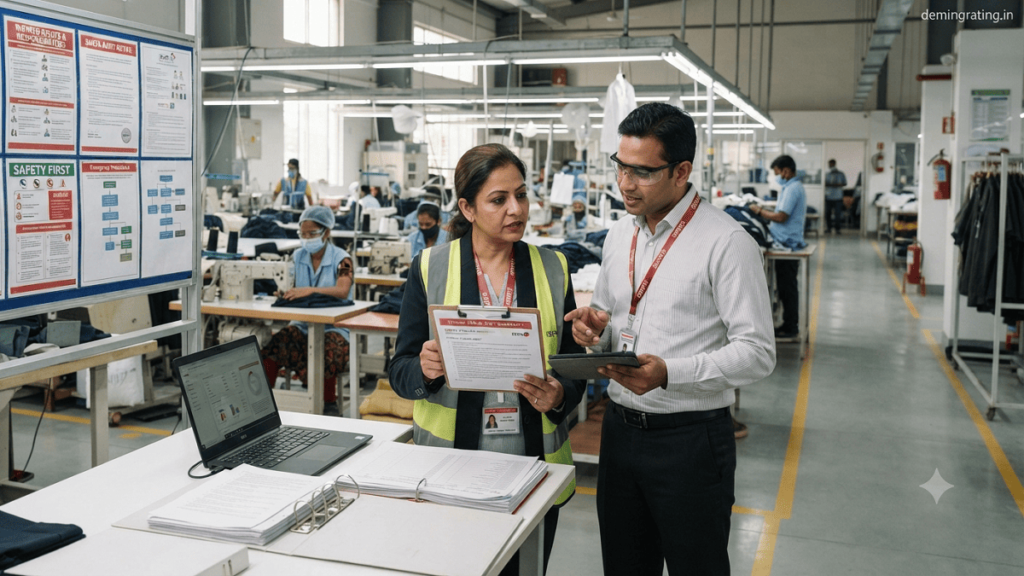
Case Study of SMETA (Sedex)
1. Company Background
Company Profile:
A textile manufacturing company supplying finished garments to international retail brands operates production facilities with more than 800 employees. The company exports products to customers in Europe, North America, SMETA (Sedex) and other global markets.
Due to increasing customer expectations around ethical sourcing, worker welfare, SMETA (Sedex) and responsible supply chain management, the company decided to undergo a SMETA (Sedex Members Ethical Trade Audit) to evaluate its social compliance performance.
Official reference:
Sedex – SMETA Audit Methodology
2. Business Challenges
Before the SMETA audit, the company identified several challenges:
- Limited documentation of employee records
- Inconsistent working hour monitoring
- Lack of formal grievance reporting systems
- Incomplete safety training records
- Weak environmental monitoring practices
- Increasing customer requests for ethical compliance verification
The company needed to improve transparency and demonstrate responsible business practices to global buyers.
3. Initial SMETA Compliance Assessment
The company conducted an internal assessment against SMETA requirements.
Findings Identified
| Area | Existing Condition | Compliance Risk |
|---|---|---|
| Working Hours | Overtime records were manually maintained | Risk of inaccurate reporting |
| Payroll | Limited verification process | Wage compliance concerns |
| Health & Safety | Safety training was irregular | Increased workplace risk |
| Worker Complaints | No formal grievance mechanism | Employee concerns not tracked |
| Environment | Waste records were incomplete | Environmental compliance gaps |
| Ethics | No formal anti-bribery training | Business integrity risk |
4. SMETA Improvement Program
The company developed a corrective action plan to address identified gaps.
A. Labor Standards Improvements
Actions Implemented:
The company improved labor compliance by:
- Updating employment contracts
- Reviewing wage calculation procedures
- Implementing electronic attendance tracking
- Monitoring overtime hours
- Creating a worker grievance process
New procedures included:
- Monthly working hour reviews
- Payroll verification checks
- Employee feedback channels
Result:
The company improved transparency around employee conditions and reduced risks related to labor compliance.
B. Health and Safety Improvements
Actions Implemented:
The company strengthened workplace safety through:
- Regular safety inspections
- Emergency response training
- Fire evacuation drills
- Improved PPE availability
- Workplace hazard assessments
Additional controls included:
- Safety committees
- Accident investigation procedures
- Employee safety awareness sessions
Result:
The workplace became safer, and employees gained better SMETA (Sedex) awareness of safety responsibilities.
C. Worker Welfare and Engagement
Actions Implemented:
The company introduced:
- Confidential complaint channels
- Worker communication meetings
- Employee suggestion systems
- Non-retaliation policies
Workers were informed about:
- Their workplace rights
- Complaint procedures
- Safety responsibilities
Result:
Employee trust improved, and management gained better visibility into workplace concerns.
D. Environmental Management Improvements
Since the company prepared for a broader SMETA 4-Pillar assessment, environmental controls were strengthened.
Actions Implemented:
- Created an environmental management policy
- Improved waste segregation practices
- Tracked energy and water consumption
- Maintained waste disposal records
- Monitored chemical handling procedures
Result:
The company improved environmental awareness and reduced operational waste.
E. Business Integrity Improvements
The company introduced ethical business controls.
Actions Implemented:
- Developed an anti-bribery policy
- Conducted ethics training
- Established reporting procedures
- Improved compliance documentation
Result:
The company strengthened transparency and ethical decision-making processes.
5. SMETA Audit Preparation Process
Before the official audit, SMETA (Sedex) the company performed a readiness assessment.
Document Review
Auditors reviewed:
- Employment records
- Payroll information
- Working hour reports
- Safety records
- Environmental documentation
- Company policies
Workplace Inspection
The audit team assessed:
- Production areas
- Worker facilities
- Emergency systems
- Safety equipment
- Waste management areas
Employee Interviews
Workers were interviewed confidentially regarding:
- Working conditions
- Wage practices
- Safety concerns
- Management behavior
- Complaint mechanisms
Conclusion
This case study demonstrates how a company can successfully implement SMETA (Sedex) audit requirements by integrating ethical practices into daily operations. Through improved labor management, SMETA (Sedex) workplace safety controls, environmental responsibility, SMETA (Sedex) and ethical governance, the organization strengthened its supply chain credibility and improved relationships with global customers.
A successful SMETA program depends on:
- Strong management commitment
- Effective employee involvement
- Accurate documentation and monitoring
- Continuous improvement of social and ethical practices
SMETA compliance should be viewed not only as an audit requirement but as a strategic approach to building responsible, transparent, and sustainable supply chains.
White Paper on SMETA (Sedex)
Executive Summary
Global supply chains are increasingly evaluated not only on operational performance but also on their social, ethical, and environmental responsibilities. Organizations are expected to ensure that suppliers maintain fair labor practices, safe workplaces, responsible environmental management, and ethical business conduct.
SMETA (Sedex Members Ethical Trade Audit) is one of the world’s most widely used ethical trade audit methodologies designed to assess responsible business practices across supply chains. Developed by Sedex, SMETA helps companies identify social compliance risks, improve supplier transparency, SMETA (Sedex) and support responsible sourcing strategies.
Official reference:
Sedex – SMETA Audit Methodology
SMETA provides a structured approach for evaluating:
- Labor standards
- Health and safety practices
- Environmental management
- Business integrity
Through SMETA audits, organizations can strengthen supply chain resilience, improve stakeholder confidence, SMETA (Sedex) and demonstrate commitment to responsible business operations.
1. Introduction to SMETA
1.1 What is SMETA?
SMETA stands for Sedex Members Ethical Trade Audit. It is an audit methodology developed by Sedex to assess ethical and responsible business practices within supply chains.
Unlike traditional compliance audits that focus only on regulatory requirements, SMETA (Sedex) evaluates broader responsible sourcing principles, including:
- Worker rights
- Workplace safety
- Environmental responsibility
- Ethical business behavior
SMETA audits are commonly used by global brands, retailers, manufacturers, and suppliers to monitor social and ethical performance.
2. Purpose of SMETA Audits
The primary purpose of SMETA is to help organizations:
- Identify ethical risks in supply chains
- Improve working conditions
- Protect employee rights
- Strengthen supplier management
- Increase transparency
- Support sustainable business practices
SMETA encourages organizations to move from reactive compliance management toward continuous improvement.
3. SMETA Audit Structure
SMETA is available in two main audit formats:
3.1 SMETA 2-Pillar Audit
The SMETA 2-Pillar audit focuses on social compliance areas.
Pillar 1: Labor Standards
The audit evaluates:
- Freedom of employment
- Child labor prevention
- Working hours
- Wages and benefits
- Discrimination prevention
- Freedom of association
- Employment conditions
Key evidence includes:
- Employee contracts
- Payroll records
- Attendance records
- Worker interviews
Pillar 2: Health and Safety
The audit evaluates:
- Workplace safety systems
- Hazard identification
- Emergency preparedness
- Fire safety
- Safety training
- Personal protective equipment
Evidence includes:
- Safety inspection records
- Training documents
- Incident reports
3.2 SMETA 4-Pillar Audit
The SMETA 4-Pillar audit includes all requirements of the 2-Pillar audit plus:
Pillar 3: Environmental Assessment
Organizations are evaluated on:
- Environmental policies
- Waste management
- Energy usage
- Water consumption
- Pollution prevention
- Resource efficiency
Pillar 4: Business Integrity
Organizations are assessed on:
- Anti-corruption controls
- Ethical business practices
- Transparency
- Fraud prevention
- Reporting mechanisms
4. Importance of SMETA in Supply Chain Management
Modern supply chains involve multiple suppliers across different countries. This creates risks related to:
- Labor violations
- Workplace accidents
- Environmental damage
- Unethical business practices
SMETA helps companies establish visibility and control over supplier operations.
Key benefits include:
- Improved supplier monitoring
- Better risk identification
- Stronger compliance processes
- Responsible sourcing assurance
5. Core Areas Evaluated During a SMETA Audit
5.1 Labor Rights and Workplace Practices
SMETA evaluates whether organizations provide fair and ethical employment conditions.
Assessment areas include:
- Recruitment practices
- Employee contracts
- Wages
- Working hours
- Worker treatment
- Complaint mechanisms
5.2 Occupational Health and Safety
A safe workplace is a fundamental SMETA requirement.
Auditors assess:
- Workplace hazards
- Safety procedures
- Emergency systems
- Worker training
- Equipment safety
5.3 Environmental Responsibility
SMETA 4-Pillar audits examine how organizations manage environmental impacts.
Key areas include:
- Waste reduction
- Pollution control
- Energy efficiency
- Environmental compliance
5.4 Ethical Business Conduct
Organizations must demonstrate responsible business behavior.
This includes:
- Anti-bribery measures
- Ethical decision-making
- Transparent operations
- Compliance reporting systems
Conclusion
SMETA (Sedex Members Ethical Trade Audit) provides organizations with a practical framework for improving ethical, social, environmental, and governance practices across global supply chains.
By implementing SMETA principles, companies can:
- Protect worker rights
- Improve workplace safety
- Strengthen supplier relationships
- Reduce compliance risks
- Enhance sustainability performance
- Build stakeholder trust
SMETA should be viewed as more than an audit requirement. It is a strategic tool that enables organizations to create responsible, transparent, and resilient supply chains aligned with modern ethical business expectations.
References
- Sedex – SMETA Audit Methodology
Sedex SMETA Audit - Sedex – Responsible Sourcing Platform
Sedex Official Website - Ethical Trading Initiative – ETI Base Code
Ethical Trading Initiative Base Code
Industry Application of SMETA (Sedex)
Executive Summary
SMETA (Sedex Members Ethical Trade Audit) is widely applied across industries to evaluate and improve responsible business practices, including labor standards, workplace safety, environmental management, and ethical conduct.
Companies use SMETA audits to assess suppliers, identify compliance risks, improve transparency, and demonstrate commitment to responsible sourcing. The methodology is especially valuable for industries with complex global supply chains where companies depend on multiple suppliers, manufacturing locations, and logistics partners.
Official references:
Sedex – SMETA Audit Methodology
Sedex – Responsible Sourcing Platform
1. Apparel and Textile Industry
Supply Chain Characteristics
The apparel industry is one of the largest users of SMETA audits due to:
- Global manufacturing networks
- Large labor-intensive operations
- Complex supplier relationships
- High focus on worker welfare
Common risks include:
- Excessive working hours
- Low wage concerns
- Unsafe workplace conditions
- Worker rights violations
SMETA Applications
Companies use SMETA to evaluate:
Labor Practices
- Employee contracts
- Wage compliance
- Working hours
- Worker treatment
- Freedom of association
Workplace Safety
- Factory safety systems
- Fire prevention
- Emergency procedures
- Worker training
Ethical Sourcing
- Supplier compliance
- Responsible manufacturing practices
- Supply chain transparency
Business Benefits
SMETA helps apparel companies:
- Meet retailer sourcing requirements
- Improve factory conditions
- Reduce labor-related risks
- Strengthen brand reputation
2. Food and Agriculture Industry
Supply Chain Characteristics
The food industry involves:
- Farms
- Processing facilities
- Packaging suppliers
- Distribution networks
Key concerns include:
- Worker welfare
- Seasonal labor practices
- Food production conditions
- Environmental responsibility
SMETA Applications
Companies assess:
Worker Conditions
- Farm worker treatment
- Employment practices
- Wage compliance
- Working hours
Health and Safety
- Workplace hazards
- Equipment safety
- Protective equipment
Environmental Practices
- Waste management
- Water usage
- Sustainable farming practices
Business Benefits
SMETA supports:
- Responsible agricultural sourcing
- Improved supplier accountability
- Customer confidence in ethical food production
3. Electronics Industry
Supply Chain Characteristics
The electronics sector includes:
- Component manufacturers
- Assembly facilities
- Global suppliers
Common risks include:
- Labor compliance issues
- Worker safety concerns
- Supply chain transparency challenges
SMETA Applications
Companies evaluate:
Labor Compliance
- Working conditions
- Employee rights
- Wage practices
Health and Safety
- Chemical handling
- Equipment safety
- Workplace hazards
Business Ethics
- Supplier conduct
- Ethical sourcing practices
Business Benefits
SMETA helps electronics companies:
- Monitor supplier responsibility
- Reduce reputational risks
- Improve supplier relationships
4. Retail and Consumer Goods Industry
Supply Chain Characteristics
Retail organizations manage large supplier networks involving:
- Clothing suppliers
- Food producers
- Household goods manufacturers
- Packaging suppliers
SMETA Applications
Retail companies use SMETA for:
Supplier Assessment
- Evaluating ethical performance
- Monitoring compliance
- Identifying improvement areas
Responsible Procurement
- Supplier selection
- Vendor approval processes
- Sustainability programs
Business Benefits
SMETA enables retailers to:
- Improve supply chain visibility
- Meet customer expectations
- Support ethical sourcing commitments
5. Manufacturing Industry
Supply Chain Characteristics
Manufacturing companies often operate:
- Multiple factories
- International supplier networks
- Outsourced production facilities
SMETA Applications
Manufacturers apply SMETA to review:
Workforce Management
- Employment practices
- Employee welfare
- Working conditions
Safety Management
- Machine safety
- Hazard controls
- Safety training
Environmental Practices
- Waste reduction
- Resource management
- Pollution prevention
Business Benefits
SMETA helps manufacturers:
- Improve operational compliance
- Reduce workplace risks
- Strengthen global customer relationships
Ask FAQs
What is a SMETA audit?
A SMETA (Sedex Members Ethical Trade Audit) is an ethical trade audit methodology used to assess an organization’s responsible business practices and supply chain performance. It evaluates areas such as labor standards, workplace health and safety, environmental management, and business integrity. SMETA helps companies identify risks, improve compliance, and promote responsible sourcing practices.
What is the difference between SMETA 2-Pillar and 4-Pillar audits
A SMETA 2-Pillar audit focuses on:
Labor standards
Health and safety practices
A SMETA 4-Pillar audit includes all 2-Pillar requirements plus:
Environmental assessment
Business integrity evaluation
Organizations choose the audit type based on customer requirements, industry expectations, and supply chain risks.
Who needs a SMETA audit?
SMETA audits are commonly used by:
Manufacturers
Suppliers
Retailers
Food producers
Apparel companies
Electronics companies
Consumer goods businesses
Global supply chain partners
Companies typically conduct SMETA audits to demonstrate ethical sourcing practices, improve supplier transparency, and meet customer compliance expectations.
How do companies prepare for a SMETA audit
Organizations can prepare by:
Reviewing SMETA requirements
Conducting internal compliance assessments
Updating policies and procedures
Organizing employee and payroll records
Reviewing workplace safety practices
Training employees and managers
Preparing corrective action plans
Proper preparation helps reduce audit findings and improves overall compliance performance.
What are the benefits of SMETA compliance
SMETA compliance helps organizations:
Improve supply chain transparency
Strengthen ethical sourcing practices
Enhance worker welfare and safety
Identify and reduce compliance risks
Improve supplier relationships
Support ESG and sustainability goals
Increase customer and stakeholder confidence
Demonstrate commitment to responsible business practices
SMETA should be viewed as a continuous improvement framework that helps organizations build more ethical, sustainable, and resilient supply chain.
Table of Contents
Disclaimer:
This content is for general informational purposes only and does not constitute professional compliance, legal, or audit advice. SMETA requirements may vary based on industry, location, and business operations. Organizations should refer to official Sedex guidance or consult qualified professionals for specific compliance needs.