
C-TPAT Audit & Compliance
Overview
C-TPAT (Customs Trade Partnership Against Terrorism) is a voluntary supply chain security program established by the U.S. Customs and Border Protection (CBP) after the September 11, 2001 attacks. The program works with businesses involved in international trade to strengthen supply chain security and reduce the risk of terrorism, smuggling, and other security threats.
Companies that participate in commit to implementing security measures across their supply chains and undergo periodic validation assessments (audits) by CBP to verify compliance.
Official CBP information:
CBP Customs Trade Partnership Against Terrorism (C-TPAT)
1. Purpose of a C-TPAT Audit
A C-TPAT audit evaluates whether an organization’s supply chain security practices meet CBP’s Minimum Security Criteria (MSC). The audit focuses on identifying vulnerabilities and ensuring appropriate controls are implemented.
The main objectives are:
- Verify compliance with security requirements
- Identify supply chain security risks
- Evaluate effectiveness of existing controls
- Ensure proper documentation and recordkeeping
- Promote continuous improvement in security practices
A successful audit demonstrates that a company maintains a secure international supply chain and may receive benefits such as reduced customs inspections and priority processing.
2. Key Areas Covered in a C-TPAT Audit
A. Security Vision and Responsibility
Auditors review whether the company has:
- A documented supply chain security policy
- Assigned security responsibilities
- Management commitment toward security compliance
- Periodic security reviews
Required evidence may include:
- Security manuals
- Organizational charts
- Management review records
- Security improvement plans
B. Business Partner Security
Companies must ensure that suppliers, manufacturers, logistics providers, and service partners maintain appropriate security standards.
Audit checks include:
- Supplier security agreements
- Vendor risk assessments
- Verification of partner compliance
- Screening procedures for business partners
Examples of documentation:
- Supplier questionnaires
- Contracts containing security clauses
- Supplier audit reports
C. Container and Transportation Security
Transportation security is a major focus area because cargo can be vulnerable during movement.
Auditors evaluate:
- Container inspection procedures
- High-security seal usage
- Seal control processes
- Tracking and monitoring systems
- Transportation provider security controls
Common requirements:
- Documented container inspection checklist
- Seal inventory records
- Seal replacement procedures
- Carrier security verification
Reference:
CBP C-TPAT Minimum Security Criteria (MSC)
D. Physical Security
The facility must have adequate physical protection measures.
Audit areas include:
- Perimeter security
- Access control systems
- Visitor management
- CCTV monitoring
- Lighting systems
- Restricted areas
Examples of controls:
- Employee identification badges
- Visitor sign-in procedures
- Security guard procedures
- Alarm systems
E. Personnel Security
C-TPAT requires companies to maintain processes that prevent unauthorized individuals from accessing supply chain operations.
Auditors review:
- Employee background checks
- Hiring procedures
- Identification verification
- Employee termination processes
- Security awareness training
Required records may include:
- Background screening documents
- Training attendance records
- Termination checklists
F. Cybersecurity Controls
Modern compliance includes protection against cybersecurity risks.
Audit areas include:
- Information security policies
- Password management
- User access controls
- Network protection
- Incident response procedures
Recommended practices:
- Multi-factor authentication
- Regular vulnerability assessments
- Employee cybersecurity training
- Data backup procedures
G. Security Training and Awareness
Organizations must train employees on supply chain security responsibilities.
Training topics may include:
- Cargo security risks
- Suspicious activity reporting
- Access control procedures
- Cybersecurity awareness
- Emergency response
Evidence:
- Training records
- Training materials
- Employee acknowledgment forms
Useful External Resources
- U.S. Customs and Border Protection – Program
CBP Customs Trade Partnership Against Terrorism (C-TPAT) - C-TPAT Minimum Security Criteria
CBP C-TPAT Security Criteria - U.S. Customs and Border Protection Trade Programs
CBP Trade Programs Overview - World Customs Organization – SAFE Framework of Standards
World Customs Organization SAFE Framework
Conclusion
C-TPAT audit and compliance is not only a customs requirement but a comprehensive supply chain security management system. Organizations that maintain strong documentation, effective security controls, employee awareness, and continuous improvement processes are better positioned to achieve and maintain certification benefits.
What is a C-TPAT Audit?
A C-TPAT audit is a formal assessment conducted to evaluate whether a company’s supply chain security practices comply with the requirements of the Customs Trade Partnership Against Terrorism (C-TPAT) program established by the U.S. Customs and Border Protection (CBP).
The purpose of the audit is to verify that companies involved in international trade have effective security measures in place to prevent risks such as terrorism, smuggling, cargo theft, unauthorized access, and supply chain vulnerabilities.
Official reference:
CBP Customs Trade Partnership Against Terrorism (C-TPAT)
Purpose of a C-TPAT Audit
A C-TPAT audit helps CBP and participating companies confirm that security controls are properly implemented throughout the supply chain. The audit evaluates whether an organization:
- Identifies and manages supply chain security risks
- Maintains documented security procedures
- Protects cargo and facilities from unauthorized access
- Ensures employees and business partners follow security requirements
- Continuously improves its security program
Who Conducts a C-TPAT Audit?
C-TPAT audits may be conducted by:
- U.S. Customs and Border Protection (CBP) C-TPAT specialists
- CBP performs validation assessments to verify compliance.
- Internal company audit teams
- Organizations often conduct self-assessments before CBP reviews.
- Third-party security consultants
- Companies may hire external experts to identify gaps and prepare for validation.
What Does a C-TPAT Audit Review?
A C-TPAT audit examines several areas of supply chain security, including:
1. Security Policies and Procedures
Auditors review whether the company has:
- Written security policies
- Defined security responsibilities
- Risk assessment procedures
- Corrective action processes
2. Physical Security
The audit evaluates facility protection measures such as:
- Perimeter fencing
- Access control systems
- Security guards
- CCTV monitoring
- Visitor management
- Restricted area controls
3. Container and Cargo Security
Auditors verify controls related to cargo protection, including:
- Container inspections
- High-security seal management
- Seal tracking records
- Storage procedures
- Transportation security
4. Business Partner Security
Companies must ensure that suppliers and logistics partners maintain appropriate security practices.
Auditors may review:
- Supplier security questionnaires
- Vendor assessments
- Contracts with security requirements
- Carrier compliance records
5. Employee Security
The audit checks whether companies have processes for:
- Employee background screening
- Identification control
- Employee termination procedures
- Security awareness training
6. Cybersecurity
Modern audits also evaluate information security controls, including:
- Password policies
- User access management
- Data protection measures
- Cybersecurity training
- Incident response procedures
Typical C-TPAT Audit Process
Step 1: Preparation
The company reviews requirements and performs an internal risk assessment.
Step 2: Document Review
Auditors examine policies, procedures, records, and evidence of compliance.
Step 3: Facility Inspection
The auditor visits the facility to verify that security procedures are implemented.
Step 4: Employee Interviews
Employees may be interviewed to confirm awareness of security responsibilities.
Step 5: Findings and Corrective Actions
Any gaps identified must be addressed through corrective action plans.
Examples of C-TPAT Audit Findings
Common issues identified during audits include:
- Missing container inspection records
- Incomplete visitor logs
- Lack of employee security training records
- Weak supplier verification processes
- Poor access control management
- Outdated security procedures
- Insufficient cybersecurity controls
Why is a C-TPAT Audit Important?
A successful C-TPAT audit helps companies:
- Reduce supply chain security risks
- Improve customs processing efficiency
- Strengthen relationships with international customers
- Demonstrate commitment to global trade security
- Potentially receive benefits such as reduced cargo inspections
Key Reference
CBP C-TPAT Minimum Security Criteria:
CBP C-TPAT Minimum Security Criteria

What are C-TPAT compliance requirements?
C-TPAT (Customs Trade Partnership Against Terrorism) compliance requirements are the security standards that companies must implement to protect their international supply chains from risks such as terrorism, smuggling, cargo theft, and unauthorized access.
The requirements are based on the Minimum Security Criteria (MSC) established by the U.S. Customs and Border Protection (CBP). They apply to different types of supply chain participants, including importers, exporters, manufacturers, carriers, brokers, and logistics providers.
Official reference:
CBP Customs Trade Partnership Against Terrorism (C-TPAT)
1. Security Vision and Responsibility
Companies must establish a formal supply chain security program supported by management.
Key requirements:
- Develop a written supply chain security policy
- Assign responsible personnel for security management
- Conduct periodic security risk assessments
- Establish procedures for reporting and investigating security incidents
- Review and improve security practices regularly
Required evidence may include:
- Security manuals
- Organizational responsibility charts
- Risk assessment reports
- Management review records
2. Risk Assessment Requirements
Organizations must identify and evaluate security risks throughout their supply chain.
Companies should:
- Identify potential security vulnerabilities
- Assess supplier and logistics risks
- Evaluate transportation routes
- Document risk mitigation actions
- Update assessments periodically
A risk assessment should consider:
- Cargo theft risks
- Unauthorized access risks
- Supplier security weaknesses
- Cybersecurity threats
- Geographical and operational risks
3. Business Partner Security Requirements
C-TPAT requires companies to verify that their business partners maintain appropriate security practices.
Covered partners include:
- Suppliers
- Manufacturers
- Freight forwarders
- Transportation providers
- Customs brokers
- Third-party logistics providers
Compliance requirements include:
- Conducting supplier security evaluations
- Maintaining written agreements with security expectations
- Verifying partner compliance
- Monitoring high-risk suppliers
Examples of documentation:
- Supplier security questionnaires
- Vendor audit reports
- Contracts with security clauses
4. Container and Transportation Security Requirements
Cargo security is a major focus of compliance.
Companies must establish controls for:
Container Security
Requirements include:
- Inspect containers before loading
- Use high-security seals that meet international standards
- Maintain seal control procedures
- Record container inspection results
- Secure containers during storage and transportation
Transportation Security
Companies should:
- Verify transportation providers
- Monitor cargo movement
- Establish procedures for delays or route deviations
- Maintain shipment records
Required records:
- Container inspection checklists
- Seal logs
- Transportation documentation
- Shipment tracking records
5. Physical Security Requirements
Facilities must maintain security controls to prevent unauthorized access.
Requirements include:
- Secure facility boundaries
- Control entry and exit points
- Maintain visitor management procedures
- Protect restricted areas
- Ensure proper lighting
- Use security monitoring systems where appropriate
Examples:
- Employee identification badges
- Visitor sign-in records
- CCTV monitoring
- Security guard procedures
- Access control systems
6. Access Control Requirements
Companies must control access to facilities, cargo, and sensitive areas.
Requirements include:
- Issue identification badges to employees
- Verify visitor identity
- Escort visitors when required
- Restrict access to authorized personnel only
- Remove access privileges after employee termination
Records should include:
- Badge issuance records
- Visitor logs
- Access authorization lists
7. Personnel Security Requirements
Companies must establish processes to reduce risks from unauthorized or unsuitable personnel.
Requirements include:
- Employee background verification where legally permitted
- Employment application screening
- Identification verification
- Termination procedures
- Security awareness training
Companies should maintain:
- Employee screening records
- Training documentation
- Termination checklists
8. Security Training and Awareness Requirements
Employees must understand their role in maintaining supply chain security.
Training should cover:
- Cargo security procedures
- Recognizing suspicious activities
- Reporting security concerns
- Access control procedures
- Cybersecurity awareness
Required evidence:
- Training schedules
- Attendance records
- Training materials
- Employee acknowledgments
9. Cybersecurity Requirements
C-TPAT includes cybersecurity controls to protect supply chain information.
Companies should implement:
- Written cybersecurity policies
- User access controls
- Password management requirements
- Multi-factor authentication where appropriate
- Protection against unauthorized system access
- Incident response procedures
- Employee cybersecurity training
Common audit checks:
- Access rights reviews
- Security awareness records
- Data protection procedures
- Backup processes
Official References
- U.S. Customs and Border Protection – Program
CBP Customs Trade Partnership Against Terrorism (C-TPAT) - C-TPAT Minimum Security Criteria
CBP C-TPAT Minimum Security Criteria - World Customs Organization SAFE Framework of Standards
World Customs Organization SAFE Framework
Summary:
C-TPAT compliance requires organizations to establish a comprehensive supply chain security management system covering risk assessment, business partner controls, cargo protection, physical security, employee security, cybersecurity, training, and continuous improvement. Compliance is demonstrated through effective implementation and documented evidence of security practices.
How to prepare for a C-TPAT audit?
Preparing for a C-TPAT (Customs Trade Partnership Against Terrorism) audit requires a structured review of your company’s supply chain security practices, documentation, and operational controls. A successful audit depends on demonstrating that security procedures are not only documented but also effectively implemented in daily operations.
C-TPAT audits (also known as validation assessments) are conducted by U.S. Customs and Border Protection (CBP) to verify compliance with the program’s Minimum Security Criteria (MSC).
Official references:
CBP Customs Trade Partnership Against Terrorism (C-TPAT)
CBP C-TPAT Minimum Security Criteria
1. Conduct an Internal C-TPAT Gap Assessment
Before the audit, perform an internal review to identify weaknesses against requirements.
Review:
- Current security policies
- Facility security controls
- Employee security procedures
- Supplier security practices
- Transportation security measures
- Cybersecurity controls
- Documentation accuracy
Recommended approach:
- Compare existing practices against Minimum Security Criteria.
- Identify missing controls or documentation gaps.
- Assign responsibility for corrective actions.
- Track completion before the audit.
A documented gap assessment demonstrates proactive compliance management.
2. Review and Update Security Policies
Ensure all security procedures are current, approved, and communicated to employees.
Important policies include:
- Supply chain security policy
- Visitor access policy
- Container inspection procedure
- Seal management procedure
- Employee screening procedure
- Incident reporting procedure
- Cybersecurity policy
- Emergency response procedure
Verify that:
- Documents have revision dates
- Responsibilities are clearly assigned
- Employees understand applicable procedures
- Actual practices match written procedures
3. Perform a Supply Chain Risk Assessment
requires companies to identify and address security vulnerabilities.
Review risks related to:
- Suppliers
- Manufacturing locations
- Transportation routes
- Ports and border crossings
- Third-party logistics providers
- Information systems
Document:
- Identified risks
- Risk rating
- Corrective actions
- Review dates
Example:
| Risk Area | Risk Identified | Corrective Action |
|---|---|---|
| Supplier Security | Missing security verification | Annual supplier assessment |
| Container Control | Incomplete inspection records | Implement inspection checklist |
| Cybersecurity | Weak access controls | Introduce stronger authentication |
4. Verify Business Partner Compliance
requires companies to evaluate the security practices of business partners.
Review:
- Supplier security agreements
- Vendor assessments
- Carrier qualification records
- Third-party logistics provider reviews
Ensure:
- High-risk partners are evaluated regularly
- Security expectations are included in contracts
- Corrective actions are documented
Maintain evidence such as:
- Supplier questionnaires
- Vendor audit reports
- Signed agreements
5. Inspect Physical Security Controls
Conduct a facility security walkthrough before the audit.
Check:
Facility Protection
- Perimeter fencing
- Gates and entry points
- Lighting systems
- Security alarms
- CCTV coverage
Access Control
- Employee identification badges
- Visitor registration process
- Restricted area controls
- Access authorization lists
Verify that physical controls match documented procedures.
6. Review Container and Cargo Security Procedures
Container security is one of the most important areas of compliance.
Confirm that employees follow procedures for:
Container Inspection
Maintain records showing:
- Container condition checks
- Door inspections
- Floor and ceiling inspections
- Inspection date and employee identification
Seal Management
Verify:
- Approved high-security seals are used
- Seal numbers are recorded
- Seal inventory is controlled
- Damaged or missing seals are investigated
Required documents:
- Container inspection logs
- Seal tracking records
- Shipment records
7. Verify Employee Security Procedures
Review personnel security controls, including:
- Hiring procedures
- Background screening processes
- Employee identification controls
- Termination procedures
Confirm that:
- Former employees lose system and facility access
- Employee records are maintained
- Security responsibilities are communicated
Final Preparation Recommendation
A successful audit preparation approach should focus on three areas:
- People – Employees understand and follow security requirements.
- Process – Security procedures are documented and consistently applied.
- Proof – Records and evidence demonstrate compliance.
Organizations that continuously monitor risks and maintain strong documentation are better positioned to pass validation assessments and maintain long-term compliance.
Additional reference:
CBP Trade Programs Administration
What are the benefits of C-TPAT certification?
C-TPAT (Customs Trade Partnership Against Terrorism) certification provides companies with a framework to strengthen supply chain security while receiving benefits from participation in a trusted trader program managed by U.S. Customs and Border Protection (CBP).
certification demonstrates that an organization has implemented effective security controls to protect its supply chain from threats such as terrorism, cargo theft, smuggling, and unauthorized access.
Official reference:
CBP Customs Trade Partnership Against Terrorism (C-TPAT)
1. Reduced Customs Inspections
One of the primary benefits of participation is reduced likelihood of cargo examinations compared with non-certified companies.
Benefits include:
- Lower risk of shipment delays caused by inspections
- More predictable customs clearance processes
- Improved supply chain reliability
CBP uses membership as a factor when assessing cargo security risk.
2. Faster Customs Processing
C-TPAT-certified companies may receive priority processing advantages during customs operations.
Operational benefits include:
- Faster cargo movement
- Reduced administrative delays
- Improved import/export efficiency
- Better shipment planning
This can be especially valuable for companies handling high-volume international trade.
3. Improved Supply Chain Security
helps organizations identify and reduce vulnerabilities throughout their supply chain.
Companies improve security through:
- Supplier risk assessments
- Transportation security controls
- Container protection measures
- Employee security procedures
- Access control improvements
A stronger security program reduces risks such as:
- Cargo theft
- Unauthorized access
- Shipment tampering
- Supply chain disruptions
4. Enhanced Business Reputation and Customer Confidence
certification demonstrates a company’s commitment to international trade security.
Business advantages include:
- Increased customer trust
- Stronger relationships with global partners
- Improved credibility with multinational customers
- Competitive advantage when bidding for contracts
Many global organizations prefer working with suppliers that maintain recognized supply chain security standards.
5. Better Risk Management
The program encourages companies to adopt a proactive approach to security.
Organizations benefit from:
- Structured risk assessments
- Documented security processes
- Regular compliance reviews
- Continuous improvement practices
This helps companies identify potential problems before they become operational issues.
6. Stronger Relationships With Supply Chain Partners
encourages collaboration between companies and their business partners.
Benefits include:
- Improved supplier evaluation processes
- Better communication with logistics providers
- Clear security expectations
- More reliable supply chain operations
Companies can use requirements as a standard for selecting and monitoring suppliers.
7. Improved Internal Security Controls
Implementing requirements often improves overall company operations.
Examples include:
- Better employee access management
- Improved visitor control
- Stronger documentation practices
- Enhanced inventory protection
- Improved incident reporting
These improvements can reduce both security risks and operational inefficiencies.
8. Employee Security Awareness
requires companies to train employees on security responsibilities.
Benefits include:
- Employees recognize suspicious activities
- Faster reporting of security issues
- Increased awareness of cargo protection procedures
- Stronger security culture
9. Cybersecurity Improvements
Modern requirements encourage companies to strengthen cybersecurity practices.
Benefits include:
- Better protection of trade-related information
- Improved access controls
- Reduced risk of unauthorized system access
- Increased awareness of cyber threats
10. Competitive Advantage in Global Trade
C-TPAT certification can provide a competitive advantage for companies involved in international commerce.
Advantages include:
- Preferred status as a trusted trading partner
- Increased confidence from customers and suppliers
- Improved ability to meet global supply chain expectations
- Stronger position in international markets
Summary of C-TPAT Benefits
| Benefit Area | Business Impact |
|---|---|
| Customs Processing | Reduced delays and improved shipment flow |
| Cargo Security | Lower risk of theft, tampering, and smuggling |
| Supply Chain Management | Better visibility and risk control |
| Customer Confidence | Increased trust from business partners |
| Compliance | Stronger regulatory readiness |
| Operations | Improved processes and documentation |
| Employee Awareness | Better security culture |
| Cybersecurity | Improved protection of information systems |
Important Note
C-TPAT certification does not guarantee that shipments will never be inspected or that customs clearance will always be immediate. CBP maintains the authority to inspect shipments based on security risks, intelligence, and operational requirements.
Official Resources
- U.S. Customs and Border Protection – C-TPAT Program
CBP Customs Trade Partnership Against Terrorism (C-TPAT) - CBP Trade Programs Administration
CBP Trade Programs Administration - World Customs Organization – SAFE Framework of Standards
World Customs Organization SAFE Framework
Conclusion:
C-TPAT certification provides companies with both security and operational advantages by creating a more resilient supply chain, improving customs efficiency, strengthening partner confidence, and reducing exposure to international trade risks. It is best viewed not only as a compliance requirement but as a strategic investment in supply chain reliability and business continuity.
How does C-TPAT improve supply chain security?
C-TPAT (Customs Trade Partnership Against Terrorism) improves supply chain security by helping companies identify vulnerabilities, implement preventive controls, and establish standardized security practices across their international supply chain. The program encourages collaboration between U.S. Customs and Border Protection (CBP) and private-sector companies to protect cargo from threats such as terrorism, smuggling, theft, tampering, and unauthorized access.
Official reference:
CBP Customs Trade Partnership Against Terrorism (C-TPAT)
1. Identifies Supply Chain Risks
C-TPAT requires companies to conduct regular risk assessments to identify weaknesses in their supply chain.
Companies evaluate risks related to:
- Suppliers and manufacturers
- Transportation providers
- Warehouses and distribution centers
- Cargo handling processes
- International shipping routes
- Cybersecurity threats
By identifying vulnerabilities early, organizations can implement preventive measures before security incidents occur.
Example:
A company may identify that a third-party warehouse has weak access controls and implement additional verification requirements.
2. Strengthens Physical Security Controls
C-TPAT improves facility security by requiring companies to protect locations where cargo is manufactured, stored, and transported.
Security improvements include:
- Controlled facility access points
- Employee identification systems
- Visitor management procedures
- Security cameras and monitoring systems
- Proper lighting and perimeter protection
- Restricted access to sensitive areas
These controls reduce the possibility of unauthorized individuals accessing cargo or operational areas.
3. Protects Cargo and Containers
Cargo security is a major focus of C-TPAT.
Companies implement procedures to prevent:
- Cargo theft
- Container tampering
- Unauthorized loading or unloading
- Shipment contamination
Key controls include:
- Container inspections before loading
- Use of high-security seals
- Seal tracking and inventory management
- Secure cargo storage
- Documentation of inspections
Reference:
CBP C-TPAT Minimum Security Criteria
4. Improves Business Partner Security
Modern supply chains involve many organizations, including:
- Suppliers
- Manufacturers
- Freight forwarders
- Carriers
- Customs brokers
- Logistics providers
C-TPAT requires companies to evaluate and monitor their partners’ security practices.
Improvements include:
- Supplier security assessments
- Security requirements in contracts
- Vendor verification processes
- Regular partner reviews
This creates a more secure supply chain from origin to final destination.
5. Enhances Transportation Security
C-TPAT helps companies establish stronger controls over cargo movement.
Security measures include:
- Approved transportation providers
- Shipment tracking systems
- Route risk assessments
- Procedures for delays or unexpected events
- Driver identification and verification
These practices reduce risks during transportation.
6. Strengthens Employee Security Awareness
Employees play a critical role in supply chain protection.
C-TPAT encourages companies to provide training on:
- Recognizing suspicious activities
- Reporting security incidents
- Cargo protection procedures
- Access control requirements
- Emergency response actions
A trained workforce helps detect and prevent security threats more effectively.
7. Improves Cybersecurity Protection
Supply chains depend heavily on digital systems for:
- Shipment tracking
- Customer information
- Inventory management
- Trade documentation
C-TPAT encourages companies to implement cybersecurity controls such as:
- User access management
- Password security requirements
- Data protection measures
- Cyber incident response procedures
- Employee cybersecurity awareness training
This reduces risks from cyber threats that could disrupt supply chain operations.
Conclusion
C-TPAT improves supply chain security by creating a structured security framework that covers the entire movement of goods—from suppliers and manufacturers to transportation providers and final delivery. Through risk assessments, stronger physical controls, partner verification, employee training, cybersecurity measures, and continuous improvement, companies can build a more secure, reliable, and resilient global supply chain.
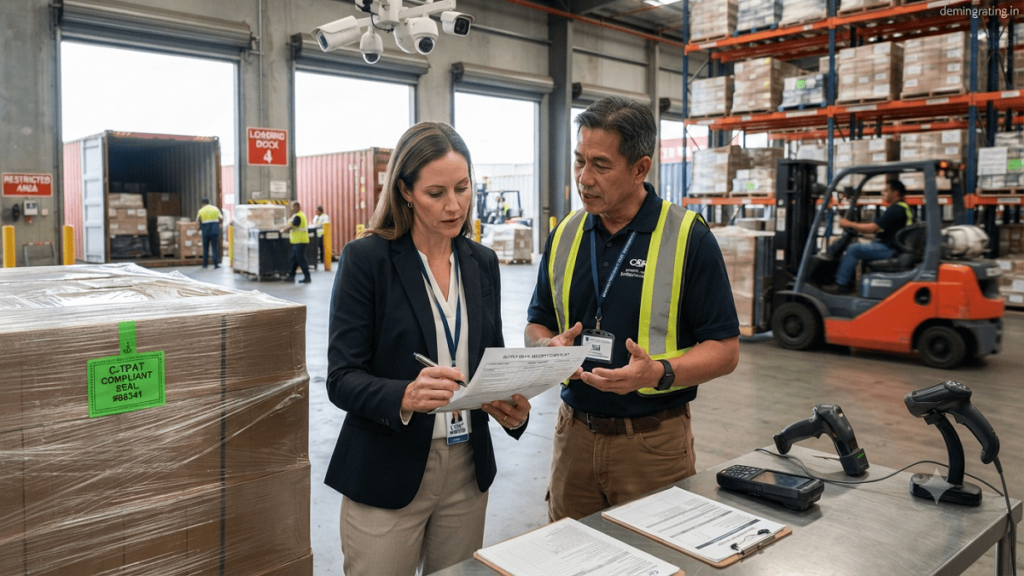
Case Study of C-TPAT Audit & Compliance
1. Company Background
Company Profile:
A global manufacturing company supplying automotive components to customers in the United States operates manufacturing facilities in Asia and exports finished goods through international logistics providers.
Business Challenges:
- High-volume international shipments to U.S. customers
- Multiple suppliers across different countries
- Dependence on third-party logistics providers
- Risk of cargo theft, shipment delays, and security breaches
- Increasing customer expectations for supply chain security compliance
To strengthen its supply chain security and improve U.S. import operations, the company decided to implement and maintain compliance with the Customs Trade Partnership Against Terrorism (C-TPAT) program.
Official reference:
CBP Customs Trade Partnership Against Terrorism (C-TPAT)
2. Initial Compliance Assessment
Before applying for C-TPAT participation, the company conducted an internal security assessment based on the C-TPAT Minimum Security Criteria (MSC).
Reference:
CBP C-TPAT Minimum Security Criteria
Findings Identified
| Area | Existing Condition | Risk Identified |
|---|---|---|
| Supplier Management | No formal supplier security evaluation | Unknown supplier security risks |
| Container Security | Inspections performed inconsistently | Potential cargo tampering risk |
| Seal Management | Manual tracking process | Risk of seal misuse |
| Employee Training | No documented security training | Low security awareness |
| Visitor Control | Paper-based visitor logs | Limited access monitoring |
| Cybersecurity | Basic password controls | Potential data security risks |
3. Corrective Action Plan
The company developed a C-TPAT improvement plan to address identified gaps.
A. Supply Chain Risk Management
Actions implemented:
- Created a formal supply chain risk assessment process
- Classified suppliers based on security risk
- Introduced annual supplier security reviews
- Added security requirements to supplier contracts
Result:
The company gained better visibility into supplier security practices and improved control over third-party risks.
B. Container and Cargo Security Improvements
Actions implemented:
- Introduced standardized container inspection checklists
- Required documented inspection before loading
- Implemented high-security seal controls
- Created seal inventory tracking procedures
New controls included:
- Seal number recording
- Seal issue and return tracking
- Investigation procedures for damaged seals
Result:
Cargo integrity improved, and the company reduced the risk of unauthorized access during transportation.
C. Physical Security Enhancement
The company upgraded facility security by implementing:
- Electronic access control systems
- Employee identification badges
- CCTV monitoring
- Visitor registration procedures
- Restricted access zones
Before:
Visitors could enter production areas with limited monitoring.
After:
Visitors required:
- Identity verification
- Visitor badge issuance
- Escort by authorized employees
Result:
Unauthorized access risks were significantly reduced.
D. Employee Security and Training
The company developed a security awareness program covering:
- C-TPAT requirements
- Suspicious activity reporting
- Cargo security procedures
- Emergency response actions
- Cybersecurity awareness
Training records were maintained through:
- Attendance sheets
- Training materials
- Employee acknowledgments
Result:
Employees became more aware of their responsibilities in protecting the supply chain.
E. Cybersecurity Improvements
The company strengthened information security controls.
Implemented measures:
- User access reviews
- Stronger password requirements
- Employee cybersecurity training
- Backup procedures
- Incident response processes
Result:
The company reduced risks associated with unauthorized access to trade and shipment information.
4. C-TPAT Audit Preparation Process
Before the CBP validation assessment, the company performed an internal mock audit.
Activities included:
Document Review
Auditors reviewed:
- Security policies
- Risk assessments
- Supplier evaluations
- Training records
- Container inspection logs
- Incident reports
Facility Inspection
The audit team verified:
- Perimeter security
- Access controls
- Cargo storage areas
- Container handling procedures
- Security monitoring systems
Employee Interviews
Employees were asked questions such as:
- How do you report suspicious activity?
- What is the procedure for visitors?
- How are containers inspected?
- What happens if a seal is damaged?
5. C-TPAT Audit Findings and Resolution
During the internal audit, the following issues were identified:
| Finding | Root Cause | Corrective Action |
|---|---|---|
| Missing training records | No centralized tracking system | Implemented electronic training database |
| Supplier reviews incomplete | No defined review schedule | Created annual supplier evaluation program |
| Inconsistent container inspections | Lack of standardized procedure | Introduced mandatory inspection checklist |
All corrective actions were completed before the CBP validation assessment.
6. Audit Outcome
The company successfully demonstrated compliance with C-TPAT requirements.
Key Achievements:
- Established documented supply chain security procedures
- Improved supplier monitoring
- Strengthened cargo protection
- Increased employee security awareness
- Improved audit readiness
- Enhanced relationship with U.S. customers
Conclusion
This case study demonstrates how a company can successfully implement C-TPAT audit and compliance requirements by integrating security practices into daily operations. The organization improved supply chain visibility, reduced security risks, strengthened business partnerships, and created a more resilient international trade operation.
A successful C-TPAT program requires three core elements:
- Effective security processes – clearly defined and implemented controls
- Employee involvement – trained personnel who understand security responsibilities
- Documented evidence – records proving compliance and continuous improvement
C-TPAT compliance should be viewed as a strategic supply chain security investment rather than only a customs requirement.
White Paper on C-TPAT Audit & Compliance
Executive Summary
Global supply chains are increasingly exposed to security threats, including cargo theft, smuggling, unauthorized access, cyber threats, and disruptions caused by weak supplier controls. The Customs Trade Partnership Against Terrorism (C-TPAT) program provides organizations with a structured framework to identify vulnerabilities and implement security measures throughout their international supply chains.
Established by the U.S. Customs and Border Protection (CBP), C-TPAT is a voluntary partnership program that encourages companies to adopt security practices designed to protect the movement of goods from origin to destination. Participants must evaluate their supply chain security practices, implement controls based on risk, and maintain evidence demonstrating compliance.
A C-TPAT audit or validation assessment evaluates whether a company’s security procedures are effectively implemented and aligned with CBP requirements. Successful compliance enhances supply chain resilience, improves operational visibility, and strengthens relationships with global trading partners.
1. Introduction to C-TPAT
1.1 Background
The Customs Trade Partnership Against Terrorism (C-TPAT) was introduced by CBP to strengthen international supply chain security by creating collaboration between government authorities and private companies.
The program focuses on preventing terrorists and criminal organizations from exploiting legitimate trade channels. C-TPAT uses a risk-based approach, allowing companies to develop security measures appropriate to their business model and supply chain risks.
2. Purpose of C-TPAT Compliance
The primary objectives of C-TPAT compliance are:
- Protect international cargo movements
- Reduce supply chain vulnerabilities
- Improve security collaboration between businesses and CBP
- Establish consistent security practices
- Enhance risk management capabilities
Organizations participating in C-TPAT must assess their supply chains against CBP security criteria, implement required controls, and maintain documented evidence of compliance.
3. Importance of C-TPAT Audit and Validation
A C-TPAT audit evaluates whether security controls are:
- Properly documented
- Implemented effectively
- Consistently followed
- Supported by objective evidence
The audit process helps organizations identify weaknesses before they result in:
- Cargo loss
- Security incidents
- Regulatory concerns
- Supply chain disruptions
A strong audit program transforms security from a reactive activity into a proactive risk-management system.
4. C-TPAT Compliance Framework
C-TPAT compliance is built around several critical security areas.
4.1 Business Partner Security
Organizations must ensure that suppliers, logistics providers, and other business partners maintain appropriate security practices.
Key requirements:
- Supplier security evaluations
- Written security agreements
- Partner risk assessments
- Verification of security practices
Examples of evidence:
- Supplier questionnaires
- Vendor assessments
- Security clauses in contracts
- Partner certifications
Business partner requirements ensure security extends beyond the company’s own facilities into the wider supply chain.
4.2 Container and Cargo Security
Cargo protection is one of the most important elements of C-TPAT compliance.
Organizations should establish controls for:
- Container inspections
- Seal management
- Cargo loading procedures
- Secure storage
- Shipment monitoring
Required controls include:
- Inspection records
- Seal tracking logs
- Container security procedures
- Investigation processes for damaged seals
4.3 Physical Security Controls
Physical security measures protect facilities, equipment, and cargo.
Common controls include:
- Perimeter protection
- Security lighting
- CCTV monitoring
- Access control systems
- Restricted area management
The objective is to prevent unauthorized access and protect sensitive supply chain operations.
4.4 Access Control Management
Effective access control ensures only authorized personnel can enter facilities or access sensitive information.
Controls include:
- Employee identification badges
- Visitor registration
- Visitor escort procedures
- Access authorization reviews
Organizations should maintain records demonstrating that access is controlled and monitored.
4.5 Personnel Security
Employees have a significant impact on supply chain security.
C-TPAT programs typically include:
- Employee screening processes
- Background verification where applicable
- Security responsibilities
- Employee termination procedures
Companies should ensure former employees no longer have access to facilities or systems.
4.6 Security Training and Awareness
Training ensures employees understand security expectations.
Training topics include:
- Suspicious activity reporting
- Cargo security procedures
- Access control requirements
- Emergency response
- Cybersecurity awareness
Evidence includes:
- Training attendance records
- Training materials
- Employee acknowledgments
4.7 Cybersecurity Controls
Modern supply chains depend heavily on digital systems, making cybersecurity an essential compliance area.
Key controls include:
- User access management
- Password security
- Data protection
- Incident response procedures
- Cybersecurity awareness training
Cybersecurity failures can impact:
- Shipment information
- Customer data
- Trade documentation
- Operational continuity
5. C-TPAT Audit Process
Phase 1: Preparation
Organizations should:
- Review C-TPAT requirements
- Perform risk assessments
- Conduct internal audits
- Update procedures
Phase 2: Documentation Review
Auditors review evidence such as:
- Security policies
- Risk assessments
- Training records
- Supplier evaluations
- Inspection logs
Phase 3: Facility Assessment
The audit team verifies actual implementation through:
- Facility walkthroughs
- Employee interviews
- Security system reviews
- Process observations
Phase 4: Corrective Action
If gaps are identified, organizations must:
- Investigate root causes
- Define corrective actions
- Implement improvements
- Maintain evidence of completion
Conclusion
C-TPAT audit and compliance represent a comprehensive approach to protecting international supply chains against security threats. Organizations that successfully implement C-TPAT requirements develop stronger controls over suppliers, cargo, facilities, employees, and information systems.
The most successful C-TPAT programs are not created solely to pass audits; they are integrated into daily business operations as a long-term security and risk-management strategy.
By combining documented procedures, employee awareness, technology controls, supplier collaboration, and continuous improvement, companies can build secure, efficient, and resilient global supply chains.
References
- U.S. Customs and Border Protection – Customs Trade Partnership Against Terrorism (C-TPAT)
CBP C-TPAT Program - C-TPAT Minimum Security Criteria
CBP C-TPAT Security Criteria - U.S. Customs and Border Protection – C-TPAT Frequently Asked Questions
CBP C-TPAT FAQs - World Customs Organization – SAFE Framework of Standards
World Customs Organization SAFE Framework
Industry Application of C-TPAT Audit & Compliance
Executive Summary
The Customs Trade Partnership Against Terrorism (C-TPAT) program is widely applied across industries involved in international trade, particularly organizations that import goods into the United States. C-TPAT compliance helps companies strengthen supply chain security by establishing controls for cargo protection, supplier management, facility security, employee awareness, transportation security, and cybersecurity.
Different industries apply C-TPAT requirements based on their specific supply chain risks. While a pharmaceutical company may focus heavily on product integrity and controlled access, an automotive manufacturer may prioritize supplier security and just-in-time logistics protection.
Official reference:
CBP Customs Trade Partnership Against Terrorism (C-TPAT)
1. Automotive Industry
Supply Chain Characteristics
The automotive industry relies on complex global supply chains involving:
- Tier 1, Tier 2, and Tier 3 suppliers
- International manufacturing plants
- Just-in-time delivery systems
- High-value components
- Multiple logistics providers
Because automotive production depends on timely delivery of parts, supply chain disruptions can significantly impact operations.
C-TPAT Applications
Supplier Security Management
Automotive companies apply C-TPAT requirements by:
- Assessing supplier security practices
- Conducting supplier risk reviews
- Including security clauses in supplier agreements
- Monitoring high-risk suppliers
Cargo Security
Controls include:
- Container inspections
- Seal verification
- Secure loading procedures
- Shipment tracking
Facility Security
Implementation includes:
- Controlled access to manufacturing areas
- Employee badge systems
- CCTV monitoring
- Restricted storage areas
Business Impact
C-TPAT compliance helps automotive companies:
- Reduce cargo theft risks
- Improve supplier visibility
- Maintain reliable production schedules
- Strengthen customer confidence
2. Pharmaceutical and Healthcare Industry
Supply Chain Characteristics
The pharmaceutical industry manages highly sensitive products requiring:
- Product integrity
- Temperature control
- Regulatory compliance
- Secure transportation
C-TPAT Applications
Product Security
Companies implement:
- Secure pharmaceutical storage
- Controlled warehouse access
- Shipment monitoring
- Tamper-evident packaging controls
Transportation Security
Measures include:
- Approved logistics providers
- Shipment tracking
- Temperature monitoring systems
- Secure transfer procedures
Personnel Security
Controls include:
- Employee screening
- Restricted access authorization
- Security awareness training
Business Impact
C-TPAT compliance supports:
- Reduced risk of counterfeit products
- Improved product protection
- Stronger regulatory readiness
- Better customer trust
3. Electronics and Technology Industry
Supply Chain Characteristics
The electronics sector faces high security risks due to:
- High-value products
- Rapid product cycles
- Global manufacturing networks
- Intellectual property concerns
C-TPAT Applications
Cargo Protection
Companies implement:
- Secure packaging processes
- GPS shipment monitoring
- Controlled warehouse access
- Carrier security verification
Cybersecurity
Important controls include:
- Data access restrictions
- Information security policies
- Employee cybersecurity training
- Protection of shipment information
Supplier Controls
Companies assess:
- Contract manufacturers
- Component suppliers
- Logistics providers
Business Impact
Benefits include:
- Reduced theft risk
- Protection of intellectual property
- Improved customer confidence
- Stronger global supply chain control
Ask FAQs
What is a C-TPAT audit?
A C-TPAT (Customs Trade Partnership Against Terrorism) audit is an assessment that evaluates whether an organization’s supply chain security practices comply with the security criteria established by U.S. Customs and Border Protection (CBP). The audit reviews areas such as cargo security, physical security, personnel security, access controls, cybersecurity, and business partner requirements to help protect the international supply chain from security threats.
Who should obtain C-TPAT certification?
C-TPAT certification is intended for businesses involved in international trade with the United States, including:
Importers
Exporters
Manufacturers
Customs brokers
Freight forwarders
Third-party logistics (3PL) providers
Ocean carriers
Air carriers
Consolidators
Port and terminal operators
Participation is voluntary, but many organizations pursue certification to strengthen supply chain security and improve trade efficiency.
How often should a company review its C-TPAT compliance?
Organizations should continuously monitor their supply chain security program and perform regular internal audits, typically at least annually or whenever significant operational changes occur. Periodic reviews help ensure ongoing compliance with CBP security criteria and support successful C-TPAT validations.
What documents are required for a C-TPAT audit?
Common documents include:
Supply chain security policies
Risk assessment reports
Security procedures
Employee training records
Access control logs
Visitor records
Cargo inspection records
Business partner screening records
Incident reports
Corrective action records
Maintaining accurate and up-to-date documentation is essential for demonstrating compliance during audits and validations.
What are the benefits of C-TPAT compliance
C-TPAT compliance offers several advantages, including:
Enhanced supply chain security
Reduced risk of cargo theft and tampering
Fewer CBP inspections and border delays
Faster customs processing for eligible shipments
Improved relationships with business partners
Greater customer confidence
Stronger risk management and regulatory compliance
Increased competitiveness in international trade
Table of Contents
Disclaimer:
This content is provided for general informational purposes only and does not constitute legal, regulatory, or professional compliance advice. C-TPAT requirements may vary based on business type, supply chain structure, and CBP updates. Organizations should consult official CBP guidance or qualified compliance professionals to ensure current and applicable requirements are met.