
amfori QMI: Quality Management Initiative for Sustainable Supply Chains
Introduction
amfori QMI (Quality Management Initiative) is a quality-focused programme designed to help businesses and suppliers improve product quality, operational performance, and supply-chain reliability. It supports organisations in developing stronger quality management systems, reducing defects, improving production processes, and creating more sustainable and efficient supply chains.
In global sourcing networks, maintaining consistent product quality is a major challenge due to complex supplier relationships, different manufacturing standards, and changing customer expectations. amfori QMI helps companies address these challenges by promoting structured quality management practices and continuous improvement.
Official resource:
amfori Quality Management Initiative (QMI)
What is amfori QMI?
amfori QMI (Quality Management Initiative) is a supply-chain quality improvement approach developed by amfori to help companies and suppliers strengthen their quality management capabilities.
The initiative focuses on improving:
- Product quality consistency
- Manufacturing processes
- Supplier performance
- Quality control systems
- Customer satisfaction
Unlike traditional quality inspections that only identify defects after production, QMI focuses on building preventive quality systems that reduce problems at their source.
Why Was amfori QMI Created?
Global supply chains often experience quality challenges such as:
- Product defects
- Inconsistent production standards
- Poor supplier quality systems
- Inefficient manufacturing processes
- Customer complaints
- Increased product recalls
Businesses require more than final product inspections. They need reliable quality management systems throughout the entire supply chain.
amfori QMI was created to help organisations:
- Improve supplier capabilities
- Prevent quality failures
- Strengthen production processes
- Create long-term supplier partnerships
How Does amfori QMI Work?
amfori QMI follows a continuous improvement approach based on assessment, capability building, and process optimisation.
The main process includes:
1. Supplier Quality Assessment
The first step involves evaluating supplier quality performance.
Assessments may review:
- Quality management systems
- Production controls
- Manufacturing processes
- Inspection procedures
- Documentation systems
The objective is to identify strengths, weaknesses, and improvement opportunities.
2. Quality Management System Development
Suppliers are encouraged to establish structured quality management systems.
Key elements include:
- Defined quality policies
- Clear responsibilities
- Standard operating procedures
- Quality objectives
- Performance monitoring
A strong quality management system helps prevent problems before they occur.
3. Process Control and Improvement
amfori QMI encourages suppliers to improve production processes through:
- Process monitoring
- Root cause analysis
- Corrective actions
- Preventive measures
Companies focus on eliminating recurring issues instead of only correcting final product defects.
4. Supplier Capability Building
A major focus of QMI is supplier development.
Support areas may include:
- Quality training
- Manufacturing improvement
- Problem-solving techniques
- Production efficiency improvement
This helps suppliers become stronger long-term business partners.
5. Performance Monitoring
Businesses can monitor supplier quality performance through:
- Quality indicators
- Defect rates
- Customer feedback
- Improvement progress
Continuous monitoring helps maintain consistent standards across supply chains.
Key Elements of amfori QMI
1. Quality Management Systems
Suppliers should establish systems that ensure:
- Consistent product quality
- Clear quality responsibilities
- Effective monitoring processes
2. Quality Risk Management
Companies identify potential quality risks related to:
- Materials
- Manufacturing processes
- Supplier capabilities
- Product requirements
Risk prevention helps reduce failures and unexpected costs.
3. Production Process Control
Suppliers improve:
- Production planning
- Process documentation
- Manufacturing controls
- Inspection procedures
4. Defect Prevention
Instead of relying only on final inspections, QMI promotes:
- Early problem identification
- Root cause analysis
- Preventive improvements
5. Continuous Improvement Culture
Suppliers are encouraged to develop:
- Improvement plans
- Performance reviews
- Employee involvement
- Long-term quality objectives
Conclusion
amfori QMI (Quality Management Initiative) helps businesses and suppliers improve supply-chain quality through structured management systems, supplier development, and continuous improvement practices.
By focusing on prevention rather than correction, QMI enables organisations to reduce defects, improve efficiency, strengthen supplier relationships, and create more reliable and sustainable supply chains.
For companies managing global sourcing networks, integrating quality management principles alongside social and environmental initiatives such as amfori BSCI and amfori BEPI can support a more complete responsible supply-chain strategy.
Relevant External Resources
What is amfori QMI and how does the Quality Management Initiative improve supply chain quality?
Introduction
amfori QMI (Quality Management Initiative) is a quality improvement approach designed to help businesses and suppliers strengthen quality management systems, improve manufacturing processes, and achieve consistent product standards across global supply chains.
In complex international supply networks, companies often face challenges such as inconsistent product quality, supplier capability gaps, production defects, and customer complaints. amfori QMI helps organisations move from reactive quality inspections toward proactive quality management by focusing on prevention, process control, and continuous improvement.
Official resource:
amfori Official Website
What is amfori QMI?
amfori QMI (Quality Management Initiative) is a supply-chain quality improvement programme that supports companies and suppliers in developing stronger quality management practices.
The initiative focuses on helping organisations:
- Improve supplier quality performance
- Reduce production defects
- Strengthen manufacturing processes
- Improve product consistency
- Build reliable and efficient supply chains
Unlike traditional inspection-based approaches that identify problems after production, QMI promotes preventive quality management by identifying risks and improving processes before defects occur.
Why Was amfori QMI Developed?
Global supply chains involve multiple suppliers, production locations, and manufacturing processes. Maintaining consistent quality across these networks can be challenging.
Common supply-chain quality issues include:
- Product defects
- Inconsistent specifications
- Poor process controls
- Ineffective quality inspections
- Supplier capability limitations
- Production delays
- Increased customer complaints
amfori QMI helps companies address these challenges by creating a structured approach to quality improvement and supplier development.
How Does amfori QMI Work?
The Quality Management Initiative follows a continuous improvement approach based on assessment, process improvement, and performance monitoring.
The main steps include:
1. Supplier Quality Assessment
The first stage involves evaluating supplier quality capabilities.
Companies assess areas such as:
- Existing quality management systems
- Production processes
- Inspection procedures
- Quality documentation
- Manufacturing controls
This helps identify supplier strengths and improvement opportunities.
2. Establishing Quality Management Systems
amfori QMI encourages suppliers to develop structured quality systems.
Key elements include:
- Quality policies
- Defined responsibilities
- Standard operating procedures
- Quality objectives
- Performance monitoring methods
A strong quality management system ensures that quality is managed throughout production rather than checked only at the end.
3. Improving Production Process Control
A major focus of QMI is improving manufacturing processes.
Suppliers can improve through:
- Standardised production procedures
- Process monitoring
- Equipment control
- Material management
- In-process inspections
Better process control reduces variations and improves product consistency.
4. Identifying Root Causes of Quality Problems
Instead of only correcting defects, QMI promotes identifying the underlying causes.
Common improvement methods include:
- Root cause analysis
- Corrective action plans
- Preventive measures
- Continuous monitoring
This approach helps prevent the same problems from occurring repeatedly.
5. Supplier Capability Development
amfori QMI supports suppliers by improving their technical and operational capabilities.
Areas of improvement may include:
- Quality training
- Employee awareness programmes
- Manufacturing skills
- Problem-solving techniques
- Production efficiency
Supplier development creates stronger long-term partnerships between buyers and manufacturers.
Conclusion
amfori QMI (Quality Management Initiative) helps businesses and suppliers improve supply-chain quality by strengthening management systems, improving production processes, developing supplier capabilities, and promoting continuous improvement.
By shifting from defect detection to defect prevention, QMI enables companies to build more reliable supply chains, reduce operational risks, improve customer satisfaction, and achieve long-term quality excellence.
When combined with initiatives such as amfori BSCI for social responsibility and amfori BEPI for environmental performance, QMI supports a comprehensive approach to creating responsible, efficient, and sustainable global supply chains.
What are the key principles and requirements of amfori QMI for businesses and suppliers?
Introduction
amfori QMI (Quality Management Initiative) focuses on improving supply-chain quality by helping businesses and suppliers develop stronger quality management systems, improve manufacturing processes, and achieve consistent product performance.
Unlike traditional quality inspections that focus mainly on detecting defects after production, amfori QMI promotes a preventive and continuous improvement approach. It encourages businesses and suppliers to identify quality risks early, strengthen supplier capabilities, and build reliable long-term supply chains.
Official resource:
amfori Official Website
Key Principles of amfori QMI
1. Quality Management System Development
A strong quality management system is the foundation of QMI implementation.
Key Requirements:
Businesses and suppliers should establish:
- Documented quality policies
- Defined quality responsibilities
- Standard operating procedures
- Quality objectives
- Monitoring and improvement processes
A structured system ensures that quality is managed throughout the entire supply chain.
2. Continuous Improvement Culture
amfori QMI promotes ongoing improvement rather than one-time compliance.
Key Requirements:
Organisations should:
- Regularly evaluate quality performance
- Identify improvement opportunities
- Implement corrective actions
- Monitor improvement results
Suppliers are encouraged to continuously strengthen their production and quality capabilities.
3. Supplier Quality Management
Businesses must actively manage supplier quality performance.
Key Requirements:
Companies should:
- Evaluate supplier capabilities
- Define quality expectations
- Monitor supplier performance
- Support supplier improvement activities
Suppliers should demonstrate their ability to consistently meet customer quality requirements.
4. Risk-Based Quality Management
QMI encourages organisations to identify and manage quality risks before they affect customers.
Key Requirements:
Businesses and suppliers should assess risks related to:
- Raw materials
- Production processes
- Equipment performance
- Supplier capability
- Product specifications
Preventive action helps reduce defects and supply-chain disruptions.
5. Process Control and Standardisation
Consistent production processes are essential for maintaining product quality.
Key Requirements:
Suppliers should implement:
- Defined manufacturing procedures
- Process monitoring systems
- Production controls
- Inspection checkpoints
Standardised processes help reduce variations between production batches.
6. Defect Prevention and Root Cause Analysis
amfori QMI focuses on preventing recurring quality problems.
Key Requirements:
When quality issues occur, organisations should:
- Identify the root cause
- Analyse production failures
- Develop corrective actions
- Implement preventive measures
The objective is to eliminate repeated defects rather than only repair finished products.
7. Quality Performance Monitoring
Businesses and suppliers should track measurable quality indicators.
Common Performance Measures:
- Product defect rates
- Customer complaints
- Inspection results
- Production efficiency
- Corrective action completion
Regular monitoring supports data-driven quality improvements.
8. Employee Training and Awareness
Quality depends on employees understanding their responsibilities.
Key Requirements:
Suppliers should provide training on:
- Quality procedures
- Production standards
- Inspection methods
- Problem-solving techniques
- Workplace responsibilities
Employees should understand how their work affects final product quality.
9. Documentation and Record Management
Proper documentation provides evidence of effective quality management.
Required Records May Include:
- Quality policies
- Production procedures
- Inspection reports
- Testing records
- Supplier evaluations
- Corrective action reports
- Training records
Accurate records help businesses monitor performance and improve processes.
10. Customer Requirement Management
Suppliers must understand and consistently meet customer expectations.
Key Requirements:
Businesses and suppliers should maintain:
- Clear product specifications
- Defined quality standards
- Communication processes
- Requirement review procedures
This reduces misunderstandings and quality failures.
Conclusion
The key principles of amfori QMI are based on quality system development, supplier collaboration, risk prevention, process control, and continuous improvement.
For businesses, QMI provides a structured approach to managing supplier quality and reducing supply-chain risks. For suppliers, it creates opportunities to improve manufacturing capabilities, increase buyer confidence, and achieve consistent product performance.
By implementing amfori QMI principles, organisations can build stronger supply chains that deliver higher quality, improved efficiency, and long-term business value.
How does amfori QMI help companies achieve sustainable and efficient supply chain management?
Introduction
amfori QMI (Quality Management Initiative) helps companies and suppliers improve supply-chain performance by strengthening quality management systems, reducing operational risks, improving supplier capabilities, and promoting continuous improvement.
In global supply chains, sustainability is not only about environmental and social responsibility; it also depends on operational efficiency, product reliability, resource optimisation, and strong supplier relationships. amfori QMI supports companies in creating more resilient supply chains by shifting from reactive quality control toward proactive quality management.
Official resource:
amfori Official Website
1. Improves Supplier Quality Performance
A major challenge in global supply chains is maintaining consistent product quality across multiple suppliers and manufacturing locations.
amfori QMI helps companies improve supplier performance by:
- Assessing supplier quality capabilities
- Identifying process weaknesses
- Developing improvement plans
- Monitoring quality progress
This allows businesses to build stronger supplier networks with more reliable production capabilities.
2. Reduces Product Defects and Waste
Poor quality management often leads to:
- Product defects
- Material waste
- Rework
- Returns
- Production delays
amfori QMI promotes preventive quality practices by helping suppliers:
- Identify quality risks early
- Improve production controls
- Analyse defect causes
- Implement corrective actions
Reducing defects improves efficiency while lowering unnecessary resource consumption.
3. Supports Sustainable Resource Management
Quality improvement contributes directly to sustainability by reducing waste throughout production processes.
amfori QMI helps organisations optimise:
- Raw material usage
- Manufacturing processes
- Production efficiency
- Resource consumption
When suppliers produce correctly the first time, companies reduce waste generation and improve overall supply-chain sustainability.
4. Strengthens Supplier Relationships
Sustainable supply chains depend on long-term collaboration between businesses and suppliers.
amfori QMI encourages companies to move from traditional supplier monitoring toward supplier development.
Benefits include:
- Better communication
- Shared quality objectives
- Technical improvement support
- Stronger partnerships
This creates a more stable and resilient supply network.
5. Enhances Supply Chain Transparency
Understanding supplier capabilities is essential for managing global supply-chain risks.
amfori QMI supports transparency by helping companies evaluate:
- Supplier quality systems
- Production processes
- Performance indicators
- Improvement progress
Better visibility allows companies to make informed sourcing decisions.
6. Improves Operational Efficiency
Efficient supply chains require well-controlled processes.
amfori QMI helps suppliers improve:
- Production planning
- Manufacturing consistency
- Quality inspection processes
- Workflow efficiency
Operational improvements can result in:
- Lower production costs
- Faster problem resolution
- Reduced downtime
- Improved delivery performance
7. Promotes Risk Prevention
Traditional quality approaches often identify problems after products are completed. amfori QMI focuses on preventing issues before they occur.
Companies can manage risks related to:
- Supplier capability gaps
- Production failures
- Material quality issues
- Process inconsistencies
Risk prevention reduces supply-chain disruptions and improves business continuity.
Conclusion
amfori QMI helps companies achieve sustainable and efficient supply chain management by improving supplier capabilities, preventing quality failures, reducing waste, and strengthening operational processes.
By focusing on continuous improvement and collaboration, QMI enables businesses and suppliers to create more resilient supply chains that deliver consistent quality while supporting sustainability objectives.
When integrated with social and environmental initiatives such as amfori BSCI and amfori BEPI, amfori QMI contributes to a complete approach for responsible and high-performing global supply chain management.
What are the benefits of implementing amfori QMI standards in global supply chains?
Introduction
amfori QMI (Quality Management Initiative) helps businesses and suppliers improve supply-chain quality, operational efficiency, and supplier performance through structured quality management practices. By implementing QMI principles, organisations can move beyond traditional defect detection and establish preventive systems that improve product reliability, reduce risks, and support sustainable supply-chain growth.
In global supply chains, where companies work with multiple suppliers across different regions, maintaining consistent quality standards is essential for business continuity, customer satisfaction, and long-term competitiveness.
Official resource:
amfori Official Website
1. Improved Product Quality and Consistency
One of the primary benefits of amfori QMI is improved product quality across the supply chain.
The framework helps suppliers establish stronger quality systems that ensure:
- Consistent manufacturing processes
- Better product specifications control
- Improved inspection procedures
- Reduced quality variations
This allows companies to deliver reliable products that meet customer expectations across different markets.
2. Reduction in Product Defects and Failures
Poor-quality products can create significant business costs through:
- Returns
- Repairs
- Customer complaints
- Product recalls
- Production delays
amfori QMI reduces these risks by promoting:
- Root cause analysis
- Corrective actions
- Preventive quality measures
- Process improvement
Instead of fixing problems after production, suppliers learn to prevent issues from occurring.

3. Stronger Supplier Performance Management
Global companies often depend on hundreds of suppliers, making supplier performance management challenging.
amfori QMI helps businesses:
- Evaluate supplier quality capabilities
- Identify improvement areas
- Track supplier performance
- Support supplier development
This creates a more reliable and capable supplier network.
4. Increased Supply Chain Transparency
Transparency is essential for managing modern supply chains.
amfori QMI helps companies gain better visibility into:
- Supplier processes
- Quality management systems
- Manufacturing controls
- Performance improvements
Better transparency enables organisations to make informed sourcing and risk-management decisions.
5. Reduced Operational Costs
Quality failures can increase operational expenses through waste, rework, and inefficient processes.
Implementing QMI standards can help reduce:
- Production waste
- Material losses
- Inspection failures
- Reprocessing costs
- Customer return expenses
Improved quality management contributes to better resource utilisation and operational efficiency.
6. Improved Supply Chain Efficiency
amfori QMI encourages suppliers to optimise production processes.
Benefits include:
- Better workflow management
- Improved production planning
- Faster issue resolution
- Reduced downtime
- More efficient resource usage
Efficient processes help companies maintain competitive pricing while improving quality.
7. Enhanced Supplier Relationships
amfori QMI promotes collaboration between buyers and suppliers rather than focusing only on compliance failures.
Companies can build stronger relationships through:
- Joint improvement initiatives
- Supplier training
- Performance discussions
- Long-term development plans
This creates more stable and resilient supply chains.
8. Better Risk Management
Global supply chains face risks such as:
- Supplier failures
- Production interruptions
- Quality inconsistencies
- Market disruptions
amfori QMI helps companies identify and manage these risks through:
- Quality assessments
- Performance monitoring
- Preventive action planning
This improves supply-chain resilience and business continuity.
9. Increased Customer Satisfaction
Customers expect products that are:
- Reliable
- Safe
- Consistent
- High quality
By improving supplier performance and reducing defects, QMI helps businesses achieve:
- Higher customer confidence
- Fewer complaints
- Stronger brand reputation
- Improved customer loyalty
10. Supports Sustainable Supply Chain Practices
Quality management contributes to sustainability by improving resource efficiency.
amfori QMI helps reduce:
- Material waste
- Production errors
- Excess consumption
- Unnecessary transportation caused by quality failures
More efficient production supports both environmental and economic sustainability goals.
Conclusion
Implementing amfori QMI standards helps businesses and suppliers create stronger, more efficient, and more sustainable global supply chains. By focusing on quality management systems, supplier development, risk prevention, and continuous improvement, organisations can reduce operational challenges while improving product reliability and customer satisfaction.
For companies managing international supply networks, amfori QMI provides a structured approach to achieving long-term supply-chain excellence by combining quality improvement with responsible business practices.
How is amfori QMI different from other supply chain quality management and sustainability initiatives?
Introduction
amfori QMI (Quality Management Initiative) is a supply-chain quality improvement approach designed to help businesses and suppliers strengthen product quality, improve manufacturing processes, and develop stronger supplier capabilities.
While many supply-chain initiatives focus on areas such as social responsibility, environmental impact, or general quality certification, amfori QMI specifically focuses on building quality management capabilities within global supply chains through continuous improvement and supplier collaboration.
Official resource:
amfori Official Website
Overview: amfori QMI vs Other Initiatives
| Initiative | Main Focus | Primary Objective |
|---|---|---|
| amfori QMI | Supply-chain quality improvement | Improve supplier quality systems and production performance |
| amfori BSCI | Social compliance | Improve labour rights and workplace conditions |
| amfori BEPI | Environmental sustainability | Reduce environmental impacts in supply chains |
| ISO 9001 | Quality management system certification | Establish formal quality management systems |
| SMETA | Ethical trade auditing | Assess labour, health, safety, environment, and ethics |
| SA8000 | Social accountability certification | Certify responsible labour practices |
| ISO 14001 | Environmental management | Improve environmental management systems |
1. Focus Area: Quality Improvement vs Compliance Assessment
The biggest difference between amfori QMI and many other initiatives is its focus.
amfori QMI Focus
amfori QMI focuses on:
- Improving supplier quality capabilities
- Preventing product defects
- Strengthening manufacturing processes
- Developing continuous improvement systems
It is designed to improve how suppliers operate rather than only checking whether requirements are met.
Other Initiatives
Many other programmes focus on:
- Compliance verification
- Certification requirements
- Risk assessment
- Audit performance
For example:
- amfori BSCI evaluates social and labour conditions.
- amfori BEPI evaluates environmental performance.
- SA8000 certifies social accountability practices.
2. Preventive Approach vs Inspection-Based Approach
amfori QMI
QMI follows a preventive quality approach.
It encourages suppliers to:
- Identify risks early
- Improve production processes
- Analyse root causes
- Prevent recurring defects
The goal is to build quality into production.
Traditional Quality Inspections
Traditional approaches often focus on:
- Checking finished products
- Identifying defects
- Rejecting non-conforming goods
While inspections are useful, they may not address the underlying cause of quality problems.
3. Supplier Development vs Supplier Evaluation
amfori QMI
A key difference is its emphasis on supplier improvement.
Companies work with suppliers to:
- Improve technical capabilities
- Strengthen quality systems
- Develop better processes
- Achieve long-term performance improvements
Other Compliance Programmes
Many initiatives mainly evaluate supplier performance through:
- Audits
- Assessments
- Certification reviews
They identify issues but may not always focus on operational quality development.
4. Quality Performance vs Social and Environmental Responsibility
Supply-chain sustainability includes multiple dimensions.
amfori QMI
Focuses mainly on:
- Product quality
- Manufacturing efficiency
- Process improvement
- Supplier capability
amfori BSCI
Focuses on:
- Worker rights
- Labour conditions
- Workplace safety
- Ethical employment practices
amfori BEPI
Focuses on:
- Environmental management
- Energy efficiency
- Waste reduction
- Resource protection
Together, these initiatives address different aspects of responsible supply-chain management.
5. Quality Capability Building vs Certification
amfori QMI
QMI is designed as an improvement initiative that helps suppliers enhance their quality performance.
It focuses on:
- Learning
- Improvement
- Collaboration
- Capability development
Certification-Based Standards
Standards such as:
ISO 9001
Focus on certified quality management systems.
SA8000
Provides certification for social accountability.
ISO 14001
Provides certification for environmental management systems.
These standards require formal certification processes through accredited bodies.
6. Manufacturing Process Focus
amfori QMI places strong attention on production processes.
Key areas include:
- Process control
- Defect prevention
- Production consistency
- Quality monitoring
This makes it especially relevant for industries with complex manufacturing operations.
Examples:
- Apparel
- Footwear
- Electronics
- Consumer goods
- Manufacturing
7. Integration with Sustainable Supply Chain Strategies
amfori QMI differs because it can work alongside other sustainability initiatives.
A company may combine:
| Business Goal | Initiative |
|---|---|
| Improve product quality | amfori QMI |
| Improve labour standards | amfori BSCI |
| Improve environmental performance | amfori BEPI |
| Improve certified quality systems | ISO 9001 |
| Improve workplace safety | ISO 45001 |
This allows companies to address different supply-chain challenges together.
Detailed Comparison: amfori QMI vs Key Standards
| Feature | amfori QMI | ISO 9001 | amfori BSCI | amfori BEPI |
|---|---|---|---|---|
| Main Purpose | Quality improvement | Quality certification | Social compliance | Environmental improvement |
| Primary Focus | Product and process quality | Quality management system | Worker rights | Environmental impact |
| Approach | Supplier development | Certification | Assessment and improvement | Assessment and improvement |
| Main Users | Buyers and suppliers | Organisations of all types | Global supply chains | Manufacturers and suppliers |
| Key Outcome | Better supplier quality performance | Certified quality system | Improved labour practices | Reduced environmental risks |
Conclusion
The main difference between amfori QMI and other supply-chain quality and sustainability initiatives is its focus on quality improvement through supplier development, process optimisation, and continuous improvement.
While initiatives such as amfori BSCI address social responsibility and amfori BEPI addresses environmental performance, amfori QMI focuses on strengthening the quality foundation of supply chains.
By helping suppliers prevent defects, improve processes, and build stronger quality systems, amfori QMI supports businesses in creating more reliable, efficient, and sustainable global supply chains.
Case Study on amfori QMI
Introduction
Global supply chains often face challenges related to inconsistent product quality, supplier capability gaps, production delays, and increasing customer expectations. Companies sourcing products internationally need reliable systems to ensure that suppliers can consistently deliver high-quality products while improving operational efficiency.
amfori QMI (Quality Management Initiative) provides a structured approach to improving supplier quality performance through process optimisation, quality management systems, and continuous improvement.
This case study demonstrates how a global consumer goods company can use amfori QMI principles to strengthen supplier capabilities, reduce defects, and build a more efficient supply chain.
Official resource:
amfori Official Website
Case Study Title
Improving Manufacturing Quality and Supplier Performance Through amfori QMI Implementation
Company Background
A global consumer goods company operating across Europe, North America, and Asia sourced products from multiple manufacturing suppliers.
The company worked with suppliers producing:
- Household products
- Consumer goods
- Retail merchandise
As the business expanded, it experienced increasing quality challenges across its supplier network.
Business Challenges
The company identified several supply-chain quality issues:
1. Inconsistent Product Quality
Different suppliers followed different production practices, resulting in:
- Variation in product specifications
- Uneven quality standards
- Increased inspection failures
2. High Defect Rates
The company experienced:
- Increased product returns
- Customer complaints
- Additional quality inspections
- Higher operational costs
3. Limited Supplier Quality Systems
Some suppliers lacked:
- Structured quality management processes
- Root cause analysis methods
- Preventive quality controls
Most suppliers relied heavily on final inspections rather than preventing defects during production.
4. Supply Chain Efficiency Problems
Quality failures caused:
- Production delays
- Additional rework
- Increased material waste
- Delivery challenges
The company needed a long-term approach to improve supplier capabilities.
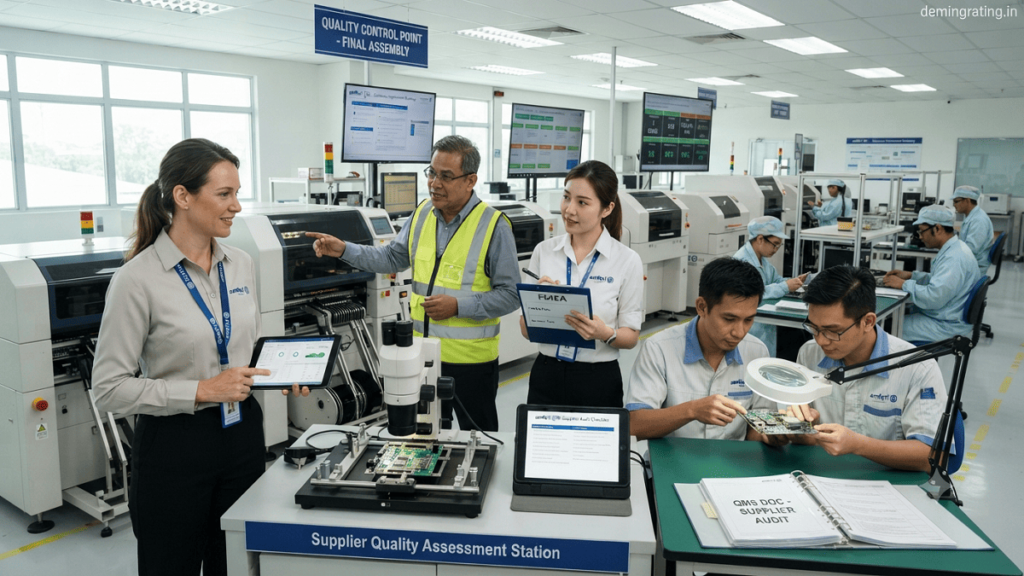
Implementation of amfori QMI Approach
The company introduced amfori QMI principles across selected supplier facilities.
The implementation focused on five major areas:
1. Supplier Quality Assessment
The company conducted supplier evaluations to understand existing capabilities.
Assessment areas included:
- Quality management systems
- Production processes
- Inspection procedures
- Documentation practices
- Employee quality awareness
The assessment helped identify high-risk areas and improvement priorities.
2. Development of Quality Management Systems
Suppliers were supported in developing stronger quality structures.
Actions included:
- Creating quality policies
- Assigning quality responsibilities
- Developing standard operating procedures
- Establishing quality performance indicators
This helped suppliers move from informal quality practices to structured systems.
3. Process Improvement and Defect Prevention
Instead of focusing only on finished-product inspections, suppliers implemented preventive measures.
Improvements included:
- Production process monitoring
- Quality checkpoints
- Root cause analysis
- Corrective action procedures
This reduced repeated quality failures.
4. Supplier Training and Capability Building
Supplier employees received training on:
- Quality management principles
- Defect identification
- Problem-solving techniques
- Process control methods
Training improved employee understanding of quality responsibilities.
5. Continuous Performance Monitoring
The company established regular reviews using quality performance indicators.
Key measurements included:
- Defect rates
- Customer complaints
- Inspection results
- Corrective action completion
- Production efficiency
Results and Improvements
After implementing the amfori QMI approach, the company achieved significant improvements.
1. Reduced Product Defects
Improved process controls resulted in:
- Fewer manufacturing errors
- Lower rejection rates
- Reduced customer complaints
2. Improved Supplier Capability
Suppliers developed stronger:
- Quality systems
- Production controls
- Problem-solving skills
This improved their ability to meet international buyer expectations.
3. Increased Supply Chain Reliability
The company experienced:
- More consistent product quality
- Fewer production interruptions
- Better delivery performance
4. Lower Operational Costs
Quality improvements reduced:
- Rework costs
- Waste generation
- Additional inspection requirements
- Product return expenses
5. Stronger Supplier Relationships
The company shifted from a corrective approach to a collaborative improvement model.
Suppliers became long-term partners focused on:
- Shared quality goals
- Continuous improvement
- Operational excellence
Conclusion
This case study demonstrates how amfori QMI can help companies transform supplier quality management from a reactive inspection process into a proactive improvement system.
By implementing quality assessments, process controls, supplier training, and continuous improvement practices, businesses can reduce defects, improve efficiency, strengthen supplier relationships, and build more resilient global supply chains.
amfori QMI works best as part of a broader responsible supply-chain strategy alongside initiatives such as amfori BSCI for social compliance and amfori BEPI for environmental performance, enabling organisations to achieve quality, sustainability, and operational excellence together.
White Paper on amfori QMI
Executive Summary
Global supply chains are becoming increasingly complex due to expanding supplier networks, changing customer expectations, and growing demand for transparency and reliability. Businesses today require more than product inspections; they need structured quality management systems that prevent defects, improve supplier capabilities, and support long-term supply-chain resilience.
amfori QMI (Quality Management Initiative) provides a standardised approach to assessing and improving supplier quality management capabilities. It helps brands, retailers, and manufacturers establish a common framework for evaluating production practices, reducing duplicated assessments, and improving supply-chain efficiency.
This white paper explores the role of amfori QMI, its principles, implementation approach, business benefits, and contribution to sustainable supply-chain management.
1. Introduction: The Need for Better Supply Chain Quality Management
Modern supply chains face several quality-related challenges:
- Increasing supplier complexity
- Inconsistent manufacturing standards
- Product defects and recalls
- Limited supplier visibility
- Repeated quality assessments
- Rising operational costs
Traditional quality control methods often focus on identifying defects after production. However, this reactive approach can result in:
- Increased waste
- Higher correction costs
- Production delays
- Customer dissatisfaction
A sustainable supply chain requires a proactive quality management approach where suppliers continuously improve their systems and processes.
amfori QMI was developed to provide a common assessment and improvement approach for quality management across global non-food supply chains.
2. What is amfori QMI?
amfori QMI (Quality Management Initiative) is a quality management assessment framework designed to help businesses evaluate and improve supplier manufacturing practices and quality capabilities.
The initiative provides standardised tools that enable companies to:
- Assess supplier quality systems
- Identify improvement opportunities
- Reduce duplicated audit efforts
- Strengthen supplier relationships
- Improve supply-chain visibility
The framework supports businesses seeking responsible and sustainable supply chains by improving operational quality performance.
3. Objectives of amfori QMI
The primary objectives of amfori QMI include:
3.1 Improving Supplier Quality Capability
amfori QMI helps suppliers strengthen:
- Quality management systems
- Production controls
- Technical capabilities
- Testing processes
3.2 Creating a Common Quality Assessment Approach
Many global companies previously used different supplier assessment methods, resulting in:
- Duplicate audits
- Increased costs
- Inconsistent evaluations
QMI provides a unified approach to evaluating supplier quality performance.
3.3 Supporting Continuous Improvement
The initiative encourages suppliers to move from corrective actions toward preventive quality management.
This includes:
- Identifying root causes
- Improving processes
- Monitoring performance
- Implementing improvement plans
4. Core Areas of amfori QMI Assessment
The amfori QMI assessment evaluates supplier quality capabilities through key quality management areas.
4.1 Infrastructure, System and Environment
This area evaluates whether suppliers have appropriate foundations for quality management.
Assessment considerations include:
- Facility conditions
- Quality documentation systems
- Resource management
- Operational infrastructure
4.2 Incoming Materials Quality Control (IQC)
This area focuses on controlling incoming materials before production.
Key considerations include:
- Material inspection procedures
- Supplier material verification
- Non-conforming material control
4.3 Product Design Management
This area examines how suppliers manage product design requirements.
It includes:
- Technical documentation
- Design responsibilities
- Product testing capabilities
- Specification management
4.4 Production Control
Production control is a major focus area.
It evaluates:
- Manufacturing procedures
- Process monitoring
- Quality checkpoints
- Production consistency
Production control carries significant importance because effective process management directly influences final product quality.
5. How amfori QMI Works
Step 1: Supplier Assessment
Approved assessment providers conduct evaluations of supplier facilities.
The assessment reviews:
- Quality systems
- Manufacturing capabilities
- Production processes
- Technical competence
Step 2: Performance Evaluation
Source: QMULOfficial
Assessment results help companies understand:
- Supplier strengths
- Quality risks
- Improvement opportunities
Step 3: Improvement Planning
Based on findings, suppliers can develop:
- Corrective action plans
- Process improvement strategies
- Quality capability development programmes
Step 4: Continuous Monitoring
Companies monitor supplier progress through:
- Quality indicators
- Performance reviews
- Improvement tracking
6. Benefits of amfori QMI for Businesses
6.1 Better Supply Chain Visibility
Businesses gain improved understanding of supplier:
- Quality capabilities
- Production processes
- Operational risks
6.2 Reduced Audit Duplication
A common assessment framework reduces repeated supplier evaluations and improves resource efficiency.
6.3 Improved Supplier Selection
Companies can identify suppliers with stronger:
- Manufacturing capabilities
- Quality systems
- Continuous improvement practices
6.4 Reduced Quality Risks
QMI helps prevent:
- Product failures
- Customer complaints
- Production disruptions
6.5 Stronger Supplier Partnerships
Instead of only identifying problems, businesses can collaborate with suppliers to improve performance.
7. Benefits of amfori QMI for Suppliers
7.1 Improved Quality Systems
Suppliers can develop:
- Better procedures
- Stronger controls
- More effective monitoring systems
7.2 Increased Buyer Confidence
Demonstrating quality management capabilities helps suppliers build stronger relationships with international buyers.
7.3 Operational Efficiency Improvements
Better quality processes can reduce:
- Waste
- Rework
- Production errors
- Resource losses
7.4 Greater Market Opportunities
Suppliers with strong quality systems are better positioned to work with global brands and retailers.
Conclusion
amfori QMI represents a strategic approach to improving supply-chain quality management by focusing on supplier capability development, process improvement, and continuous improvement.
Unlike traditional inspection-based approaches, QMI encourages businesses and suppliers to prevent quality problems by strengthening systems and manufacturing processes.
By implementing amfori QMI principles, companies can achieve:
- Better supplier performance
- Reduced quality risks
- Improved operational efficiency
- Stronger supply-chain resilience
- More sustainable business operations
For organisations managing global supplier networks, amfori QMI provides an important foundation for building reliable, transparent, and high-performing supply chains.
Industry Application on amfori QMI
Introduction
amfori QMI (Quality Management Initiative) is designed to help businesses and suppliers improve product quality, strengthen manufacturing processes, and create more reliable supply chains. It is particularly valuable for industries that depend on complex global supplier networks, where maintaining consistent quality standards across different production locations is challenging.
By promoting structured quality management systems, supplier capability development, and continuous improvement, amfori QMI helps organisations reduce defects, improve efficiency, and strengthen customer confidence.
Official resource:
amfori Official Website
1. Textile and Apparel Industry
Industry Challenges
The textile and apparel sector often faces quality challenges due to:
- Multiple manufacturing locations
- Complex production processes
- Material variations
- High customer expectations
- Short product cycles
Common quality issues include:
- Fabric defects
- Colour inconsistency
- Incorrect sizing
- Stitching problems
- Product durability issues
How amfori QMI Helps
amfori QMI supports apparel manufacturers by improving:
- Raw material quality control
- Production process monitoring
- Garment inspection systems
- Supplier quality capabilities
Key improvements include:
- Standardised production procedures
- Better defect prevention
- Improved factory quality systems
- Reduced product returns
Example Applications
Companies can use QMI principles to:
- Evaluate garment supplier capabilities
- Improve production consistency
- Develop corrective action plans
- Monitor supplier quality performance
2. Footwear Industry
Industry Challenges
Footwear production involves multiple components, including:
- Leather or synthetic materials
- Soles
- Adhesives
- Stitching components
- Finishing processes
Quality problems may include:
- Sole detachment
- Material failure
- Uneven finishing
- Incorrect dimensions
How amfori QMI Helps
QMI supports footwear suppliers through:
- Material inspection processes
- Manufacturing process controls
- Product testing improvements
- Quality documentation systems
Benefits include:
- Improved durability
- Lower defect rates
- More consistent production outcomes
3. Electronics Industry
Industry Challenges
Electronics supply chains require strict quality controls because products involve:
- Complex components
- Technical specifications
- Safety requirements
- Multiple suppliers
Common risks include:
- Component failures
- Assembly defects
- Testing failures
- Product recalls
How amfori QMI Helps
QMI principles help electronics suppliers improve:
- Component quality management
- Assembly processes
- Testing procedures
- Production monitoring
Applications include:
- Supplier capability assessments
- Process improvement programmes
- Defect reduction initiatives
4. Consumer Goods Industry
Industry Challenges
Consumer goods companies manage large product portfolios, including:
- Household products
- Personal care products
- Lifestyle products
- Retail merchandise
Challenges include:
- Inconsistent supplier quality
- Product safety concerns
- Customer complaints
- High-volume production requirements
How amfori QMI Helps
QMI enables companies to:
- Standardise supplier quality expectations
- Improve production reliability
- Reduce product failures
- Strengthen supplier relationships
5. Furniture and Home Products Industry
Industry Challenges
Furniture and home product manufacturers face quality issues related to:
- Material selection
- Assembly processes
- Product durability
- Finishing quality
How amfori QMI Helps
Suppliers can improve:
- Material inspection
- Manufacturing controls
- Product testing
- Final quality checks
Benefits include:
- Improved product lifespan
- Reduced customer complaints
- Better consistency across markets
6. Retail and Private Label Supply Chains
Industry Challenges
Retailers often source products from multiple countries and suppliers.
Major challenges include:
- Maintaining consistent quality standards
- Managing supplier performance
- Reducing product recalls
How amfori QMI Helps
Retail companies can use QMI principles to:
- Evaluate supplier capabilities
- Create common quality expectations
- Monitor supplier improvement
- Reduce supply-chain risks
This is especially useful for private-label products where retailers are responsible for customer experience.
7. Manufacturing Industry
Industry Challenges
Manufacturing industries require:
- Reliable production systems
- Consistent output quality
- Efficient processes
Quality failures can result in:
- Production downtime
- Increased costs
- Customer dissatisfaction
How amfori QMI Helps
QMI supports manufacturers through:
- Process optimisation
- Quality system improvement
- Production monitoring
- Root cause analysis
Conclusion
amfori QMI has broad applications across industries that rely on global manufacturing and supplier networks. From apparel and footwear to electronics, consumer goods, and retail, QMI helps organisations improve quality management systems, reduce defects, strengthen supplier capabilities, and create more efficient supply chains.
By focusing on prevention, collaboration, and continuous improvement, amfori QMI enables industries to achieve higher product quality while supporting long-term supply-chain resilience and sustainability.
Table of Contents
Disclaimer:
This content is for informational and educational purposes only. It provides a general overview of amfori QMI and its applications in supply chain quality management. Organisations should refer to official amfori guidelines and consult qualified professionals for specific implementation, assessment, or compliance requirements.